


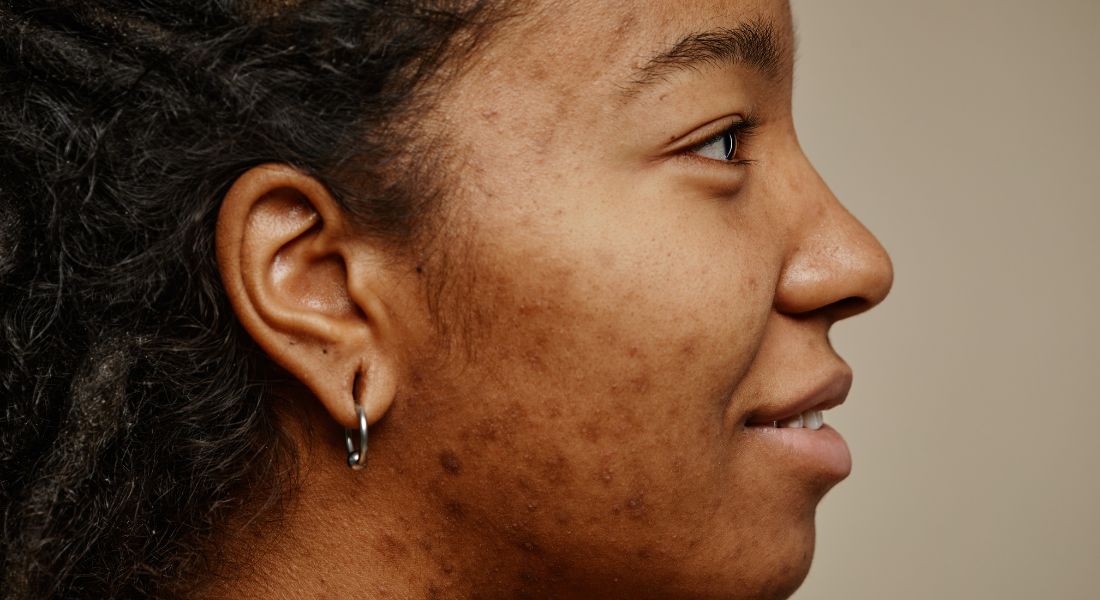
Acne can already be frustrating on its own, but in Black skin, the dark marks left behind after breakouts often become an even bigger concern. A spot may calm down within days or weeks, yet the pigmentation it leaves behind can remain visible for months and sometimes even longer.
These marks are usually caused by post-inflammatory hyperpigmentation, often called PIH. This happens when the skin produces extra melanin after inflammation, irritation, or injury. In Black skin, pigment-producing cells tend to respond more strongly after inflammation, which is why even relatively small spots can leave noticeable marks.
You may notice these marks appearing as brown, dark brown, grey-brown, purple-brown, or almost black patches once acne heals. Even when active acne improves, the remaining pigmentation can make the skin continue to look uneven or marked for a long time afterwards.
This does not mean your skin is unhealthy or that you have done something wrong. It simply means your skin reacts differently to inflammation. Understanding this can help you treat acne more safely and avoid harsh routines that may worsen irritation and make pigmentation last even longer.
What Acne Pigmentation Means
Acne pigmentation is usually a flat colour change left behind after an acne spot has healed. The skin often feels smooth, but the area looks darker than the surrounding skin, which can make your complexion appear uneven for weeks or months after the acne settles.
This is different from a true acne scar. A scar changes the texture of the skin and may appear as a dent, pit, raised area, or uneven surface, while pigmentation mainly changes the colour. However, you can have both at the same time, especially after deeper or more inflamed acne spots.
Understanding this difference is important because pigmentation treatments may help dark marks but usually will not improve deeper scars. A dermatologist can assess whether you mainly have post-inflammatory hyperpigmentation, acne scarring, or both, which helps make treatment more accurate and effective.
Why Black Skin Is More Prone to Dark Marks
Black skin naturally contains more active melanin production. Melanin is the pigment that gives your skin its colour and helps provide some natural protection against certain forms of sun damage. However, when the skin becomes inflamed or irritated, the cells that produce pigment, called melanocytes, can become more active than usual.
Acne creates inflammation inside and around the pore. Once the spot starts to heal, the skin may respond by leaving extra pigment behind as part of the healing process. In Black skin, this pigment response is often stronger and more noticeable, which is why acne marks may appear darker and remain visible for longer compared with lighter skin tones.
This is not a flaw in your skin or a sign that your skin is unhealthy. It is simply a natural biological response, but it does mean acne needs careful management. Gentle treatment, early inflammation control, and avoiding unnecessary irritation can all help reduce the risk of long-lasting dark marks.
Why Acne Marks Can Last for Months
Dark marks left behind after acne can last for months because excess pigment does not disappear immediately once a spot has healed. Your skin needs time to gradually break down and clear the extra melanin that was produced during inflammation.
If the pigment sits closer to the surface of the skin, it may fade more quickly. However, if the pigment is deeper within the skin, the marks can remain visible for much longer. Sun exposure can also make pigmentation darker and more stubborn, which is why sunscreen is still important even if you have Black skin.
Another reason acne marks can seem never-ending is repeated inflammation. If new breakouts keep appearing, new dark marks continue forming before older ones have had time to fade properly. This can make it feel as though your pigmentation is not improving, even when your skin is actually trying to heal from ongoing inflammation.
Active Acne Keeps the Pigmentation Cycle Going
One of the main reasons acne pigmentation lasts so long is that new breakouts continue creating fresh dark marks. You may be trying to fade older pigmentation, but if active acne is still appearing, the cycle keeps repeating itself.
This is why controlling acne should usually come before aggressive pigmentation treatment. If you do not reduce new spots and inflammation, you are likely to keep developing new marks even while treating the old ones.
A good treatment plan focuses on calming active inflammation first. Depending on your acne type and severity, this may involve topical treatments, oral medication, hormonal therapy, or isotretinoin. Once breakouts are more controlled, the skin has a better chance to gradually fade existing pigmentation without constantly dealing with new inflammation.
Inflammation Triggers Pigment Production
Inflammation is the main reason post-inflammatory hyperpigmentation develops after acne. In general, the more inflamed a spot becomes, the more likely it is to leave a visible dark mark once it heals. This is why deeper or more irritated breakouts often leave longer-lasting pigmentation.
Deep, painful spots such as nodules and cysts are especially likely to trigger dark marks because they create stronger inflammation beneath the skin. However, even smaller spots can leave pigmentation behind if you repeatedly pick, squeeze, scratch, or irritate them while they are healing.
Inflammation can also become worse because of harsh skincare habits. Strong scrubs, excessive exfoliation, aggressive peels, or overusing acne treatments may damage your skin barrier and increase irritation. In Black skin, this extra inflammation can lead to even more pigmentation, which is why gentle and consistent treatment is usually safer than aggressive product use.
Picking Makes Pigmentation Worse
Picking acne spots is one of the most common reasons dark marks become more noticeable and longer-lasting in Black skin. When you squeeze, scratch, or pick at a spot, you create extra trauma in skin that is already inflamed.
This additional trauma increases inflammation and can push damage deeper into the skin. In Black skin, more inflammation often leads to more pigment production, which means a spot that may have left only a mild mark can become significantly darker after being picked.
Picking can also increase the risk of true acne scarring, especially if the spot is deep, painful, or repeatedly irritated. If you struggle with picking, you are not alone. Small changes such as using pimple patches, treating spots early, keeping nails short, and avoiding magnifying mirrors can help reduce skin trauma and support more even healing.
Harsh Products Can Delay Healing
It can be tempting to use strong products to fade dark marks quickly, especially when pigmentation feels stubborn. However, harsh treatments can sometimes irritate the skin and make pigmentation even worse. In Black skin, inflammation and irritation may trigger extra pigment production, which can slow healing instead of improving it.
- Strong Products Can Irritate the Skin: Harsh scrubs, peeling solutions, and high-strength acids may damage the skin barrier and increase inflammation.
- Irritation May Worsen Pigmentation: In Black skin, irritation can lead to more darkening and longer-lasting marks after acne heals.
- Burning or Peeling Is Not Always Good: Tingling, stinging, or peeling does not necessarily mean your skincare is working effectively.
- Gentle Routines Often Work Better: A calmer and more consistent skincare routine can support healing without causing extra irritation.
Overall, your skin usually responds better to steady and balanced care rather than aggressive treatment. Trying to force fast results can sometimes create more pigmentation and sensitivity over time. A gentle routine focused on protecting your skin barrier often leads to healthier and more even-looking skin in the long run.
The Skin Barrier Matters
Your skin barrier is the outer protective layer of your skin. It helps keep moisture inside the skin while protecting against irritants, bacteria, and environmental stress. When the barrier is healthy, your skin is usually better able to tolerate acne treatment and heal more evenly.
When the barrier becomes damaged, the skin can turn more reactive and sensitive. Treatments may sting more, dryness and tightness may worsen, and inflammation can increase. In Black skin, this extra irritation can make pigmentation more persistent and increase the chance of new dark marks forming after acne.
Using a non-comedogenic moisturiser can help support the skin barrier while you treat acne. This is not only about comfort. A good moisturiser may help you tolerate prescription treatments better, reduce unnecessary irritation, and support more even healing over time.
Why Sunscreen Is Still Important

A common myth is that Black skin does not need sunscreen. This is not true, especially if you are dealing with pigmentation after acne. Although melanin gives your skin some natural protection, it does not prevent dark marks from becoming darker or lasting longer after sun exposure.
If you are using treatments such as retinoids, exfoliating acids, or pigmentation creams, sunscreen becomes even more important because these products can make your skin more sensitive to sunlight. Without sun protection, post-inflammatory hyperpigmentation may remain more visible and take longer to fade.
One reason some people avoid sunscreen is that older formulas often left a grey or ashy cast on darker skin tones. Fortunately, many modern sunscreens are much better. Tinted, invisible, gel-based, and lightweight formulas can feel more comfortable on the skin and blend more naturally without leaving an obvious residue.
Pigmentation Can Sit at Different Skin Depths
Not all dark marks from acne sit at the same depth in the skin, which is one reason pigmentation can vary so much from person to person. Some marks stay closer to the surface and may fade more easily, while others settle deeper within the skin and become more persistent. The depth of the pigment can affect not only how the mark looks, but also how long it may take to improve.
Pigment that sits in the upper layer of the skin, known as epidermal pigmentation, often responds better to topical treatments and sun protection. Deeper pigment, called dermal pigmentation, may appear more grey-brown or blue-grey and can take much longer to fade.
This is one reason some marks improve relatively quickly while others remain visible for many months. It also explains why a treatment that works well for one person may not produce the same results for someone else. A dermatologist can help assess the type and depth of pigmentation so you can have a more realistic and effective treatment plan.
Dark Marks Are Often More Distressing Than Acne
For many people with Black skin, the dark marks left behind after acne can feel more upsetting than the acne itself. The active spot may disappear, but the pigmentation often remains visible for weeks or months, making it feel as though the skin never fully clears.
These marks can affect your confidence, makeup choices, social plans, photographs, and how comfortable you feel showing your skin naturally. Even when breakouts become less frequent, the remaining pigmentation may still make you feel as though your acne has not improved very much.
This concern deserves to be taken seriously. Dark marks are not “just cosmetic” when they affect how you feel about your appearance and confidence. A good acne consultation should ask what bothers you most, whether that is pain, repeated breakouts, pigmentation, scarring, or uneven skin tone. Your treatment plan should reflect those concerns and include steps to help prevent future pigmentation as well as treat active acne.
Acne Treatment Should Start Early
Starting acne treatment early is one of the best ways to reduce long-lasting dark marks and scarring. The longer acne stays inflamed, the greater the chance that your skin may develop pigmentation changes after spots heal. Early treatment can help control inflammation before more damage occurs.
- Inflammation Can Lead to Dark Marks: Ongoing acne inflammation increases the risk of post-inflammatory pigmentation, especially in Black skin.
- You Do Not Need Severe Acne to Seek Help: If your acne regularly leaves dark marks, that is already a good reason to start treatment early.
- Early Control May Reduce Scarring: Treating acne sooner may lower the risk of permanent texture changes and deeper scars.
- Deep Breakouts Need Extra Attention: Painful or repeated spots are more likely to leave both pigmentation and scarring if left untreated.
Overall, the main goal of early acne treatment is prevention. It is usually much easier to stop new marks from forming than to fade older pigmentation later. Taking acne seriously early on can help protect both your skin health and long-term skin appearance.
Retinoids Can Help Acne and Pigmentation
Topical retinoids are commonly used to treat acne because they help prevent blocked pores, reduce comedones, and support long-term acne control. They are often an important part of treatment when breakouts are frequent or persistent.
Retinoids may also help improve pigmentation over time by encouraging skin turnover. This can make them especially useful when acne and dark marks appear together, which is common in Black skin.
However, retinoids need to be used carefully. If they cause too much dryness or irritation, they may actually worsen pigmentation instead of helping it. A dermatologist may advise starting slowly, such as using a small amount a few nights a week before increasing gradually.
It is also important not to apply more product than directed. Using extra retinoid does not usually produce faster results and often only increases irritation. Gentle, consistent use is usually safer and more effective over time.
Azelaic Acid Can Be Useful
Azelaic acid can be a useful treatment when you are dealing with both Acne and dark marks at the same time. It has anti-inflammatory properties and may also help improve uneven pigmentation in some people, which makes it especially relevant for Black skin.
It may be particularly helpful if post-inflammatory hyperpigmentation is one of your main concerns. Depending on your skin and acne severity, azelaic acid can sometimes be used on its own or combined with other acne treatments as part of a wider routine.
Some people notice mild stinging, dryness, or irritation when they first start using azelaic acid, especially if their skin is sensitive. This usually needs to be introduced carefully and balanced with moisturiser and gentle skincare.
Azelaic acid is not an instant solution, and pigmentation still takes time to fade. However, it can be a valuable part of a balanced acne plan because it may help reduce active breakouts while also supporting a more even skin tone over time.
Benzoyl Peroxide Needs Careful Use
Benzoyl peroxide can be very helpful for inflammatory acne because it helps reduce acne-causing bacteria and calm inflammation inside the skin. It is also useful because, unlike antibiotics, it does not contribute to antibiotic resistance in the same way.
However, benzoyl peroxide can sometimes cause dryness, peeling, or irritation, especially if it is too strong or used too often. In Black skin, extra irritation may increase the risk of post-inflammatory hyperpigmentation and make dark marks more noticeable. This does not mean you need to avoid benzoyl peroxide completely, but it does mean it should be used carefully.
Some people tolerate lower strengths or wash-off formulas better than stronger leave-on treatments. A dermatologist can help you choose the right approach for your skin type and acne severity. The aim is to reduce inflammation and breakouts without causing unnecessary irritation that may worsen pigmentation.
Hydroquinone and Prescription Pigment Treatments
Hydroquinone is sometimes used to treat post-inflammatory hyperpigmentation after acne, but it needs to be used carefully and under professional guidance. It is not usually something you should apply casually or continuously without monitoring, especially in Black skin where irritation itself can worsen pigmentation.
When used correctly, hydroquinone may help lighten certain types of dark marks. However, if it is overused or used incorrectly, it can irritate the skin and potentially lead to unwanted side effects. Other prescription treatments may combine depigmenting ingredients with retinoids or anti-inflammatory agents depending on your skin type and the depth of pigmentation.
You should also be cautious with unregulated skin-lightening creams sold online or without proper medical advice. Some products may contain harmful ingredients such as strong steroids or mercury, which can seriously damage the skin. The safest approach is a personalised treatment plan from a dermatologist who understands how to manage pigmentation safely in Black skin.
Hair Products May Contribute to Acne and Marks

Hair products can sometimes play a role in acne, especially if breakouts appear around the forehead, temples, cheeks, jawline, neck, or back. Oils, pomades, gels, and heavy styling products may transfer onto your skin and clog pores. In Black skin, these breakouts may also leave long-lasting dark marks after healing.
- Heavy Products Can Clog Pores: Oils, butters, leave-in conditioners, and edge-control products may contribute to acne if they sit on the skin.
- Hairline Breakouts Are an Important Clue: Acne near the forehead or sides of the face may suggest that hair products are affecting your skin.
- Small Routine Changes May Help: Keeping heavy products away from your face and washing pillowcases regularly can reduce buildup and irritation.
- Your Hair Routine Matters: Mentioning your hair products during a consultation can help your dermatologist identify possible acne triggers.
Overall, you may not need to stop using hair products completely to improve your skin. Often, small adjustments in application and skincare habits can reduce breakouts and pigmentation. Paying attention to where acne appears can provide useful clues about what may be irritating your skin.
Vitamin C, Niacinamide and Supportive Ingredients
Some non-prescription ingredients may help support pigmentation care after acne. Ingredients such as vitamin C, niacinamide, liquorice extract, and other brightening agents are commonly included in skincare products aimed at improving uneven skin tone.
These ingredients may help support a more even complexion over time, but results can vary from person to person. They are also usually not enough on their own if your acne is still active, inflamed, or severe. In those cases, controlling the acne itself remains the most important step.
It is also important that your skin tolerates these products well. Even ingredients described as gentle can sometimes cause irritation, especially if you are already using prescription acne treatments. Adding too many brightening serums at once may overwhelm your skin barrier and worsen inflammation.
Supportive skincare ingredients can still be useful as part of a balanced routine, but they should not replace proper acne treatment. If new breakouts continue forming, new dark marks are likely to keep appearing as well.
Chemical Peels Must Be Chosen Carefully
Chemical peels can sometimes help with acne and post-inflammatory hyperpigmentation, but they need to be chosen very carefully in Black skin. The wrong peel strength, poor preparation, or incorrect aftercare may worsen irritation and make dark marks more noticeable instead of improving them.
Superficial peels performed by experienced clinicians may help some people with clogged pores, uneven tone, and mild pigmentation. However, deeper or more aggressive peels can be risky because they may lead to burns, prolonged irritation, or increased pigmentation after healing.
At-home chemical peels can also cause problems if they are too strong or used too frequently. Online skincare trends rarely take your skin tone, acne severity, or medical history into account. If you are considering a peel, it is safer to speak with a dermatologist first, especially because active acne usually needs to be controlled before focusing heavily on pigmentation procedures.
Lasers and Devices Need Expertise
Lasers and energy-based treatments can sometimes help acne scars and pigmentation, but they need to be chosen very carefully in Black skin. Darker skin contains more melanin, which means certain laser devices can increase the risk of burns, irritation, or post-inflammatory hyperpigmentation if the wrong settings or techniques are used.
This does not mean laser treatments are unsuitable for Black skin. It simply means you should see a clinician who has experience treating darker skin tones safely. For acne scars, treatment options may include microneedling, radiofrequency microneedling, fractional laser, or other procedures depending on the scar type and severity.
For pigmentation alone, topical treatments and sun protection are often the first step before considering procedures. If marks remain persistent, procedures may sometimes be discussed later. Before having any treatment, you should always ask about the risk of post-inflammatory hyperpigmentation and what steps will be taken to reduce that risk. A safe and experienced clinician should discuss these points openly with you.
Hormonal Acne Can Keep Creating Marks
Hormonal acne can be one reason dark marks keep coming back, especially if breakouts appear around the jawline, chin, cheeks, or lower face. These spots can be deeper, more tender, and more likely to leave pigmentation after they heal.
If hormonal acne is not controlled, you may keep treating old dark marks while new ones continue to form. This can make pigmentation feel endless, even when some marks are slowly fading in the background.
A dermatologist may ask about your breakout pattern, menstrual cycle, skincare routine, hair products, and any signs of hormonal imbalance. Depending on your situation, treatment may include prescription creams, oral medication, hormonal treatment, or other acne management options.
The aim is not only to fade existing pigmentation. It is also to reduce new breakouts so your skin has a better chance to heal without constantly forming new marks.
Body Acne Can Also Leave Pigmentation
Acne-related pigmentation is not limited to the face. In Black skin, dark marks can also develop after acne on the chest, shoulders, back, neck, or buttocks. These marks may remain visible long after the spots themselves have settled.
Body acne can sometimes be more difficult to manage because the affected areas are larger and may be exposed to sweating, friction, tight clothing, exercise, or hair products. If the acne becomes inflamed, painful, or repeatedly irritated, the risk of long-lasting pigmentation and scarring increases even further.
A dermatologist may recommend medicated body washes, topical treatments, oral medication, or practical lifestyle changes depending on the pattern and severity of your acne. It is important not to ignore body acne simply because it is usually covered by clothing. Treating it early can help reduce both pigmentation and long-term scarring.
Makeup Can Hide Marks, But It Can Also Trigger Spots
Makeup can help you feel more confident while acne pigmentation gradually fades, and there is nothing wrong with using it if it supports how you feel about your skin. Many people use makeup to help reduce the visibility of dark marks during treatment.
However, some heavy or comedogenic products can clog pores and contribute to new breakouts, which may then create more pigmentation. This is why choosing suitable products matters, especially if your skin is acne-prone.
It can help to look for non-comedogenic makeup where possible, clean your brushes and sponges regularly, and remove makeup gently every evening. Avoid harsh scrubbing when cleansing, as this may irritate the skin and worsen dark marks. If acne tends to appear mainly in areas where makeup is heaviest, your products or application habits may need reviewing with the help of a dermatologist.
Why Pigmentation Treatment Takes Patience
One of the hardest parts of dealing with pigmentation after acne is that it takes time to fade, even when you are doing everything right. Dark marks can persist for weeks or even months, which can feel frustrating when you are trying hard to improve your skin.
This happens because melanin needs time to gradually break down and be cleared by your skin. If the pigmentation is deeper, it can take even longer to fade, which is why some marks seem more stubborn than others.
You may not notice changes from day to day, so progress can feel very slow. In reality, improvement is often happening gradually, and it is usually easier to see when you compare monthly photographs rather than daily mirror checks.
Patience does not mean doing nothing. It means staying consistent with acne control, sunscreen, and suitable pigmentation treatments. At the same time, trying too many new products at once can irritate your skin and slow progress, so a steady and simple routine is usually the safer approach.
When to See a Dermatologist

You should consider seeing a dermatologist if acne pigmentation is lasting for months, getting worse, or starting to affect your confidence. It is also important to seek help if your acne is painful, deep, leaving scars, or not improving with over-the-counter treatments.
A dermatologist can assess your acne type, the depth of your pigmentation, your skin sensitivity, and your risk of scarring. This allows them to build a treatment plan that addresses both the active acne and the dark marks, rather than focusing on just one aspect.
Depending on your needs, they may recommend topical treatments, oral medication, hormonal therapy, isotretinoin, or specific pigmentation treatments. They can also guide you on whether procedures such as chemical peels, microneedling, or laser treatments are suitable for your skin type.
This is especially important in Black skin, where treatment choices need extra care to avoid worsening pigmentation. Getting professional advice early can reduce trial and error and help you avoid treatments that may unintentionally make dark marks worse.
FAQs:
1. What is acne pigmentation in Black skin?
Acne pigmentation refers to dark marks left behind after acne heals. In Black skin, this is usually post-inflammatory hyperpigmentation (PIH), where extra melanin is produced after inflammation, leaving brown, grey-brown, or dark patches.
2. Why does acne leave darker marks in Black skin?
Black skin has more active melanocytes, which produce melanin. When acne causes inflammation, these cells respond more strongly, leading to darker and more noticeable pigmentation after spots heal.
3. Is acne pigmentation the same as acne scarring?
No. Pigmentation affects skin colour and is usually flat, while acne scarring affects skin texture, causing dents, pits, or raised areas. However, both can occur together after severe acne.
4. How long does acne pigmentation take to fade?
It can take several weeks to months, depending on how deep the pigment is, how inflamed the acne was, and whether new breakouts continue forming.
5. Can sunlight make acne pigmentation worse?
Yes. UV exposure can darken existing pigmentation and make it last longer. Sunscreen is important even for Black skin to help prevent further darkening.
6. Does picking acne make pigmentation worse?
Yes. Picking or squeezing spots increases inflammation and skin damage, which leads to more melanin production and darker, longer-lasting marks.
7. What skincare ingredients help reduce acne pigmentation?
Ingredients such as retinoids, azelaic acid, niacinamide, vitamin C, and liquorice extract may help gradually improve uneven pigmentation when used consistently.
8. Can acne pigmentation go away without treatment?
Yes, mild pigmentation can fade on its own over time. However, this process can be slow, especially if acne continues or if there is ongoing inflammation.
9. When should I see a dermatologist for acne pigmentation?
You should see a dermatologist if dark marks persist for months, worsen, or affect your confidence, or if your acne is painful, deep, or not improving with over-the-counter treatments.
10. Can procedures like lasers or peels treat acne pigmentation in Black skin?
Yes, but they must be chosen carefully. In experienced hands, treatments like chemical peels, microneedling, or lasers can help, but incorrect use may worsen pigmentation, so professional assessment is essential.
Final Thoughts: Managing Acne Pigmentation with the Right Support
Acne pigmentation in Black skin can be persistent, but it is important to remember that it is both common and treatable with the right approach. In my experience, the biggest difference comes from focusing on calming active acne first, protecting the skin barrier, and being consistent rather than trying to rush results with harsh products. Dark marks may take time to fade, but with patience and the correct routine, gradual improvement is very achievable.
What I also find important is not dealing with this alone when the pigmentation is long-lasting or affecting confidence. A dermatologist can help you understand your skin in more detail and choose treatments that are both safe and effective for deeper skin tones. If you’d like to book a consultation with one of our dermatologists, you can contact us at the acne clinic in London.
References:
- Davis, E.C. and Callender, V.D. (2010) Postinflammatory hyperpigmentation: a review of the pidemiology, clinical features, and treatment options in skin of color. Journal of Clinical and Aesthetic Dermatology, 3(7), pp. 20-31. Available at: https://pmc.ncbi.nlm.nih.gov/articles/PMC2921758/
- Juhl, C.R., Bergholdt, H.K.M., Miller, I.M., Jemec, G.B.E., Kanters, J.K. and Ellervik, C. (2018) Dairy intake and acne vulgaris: A systematic review and meta-analysis of observational studies, Nutrients, 10(8), p. 1049. Available at: https://www.mdpi.com/2072-6643/10/8/1049
- Aghasi, M., Golzarand, M., Shab-Bidar, S. and Djafarian, K. (2019) Dairy intake and acne development: A meta-analysis of observational studies, Clinical Nutrition, 38(3), pp. 1067-1075. Available at: https://www.sciencedirect.com/science/article/abs/pii/S0261561418301663
- Cengiz, F.P., Cemil, B.C., Emiroglu, N., Bahali, A.G. and Onsun, N. (2017) Acne located on the trunk, whey protein supplementation: Is there any association, Health Promotion Perspectives, 7(2), pp. 106–108. Available at: https://pmc.ncbi.nlm.nih.gov/articles/PMC5350548/
- Alshammari, S., Alajlouni, Y., Al-Khateeb, A. and Al-Sawalha, N. (2024) The effect of whey protein supplements on acne vulgaris among male adolescents and young adults: A case-control study, Clinical, Cosmetic and Investigational Dermatology. Available at: https://pmc.ncbi.nlm.nih.gov/articles/PMC11022506/