


If you have vitiligo, you may notice itching before or around the time a new white patch appears. You should know that established patches usually do not cause discomfort, and itching alone does not show that your vitiligo is spreading.
You may need a skin assessment if your vitiligo patch becomes persistently painful, very sore, swollen or inflamed. You and your dermatologist can then check whether the sensation is related to vitiligo, sunburn, treatment irritation or another skin problem.
Does Vitiligo Normally Itch?
Vitiligo is usually an asymptomatic condition, so your lighter or white patches may not cause itching, soreness or other sensations. You should know that your skin can still become itchy, particularly when your vitiligo is first appearing or changing.
You do not need to worry if your vitiligo does not itch, as this is common. You should seek advice if your skin develops persistent itching, redness, scaling or pain because another cause may need assessment.
UK Guidance Note
The British Association of Dermatologists describes vitiligo as usually neither itchy nor painful, although some people notice itching before a new patch appears. Persistent discomfort or a change in the texture or appearance of the skin should therefore not automatically be attributed to vitiligo.
Does Vitiligo Normally Cause Pain?
Pain is not a typical symptom of uncomplicated vitiligo, so your vitiligo patches will usually not feel painful. You should not assume that ongoing pain is simply part of your vitiligo, particularly if your skin also becomes red, swollen, blistered or broken.
Your skin may feel sore because of sunburn, treatment or cosmetic irritation, scratching or another skin condition. You and your dermatologist can assess the area if it becomes painful or the cause is unclear.
Evidence Note
Research suggests that itching affects only a minority of people with vitiligo, while persistent pain is not considered a typical feature of uncomplicated disease. New or ongoing discomfort should therefore also prompt consideration of causes such as dermatitis, treatment irritation or sunburn.
Does Itching Mean Your Vitiligo Is Spreading?
Itching can occur alongside active vitiligo, but you should not use it alone to decide whether your condition is spreading. You may notice new or enlarging patches even when your skin does not itch.
You can take photos in similar lighting to track changes over time. You should speak to your dermatologist if new patches appear or existing patches enlarge so vitiligo activity can be assessed.
Research Insight
A systematic review of clinical signs of active vitiligo found strong evidence for the Koebner phenomenon, where new vitiligo develops after skin injury or friction. By contrast, evidence that itching by itself reliably identifies active disease was inconclusive.
Why Does Your Vitiligo Patch Feel Dry or Flaky?
Vitiligo itself does not usually make your skin dry, so you may find a patch feels similar to the surrounding skin. You should consider eczema, skincare irritation, cold weather or frequent washing if your patch becomes dry, flaky or cracked.
Dryness can make your skin itchy, and repeated scratching may cause soreness. You can use a gentle moisturiser for ordinary dryness, but you should speak to your dermatologist if the area remains flaky, inflamed or irritated.
Why Might Active Vitiligo Feel Itchy?
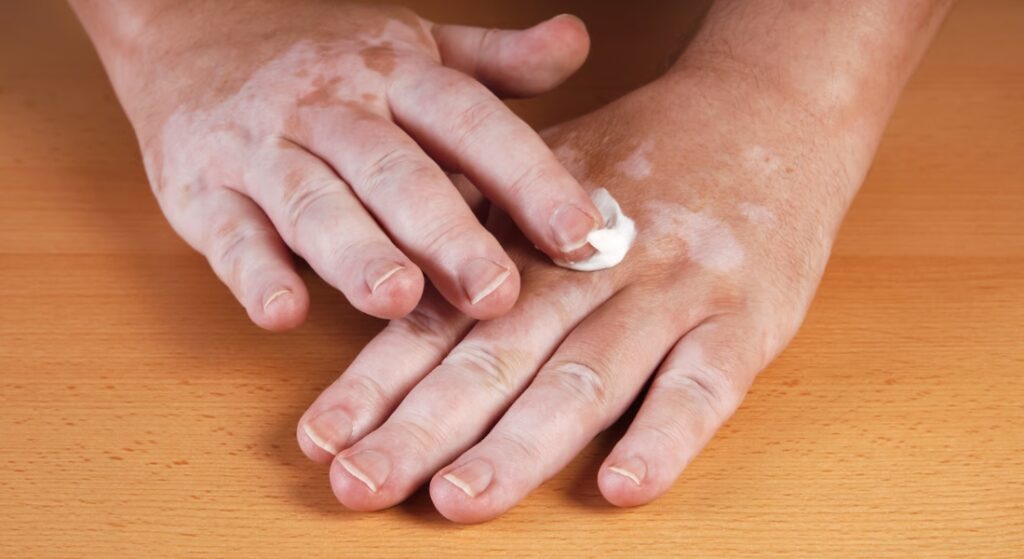
Researchers do not yet know exactly why some people with vitiligo experience itching. You may notice your skin feels itchy when your vitiligo first appears or changes, but itching does not always mean your vitiligo is spreading.
You should also consider other causes such as dry skin, eczema, irritation, allergy or heat. You and your dermatologist can review your patches and other symptoms to judge whether the itching may relate to active vitiligo.
Why Can Sun Exposure Make Vitiligo Hurt?
Your vitiligo patches contain little or no melanin, so they have less natural UV protection. You may find your skin burns more easily, and you should protect exposed patches from strong sunlight.
If your vitiligo becomes hot, sore, swollen or blistered after sun exposure, you may have sunburn rather than discomfort caused by vitiligo itself. You should use SPF 50 or above, protective clothing and shade outdoors, and follow your phototherapy unit’s instructions on treatment days.
Can Vitiligo Treatments Cause Itching or Burning?
Sometimes the discomfort you notice may come from your vitiligo treatment rather than the condition itself. You may experience burning, stinging or itching with tacrolimus or pimecrolimus, while topical steroids and phototherapy can also cause local skin reactions that your clinician may need to review.
You should follow your dermatologist’s instructions and report persistent discomfort after treatment. You do not need to tolerate ongoing burning or itching because your clinician can check whether the treatment needs adjusting.
How Can You Tell Treatment Irritation From Vitiligo Itch?
Timing can help you understand whether your treatment is causing the discomfort. You may notice itching, burning, redness or stinging soon after applying a new cream, while your vitiligo may itch when new patches appear or existing borders change.
You should not stop prescribed treatment after one mild sensation unless your clinician advises it. You should seek prompt advice if your skin develops severe pain, blistering, swelling or a marked rash so the reaction can be assessed.
Clinical Tip
If itching or burning starts after a new cream or phototherapy session, note when it began, how long it lasted and whether the skin became red or swollen. This information can help your dermatologist distinguish a treatment reaction from unrelated itching or another skin condition.
Could an Itchy White Patch Be Something Other Than Vitiligo?
Not every lighter or white patch on your skin is vitiligo. You may have another condition, such as eczema or pityriasis versicolor, especially if your patch is itchy, dry, flaky or changes in texture.
You should have your skin assessed rather than relying on photos alone to diagnose vitiligo. You and your dermatologist can check the pattern of pigment loss and, when needed, use a Wood’s lamp to help identify the cause.
What Could Your Skin Symptoms Mean?
| What you notice | Possible explanation to consider |
| White patch with no texture change or discomfort | Typical vitiligo may be possible |
| Mild itch around a newly changing patch | Can occur with vitiligo but does not prove disease activity |
| Dry, flaky or cracked white patch | Eczema, irritation or another scaly skin condition |
| Burning shortly after applying a treatment | Treatment-related irritation |
| Hot, red and painful skin after strong sunlight | Sunburn |
| Itchy patch after new sunscreen, makeup or camouflage | Contact or irritant dermatitis |
| Crusting, oozing, increasing warmth or tenderness | Infection or significant inflammation needs consideration |
| Severe or persistent pain | Not typical of uncomplicated vitiligo and should be assessed |
Could Eczema Be Causing Itching on Your Vitiligo Patch?

Having vitiligo does not stop you from developing other skin conditions in the same area. You may develop eczema or contact dermatitis on your vitiligo patches, and you may notice itching, dryness, redness, scaling or cracking that is not caused by vitiligo itself.
You should consider whether a new skincare, sunscreen, makeup or camouflage product is triggering symptoms. You and your dermatologist can assess persistent irritation so your inflammation is treated without unnecessarily changing vitiligo treatment.
Can Scratching Make Vitiligo Worse?
Repeated scratching can damage your skin, and physical trauma may trigger vitiligo at injured sites in some people. You should not assume one scratch will create a patch, but you may want to minimise repeated rubbing.
You may notice scratch marks, thickened skin or more discomfort after repeated scratching. You can look for the cause of your itch, while your dermatologist can treat dryness, inflammation, allergy or active vitiligo.
What Can You Do About Mild Itching?
If your itching is mild and your skin otherwise looks normal, a few simple measures may help make it more comfortable. You should also watch for any new redness, scaling or soreness.
- Avoid scratching: Repeated scratching can make irritation and soreness worse.
- Keep your skin moisturised: A fragrance-free moisturiser may help if dryness is contributing.
- Avoid overheating: Heat can make itching feel more noticeable.
- Protect your skin from the sun: Vitiligo patches can burn more easily and become uncomfortable.
You should avoid introducing several new products at once, as this can make irritation harder to identify. Speak to your dermatologist if the itching continues or your skin develops other changes.
When Should Pain or Itching Be Checked?
Mild itching without other changes is usually less concerning, but you should seek advice if your itching worsens, disturbs sleep or breaks your skin. You may also want assessment if a new rash or redness appears.
Pain is not typical of uncomplicated vitiligo, so you should seek prompt advice if your patch becomes hot, swollen, blistered, crusted or starts to ooze. You and your dermatologist can check for sunburn, infection, dermatitis or treatment irritation.
What If Your Vitiligo Suddenly Starts Itching?
A sudden change in how your vitiligo feels is worth noticing, especially if the skin was previously symptom-free. You should consider recent sun exposure, a new treatment, changed products or increased friction affecting your skin.
You may notice mild itching when vitiligo is changing, but you should also look for redness, scaling or crusting. You and your dermatologist can assess whether the symptoms relate to vitiligo activity or another skin problem.
Can Stress Make the Itching Feel Worse?
Stress and itching can sometimes influence each other, even when stress is not the original cause of your skin symptoms. You may find that an ongoing itch becomes harder to ignore when you are tired, stressed or worried, while repeated scratching can further irritate your skin.
You should know that this does not mean the itching is imaginary or purely psychological. You can tell your doctor if symptoms affect your sleep, concentration or daily life so their overall impact can be considered.
How Can a Dermatologist Work Out Why Your Skin Hurts or Itches?

Your dermatologist will usually examine the skin and ask when your symptoms began. You may be asked whether the itching or pain started around pigment changes and whether your patches are expanding or another trigger is involved.
You should tell your dermatologist about creams, sunscreen, camouflage makeup and phototherapy. You and your dermatologist can check for scaling, blistering, crusting or discharge to identify vitiligo activity, treatment irritation or another condition.
Myth vs Fact
| Myth | Fact |
| Vitiligo always itches | Most vitiligo patches are symptom-free, although some people experience itching |
| Itching proves that vitiligo is spreading | Itch can occur in active disease, but it is not a reliable marker on its own |
| Pain is a normal symptom of vitiligo | Persistent pain is not typical of uncomplicated vitiligo |
| Every itchy white patch is vitiligo | Eczema, fungal conditions and contact dermatitis can also cause lighter itchy patches |
| Scratching once will create a new vitiligo patch | The Koebner phenomenon can occur after skin trauma in some people, but one scratch does not inevitably cause vitiligo |
| Burning always means vitiligo is active | Burning may instead come from topical treatment, dermatitis or sunburn |
Key Takeaways
- Vitiligo is usually neither painful nor itchy, although a minority of people experience itching.
- Some people report itching around newly appearing patches, but itch alone cannot reliably show whether vitiligo is active.
- Persistent pain is not typical of uncomplicated vitiligo and deserves assessment.
- Dryness, eczema, contact dermatitis, sunburn and treatment irritation can all cause symptoms in skin affected by vitiligo.
- Burning or stinging after tacrolimus or pimecrolimus may be treatment related rather than caused by vitiligo itself.
- Repeated skin trauma can occasionally trigger new vitiligo at the injured site, known as the Koebner phenomenon.
- Vitiligo patches burn more easily in sunlight; NHS guidance recommends SPF 50 or above.
- If you are having phototherapy, follow the treatment unit’s instructions about sunscreen, moisturisers and cosmetics before each session.
- Hot, swollen, blistered, crusted or oozing skin should not simply be assumed to be part of vitiligo.
Frequently Asked Questions
1. When might itching occur with vitiligo?
Your vitiligo patches may occasionally feel itchy, particularly when your vitiligo first appears or changes. You should know that established vitiligo patches are usually asymptomatic, so persistent itching may have another cause.
2. What does persistent pain in a vitiligo patch suggest?
Vitiligo does not usually cause pain, so you should not assume ongoing soreness is normal. If your patch becomes painful, red, swollen or blistered, you and your dermatologist can check whether sunburn, irritation or another problem is responsible.
3. Which changes matter more than itch when checking whether vitiligo is spreading?
Itching can occur alongside active vitiligo, but you should not use it alone to judge spreading. You can photograph your skin in similar lighting and contact your dermatologist if new patches appear or existing ones enlarge.
4. What else can make vitiligo skin feel dry or flaky?
Vitiligo itself does not usually make your skin dry, but you may develop dryness from eczema, irritation, cold weather or frequent washing. You can use a gentle moisturiser, but seek advice if your skin remains inflamed.
5. Why is sun protection important if you have vitiligo?
Your vitiligo patches contain little or no melanin, so they have less natural UV protection and can burn more easily. You should protect your skin from ordinary sunlight with SPF 50 or above, protective clothing and shade, and follow your phototherapy unit’s instructions on treatment days.
6. Which vitiligo treatments can make skin itch or burn?
Some vitiligo treatments can cause temporary itching, burning or irritation, including certain topical treatments and light therapy. You should tell your dermatologist if your skin remains uncomfortable so they can check whether your treatment needs adjusting.
7. What clues suggest treatment irritation rather than vitiligo itself?
The timing of your symptoms can provide a useful clue, as treatment irritation may begin after applying a new cream or undergoing light therapy. You should tell your dermatologist when the itching, burning or redness started and whether you have changed any treatments or skincare products.
8. When should an itchy white patch be assessed?
Not every lighter or white patch is vitiligo, and you may have eczema or pityriasis versicolor instead. You should have the patch assessed so you and your dermatologist can identify the cause.
9. Which simple measures may help mild itching?
You can help mild itching by avoiding overheating and scratching and using moisturiser if the skin feels dry. You should protect your vitiligo patches from the sun and contact your dermatologist if the itching continues.
10. Which symptoms need prompt dermatology advice?
You should seek advice if your itching worsens, disturbs sleep or breaks the skin. You should seek prompt assessment if your patch becomes hot, swollen, blistered, crusted or starts to ooze because another problem may be present.
Final Thoughts: Understanding Itching and Pain With Vitiligo
Vitiligo usually does not cause pain or ongoing itching, although you may notice mild itching when new patches appear or existing areas change. You should have your skin assessed if you develop persistent itching, pain, redness, swelling, blistering or other changes that could indicate another skin condition or treatment irritation.
If you are considering Vitiligo treatment in London, you can get in touch with our team at London Dermatology Centre.
References:
- AL-smadi, K., Imran, M., Leite-Silva, V.R. and Mohammed, Y. (2023) ‘Vitiligo: A Review of Aetiology, Pathogenesis, Treatment, and Psychosocial Impact’, Cosmetics, 10(3), article 84. Available at: https://www.mdpi.com/2079-9284/10/3/84
- van Geel, N., Grine, L., De Wispelaere, P., Mertens, D., Prinsen, C.A.C. and Speeckaert, R. (2019) ‘Clinical visible signs of disease activity in vitiligo: a systematic review and meta-analysis’, Journal of the European Academy of Dermatology and Venereology, 33(9), pp. 1667–1675. Available at: https://pubmed.ncbi.nlm.nih.gov/31131483/
- Vachiramon, V., Onprasert, W., Harnchoowong, S. and Chanprapaph, K. (2017) ‘Prevalence and Clinical Characteristics of Itch in Vitiligo and Its Clinical Significance’, BioMed Research International, 2017, article 5617838. Available at: https://pmc.ncbi.nlm.nih.gov/articles/PMC5554571/
- Alikhan, A., Felsten, L.M., Daly, M. and Petronic-Rosic, V. (2011) ‘Vitiligo: A comprehensive overview: Part I. Introduction, epidemiology, quality of life, diagnosis, differential diagnosis, associations, histopathology, etiology, and work-up’, Journal of the American Academy of Dermatology, 65(3), pp. 473–491. Available at: https://www.sciencedirect.com/science/article/pii/S0190962211000193
- Eleftheriadou, V. et al. (2022) ‘British Association of Dermatologists guidelines for the management of people with vitiligo 2021’, British Journal of Dermatology, 186(1), pp. 18–29. Available at: https://academic.oup.com/bjd/article/186/1/18/6593593