


In this article, Fraxel refers to the non-ablative 1550/1927 nm system used for fractional skin resurfacing. Your alexandrite laser uses around 755 nm and mainly targets melanin, making it useful for pigmentation or hair reduction.
Your choice depends on the concern you want to treat and the exact device being used. Your practitioner should assess your skin and recommend the most suitable laser for you.
What Are Fraxel and Alexandrite Lasers?
Your Fraxel treatment uses fractional 1550 nm or 1927 nm wavelengths for concerns such as pigmentation, wrinkles and selected acne scars. It creates microscopic treatment zones while leaving surrounding areas of skin relatively spared.
Your alexandrite laser uses a 755 nm wavelength that targets melanin. Your treatment may be used for pigmentation, unwanted hair or tattoos, depending on the device.
How Does Fraxel Work?
Your Fraxel laser creates microscopic treatment zones while leaving surrounding areas of skin relatively spared. Your skin then heals and remodels collagen, helping improve texture and other concerns.
Your 1927 nm wavelength works more superficially and may be used for pigmentation and photodamage, while your 1550 nm wavelength reaches deeper into the skin. Your dermatologist can choose the wavelength based on what you want to improve.
How Does an Alexandrite Laser Work?
Your alexandrite laser uses a 755 nm wavelength that targets melanin. Your treatment can target pigment in hair follicles or benign pigmented lesions, depending on the device.
Your treatment can vary depending on the pulse duration and laser settings. Your practitioner should choose the device and settings based on what you want to treat.
What Is the Main Difference Between Fraxel and Alexandrite?
Your Fraxel laser creates tiny treatment zones across your skin to improve pigmentation, texture and scars. Your alexandrite laser mainly targets melanin in your hair or pigmented areas.
Your choice depends on what you want to treat. Your dermatologist can recommend the right laser based on your skin and specific concern.
Fraxel vs Alexandrite Laser at a Glance
| Feature | Fraxel 1550/1927 | Alexandrite 755 nm |
| Main technology | Fractional non-ablative resurfacing | Melanin-targeting laser; pulse mode varies |
| Wavelength | 1550 nm and 1927 nm | 755 nm |
| Common uses | Texture, scars, sun damage, pigmentation | Hair reduction, selected pigmented lesions and some tattoo applications |
| Acne scars | 1550 nm can improve selected scars | Some picosecond systems with specialised optics have scar applications |
| Hair removal | Not designed for hair removal | Long-pulsed alexandrite is widely used |
| Downtime | Usually broader redness, dryness and flaking | Depends greatly on application and device |
Why Does the Type of Alexandrite Laser Matter?
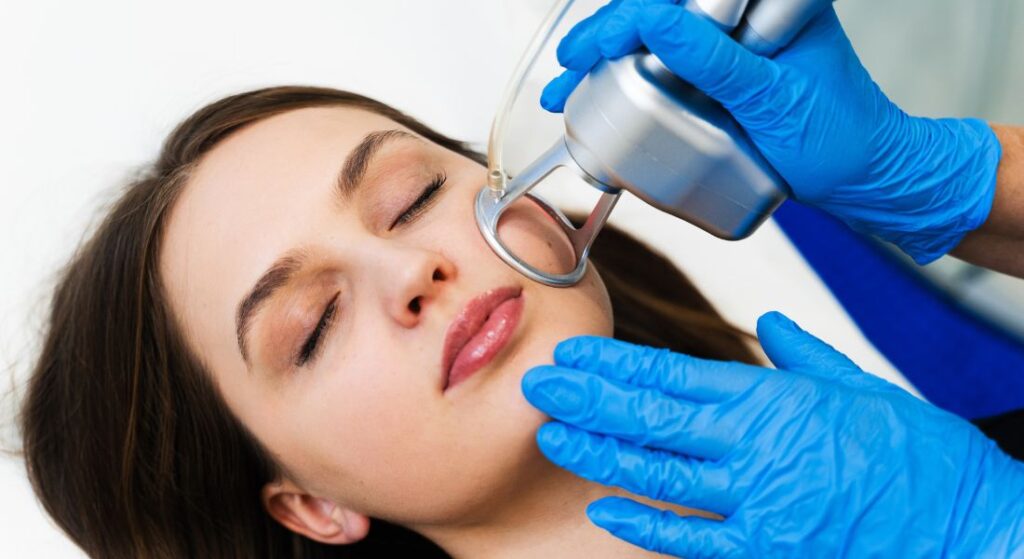
Your alexandrite laser can work differently depending on its pulse duration and device. Your treatment may be used for hair reduction, pigmentation or tattoos.
You should ask which alexandrite device your practitioner uses. Your treatment mode and settings should match your specific concern.
Fraxel vs Alexandrite for Sun Spots and Freckles
Your Fraxel 1927 nm treatment may be used for broader areas of photopigmentation and sun damage. Your alexandrite laser can target melanin more selectively, making it useful for selected individual pigmented lesions.
Your dermatologist should check that your pigmentation is benign before treatment. If you have a new or changing spot, you should have it assessed rather than treating it with a cosmetic laser.
Clinical Tip
A cosmetic laser should not be used simply because a lesion looks brown. New, changing or clinically uncertain pigmented lesions should be assessed before laser treatment, as destroying pigment without establishing the diagnosis can be inappropriate.
What About Melasma and Diffuse Pigmentation?
Melasma is a chronic pigmentation condition that needs more careful assessment than ordinary sun spots. Fraxel or alexandrite treatment may have a role in selected cases, but neither is automatically the right choice for you.
Your dermatologist may first recommend sun protection and topical treatments before considering laser treatment. Your skin type, pigmentation pattern and risk of pigmentation changes should guide whether laser treatment is suitable for you.
Research Insight
Laser treatment for melasma should not be approached in the same way as isolated sun spots. A 2026 meta-analysis of five randomised trials involving 139 patients found that triple-combination topical therapy produced greater improvement than 755 nm picosecond alexandrite laser, while post-inflammatory hyperpigmentation was more common with the laser than with topical treatment.
However, the authors rated the overall certainty of the evidence as low because the included trials were small and varied in their methods. This supports careful patient selection rather than assuming laser treatment is the preferred first option for melasma.
Which Treatment Is Better for Acne Scars and Uneven Texture?
Your Fraxel 1550 nm laser can target deeper skin layers to improve acne scars and uneven texture. Your alexandrite laser is mainly used for pigment and hair, although some 755 nm picosecond devices have specific acne scar applications.
Your acne scar type also matters because rolling, boxcar and ice-pick scars may need different treatments. Your dermatologist can assess your scars and decide whether resurfacing or another treatment is more suitable for you.
Evidence Note
Fraxel 1550 nm is specifically used for fractional resurfacing and acne scars. Some 755 nm picosecond alexandrite systems with specialised optical arrays have also been studied for atrophic acne scars, but this does not mean that every alexandrite laser can treat scarring.
Which Laser Is Used for Hair Removal?
Your alexandrite laser uses 755 nm energy that is strongly absorbed by melanin, making it useful for targeting dark hair follicles. Your skin tone and hair colour matter because the laser can also affect melanin in your skin.
Your Fraxel laser is not designed for hair removal. If unwanted hair is your main concern, your practitioner can assess whether alexandrite or another hair-removal laser is suitable for you.
Can Fraxel or Alexandrite Lasers Remove Tattoos?
Your Fraxel laser is designed for skin resurfacing rather than tattoo removal. Your alexandrite laser, particularly Q-switched or picosecond 755 nm systems, can target certain tattoo pigments.
Your tattoo colour and pigment depth affect which laser you need. Your practitioner may recommend different wavelengths and several sessions depending on the colours in your tattoo.
What Does Fraxel Treatment Feel Like?
Your Fraxel treatment may feel warm, prickly or hot as the handpiece passes over your skin. Your practitioner may use topical anaesthetic and cooling to make your treatment more comfortable.
Your skin may feel like moderate sunburn afterwards, with redness, dryness or swelling. Your treated pigmentation may look darker temporarily before your skin sheds it during recovery.
What Does Alexandrite Laser Treatment Feel Like?
Your experience with an alexandrite laser depends on the device, settings and what is being treated. Hair removal, pigmentation and tattoo treatments can all feel slightly different.
- Snapping sensation: You may feel brief snapping or stinging as each laser pulse reaches the treatment area.
- Heat or warmth: Some people notice short bursts of warmth during treatment, particularly when higher-energy settings are used.
- Cooling during treatment: Your practitioner may use contact cooling or another cooling method to protect your skin and improve comfort.
- After-treatment sensitivity: Mild redness, warmth or tenderness can occur afterwards, although the amount varies with the treatment type and intensity.
Your practitioner should explain what you are likely to feel based on the specific alexandrite device and treatment settings being used.
How Does the Downtime Compare?
Your Fraxel treatment can cause redness, swelling, dryness and roughness across the treated area. Your skin may also darken and flake temporarily as it heals, so you should avoid picking or harsh exfoliation.
Your alexandrite downtime depends on what you are treating. Your hair-removal session may cause temporary redness, while pigment or tattoo treatment can cause localised crusting, swelling or flaking.
How Many Treatment Sessions Might You Need?
You may need several Fraxel sessions because each treatment affects only a fraction of your skin. Your treatment plan will depend on the concern being treated, the wavelength and settings used, and how your skin responds.
Your alexandrite treatment plan varies much more according to its purpose. Hair reduction, pigmentation and tattoo treatments may all require more than one session, so your practitioner should explain the likely number and spacing of treatments for the specific device being used.
How Long Can the Results Last?
Your results depend on the concern being treated, the laser used and how your skin changes over time. Fraxel may provide gradual improvements in texture, scars or pigmentation, while alexandrite results vary depending on whether you are treating hair, pigmentation or tattoos.
Your results may also be affected by sun exposure, ageing and new pigmentation. You should follow your practitioner’s aftercare advice and use appropriate sun protection to help maintain your results and reduce the risk of further pigment changes.
How Does Skin Tone Affect Treatment Choice?
Your skin tone matters when you have alexandrite treatment because the 755 nm wavelength is strongly absorbed by melanin. For hair reduction, your practitioner may adjust the treatment settings or consider a longer wavelength such as 1064 nm Nd:YAG, depending on your skin type.
Your Fraxel treatment also needs careful planning if your skin is prone to pigmentation changes. Your skin history, recent sun exposure, tanning and previous reactions should all be considered before treatment.
What Are the Possible Risks and Side Effects?
Your Fraxel treatment may cause temporary redness, swelling, heat, dryness or peeling. Your alexandrite treatment can also cause redness and swelling, while unsuitable settings may lead to burns or changes in pigmentation.
Your risk depends on your skin, the laser and how it is used. Your dermatologist should assess any new or changing pigmented lesion before you have cosmetic laser treatment.
UK Guidance Note
Before treatment, ask which laser device and wavelength will be used for your specific concern, what recovery to expect and which complications are relevant to you. Your practitioner should assess your skin type, pigmentation history and treatment goal before selecting the treatment settings.
How Does a Dermatologist Decide Which Laser Is Appropriate?

Your dermatologist will start by identifying the condition or concern being treated rather than simply choosing a laser. Whether you have sun spots, melasma, acne scars or unwanted hair can change which treatment is suitable for you.
Your skin type, previous pigmentation, medications and recent sun exposure also matter. Your dermatologist can then choose the laser, settings and treatment approach that best match your skin and your goals.
Myth vs Fact
| Myth | Fact |
| Alexandrite is one standard treatment. | 755 nm alexandrite lasers can use long-pulsed, Q-switched or picosecond technology with different applications. |
| Fraxel and alexandrite both mainly treat pigmentation. | Fraxel is a fractional resurfacing platform, while alexandrite primarily interacts with melanin. |
| Every alexandrite laser can treat acne scars. | Scar treatment has mainly been studied with specific picosecond systems and specialised optics. |
| Laser is automatically the best treatment for melasma. | Melasma often needs conservative management, and laser can sometimes worsen pigmentation. |
| Fraxel can remove unwanted hair. | Fraxel is not designed for hair reduction. |
Key Takeaways
- Fraxel uses fractional 1550 nm and 1927 nm wavelengths for resurfacing, pigmentation, scars and texture concerns.
- Alexandrite lasers use 755 nm, but their applications vary according to pulse duration and device design.
- Long-pulsed alexandrite is commonly used for hair reduction and selected pigment concerns.
- Some picosecond alexandrite systems can treat pigmentation, tattoos and selected acne scars.
- Melasma needs careful diagnosis because laser treatment can sometimes worsen pigmentation.
- The right laser depends on your diagnosis, skin characteristics, treatment goal and the exact device being used.
Frequently Asked Questions
1. What is the main difference between Fraxel and alexandrite lasers?
Fraxel is a fractional resurfacing laser that uses 1550 nm and 1927 nm wavelengths. Alexandrite lasers use around 755 nm and primarily target melanin, making them useful for hair and selected pigmentation treatments.
2. Is Fraxel or alexandrite better for pigmentation?
It depends on the type and distribution of your pigmentation. Fraxel may suit widespread pigmentation with texture or sun damage, while alexandrite can selectively target certain benign pigmented lesions.
3. Can alexandrite lasers treat sun spots and freckles?
Yes, certain alexandrite systems can be used for selected benign pigmented lesions, including some sun spots and freckles. The exact device and treatment settings matter.
4. Can Fraxel treat acne scars and uneven skin texture?
Yes, Fraxel 1550 nm can be used for selected acne scars and certain textural concerns. Its fractional approach creates microscopic treatment zones while leaving surrounding areas relatively spared.
5. Can alexandrite lasers be used for hair removal?
Yes, long-pulsed 755 nm alexandrite lasers are widely used for hair reduction. They are generally better suited to darker hair and lighter skin.
6. Can Fraxel or alexandrite treat melasma?
Certain systems may have a role in treating melasma, but laser treatment requires careful assessment. Your dermatologist may recommend sun protection and topical treatments first, as lasers can sometimes trigger or worsen pigmentation.
7. What is the difference between long-pulsed, Q-switched and picosecond alexandrite lasers?
They all use approximately 755 nm, but their pulse durations and applications differ. Long-pulsed systems are commonly used for hair reduction, while Q-switched and picosecond systems can be used for selected pigmentation and tattoo treatments.
8. Which treatment has more downtime, Fraxel or alexandrite?
Fraxel usually causes a broader recovery, with redness, dryness, roughness and possible peeling across the treated area. Alexandrite downtime varies greatly depending on whether you are treating hair, pigmentation or a tattoo.
9. Are Fraxel and alexandrite lasers suitable for all skin tones?
Both require careful settings, particularly if you are prone to post-inflammatory hyperpigmentation. Alexandrite’s strong interaction with melanin means 755 nm treatment may require extra caution in darker skin tones.
10. How do you know which laser is right for you?
Your dermatologist should start by identifying the condition being treated rather than simply choosing a laser. Your skin type, pigmentation pattern, treatment goal, previous reactions and the exact device being used all help determine the appropriate option.
Final Thoughts: Fraxel vs Alexandrite Laser
Fraxel and alexandrite lasers work in different ways and are suited to different skin concerns. Fraxel can be useful for pigmentation, sun damage, acne scars and uneven texture, while alexandrite lasers are commonly used for unwanted hair and selected pigment treatments.
If you’re considering Fraxel laser treatment in London, you can get in touch with our team at London Dermatology Centre.
References:
- Narurkar, V.A., Alster, T.S., Bernstein, E.F., Lin, T.J. and Loncaric, A. (2018) ‘Safety and efficacy of a 1550nm/1927nm dual wavelength laser for the treatment of photodamaged skin’, Journal of Drugs in Dermatology, 17(1), pp. 41–46. Available at: https://pubmed.ncbi.nlm.nih.gov/29320586/
- Chen, C. and Ke, Y. (2023) ‘Applications of Long-Pulse Alexandrite Laser in Cosmetic Dermatology: A Review’, Clinical, Cosmetic and Investigational Dermatology, 16, pp. 3349–3357. Available at: https://pmc.ncbi.nlm.nih.gov/articles/PMC10661922/
- Haimovic, A., Brauer, J.A., Bae, Y.-S.C. and Geronemus, R.G. (2016) ‘Safety of a picosecond laser with diffractive lens array (DLA) in the treatment of Fitzpatrick skin types IV to VI: A retrospective review’, Journal of the American Academy of Dermatology, 74(5), pp. 931–936. Available at: https://www.sciencedirect.com/science/article/pii/S0190962215025311
- Haedersdal, M., Beerwerth, F. and Nash, J.F. (2011) ‘Laser and intense pulsed light hair removal technologies: from professional to home use’, British Journal of Dermatology, 165(Suppl. 3), pp. 31–36. Available at: https://academic.oup.com/bjd/article-abstract/165/s3/31/6642690
- Garg, S., Vashisht, K.R., Garg, D., Oberoi, B. and Sharma, G. (2024) ‘Advancements in Laser Therapies for Dermal Hyperpigmentation in Skin of Color: A Comprehensive Literature Review and Experience of Sequential Laser Treatments in a Cohort of 122 Indian Patients’, Journal of Clinical Medicine, 13(7), article 2116. Available at: https://www.mdpi.com/2077-0383/13/7/2116