


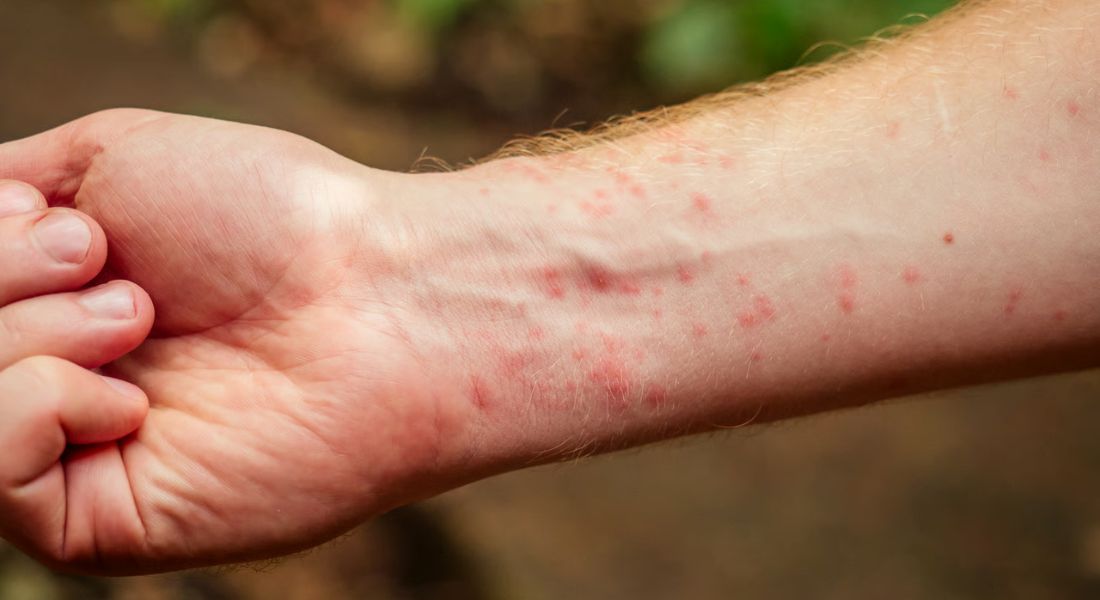
If you wake up with itchy bumps, you may wonder whether scabies or bed bugs are responsible. Scabies mites live in the skin, while bed bugs hide around beds and furniture and may bite while you sleep.
You need to identify the cause before choosing treatment. Check when your itching started, where the rash appears and whether close contacts are also affected. You can also look for bed bugs around the sleeping area or burrows on your skin.
What Is the Difference Between Scabies and Bed Bug Bites?
Scabies mites burrow into the outer layer of your skin, where they lay eggs and trigger an itchy rash. Bed bugs do not live on your body; they hide in mattresses, bed frames or furniture and come out to feed.
You can catch scabies through prolonged close skin-to-skin contact, while you may bring bed bugs home through infested luggage, furniture or accommodation. If you suspect bed bugs, check your bed and nearby furniture for signs of an infestation.
Why Can Both Conditions Itch at Night?
If you have scabies, the itching may become particularly intense at night, although symptoms can continue during the day. Bed bugs usually bite while you sleep, but your skin reaction may not become noticeable until later.
You should consider when the itching appears and whether new marks follow sleep in a particular room. If your symptoms continue away from that environment, you can ask a clinician whether scabies or another skin condition may be responsible.
What Do Scabies Lesions Usually Look Like?
If you have scabies, you may develop itchy bumps, scratch marks, scaling or tiny burrows in the skin. These may appear between your fingers, around your wrists or on areas such as the waist and groin.
You may also develop widespread eczema-like inflammation that makes scabies harder to recognise. If your rash looks different from typical pictures, you should not exclude scabies because age, scratching and immune status can alter its appearance.
What Do Bed Bug Bites Usually Look Like?
If bed bugs bite you, raised itchy bumps may appear pink, red, purple or brown depending on skin tone. Your reaction may include swelling or blisters, and you may notice several bites grouped together or arranged in a line.
You should not rely on the bite pattern or a central mark alone to identify bed bugs, as other insect bites can look similar. If you have darker skin, you may notice swelling, changes in skin texture or darker marks more easily than redness, especially after scratching.
UK Guidance Note
UKHSA describes scabies as an infestation caused by Sarcoptes scabiei mites and spread mainly through close, prolonged skin-to-skin contact. Bed bugs, by contrast, live in the environment rather than on the body. NHS advice recommends looking for evidence such as insects, dark spotting or blood marks around the bed because skin reactions alone cannot reliably confirm bed bugs.
Where Does Scabies Usually Appear?
If you have scabies, itchy bumps or burrows may appear between the fingers, around the wrists, underarms, waist, groin or buttocks. You may also notice genital nodules, which can provide your clinician with another diagnostic clue.
If your baby has scabies, you may notice lesions on their scalp, face, palms or soles, rather than the typical adult pattern. You should get your baby’s rash assessed by a clinician, especially if it is widespread or unusual, instead of relying on pictures to identify the cause.
Where Do Bed Bug Bites Usually Appear?
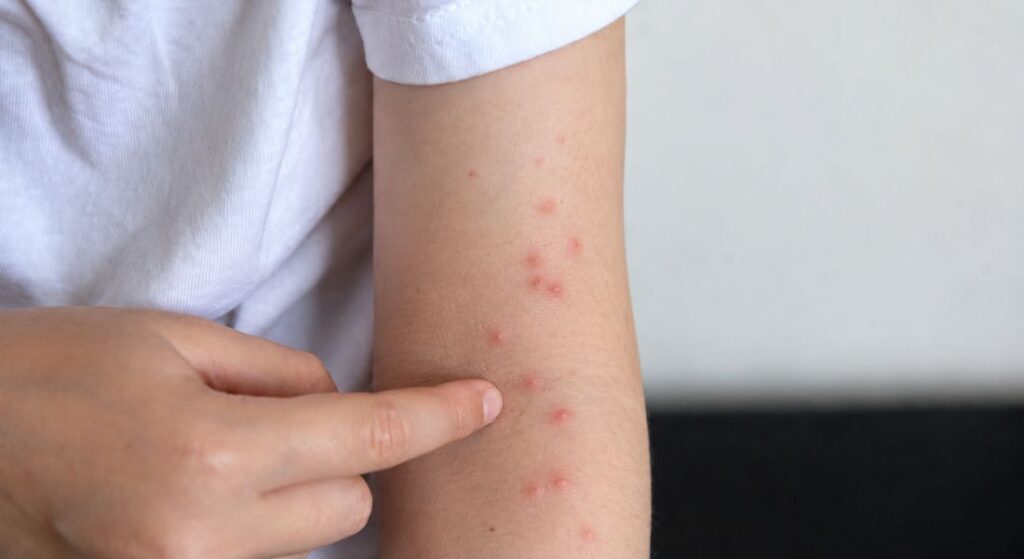
You may notice bed bug bites on exposed areas such as your face, neck, arms or legs after sleeping. Scabies more often causes lesions in sites such as your finger webs, wrists, waist, armpits or groin.
You should consider where the rash appears and whether new marks develop after sleeping in a particular place. If your symptoms continue elsewhere, you should avoid assuming that bed bugs are definitely responsible.
Does Everyone in the Household Need to Be Itchy?
If you have scabies, someone close to you may also develop itching, but symptoms can take several weeks to appear. You should not rule out scabies just because your family members are not itchy yet, as they may still be in the early stages of an infestation.
If several people develop bites after sharing a room, you may have encountered bed bugs. Because not everyone develops a visible reaction, you should also inspect your surroundings rather than relying only on other people’s symptoms.
Can Bed Bugs Be Found Around Your Bed?
If you suspect bed bugs, check your mattress seams, bed frame and nearby furniture for blood spots, small brown marks, shed skins, eggs or insects. You may not find them straight away because bed bugs hide in tiny gaps during the day, but adult bugs can be visible to the naked eye.
You should inspect the sleeping area as well as your skin when bed bugs are suspected. A dermatologist can assess your rash, while a pest control professional can help you confirm and manage an environmental infestation.
Evidence Note
Night-time itching is a recognised feature of scabies, but it is not diagnostic on its own. Greater weight should be given to the overall pattern: burrows or typical scabies lesions, close-contact exposure and other household members developing symptoms support scabies, while repeated new marks after sleeping plus environmental evidence around the bed support bed bugs.
Can You Have Bed Bugs Without Seeing Any Bites?
If bed bugs are present, you may develop itchy marks or have no visible skin reaction at all. Your bites can appear in different patterns, so you cannot estimate the extent of an infestation from the rash alone.
If you keep waking with new itchy marks, check your mattress seams, bed frame and nearby furniture for insects, blood spots or brown marks. If you find no evidence of bed bugs but have persistent itching or lesions in typical scabies areas, you should seek medical advice.
Can Scabies Be Mistaken for Bed Bug Bites?
You may find it difficult to distinguish scabies from bed bug bites because both conditions can cause intensely itchy bumps and discomfort at night. Scratching can also change how your rash looks, making it harder to recognise the underlying cause without considering other clues.
- Similar-Looking Skin Bumps: You may develop small, itchy bumps with either condition, so the appearance of your rash alone may not reveal what is causing it.
- Night-Time Itching: You may notice intense itching with scabies or become aware of bed bug bites after sleeping, making both conditions seem similar.
- Different Affected Areas: You may find scabies lesions between your fingers or around your wrists and waist, while bed bug bites often appear on exposed skin.
- Presence of Scabies Burrows: You may notice tiny, wavy lines in your skin with scabies, although scratching and inflammation can make these burrows difficult to identify.
- Evidence Around Your Bed: You may find insects, shed skins or small blood spots near your mattress or bed frame if bed bugs are responsible for your symptoms.
You should consider where the rash appears, whether symptoms follow a particular sleeping environment and whether close contacts are itching. If your cause remains uncertain, you can ask a dermatologist to examine your skin and consider other possible conditions.
How Does the Timing of Symptoms Differ?
If you develop scabies for the first time, symptoms may take three to six weeks to appear. If you have previously had scabies, your immune response may produce symptoms much sooner after reinfestation.
Bed bug marks may appear soon after a bite or several days later. You should consider whether your symptoms repeatedly follow sleep in one location, while your clinician can use the timeline together with the skin examination.
How Are Scabies and Bed Bug Bites Diagnosed?

Your clinician will usually diagnose scabies by examining your skin, checking for burrows and typical lesions, and asking whether anyone close to you has similar symptoms. They may examine a skin scraping under a microscope, but a negative result does not always rule out scabies.
You cannot reliably diagnose bed bugs from your skin reaction alone. You should examine your sleeping environment for evidence and consider professional pest control if an infestation is suspected.
Scabies vs Bed Bug Bites: Key Differences
| Feature | Scabies | Bed bug bites |
| Cause | Sarcoptes scabiei mites in the skin | Bed bugs feeding from the environment |
| Typical itch | Often severe, especially at night | Itchy reaction after bites; severity varies |
| Typical areas | Finger webs, wrists, waist, groin, buttocks | Exposed skin such as face, neck, arms and legs |
| Burrows | May be present | Not caused by bed bugs |
| Close contacts | Household/close contacts may develop scabies | People sharing an infested room may be bitten |
| Environmental evidence | Usually not needed to diagnose | Bugs, faecal spots, blood marks or shed skins can support infestation |
| Main management | Anti-scabies treatment + contact management | Bite relief + eradication of bed bugs from the property |
Do Bed Bugs Spread From Person to Person Like Scabies?
Scabies can spread to you through prolonged close skin-to-skin contact with an affected person. Bed bugs do not spread between people in the same way; you may bring them home in your luggage, clothing or second-hand furniture.
You should remember that neither condition means you have poor hygiene. Anyone can develop scabies or encounter bed bugs, so you should focus on identifying the cause and getting the right treatment or help to remove the infestation.
Research Insight
The appearance of bed bug bites is not specific enough to diagnose an infestation. Some people develop intensely itchy lumps or blisters, while others show little or no visible reaction. Environmental evidence such as live bugs, faecal spots, shed skins or blood marks around the bed is therefore more useful than a particular ‘line’ or ‘cluster’ pattern alone. Because individual skin reactions vary considerably, environmental inspection and clinical history are especially useful when the appearance of the rash does not clearly identify the cause.
Why Does the Treatment Differ?
If you have scabies, treatment must eliminate the mites from your skin, and relevant close contacts may also need treatment. You should know that itching can continue after successful therapy and does not automatically mean scabies remains active.
If you have bed bug bites, you can use simple measures such as a cool compress while the skin settles. However, your home infestation also needs appropriate control because treating the bites will not remove bed bugs from the environment.
Clinical Tip
When bed bugs are suspected, examine the environment as well as the skin. Check mattress seams, bed frames, headboards and nearby furniture for live insects, dark faecal spots, blood smears, eggs or shed skins. A rash alone cannot reliably confirm bed bugs.
When Should You Seek Medical Assessment?
You should seek medical advice when the cause of your rash is uncertain, particularly if itching is severe or disrupts sleep. If new lesions or burrows appear after scabies treatment, you should also arrange reassessment.
You should seek medical attention if bites become increasingly painful, swollen or show signs of infection. If you develop severe breathing difficulty, swelling of the mouth or throat, collapse or loss of consciousness, call 999.
What Can You Do While You Work Out the Cause?

While you wait for assessment, avoid scratching because broken skin can become infected. You can keep your nails short, use a cool damp cloth and apply a simple moisturiser if your skin feels dry.
If you have already treated scabies, itching may continue for several weeks, so avoid automatically repeating treatment. If you suspect bed bugs, inspect your sleeping area and seek medical advice if your symptoms persist or worsen.
Myth vs Fact
| Myth | Fact |
| Every line of three bites means bed bugs. | Bite patterns are variable and cannot diagnose bed bugs on their own. |
| You can rule out scabies if nobody else is itching. | Scabies symptoms may take several weeks to appear in newly infested contacts. |
| Bed bugs live on your skin like scabies mites. | Bed bugs hide in the environment and come out to feed; they do not live in the skin. |
| No visible burrows means you cannot have scabies. | Burrows can be difficult to see or obscured by scratching and inflammation. |
| Bed bugs only occur in dirty homes. | Bed bugs can occur in clean or dirty environments and are often transported in luggage or furniture. |
| Treating itchy bed bug bites removes the infestation. | Skin treatment may relieve symptoms, but the environmental infestation still needs to be controlled. |
Key Takeaways
- Scabies mites live and reproduce in the skin, while bed bugs live in the surrounding environment.
- Severe night-time itching, burrows and lesions in typical body sites increase suspicion of scabies.
- Bed bug bites more often affect exposed skin, but bite appearance or pattern alone cannot confirm the cause.
- Scabies symptoms may take several weeks to appear after a first infestation, so close contacts can be symptom free initially.
- Environmental signs such as live bugs, dark spotting, shed skins or blood marks support a bed bug infestation.
- Scabies requires medical treatment and contact management, while bed bug control requires treatment of the environment.
Frequently Asked Questions
1. Can you bring bed bugs home in your luggage?
Yes. You can accidentally carry bed bugs or their eggs in luggage and belongings after staying in an infested place. You should inspect luggage carefully if you suspect exposure.
2. Can your pets give you human scabies?
Pets do not normally transmit human scabies. If your pet has an itchy skin condition while you also have a rash, you should arrange appropriate veterinary and medical advice separately.
3. Does having bed bugs mean your home is dirty?
No. Bed bugs can enter clean or cluttered homes because they travel in belongings and furniture. You should focus on identifying and controlling the infestation rather than blaming your household hygiene.
4. Can scratching bed bug bites or scabies damage your skin?
Repeated scratching can break your skin and increase the chance of infection. You should seek medical advice if your skin becomes painful, increasingly swollen, warm or starts producing pus.
5. Should you throw away your mattress if you find bed bugs?
You should not automatically discard a mattress before getting appropriate pest-control advice. Your pest professional can advise whether treatment is possible and how you should manage affected furniture safely.
6. Can bed bug bites leave darker marks after they heal?
Your skin may remain darker or discoloured for a while after inflammation settles, particularly after scratching. You should seek assessment if your marks are changing unexpectedly or the rash continues to worsen.
7. Can a child have a different scabies rash from an adult?
Yes. Your child’s scabies may involve areas such as the scalp, face, palms or soles, especially at a young age. You should seek medical advice when your baby or young child may have scabies.
8. Should you keep treating scabies because itching has not stopped immediately?
No. Your itching can continue even after the mites have been successfully treated. You should follow the recommended treatment course and seek reassessment rather than repeatedly applying scabies medicines without advice.
9. Can you diagnose bed bugs from photographs of your bites?
No. Your bite appearance is not specific enough to confirm bed bugs. You should combine skin symptoms with environmental evidence and seek professional assessment if your diagnosis remains uncertain.
10. Who should you contact if you think your home has bed bugs?
You can contact a professional pest control service or your local council for advice about an infestation. You should also seek medical help if your skin reaction is severe, infected or difficult to identify.
Final Thoughts: Understanding Scabies and Bed Bug Bites
Scabies and bed bug bites can cause intense itching and similar-looking rashes, but their causes and treatments are different. By checking your symptoms, noticing where the rash appears and looking for signs of bed bugs, you can better understand what may be causing your discomfort and seek the right help.
If your itching persists or you are unsure what is causing your rash, a dermatologist can help you identify the problem. Explore our guide to scabies treatment in London to learn more about scabies symptoms, treatment options and when to seek professional advice.
References:
- Gupta, S., Thornley, S., Grant, C., Morris, A. and Sundborn, G. (2026) ‘Scabies diagnosis: a narrative review of diagnostic methods, clinical misdiagnosis, and emerging directions’, Journal of Clinical Medicine, 15(19), article 7346. Available at: https://www.mdpi.com/2077-0383/15/19/7346
- Leung, A.K.C., Lam, J.M., Barankin, B., Leong, K.F. and Hon, K.L. (2024) ‘Bed bug infestation: an updated review’, Current Pediatric Reviews, 20(2), pp. 137–149. Available at: https://pubmed.ncbi.nlm.nih.gov/37038684/
- Uzun, S. et al. (2024) ‘Clinical practice guidelines for the diagnosis and treatment of scabies’, International Journal of Dermatology, 63(12), pp. 1642–1656. Available at: https://pmc.ncbi.nlm.nih.gov/articles/PMC11589009/
- Fésűs, L., Jobbágy, A., Kiss, N., Horváth, E., Avci, P., Lukács, A., Mayer, K., Bergler-Czop, B., Wikonkál, N. and Bánvölgyi, A. (2021) ‘Dermatologic aspects of bed bug epidemic: an atlas of differential diagnosis’, Advances in Dermatology and Allergology, 38(2), pp. 184–192. Available at: https://pmc.ncbi.nlm.nih.gov/articles/PMC9880782/
- Engelman, D. et al. (2020) ‘The 2020 International Alliance for the Control of Scabies Consensus Criteria for the Diagnosis of Scabies’, British Journal of Dermatology, 183(5), pp. 808–820. Available at: https://academic.oup.com/bjd/article/183/5/808/6600227