


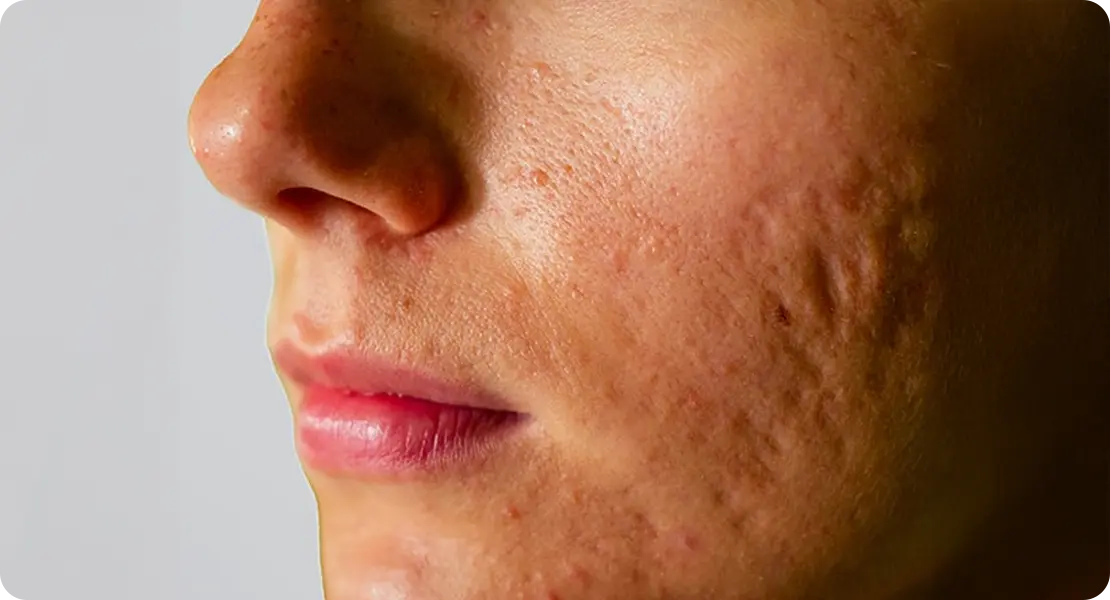
Many people believe that once acne scars have been on their skin for years or even decades there’s nothing left that can be done. I hear it all the time: “These scars are too old to fix,” or “I should’ve treated them when I was younger.” But the reality is very different. Even long-standing scars can improve significantly with the right approach.
If you’ve lived with acne scars for a long time, you might have tried fading creams, exfoliators, home devices or moisturisers, only to feel disappointed. You may have assumed the scars are “set in stone.” Maybe they’ve become part of how you see yourself, even if you don’t like them. But modern dermatology has changed dramatically, and treatments today can stimulate your skin in ways that simply weren’t possible 10 or 20 years ago.
Old acne scars are not hopeless they just behave differently, and they require a tailored approach. In this guide, I’ll explain why older scars can still be treated successfully, what makes them more challenging, which treatments work best and what results you can realistically expect. My aim is to help you feel informed, confident and aware that improvement is always possible, no matter how old your scars are.
Why Older Acne Scars Can Still Improve
One important thing to understand is that the skin never stops responding to controlled injury, even as you age. This is the foundation of how scar treatments work. Whether your scars are five years old or thirty years old, their structure can be remodelled.
Here’s why:
1. Collagen Remodelling Happens at Any Age
Your skin doesn’t lose its ability to produce collagen it just slows down.
Collagen-stimulating treatments such as:
- laser
- microneedling
- radiofrequency
- subcision
…can still trigger new collagen even in mature skin.
2. Old Scars Often Have Untreated Fibrous Tethering
Indented scars tend to have bands of tight scar tissue underneath them. These bands remain there until they’re broken with the right techniques. Age does not stop these bands from being released.
3. Skin Texture Can Always Be Smoothed
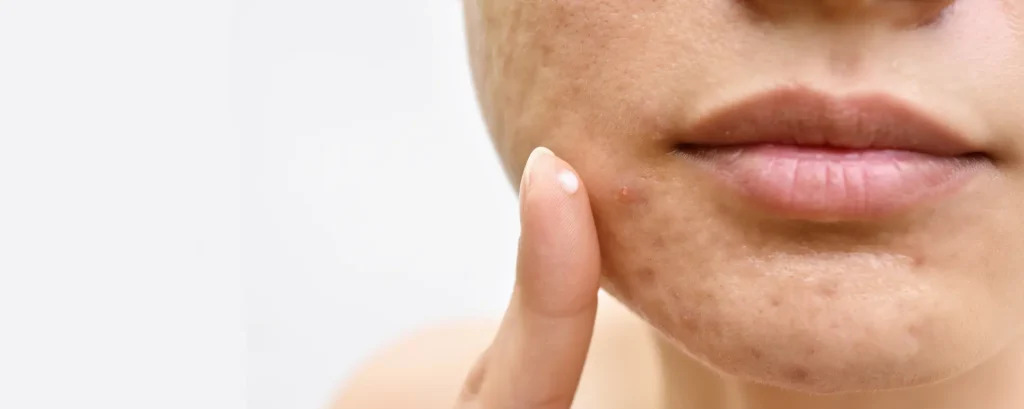
Even if scars are decades old, resurfacing treatments can:
- soften sharp edges
- improve roughness
- smooth irregularities
- blend scars into the surrounding skin
Age isn’t a barrier to smoother texture.
4. Pigmentation Can Fade With the Right Treatments
Old marks often contain stubborn pigment that does not fade on its own. But lasers, peels and topicals can help lift years of pigmentation.
5. Modern Dermatology Is Far More Advanced Than It Was Years Ago
Treatments like:
- RF microneedling
- fractional CO₂
- erbium lasers
- plasma devices
- subcision with fillers
…were not widely available a decade ago. Many people who struggled with scars for years now see dramatic results with these newer treatments.
Why Old Acne Scars Behave Differently
Even though older scars can improve, they do react differently to treatment. Understanding this helps set realistic expectations.
1. Older Scars Tend to Be Stiffer and Less Elastic
Over time, collagen in the scar becomes:
- tougher
- thicker
- more fibrous
This means:
- more sessions
- deeper treatments
- combination approaches
…are often needed.
2. Pigmentation May Be More Deeply Settled

Old dark marks can sit deeper within the skin and require:
- laser resurfacing
- consistent pigment inhibitors
- multiple peels
…to fade properly.
3. Scars Often Combine Multiple Types
Older scars usually develop into a mix of:
- rolling scars
- boxcar scars
- tethered scars
- sharp ice-pick scars
Treating a combination requires different methods.
4. Skin Quality Declines Over Time
With age, your skin naturally loses:
- collagen
- elasticity
- hydration
- firmness
This means scar improvement may be slower, but it is still absolutely achievable.
Types of Old Acne Scars and How They Respond to Treatment
Old scars usually fall into common categories.
Here’s how they behave and what works best for each type.
1. Atrophic (Indented) Scars
Rolling scars
Wide depressions with sloping edges.
Boxcar scars
Sharp-edged indentations.
Ice-pick scars
Deep, narrow holes.
How they respond:
Atrophic scars respond well to:
- subcision
- laser resurfacing
- RF microneedling
- cross TCA
- fillers
Old scars soften with repeated collagen stimulation.
2. Hypertrophic Scars (Raised)
These scars become thicker and firmer over time.
How they respond:
- steroid injections
- silicone therapy
- laser
- RF microneedling
Older raised scars may need more sessions but still flatten well.
3. Keloid Scars
Keloids can grow larger over time and become more stubborn.
How they respond:
- steroid injections
- 5-FU injections
- laser combination
- silicone sheets
- cryotherapy (selective cases)
Long-standing keloids require a combination approach but can still be treated.
4. Dark Marks (Post-Inflammatory Hyperpigmentation)
These often linger for many years on certain skin types.
How they respond:
- chemical peels
- pigment lasers
- retinoids
- pigment-inhibiting skincare
Old pigmentation is very treatable with the right routine.
5. Red Marks (Post-Inflammatory Erythema)
Redness may persist long after acne clears.
How they respond:
- vascular lasers
- gentle resurfacing
- anti-inflammatory skincare
Even redness can improve years later.
Best Dermatologist-Recommended Treatments for Old Acne Scars
Modern dermatology offers a wide range of treatments that can stimulate collagen, remodel scar tissue and smooth your skin even if your scars have been there for decades.
Below is a detailed explanation of the most effective treatments for older scars.
1. Subcision (One of the Best Treatments for Old Scars)
Subcision is designed for long-standing, tethered scars that create indentations.
A tiny needle is used to break the fibrous scar tissue pulling the skin down.
Why it works so well for old scars:
- older scars have more tethering
- breaking these bands lifts the skin
- new collagen fills the space
- results look natural
Subcision is often used before other treatments.
2. Fractional CO₂ Laser
This laser removes columns of skin and stimulates deep collagen remodelling.
Benefits for old scars:
- softens hard edges
- lifts deep indentations
- smooths rough texture
- boosts collagen production
- improves skin tightness
Old scars respond very well to CO₂ when combined with subcision.
3. RF Microneedling
This combines microneedling with radiofrequency energy.
Benefits:
- tightens skin
- smooths texture
- boosts collagen
- works on all scar ages
- safer for darker skin types
RF microneedling is excellent for older rolling or boxcar scars.
4. Chemical Peels (Medium and Deep Peels)
Stronger peels can resurface old skin and fade pigmentation.
Benefits:
- improves texture
- brightens tone
- fades old marks
- encourages new skin growth
TCA CROSS is ideal for deep ice-pick scars.
5. Dermal Fillers (For Deep Scarring)
Fillers are used to fill deep indentations that won’t lift on their own.
Benefits:
- instant volume
- smoother skin
- works even on decades-old scars
Often used with subcision.
6. Vascular Lasers (For Redness)
These lasers treat red marks left from old inflammation.
Benefits:
- reduces redness
- improves skin tone
- blends scars
Old red marks fade beautifully with vascular lasers.
7. Silicone Therapy (For Raised Scars)
Silicone gel or sheets soften and flatten old raised scars.
Benefits:
- reduces thickness
- softens texture
- improves colour
Consistency is key.
8. Steroid or 5-FU Injections (For Keloids or Thick Scars)
Older keloids respond well to combination injections.
Benefits:
- flattens scar
- reduces itching
- reduces redness
Often combined with laser therapy.
9. Punch Techniques (For Very Deep Ice-Pick Scars)
Old ice-pick scars sometimes need surgical removal.
Benefits:
- removes thick scar tissue
- allows smoother healing
- ideal for very sharp scars
Can be followed by laser.
Why Combination Treatment Is Best for Old Scars
Old scars are rarely just one type they’re usually a mixture.
That’s why dermatologists almost always use combination treatments.
Examples of combinations include:
- subcision + CO₂ laser
- RF microneedling + peels
- CO₂ laser + filler
- vascular laser + resurfacing
- subcision + RF microneedling + peels
Combining treatments produces dramatically better results.
How Many Sessions Do You Need?
Because older scars are more stubborn, expect:
- 3–6 sessions for moderate scars
- 6–10 sessions for severe scars
- 1–3 treatments per modality
- sessions spaced 4–8 weeks apart
Results improve gradually as collagen rebuilds.
What Improvements Can You Expect?
This is one of the most important questions.
Old scars can improve significantly but no treatment can erase all scars completely.
You can expect:
- smoother skin
- softer scar edges
- reduced indentation
- more even tone
- less visible scarring
- improvement in confidence
Most people see 40–70% improvement, with some seeing even more depending on scar type.
Lifestyle and Skincare to Support Old Scar Treatments
To get the best results, support your skin with the right habits.
1. Retinoids
Retinoids encourage:
- collagen production
- cell turnover
- smoother texture
They make old scars more responsive to treatment.
2. Sunscreen
Sun exposure makes scars:
- darker
- rougher
- slower to heal
SPF 50 is essential.
3. Pigment Inhibitors
These reduce dark marks and prevent pigmentation after treatments.
4. Gentle Exfoliation
Helps maintain smoother skin.
5. Avoid Picking
Even old scars can worsen if you pick new breakouts.
FAQs:
1. Can old acne scars really improve, even after many years?
Yes, old acne scars can absolutely improve, even if they have been on your skin for decades. The idea that scars become “permanent” after a certain number of years is a common misconception. Scar tissue may mature and become firmer over time, but it never becomes biologically inactive. Your skin retains the ability to remodel collagen throughout life, which means modern treatments such as subcision, fractional CO₂ laser, RF microneedling and chemical peels can still stimulate fresh collagen and soften even very old scars. While improvement may require more sessions than newer scars, meaningful changes are still very achievable.
2. Are older scars harder to treat than newer scars?
Older scars do tend to be more resistant because the collagen within them has become thicker, stiffer and more fibrous over time. This makes the scar tissue less elastic and more deeply embedded into the skin. As a result, older scars usually require more intensive or combination-based treatment plans compared to newer scars. However, this increased difficulty doesn’t mean they won’t improve. It simply means the dermatologist may recommend deeper lasers, more extensive subcision or several sessions of RF microneedling to break through the stronger scar tissue.
3. Which treatment is best for very old indented scars?
Indented scars that have been present for years respond especially well to subcision because the tethering bands underneath the skin remain even in long-standing scars. Breaking these bands lifts the depression and allows new collagen to fill the gap. Once the indentation is released, treatments such as fractional CO₂ laser or RF microneedling can then refine the texture and smoothness. This combination is often recommended because subcision creates structural improvement, while resurfacing techniques enhance the surface texture and blend the scar more naturally into the surrounding skin.
4. Is it possible to treat old acne scars on darker skin tones safely?
Yes, older acne scars on darker skin tones can be treated very safely, but the treatment plan must be carefully selected by a dermatologist experienced with melanin-rich skin. Energy-based devices such as RF microneedling are considered very safe because they deliver heat below the surface without disturbing pigment. Fractional CO₂ lasers can also be used with the correct settings, though they typically require a more conservative approach. Pigmentation control before and after treatment is essential to avoid post-inflammatory hyperpigmentation, and dermatologists often prescribe pigment inhibitors or retinoids to prepare the skin beforehand.
5. Do very old ice-pick scars respond to treatment?
Ice-pick scars are the most challenging type of acne scars to treat because they are narrow, deep and often extend into the deeper dermis. When they have existed for many years, they can become even more sharply defined. Although they do improve, they usually require targeted procedures such as TCA CROSS or punch excision rather than resurfacing alone. Once the depth is addressed, additional treatments like fractional CO₂ laser can help refine the skin’s texture. Long-standing ice-pick scars usually improve in stages rather than in a single treatment.
6. How long does it take to see results when treating older scars?
Results appear gradually because collagen remodelling is a slow biological process. Most people begin noticing visible improvement within eight to twelve weeks after their first major treatment, although full results may take several months. Older scars often require multiple sessions spaced weeks apart, and the improvement accumulates over time. It’s important to understand that the skin continues to remodel itself long after the procedure is done, meaning you may continue to see refinement for several months as new collagen forms and old scar tissue becomes softer and smoother.
7. Are the results from treating older acne scars permanent?
The improvements gained from treating old acne scars are generally long-lasting and often permanent, provided that new acne does not form and cause additional scarring. When collagen is rebuilt or scar tissue is released, those changes remain. However, ageing does continue, and the natural loss of collagen over time may slightly reduce the appearance of results many years later. Maintaining good skincare habits, using retinoids and protecting your skin with sunscreen can help preserve the improvements for much longer.
8. Can fillers help improve old acne scars?
Fillers can be extremely effective for very old scars that have lost volume or have structural indentations that do not respond fully to subcision alone. They work by lifting the depressions immediately and supporting the skin from underneath. Hyaluronic acid fillers are the most commonly used because they provide natural-looking volume and also encourage collagen production over time. Fillers are often used alongside subcision for a more natural and durable improvement, especially when scars have existed for many years and have become deeply embedded.
9. Is combination treatment truly necessary for old acne scars?
Combination treatment is almost always the most effective approach for old acne scars because long-standing scars usually develop into a mix of scar types. One person might have rolling, boxcar and ice-pick scars in the same area, and no single treatment can address all of these variations at once. Combining procedures such as subcision, CO₂ laser, RF microneedling and chemical peels allows each type of scar to be targeted appropriately. This multi-layered strategy delivers results that are far superior to using only one type of treatment.
10. When should you see a dermatologist for old acne scars?
You should consider seeing a dermatologist if your scars affect your confidence, have become more noticeable with age or have not responded to home treatments like exfoliators, serums or over-the-counter products. A dermatologist can distinguish between different scar types, assess the level of tethering or pigment and create a customised treatment plan. This is especially important for older scars because they often require a more strategic and personalised approach. An experienced specialist can guide you on what results you can realistically expect and how many sessions will likely be required.
Final Thought: Your Next Step Toward Better Skin Health
Back and chest acne scarring can feel especially stubborn, often affecting more than just your skin it can influence confidence, comfort and how you feel in your everyday life. The encouraging news is that even long-standing, textured or raised scars can be improved with the right combination of modern dermatology treatments. Approaches such as subcision, laser resurfacing, microneedling and targeted pigmentation therapies can work together to smooth, soften and restore a more even appearance over time.
If you’re dealing with uneven texture, deep marks or persistent pigmentation, speaking with a specialist can help you understand which treatments are best suited to your skin type and scar pattern. A personalised plan usually delivers far better results than a one-size-fits-all approach. If you’re considering acne scar treatment in London and want to know if it’s the right option, you’re welcome to reach out to us at London Dermatology Centre to book a consultation.
References:
1. Lee, S.J., Kwon, H.H., Jung, J.Y. and Park, M.Y., 2020. Treatment of atrophic acne scars: A systematic review. Journal of Clinical Medicine, 9(6), p.1677. https://www.mdpi.com/2077-0383/9/6/1677
2. Alam, M., Omura, N.E., Kaminer, M.S., Dover, J.S. and Arndt, K.A., 2005. Subcision for acne scarring: technique and outcomes in 40 patients. Dermatologic Surgery, 31(3), pp.310–317.
https://pubmed.ncbi.nlm.nih.gov/15841637/
3. Manuskiatti, W. and Fitzpatrick, R.E., 2002. Treatment response of ice-pick acne scars following punch excision and resurfacing. Archives of Dermatology, 138(3), pp.337–342. https://pubmed.ncbi.nlm.nih.gov/11902983/
4. Issa, M.C.A. and Tostes, V., 2013. Microneedling: Advances and widening horizons. Journal of Cutaneous and Aesthetic Surgery, 6(4), pp.193–202. https://www.ncbi.nlm.nih.gov/pmc/articles/PMC4172044/
5. Jeong, J., Park, J. and Roh, M., 2015. Fractional laser treatment for acne scars: long-term outcomes. Annals of Dermatology, 27(1), pp.26–33. https://www.ncbi.nlm.nih.gov/pmc/articles/PMC4327985/