



Vitiligo often begins so quietly that many people don’t realise anything is changing until a visible white patch appears. The earliest signs are usually subtle, soft shifts in skin tone that can be mistaken for dryness, mild irritation, or normal pigment variation. Because the condition usually develops slowly, you might not immediately connect these faint changes to vitiligo. Yet recognising the early patterns can make a significant difference. Early diagnosis often leads to earlier treatment, and earlier treatment may help stabilise pigment loss.
If you’ve noticed lighter areas on your skin whether they look slightly chalky, pale, powdery or uneven you may be wondering whether they could be early signs of vitiligo. This guide will help you understand the earliest clues, where they commonly show up, what they look like in real life, and when you should reach out to a dermatologist. By learning what to look for, you can take action sooner and feel more confident about what’s happening to your skin.
Why Early Vitiligo Signs Are Often Missed
Most people only associate vitiligo with bright white patches, but the condition rarely starts that way. Before pigment disappears completely, melanocytes (pigment-producing cells) begin to weaken. During this period, the skin fades gradually, sometimes so slowly that you barely notice the difference day to day. This fading phase may last weeks or months before the contrast becomes obvious.
Another reason early signs go unnoticed is that pigment loss tends to start in areas exposed to friction or pressure places that already experience irritation. If a slightly pale patch appears on your knuckles, underarms or thighs, you might assume it’s due to rubbing from clothing rather than a pigment condition.
The truth is that early vitiligo is often subtle, patchy and easily overlooked. But once you know what to look for, the early signs become much easier to spot.
How Vitiligo Develops in the Skin
Vitiligo is an autoimmune condition where your immune system mistakenly targets melanocytes, the cells that give your skin its colour. When these cells become stressed or damaged, they reduce melanin production. At first, this may cause mild fading rather than complete depigmentation.
Over time, as more melanocytes are affected, the skin gradually becomes lighter until it eventually turns chalk-white. This process is not sudden. It begins with small and subtle alterations that may appear and disappear before eventually settling into a clearer pattern.
Early Cellular Changes
- Melanocyte fatigue – Before pigment disappears, melanocytes may produce less melanin, creating faint pale zones rather than bright white patches.
- Patchy pigment output – Instead of a single block of lighter skin, small scattered light areas may appear first.
- Reduced UV response – Early vitiligo patches often fail to tan, making the contrast more noticeable after sun exposure.
Understanding these changes helps you recognise vitiligo before large patches fully form.
Subtle Early Signs of Vitiligo to Watch For

Recognising early vitiligo starts with understanding what the first subtle signs look like. These early clues may appear singly or in combination, and they often shift gradually.
1. Mild Fading of Skin Tone
One of the earliest signs many people notice is a soft, pale patch that looks slightly lighter than the surrounding skin. Instead of a clean white patch, this fading looks like a gentle wash of lighter colour. Under shadows or dim lighting, you might not see it at all. However, natural daylight or photographs often make this early patch easier to spot.
You might only recognise it after a holiday or outdoor activity when the surrounding skin darkens but the faded patch stays the same colour.
2. Chalky or Powdery Appearance
Some early patches have a dull, matte appearance almost chalky or powdery compared to normally pigmented skin. Even though the texture feels the same, the area looks as if it has lost its natural richness. People often mistake this for dry skin, but moisturisers do not restore the pigment.
This chalky effect is caused by early melanocyte decline, long before the skin becomes fully depigmented.
3. Tiny Confetti-Like White Spots
One of the most important early warning signs dermatologists look for is “confetti depigmentation.” These are tiny, bright white dots scattered across the skin like confetti. They are extremely small often just 1–3 mm and may cluster together.
These dots indicate rapidly progressing vitiligo and should never be ignored. They often appear before a larger patch forms and are considered an active sign of melanocyte loss.
4. Subtle Lightening in Friction Areas
Vitiligo often begins in areas exposed to repeated friction such as the fingers, knuckles, wrists, underarms, groin, ankles, waistline, and inner thighs because friction can stress melanocytes and make them more vulnerable to immune attack. If you notice gradual, consistent lightening in these zones, especially with chalky or patchy fading, it may be an early sign.
5. Pale Halos Around Hair Follicles
Another subtle sign occurs when small pale rings form around hair follicles. Because melanocytes exist within follicles, early pigment loss sometimes starts here first. These halo-like dots may look faint at first, then gradually expand.
They are often easier to see on darker hair or thicker hair-growing areas such as the legs or beard.
6. Very Subtle Borders on Pale Patches
In early vitiligo, borders are often soft and blurred rather than sharply defined. You might see a gentle transition from your normal skin tone into a slightly paler shade. Over time, these borders tend to sharpen, giving patches a more classic appearance.
If you notice a pale spot that seems to change subtly over days or weeks, this evolving border may be an early indicator.
Where Early Vitiligo Commonly Appears
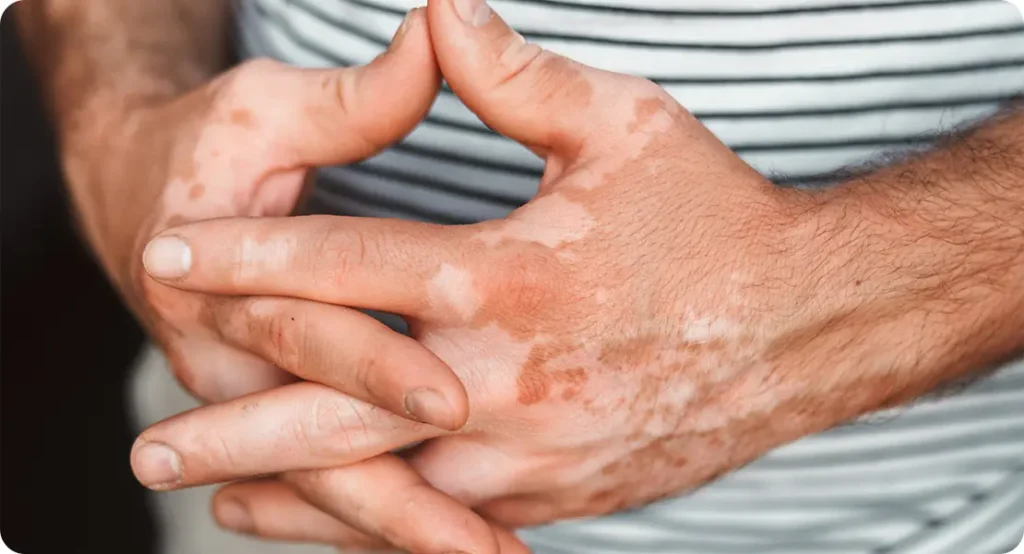
Vitiligo can appear anywhere on your body, but certain areas are more likely to show early signs. These are often regions exposed to friction, minor trauma, heat or sun exposure.
Common Early Sites
- Around the eyes and mouth – Subtle periorbital lightening or faint patches around the lips are classic early patterns.
- Fingers, knuckles and hands – Daily friction makes these areas especially vulnerable.
- Feet and ankles – Shoes and socks create constant rubbing.
- Underarms – Sweat, shaving and movement increase irritation, often triggering early pigment loss.
- Genitals and inner thighs – Friction from clothing and movement commonly triggers early lesions here.
- Neck and collar area – Clothing rub, jewellery or straps may contribute to early fading.
Even areas not regularly exposed to friction can show early pigment changes, but friction sites are the most frequent.
How Early Vitiligo Shows Up Under Different Lighting
Early vitiligo behaves differently depending on the light source. Many people only recognise their early patches after seeing a photograph taken in daylight or under strong indoor lighting.
Light-Dependent Visibility
- Natural sunlight – Makes faded areas appear more visible due to broader contrast.
- Bathroom mirrors – Pale patches may blend into the skin because indoor lights are softer.
- Flash photography – Highlights pale areas more sharply because melanin reflects light differently.
- UV (Wood’s lamp) – Dermatologists use this tool because early vitiligo glows bright white under UV, even when not visible to the naked eye.
If you suspect early vitiligo, a Wood’s lamp examination is one of the most reliable ways to confirm it.
Other Skin Conditions That Can Mimic Early Vitiligo
Several skin conditions can resemble the early stages of vitiligo, which is why getting a proper diagnosis is essential. If you’re unsure about what you’re seeing, it’s best to consult a specialist rather than rely on self-assessment. Conditions such as tinea versicolor, post-inflammatory hypopigmentation, pityriasis alba, and even temporary friction marks can all create pale or uneven patches that look similar to vitiligo.
These lookalike conditions each have their own causes ranging from fungal overgrowth to previous inflammation and many improve on their own or with simple treatment. A dermatologist can accurately differentiate between them using a clinical examination and tools like a Wood’s lamp, ensuring you receive the right guidance from the start.
Early Vitiligo in Children vs Adults
While vitiligo affects all ages, early signs can present slightly differently in children. Children often develop vitiligo in areas of friction, such as the knees, elbows and face. Confetti-like spots are especially important in younger patients, as they may signal rapid progression.
Adults may notice more gradual fading or chalky patches before distinctive white areas appear. Because adults typically have more stable skin patterns, spotting subtle changes early becomes easier with careful observation.
Why Some People Notice Early Signs More Than Others
Not everyone notices the early signs of vitiligo in the same way, and several personal factors influence how quickly fading becomes visible. Differences in skin tone, sun exposure habits, daily routines, and existing health conditions all shape how easily subtle changes are detected. Understanding these factors can help you stay more aware of your own skin and recognise early shifts with confidence.
Your awareness of early vitiligo depends on several factors:
- Skin tone – In darker skin tones, early fading is more visible, but subtle chalkiness can still be missed.
- Sun exposure habits – Tanned skin makes faded patches easier to see.
- Lifestyle and daily activities – People who frequently examine their skin for cosmetic or health reasons often detect early changes sooner.
- Presence of autoimmune conditions – People with thyroid disease or other autoimmune conditions may be more vigilant.
Recognising your personal risk factors can help you monitor your skin more attentively.
When to Seek a Dermatologist
If you notice subtle fading, patches that do not tan, chalky areas or small white confetti-like dots, it is important to seek professional advice as early as possible. Early treatment may slow progression and, in some cases, help repigment affected areas.
When to Get Checked
- Pale patches that slowly expand
- Small confetti-like white dots
- Fading around the mouth or eyes
- Light patches in friction areas
- Areas that remain untanned despite sun exposure
- Family history of vitiligo or autoimmune conditions
A dermatologist can confirm the diagnosis with a simple examination, often including a Wood’s lamp.
Why Early Diagnosis Matters
Early diagnosis gives you more options. At the earliest stage, treatments are often more effective because some melanocytes may still be functioning. The sooner you start treatment, the greater the chance of stabilisation or improvement.
Benefits of Early Treatment
- Better repigmentation rates – Early melanocytes may still respond efficiently.
- Slower progression – Early intervention may reduce the spread.
- More treatment choices – Topicals, phototherapy and systemic therapies work best early.
- Improved emotional wellbeing – Understanding what’s happening helps reduce stress.
Getting support early allows you to feel more in control of your condition.
Frequently Asked Questions:
1. What does the earliest stage of vitiligo actually look like?
In the earliest stage, vitiligo usually appears as soft, faint patches of skin that look slightly lighter than the surrounding area rather than pure white. These early patches may seem powdery, chalky, uneven or gently faded. Many people mistake them for dryness or mild irritation because the skin texture feels completely normal. Under strong daylight or in photographs, the contrast becomes easier to see, and this is often when people first realise a pigment change is occurring.
2. How can I tell the difference between early vitiligo and normal pigment variation?
Normal pigment variation tends to stay stable and doesn’t gradually expand or change shape. Early vitiligo, on the other hand, subtly progresses over weeks or months. You may notice a patch staying lighter even after sun exposure, failing to tan like the rest of your skin. Another hint is that moisturisers do not improve the lighter area, and it may appear more obvious in natural daylight or under flash photography. If you see shifting borders or slowly expanding pale zones, vitiligo becomes more likely.
3. Are tiny white ‘confetti-like’ dots always a sign of vitiligo?
Confetti-like depigmentation is considered one of the most important early signs of vitiligo, especially when the dots are bright white, tiny and clustered. While other conditions can cause pale patches, these tiny sharply white dots are most strongly associated with active vitiligo. They often appear before a larger patch forms and can indicate rapid progression. If you notice these small dots, you should seek professional advice promptly so treatment can begin as early as possible.
4. Does early vitiligo cause any itching, irritation or changes in texture?
In most cases, early vitiligo does not cause itching or irritation. The affected skin feels exactly the same as surrounding skin, which is why many people overlook the initial colour changes. Rarely, some people experience mild itchiness just before new patches form, but this is not universal. A lack of textural change is actually one of the defining features of vitiligo and helps differentiate it from conditions like eczema or fungal infections.
5. Can early vitiligo reverse on its own without treatment?
Spontaneous repigmentation is possible, especially in early or very small patches, but it is not predictable. Some people notice partial repigmentation after sun exposure or phototherapy, while others see patches continue to spread. Because the condition can progress silently, dermatologists recommend not waiting to “see what happens.” Early treatment gives you the best chance of stabilising the condition or encouraging repigmentation while melanocytes are still active.
6. Does vitiligo always start on the hands and face?
No although hands, fingers and the face are common early locations due to friction and sun exposure, vitiligo can begin anywhere. Some people first notice changes under the arms, around the genitals, on the inner thighs or around the mouth. Areas subject to rubbing from clothes or movement, such as the waistline, bra line or ankles, are also frequent early sites. The first location varies from person to person, which is why recognising subtle changes is important.
7. How does a dermatologist confirm early vitiligo?
Dermatologists usually rely on a physical examination and a Wood’s lamp test. Under a Wood’s lamp, early vitiligo glows bright white, even if it is barely visible in normal lighting. This helps distinguish it from conditions like tinea versicolor or post-inflammatory hypopigmentation. In rare cases where the diagnosis is unclear, the doctor may order blood tests to check for associated autoimmune conditions, but most early diagnoses are made visually.
8. Can stress trigger or worsen early vitiligo?
Stress doesn’t cause vitiligo on its own, but it can contribute to flare-ups or faster progression in people who are genetically predisposed. Emotional stress affects the immune system and may increase autoimmune activity, which in turn can affect melanocytes. Many patients report noticing new or worsening patches during periods of significant stress. Managing stress through sleep, exercise and relaxation techniques may help stabilise progression alongside medical treatment.
9. What treatments are most effective during the early stage of vitiligo?
Early treatment often includes topical corticosteroids, calcineurin inhibitors, targeted phototherapy (such as narrowband UVB) or a combination of these options. Because some melanocytes may still be functioning in the early stage, these treatments can be highly effective at restoring pigment or slowing further pigment loss. Dermatologists tailor the approach based on your skin type, patch location and rate of progression, with early intervention offering the highest success rate.
10. When should I definitely seek help from a dermatologist?
You should seek help as soon as you notice fading patches that expand slowly, pale areas that fail to tan, chalky or powdery lightening, or tiny white confetti-like dots. These signs indicate that melanocyte activity may be declining, and early intervention is crucial for the best outcome. Even if you’re unsure whether the change is vitiligo or something harmless, getting a professional evaluation will give you clarity and help prevent unnecessary progression.
Final Thought: Understanding Early Signs of Vitiligo
Spotting the earliest signs of vitiligo can feel confusing, especially when the changes are subtle or easy to mistake for something harmless. But understanding what early fading, chalky patches or tiny confetti-like dots mean gives you the chance to act sooner. Early diagnosis not only provides clarity, it also opens the door to treatments that may slow progression, stabilise pigment loss and, in some cases, help restore colour before patches become more noticeable. Paying attention to small shifts in your skin tone is one of the most valuable steps you can take.
If you’ve started noticing these early changes and want expert guidance, it may be helpful to speak with a dermatologist who specialises in pigment disorders. If you’re considering vitiligo clinic in London, you can contact us at the London Dermatology Centre to book a consultation with one of our specialists. Our team will assess your skin, explain what the early signs mean in your specific case, and guide you through the most effective treatment options for early-stage vitiligo.
References:
1. Ezzedine, K., Eleftheriadou, V., Whitton, M. & van Geel, N., 2015. Vitiligo. Journal of Clinical Medicine, 4(1), pp.115–128. https://www.mdpi.com/2077-0383/4/1/115
2. Passeron, T., 2020. Medical and Maintenance Treatments for Vitiligo. Journal of Clinical Medicine, 9(4), p.1017. https://www.mdpi.com/2077-0383/9/4/1017
3. Hamzavi, I., Jain, H., McLean, D. & Shapiro, J., 2004. Parametric modelling of narrowband UV-B phototherapy for vitiligo. Archives of Dermatology, 140(9), pp.1107–1113. https://pubmed.ncbi.nlm.nih.gov/15381553/
4. Taïeb, A. & Picardo, M., 2009. Clinical practice. Vitiligo. The New England Journal of Medicine, 360(2), pp.160–169. https://pubmed.ncbi.nlm.nih.gov/19129527/ 5. Richmond, J.M. & Harris, J.E., 2014. Vitiligo: Treatment options and future directions. Journal of the American Academy of Dermatology, 71(5), pp.19–24. https://www.ncbi.nlm.nih.gov/pmc/articles/PMC4171713/