


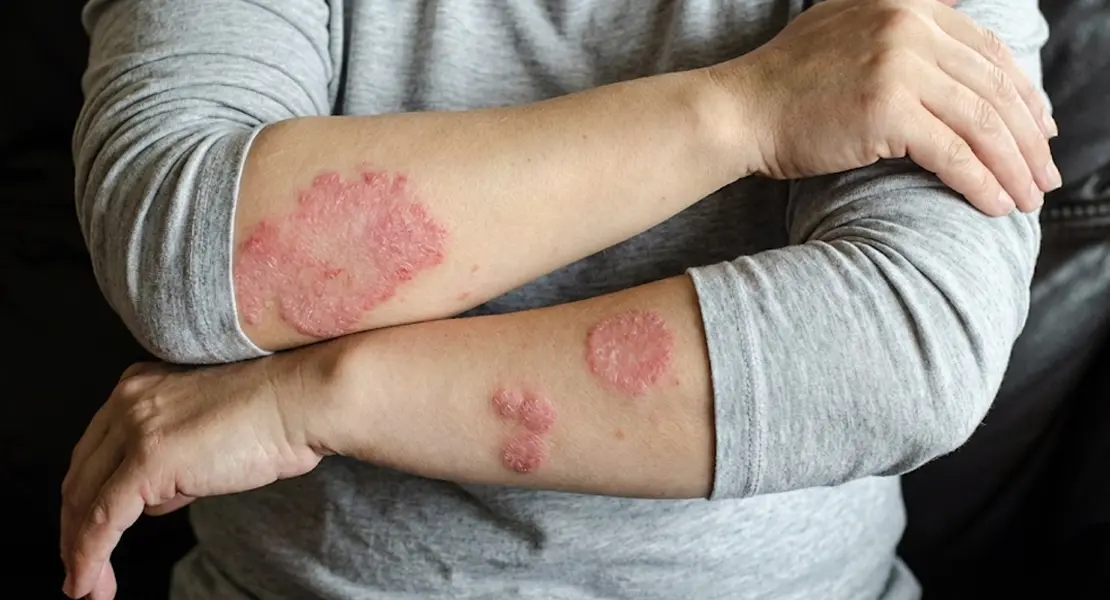
If you’ve recently noticed round, coin-shaped patches appearing on your skin, you may have already tried moisturisers, steroid creams or online remedies with little success. These patches often start as small, irritated spots that quickly expand into circular areas of inflammation, dryness and itching. They can look alarming and feel extremely uncomfortable, especially when they start to crack, ooze or spread. Many people assume these patches are ringworm or an allergy, but in reality, they’re often a specific type of eczema called discoid eczema, also known as nummular eczema.
In this detailed guide, I want to help you understand why these coin-shaped patches develop, what triggers them, how they differ from other rashes, and which treatments actually make a long-term difference. Discoid eczema requires a specific strategy not just moisturiser and hope and once you understand the pattern, you can finally get control over the flare-ups.
What Exactly Is Discoid (Nummular) Eczema?
Discoid eczema, also known as nummular eczema, is a chronic inflammatory skin condition characterised by round or oval patches that resemble coins, which is reflected in its Latin-derived name “nummular.” These patches are typically dry, scaly, itchy, and inflamed, and in some cases may become weepy or crusted. The size of the lesions can vary, ranging from small spots of 1–2 cm to larger patches several centimetres wide, with sharply defined edges that can sometimes be mistaken for a fungal infection.
This form of eczema can develop on almost any part of the body, though it most commonly affects the legs, arms, torso, hands, and trunk. In some individuals, discoid eczema appears as just a few isolated patches, while in others it may occur more widely, covering multiple areas of the body and causing significant discomfort.
Who Usually Develops Discoid Eczema?
Discoid eczema can affect people of all ages, but it is more commonly seen in adults, particularly men over 50 and women between 15 and 25. Those with very dry skin, a history of eczema or allergies, exposure to skin irritants, or poor skin barrier function are at higher risk. Stress and immune-related conditions can also contribute to its development, and in some cases, discoid eczema can appear suddenly in individuals who have never experienced eczema before.
Why Does Discoid Eczema Happen? Understanding the Core Problem

Discoid eczema primarily occurs due to a problem with the skin barrier, which normally protects the skin from moisture loss, irritants, and infections. When this barrier is weakened or damaged, the skin becomes dry, sensitive, and prone to inflammation, resulting in the characteristic round, red, scaly patches. Understanding the factors that compromise the skin barrier is key to preventing and managing flare-ups effectively.
Harsh soaps and detergents: Frequent use of strong soaps or cleaning products can strip the skin of its natural oils, leaving it dry and more susceptible to irritation. Over time, this can significantly weaken the skin barrier and trigger eczema flare-ups.
Long, hot showers: Extended exposure to hot water removes essential moisture from the skin. This not only dries the skin but also makes it more vulnerable to allergens and irritants, contributing to inflammation.
Dry winter air: Cold, dry air can dehydrate the skin, particularly in winter months. Reduced humidity exacerbates moisture loss, increasing the likelihood of developing itchy, scaly patches.
Overwashing: Excessive washing, especially with harsh soaps, disrupts the skin’s natural protective layer. This repeated barrier damage encourages inflammation and prolongs flare-ups.
Skin trauma like scratches or insect bites: Any form of skin injury, including scratches or insect bites, can breach the skin barrier. The affected areas become highly reactive, often leading to localized eczema patches.
Stress: Emotional or physical stress can weaken the immune system and reduce the skin’s resilience. This makes the skin more reactive to triggers and can worsen flare-ups.
Allergies: Allergic reactions to foods, metals, or environmental substances can exacerbate barrier dysfunction, prompting inflammation and the formation of discoid eczema patches.
Underlying eczema tendencies: Individuals with a personal or family history of eczema are naturally more prone to barrier issues. Their skin reacts more strongly to minor irritants, making flare-ups more frequent and persistent.
What Do Discoid Eczema Patches Look Like? Classic Signs
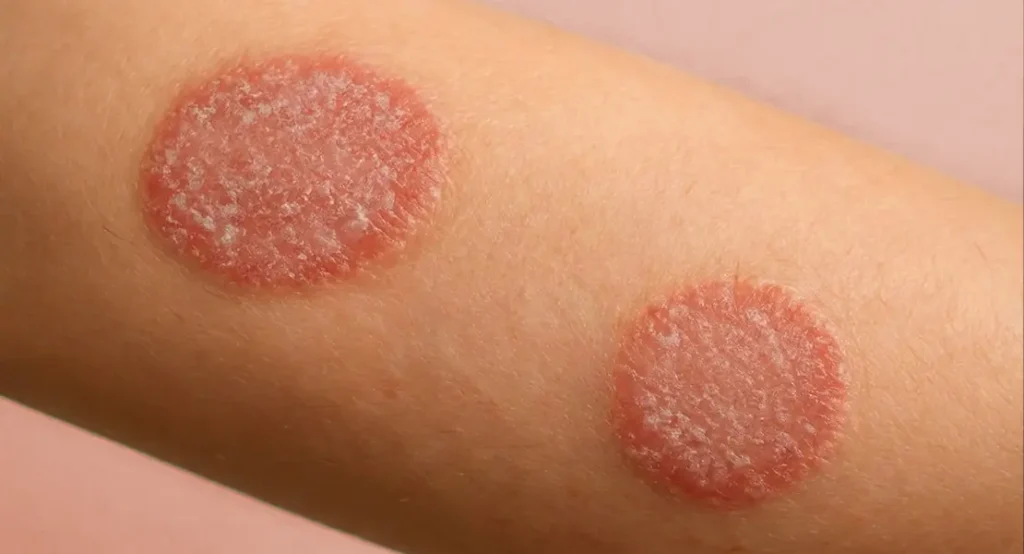
Discoid eczema is characterised by distinct, round or coin-shaped lesions that are often inflamed or reddened. The patches are usually dry or scaly, and in more severe flare-ups, they may become crusted or ooze. The edges of the lesions often show scaling, and there is usually a clear border separating the affected skin from the surrounding healthy skin, making the patches easily recognisable.
Itching is a prominent symptom, and multiple patches can appear simultaneously at different stages of healing. In some cases, the patches may overlap or merge, forming larger oval-shaped areas, which can increase discomfort and make the condition more noticeable.
Common Misdiagnoses: Why Discoid Eczema Is Often Mistaken for Other Conditions
Discoid eczema is often misdiagnosed because its symptoms can closely resemble those of several other skin conditions. The round, scaly patches may be mistaken for fungal infections, psoriasis, or other types of eczema, leading to incorrect treatment if not properly evaluated. Accurate diagnosis by a dermatologist is essential, as the management and treatment strategies vary depending on the underlying condition.
Ringworm (tinea corporis): Ringworm, or tinea corporis, is the most common condition that discoid eczema is mistaken for. While both present as circular lesions, ringworm typically has a clearer centre, a raised outer edge, and fungus can be detected under a skin scraping. In contrast, discoid eczema does not feature central clearing, helping to distinguish the two conditions.
Psoriasis: Psoriasis can sometimes be confused with discoid eczema because its patches may also appear round and scaly. However, psoriasis lesions are generally thicker and are covered with distinctive silvery scales, which helps differentiate them from the drier, inflamed patches of discoid eczema.
Contact dermatitis: Contact dermatitis can resemble discoid eczema, as both are forms of eczema, but it is specifically triggered by direct contact with an allergen or irritant. Identifying the external trigger is key to distinguishing contact dermatitis from discoid eczema, which may develop without a clear immediate cause.
Impetigo or bacterial infection: Impetigo or other bacterial infections can sometimes be mistaken for discoid eczema because both can cause crusting and oozing. However, discoid eczema typically shows deeper dryness and inflammation beneath the surface, which helps differentiate it from purely infectious conditions.
Atopic eczema: Some individuals can develop discoid eczema even without a prior history of atopic eczema, which can make diagnosis more challenging. Since treatment approaches vary depending on the specific type of eczema or skin condition, a proper evaluation by a dermatologist is essential to ensure effective management.
What Triggers Discoid Eczema?
Discoid eczema is influenced by a combination of internal and external triggers, and recognising these factors can help manage flare-ups more effectively. One of the most significant triggers is extremely dry skin, which often initiates the flare cycle. When the skin loses moisture, its protective barrier weakens, leaving it more vulnerable to irritation and inflammation. Cold weather, low humidity, and indoor heating can all exacerbate dryness, making flare-ups more likely.
Irritants also play a major role in triggering discoid eczema. Everyday products such as soaps, fragranced lotions, shower gels, laundry detergents, shampoos, disinfectants, and cleaning agents can provoke a reaction, especially in people with sensitive skin. Even mild irritants may be enough to initiate a flare, highlighting the importance of using gentle, non-irritating products.
Skin trauma, including scratches, insect bites, burns, or abrasions, can trigger new eczema patches exactly where the injury occurs, a phenomenon known as the Koebner effect. Stress is another influential factor; while it doesn’t directly cause eczema, elevated stress hormones weaken the skin barrier, increasing the frequency and severity of flare-ups. Alcohol consumption can further exacerbate the condition by dehydrating the skin and increasing inflammation.
Environmental changes, particularly cold weather, contribute to dryness and moisture loss, which can precipitate flares. Allergies, especially contact allergies to metals, fragrances, preservatives, or topical ingredients, may also trigger discoid eczema, with patch testing often helping to uncover hidden sensitivities. Additionally, infections can worsen a flare, as bacteria entering through skin trauma intensify inflammation and delay healing.
How Dermatologists Diagnose Discoid Eczema
Dermatologists typically diagnose discoid eczema by examining the appearance of the skin and reviewing your medical history. During a physical examination, they assess the size and shape of the patches, scaling patterns, degree of inflammation, signs of infection, and the distribution of lesions. These observations often provide enough information for an accurate diagnosis.
In some cases, additional tests may be necessary to rule out other conditions or identify underlying triggers. Skin scrapings can help exclude fungal infections such as ringworm, while patch testing may reveal allergies to substances like nickel, fragrances, preservatives, hair dye ingredients, or rubber chemicals. Although rarely needed, a skin biopsy can also be performed if the diagnosis remains uncertain.
The Treatment Ladder for Discoid Eczema
Discoid eczema requires a structured, multi-step treatment approach rather than relying solely on moisturisers or occasional use of steroids. Effective management focuses on repairing the skin barrier, reducing inflammation, controlling flare-ups, and addressing any underlying triggers or infections. Dermatologists typically follow a step-by-step “treatment ladder,” progressing from basic skincare and topical therapies to more advanced interventions for severe or persistent cases, ensuring both short-term relief and long-term control.
Step 1: Restore the Skin Barrier (Moisturising Correctly)
Restoring the skin barrier through proper moisturising is a crucial first step in managing discoid eczema. This involves using thicker, ointment-based moisturisers, applying them multiple times a day, avoiding fragranced products, and even using moisturiser as a soap substitute. Applying moisturiser immediately after bathing helps lock in moisture and protect the skin. While moisturising alone cannot cure discoid eczema, it is essential for making other treatments effective.
Step 2: Topical Steroids (Essential for Active Patches)
Topical steroids are essential for controlling active discoid eczema patches, as they work quickly to reduce inflammation. Dermatologists may prescribe moderate-strength steroids for mild lesions and more potent formulations for stubborn or thick patches. Areas with thicker skin, such as the hands, legs, and feet, often require higher-potency steroids. These medications should be used carefully and as directed, typically for one to two weeks during active flare-ups, to ensure effectiveness and minimise side effects.
Step 3: Calcineurin Inhibitors (For Sensitive Areas or Long-Term Use)
Calcineurin inhibitors, such as tacrolimus or pimecrolimus, are used for discoid eczema when topical steroids are unsuitable, particularly on delicate or sensitive areas of the skin. They are also helpful for long-term management, as they reduce inflammation and help prevent recurrence of flare-ups. These medications provide an alternative treatment option while minimising the risks associated with prolonged steroid use.
Step 4: Managing Infection
Managing infection is a crucial step in treating discoid eczema, as crusting, oozing, or spreading patches can indicate a bacterial infection. Treatment may involve topical or oral antibiotics, as well as antiseptic washes to control bacterial growth. If left untreated, infection can prevent the eczema from healing and prolong flare-ups.
Step 5: Wet Wrap Therapy
Wet wrap therapy is an effective treatment for severe discoid eczema flare-ups. It works by cooling inflammation, relieving intense itching, enhancing the absorption of topical steroids, and speeding up the healing process. This method is particularly beneficial for children and for cases where eczema affects large areas of the body.
Step 6: Antihistamines
Antihistamines can help manage discoid eczema by reducing night-time itching, improving sleep, and minimising scratching behaviour. While they do not treat the underlying eczema, they provide relief from discomfort and help prevent further skin irritation caused by scratching.
Step 7: Patch Testing and Trigger Management
Patch testing and trigger management are important for people whose discoid eczema keeps recurring. Dermatologists may perform patch testing to identify specific allergies or sensitivities, and avoiding these irritants or allergens can significantly reduce the frequency and severity of flare-ups.
Step 8: Phototherapy
Phototherapy, including narrowband UVB or PUVA treatment, is used for discoid eczema when the condition is widespread, topical treatments are insufficient, or flare-ups keep recurring. This therapy helps reduce inflammation, improves the function of the skin barrier, and can provide longer-lasting relief when other treatments alone are not effective.
Step 9: Systemic Treatment for Severe Cases
In severe or chronic cases of discoid eczema, systemic treatments may be necessary to control inflammation from within the body. Options include oral steroids, methotrexate, ciclosporin, and alitretinoin, which are prescribed under careful medical supervision for patients who do not respond adequately to topical therapies.
Daily Habits That Help Prevent Flare-Ups
Preventing discoid eczema flare-ups often requires simple but consistent lifestyle adjustments. Switching to soap-free cleansers is important, as regular soaps can strip the skin of natural oils and worsen dryness. Keeping showers short and lukewarm helps protect the skin barrier, while applying moisturiser immediately after washing locks in essential moisture. Avoiding scratching is crucial, as it can create micro-injuries that trigger new patches.
Wearing soft, breathable fabrics is another key habit, as materials like wool or synthetic fibres can irritate sensitive skin. Using fragrance-free laundry detergents reduces the risk of irritation from residual chemicals. Protecting the skin from cold air, which tightens and dries it out, also helps maintain the skin’s natural barrier.
Other lifestyle factors, such as limiting alcohol intake and managing stress, play an important role in preventing flare-ups. Alcohol can increase dehydration and inflammation, while stress weakens the skin’s resilience, making flare cycles more likely. Incorporating these daily habits consistently can significantly reduce the frequency and severity of discoid eczema episodes.
Understanding Why Discoid Eczema Keeps Coming Back
The recurring nature of discoid eczema is one of the most challenging aspects of managing the condition. Even after visible patches heal, the skin barrier often remains fragile for months, leaving it vulnerable to new flare-ups. Hidden irritants or allergens that have not been fully identified or removed can also trigger repeated episodes. Additionally, many people reduce or stop moisturising once their skin appears better, which can contribute to relapse.
Improper use of topical steroids, such as under-use, may prevent complete healing and allow inflammation to persist. Environmental factors, like cold weather, can reactivate symptoms by drying out the skin, while scratching can create micro-injuries that serve as new flare sites. Understanding these factors is crucial for effective long-term management and reducing the frequency of recurrences.
Long-Term Outlook
Discoid eczema is often a chronic condition, but with consistent skincare, appropriate treatment, and careful identification of triggers, the frequency and severity of flare-ups can be significantly reduced. Most people experience fewer and shorter flares, less itching, improved skin texture, and stronger barrier function. With diligent management, many patients also enjoy long periods without symptoms once the cycle of eczema has been effectively controlled.
FAQs:
1. What is discoid eczema and how does it affect the skin?
Discoid eczema, also known as nummular eczema, is a chronic inflammatory skin condition that is characterised by round or oval patches resembling coins. These patches are usually red, scaly, itchy, and inflamed, and in severe cases, they may become crusted or ooze. The affected skin often feels dry and sensitive, and the lesions can appear anywhere on the body, though they are most commonly found on the arms, legs, hands, and torso.
2. Who is most likely to develop discoid eczema?
Discoid eczema can occur in people of all ages, but it is more commonly seen in adults, particularly men over 50 and women between 15 and 25. Individuals with very dry skin, a history of eczema, or a family history of allergic conditions are at higher risk. Other factors such as exposure to skin irritants, frequent washing, environmental stressors, or compromised skin barrier function can contribute to the onset of discoid eczema.
3. What are the main symptoms of discoid eczema?
The main symptoms of discoid eczema include round or oval patches of inflamed, dry, scaly skin that are often intensely itchy. In some cases, the patches may become crusted or ooze fluid, and multiple lesions can occur simultaneously, sometimes merging to form larger areas. The edges of the patches are usually well-defined, which helps differentiate discoid eczema from other skin conditions.
4. How is discoid eczema different from other skin conditions like ringworm or psoriasis?
Discoid eczema is frequently misdiagnosed because its circular patches can resemble other skin conditions. Unlike ringworm, which usually has a clear centre and raised edges with fungal presence detectable under a skin scraping, discoid eczema lacks central clearing and is inflammatory rather than infectious.
5. What triggers discoid eczema?
Discoid eczema is triggered by a combination of internal and external factors that compromise the skin barrier. Dry skin is a major contributor, making the skin more susceptible to irritation and inflammation. Environmental factors such as cold weather, low humidity, and indoor heating can worsen dryness and provoke flare-ups. Frequent use of harsh soaps, detergents, or cleaning products, as well as long, hot showers, can strip the skin of protective oils.
6. How do dermatologists diagnose discoid eczema?
Dermatologists diagnose discoid eczema by carefully examining the affected skin and reviewing the patient’s medical history. They assess the size, shape, and distribution of lesions, scaling patterns, degree of inflammation, and any signs of infection. Additional tests may include skin scrapings to rule out fungal infections and patch testing to identify potential allergens or irritants. Rarely, a skin biopsy is performed if the diagnosis remains uncertain.
7. What is the typical treatment approach for discoid eczema?
The treatment of discoid eczema involves a structured, step-by-step approach to restore the skin barrier, control inflammation, and prevent flare-ups. Initial steps focus on intensive moisturising to repair and protect the skin, followed by topical steroids to reduce active inflammation. Calcineurin inhibitors may be used in sensitive areas or for long-term control.
8. Can lifestyle and daily habits help prevent discoid eczema flare-ups?
Yes, daily habits play a crucial role in managing discoid eczema. Using soap-free or gentle cleansers, keeping showers short and lukewarm, and applying moisturiser immediately after bathing help maintain the skin barrier. Avoiding scratching, wearing soft, breathable fabrics, and using fragrance-free detergents are important preventative measures.
9. Why does discoid eczema keep coming back even after treatment?
Discoid eczema often recurs because the underlying skin barrier remains fragile even after visible patches heal. Hidden irritants or allergens that have not been fully identified can trigger new flare-ups, and patients may reduce or stop moisturising once the skin appears better. Improper use of topical steroids or environmental stressors like cold weather and scratching can also reactivate inflammation.
10. What is the long-term outlook for people with discoid eczema?
While discoid eczema is often chronic, most patients can achieve effective control with consistent treatment, trigger management, and appropriate lifestyle adjustments. Regular moisturising, use of prescribed medications, and avoidance of known irritants or allergens can reduce the frequency and severity of flare-ups.
Final Thought: Taking Control of Discoid Eczema: Next Steps for Healthy Skin
Discoid eczema can be persistent and frustrating, but understanding its triggers, recognising the coin-shaped patches early, and following a structured treatment plan can make a significant difference in managing flare-ups. Consistent skincare, appropriate medications, and lifestyle adjustments all play a key role in reducing discomfort and preventing recurrence.
If you’re considering eczema treatment in London, you can contact us at the London Dermatology Centre to book a consultation with one of our specialists, who can create a personalised plan to restore your skin’s health and improve long-term outcomes.
References:
1. Provides an updated clinical review of nummular (discoid) eczema, including diagnosis, coin‑shaped lesions, and management with moisturisers and corticosteroids. https://pubmed.ncbi.nlm.nih.gov/32778043/
2. A comprehensive PubMed article on nummular dermatitis (discoid eczema), describing its clinical features, chronicity, and typical treatments. https://www.ncbi.nlm.nih.gov/books/NBK565878/
3. Discusses the coin‑like presentation of nummular eczema and its overlap with atopic dermatitis, highlighting diagnostic and therapeutic considerations. https://www.mdpi.com/2227-9059/10/11/2927
4. A PMC case report showing discoid eczema’s coin‑shaped erythematous patches and discussing responsiveness to treatment. https://pmc.ncbi.nlm.nih.gov/articles/PMC12013962/
5. An updated clinical overview of nummular eczema’s presentation, common triggers (dry skin, trauma), and differentiation from fungal rashes. https://emedicine.medscape.com/article/1123605-overview