


If you’ve started noticing more hair in your brush, thinner ponytails, or visible scalp around your parting during perimenopause or menopause, you’re not imagining it. Hair changes are one of the most distressing and least talked-about symptoms of this stage of life. Many women tell me the hair loss feels sudden, relentless, and completely out of their control.
Menopause doesn’t just affect periods or hot flushes. It brings deep hormonal shifts that directly influence how your hair follicles behave, how long hairs stay in the growth phase, and how resilient your scalp environment remains. What once felt like stable, predictable hair can suddenly become fragile, fine, and slow to recover.
In this guide, I’ll explain why hair loss often accelerates during perimenopause and menopause, how alopecia patterns change at this stage of life, and which treatment approaches dermatologists prioritise when managing menopausal hair loss. Understanding what’s happening beneath the surface is the first step toward regaining control.
Why Menopause Is a Turning Point for Hair Health
Hair follicles are highly sensitive to hormonal signals, particularly oestrogen, which helps keep hair in the growth phase and supports overall follicle strength during the reproductive years. As menopause approaches, shifting hormone levels disrupt this balance and change how follicles behave. These changes tend to affect hair density gradually rather than causing sudden hair loss.
- Oestrogen normally prolongs the hair growth phase and helps maintain thicker, healthier strands
- During menopause, fluctuating and then declining oestrogen levels reduce this protective effect
- The relative influence of androgens becomes stronger, even if androgen levels themselves do not significantly increase
- This hormonal shift shortens the growth phase and increases follicle miniaturisation, leading to progressive thinning rather than distinct bald patches
Understanding Hair Growth Cycle
To understand menopausal hair loss, it helps to know how hair normally grows. Each follicle cycles through growth, rest, and shedding phases. During the anagen phase, hair actively grows. This phase normally lasts several years. The catagen phase is a brief transition, followed by telogen, when the hair sheds. Hormonal changes shorten the anagen phase and push more follicles into telogen. Over time, this leads to increased shedding and reduced density.
Why Hair Loss Often Starts in Perimenopause
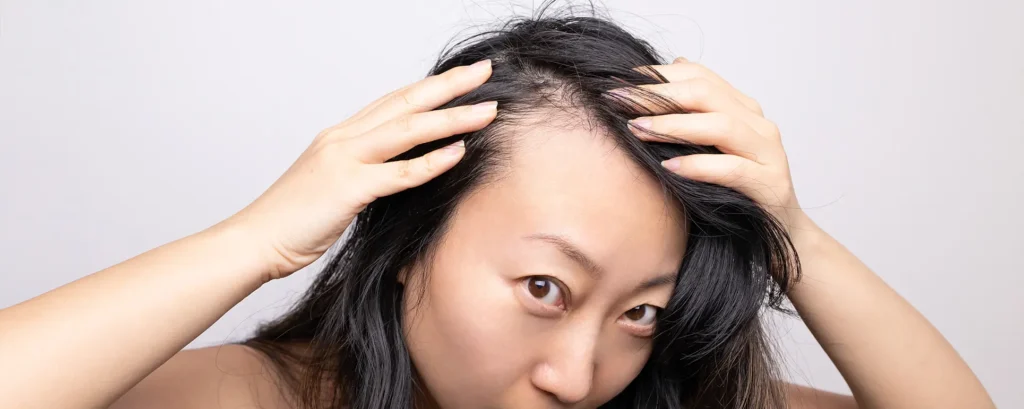
Perimenopause is the transitional phase leading up to menopause and can begin several years before the final menstrual period. During this time, hormone levels fluctuate irregularly rather than declining in a steady way, which can disturb normal hair growth patterns. These changes often appear gradually and may go unrecognised at first.
- Hormonal fluctuations during perimenopause can disrupt the normal hair growth cycle before menopause is formally reached
- Many women notice increased shedding, finer texture, or slower regrowth during this stage
- Symptoms are often subtle initially and may progress over time if not addressed
- Because perimenopause is frequently overlooked, hair loss may be misattributed to stress, delaying timely and effective treatment
Common Hair Loss Patterns During Menopause
Hair loss during menopause rarely leads to complete baldness and instead develops in gradual, recognisable patterns. Changes in density often occur slowly, making them easy to overlook at first. Over time, subtle thinning becomes more noticeable in specific areas of the scalp.
- Thinning is most commonly seen along the central parting, crown, and temples
- Ponytails may feel noticeably thinner even when overall shedding appears mild
- Hair volume gradually decreases, making styling more difficult
- These changes reflect female pattern hair loss, which often accelerates during menopause due to hormonal shifts
Female Pattern Hair Loss and Menopause
Female pattern hair loss is the most common type of alopecia seen during menopause. It is driven by genetic sensitivity of follicles to androgens. As oestrogen declines, androgen influence becomes more pronounced. Susceptible follicles shrink over time, producing finer, shorter hairs.
This process is gradual but progressive. Early intervention makes a significant difference to long-term outcomes.
Telogen Effluvium and Hormonal Change
Some women notice sudden, noticeable hair shedding rather than gradual thinning, which is often due to telogen effluvium. This condition is commonly triggered by hormonal stress, illness, or significant physical or emotional changes. Menopause itself can act as a trigger, particularly when combined with disrupted sleep, anxiety, or nutritional imbalances.
- Hormonal fluctuations during menopause can push a higher number of hair follicles into the shedding phase
- Physical or emotional stress, illness, or rapid weight changes can worsen telogen effluvium
- Nutritional deficiencies, especially low iron, vitamin D, or protein intake, may contribute to increased shedding
- Telogen effluvium is typically temporary and reversible once the underlying trigger is addressed
- In some cases, it can reveal underlying female pattern hair loss if follicles are already genetically sensitive
With appropriate evaluation and management, hair growth often recovers over time. Identifying and correcting contributing factors such as stress, hormone balance, and nutrition is essential. Early assessment also helps distinguish reversible shedding from longer-term hair loss, allowing for more targeted and effective treatment.
Why Hair Texture Changes During Menopause
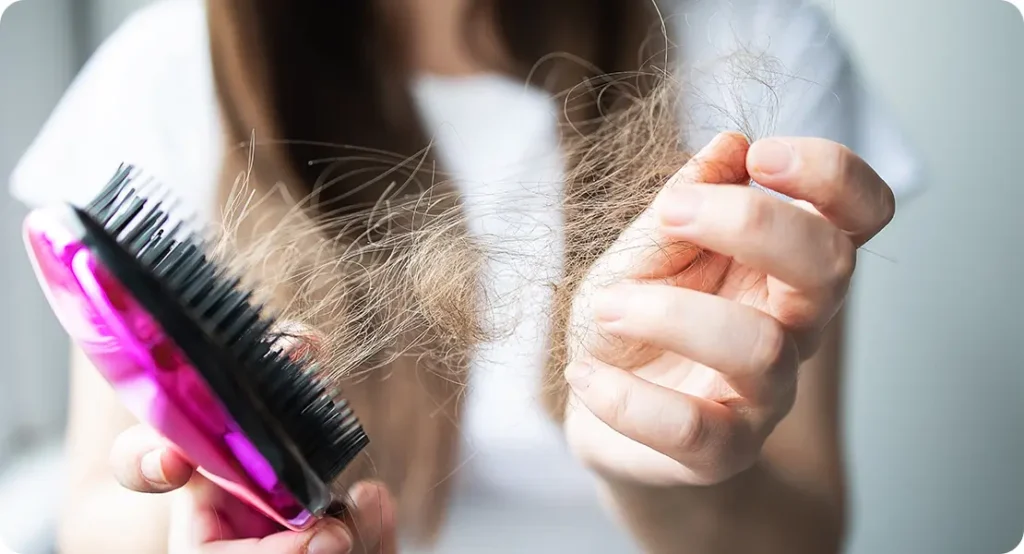
Menopause doesn’t only affect hair volume; it also changes how hair looks and feels. Many women notice differences in texture long before visible thinning occurs. These changes are driven by hormonal shifts that influence the scalp, hair follicles, and the structure of the hair itself.
- Reduced oestrogen levels lead to lower sebum production, making hair drier and less naturally conditioned
- Changes in keratin production alter the hair shaft, causing strands to feel coarser, weaker, or more brittle
- As texture becomes rougher and less flexible, hair can appear thinner even before actual density loss is noticeable
The Role of Scalp Health in Menopausal Alopecia
Scalp health is often overlooked, but it becomes increasingly important during menopause. Hormonal changes can lead to reduced oil production and slower cell turnover, which alters the scalp’s natural balance.
A dry, inflamed, or sensitive scalp can interfere with normal follicle function and contribute to increased hair shedding. Ongoing irritation may also reduce the effectiveness of hair-loss treatments if the scalp barrier is compromised.
Maintaining a healthy scalp environment supports stronger follicle activity and improves response to treatment. Focusing on scalp care is therefore essential for achieving better long-term stability and hair health during menopause.
Other Factors That Worsen Hair Loss at Menopause
Hormonal changes are not the only contributors to hair loss during menopause. This life stage often coincides with other physical and lifestyle factors that can further disrupt the hair growth cycle.
Iron deficiency becomes more common, especially in women who experienced heavy periods before menopause. Thyroid disorders may also emerge or worsen during this time, both of which can significantly affect hair density and shedding.
Chronic stress, poor sleep quality, and restrictive or unbalanced diets can further impair hair cycling. When these factors combine with hormonal shifts, hair loss may appear more pronounced and persistent.
How Menopausal Alopecia Is Diagnosed
Diagnosis starts with a thorough clinical assessment rather than a single test. A dermatologist will carefully evaluate the pattern of hair loss, overall density, and signs of increased shedding. Hair shaft quality and scalp health also provide important diagnostic clues.
- A detailed medical and hormonal history helps identify menopausal changes and contributing factors
- Scalp examination assesses distribution, thinning patterns, and miniaturisation of hair follicles
- Blood tests are commonly ordered to check iron levels, thyroid function, vitamin D, and other relevant markers
- Trichoscopy may be used to examine hair follicles and scalp features in greater detail
- In unclear cases, a scalp biopsy can help confirm the specific type of alopecia
Once the diagnosis is clear, a targeted treatment plan can be created. Identifying hormonal, nutritional, or medical contributors is essential for effective management. Early and accurate diagnosis improves the chances of stabilising hair loss and supporting healthier regrowth.
Why Accurate Diagnosis Matters
Hair loss treatments are not interchangeable, as different conditions affect the hair cycle in distinct ways. For example, treatments effective for telogen effluvium will not adequately address female pattern hair loss.
When hair loss is misdiagnosed, it often leads to wasted time, unnecessary expense, and growing frustration. Without proper assessment, treatments may fail to target the underlying cause of shedding or thinning.
This is why specialist input is especially important when hair loss accelerates around menopause. An accurate diagnosis ensures the treatment plan is tailored to the correct mechanism, improving outcomes and long-term hair stability.
Treatment Priorities for Menopausal Alopecia
When managing menopausal alopecia, dermatologists prioritise stabilising ongoing hair loss before focusing on regrowth. Slowing or stopping excessive shedding helps preserve existing hair and creates a better foundation for further treatment.
Treatment plans are typically long-term and tailored to the individual, with adjustments made based on how the hair and scalp respond over time. There is rarely a single solution, and combination approaches are often needed.
Consistency plays a far greater role than intensity in managing menopausal hair loss. Regular, sustained treatment is key to achieving gradual improvement and maintaining long-term results.
Topical Treatments Dermatologists Use First
Topical therapies are usually the first-line approach for managing female pattern hair loss. These treatments are non-invasive, widely studied, and suitable for long-term use. Among them, topical minoxidil remains the most commonly recommended option.
- Topical minoxidil helps prolong the hair growth phase and increases follicle size, supporting thicker, stronger regrowth
- Visible improvement typically takes three to six months, as hair growth occurs gradually
- Some patients experience initial shedding, which is temporary and signals the treatment is stimulating new growth
- Consistent, long-term use is essential to maintain results and prevent further progression
When used correctly and patiently, topical treatments can significantly slow hair loss and improve overall density. Dermatologists often monitor progress and adjust treatment plans as needed. Early and regular use offers the best chance of preserving existing hair and supporting regrowth.
Oral Treatments and Hormonal Considerations
In certain cases of menopausal hair loss, oral medications may be prescribed to target androgen activity or enhance follicle responsiveness. These treatments aim to support hair regrowth and slow thinning by addressing underlying hormonal influences.
Hormonal therapies are considered with caution during menopause. Dermatologists carefully weigh the potential benefits against risks, taking into account the patient’s overall health, medical history, and any concurrent medications.
Treatment is always individualised rather than applied routinely. Personalised plans ensure that interventions are both safe and effective, optimising outcomes while minimising side effects.
The Role of Nutritional Support
Proper nutrition plays a key role in supporting hair health, particularly during menopause. Identifying and correcting deficiencies can help slow hair loss and improve follicle function. While supplements can be beneficial, they are most effective when tailored to actual nutritional gaps.
- Iron deficiency, even without anaemia, can significantly contribute to hair shedding and slowed regrowth
- Adequate protein intake is essential for healthy keratin production, the building block of hair
- Vitamin D and other micronutrients, including zinc and biotin, are assessed to support overall follicle health
- Supplements should be used only when deficiencies are confirmed, as unnecessary supplementation does not improve outcomes
- Overuse of certain nutrients can be harmful, making professional guidance important for safe and effective support
Focusing on targeted nutritional support alongside medical treatments can enhance results and overall hair quality. A balanced diet combined with evidence-based supplementation helps create the optimal environment for hair growth.
Procedural Treatments for Menopausal Hair Loss
In addition to medical therapy, procedural treatments can support hair regrowth and scalp health. Techniques like PRP (platelet-rich plasma) and low-level laser therapy are designed to stimulate follicles and improve circulation, enhancing the effects of ongoing topical or systemic treatments.
- PRP involves injecting concentrated platelets into the scalp to promote follicle stimulation and hair growth
- Low-level laser therapy improves scalp blood flow and can increase follicle activity when used consistently
- These procedures are adjuncts, not replacements, for established medical treatments like topical minoxidil
- Results vary depending on the degree of thinning and individual response, with more noticeable benefits in early or moderate hair loss
Why Early Treatment Makes a Difference
Once hair follicles have undergone extensive miniaturisation, stimulating meaningful regrowth becomes much more difficult. Early intervention helps protect and preserve existing hair before significant thinning occurs.
Many women delay seeking help, believing that hair loss during menopause is inevitable. While hormonal changes do increase the risk, progression is not automatic, and proactive management can make a substantial difference.
Timely treatment can significantly slow down shedding, stabilise hair density, and improve the effectiveness of regrowth therapies, giving better long-term outcomes for menopausal hair health.
Managing Expectations During Treatment
Menopausal alopecia is a chronic condition that develops gradually over time. The primary goals of treatment are to improve hair density, slow further thinning, and maintain overall scalp coverage. While dramatic regrowth is uncommon, consistent care can lead to meaningful improvements in appearance and hair health.
- Treatments focus on stabilising hair loss rather than fully restoring pre-menopausal hair volume
- Consistent use of topical therapies like minoxidil is essential for maintaining results
- Procedural treatments such as PRP or low-level laser therapy can enhance outcomes but are adjuncts, not stand-alone solutions
- Nutritional optimisation and addressing underlying deficiencies support treatment effectiveness
- Understanding realistic outcomes helps prevent disappointment and encourages adherence to long-term management plans
Setting realistic expectations from the start is key to maintaining motivation and avoiding frustration. With patience and consistent care, patients can achieve noticeable improvements and better manage menopausal hair loss over time.
Psychological Impact of Menopausal Hair Loss
Hair loss during menopause often occurs alongside other physical and emotional changes, which can intensify feelings of distress. The combination of hormonal shifts, visible thinning, and life transitions can make the experience particularly challenging for many women.
Many women report reduced confidence, heightened anxiety, and even social withdrawal as a result of hair thinning. These emotional responses are valid, common, and should be acknowledged as part of the overall impact of menopausal hair loss.
Addressing hair loss goes beyond cosmetic concerns. Effective treatment can significantly improve self-esteem, mental well-being, and overall quality of life, helping women feel more confident and comfortable in their daily lives.
When to Seek Specialist Help
Specialist assessment is recommended if hair shedding persists, noticeable thinning occurs, or changes in hair texture become apparent. Early evaluation helps identify underlying causes and prevents delays in effective treatment. Consulting a dermatologist ensures that the condition is accurately diagnosed and appropriately managed.
- Persistent or excessive hair shedding that does not improve warrants professional evaluation
- Visible thinning or widening of the part line indicates potential progression that should be addressed promptly
- Changes in hair texture, such as increased brittleness or coarseness, may signal underlying hormonal or nutritional issues
- Over-the-counter remedies may provide temporary relief but can delay targeted, effective treatment
- Visiting an experienced alopecia clinic in London ensures a thorough assessment and evidence-based treatment plan
Seeking timely specialist care allows for early intervention, maximising the potential to stabilise hair loss and support regrowth. Professional guidance helps tailor treatments to individual needs, improving both results and patient confidence.
Long-Term Outlook for Menopausal Alopecia
With the right approach, hair loss during menopause can often be stabilised effectively. While it may not be possible to fully restore pre-menopausal density, progression can be slowed, preserving existing hair and improving overall appearance.
Ongoing monitoring is essential, as treatment plans may need to evolve in response to hormonal changes, health factors, or hair growth patterns. Regular follow-ups help ensure that interventions remain effective over time.
The primary goal is sustainable control rather than quick fixes. Focusing on long-term management supports lasting results, maintains hair health, and improves confidence throughout the menopausal transition.
Living Well With Hair Changes After Menopause
Hair changes during menopause are common, but they do not define your health, beauty, or identity. Understanding the biological factors behind hair loss empowers women to make informed decisions about care and management. With the right approach, it is possible to preserve hair, improve density, and feel confident.
- Recognising that menopausal hair changes are natural helps reduce stress and anxiety, which can further affect hair health
- Combining medical treatments, procedural therapies, and nutritional support offers the best chance for stabilising hair loss
- Maintaining realistic expectations prevents disappointment and encourages consistent care
- Emotional support and professional guidance can improve coping strategies and overall wellbeing
- Many women regain confidence and a sense of control through proactive management and personalised treatment plans
By taking an informed and proactive approach, women can navigate menopausal hair changes with confidence, maintain hair health, and embrace self-care strategies that support long-term wellbeing.
FAQs:
1. Why does hair thinning accelerate during menopause?
Hair thinning accelerates during menopause primarily due to hormonal changes, particularly the decline in oestrogen levels. Oestrogen normally helps maintain the hair growth phase and supports follicle health. As oestrogen declines, hair follicles become more sensitive to the effects of androgens, which can cause gradual miniaturisation of follicles, leading to finer and shorter hairs. This shift in hormone balance shortens the growth phase, increases shedding, and reduces overall hair density, making hair appear thinner over time.
2. How does perimenopause contribute to hair loss?
Perimenopause, the transitional phase leading up to menopause, involves irregular fluctuations in hormone levels. These variations can disrupt the normal hair growth cycle, often causing increased shedding, slower regrowth, or changes in hair texture. The process is usually gradual, which means many women may not immediately recognise the early signs. Perimenopausal hair changes can be compounded by stress, nutritional deficiencies, or other lifestyle factors, making early recognition and intervention important.
3. What are the common hair loss patterns during menopause?
Hair loss during menopause rarely results in complete baldness. Instead, it usually presents as a gradual thinning along the central parting, crown, and temples. Ponytails may appear noticeably thinner, and overall hair volume can decrease, making styling more challenging. This pattern, often referred to as female pattern hair loss, reflects a progressive reduction in hair density rather than sudden bald patches, and is closely linked to hormonal changes that occur during this stage of life.
4. What is the difference between female pattern hair loss and telogen effluvium?
Female pattern hair loss is a gradual, progressive condition driven by genetic sensitivity to androgens, often accelerated by the hormonal changes of menopause. It mainly affects hair density and follicle size over time. Telogen effluvium, on the other hand, involves sudden, noticeable shedding triggered by stress, hormonal shifts, illness, or nutritional deficiencies. While telogen effluvium is usually temporary and reversible, it can sometimes reveal or exacerbate underlying female pattern hair loss, making early assessment crucial.
5. Why does hair texture change during menopause?
Hair texture changes occur because hormonal shifts influence both the scalp environment and hair shaft structure. Reduced oestrogen levels lower sebum production, leading to drier, less naturally conditioned hair. Keratin production also changes, which can make hair feel coarser, weaker, or more brittle. These texture alterations may make hair appear thinner even before actual density loss is significant, highlighting the importance of addressing both hair quality and volume when managing menopausal hair changes.
6. How does scalp health affect hair loss in menopausal women?
Scalp health becomes increasingly important during menopause because hormonal changes can reduce oil production and slow cell turnover. A dry, inflamed, or sensitive scalp can compromise follicle function and worsen hair shedding. Maintaining a healthy scalp environment supports follicle activity and improves the effectiveness of treatments, making scalp care an essential part of managing menopausal alopecia and preserving hair density over the long term.
7. What diagnostic steps do dermatologists take for menopausal hair loss?
Dermatologists conduct a thorough clinical assessment to diagnose menopausal hair loss accurately. This includes evaluating hair density, shedding patterns, follicle miniaturisation, and scalp condition. A detailed medical and hormonal history is taken, and blood tests may be ordered to assess iron, thyroid function, vitamin D, and other relevant markers. In some cases, trichoscopy or scalp biopsy is used to examine follicles in detail. Accurate diagnosis ensures that treatment targets the specific mechanism of hair loss, whether hormonal, nutritional, or stress-related.
8. What treatments are prioritised for menopausal hair loss?
Treatment priorities focus first on stabilising ongoing hair loss before promoting regrowth. Dermatologists often begin with topical therapies such as minoxidil to prolong the growth phase and increase follicle size. Oral medications or hormonal interventions may be considered selectively, depending on individual hormonal profiles and health factors. Nutritional optimisation and correction of deficiencies support follicle function, while procedural treatments like PRP or low-level laser therapy can further enhance results. Long-term consistency is essential for stabilising hair and supporting gradual improvement.
9. Why is early intervention important in menopausal hair loss?
Early intervention is crucial because once follicles undergo significant miniaturisation, stimulating meaningful regrowth becomes much more difficult. Treating hair loss proactively allows for preservation of existing hair, improves response to therapies, and reduces frustration associated with gradual thinning. Women who delay treatment may experience more pronounced density loss, while those who seek specialist guidance early have a higher chance of maintaining hair health and achieving visible improvements over time.
10. How does menopausal hair loss affect emotional wellbeing, and what support is available?
Menopausal hair loss can have a significant psychological impact, including reduced confidence, heightened anxiety, and social withdrawal. These emotional effects are valid and common, reflecting the intersection of visible hair changes and broader life transitions. Seeking professional care can provide reassurance, tailored treatment, and structured management, which often improves both hair health and mental wellbeing. Supportive strategies, including realistic expectation setting, counselling, and guidance on self-care, help women regain confidence while managing hair changes effectively.
Final Thoughts: Taking Control of Menopausal Hair Loss
Hair thinning during perimenopause and menopause is common, but it doesn’t have to be accepted as inevitable. Understanding how hormonal changes affect follicle behaviour and hair growth cycles is key to managing menopausal alopecia effectively. Early diagnosis, personalised treatment plans, and consistent care are essential for stabilising hair loss, supporting regrowth, and maintaining scalp health. If you’re thinking about alopecia treatment in London, feel free to contact us at the London Dermatology Centre to discuss your options.
References:
1. Rawlings, A. V., et al. (2021) Hormonal effects on hair follicles and their cycling: implications for menopause and female pattern hair loss, International Journal of Molecular Sciences, 21(15), p.5342. https://www.mdpi.com/1422-0067/21/15/5342
2. Kanti, V., et al. (2023) Female Pattern Hair Loss: An Overview with Focus on Genetics, Genes, 14(7), p.1326. https://www.mdpi.com/2073-4425/14/7/1326
3. Gupta, A. K., Economopoulos, V., Mann, A., Wang, T. & Mirmirani, P. (2025) Menopause and hair loss in women: Exploring the hormonal transition, Maturitas, 198, p.108378. https://www.sciencedirect.com/science/article/pii/S0378512225001860
4. Sinclair, R. & others (2017) Hormonal therapy in female pattern hair loss, International Journal of Women’s Dermatology, 3(1), pp.53–57. https://www.sciencedirect.com/science/article/pii/S2352647517300011
5. Gupta, A. K., Economopoulos, V., Mann, A., Wang, T. & Mirmirani, P. (2025) Menopause and hair loss in women: Exploring the hormonal transition. https://pubmed.ncbi.nlm.nih.gov/40318238/