



The idea of “good skin” has quietly drifted away from biological reality. In clinic, you rarely see patients with genuinely unhealthy skin, but you constantly see people who believe something is wrong. That gap between perception and physiology is where much of today’s skin anxiety lives.
Social media has trained you to judge skin instantly and visually. Smooth texture, even tone, invisible pores, and zero redness are treated as markers of health, while anything outside that narrow ideal is labelled a flaw. This creates the false impression that normal skin variation is a problem that needs correction.
From a dermatological perspective, that definition doesn’t hold up. Your skin is a living, adaptive organ, not a static surface. It responds to hormones, environment, inflammation, healing, and age, and those responses are signs of function, not failure.
The real issue is that these myths don’t just distort expectations, they drive behaviour. People over-exfoliate, over-treat, and constantly switch products in pursuit of an aesthetic that biology never promised. That cycle often creates the very problems they are trying to eliminate.
The belief that pores should not be visible
Many people worry that visible pores signal poor skin health, but they’re a natural part of the skin’s structure. Pores connect to sebaceous glands and vary in size and visibility without indicating damage or dirt.
1. Pores fluctuate naturally: Hydration, oil production, lighting, and facial movement all influence how prominent pores appear throughout the day. Magnifying mirrors or harsh lighting can exaggerate their visibility.
2. Aggressive skincare backfires: Over-exfoliating, harsh cleansers, or chronically drying products can damage skin structure, making pores look larger rather than smaller.
3. Focus on function, not invisibility: Healthy pores are clear, uncongested, and free from irritation or inflammation. The goal is effective skin health, not erasing pores entirely.
Understanding that pores are normal helps shift skincare from obsessive concealment to functional care, reducing both stress and counterproductive routines.
The assumption that reactive skin is weak skin
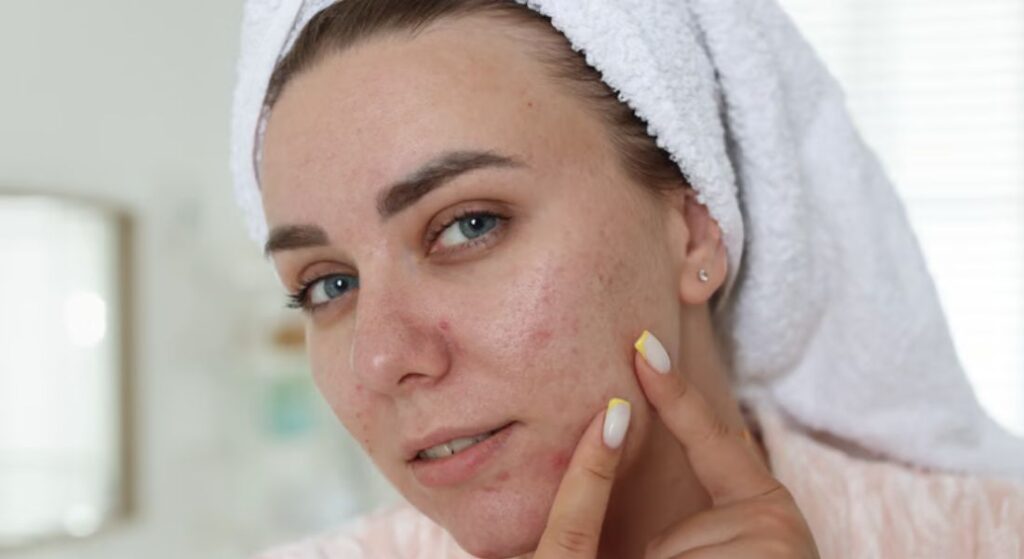
Skin that reacts is often mislabelled as fragile or poorly functioning, but reactivity is not a sign of weakness it is a sign of responsiveness. Redness, stinging, or breakouts are your skin’s way of communicating stress or mismatched products. Ignoring these signals doesn’t build resilience; it masks important warnings.
Many people take pride in pushing their skin to “handle” more daily exfoliation, layering strong actives, or constant product experimentation. While tolerance may appear high at first, this approach often leads to chronic sensitivity, pigmentation issues, or unpredictable flare-ups over time.
Truly healthy skin responds appropriately and recovers efficiently. It doesn’t remain silent under stress, and recognising its signals allows you to care for it without causing long-term damage.
The idea that flawless skin is achievable with the right routine
Many people approach skincare as a system of control, believing that the perfect combination of products and habits will guarantee flawless skin. They expect complete consistency and view any deviation like a single breakout or patchiness as failure.
Skin biology does not work that way. Genetics, hormones, immune activity, stress, environment, and ageing all influence how skin behaves, and no routine can override that natural variability. Optimising conditions helps, but it cannot create perfection.
Treating flawless skin as the baseline encourages overcorrection, constant product changes, and unnecessary interventions. Healthy skin fluctuates naturally, and accepting that reality is often the turning point between chronic dissatisfaction and long-term stability.
The belief that texture means something is wrong
Skin texture is often misrepresented as a flaw, but subtle lines, pores, and surface variations are completely normal. Social media filters and unrealistic standards have made smoothness seem essential, creating unnecessary pressure and over-treatment.
1. Normal anatomy shows texture: Everyone’s skin has natural variations; expecting complete smoothness ignores how skin is structured and functions.
2. Over-treating worsens appearance: Excessive exfoliation, harsh products, or barrier disruption can accentuate irregularities instead of improving them.
3. Clinical context matters: Dermatologists assess texture for signs of inflammation, scarring, dehydration, or structural issues. Most variations are harmless, and skin health is judged by resilience and barrier integrity, not flawlessness.
Recognising that texture is normal reduces stress and prevents interventions that can damage the skin, allowing care to focus on long-term function rather than superficial perfection.
The assumption that more products lead to better results
Modern skincare has become increasingly complex, with multi-step routines often seen as a mark of dedication rather than a potential risk. Each additional product introduces variables that can affect skin balance, sometimes in unpredictable ways.
Layering multiple actives increases the likelihood of irritation, incompatibility, and cumulative barrier stress. Over time, this approach can make skin more sensitive rather than improving its appearance.
One of the most effective strategies in clinic is simplification. Removing redundant products often produces better results than continually adding new treatments, and consistent, targeted routines outperform maximalist approaches in almost every long-term outcome.
The framing of oily skin as unhealthy skin

Oil is often viewed as a problem to eliminate rather than a natural, protective part of healthy skin. This misconception leads many people with oily skin to over-cleanse or over-exfoliate, which disrupts the barrier and disturbs the skin’s microbial balance.
Sebum plays a crucial role in maintaining hydration, supporting the barrier, and regulating microbial populations. Aggressively stripping it forces the skin to compensate by producing more oil, which can trigger inflammation, breakouts, and further imbalance.
Oiliness alone is not a sign of unhealthy skin. True pathology arises from congestion, persistent irritation, or barrier dysfunction. Healthy skin is balanced, not entirely matte, and working with sebum rather than against it preserves long-term integrity and resilience.
The belief that discomfort means a product is working
Many people assume that burning, stinging, or persistent tingling signals a product is effective, but this is a dangerous misconception. Sensation indicates irritation, not improvement. Mild, brief tingling can occasionally happen, but pain or persistent discomfort is never necessary for results.
Normalising discomfort encourages ignoring early warning signs, which over time can compromise the skin barrier and trigger delayed hypersensitivity reactions. Chronic irritation undermines long-term skin health, even if short-term results appear promising.
Truly effective skincare works quietly and predictably, supporting function without causing stress or damage to the skin. Learning to differentiate normal adaptation from harmful irritation is key to maintaining resilience and achieving lasting outcomes.
The assumption that “natural” equals safer
Many people assume that “natural” automatically means gentle or safe, but this is misleading. Several natural ingredients, including essential oils, are common irritants and can trigger contact dermatitis, particularly with repeated exposure.
In contrast, many synthetic ingredients are designed for stability, predictability, and minimal allergenic potential. Safety and efficacy are determined by formulation, concentration, and suitability for your skin type not whether an ingredient is marketed as “natural.”
Ultimately, skin responds to chemistry, not marketing. Recognising this helps you make informed choices, avoid unnecessary irritation, and still achieve effective, lasting results.
The habit of copying other people’s routines
Following someone else’s skincare routine rarely delivers the same results because skin is highly individual. Differences in barrier strength, oil production, immune response, and microbiome all affect how products behave on your face.
1. Individual biology matters: What works for one person may trigger irritation, breakouts, or ineffectiveness in another due to unique skin characteristics.
2. Borrowed routines often cause damage: Problems usually arise from misaligned application rather than the products themselves. Overuse or mismatch can weaken the barrier or exacerbate issues.
3. Professional guidance prevents trial and error: Dermatologists assess your skin and recommend tailored routines. Personalised care avoids setbacks and accelerates visible improvement.
Skincare is most effective when it’s customised; copying others may feel convenient but often costs time, comfort, and results. Working with experts ensures treatments truly suit your skin.
The idea that professional input is only for severe problems
Many people delay seeking professional advice, believing they should manage their skin alone. By the time they reach a clinic, habits are often entrenched, and cumulative damage may already be present.
Skin is constantly changing due to age, hormones, environment, and overall health. What worked in the past can quietly undermine skin later, even if it once seemed effective or harmless.
Early guidance prevents escalation and encourages informed choices rather than aggressive interventions. Good skin isn’t about self-sufficiency; it’s about making decisions grounded in accurate information and expert insight.
What healthy skin actually looks like
Once myths are stripped away, healthy skin is less dramatic than most people expect. It is not flawless, poreless, or completely static, and that is perfectly normal. Imperfections, minor texture, and subtle variations are part of natural skin anatomy.
Healthy skin responds and recovers well after stress. It tolerates products appropriately, maintains comfort most of the time, and adapts to environmental or hormonal changes without long-term damage. Occasional events like flushing, pigmentation shifts, or breakouts do not negate its overall health.
The focus is resilience, not perfection. Skin that adapts, heals efficiently, and functions effectively rather than looking unrealistically uniform is the real benchmark of dermatological health. Recognising this allows you to care for your skin thoughtfully, avoid unnecessary interventions, and appreciate its natural strength.
The confusion between cosmetic improvement and skin health
One of the most subtle misconceptions is assuming that cosmetic improvement automatically means healthier skin. Temporary changes like smoother texture, brighter tone, or clearer appearance are often mistaken for biological progress, but this is misleading.
Many cosmetic effects are short-term and superficial. Silicone-based smoothing, dehydration-induced tightness, or temporary suppression of inflammation can make skin look better briefly, while doing little or even harming long-term resilience.
In clinic, we focus on whether improvement is durable. Does the skin recover more efficiently over time? Does sensitivity reduce? Does barrier function strengthen? These indicators are far more meaningful than instant visual changes. Chasing appearance alone can sacrifice lasting skin health without patients even realising it.
The belief that inflammation is always obvious
Many people assume inflammation is always dramatic redness, heat, or pain but in reality, it’s often quiet and persistent. Low-grade inflammation can appear as uneven pigmentation, increased sensitivity, delayed healing, or subtle texture changes that accumulate over time.
Routines that seem sophisticated may unintentionally promote inflammation. Layering too many actives, skipping recovery periods, or constantly disrupting the barrier creates a chronic, low-level stress state that undermines skin health.
Good skin is not entirely inflammation-free; it is inflammation-controlled. This distinction matters far more than visual smoothness, as managing underlying stress ensures resilience, function, and long-term integrity.
The misunderstanding of ageing as skin failure
Ageing skin is often misinterpreted as failure. Lines, laxity, and textural changes are treated as problems to erase rather than natural biological processes to manage intelligently. Expecting to “turn back the clock” pushes many toward overly aggressive routines.
Overuse of resurfacing treatments or strong stimulatory actives can backfire, especially in later decades, weakening the barrier and increasing sensitivity. In contrast, ageing skin benefits most from stability, consistent routines, and targeted, supportive interventions.
Healthy ageing skin isn’t about reversing time. It’s about maintaining function, resilience, and barrier integrity while natural changes occur, allowing the skin to adapt gracefully rather than be constantly forced.
The role of stress and nervous system load
Stress is often underestimated in skincare because it isn’t as visible or measurable as creams or serums, yet its impact is profound. Chronic stress disrupts immune signalling, slows barrier repair, alters oil production, and lowers inflammatory thresholds, leaving skin more reactive and unpredictable.
No routine can fully override a persistently stressed system. Layering multiple actives or treatments in this context often worsens outcomes instead of improving them.
Truly healthy skin reflects a regulated nervous system as much as a considered routine. Recognising this connection allows products and interventions to work effectively, supporting resilience rather than simply masking stress-related reactivity.
The expectation that skin should behave consistently every day
It’s common to worry when skin looks different from one day to the next, but short-term variation is entirely normal. Hydration, sleep, diet, hormones, and environmental factors all subtly influence appearance without indicating damage.
1. Normal fluctuations are harmless: Minor changes in texture, oiliness, or glow reflect natural skin responses and don’t signal instability.
2. Volatility signals fragility: Over-treatment or inadequate support can make skin overly reactive, creating exaggerated changes to minor triggers.
3. Healthy skin adapts gracefully: Balanced skin responds subtly, recovers efficiently, and maintains overall function. Restoring this steadiness is central to effective, long-term care.
Accepting natural variation prevents unnecessary worry and encourages routines that support resilience rather than over-correction.
The danger of treating prevention as punishment
Preventative skincare is often framed as a test of discipline, with strict avoidance, relentless routines, and fear-driven messaging dominating the conversation. This approach fosters resentment and burnout, leading people to swing between rigid control and complete neglect.
Effective prevention is proportionate and adaptable. Sunscreen, for example, should be incorporated naturally into your routine rather than becoming a burdensome ritual.
Healthy skin habits are sustainable, not oppressive. When prevention feels manageable, consistent care becomes achievable, supporting long-term resilience without stress.
Why consistency matters more than optimisation
Many people focus on chasing the “perfect” routine, frequently switching products in pursuit of marginal gains. This constant tinkering disrupts the skin’s repair and adaptation processes, limiting real progress.
Skin responds best to consistency, allowing barrier function, hydration, and resilience to stabilise over time. In clinic, we emphasise routines that can be maintained even during busy or stressful periods.
A good routine is one you can follow reliably without overthinking. Long-term improvement comes not from optimisation, but from steady, manageable care that supports the skin’s natural function.
The difference between control and care

Control-driven skincare aims to eliminate every perceived flaw oil, texture, pigmentation, or signs of ageing often creating stress and over-treatment. In contrast, care-driven skincare focuses on support: reinforcing the barrier, aiding repair, promoting tolerance, and encouraging recovery.
Control may feel productive in the short term, but it often destabilises skin and undermines long-term health. Care, while less dramatic, delivers consistent, lasting outcomes.
When people shift from control to care, their skin usually becomes calmer, more predictable, and easier to manage. This mindset encourages sustainable routines and reduces frustration with natural variation.
FAQs:
1. Are visible pores a sign of unhealthy skin?
No. Pores are normal structures connected to sebaceous glands. Their size fluctuates with oil production, hydration, and lighting, and healthy skin is about clear, uninflamed pores not invisibility.
2. Does reactive or sensitive skin indicate weakness?
Not at all. Redness, stinging, or breakouts show your skin is responsive, not failing. Recognising these signals allows for safer care and prevents long-term damage.
3. Can any routine guarantee flawless skin?
No. Genetics, hormones, environment, and ageing all influence skin behaviour. Healthy skin fluctuates naturally, and aiming for perfection often drives over-treatment and unnecessary stress.
4. Does texture mean my skin is unhealthy?
Minor lines, pores, and surface variations are completely normal. Dermatologists assess texture in context, focusing on barrier function and resilience rather than absolute smoothness.
5. Will more products improve my skin faster?
Usually not. Overloading with products increases irritation risk and disrupts balance. Simplified, consistent routines are far more effective than maximalist approaches.
6. Is oily skin unhealthy?
No. Sebum protects the skin and maintains barrier integrity. Problems arise only when oil leads to congestion or persistent irritation, not from natural oiliness itself.
7. Does tingling or discomfort mean a product is working?
No. Persistent stinging or burning signals irritation, not improvement. Effective skincare supports function quietly without causing harm.
8. Are natural ingredients automatically safer?
Not necessarily. Many natural ingredients, such as essential oils, can irritate the skin. Safety depends on formulation, concentration, and suitability, not marketing labels.
9. Should I copy someone else’s skincare routine?
No. Skin is highly individual. What works for one person may cause breakouts or sensitivity in another. Tailored routines guided by a professional are more effective.
10. Is professional advice only for severe problems?
No. Early guidance prevents cumulative damage, helps navigate natural fluctuations, and ensures routines support resilience rather than just appearance.
Final Thoughts: Rethinking “Good Skin”
True skin health isn’t about perfection, invisibility, or flawless appearance. It’s about resilience, recovery, and consistent function responding appropriately to stress, environment, and age while maintaining barrier integrity. Accepting natural variation reduces anxiety and prevents counterproductive over-treatment.
Shifting from control-driven routines to care-focused practices ensures long-term skin stability. Simplifying your regimen, respecting your skin’s signals, and maintaining consistency often delivers far better results than chasing cosmetic ideals or constantly switching products. Understanding the difference between superficial improvement and genuine skin health allows you to prioritise strategies that support long-term resilience.
If you would like to book a consultation with one of our dermatologists, you can contact us at the London Dermatology Centre. Early, personalised guidance helps protect your skin, improves outcomes, and ensures your routine works with your biology, not against it.
References:
- Flament, F., et al. (2015). Facial skin pores: a multiethnic study. Journal of Cosmetic Dermatology, https://pmc.ncbi.nlm.nih.gov/articles/PMC4337418/
- Mim, M.F., et al. (2024). ‘The dynamic relationship between skin microbiomes and personal care products: a comprehensive review.’ https://www.sciencedirect.com/science/article/pii/S2405844024105804
- Baker, P., et al. (2023). Skin Barrier Function: The Interplay of Physical, Chemical, and Biological Features. Cells, https://www.mdpi.com/2073-4409/12/23/2745
- Oxford Handbook of Medical Dermatology (2019). Chapter on Dermatology Fundamentals. https://academic.oup.com/book/30100/chapter-abstract/266440687
- Palawisuth, S., et al. (2021). Quantitative Assessment of Long‑Term Efficacy and Safety of Laser Treatment for Pores. https://pmc.ncbi.nlm.nih.gov/articles/PMC9291000/