


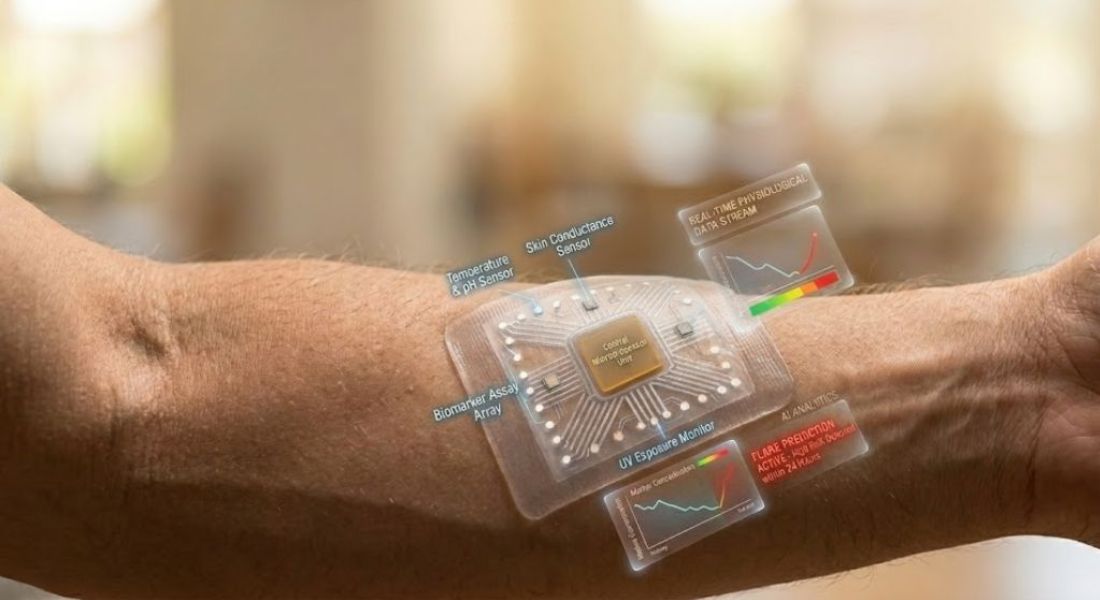
Chronic skin conditions such as eczema, psoriasis, and rosacea are often unpredictable. You may notice that flares appear suddenly without clear warning. This uncertainty can be one of the most frustrating aspects of living with inflammatory skin disease.
In 2026, wearable technology is beginning to explore a new possibility. Instead of reacting to flares after they appear, researchers are investigating whether physiological markers could predict them in advance. Smart skin monitoring aims to shift dermatology from reactive to proactive care.
This article explores how wearable sensors work, what they measure, and whether they could truly forecast flare-ups. We examine the science behind inflammation tracking and the practical implications for patients. Most importantly, we explain what this emerging technology could realistically mean for you.
What Is Smart Skin Monitoring?
Smart skin monitoring refers to wearable devices that track biological signals linked to your skin health. These can look like small adhesive patches, wristbands, or discreet sensors placed on the skin. They continuously collect physiological data, giving you a much more detailed picture of what’s happening beneath the surface.
Unlike traditional clinic appointments, which offer only occasional snapshots, wearable technology allows ongoing monitoring. For you, this means patterns can be identified over time rather than relying on memory or isolated flare-ups. Subtle changes may even be detected before you notice visible symptoms.
The real goal is prediction rather than simple recording. Instead of just documenting when a flare happens, the technology may help anticipate it. That shift from reactive to proactive care represents a major change in how dermatology supports you and your skin health.
Why Predicting Flares Matters
Inflammatory skin conditions can be frustratingly unpredictable. You might feel completely stable one day, then wake up to redness, itching, or irritation the next. That sudden shift can feel like it comes out of nowhere. The lack of warning is often one of the hardest parts to manage.
If flares could be predicted even 24 to 48 hours in advance, you’d have the chance to act early. Starting treatment sooner may reduce both the severity and the duration of a flare. Instead of reacting once symptoms peak, you’d be stepping in before things escalate. That kind of proactive management can make a real difference to your day-to-day life.
Earlier intervention may also reduce the need for stronger rescue treatments. By catching inflammation at a milder stage, you may prevent it from spiralling. For you, this can mean fewer disruptions to work, sleep, and social plans. Small timing advantages can translate into meaningful improvements.
There’s also an emotional benefit. Living with unpredictability can create constant low-level anxiety. When you’re able to anticipate changes, you regain a sense of control. That reassurance alone can make managing a chronic skin condition feel far less overwhelming.
Physiological Markers of Skin Inflammation
Inflammation doesn’t just show up as visible redness. Before you see anything on the surface, your skin may already be changing in subtle ways temperature can rise slightly, hydration levels can shift, and electrical conductance can alter. These physiological changes often happen before you notice itching or irritation. For you, that means there may be early warning signs your eyes simply can’t detect.
Wearable sensors are designed to pick up these small fluctuations. A slight increase in local skin temperature can signal early inflammatory activity, while changes in transepidermal water loss may indicate barrier disruption before a rash appears. By tracking these markers continuously, the technology may offer advance notice of a flare. Instead of waiting for visible symptoms, you could respond to measurable changes happening beneath the surface.
Monitoring Skin Temperature
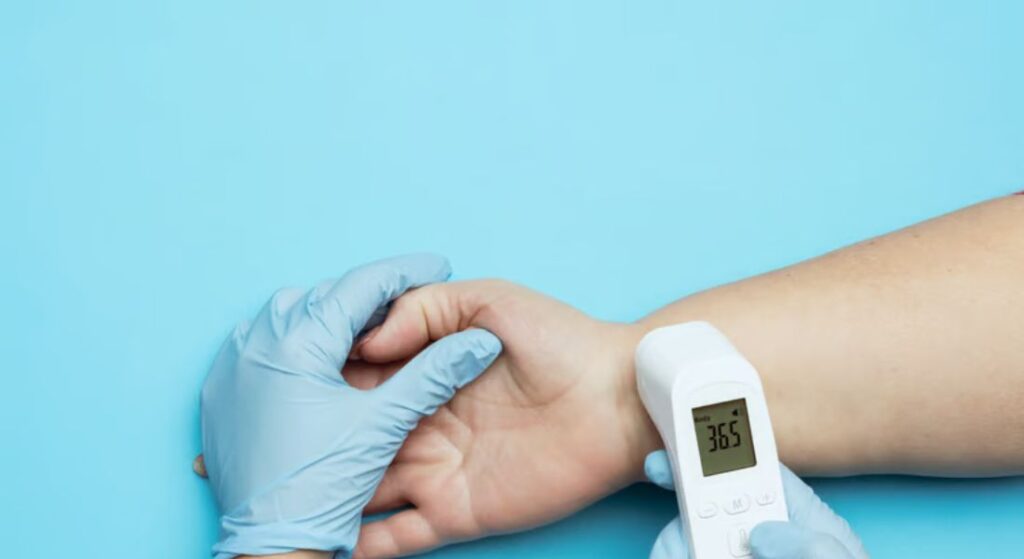
If you’ve ever noticed that inflamed skin feels warm to the touch, that’s not your imagination. When inflammation builds, blood flow to the area increases and that raises surface temperature. What’s interesting is that these temperature shifts can sometimes happen before you see obvious redness or swelling.
1. Early thermal changes: Micro-sensors are now capable of detecting very small temperature variations across the skin. These subtle increases may appear before visible symptoms develop, giving you an earlier indication that a flare could be building.
2. Tracking patterns over time: Continuous temperature monitoring allows trends to emerge. If you repeatedly see small elevations in the same area, that pattern may correlate with your flare cycles. Over time, those data points become clinically meaningful rather than random readings.
3. Turning data into insight: A single temperature reading doesn’t tell you much. But repeated measurements analysed together can highlight deviations from your personal baseline. That’s where predictive monitoring starts to become useful.
4. Why temperature isn’t enough on its own: Warm skin doesn’t automatically mean disease activity. Exercise, environmental heat, or friction can also raise temperature. That’s why thermal data needs to be interpreted alongside other signals such as redness detection, hydration levels, or molecular biomarkers.
In short, temperature monitoring has potential as an early warning tool. For you, the key idea is that inflammation leaves measurable traces before it becomes obvious. When combined with other parameters, thermal tracking could support more proactive and personalised skin management.
Measuring Skin Hydration and Barrier Integrity
Your skin barrier plays a central role in many inflammatory conditions. When that barrier becomes compromised, problems often follow. Wearable patches can now measure your skin hydration levels in real time, giving insight into how well your barrier is functioning. If hydration drops, it may signal that your skin is becoming vulnerable before you even feel discomfort.
Some devices also measure transepidermal water loss, which tracks how much moisture is evaporating from your skin. An increase can suggest weakening barrier integrity and may occur before itching or visible irritation starts. For you, this opens the door to early intervention applying moisturiser or adjusting treatment before a flare escalates. Sometimes, a simple preventative step taken at the right moment can significantly reduce the severity of symptoms.
Tracking Sweat and Electrolyte Changes
Sweat can tell you more than you might think. Changes in sweat composition, including electrolyte levels, may reflect shifts in inflammatory activity within your body. Some wearable sensors are now designed to analyse these subtle variations. For you, this could mean gaining insight into immune changes without waiting for visible skin symptoms.
One of the biggest advantages of sweat-based biosensing is that it’s non-invasive. Instead of repeated blood tests, continuous sampling can happen quietly through a skin patch. That makes it far more practical for long-term monitoring. You get ongoing data without disrupting your daily routine.
As of 2026, researchers are still refining how accurate and clinically useful these measurements are. Validation studies are ongoing to ensure the data truly reflects meaningful inflammatory changes. Early findings are encouraging, but the technology is still evolving. For you, that means the potential is exciting but it’s important to view it as developing rather than definitive.
Detecting Stress Biomarkers
Stress is a well-known trigger for many inflammatory skin conditions. You’ve probably noticed that your skin can flare during busy, emotional, or high-pressure periods. Wearable devices can measure heart rate variability, which reflects how your nervous system is responding to stress. When variability shifts, it may signal that your body is under strain even before you consciously feel it.
Cortisol, the body’s primary stress hormone, also plays a role in flare patterns. Directly measuring cortisol through wearables is still technically challenging, but indirect markers of physiological stress are much easier to track. For you, this means stress patterns can still be identified without invasive testing. These signals provide useful background information alongside skin-specific data.
When stress data is combined with skin temperature, hydration, and barrier measurements, prediction models become more sophisticated. Instead of looking at your skin in isolation, the system recognises that inflammation is influenced by your wider physiology. That broader perspective can improve accuracy in anticipating flare-ups.
Skin health doesn’t exist in a vacuum. Your immune system, nervous system, and hormonal balance all interact in complex ways. By monitoring the whole body rather than just the surface, wearable technology may offer you a more complete understanding of what triggers your symptoms. This integrated approach represents a shift toward truly personalised care.
Artificial Intelligence and Data Interpretation
Raw sensor data on its own doesn’t mean very much. You might collect thousands of data points on temperature, hydration, stress, and sweat composition, but without interpretation, it’s just numbers. Artificial intelligence systems analyse these patterns over time, looking for meaningful connections. Algorithms can identify correlations between subtle physiological shifts and the timing of your flare-ups.
Machine learning strengthens this process. The more data your device gathers, the better the system becomes at recognising your individual patterns. Over time, predictions can become increasingly personalised to you rather than based on general population trends. This gradual refinement is what improves predictive accuracy.
That said, AI doesn’t replace medical judgement. It acts as a support tool, highlighting trends and potential warning signs. Clinical oversight remains essential to interpret the data in context and guide appropriate treatment decisions. For you, the technology enhances care it doesn’t substitute the expertise of a trained clinician.
Personalised Dermatology Care

Wearable data opens the door to truly personalised dermatology care. Instead of following a fixed, one-size-fits-all schedule, your treatment plan can adapt based on what your skin is actually doing. This fits neatly with the wider move towards precision medicine, where care is tailored to the individual rather than the average. For you, that means therapy can evolve in real time rather than waiting for the next appointment.
If your device detects early signs of increased inflammation risk, your topical treatment might be stepped up before a flare fully develops. On the other hand, if your skin appears stable, medication intensity could potentially be reduced. This kind of responsive adjustment helps prevent both under-treatment and unnecessary overtreatment. It’s a smarter, more balanced approach to managing chronic skin conditions.
Personalisation also tends to improve adherence. When treatment feels responsive to your needs rather than rigid and repetitive, you’re more likely to stay engaged. You’re not just following instructions you’re actively participating in your care. That sense of involvement can make managing your skin feel far more empowering.
Application in Eczema
In eczema, the skin barrier becomes weakened and inflammation simmers beneath the surface before you can always see it. Wearable sensors may be able to pick up early warning signs, such as increased dryness, subtle rises in skin temperature, or changes in water loss. That combination could signal a flare brewing before the itching properly kicks in. Instead of being caught off guard, you’d have a heads-up.
With that early signal, you could step in sooner applying moisturisers more intensively or starting anti-inflammatory treatment before symptoms escalate. Acting preventatively rather than reactively may reduce flare severity and shorten recovery time. Clinical trials are still assessing how accurate these predictions truly are, and widespread use isn’t established just yet. It’s promising, though, and research is steadily moving forward.
Application in Psoriasis
With psoriasis, flares are driven by complex inflammatory cascades happening beneath the surface. Before plaques fully develop, there may be subtle shifts in skin temperature or local blood flow. Continuous monitoring could potentially pick up these early physiological changes, giving you insight into what’s happening before visible thickening or scaling appears.
What makes prediction more powerful is combining those biological signals with environmental data. Stress levels, changes in climate, sleep disruption, and even seasonal patterns can all influence psoriasis activity. When wearable data is integrated with these external factors, the overall prediction model becomes more reliable and personalised to your specific triggers.
In the future, personalised alerts might help guide adjustments to topical treatments or even systemic therapy, in discussion with your clinician. Acting early could shorten flare duration and reduce severity. That said, clinical validation is still ongoing, and while the direction is encouraging, widespread adoption depends on robust long-term evidence.
Monitoring Rosacea Activity
If you live with Rosacea, you’ll know how reactive your skin can be. Heat, stress, spicy food, alcohol even a warm room can trigger flushing. What’s happening underneath is often subtle vasodilation, where small blood vessels expand before redness becomes obvious.
1. Detecting early vascular changes: Wearable temperature sensors may be able to pick up very small increases in skin warmth linked to early vasodilation. These shifts can occur before you notice visible flushing. That gives you a potential early warning rather than reacting once a flare is fully established.
2. Recognising your personal trigger patterns: When temperature data is tracked continuously, patterns begin to emerge. You might notice consistent elevations after certain activities or environmental exposures. Identifying those links allows you to adjust behaviour for example, limiting heat exposure or modifying stress triggers before escalation occurs.
3. Supporting lifestyle modification in real time: Instead of relying purely on memory (“Was it the coffee? The weather?”), you have objective data. If a temperature spike appears after sun exposure or exercise, you can respond quickly cooling the skin or stepping out of a hot environment.
4. Technology as a complement, not a replacement: Wearables don’t replace traditional advice. Avoiding known triggers, using appropriate skincare, and following medical guidance remain essential. But objective feedback can strengthen your confidence in managing the condition.
For you, the real benefit is awareness. When subtle physiological changes are visible before symptoms worsen, you’re better equipped to act early. Technology doesn’t eliminate rosacea but it may help you stay one step ahead of it.
Remote Dermatology Integration

Wearable data can be securely transmitted to your dermatologist, allowing remote monitoring between appointments. Instead of waiting weeks to review how things have been going, your clinician can spot early warning signs and intervene sooner if needed. This kind of real-time insight fits naturally with the growth of teledermatology, making virtual care more proactive rather than purely reactive.
Sharing objective data also changes the conversation. Rather than relying only on how you remember your symptoms, there are measurable trends to review together. That can make clinical decisions more precise and collaborative. Of course, strong privacy safeguards are essential secure data handling is what builds trust. When integrated responsibly, remote monitoring can enhance care without compromising confidentiality.
Limitations of Current Technology
Wearable sensors are improving quickly, but they’re still a developing technology. Accuracy can vary between devices, and not all measurements are equally reliable yet. Standardisation across manufacturers is still being refined, which means results may not always be directly comparable. So while the direction is exciting, it’s fair to say the tech isn’t perfect.
False positives are another reality. Not every small rise in skin temperature or shift in hydration means inflammation is starting. Exercise, weather changes, or even emotional stress can influence readings. That’s why interpretation always needs context raw data on its own doesn’t tell the full story about what your skin is doing.
Most importantly, technology should complement medical assessment, not replace it. Wearables can provide helpful signals and trends, but clinical expertise remains central to diagnosis and treatment decisions. Keeping balanced expectations helps you see these devices as supportive tools rather than definitive answers.
Data Privacy and Ethical Concerns
Continuous monitoring naturally raises questions about privacy. If you’re wearing a device that tracks your skin and physiological data around the clock, you’ll want reassurance that your personal health information is properly protected. Robust security systems and clear ethical frameworks are essential to make that possible. Without them, trust quickly erodes.
You should always understand how your data is stored, who can access it, and how it might be used. Is it anonymised? Is it shared for research? How long is it kept? Transparency isn’t a luxury here it’s fundamental. When you’re fully informed and have given clear consent, you remain in control of your own health information.
Strong regulation also plays a key role. Oversight bodies help ensure companies develop these technologies responsibly and respect patient rights. Innovation only works long term if it’s built on ethical practice. When privacy, consent and accountability are prioritised, you can benefit from new technology without feeling exposed.
Accessibility and Cost
Advanced wearable devices can be expensive, especially in the early stages of development. If you’re considering using one, cost may be a genuine barrier, and insurance coverage can vary widely depending on your provider and location. At the moment, access isn’t evenly distributed, which means some patients benefit sooner than others.
Over time, though, technology typically becomes more affordable. As production scales up and more companies enter the market, prices often decrease. Wider adoption tends to drive competition and innovation, gradually making devices more mainstream and accessible to a broader population. What feels cutting-edge today can become routine in just a few years.
Equitable access is an important consideration. Innovation shouldn’t widen health inequalities it should reduce them. If these tools truly improve outcomes, they should be developed and distributed in ways that allow as many patients as possible to benefit. Inclusive thinking needs to sit alongside technological progress.
Long-Term Clinical Validation
Predictive accuracy has to be demonstrated in large, well-designed clinical trials before this technology can be fully trusted. Just because two factors appear linked doesn’t mean one causes the other correlation alone isn’t enough. Researchers need robust validation to confirm that wearable signals genuinely predict flares, rather than simply coinciding with them.
Long-term studies are particularly important. They assess whether results remain consistent over time and across different patient groups. Reproducibility strengthens confidence, and confidence drives clinical adoption. Ultimately, widespread endorsement depends on clear evidence that these systems are both safe and accurate. Responsible integration into routine care takes time and it should.
Future Developments
If you look at where wearable skin technology is heading, it’s clear that we’re only at the beginning. The next generation of sensors won’t just measure one signal they’re likely to integrate multiple biomarkers at the same time.
1. Multi-parameter monitoring: Instead of tracking temperature alone, future devices may simultaneously measure hydration, pH, inflammatory markers, and microvascular changes. When these signals are analysed together, predictive accuracy improves. For you, that means earlier and more reliable detection of subtle changes.
2. Greater predictive power through combined data: A single data point can be misleading. But when several biological markers shift in the same direction, patterns become clearer. Combined data strengthens the system’s ability to distinguish between normal variation and early disease activity.
3. Miniaturisation and improved comfort: As technology advances, devices are becoming smaller and more discreet. Adhesive patches may become nearly invisible and lightweight, making them easier to wear consistently. Comfort plays a major role in whether you actually use a device long term.
4. Integration with mobile health platforms: Seamless connection with smartphone apps and digital health systems will make real-time insights more accessible. You may be able to view trends instantly, receive alerts, or share data securely with your clinician.
Progress in this area is steady rather than dramatic, but it’s meaningful. The goal isn’t just innovation for its own sake it’s giving you clearer, earlier insight into your skin health in a way that fits naturally into everyday life.
What This Means for You
Smart skin monitoring represents a genuine shift in how your care could work. Instead of waiting until redness, itching or plaques are clearly visible, subtle early signals might prompt action sooner. That kind of early awareness can feel empowering you’re responding to patterns, not just reacting to symptoms.
At the same time, it’s important to keep things in perspective. Wearable technology doesn’t replace professional assessment or diagnosis. It acts as a support tool, helping you and your clinician make more informed decisions together. Medical oversight remains central, especially when adjusting treatment plans.
Staying informed about emerging research puts you in a strong position. It’s completely reasonable to feel optimistic about innovation in this space, while also recognising that the science is still evolving. Responsible optimism hopeful but grounded is probably the healthiest stance as this technology continues to develop.
FAQs:
1. What is smart skin monitoring?
Smart skin monitoring uses wearable sensors to track biological signals linked to inflammation and skin barrier health. Instead of relying on occasional clinic visits, you receive continuous data about subtle physiological changes happening beneath the surface. The goal is not just to record flares, but to anticipate them before visible symptoms appear.
2. Can wearable sensors really predict flare-ups?
Research suggests they may be able to identify early warning signs such as rising skin temperature or changes in hydration before a flare becomes obvious. However, predictive accuracy is still being validated in clinical trials. For you, this means the technology is promising but not yet definitive.
3. What kinds of skin conditions could benefit?
Chronic inflammatory conditions such as eczema, psoriasis, and rosacea are the primary focus. These conditions often show subtle physiological changes before visible symptoms develop. Continuous monitoring may help you intervene earlier and potentially reduce flare severity.
4. What do wearable skin sensors actually measure?
Devices can track markers like skin temperature, hydration levels, transepidermal water loss, and sometimes stress-related indicators such as heart rate variability. Some emerging systems are also exploring sweat composition and inflammatory biomarkers. When combined, these signals provide a broader picture of what your skin is doing.
5. How does temperature monitoring help detect inflammation?
Inflamed skin typically becomes warmer due to increased blood flow. Micro-sensors can detect small temperature rises that may occur before redness appears. For you, this could serve as an early alert that inflammation is beginning to build.
6. Can stress tracking really influence skin flare prediction?
Stress is a recognised trigger for many inflammatory skin conditions. Wearables can monitor indirect stress markers like heart rate variability, helping identify when your body is under strain. When stress data is analysed alongside skin readings, predictions may become more accurate.
7. Will wearable technology replace dermatologist appointments?
No, wearable devices are designed to support not replace medical care. They provide additional data that can guide conversations and treatment adjustments. Clinical expertise remains essential for diagnosis and management decisions.
8. Is the data from these devices reliable?
Accuracy is improving, but not all devices are equally validated yet. Large-scale, long-term clinical studies are still ongoing to confirm predictive reliability. For you, it’s important to view current devices as supportive tools rather than guaranteed forecasting systems.
9. Are there privacy concerns with continuous monitoring?
Yes, continuous health tracking raises important questions about data security and consent. You should always understand how your data is stored, who can access it, and how it may be used. Responsible companies prioritise encryption, transparency, and regulatory compliance.
10. What could this mean for dermatology in the future?
Smart monitoring may shift dermatology from reactive treatment to proactive care. Instead of waiting for visible symptoms, you could respond to measurable early signals. While the science is still evolving, the long-term aim is more personalised, timely, and preventative skin management.
Final Thoughts: Smart Skin Monitoring and the Future of Dermatology
Smart skin monitoring signals an important shift in how chronic inflammatory conditions may be managed in the years ahead. While wearable sensors and predictive algorithms are still developing, early research suggests real potential to identify subtle physiological changes before visible flares appear. As with all medical innovation, progress in dermatology remains evidence-led, carefully validated, and grounded in patient safety. The goal is not to replace clinical expertise, but to enhance it moving from reactive treatment towards more personalised, proactive care.
If you’re considering a dermatologist in London, you can get in touch with us at London Dermatology Centre to discuss how emerging monitoring technologies, current treatment options, and evolving research may relate to your individual skin concerns. Staying informed and seeking specialist guidance remains the most reliable way to navigate this rapidly advancing field.
References:
- Wu, T. & Liu, G. (2025) Non‑Invasive Wearables in Inflammation Monitoring: From Biomarkers to Biosensors, Biosensors, https://pubmed.ncbi.nlm.nih.gov/40558433/
- Khan, Y., Todorov, A., Torah, R., Beeby, S. & Ardern‑Jones, M.R. (2024) Skin sensing and wearable technology as tools to measure atopic dermatitis severity, Skin Health and Disease https://pmc.ncbi.nlm.nih.gov/articles/PMC11442081/
- Tao, Q., Liu, S., Zhang, J., Jiang, J. & Chen, H. (2023) Clinical applications of smart wearable sensors, iScience, https://www.sciencedirect.com/science/article/pii/S2589004223015626
- Sharma, P. et al. (2025) Wearable devices detect physiological changes that precede and are associated with symptomatic and inflammatory rheumatoid arthritis flares, Scientific Reports, https://pubmed.ncbi.nlm.nih.gov/41318620/
- Khan, Y. et al. (2024)Skin Sensing and Wearable Technology as Tools to Measure Atopic Dermatitis Severity, Skin Health and Disease https://academic.oup.com/skinhd/article/4/5/ski2.449/7896859