


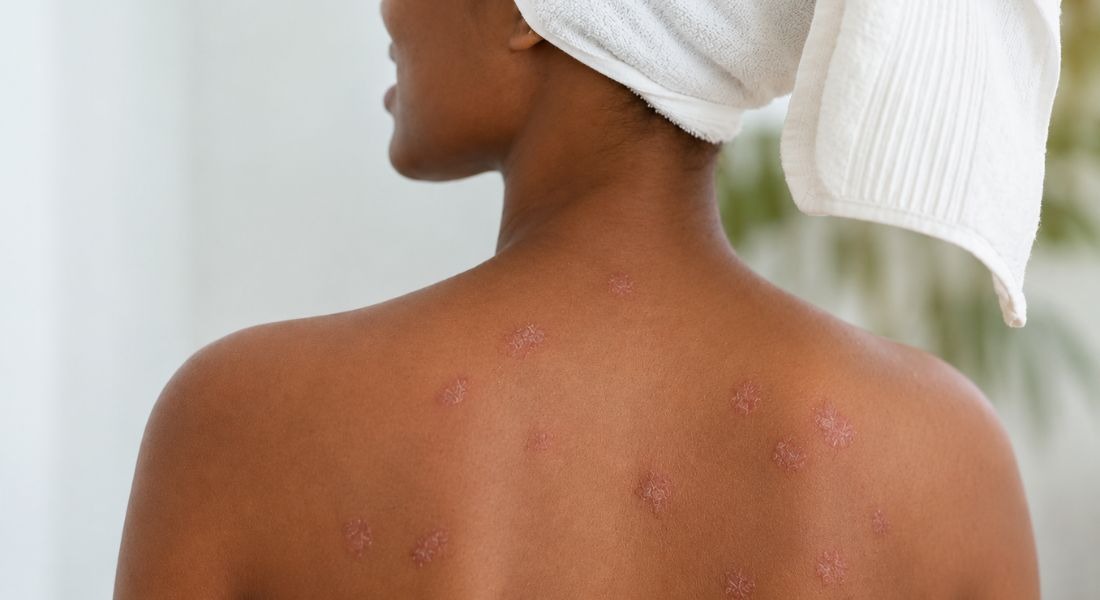
If you have Black skin, you may notice that psoriasis does not always look the same as it is often shown in medical images. This is because the condition does not always appear red, which can make it more difficult to recognise or assess at first glance.
Instead, you may see affected areas that look dark brown, purple, grey-brown, or ashen. The scaling can also appear different, sometimes looking silvery, thinner, or more subtle than the thick white scales often described in lighter skin tones.
Because redness is not always visible, psoriasis in Black skin can sometimes be mistaken for other skin conditions or even under-recognised by healthcare professionals. This can lead to delays in diagnosis or treatment if the condition is assessed based mainly on colour changes.
Understanding these differences is important because it helps you recognise symptoms earlier and seek appropriate care. With timely diagnosis and the right treatment, you can better manage psoriasis and reduce the risk of long-term skin changes.
Why Colour Differences Occur
If you have Black skin, you may notice that psoriasis does not always look the way it is shown in textbooks or online images. This is because higher levels of melanin can mask the typical redness seen in inflammation, even though the underlying disease process is the same.
Although the inflammation is still present, the colour changes may appear differently on your skin. Instead of bright red patches, you may see areas that look purple, dark brown, or grey-brown, which can sometimes make the condition harder to identify at first.
Understanding these colour differences is important because it can help prevent misdiagnosis or delays in treatment. When you recognise how psoriasis presents in darker skin tones, you are more likely to seek timely medical advice and get the right care sooner.
Common Symptoms in Black Skin
Psoriasis in Black skin may not always appear very red or obvious in colour, but it can still cause significant discomfort and changes in the skin. You may notice changes in texture and sensation even when colour changes are subtle.
- Thickened Skin Patches: You may feel raised or thickened areas on the skin that feel different from surrounding skin.
- Itching and Irritation: The affected areas can feel itchy, irritated, or uncomfortable, especially during flare-ups.
- Dry or Scaly Skin: Scaling may be present, but it can sometimes be subtle and less visible depending on your skin tone.
- Rough or Tight Sensation: Your skin may feel rough, tight, or uncomfortable even if there is not a strong visible colour change.
- Variable Appearance: In Black skin, psoriasis may appear as darker, purplish, greyish, or ashy patches rather than classic redness.
Overall, symptoms in Black skin are often more noticeable through texture and sensation rather than redness alone. Understanding these differences can help you recognise psoriasis earlier and seek appropriate treatment sooner.
Plaque Appearance
If you have plaque psoriasis in Black skin, you may notice raised patches that appear dark brown, purple, or grey-brown rather than the bright red commonly shown in medical images. These plaques are often covered with grey or silvery scales, which can vary in thickness depending on how active the condition is.
You may find these plaques developing on areas such as the elbows, knees, back, scalp, or other parts of the body. The exact location, size, and severity can differ from person to person, and symptoms may come and go in cycles.
Understanding how plaque psoriasis appears in Black skin can help you recognise changes earlier and seek appropriate treatment. With the right care, you can better manage flare-ups and reduce the impact on your daily comfort and skin health.
Scalp Involvement
If you have inverse psoriasis, it affects skin folds such as the underarms, groin, under the breasts, or other areas where skin rubs together. These areas are naturally warm and moist, so you may notice smoother, less scaly patches compared to other types of psoriasis.
In Black skin, inverse psoriasis may appear darker than the surrounding skin and can look shiny or glossy rather than red. This difference in appearance can make it harder to recognise, especially if you are expecting the typical redness associated with psoriasis.
It is sometimes mistaken for fungal infections, irritation, or other common skin conditions. This is why careful examination by a healthcare professional is important, so you can get the correct diagnosis and the most effective treatment for your symptoms.
Inverse Psoriasis
If you have inverse psoriasis, it affects skin folds such as the underarms, groin, under the breasts, or other areas where skin rubs together. These areas are naturally warm and moist, so you may notice smoother, less scaly patches compared to other types of psoriasis.
In Black skin, inverse psoriasis may appear darker than the surrounding skin and can look shiny or glossy rather than red. This difference in appearance can make it harder to recognise, especially if you are expecting the typical redness associated with psoriasis.
It is sometimes mistaken for fungal infections, irritation, or other common skin conditions. This is why careful examination by a healthcare professional is important, so you can get the correct diagnosis and the most effective treatment for your symptoms.
Nail Changes
If you have psoriasis, you may notice changes in your fingernails or toenails, such as pitting, thickening, ridges, crumbling, or discolouration. These changes can vary in severity and may develop gradually over time.
In Black skin, nail involvement can sometimes be more subtle and less noticeable than skin plaques. However, these nail changes are still important diagnostic clues that can help healthcare professionals identify psoriasis more accurately.
You may find that nail psoriasis appears before skin symptoms in some cases, or it may develop at the same time as other skin changes. Recognising these signs early can help you get the right diagnosis and start appropriate treatment sooner.
Itching and Discomfort

If you have psoriasis, you may notice that itching and discomfort can still be significant even when the colour changes on your skin are subtle. This itching can sometimes feel persistent and may worsen during flare-ups.
It is important that you try to avoid scratching, as this can increase inflammation and may also lead to further skin irritation or post-inflammatory pigmentation changes. Keeping your skin well moisturised and following your treatment plan can help reduce the urge to scratch.
Managing itch is a key part of controlling psoriasis, and when you address it early, you can help reduce discomfort and prevent your symptoms from worsening over time. With consistent care, you can break the itch–scratch cycle, support skin healing more effectively, and improve your overall comfort and quality of life during both flare-ups and calmer periods.
Triggers for Flares
Psoriasis flare-ups can be triggered by a range of factors, including stress, skin injury, infections, changes in weather, and certain medications. These triggers can vary from person to person, so you may notice that your symptoms worsen in specific situations.
If you have Black skin, you may also find that friction from clothing or certain haircare practices can contribute to irritation and increase the likelihood of flares. Identifying these personal triggers can help you take better control of your condition.
By understanding what worsens your psoriasis, you can make small but effective changes to your routine to help reduce flare frequency. This can lead to more stable skin and improved long-term symptom management.
Diagnosis Challenges
If you have Black skin, psoriasis can sometimes be harder to diagnose because the colour changes may be more subtle. Instead of the typical red appearance, you may notice darker patches or less obvious inflammation, which can make the condition easier to miss at first glance.
To make an accurate diagnosis, a dermatologist will look beyond colour and focus on other important signs. These include the texture of your skin, the presence of scaling, where the patches appear on your body, and whether you have a history of recurring flare-ups.
In some cases, further tests may be needed if the diagnosis is unclear. A skin biopsy or careful assessment of clinical patterns can help confirm whether you have psoriasis and rule out other similar skin conditions.
Treatment Overview
Treatment for psoriasis depends on how severe your condition is, where it appears on your body, and how your skin responds to different therapies. Your dermatologist will tailor the treatment plan to your individual needs so that you get the most effective and safe option for your situation.
- Mild Psoriasis Treatments: You may be offered topical treatments such as corticosteroids or vitamin D analogues to help reduce inflammation and scaling.
- Moderate to Severe Psoriasis: If your psoriasis is more widespread or persistent, phototherapy or systemic treatments may be recommended.
- Targeted Treatment Approach: The location of your psoriasis (such as scalp, face, or body folds) can influence which treatments are most suitable.
- Personalised Care Plan: Your skin type, overall health, and treatment response all play a role in choosing the right therapy for you.
- Stepwise Management: Treatment is often adjusted over time depending on how well your skin responds.
Overall, psoriasis treatment is not one-size-fits-all. A tailored approach helps ensure your symptoms are controlled effectively while minimising side effects and improving your long-term skin health.
Topical Steroid Use
If you have psoriasis, your doctor may prescribe topical corticosteroids to help reduce inflammation, redness, itching, and scaling. These treatments are often effective for controlling flare-ups and improving the appearance and comfort of affected skin.
The strength of the steroid and how often you use it will depend on your symptoms and the area of your body being treated. You may be given a milder option for sensitive areas and a stronger one for thicker plaques, with clear instructions on how to apply it safely.
Using topical steroids correctly is important to get the best results and reduce the risk of side effects. When you follow your treatment plan as advised, you can help keep flare-ups under control more effectively over time.
Non-Steroid Topicals
If you have psoriasis in sensitive areas, your dermatologist may recommend non-steroid topical treatments such as calcineurin inhibitors or vitamin D analogues. These options help reduce inflammation and scaling while avoiding some of the side effects that can be associated with long-term steroid use.
You may find these treatments particularly helpful if you have psoriasis on areas like your face, neck, or skin folds, where the skin is thinner and more delicate. They can be used on their own or alongside other treatments as part of your personalised care plan.
When you use them as directed, non-steroid topicals can provide effective symptom control while being gentle on sensitive skin. Your dermatologist will guide you on how and when to use them to get the best results.
Phototherapy
Phototherapy, particularly narrowband UVB therapy, can be an effective treatment option for moderate to severe psoriasis. It works by slowing down the rapid growth of skin cells and helping to reduce plaque thickness, scaling, and inflammation over time.
Treatment is usually given in a clinical setting over a series of regular sessions, and you may notice gradual improvement as your skin responds. Consistency is important, as results typically build up over several weeks of ongoing treatment.
When properly administered under specialist supervision, phototherapy is considered safe for Black skin. Your dermatologist will carefully adjust the dose to suit your skin type, helping to maximise benefits while reducing the risk of side effects.
Systemic Treatments
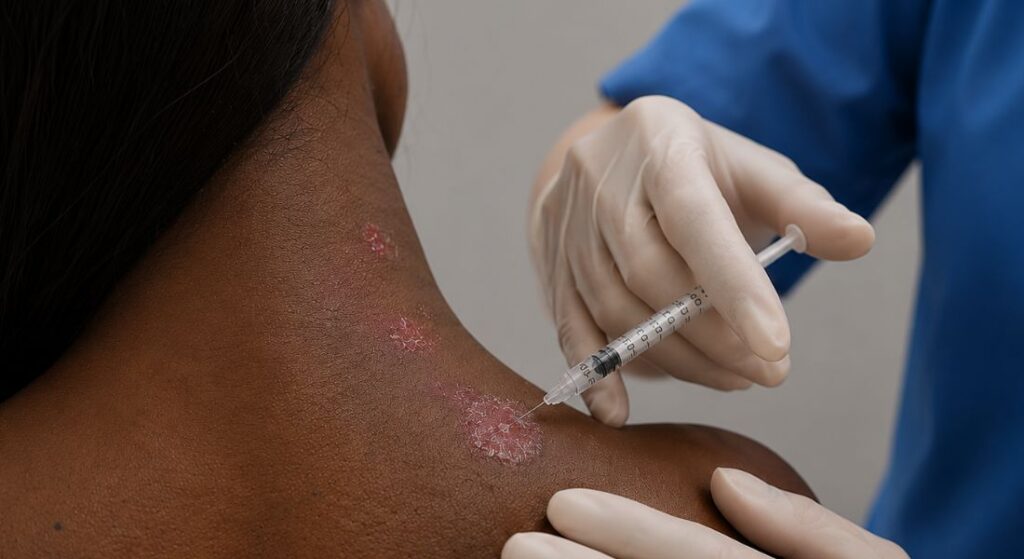
If you have severe psoriasis, your dermatologist may recommend systemic treatments such as biologics, methotrexate, or ciclosporin. These medicines work throughout your body to help control inflammation and are usually considered when topical treatments are not enough.
The treatment your doctor chooses for you will depend on several factors, including how severe your psoriasis is, any other health conditions you may have, and your personal preferences. This ensures that your care plan is both effective and suitable for your individual needs.
Regular monitoring is an important part of systemic treatment. It helps your healthcare team check how well your treatment is working and ensures that it remains safe for you over time, with adjustments made if needed.
Pigmentation Considerations
If you have Black skin, psoriasis can sometimes lead to post-inflammatory pigmentation changes after a flare-up. You may notice darker or lighter patches that remain even after the active inflammation has settled, and these changes can take time to gradually fade.
It is important for you to treat psoriasis early and consistently, as controlling inflammation quickly can help reduce the risk of long-term pigmentation changes. The better you manage flare-ups, the less likely you are to experience noticeable differences in skin tone afterwards.
With the right treatment plan and good skin care habits, you can support your skin’s healing process over time. Being consistent with treatment and protecting your skin can make a real difference in minimising pigmentation changes.
Scalp Care and Hair Practices
Taking care of your scalp is especially important if you have Black skin and scalp psoriasis. You may find that gentle cleansing and medicated shampoos prescribed by your dermatologist help reduce scaling, itching, and inflammation while keeping your scalp more comfortable.
It is also important for you to be mindful of the hair products you use, as harsh chemicals or heavy buildup can irritate the scalp and trigger flare-ups. If you wear styles like braids or extensions, avoiding excessive tension can also help reduce discomfort and prevent further irritation.
By maintaining a consistent and gentle haircare routine, you can support your scalp health and reduce the frequency of flare-ups. Small adjustments in your daily routine can make a meaningful difference in managing symptoms over time.
Emotional Impact
Living with psoriasis can sometimes affect how you feel about your appearance, especially if you have visible plaques or pigmentation changes. You may notice changes in your confidence or feel less comfortable in social situations, particularly during flare-ups.
It can help to understand that these emotional effects are a normal part of living with a visible skin condition. With the right information, support, and reassurance, you can feel more in control and better able to manage the psychological impact of psoriasis.
You may also find it helpful to speak to a counsellor or join a support group where you can share your experiences with others who understand what you are going through. This kind of support can make it easier to cope and help you feel less alone in managing your condition.
Lifestyle Management
Managing psoriasis often involves paying attention to your everyday lifestyle, as this can have a real impact on how frequently your symptoms flare. If you learn to manage your triggers, reduce stress where possible, and maintain a consistent skincare routine, you may notice better overall control of your condition.
You can support your skin by moisturising regularly, using sun protection daily, and following gentle haircare practices if your scalp is affected. Staying consistent with these habits helps strengthen your skin barrier and may reduce dryness, irritation, and flare-ups over time.
Making healthy lifestyle choices can also support your long-term skin health. If you focus on balanced nutrition, good sleep, and avoiding known triggers, you are more likely to experience fewer flares and more stable skin condition overall.
When to Seek Specialist Care

If your psoriasis is persistent, spreading, or starting to affect your daily life, it is important for you to seek advice from a dermatologist. Getting specialist input early can help ensure you receive the right diagnosis and treatment for your symptoms.
You may benefit from specialist care if your symptoms are not improving with basic treatments or if flare-ups are becoming more frequent or severe. A dermatologist can assess your condition in detail and recommend a more targeted treatment plan.
Early intervention can make a significant difference to your long-term outcomes. By seeking help sooner, you can reduce the risk of complications such as worsening inflammation, infection from cracked or broken skin, and long-term pigmentation changes. It also gives you a better chance of finding an effective treatment plan earlier, helping you achieve more stable control of your psoriasis and improving your overall quality of life.
Long-Term Management Strategy
Psoriasis is a chronic condition that requires ongoing care and long-term management. While treatments can effectively control symptoms, you may experience periods when the condition improves and times when flare-ups occur.
Managing psoriasis often involves a combination of treatments, including topical medications, systemic therapies, moisturisers, and lifestyle measures. Your treatment plan will be tailored to your symptoms, the severity of your psoriasis, and how your skin responds over time.
Regular follow-up appointments are an important part of long-term care. By working closely with your dermatologist and following a personalised management plan, you can achieve better symptom control and maintain healthier skin over the long term.
FAQs:
1. Why does psoriasis look purple, grey, or dark brown in Black skin?
In Black skin, higher levels of melanin can make the redness associated with inflammation less visible. As a result, psoriasis plaques often appear purple, dark brown, grey-brown, or ashen instead of bright red. Although the colour may differ, the underlying inflammation is the same and still requires appropriate treatment.
2. Does psoriasis present differently in Black skin compared with lighter skin tones?
Yes. While the condition causes similar symptoms across all skin types, the colour and appearance of the plaques can vary significantly. In Black skin, scaling may appear grey or silvery, and redness may be replaced by darker shades, which can make the condition more difficult to recognise.
3. Can psoriasis in Black skin be mistaken for another skin condition?
Yes. Psoriasis may be confused with eczema, seborrhoeic dermatitis, fungal infections, or other inflammatory skin disorders. Because redness is less obvious, diagnosis often depends on identifying scaling, plaque thickness, distribution, and symptom history.
4. What are the most common symptoms of psoriasis in Black skin?
Common symptoms include thickened patches of skin, scaling, itching, dryness, and discomfort. Some people also experience cracking of the skin, soreness, or a burning sensation. Symptoms can range from mild to severe and may fluctuate over time.
5. How does scalp psoriasis appear in Black skin?
Scalp psoriasis often presents as dark, thickened patches with visible flaking or scaling. The condition may cause itching and discomfort, particularly beneath braids, weaves, wigs, or other protective hairstyles. It can sometimes be mistaken for dandruff, making proper diagnosis important.
6. Can psoriasis cause changes in skin colour after a flare-up?
Yes. Many people with Black skin experience post-inflammatory hyperpigmentation or, less commonly, hypopigmentation after psoriasis lesions heal. These colour changes can persist for weeks or months after the active inflammation has resolved, although they often improve gradually over time.
7. What triggers psoriasis flare-ups?
Common triggers include stress, infections, skin injuries, cold weather, certain medications, smoking, and excessive alcohol consumption. Friction from clothing, irritation from haircare products, or repeated scalp trauma may also contribute to flare-ups in some individuals.
8. What treatments are available for psoriasis in Black skin?
Treatment options depend on the severity and location of the condition. Mild psoriasis is often managed with moisturisers, topical corticosteroids, and vitamin D analogues. Moderate-to-severe cases may require phototherapy, oral medications, or biologic treatments prescribed by a dermatologist.
9. Is phototherapy safe for Black skin?
Yes. Narrowband UVB phototherapy is considered a safe and effective treatment for many people with moderate-to-severe psoriasis, including those with Black skin. Treatment should be carried out under specialist supervision to ensure the correct dosage and minimise potential side effects.
10. When should I see a dermatologist about psoriasis?
You should seek specialist advice if your symptoms are persistent, spreading, causing significant discomfort, affecting your confidence, or not responding to over-the-counter treatments. Early diagnosis and treatment can help control inflammation, reduce the risk of complications, and minimise long-term pigmentation changes.
Final Thoughts: Recognising Psoriasis in Black Skin Early
Psoriasis can look very different in Black skin, often appearing purple, grey, dark brown, or ashen rather than the bright red patches commonly seen in lighter skin tones. Understanding these differences is important because recognising the condition early can lead to faster diagnosis, more effective treatment, and a reduced risk of long-term pigmentation changes. With appropriate medical care, consistent treatment, and good skin management, most people can successfully control symptoms and improve their quality of life. If you’re thinking about psoriasis treatment in London, you can contact us at London Dermatology Centre to book a consultation with one of our specialists.
References:
- Chiricozzi, A., Romanelli, P., Volpe, E., Borsellino, G. and Romanelli, M. (2018) Scanning the immunopathogenesis of psoriasis, International Journal of Molecular Sciences, 19(1), p. 179. Available at: https://www.mdpi.com/1422-0067/19/1/179
- Radaelli, A., et al. (2023) Inflammation and psoriasis: a comprehensive review, International Journal of Molecular Sciences, 24(22), 16095. Available at: https://www.mdpi.com/1422-0067/24/22/16095
- Gkini, M.A., et al. (2025) Psoriasis in people with skin of color: an evidence-based update, International Journal of Dermatology, 64(4), pp. 667–677. Available at: https://pubmed.ncbi.nlm.nih.gov/39887710/
- Alexis, A.F. and Blackcloud, P. (2014) Psoriasis in skin of color: epidemiology, genetics, clinical presentation, and treatment nuances, Journal of Clinical and Aesthetic Dermatology, 7(11), pp. 16–24. Available at: https://pmc.ncbi.nlm.nih.gov/articles/PMC4255694/
- Griffiths, C.E.M. and Barker, J.N.W.N. (2021) Psoriasis, The Lancet, 397(10281), pp. 1301–1315. Available at: https://www.sciencedirect.com/science/article/abs/pii/S0140673620325496