


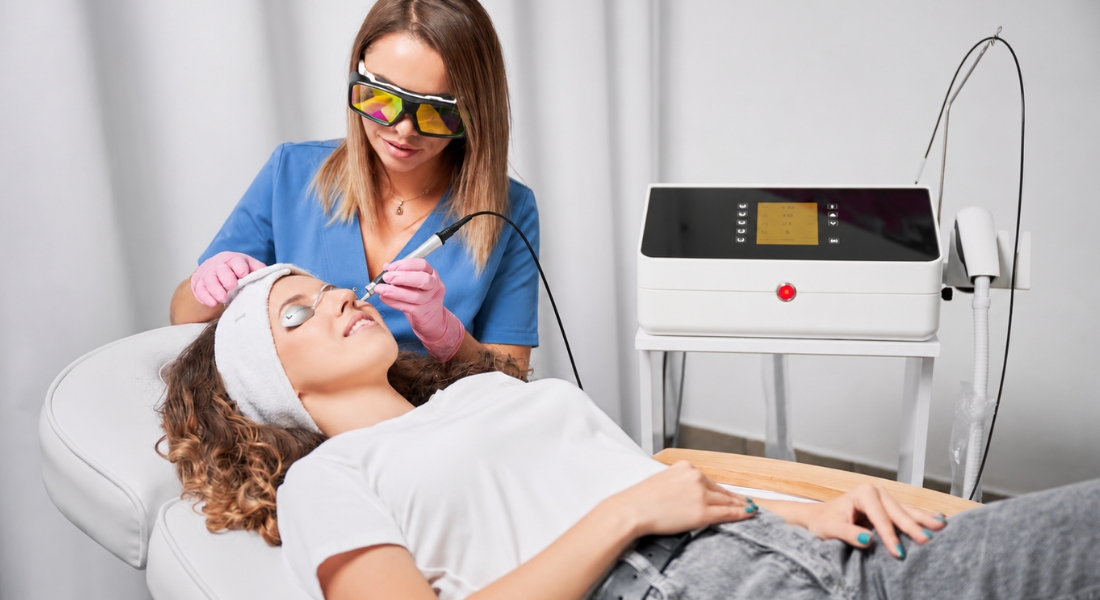
If you have a scar that is raised, itchy, painful or simply more noticeable than you expected, you may be wondering what can actually be done about it. Scar treatment has changed considerably over time, and you now have far more options than the surgical approaches that were once commonly relied upon.
Depending on your scar, your dermatologist can consider its colour, thickness, texture, symptoms and cause when discussing treatment with you. Options can include corticosteroid injections, pressure therapy, silicone, lasers, subcision and microneedling, allowing treatment to focus on the particular features that are bothering you.
How Has Scar Treatment Changed Over Time?
Historically, scar care focused largely on successful wound closure and preventing complications such as infection. Once a wound had healed, there were far fewer options for actively improving the resulting scar than are available today.
Over time, doctors recognised that scars can restrict movement, cause itching or pain and affect appearance. If you are seeking treatment for a scar today, the important difference is that care can focus not only on its appearance but also on how it feels and functions.
Why Did Surgery Play Such an Important Role in Scar Treatment?
Surgical scar revision has long been an important option when a scar restricts movement, lies in an unfavourable position or causes significant concern about its appearance. Your surgeon may remove or reposition scar tissue and carefully close the wound with the aim of making the resulting scar less noticeable or improving movement.
However, if you are prone to excessive scarring, removing a scar creates another wound that can scar again. Your surgeon may use techniques such as Z-plasty to reorient a scar or lengthen contracted tissue, particularly when the scar crosses natural skin lines or restricts movement.
How Did Understanding Skin Healing Change Scar Treatment?

Scar treatment improved as doctors learnt more about how your skin heals. Your body first stops bleeding and responds with inflammation, then rebuilds tissue and produces collagen before the scar gradually remodels over many months.
If you develop a hypertrophic scar, it usually stays within the original wound, while a keloid can grow beyond it. An atrophic scar creates a depression instead, so you may need a different treatment depending on your scar’s type and appearance.
Clinical Tip
The type of scar matters, and its age and stage of maturation can also influence which treatments are appropriate. A red, raised hypertrophic scar, a keloid growing beyond the original wound, a tethered acne scar and a burn contracture can require very different treatments. If your scar is painful, itchy, growing, restricting movement or causing significant concern, have it assessed before choosing treatment based only on its appearance.
Key Milestones in Scar Treatment
| Period | Development | Why It Mattered |
| Earlier era | Dermabrasion used to improve acne scars and uneven scar texture | Provided an early method for controlled surface resurfacing |
| Mid-1960s | Intralesional triamcinolone used for keloids and hypertrophic scars | Expanded non-surgical treatment of raised scars |
| 1970s | Pressure garments adopted in burn scar rehabilitation | Shifted treatment towards controlling scars during development |
| 1981 | Silicone gel sheeting introduced for burn scars | Provided a simple non-invasive treatment for raised scars |
| 1983 | Selective photothermolysis described | Allowed lasers to target specific skin structures more selectively |
| Mid-1990s | Pulsed dye lasers increasingly used for hypertrophic and keloid scars | Made vascularity and redness specific treatment targets |
| 1990s | Subcision described for depressed scars | Offered a way to release tethered atrophic scars |
| Late 1990s | Needle-based surface techniques described for scars | Helped pave the way for later microneedling and collagen-induction techniques |
| 2004 | Fractional photothermolysis introduced | Allowed microscopic treatment zones with intervening untreated skin |
| Current era | Combination and feature-targeted approaches expanded | Scar treatment increasingly targets individual scar features |
How Corticosteroid Injections Can Help Your Raised Scar
From the mid-1960s, intralesional corticosteroid injections became an important non-surgical option for hypertrophic scars and keloids. Triamcinolone can reduce inflammation and collagen production, which may help a raised scar become flatter, softer and less symptomatic.
Intralesional corticosteroid injections can cause local side effects, particularly with repeated treatment, including skin thinning, visible small blood vessels and changes in pigmentation. Your dermatologist may therefore adjust the treatment or combine it with other approaches depending on the scar and your response.
How Can Pressure Therapy Help After a Burn?
Severe burns can leave you with widespread, thick and tight scars that restrict movement. During the 1970s, pressure-garment therapy became an established part of burn rehabilitation, providing a non-surgical approach to managing developing hypertrophic scars.
If you have seen a burn patient wearing a close-fitting compression garment, you have seen this approach in practice. Although pressure therapy can be uncomfortable and its benefits vary, it helped shift scar care towards treating your scar while it was still developing.
Could Silicone Help Your Raised Scar?
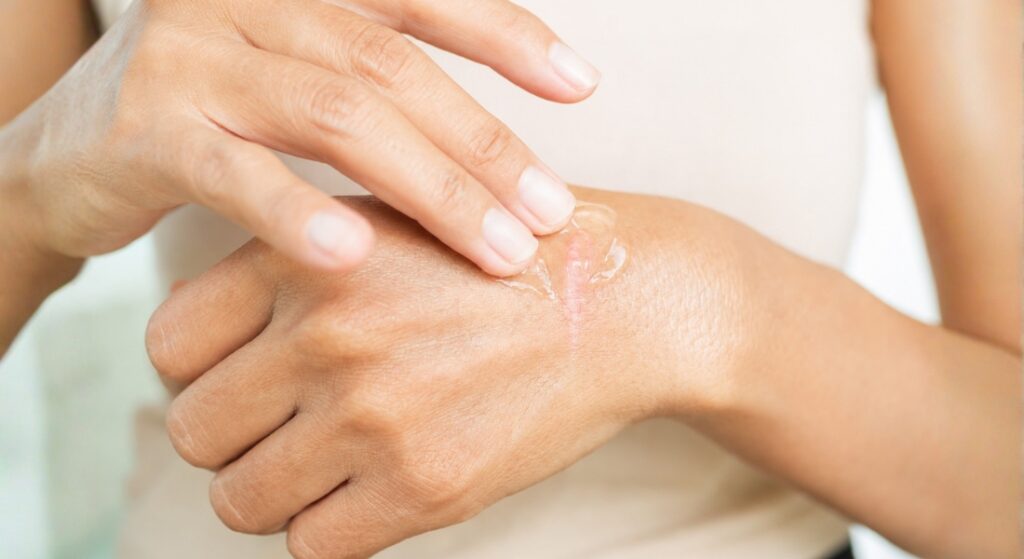
Silicone gel sheeting began to be used for burn and hypertrophic scars in 1981 and became an important non-surgical approach during the 1980s. Silicone appears to help partly by maintaining hydration and altering the local scar environment, although its exact biological mechanisms are not fully understood.
Today, silicone is available in both gel and sheet forms, and the most suitable option can depend on where your scar is located and which format you find easier to use consistently.
Although silicone cannot remove a scar completely, silicone gels and sheets are commonly used for raised scars and may help some scars become softer or flatter. However, the strength of the clinical evidence varies, so your dermatologist can advise whether silicone is appropriate for your scar.
Where Does Dermabrasion Fit Into Scar Treatment?
Historically, powered dermabrasion became an important technique for improving acne scars and other uneven surface scars. Before modern lasers became widely available, dermabrasion was one of the main ways doctors could improve uneven scar texture. The technique uses a rotating instrument to remove controlled surface layers, allowing your skin to heal with a smoother appearance.
If you have acne or surgical scars with irregular edges, resurfacing may help the scar blend more naturally with the surrounding skin. However, deep treatment could cause pigment changes or further scarring, so doctors continued looking for more precise ways to remodel your skin.
How Did Lasers Change Scar Treatment?
As laser technology developed during the twentieth century, dermatologists began exploring medical uses for concentrated light. Early dermatological lasers were less selective than modern systems, and treatment could cause unwanted thermal injury, pigment alteration or scarring. These limitations encouraged researchers to develop ways of targeting specific structures in the skin more precisely.
How Did Laser Treatment Become More Precise?
In 1983, R. Rox Anderson and John Parrish described the principle of selective photothermolysis. By matching laser wavelength and pulse duration to a particular tissue target, treatment could become more selective while limiting unnecessary thermal injury to surrounding structures.
This became especially useful for red or purple scars, where vascular lasers can target haemoglobin in blood vessels and may reduce erythema while improving selected scar characteristics.
Evidence Note
The original 1983 Anderson and Parrish study demonstrated selective damage to cutaneous microvessels and pigmented cellular structures using carefully selected light pulses. This provided an experimental foundation for designing laser systems that target particular structures rather than producing non-specific thermal injury.
Pulsed Dye Lasers Changed Treatment for Red and Raised Scars
By the mid-1990s, pulsed dye lasers became an important option for treating hypertrophic and keloid scars, particularly when vascularity and redness were prominent features. If your scar is noticeably red, the laser targets haemoglobin in its blood vessels rather than removing the whole scar surface.
If redness is one of the main features of your scar, this more selective approach allows treatment to focus on that problem rather than treating the entire scar in the same way. This encouraged a feature-based approach in which vascular lasers could target redness, while other treatments could be selected for scar thickness, tethering or surface texture.
How Can Ablative Lasers Improve Uneven Scar Texture?
Carbon dioxide and Erbium:YAG lasers made resurfacing more controlled, helping remodel your skin and improve uneven scars. If you have depressed acne scars, ablative treatment can soften sharp edges and encourage new collagen formation.
However, fully ablative treatment can involve significant redness, crusting and a longer recovery period, with risks such as infection and pigmentation changes. These limitations led doctors to develop fractional lasers, which could remodel your scar while leaving areas of surrounding skin untreated.
Why Are Fractional Lasers Used for Scar Resurfacing?
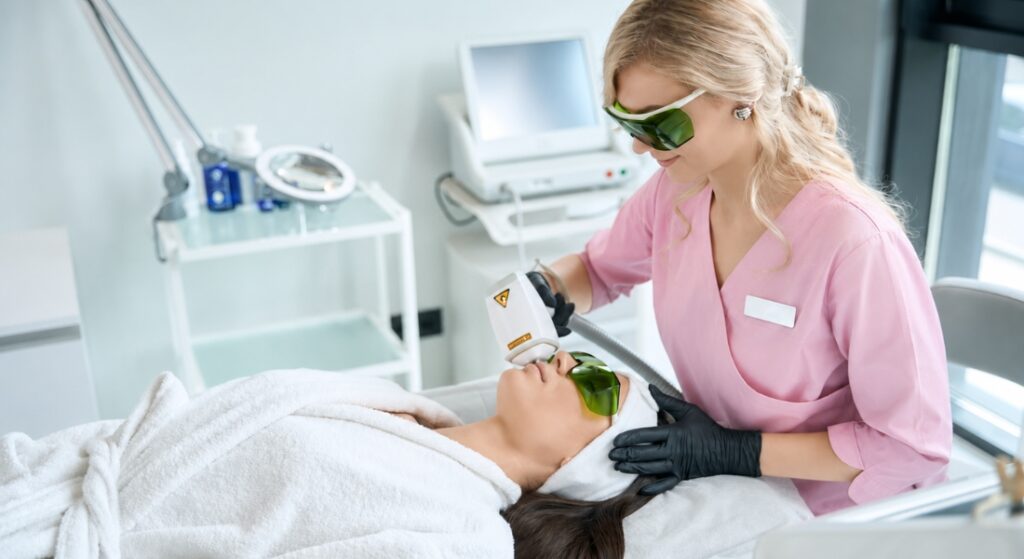
In 2004, Dieter Manstein and colleagues introduced fractional photothermolysis, creating tiny treatment columns while leaving areas of your surrounding skin untouched. Leaving areas of untreated skin between the microscopic treatment columns can support a shorter recovery than treating the entire surface with fully ablative resurfacing.
Fractional lasers, including carbon dioxide systems, have been used for selected acne, surgical, traumatic and burn scars. Fractional laser treatment may improve selected scar features such as texture, pliability and, in some burn or contracture scars, functional movement.
How Can Microneedling Support Scar Remodelling?
Needle-based scar treatments developed along several related but distinct paths. During the 1990s, subcision was described as a technique in which a needle is passed beneath a depressed scar to release fibrous attachments. By the late 1990s, needle-based surface techniques were being described for scar treatment, helping pave the way for later percutaneous collagen-induction techniques and modern microneedling devices.
Needle-based surface treatments later developed into modern microneedling, while subcision remained a separate technique for releasing tethered depressed scars. With microneedling, the epidermis is not removed in the same way as with fully ablative resurfacing; instead, controlled needle channels stimulate a wound-healing and collagen-remodelling response.
Why Your Scar May Need More Than One Treatment
Modern scar care increasingly focuses on the specific features of your scar rather than applying one treatment to every problem. A tethered, depressed scar may need subcision before microneedling or fractional laser treatment. A red, raised scar may be treated with silicone, corticosteroid injections or a vascular laser, while a contracture that restricts movement may require surgical assessment.
Your dermatologist can therefore recommend one treatment or a planned combination based on your scar’s colour, thickness, texture, depth, tethering, symptoms and effect on movement.
When Your Scar May Be Treated Before It Fully Matures
Some scar-revision procedures were traditionally delayed until a scar had matured, because early scars can naturally become flatter and paler over time. Modern scar care also recognises that selected non-surgical and laser treatments may sometimes be considered while a scar is still developing.
This does not mean every new scar needs active treatment. Some preventative measures and selected interventions may be considered while a scar is still developing, but the timing depends on the type of scar, the treatment being considered and the available evidence. Your dermatologist can decide whether early treatment is appropriate or whether observation is more suitable.
Myth vs Fact
| Myth | Fact |
| Surgery can completely erase a scar. | No. Scar revision creates another wound and aims to improve appearance, position or function rather than remove all evidence of scarring. |
| A keloid and a hypertrophic scar are the same. | No. A hypertrophic scar stays within the original wound boundary, while a keloid grows beyond it. |
| Silicone can remove every scar. | No. Silicone may help some raised scars but does not make all scars disappear. |
| Laser treatment means burning off the whole scar. | No. Modern lasers can target features such as blood vessels or create fractional microscopic treatment zones. |
| All depressed scars should be treated with the same laser. | No. Scar shape and tethering can affect whether subcision, microneedling, laser or combination treatment is more appropriate. |
Frequently Asked Questions
1. Why are modern scar treatments more personalised than older approaches?
Modern scar treatment can be tailored to the specific features of your scar, such as redness, thickness, tethering, texture or restricted movement. This means your dermatologist can select or combine treatments according to the problem that matters most to you rather than relying on one standard approach.
2. Can you still have surgery to treat a scar?
Scar revision surgery may be considered when a scar restricts movement, lies in an unfavourable direction, causes structural problems or is particularly troublesome in appearance. The aim is improvement rather than complete removal, because the procedure itself creates a new scar.
3. How many corticosteroid injections might a raised scar need?
The number of injections you may need depends on the type, size and response of your scar. Treatment is often given over more than one session, with your dermatologist reviewing whether the scar is becoming flatter, softer or less symptomatic while also monitoring for side effects.
4. How does silicone help your scar?
Silicone gel or sheeting may help some raised scars partly by maintaining hydration and altering the local scar environment. Its exact biological mechanism is not fully understood, and it does not make every scar disappear.
5. How did laser treatment change scar management?
Lasers allowed doctors to target specific features of your scar more precisely, such as redness or uneven texture. Vascular lasers can target blood vessels in red scars, while fractional and ablative lasers can remodel collagen and improve scar texture.
6. What are fractional lasers used for?
Fractional lasers may be used to improve selected textural scars, including some acne, surgical, traumatic and burn scars. They create microscopic treatment zones that stimulate remodelling while leaving intervening areas of skin untreated. Depending on the device and treatment intensity, recovery can be shorter than with fully ablative resurfacing.
7. Is microneedling suitable for every type of scar?
No. Microneedling may be helpful for selected depressed or uneven scars, but it is not the right treatment for every scar type. If your scar is raised, actively growing, severely tethered or causing restricted movement, your dermatologist may recommend a different treatment or a combination approach.
8. Why might you need more than one scar treatment?
Different scars have different problems, such as redness, thickness, depression, tightness or tethering. Your dermatologist may therefore combine treatments, such as injections for thickness, laser for redness or texture and subcision for scars that are attached to deeper tissue.
9. Can you treat a scar before it fully matures?
In selected cases, early scar management may be considered before a scar fully matures, but the timing depends on the scar type and treatment being considered. Some new scars improve naturally, so your dermatologist may recommend observation rather than immediate treatment.
10. What should you discuss with your dermatologist before scar treatment?
Your assessment may include the scar’s age, colour, thickness, texture, symptoms and effect on movement, as well as your skin type and previous tendency to develop raised or pigmented scars. You can also discuss the likely number of treatment sessions, expected recovery and realistic improvement .
Final Thoughts: What Modern Scar Treatment Means for You
Scar treatment has evolved considerably, with modern care now offering a range of surgical and non-surgical options selected around individual scar features. Depending on your scar, treatment may involve silicone, pressure therapy, corticosteroid injections, laser treatment, subcision, microneedling or surgery.
No treatment can completely erase a scar, and the most appropriate option depends on its type, age, symptoms, your skin characteristics and its effect on movement. If you are concerned about a scar, a dermatologist can assess these factors and discuss suitable treatment options and realistic goals with you.
References:
- Anderson, R.R. and Parrish, J.A. (1983) ‘Selective photothermolysis: precise microsurgery by selective absorption of pulsed radiation’, Science, 220(4596), pp. 524–527. Available at: https://pubmed.ncbi.nlm.nih.gov/6836297/
- O’Brien, L. and Jones, D.J. (2013) ‘Silicone gel sheeting for preventing and treating hypertrophic and keloid scars’, Cochrane Database of Systematic Reviews, 2013(9), article CD003826. Available at: https://pmc.ncbi.nlm.nih.gov/articles/PMC7156908/
- Gauglitz, G.G. (2013) ‘Management of keloids and hypertrophic scars: current and emerging options’, Clinical, Cosmetic and Investigational Dermatology, 6, pp. 103–114. Available at: https://pmc.ncbi.nlm.nih.gov/articles/PMC3639020/
- Manstein, D., Herron, G.S., Sink, R.K., Tanner, H. and Anderson, R.R. (2004) ‘Fractional photothermolysis: A new concept for cutaneous remodeling using microscopic patterns of thermal injury’, Lasers in Surgery and Medicine, 34(5), pp. 426–438. Available at: https://pubmed.ncbi.nlm.nih.gov/15216537/
- Juhasz, M.L.W. and Cohen, J.L. (2020) ‘Microneedling for the treatment of scars: An update for clinicians’, Clinical, Cosmetic and Investigational Dermatology, 13, pp. 997–1003. Available at: https://pmc.ncbi.nlm.nih.gov/articles/PMC7764156/