


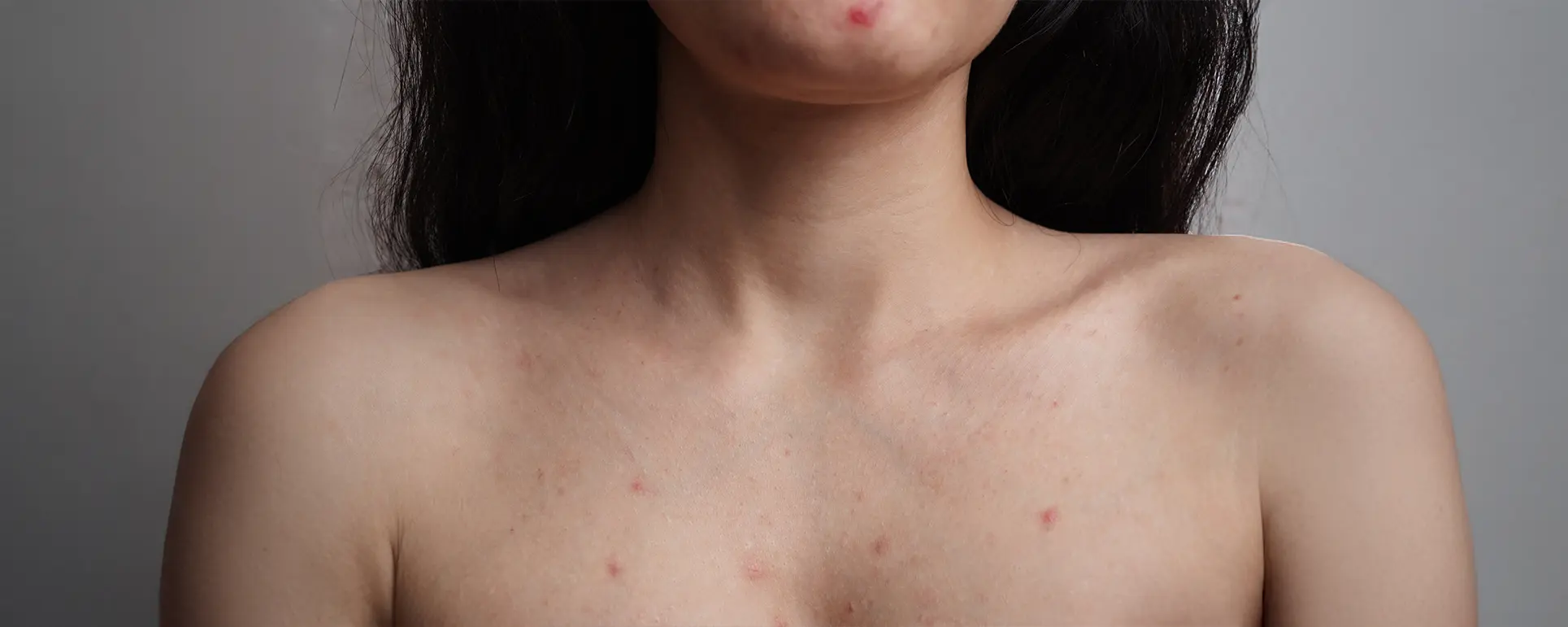
If you’ve ever dealt with acne on your back or chest, you’ll know how frustrating and uncomfortable it can be. But for many people, the biggest concern isn’t the breakouts themselves it’s the scars they leave behind. Unlike facial acne, body acne often results in deeper, more stubborn scarring that lingers for years. You might have noticed raised, thick scars that feel firm to the touch, or deep indentations that don’t seem to fade no matter how carefully you look after your skin.
It’s common to feel self-conscious about body scarring. Many people tell me they avoid wearing certain clothes, swimwear or gym tops because of marks on their back or chest. Others say the scars itch, feel tight or become irritated from clothing. And almost everyone wonders the same thing: Why are back and chest scars so much worse than facial scars and can they actually be treated?
The good news is yes body acne scars can be treated, and often with very good results. But treating them is very different from treating facial scars. The skin on your back and chest behaves differently, heals differently and requires a different treatment approach.
In this guide, I’ll walk you through everything you need to know about back and chest acne scarring: why it happens, the types of scars you might have, the best dermatologist-recommended treatments and how aftercare and prevention differ from facial acne. My goal is to help you understand your options clearly so you can make the best decisions for your skin and confidence.
Why Back & Chest Acne Causes More Severe Scarring
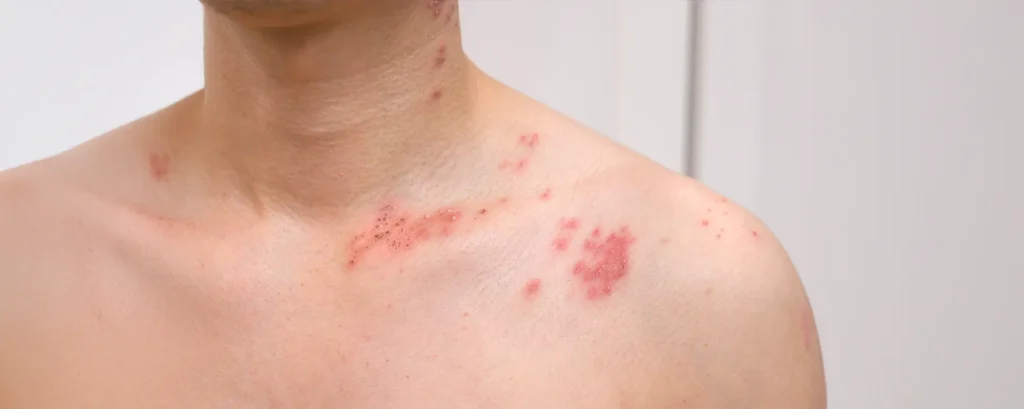
Many people are surprised to learn that body acne is often more severe than facial acne and so are the scars it leaves behind. There are several reasons for this.
1. The Skin on the Back and Chest Is Thicker
The skin on your back and chest is much thicker than the skin on your face. That means:
- acne lesions go deeper
- inflammation spreads further
- healing takes longer
- scars form more easily
Deeper inflammation increases the likelihood of both raised and indented scars.
2. Higher Density of Oil Glands
Your back and chest contain some of the body’s highest concentrations of sebaceous glands.
This makes these areas prone to:
- cystic acne
- nodules
- inflammation
- recurrent flare-ups
These painful, deep lesions are the ones most likely to scar.
3. More Friction and Sweat
Daily activities constantly expose the back and chest to:
- sweat
- tight clothing
- friction from straps
- sports equipment
- backpacks
- gym vests
Friction causes inflammation and worsens scarring.
4. Harder to Reach So Scarring Is Often Made Worse by Delay
People often delay treating back and chest acne because:
- it’s hard to reach
- it’s easy to ignore
- they don’t notice it early
- self-care is more challenging
The longer acne remains untreated, the higher the risk of scarring.
5. Picking or Scratching Makes Scarring Worse
Because body acne can itch or feel irritated, many people scratch or pick without realising.
This dramatically increases the likelihood of:
- pigmentation
- deep scars
- raised scars
- long-term marks
Even friction from clothing can mimic picking and worsen the scarring process.
Types of Back & Chest Acne Scarring
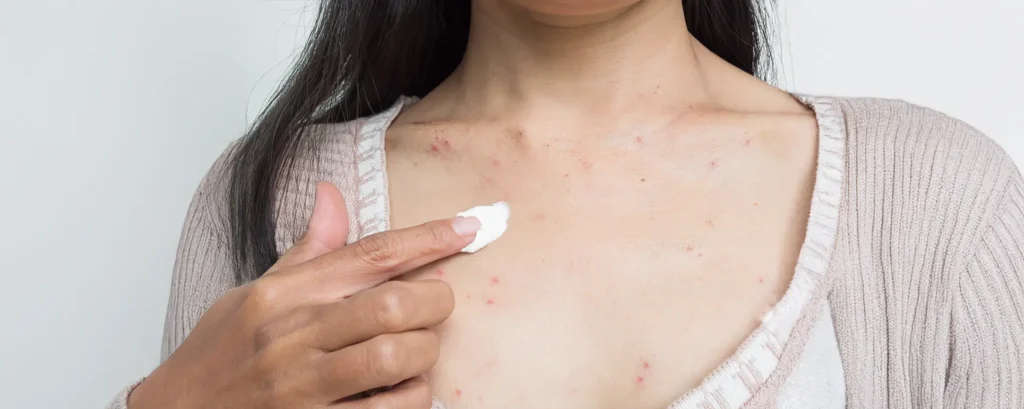
Not all acne scars are the same especially on the body. In fact, body acne is more likely to produce types of scarring that rarely appear on the face.
Here are the most common types.
1. Hypertrophic Scars (Raised Scars)
These are firm, raised scars that stay within the boundary of the original spot.
They often appear:
- pink
- red
- firm
- rubbery
- thick
Hypertrophic scars are extremely common on the chest, shoulders and upper back.
2. Keloid Scars (Thick Overgrown Scars)
Keloids are similar to hypertrophic scars but grow beyond the original acne lesion.
They are:
- raised
- shiny
- itchy
- tender
- larger than the original spot
People with darker skin types are more likely to develop keloids.
3. Atrophic Scars (Indented Scars)
These are similar to facial acne scars, but often deeper on the body.
Common types include:
- ice-pick scars
- rolling scars
- boxcar scars
On the back, these often fuse together, making the skin appear uneven or cratered.
4. Post-Inflammatory Hyperpigmentation (Dark Marks)
Even if you don’t develop true scars, you may still notice dark or brown marks left after inflammation.
These marks can persist:
- for months
- for years
- longer than facial pigmentation
Body pigmentation behaves differently and can be harder to fade.
5. Post-Inflammatory Erythema (Red Marks)
These red or pink marks are caused by inflammation of the blood vessels. The redness can be stubborn, especially on the chest.
Why Back and Chest Scars Are Harder to Treat
Treating body acne scars is more challenging than treating facial scars because:
- the skin is thicker
- the scars are often deeper
- inflammation was more widespread
- scars may be raised instead of indented
- healing time is longer
- the area is exposed to friction
- aftercare is more difficult
But difficult does not mean impossible the key is choosing the right treatment for your skin and scar type.
Best Dermatologist-Recommended Treatments for Back & Chest Acne Scarring
Because body acne scars vary widely, treatment plans must be tailored.
Here are the most effective options available today.
1. Laser Resurfacing (CO₂, Erbium, Fractional Lasers)
Laser resurfacing is one of the most effective treatments for atrophic (indented) scars on the back and chest.
How it helps:
- resurfaces uneven skin
- stimulates collagen production
- smooths rough areas
- reduces hyperpigmentation
- improves texture
Best for:
- rolling scars
- boxcar scars
- mixed scarring
- pigmentation + texture
- older scars
Downtime:
- 7–14 days for CO₂
- 5–10 days for fractional
- redness for weeks
Because the skin on the body is thicker, deeper settings are often used.
2. Microneedling and RF Microneedling
Microneedling creates micro-injuries that trigger collagen production.
RF microneedling takes this further by adding radiofrequency energy.
How it helps:
- smooths indented scars
- tightens skin
- reduces uneven texture
- fades dark marks
Best for:
- rolling scars
- large areas
- chest scarring
- mixed scarring
Downtime:
- 48–72 hours (microneedling)
- up to 5 days (RF microneedling)
This is an excellent option for people who want steady improvements with minimal downtime.
3. Chemical Peels (Medium to Deep Peels)
Body chemical peels are stronger than facial peels and must be done professionally.
How they help:
- fade dark marks
- smooth rough texture
- reduce pigmentation clusters
- help clear clogged pores
- lighten redness
Best for:
- pigmentation
- mild texture issues
- combined with other treatments
Downtime:
- peeling for 3–7 days
- some redness
Body peels often require several sessions.
4. Steroid Injections for Raised or Keloid Scars
Intralesional steroids are one of the most effective treatments for:
- hypertrophic scars
- keloids
- raised scars
How they help:
- flatten raised tissue
- reduce itching
- reduce redness
- soften thick scars
Multiple sessions may be required.
5. Cryotherapy (Freezing Treatment)
Cryotherapy uses liquid nitrogen to freeze raised scars.
How it helps:
- shrinks thickened tissue
- reduces raised scar height
Best for:
- small hypertrophic scars
- some keloids
- firm, stubborn patches
Cryotherapy must be used with caution on darker skin types.
6. Laser for Redness (Vascular Lasers VBeam)
Vascular lasers target redness rather than texture.
How they help:
- fade red marks
- reduce inflammation
- improve post-inflammatory erythema
Usually combined with other treatments.
7. Subcision for Deep, Tethered Scars
Subcision is extremely effective for rolling scars tethered deep under the skin.
How it helps:
- releases fibrous scar tissue
- smooths indentation
- improves contour
Often combined with microneedling or fillers.
8. Fillers for Deep Depressions
Dermal fillers can be used in the chest and back for severe indentations.
How they help:
- immediate volume restoration
- smoother appearance
- lifting of deep scars
Results are temporary but often very effective.
9. Silicone Gels and Silicone Sheets
Silicone is the gold standard for managing raised scars.
How it helps:
- softens scar tissue
- improves elasticity
- reduces itching
- flattens raised scars
Works best when used consistently over months.
10. Light-Based Devices (IPL, LED Therapy)
These devices help with:
- pigmentation
- redness
- inflammation
LED therapy also supports healing after other treatments.
11. Surgery for Severe Keloids or Very Large Scars
In cases of extremely large keloids or intensely raised scars, surgical removal may be needed but should always be combined with:
- steroids
- silicone
- pressure therapy
- laser
This reduces recurrence.
How to Treat Back & Chest Acne Scars Based on Scar Type
Here is a clear treatment map to help you understand which option might suit you best.
For Raised / Hypertrophic Scars:
- steroid injections
- silicone gel
- cryotherapy
- laser for redness
- RF microneedling
- surgery (rare cases)
For Keloids:
- steroid injections
- silicone sheets
- 5-FU injections
- cryotherapy (cautiously)
- laser + injections combined
For Indented (Atrophic) Scars:
- CO₂ laser
- fractional laser
- RF microneedling
- subcision
- fillers
For Pigmentation and Dark Marks:
- chemical peels
- laser resurfacing
- IPL
- pigment suppressing creams
For Mixed Scarring:
Most people have a combination.
A staged plan is usually best:
- laser + peels
- subcision + microneedling
- steroid injections + laser
- RF microneedling + fillers
Aftercare for Back & Chest Acne Scar Treatments
Aftercare is essential for good results.
Because the body heals differently from the face, here’s what you should know.
1. Avoid Sweating for 48–72 Hours
Sweat can irritate treated skin and prolong redness.
2. Avoid Tight Clothing
Tight fabrics increase irritation and risk of pigmentation.
Wear:
- loose cotton
- breathable fabrics
- soft materials
3. Avoid Sun Exposure
The back and chest are highly sun-exposed areas.
Sun increases pigmentation after any treatment.
Use:
- SPF 50
- clothing protection
- regular reapplication
4. Keep the Area Hydrated
Use dermatologist-approved moisturisers to support healing.
5. Avoid the Gym for a Few Days
Heat, sweat and friction can trigger inflammation post-treatment.
6. Do Not Pick or Scratch
Even once the area starts peeling, scratching will worsen scarring.
7. Follow Your Skincare Plan Carefully
This may include:
- pigment inhibitors
- retinoids (when skin is healed)
- moisturisers
- anti-inflammatories
Preventing Future Back & Chest Scarring
Preventing new scars is just as important as treating old ones.
Here’s how to reduce future body acne.
1. Use the Right Cleansers
Choose cleansers containing:
- salicylic acid
- benzoyl peroxide
- glycolic acid
These unclog pores and reduce future breakouts.
2. Shower After Sweating
Sweat plus bacteria equals inflammation.
Shower immediately after:
- gym workouts
- running
- sports
- hot weather
3. Avoid Tight Clothing
This prevents friction-induced acne.
4. Keep Hair Products Off Your Back
Conditioners, oils and creams can drip onto the upper back and clog pores.
5. Don’t Pick Spots
This is one of the biggest causes of scarring.
6. Moisturise Your Skin
Healthy skin is less likely to scar.
7. Treat Acne Early
See a dermatologist for:
- oral treatments
- topical treatments
- antibiotics
- hormonal therapy
Early intervention prevents long-term scarring.
Emotional Impact of Body Acne Scars
People often underestimate how emotionally challenging body acne scars can be.
You may feel:
- self-conscious
- embarrassed
- frustrated
- restricted in clothing choices
- anxious about intimacy
It is completely normal to feel this way.
Getting the right treatment can improve not only your skin, but also your confidence, comfort and quality of life.
Frequently Asked Questions:
1. Can back and chest acne scars really be treated permanently?
Many people assume that body acne scars are permanent because they tend to be deeper, thicker and more stubborn than facial scars. The truth is that most back and chest scars can be significantly improved, and some can fade almost completely with the right treatment plan. Treatments like CO₂ laser, fractional laser, RF microneedling and subcision can rebuild collagen, remodel scar tissue and repair uneven texture. Raised scars such as keloids or hypertrophic scars can also be treated successfully using steroid injections, silicone therapy and targeted lasers. While no treatment can guarantee 100% permanent removal of every scar, long-term improvement is highly achievable when a personalised plan is followed and aftercare is done correctly.
2. Why are body acne scars harder to treat than facial scars?
Body acne scars are notoriously more difficult to treat because the skin on the back and chest is significantly thicker, which allows inflammation to spread deeper. This deeper inflammation causes more structural damage, meaning scars form more easily and take longer to heal. The back and chest are also areas exposed to friction from clothing, sweat and movement, all of which slow down healing and increase pigment changes after treatment. Another reason is that people often delay treatment for body acne, simply because the areas are hard to see or reach. By the time scarring becomes noticeable, it often requires more intensive procedures compared to facial scarring.
3. How many treatment sessions will I need for body acne scars?
The number of sessions varies widely because every scar type behaves differently. Indented scars may require multiple sessions of fractional CO₂ laser or RF microneedling spaced weeks apart, while tethered rolling scars often respond well to just one or two subcision sessions. Raised scars, such as keloids or hypertrophic scars, need repeated steroid injections or combination therapy spread over several months. Pigmentation-related marks can improve more quickly with peels or laser, but deeper textural scars take longer to remodel. Most people with moderate to severe body acne scarring can expect a treatment journey that spans several months, with each session building upon the results of the previous one.
4. Is CO₂ laser safe for treating scars on the back and chest?
CO₂ laser is considered one of the most effective and safe options for atrophic body scars when performed by an experienced dermatologist. The thicker skin on the back and chest actually allows for deeper, more aggressive laser settings, which can lead to excellent improvement in texture and depth. However, because the area heals more slowly and is prone to pigmentation changes, proper preparation and strict aftercare are essential. Patients must avoid sun exposure, friction, heat and sweating during the healing period. When these guidelines are followed, CO₂ laser delivers predictable, long-lasting results with a low risk of complications.
5. Can raised scars like keloids go away completely?
Raised scars are often the most challenging type to treat because the tissue continues to grow even after the original acne lesion has healed. While keloids rarely disappear completely, they can be flattened, softened and dramatically reduced in size with consistent treatment. Steroid injections remain the gold standard, but optimal results usually come from combination therapy involving silicone sheets, cryotherapy, 5-FU injections or targeted vascular lasers. With the right approach, the scars become much less visible and far more comfortable, often relieving itching, tightness and irritation that patients commonly experience.
6. What is the best treatment for dark marks left behind after body acne?
Dark marks, known as post-inflammatory hyperpigmentation, are extremely common on the back and chest because the skin in these areas is more prone to pigment retention. Chemical peels, fractional lasers and pigment-suppressing topical creams can all help fade these marks. The key is to control ongoing inflammation and prevent new irritation, as friction, heat and sun exposure can reactivate pigmentation. Although these marks can take longer to fade than facial hyperpigmentation, they usually improve significantly with consistent care and sun protection.
7. Does acne need to be completely cleared before starting scar treatment?
It’s always best to address active acne before moving on to scar correction, because ongoing breakouts can create new scars and interfere with healing. Dermatologists usually recommend stabilising active acne with topical treatments, oral medication or hormonal therapy first. Once the inflammation is under control, scar treatments such as lasers, microneedling or chemical peels become far more effective. In some cases, both acne management and early scar treatments can be carried out together, depending on the severity of both conditions and the type of scarring present.
8. Will treatments for body acne scars be painful?
Most treatments for back and chest acne scarring do involve some level of discomfort because the procedures target deeper layers of the skin. However, dermatologists use numbing creams, cooling devices and local anaesthetic techniques to make the experience as comfortable as possible. Procedures like microneedling and peels tend to cause mild, temporary discomfort, while CO₂ laser and subcision can feel more intense. After the treatment, patients may feel tightness, warmth or sensitivity for several days, but this gradually settles as the skin heals.
9. How long does it take to see results from scar treatments?
Results depend on the type of treatment and the severity of the scars. Many people notice early improvements in smoothness and pigmentation within a few weeks. However, treatments that stimulate collagen, such as RF microneedling, lasers or subcision, deliver their best results gradually as the deeper skin layers rebuild. Full improvement can take several months because collagen remodelling is a slow biological process. Consistency with sessions and proper aftercare both play a major role in the overall results.
10. Can lifestyle changes help prevent future body acne scars?
Lifestyle habits can make a big difference in preventing new scars from forming. Showering after exercise, choosing loose and breathable clothing, avoiding heavy hair products on the back and managing sweat can all reduce the chances of new acne flare-ups. Equally important is avoiding picking or scratching spots, as this dramatically increases the risk of both dark marks and permanent scarring. Combining healthy habits with proper acne treatment ensures that new inflammation is kept under control while existing scars are being treated.
Final Thought: Treating Back and Chest Acne Scars
Back and chest acne scarring can feel especially stubborn, often affecting not just your skin but also your confidence. The good news is that with the right approach and the right combination of treatments even deep or raised body scars can be improved significantly. Whether you’re dealing with pigmentation, thickened scars, or uneven texture, modern dermatology now offers targeted solutions that can make a genuine difference. If you’re considering acne scar treatment in London and want expert guidance, feel free to reach out to us at the London Dermatology Centre to book your consultation.
References:
1. Ptaszek, B., Czernecka, M. & Podsiadło, S. (2025). The Use of a Fractional Laser in Acne Scar Treatment. Life, 15, 915. Available at: https://www.mdpi.com/2075-1729/15/6/915
2. Osman, M.A., et al. (2024). Fractional Ablative CO₂ Laser versus Fractional Non-Ablative Diode Laser for Acne Scars. Cosmetics, 11(3), 81. Available at: https://www.mdpi.com/2079-9284/11/3/81
3. Ledon, J.A., et al. (2013). Intralesional treatment for keloids and hypertrophic scars: a review. Dermatologic Surgery, 39(12), 1745–1757. Available at PubMed: https://pubmed.ncbi.nlm.nih.gov/24299571/
4. O’Boyle, C.P., et al. (2017). Intralesional cryotherapy for hypertrophic scars and keloids. Dermatologic Therapy. Available via PMC: https://pmc.ncbi.nlm.nih.gov/articles/PMC5965337/ 5. Petrov, A., et al. (2015). Fractional Carbon Dioxide Laser in Treatment of Acne Scars. Available at: https://pmc.ncbi.nlm.nih.gov/articles/PMC4884248/