


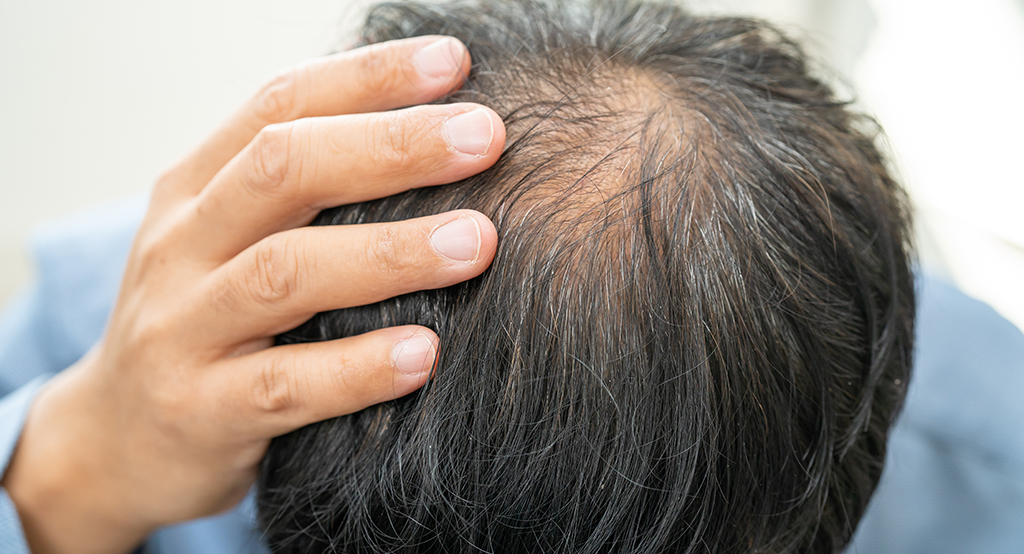
When you start experiencing noticeable hair loss, it’s easy to assume the problem is limited to your scalp. Maybe you think it’s stress, hormones, genetics, or something temporary. For many people, this is true hair loss often has straightforward causes. But in some cases, alopecia can be the first visible sign of a deeper issue: an autoimmune condition affecting your body in ways you may not yet realise.
You might already have symptoms you’ve brushed aside, or maybe everything else feels completely normal. Either way, when hair loss appears in certain patterns or behaves unpredictably, dermatologists begin thinking beyond the scalp and start considering whether your immune system may be involved. Autoimmune conditions such as thyroid disease, lupus, vitiligo, coeliac disease, and rheumatoid arthritis can all trigger hair problems. Sometimes the hair loss appears before any other symptoms do.
That’s why understanding how autoimmune disease and alopecia connect is so important. Hair can be one of the earliest parts of the body to show signs when something deeper is going on. In this guide, I want to help you recognise when hair loss may point to a wider immune issue, how dermatologists investigate these cases, and what it means for your treatment plan if autoimmunity is involved.
Understanding the Link Between Alopecia and Autoimmune Disease
Autoimmune conditions develop when your immune system becomes confused and begins attacking healthy cells. Instead of targeting viruses or harmful bacteria, it mistakenly responds to your own tissues as if they were foreign. When this process affects hair follicles, the result can be alopecia.
It’s important to understand that autoimmune-related hair loss doesn’t behave like typical pattern baldness or hormonal thinning. It often has distinct characteristics, patterns, and triggers and it frequently overlaps with other autoimmune symptoms.
This is why hair loss can sometimes serve as an early warning sign of underlying systemic inflammation, hormonal disruption, or immune dysfunction. By identifying the patterns early, dermatologists can help uncover broader health issues before they have a chance to progress.
Types of Hair Loss Commonly Linked to Autoimmune Conditions

Hair loss linked to autoimmune conditions can look very different from person to person. In these cases, the immune system mistakenly targets hair follicles or surrounding skin, disrupting normal hair growth. Understanding the common patterns of autoimmune-related hair loss can help you recognise warning signs early and seek appropriate medical evaluation before the condition progresses.
Alopecia Areata: This is the most recognised form of autoimmune hair loss and typically presents as smooth, round or oval patches with complete hair loss on the scalp or body. In more severe cases, it may progress to total scalp hair loss (alopecia totalis) or complete loss of body hair (alopecia universalis).
Diffuse Alopecia: Instead of distinct patches, diffuse alopecia causes widespread thinning across the scalp. This pattern is often linked to autoimmune thyroid disease, lupus, coeliac disease, and ANA-positive inflammatory disorders. Because the hair loss is more generalised, it can sometimes be mistaken for stress-related shedding without proper evaluation.
Scarring (Cicatricial) Alopecia: In this form, chronic inflammation damages the hair follicles permanently, preventing regrowth. Over time, affected areas may appear shiny or scarred due to loss of follicular openings. Autoimmune and inflammatory conditions such as lupus, lichen planopilaris, and dermatomyositis are known causes.
Eyebrow and Eyelash Loss: Autoimmune conditions can also affect finer facial hairs, sometimes before scalp involvement becomes noticeable. Loss of eyebrows or eyelashes is commonly seen in alopecia areata, autoimmune thyroid disease, and vitiligo. Early recognition is important, as these areas can respond well to prompt treatment.
Hair Loss with Skin Changes: When hair loss is accompanied by redness, scaling, pigment changes, or sensitivity, an autoimmune cause becomes more likely. These skin signs suggest underlying inflammation affecting both the skin and hair follicles. Identifying these features early helps guide targeted testing and specialist management.
When Hair Loss Suggests Autoimmunity: Key Warning Signs
Hair loss is very common, and in most cases it is not linked to autoimmune disease. However, certain patterns and accompanying symptoms can raise suspicion that the immune system may be playing a role. Autoimmune-related hair loss often appears suddenly and behaves differently from typical genetic or age-related thinning, which is usually gradual and predictable.
Changes beyond the hair itself are equally important. Nail abnormalities such as pitting, ridging, or increased brittleness are frequently seen in autoimmune conditions like alopecia areata. Skin changes including pigment loss (as seen in vitiligo), redness, scaling, or rashes further increase the likelihood of immune involvement. Many people also notice that hair loss begins after a period of significant stress, illness, or infection, which can act as a trigger for autoimmune activity.
Autoimmune Conditions Most Commonly Linked to Hair Loss

Autoimmune conditions can affect hair growth in many different ways, often long before a formal diagnosis is made. Because the immune system plays a key role in regulating inflammation, hormones, and nutrient absorption, disruptions can interfere with the normal hair growth cycle and trigger shedding or patchy loss. In some cases, hair loss is one of the earliest and most visible signs that an underlying autoimmune process may be developing, making awareness especially important.
Autoimmune Thyroid Disease (Hypothyroidism & Hyperthyroidism): Autoimmune thyroid disease including hypothyroidism and hyperthyroidism is one of the most common causes of diffuse hair shedding. The thyroid plays a central role in regulating metabolism, hormone balance, and the hair growth cycle, so when thyroid function is disrupted, hair follicles are often affected.
Lupus (Systemic Lupus Erythematosus & Discoid Lupus): Lupus is an autoimmune condition that can cause both scarring and non-scarring hair loss. In systemic lupus, inflammation affects hair follicles indirectly, leading to thinning or shedding, while discoid lupus causes direct scalp inflammation with redness, scaling, and potential permanent scarring if left untreated.
Vitiligo: Vitiligo is an autoimmune condition that affects melanin-producing cells, leading to patches of pigment loss on the skin. Because these cells are also present within hair follicles, some people may notice hair loss or white, depigmented hairs in the affected areas. Vitiligo commonly coexists with other autoimmune conditions, particularly thyroid disorders, which can further influence hair and skin health.
Coeliac Disease: Although most people associate coeliac disease with digestive problems, it is an autoimmune condition that can affect multiple organs, including the hair follicles. Nutritional malabsorption may lead to diffuse hair thinning, while the underlying immune response can further disrupt hair growth.
Rheumatoid Arthritis & Other Connective Tissue Diseases: Rheumatoid arthritis and other connective tissue diseases can contribute to hair thinning through chronic systemic inflammation, which disrupts normal hair growth cycles. In addition, some medications used to manage autoimmune conditions may also affect hair health.
Type 1 Diabetes & Other Endocrine Autoimmune Conditions: Type 1 diabetes and other endocrine autoimmune conditions can indirectly impact hair health by causing hormonal imbalances, nutrient deficiencies, and fluctuating levels of inflammation.
Alopecia Areata Itself: Alopecia areata is itself an autoimmune condition in which the immune system targets hair follicles. People with alopecia areata have a higher statistical risk of developing other autoimmune disorders, such as thyroid disease or vitiligo, at some point in their lives.
Why Hair Loss Appears Before Other Autoimmune Symptoms
Hair loss often appears before other autoimmune symptoms because hair follicles are highly sensitive to internal changes. Even subtle shifts in hormones, circulating inflammation, immune antibodies, stress levels, nutrient absorption, or blood flow can disrupt the hair growth cycle. When the immune system becomes imbalanced, the follicles are often among the first tissues to react.
This is also why early assessment by a dermatologist is important. Dermatologists are trained to recognise subtle patterns of immune-related hair loss and can identify warning signs that may not yet be obvious in blood tests or general symptoms, allowing earlier investigation and management.
How Dermatologists Investigate Hair Loss Linked to Autoimmune Conditions

When dermatologists suspect that hair loss may be linked to an autoimmune condition, they take a comprehensive and methodical approach. Rather than focusing only on the scalp, they assess the whole clinical picture using a combination of history-taking, physical examination, laboratory tests, and specialised tools to identify immune-related triggers.
Additional tests may include a pull test or dermoscopy to assess active shedding and follicle structure in detail. In unclear or complex cases, a scalp biopsy may be recommended. This allows direct examination of the follicles and surrounding tissue, revealing patterns of inflammation, scarring, follicle miniaturisation, or immune cell activity, which helps confirm the exact type of alopecia and guide treatment.
How Treatment Changes When Autoimmunity Is Involved
When autoimmunity is involved, hair loss treatment focuses on more than just the scalp. Dermatologists aim to calm the underlying immune imbalance while protecting and reactivating the hair follicles. Managing the root autoimmune condition is often the most impactful step and may involve working alongside specialists such as endocrinologists, rheumatologists, or gastroenterologists.
Because autoimmune conditions can affect hormone balance and nutrient absorption, treatment plans also address deficiencies in iron, vitamin D, B12, folate, zinc, and protein. Long-term monitoring is essential, as autoimmune activity can fluctuate over time. Regular reviews allow early intervention if flare-ups occur, helping to protect regrowth and maintain stable results an approach commonly used in specialist centres offering advanced alopecia care.
Why Early Diagnosis Makes a Major Difference
Early diagnosis plays a crucial role in preserving hair follicle health. When autoimmune-related hair loss is identified promptly, inflammation can be controlled before it causes lasting damage. This gives follicles a far greater chance of recovering and producing new hair. In contrast, prolonged or untreated inflammation particularly in scarring forms of alopecia can permanently destroy follicles, making regrowth impossible.
Catching the condition early leads to better recovery, more predictable regrowth, and less disruption to the hair’s natural structure. It also allows any underlying systemic autoimmune disease to be treated sooner, reducing the risk of wider health complications. For these reasons, it’s important not to delay seeking medical advice if you notice sudden, unusual, or patchy hair loss.
Lifestyle Factors That Influence Autoimmune Hair Loss
Although lifestyle changes can’t cure autoimmune conditions, they play an important supportive role in reducing flares and promoting healthier hair growth. The immune system is closely influenced by everyday factors such as stress levels, sleep quality, diet, gut health, and hormone balance. When these are poorly regulated, autoimmune activity can become more active, increasing the risk of hair shedding.
Simple, consistent habits can help calm immune responses over time. Reducing highly inflammatory foods, supporting healthy gut bacteria, keeping blood sugar stable, and managing stress hormones all contribute to better immune balance. Adequate, regular sleep is particularly important, as immune regulation and tissue repair are closely linked to sleep cycles.
Protecting the scalp from excess UV exposure and maintaining overall nutritional balance further supports follicle health. While lifestyle measures alone won’t reverse autoimmune hair loss, they significantly enhance the effectiveness of medical treatments and help support long-term hair stability and regrowth.
Does Autoimmune-Related Hair Loss Always Come Back?
Autoimmune-related hair loss is often unpredictable and doesn’t follow a linear pattern. Conditions like alopecia areata or thyroid-related hair loss can come and go, with some people experiencing complete regrowth and others facing recurring cycles of shedding over time. Because the immune system fluctuates, new episodes may occur even after successful treatment.
The primary goal of treatment is to reduce the severity of flares, support hair regrowth, minimise permanent follicle damage, and keep inflammation under control. Early intervention and consistent management make these outcomes more achievable and help maintain healthier hair over the long term.
When to Seek Specialist Help
You should consider seeing a dermatologist promptly if your hair loss was sudden, appears in patches rather than general thinning, or involves your eyebrows or eyelashes. Other warning signs include scalp pain, itching, inflammation, rapid progression of hair loss, or unexplained hormone issues. A family history of autoimmune disease or accompanying symptoms like fatigue, joint pain, or skin changes also warrants specialist evaluation.
Consulting a specialist can help determine the underlying cause of your hair loss, identify any autoimmune involvement, and guide you toward the most effective treatment options. Early assessment improves the chances of preserving hair and managing your overall health effectively.
FAQs:
1. What is the connection between alopecia and autoimmune disease?
Alopecia can sometimes be the first visible sign of an autoimmune condition, where the immune system mistakenly attacks healthy hair follicles. Conditions like thyroid disease, lupus, vitiligo, coeliac disease, and rheumatoid arthritis can all trigger hair loss. Recognising these early patterns allows dermatologists to investigate potential systemic issues before other symptoms appear. Early detection is key to timely treatment and better outcomes.
2. How can I tell if my hair loss is autoimmune-related?
Autoimmune-related hair loss often appears suddenly and in distinct patches, rather than gradual thinning. It may affect the scalp, eyebrows, eyelashes, or body hair and can be accompanied by scalp tenderness, redness, scaling, pigment changes, or nail abnormalities. Systemic symptoms such as fatigue, joint pain, or a family history of autoimmune disease can further indicate immune involvement. Consulting a dermatologist helps confirm the cause.
3. What types of hair loss are commonly linked to autoimmune conditions?
Several forms of hair loss are linked to autoimmunity. Alopecia areata presents as smooth, round patches, sometimes progressing to total scalp or body hair loss. Diffuse alopecia causes widespread thinning, often linked to thyroid disease or lupus. Scarring alopecia results in permanent follicle damage, while eyebrow and eyelash loss may occur early. Hair loss with skin changes such as redness or scaling often signals inflammation.
4. Which autoimmune conditions most frequently cause hair loss?
Autoimmune thyroid disease, lupus, vitiligo, coeliac disease, rheumatoid arthritis, type 1 diabetes, and alopecia areata are common culprits. These conditions can disrupt hair growth through inflammation, hormone imbalance, or nutrient deficiencies. Hair loss may appear before other symptoms, making early recognition and diagnosis important. Managing the underlying condition is crucial for effective hair regrowth.
5. Why does hair loss sometimes appear before other autoimmune symptoms?
Hair follicles are highly sensitive to changes in hormones, immune activity, and nutrient absorption. Even subtle disruptions can push follicles into a resting or shedding phase, causing hair loss to appear weeks or months before other symptoms. This is why sudden or patchy hair loss should not be ignored, as it may indicate early-stage autoimmune activity. Early assessment improves outcomes.
6. How do dermatologists investigate hair loss linked to autoimmune conditions?
Dermatologists begin with a detailed medical history and scalp examination to assess hair patterns and associated symptoms. Blood tests may check thyroid function, inflammatory markers, vitamin levels, and autoimmune antibodies. Additional tools such as dermoscopy, pull tests, or scalp biopsy help examine follicles for inflammation, scarring, or immune activity. This comprehensive approach allows for accurate diagnosis and treatment planning.
7. How does treatment change if hair loss is caused by autoimmunity?
Treatment focuses on both controlling the underlying autoimmune condition and protecting hair follicles. Anti-inflammatory therapies like corticosteroids, immunomodulators, or JAK inhibitors may be used alongside regrowth treatments such as minoxidil, PRP, microneedling, or nutritional support. Collaboration with specialists in endocrinology, rheumatology, or gastroenterology is often necessary. The aim is to reduce flares, restore growth, and prevent permanent follicle damage.
8. Can lifestyle changes help with autoimmune-related hair loss?
Lifestyle measures cannot cure autoimmune disease, but they support treatment and help reduce flare-ups. Managing stress, maintaining a balanced diet, ensuring adequate sleep, supporting gut health, and protecting the scalp from UV exposure all contribute to improved immune regulation. These steps create an optimal environment for hair regrowth and enhance the effectiveness of medical therapies.
9. Will hair lost due to autoimmune conditions grow back?
Hair regrowth is often unpredictable in autoimmune-related hair loss. Some people experience full recovery, while others may have recurring cycles of shedding. Early diagnosis, effective treatment, and ongoing management significantly increase the chances of stable regrowth. Consistent monitoring helps prevent permanent follicle damage and maintain healthier hair over time.
10. When should I see a specialist for hair loss?
You should see a dermatologist if hair loss is sudden, patchy, or affects eyebrows or eyelashes. Other warning signs include scalp pain, inflammation, rapid progression, nail or skin changes, unexplained hormonal issues, fatigue, joint pain, or a family history of autoimmune disease. Early assessment allows for accurate diagnosis, timely intervention, and better long-term outcomes for hair and overall health.
Final Thought: Understanding Autoimmune Hair Loss and the Importance of Early Care
Hair loss may often appear sudden or patchy, signalling more than just a cosmetic issue. In some cases, it can be an early warning of an underlying autoimmune condition, affecting the scalp and other parts of the body. Recognising unusual patterns, associated symptoms, and acting early can make a significant difference in preserving hair and overall health. If you are thinking about alopecia treatment in London, you can book a consultation with our specialist at the London Dermatology Centre.
References:
1. Šutić Udović, I., et al. Deciphering the Complex Immunopathogenesis of Alopecia Areata. International Journal of Molecular Sciences. https://www.mdpi.com/1422-0067/25/11/5652
2. Immunology of alopecia areata (PMC article by Richmond et al.) https://pmc.ncbi.nlm.nih.gov/articles/PMC7789996/
3. Alopecia areata: Understanding the Pathophysiology and Advancements in Treatment Modalities. https://pubmed.ncbi.nlm.nih.gov/40026917/
4. Żeberkiewicz, M., Rudnicka, L. & Malejczyk, J. (2020) Immunology of alopecia areata. Central European Journal of Immunology, 45(3), pp. 325–333.https://pubmed.ncbi.nlm.nih.gov/33437185/
5. Rajabi, F. & Sundberg, J.P. Alopecia Areata: a review of disease pathogenesis. British Journal of Dermatology (Oxford Academic). https://academic.oup.com/bjd/article-abstract/179/5/1033/6732534