


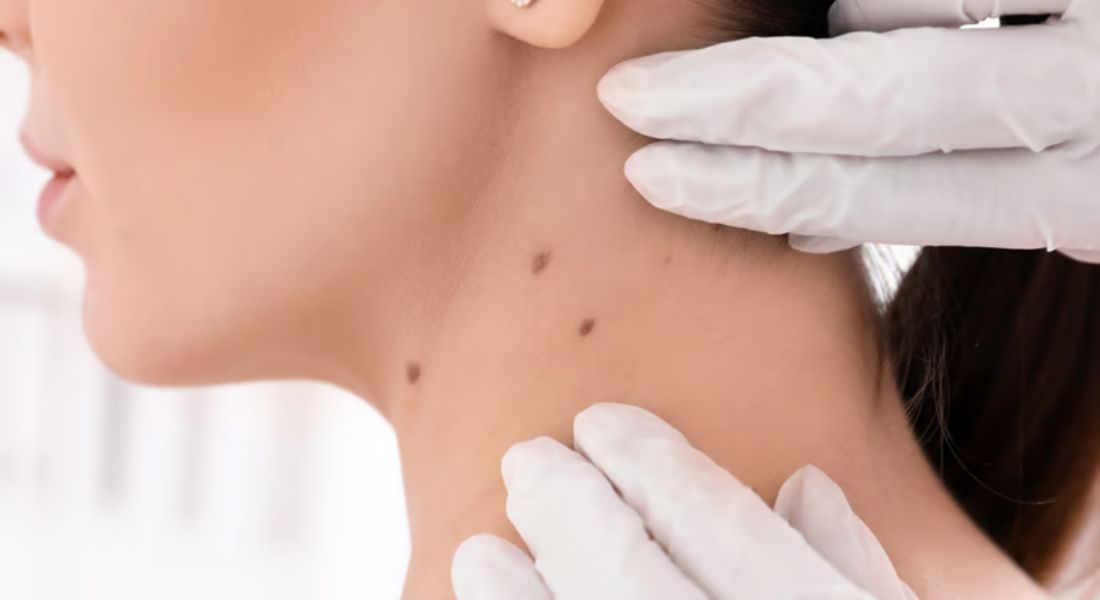
When you think about basal cell carcinoma, it’s natural to link it directly to sun-exposed areas like your face, neck, or arms. In most cases, that connection holds true because ultraviolet radiation is the dominant driver. However, it’s not the whole picture, and you can occasionally see lesions develop in areas that receive little to no direct sunlight.
If that happens, it can feel counterintuitive, especially if you’ve been diligent with sun protection. The key point to understand is that while UV exposure is the primary risk factor, it isn’t the only pathway. Factors like genetic predisposition, local skin characteristics, previous damage that isn’t immediately visible, and even random cellular mutations can all contribute to why a lesion appears in an unexpected location.
From a practical standpoint, this changes how you approach monitoring your skin. You can’t limit your attention to sun-exposed areas alone and assume the rest is low risk. A consistent, full-skin check approach, combined with early assessment of any persistent or unusual change, keeps you ahead of the problem. It’s about removing assumptions and relying on observation and action instead.
Why Basal Cell Carcinoma Is Usually Linked to Sun Exposure
Basal cell carcinoma is so closely linked to sun exposure because ultraviolet radiation directly disrupts the DNA within your skin’s basal cells. Each exposure creates small amounts of damage, and over time, that damage accumulates to a point where normal cell regulation breaks down. Once that control is lost, abnormal growth can begin, which is how these cancers develop.
The areas most often affected are the ones you expose repeatedly without thinking, your face, scalp, ears, and forearms. These regions take the brunt of daily UV exposure, whether it’s intentional or incidental, and they tend to show the earliest and most consistent signs of damage. That’s why clinicians instinctively focus on these sites during assessment.
What’s important for you is not to oversimplify the cause. While UV exposure is the dominant driver, it isn’t a strict requirement in every case. Other biological pathways can lead to similar outcomes, which is why you can occasionally see basal cell carcinoma develop outside the usual sun-exposed pattern. Understanding that distinction helps you stay alert across your entire skin, not just the obvious areas.
How It Can Occur Without Direct Sun Exposure
Basal cell carcinoma can still develop without direct sun exposure because not all DNA damage is driven by ultraviolet radiation. Your skin cells are constantly dividing, repairing, and responding to internal signals, and errors can occur in that process. Genetic predisposition, spontaneous mutations, and less obvious environmental influences can all trigger the same kind of abnormal cell behaviour seen in UV-related cases.
Even in areas that are usually covered, your skin remains biologically active and susceptible to change. Cellular damage doesn’t always need an external trigger like sunlight; it can build through internal mechanisms over time. From a practical standpoint, this is why you can’t treat covered areas as risk-free, they’re lower risk, but not immune.
There’s also the factor of indirect exposure, which is often underestimated. Clothing doesn’t block all ultraviolet radiation, and scattered or reflected UV can still reach the skin, particularly over long periods. The intensity is lower, but the cumulative effect still exists, which adds another layer to how these cancers can develop outside the typical sun-exposed pattern.
The Role of Genetic Mutations

Genetic mutations sit at the centre of basal cell carcinoma that develops without obvious sun exposure. When key genes that control cell growth and division are altered, your skin cells can begin to multiply in an unregulated way. These changes can happen spontaneously over time or be inherited, which means the trigger doesn’t always come from an external source like ultraviolet radiation.
What matters in practice is how these mutations affect critical pathways. Systems responsible for cell signalling and DNA repair are particularly important, and when they’re disrupted, the normal checks and balances break down. At that point, cells can continue to grow despite damage, creating the conditions for cancer to develop even in areas that haven’t been directly exposed to sunlight.
If you carry a genetic predisposition, your risk profile shifts regardless of how careful you are with sun protection. That doesn’t make prevention irrelevant, but it does mean you need to be more deliberate about monitoring and early action. Understanding that your risk isn’t purely environmental helps you stay alert to changes anywhere on your skin, not just in the usual high-exposure areas.
Rare Genetic Syndromes and Increased Risk
You need to recognise that while UV exposure drives most cases of basal cell carcinoma, it’s not the whole story. In rare genetic syndromes, the issue sits deeper your body’s ability to repair DNA damage is fundamentally impaired, so even minimal triggers can lead to abnormal cell growth. What changes here is not just the level of risk, but the pattern of how and where these cancers develop, which often catches people off guard.
- DNA repair mechanisms are inherently compromised: In conditions such as Gorlin syndrome, the body cannot effectively correct cellular damage. This means mutations accumulate faster, even without significant environmental exposure.
- Lesions appear in non-sun-exposed areas: You might see changes on the torso, scalp, or even beneath the nails areas typically shielded from UV radiation. This breaks the usual assumption that risk is limited to sun-exposed skin.
- Earlier onset is common: Unlike typical cases that develop later in life, these syndromes often lead to skin cancers appearing much earlier. That shifts the timeline for both vigilance and intervention.
- Patterns don’t follow the usual rules: The number, frequency, and location of lesions can be unpredictable. You’re not looking for a single suspicious spot you’re managing an ongoing risk profile.
- Monitoring needs to be specialist-led: Standard self-checks aren’t enough here. Regular dermatological assessment becomes part of long-term management, allowing early detection and controlled intervention.
When you look at these rare scenarios, the key takeaway is that biology can override environment. If you’re dealing with an elevated genetic risk, your approach has to move beyond basic prevention into structured, proactive monitoring that stays one step ahead of potential changes.Top of Form
The Influence of the Immune System
Your immune system acts as a constant surveillance mechanism, identifying and removing abnormal cells before they become clinically significant. When that system is working well, a large proportion of early cellular damage is dealt with quietly in the background. If immune function drops, that safety net weakens, and damaged cells are more likely to persist and progress.
In practical terms, this is why immunosuppression changes the risk profile. Whether it’s due to an underlying condition or treatments that deliberately reduce immune activity, your body becomes less effective at controlling abnormal growth. That’s when you start to see basal cell carcinoma developing more easily, sometimes in areas that haven’t had meaningful sun exposure.
If this applies to you, the approach needs to be more structured. You’re not relying on your immune system alone, so consistent monitoring becomes essential rather than optional. Regular skin assessments, combined with early action on any change, allow you to stay ahead of the problem and keep management straightforward.
Previous Skin Injury or Trauma
Areas of previous injury or chronic irritation can, in some cases, become sites where basal cell carcinoma develops. When your skin is healing from a burn, scar, or long-standing wound, it goes through repeated cycles of cell regeneration. Each cycle increases the opportunity for small errors in DNA replication, and over time, those errors can accumulate.
This isn’t the most common pathway, but it’s a recognised one, particularly where there’s ongoing inflammation or delayed healing. Persistent irritation creates a stressed environment at a cellular level, which can disrupt normal repair processes. In that setting, abnormal changes may develop gradually and go unnoticed if you’re not actively monitoring the area.
If you see any change in a scar or previously injured patch of skin, you shouldn’t dismiss it as part of normal healing, especially if the area has been stable for a long time. New growth, changes in texture, or anything that starts to behave differently warrants assessment. Acting early keeps the situation controlled and avoids the complications that come with delayed intervention.
Exposure to Environmental Factors Beyond UV
You can’t limit risk to ultraviolet exposure alone, because certain environmental factors also play a role in how skin cells become damaged. Contact with specific chemicals, industrial pollutants, or carcinogenic substances can interfere with normal cellular function and DNA stability. It’s less common than UV-driven damage, but when exposure is repeated or prolonged, it becomes clinically relevant.
In real-world terms, this often shows up in occupational settings. If you’re regularly exposed to substances like arsenic, hydrocarbons, or other industrial chemicals, your skin may absorb low levels over time, even in areas that are usually covered. That exposure isn’t always obvious day to day, but cumulatively, it can contribute to the same kind of cellular disruption seen with other risk factors.
What matters is awareness and control. If your environment includes potential hazards, protective measures shouldn’t be optional, they’re part of your baseline risk management. That means using appropriate protective clothing, following safety protocols, and not assuming that covering the skin alone eliminates exposure. A broader view of risk allows you to make better decisions and reduce avoidable damage over time.
Hormonal and Biological Influences
Hormonal shifts and internal biological changes can influence how your skin behaves, even if they aren’t the primary drivers of basal cell carcinoma. Fluctuations in hormones can affect cell turnover, inflammation, and repair processes, which in turn shape how your skin responds to damage. In certain contexts, that altered environment may make it easier for abnormal cells to persist rather than being corrected.
The important point is that skin biology isn’t operating in isolation. Your repair mechanisms, immune response, and cellular signalling are all influenced by internal factors, and when that balance shifts, so does the way your skin handles stress and damage. While this doesn’t directly cause basal cell carcinoma in most cases, it can contribute to the conditions that allow it to develop or progress.
From a practical standpoint, you’re better off paying attention to patterns rather than isolated changes. If your skin starts behaving differently, whether that’s healing more slowly, reacting unpredictably, or developing new lesions, it’s worth taking seriously. These signals don’t give you a diagnosis, but they do tell you when something isn’t quite right, and that’s your cue to act early rather than wait.
Common Locations for Non–Sun-Exposed Lesions
You can’t rely on location alone when you’re assessing risk for basal cell carcinoma, because non–sun-exposed lesions don’t follow the patterns most people expect. When something appears on skin that’s usually covered, it’s often dismissed or simply not checked at all, which is where delays happen. The reality is that persistence and behaviour matter far more than where a lesion sits on your body.
- Torso regions like chest, abdomen, and back: These areas are often covered and therefore rarely monitored closely. If a lesion develops here, it can go unnoticed for longer simply because you’re not checking regularly.
- Upper thighs and hips: Changes in these areas are easy to miss or attribute to friction or minor irritation. Persistent spots here should be treated with the same level of scrutiny as those on exposed skin.
- Skin folds such as underarms and groin: These regions can mask lesions due to moisture, friction, and limited visibility. Because they’re not commonly associated with skin cancer, early signs are often overlooked.
- Scalp and hair-covered areas: Even though partially exposed, the scalp is frequently missed during routine checks. Lesions here can develop unnoticed, especially if you’re not actively parting or examining the area.
- Subtle or hidden sites like under nails: While less common, changes beneath nails or in nail beds can occur and are often mistaken for trauma. Any persistent abnormality here needs proper assessment.
You’re far better off focusing on behaviour anything that doesn’t heal, changes slowly, or behaves differently from normal skin rather than assuming certain areas are “safe.” Once you remove that assumption, you start catching issues earlier, which is exactly where outcomes improve.
How These Lesions May Appear
Lesions in non–sun-exposed areas don’t behave differently enough to rely on appearance alone to rule them out. You might notice a small, shiny bump, a patch that doesn’t fully heal, or a slightly raised area that looks out of place. In many cases, it’s subtle rather than dramatic, which is exactly why it’s easy to overlook.
The challenge is visibility. Areas that aren’t regularly exposed are also the ones you’re less likely to check, so changes can sit there for longer without being noticed. You often come across them by accident rather than through deliberate observation, which introduces delay without you realising it.
What works in practice is consistency rather than intensity. If you make a habit of checking your skin properly, including less visible areas, you reduce the chances of missing something early. The rule is simple: if a lesion behaves differently from the surrounding skin or doesn’t follow a normal healing pattern, it’s worth getting it assessed without waiting for it to become more obvious.
Why Diagnosis May Be Delayed
Diagnosis tends to slip in these cases because the location doesn’t match your expectations. If a lesion appears in a covered area, you’re less likely to link it to skin cancer, which makes it easier to ignore or monitor passively. That delay isn’t usually deliberate, it’s driven by assumption, and that’s where risk builds.
From a clinical perspective, the same pattern can apply. If a lesion doesn’t present with the classic features or sits in an atypical site, it may initially be considered benign. What separates a harmless change from something that needs action is persistence, if it doesn’t resolve as expected, it shouldn’t be left alone.
The shift you need to make is simple but important. Don’t anchor your decision on where the lesion is or how typical it looks; focus on behaviour over time. If something persists, evolves, or doesn’t follow a normal healing pattern, that’s your trigger to get it assessed early, when intervention is still straightforward.
Importance of Full-Body Skin Examination

A full-body skin examination changes the way you manage risk because it removes blind spots. If you only focus on sun-exposed areas, you’re working with an incomplete picture, and that’s how lesions in less obvious locations get missed. A comprehensive check ensures you’re not relying on assumptions about where problems “should” appear.
When a specialist carries out this type of assessment, the process is systematic rather than selective. Every area is reviewed, including those that are difficult for you to see or easy to ignore. That level of detail is where early, subtle changes are picked up, often before they become clinically obvious.
What makes this effective over time is consistency. Regular full-body checks give you continuity, so changes are tracked rather than judged in isolation. That approach doesn’t just support early diagnosis, it creates a controlled, proactive system for maintaining your long-term skin health.
Treatment Outcomes for Non–Sun-Exposed Cases
Treatment outcomes in non–sun-exposed cases are generally just as strong as those linked to sun exposure, provided you act early. The clinical approach doesn’t change, you’re still aiming for complete removal with the least invasive method appropriate for the lesion. When caught at an early stage, that process is usually straightforward and highly effective.
In practical terms, you’re often dealing with smaller procedures and predictable healing. If you’re younger or otherwise healthy, your skin tends to recover well, which supports good cosmetic outcomes. Most cases resolve cleanly without the need for extensive intervention, as long as the lesion hasn’t been allowed to progress.
Where things become more complicated is when diagnosis is delayed. A lesion that’s been present for longer may require a more involved procedure to achieve complete clearance, particularly if it has extended deeper into surrounding tissue. That’s why timing matters, early action keeps treatment simple, controlled, and far more efficient.
Preventative Strategies Beyond Sun Protection
You’ve already seen how crucial sun protection is, but prevention doesn’t stop there. If you rely solely on sunscreen or shade, you’re leaving gaps that can be exploited by unnoticed changes. The most effective strategy combines vigilance, lifestyle choices, and environmental awareness so that you’re reducing risk from every angle rather than reacting after the fact.
- Regular self-monitoring: Take time to inspect your skin systematically, not just glance at visible areas. Tracking moles, spots, or persistent lesions helps you notice subtle changes early, giving you a head start on intervention.
- Healthy lifestyle supports skin resilience: Eating a balanced diet, staying hydrated, and exercising all contribute to cellular health. Your immune system plays a critical role in identifying and managing abnormal cell growth before it becomes a problem.
- Manage environmental exposures: Beyond sunlight, consider chemicals, pollutants, or occupational hazards that might stress your skin. Protective clothing, gloves, or barrier creams can mitigate cumulative damage in these situations.
- Integrate prevention into routine: Make checks and protective habits automatic rather than optional. When prevention becomes habitual, it’s far less likely you’ll miss early warning signs or skip critical steps.
- Leverage professional guidance: Periodic dermatologist visits provide a safety net that self-checks alone can’t match. Early assessment of suspicious lesions ensures you’re not relying purely on guesswork.
Prevention is a combination of awareness, action, and consistency. When you integrate these strategies into daily life, you’re not just responding to risk you’re actively reducing it across every front.Top of Form
When to Seek Specialist Advice

You should book specialist advice the moment you notice a lesion that behaves differently from your usual skin. Anything that persists, grows slowly, or changes in colour or texture deserves attention, regardless of where it appears on your body. Location doesn’t make a spot less significant what matters is its behaviour.
Pain or irritation isn’t a reliable signal at this stage. Basal cell carcinoma often develops silently, so waiting for discomfort can mean losing precious time. Acting on visual or textural changes alone gives you the advantage of catching it early, when treatment is simpler and outcomes are more predictable.
If you’re ever uncertain, err on the side of caution and have it assessed. A specialist check provides either reassurance or a prompt diagnosis, and in both cases you gain clarity. Early action keeps interventions straightforward and maximises the chance of an uncomplicated recovery.
FAQs:
1. Can Basal Cell Carcinoma occur without sun exposure?
Yes, although it is most commonly linked to ultraviolet (UV) radiation, basal cell carcinoma can develop in areas not exposed to the sun due to genetic mutations, immune factors, or environmental influences.
2. What causes basal cell carcinoma in covered areas of the body?
Non sun exposed cases are often linked to spontaneous DNA mutations, genetic predisposition, immune suppression, previous skin trauma, or exposure to harmful chemicals rather than direct UV radiation.
3. Are non–sun-exposed basal cell carcinomas more dangerous?
No, they are generally not more aggressive. However, they may be diagnosed later because they are less expected, which can make treatment slightly more complex if delayed.
4. Which body parts are most affected in non–sun-exposed cases?
Common areas include the torso (chest and back), thighs, underarms, groin, scalp, and occasionally under the nails places that are often overlooked during routine skin checks.
5. What does basal cell carcinoma look like in hidden areas?
It may appear as a small shiny bump, a non-healing patch, a scar-like area, or a slightly raised lesion that looks different from surrounding skin.
6. Can genetics increase the risk of basal cell carcinoma without sun exposure?
Yes, inherited conditions and genetic mutations affecting DNA repair mechanisms can significantly increase the risk, even with minimal or no UV exposure.
7. Does a weakened immune system increase the risk?
Yes, reduced immune function makes it harder for the body to detect and eliminate abnormal cells, increasing the likelihood of basal cell carcinoma developing anywhere on the skin.
8. Can scars or old injuries develop into basal cell carcinoma?
In some cases, yes. Areas of chronic irritation, scars, or repeated healing cycles can accumulate cellular damage over time, increasing cancer risk.
9. How can I detect basal cell carcinoma in areas I don’t usually see?
Regular full-body skin checks, including using mirrors or professional dermatological examinations, are essential to identify changes early in less visible areas.
10. When should I see a specialist about a suspicious skin lesion?
You should seek medical advice if a lesion persists, changes in size, colour, or texture, or does not heal within a few weeks regardless of its location.
Final thoughts: Staying Ahead of Basal Cell Carcinoma in Covered Areas
Basal cell carcinoma can appear in areas that rarely see the sun, which makes vigilance across your entire skin essential. Early detection through careful self-checks and timely professional evaluation ensures you can act before lesions become more complex. Observing changes in size, texture, or healing patterns keeps management simple and outcomes strong.
Combining daily skin awareness with regular dermatologist assessments gives clarity and confidence. While sun protection remains important, it isn’t enough on its own genetics, immune status, and prior skin trauma all influence risk. Being proactive across all skin surfaces removes assumptions and keeps potential issues under control.
If you’re exploring basal cell carcinoma treatment in London, our team at the London Dermatology Centre can provide tailored strategies, ongoing monitoring, and professional guidance to secure long-term skin health. Early engagement allows interventions to be straightforward, effective, and minimally invasive, giving you the best chance at a controlled outcome.
References:
- Caini, S., et al. (2020) Basal cell carcinoma: Epidemiology, risk factors, pathogenesis, and clinical practices. Cancers. https://www.mdpi.com/2072-6694/12/3/664
- Marionnet, C., et al. (2020) Impact of cellular and genetic factors on skin carcinogenesis beyond UV exposure. International Journal of MolecularSciences. https://www.mdpi.com/1422-0067/21/3/1025
- Saladi, R.N. and Persaud, A. (2017) Non‑sun‑exposed basal cell carcinoma: Case patterns and clinical considerations. Journal of Dermatological Treatment. https://pubmed.ncbi.nlm.nih.gov/28746891/
- Chinem, V.P. and Miot, H.A. (2011) Epidemiology of basal cell carcinoma, Anais Brasileiros de Dermatologia, 86(2), pp. 292–305. Available at: https://pubmed.ncbi.nlm.nih.gov/21603813/
- Ormerod, A.D., Rajpara, S.M. and Craig, F.E. (2010) Basal cell carcinoma, Clinical Evidence, pp. 1–28. Available at: https://pmc.ncbi.nlm.nih.gov/articles/PMC2907592/