


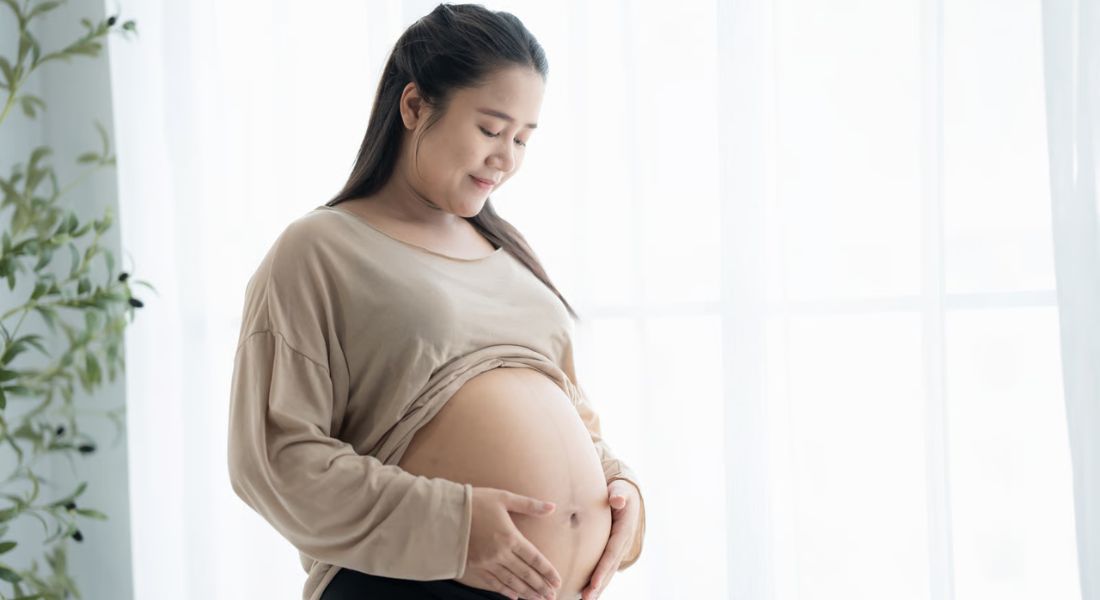
Pregnancy can bring a variety of changes to your skin, some of which may be completely new to you. You might notice darker patches, stretch marks, spots, itching or small visible blood vessels as your body responds to changing hormone levels, increased blood flow and the natural stretching of your skin.
Many pregnancy-related skin changes are caused by normal hormonal, circulatory and physical changes and gradually improve after your baby is born. However, a new rash, persistent or severe itching, blistering or rapidly worsening symptoms should be reported to your midwife, GP, obstetric team or dermatologist rather than assumed to be a normal part of pregnancy.
Why Does Your Skin Change During Pregnancy?
Your skin changes during pregnancy because your body goes through major hormonal and physical changes to support your growing baby. These changes can affect your skin’s colour, oil production, blood vessels and sensitivity, making it more likely for you to notice pigmentation, flushing, dryness or other common skin changes.
As your bump and breasts grow, your skin stretches more quickly than usual, which can lead to tightness, itching and stretch marks. Every pregnancy is different, so the changes you experience will depend on factors such as your genetics, skin tone, previous pregnancies and how your body responds to hormonal changes, with many of these changes gradually improving after your baby is born.
Are Darker Areas of Skin Normal?
Increased pigmentation is common during pregnancy and does not usually indicate a skin disorder. You may notice that your nipples, underarms, inner thighs, freckles, scars or genital skin become darker, and a dark vertical line called the linea nigra may appear down the centre of your abdomen.
These changes happen because pregnancy hormones increase the production of melanin, the pigment that gives your skin its colour. Pregnancy-related pigmentation often fades gradually after birth, although it may not disappear completely. Avoid unprescribed skin-lightening products, and arrange an assessment for any individual mole or pigmented patch that becomes raised, bleeds or changes noticeably in size, shape or colour.
What Is Melasma or the Pregnancy Mask?
Melasma causes flat brown or grey-brown patches, most commonly on the cheeks, forehead, nose, upper lip or chin. Pregnancy and hormonal changes can contribute to its development, while sunlight and visible light may make the pigmentation darker. Melasma itself is benign, but a new raised, bleeding or rapidly changing pigmented lesion should not automatically be assumed to be melasma.
Protecting your face with shade, a wide-brimmed hat and broad-spectrum SPF 30 or higher sunscreen with a high UVA rating may help prevent melasma from becoming darker. Sunscreens containing iron oxides may provide additional protection against visible light.
Do not use hydroquinone or topical retinoid creams during pregnancy. Chemical peels, microneedling and laser procedures carry risks of irritation, infection, scarring or worsening pigmentation and should only be considered after advice from an appropriately qualified clinician.
Why Do Stretch Marks Develop?
Stretch marks, also known as striae, develop when your skin stretches as your body changes during pregnancy. You may notice them on your abdomen, breasts, hips, buttocks or thighs, and they can appear pink, red, purple or darker in colour depending on your natural skin tone, sometimes with mild itching or tenderness as they form.
Whether you develop stretch marks depends on factors such as your skin type, genetics and how your body changes during pregnancy. Moisturisers may reduce dryness or discomfort, but there is limited reliable evidence that creams or oils prevent stretch marks from developing.
Stretch marks usually fade and become less noticeable after birth, although they may not disappear completely.
Is Dry or Mildly Itchy Skin Normal?
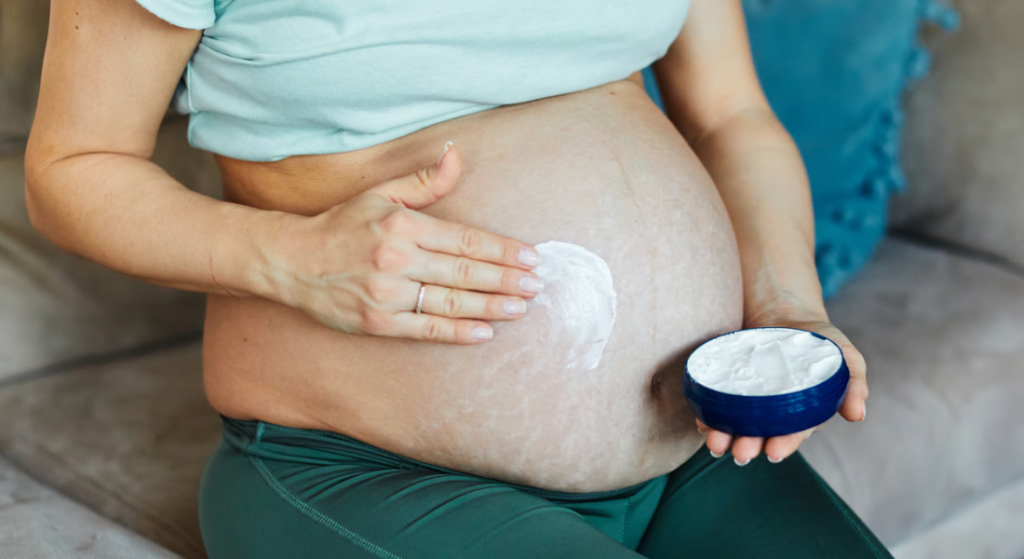
Mild localised itching can occur as the skin stretches, particularly around the abdomen and breasts. An unperfumed moisturiser, loose clothing and cool or warm rather than hot showers may reduce dryness and irritation.
Contact your maternity unit urgently if the itching becomes intense, keeps you awake, is worse at night or particularly affects your palms or soles, even when there is no visible rash. These symptoms can be associated with intrahepatic cholestasis of pregnancy and need maternity assessment rather than routine skincare advice.
Can Pregnancy Cause Acne or Oily Skin?
Pregnancy hormones can increase oil production, causing acne or making existing acne better or worse. Skin changes vary from one person to another.
- Hormonal changes: Pregnancy can increase oil production and trigger acne.
- Variable effects: Acne may improve, worsen or flare up during pregnancy.
- Gentle skincare: Use a mild cleanser and avoid picking or scrubbing spots.
- Safe treatments: Always check acne products with your healthcare professional before use.
- Avoid retinoids: Do not use products containing tretinoin or adapalene during pregnancy.
Most pregnancy-related acne improves over time, and your healthcare professional can recommend treatments that are safe for you and your baby.
Are Spider Veins and Red Palms Normal?
Yes, spider veins and red palms are common skin changes during pregnancy. You may notice small red blood vessels on your face, neck, chest or arms, or find that the palms of your hands look redder than usual because pregnancy hormones and increased blood flow affect your blood vessels.
These changes are often related to the hormonal and circulatory effects of pregnancy and may become less noticeable after your baby is born. However, seek medical advice if a visible blood vessel becomes painful, changes rapidly or bleeds, or if red palms occur with jaundice, severe itching, abdominal pain or feeling unwell.
What About Varicose Veins and Leg Swelling?
Varicose veins and gradual swelling affecting both ankles or feet are common during pregnancy. Staying active, avoiding prolonged standing, elevating your legs and using properly fitted compression stockings when recommended may reduce discomfort.
Contact your maternity team immediately if swelling suddenly increases in your face, hands or feet, particularly with a severe headache, visual changes, vomiting, pain below your ribs or feeling very unwell, as these may be signs of pre-eclampsia. One painful, warm or suddenly swollen leg needs urgent assessment for a possible blood clot; call 999 if leg symptoms occur with sudden breathlessness, chest pain, collapse or coughing up blood.
How Can Pregnancy Affect an Existing Skin Condition?
Pregnancy can affect existing skin conditions in different ways, so you may find that eczema, psoriasis, acne or other inflammatory skin problems improve, become worse or stay much the same. Hormonal changes, heat, sweating and increased skin sensitivity can all influence how your skin behaves during pregnancy.
If you already use treatment for a skin condition, do not stop it without speaking to the healthcare professional who prescribed it, as some medicines can be continued while others may need to be changed. You should also let your maternity team know about any medicines or skincare treatments you use, and seek medical advice if your symptoms become unusually severe or different from your usual flare-ups.
Clinical Tip
Take clear photographs when a rash first appears and note when it began, where it started, whether the belly button, palms or soles are involved and whether blisters or night-time itching develop. Bring a list or photographs of your prescribed medicines and skincare products to the appointment, but do not stop treatment unless the prescribing clinician advises you to do so.
What Is Polymorphic Eruption of Pregnancy?
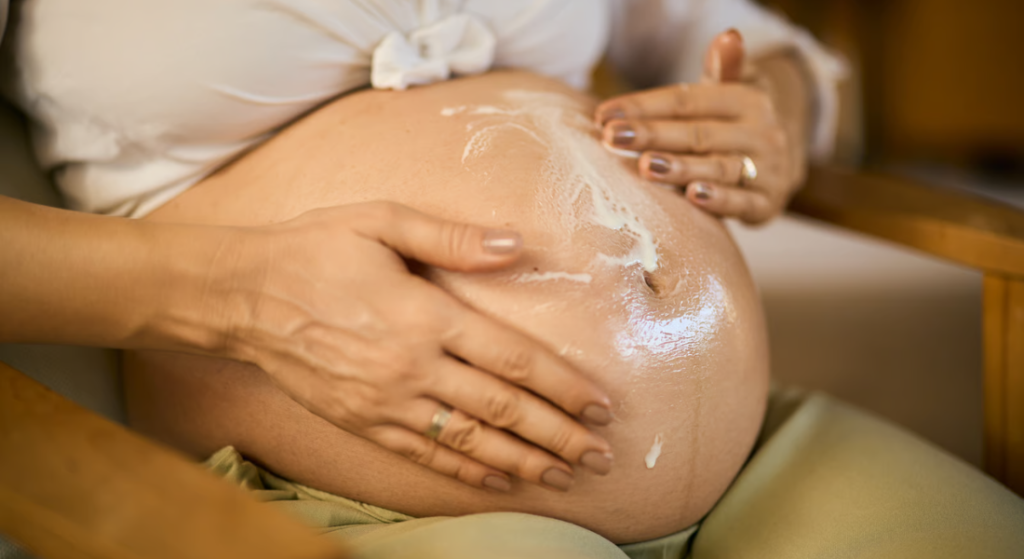
Polymorphic eruption of pregnancy (PEP), previously known as PUPPP, is a common pregnancy-related rash that causes intense itching, usually during the third trimester or shortly after your baby is born. The rash often starts within the stretch marks on your abdomen before spreading to your buttocks and thighs, while the skin around your belly button is often unaffected.
PEP can cause intense discomfort, but it has not been associated with adverse effects on the baby. It usually improves towards the end of pregnancy or within a few weeks after birth.
Treatment aims to relieve itching and inflammation and may include moisturisers, prescribed topical corticosteroids and an antihistamine that is suitable during pregnancy. Treatment should be selected with your maternity, GP or dermatology team.
Seek prompt dermatology or maternity advice if several blisters develop, the rash begins directly around the belly button or its appearance is otherwise unusual. Early pemphigoid gestationis can resemble PEP but requires different investigation and pregnancy monitoring.
When Could an Itchy Rash Be Eczema or Irritation?
Not every itchy rash during pregnancy is caused by a pregnancy-specific condition. You may develop eczema, contact dermatitis, heat rash, hives or skin irritation from products such as fragranced creams, soaps or detergents, and these conditions can cause dry, itchy or inflamed skin in different areas of your body.
If you notice a new rash, it is best to stop using any recently introduced skincare or cosmetic products and speak to your pharmacist, GP or maternity team about treatments that are suitable during pregnancy. You should also seek medical advice if the rash spreads, becomes painful, starts weeping or crusting, or if you develop a widespread rash, as this may need prompt assessment.
Myth vs Fact
| Myth | Fact |
| All itching is a normal result of the skin stretching. | Mild local itching is common, but severe itching, night-time itching or itching of the palms and soles needs urgent assessment for ICP. |
| Every pregnancy rash is simply a normal pregnancy change. | PEP is not associated with adverse effects on the baby, but pemphigoid gestationis, infections and severe medicine reactions require different assessment, monitoring and treatment. |
| Creams and oils can prevent stretch marks. | Moisturisers may reduce dryness and discomfort, but no cream or oil has been proven to prevent stretch marks reliably. |
| All over-the-counter acne products are safe in pregnancy. | Products containing topical retinoids should not be used during pregnancy, and medicated products should be checked with a healthcare professional. |
| Sudden swelling is always a normal pregnancy change. | Sudden swelling of the face, hands or feet with headache, visual symptoms or rib pain may indicate pre-eclampsia. |
| One painful swollen leg is probably only a varicose vein. | Pain and swelling affecting one leg may indicate DVT and require urgent assessment. |
What Is Pemphigoid Gestationis?
Pemphigoid gestationis is a rare autoimmune blistering condition associated with pregnancy. It commonly begins with severe itching and raised inflamed skin around the belly button before spreading, with firm fluid-filled blisters often developing later. A dermatologist may arrange a skin biopsy and blood test because the early rash can resemble other pregnancy-related conditions.
Prompt dermatology and obstetric assessment is needed because the condition may require topical or oral corticosteroids and closer pregnancy monitoring. Pemphigoid gestationis is associated with an increased chance of premature birth and lower birth weight.
Approximately 5% to 10% of affected babies may temporarily develop blisters after birth because maternal antibodies have crossed the placenta. The condition is not caused by the herpes virus and cannot be passed to another person.
Why Is Itching Without a Rash Important?
Severe or persistent itching without a rash can be a sign of intrahepatic cholestasis of pregnancy, particularly when the itching affects your palms or soles, becomes worse at night or keeps you awake. Contact your maternity unit urgently rather than waiting for a routine appointment. If you cannot contact the maternity unit, call NHS 111.
Assessment normally includes bile-acid and liver-function blood tests. Itching can begin days or weeks before the results become abnormal, so the tests should be repeated when symptoms continue and no other cause has been identified.
If ICP is confirmed, you will need an individual obstetric care plan because pregnancy risks vary according to bile-acid levels and other clinical factors. Monitor your baby’s usual pattern of movement and attend your maternity unit immediately if you notice reduced or changed movements.
Which Skin Symptoms Require Prompt Medical Assessment?

Contact your maternity unit, GP or NHS 111 urgently for severe itching, itching of the palms or soles, sudden swelling of the face or hands, severe headache, visual changes, pain below the ribs, one painful or swollen leg, extensive blistering or a new widespread rash.
You should also seek urgent advice if you develop a rash at any stage of pregnancy or have close contact with someone who has a potentially infectious rash, including chickenpox, measles, rubella or slapped cheek syndrome. Telephone before attending a GP surgery, antenatal clinic or maternity unit so that you can be assessed without exposing other pregnant patients.
Call 999 if you develop sudden or severe difficulty breathing, chest pain, cough up blood, collapse, reduced responsiveness, or sudden swelling of the lips, mouth, tongue or throat. If you have a painful or swollen leg together with breathlessness or chest pain, call 999 and do not drive yourself to A&E.
A widespread blistering or peeling rash, particularly with skin pain, fever, mouth or eye involvement, or feeling very unwell, needs immediate hospital assessment. Call 999 when breathing, swallowing or consciousness is affected. A changing mole or persistent skin lesion should be assessed promptly but does not usually require a 999 call unless another medical emergency is present.
UK Guidance Note
UKHSA guidance advises contacting your midwife, GP or obstetric team urgently if you develop a rash at any stage of pregnancy or have close contact with someone who has a rash. Do not attend an antenatal clinic, maternity unit or GP waiting room without telephoning first, as the service may need to organise assessment separately to protect other pregnant patients.
How Can You Care for Your Skin Safely During Pregnancy?
You can care for your skin during pregnancy by keeping your skincare routine simple and gentle. Using a fragrance-free cleanser, applying a moisturiser regularly and protecting your skin with a broad-spectrum sunscreen can help reduce dryness, irritation and pigmentation, while introducing only one new product at a time makes it easier to identify anything that irritates your skin.
Check medicated creams, acne products, skin-lightening preparations and herbal remedies with a GP, pharmacist or dermatologist before use. Retinoids and hydroquinone should be avoided during pregnancy, but do not stop an existing prescribed treatment without discussing it with the prescribing clinician, as many dermatological treatments can be continued or safely adjusted.
Seek medical advice when symptoms are persistent, severe or difficult to diagnose rather than repeatedly changing products yourself. Treatment decisions should consider your stage of pregnancy, the area being treated, the amount required and whether you plan to breastfeed.
Key Takeaways
- Increased pigmentation, stretch marks, mild dryness and visible blood vessels are common during pregnancy.
- Severe itching, especially on the palms or soles or without a rash, needs urgent maternity assessment.
- PEP is not associated with adverse effects on the baby, but several blisters or a rash beginning around the belly button may indicate pemphigoid gestationis.
- Sudden swelling with headache, visual changes or pain below the ribs may indicate pre-eclampsia.
- A painful, warm or swollen leg may indicate DVT, while breathlessness or chest pain requires emergency help.
- Check medicated skincare with a healthcare professional and avoid retinoid and hydroquinone products during pregnancy.
Frequently Asked Questions
1. When do pregnancy skin changes usually begin?
Some skin changes, such as increased pigmentation or acne, can appear during the first trimester, while others, including stretch marks and pregnancy-specific rashes, are more common in the second or third trimester. The timing varies from person to person.
2. Do pregnancy skin changes disappear after giving birth?
Many pregnancy-related skin changes gradually improve after delivery as hormone levels return to normal. Pigmentation, spider veins and stretch marks often fade over time, although some changes may not disappear completely.
3. Can I use my normal skincare products during pregnancy?
Not every product is suitable during pregnancy. Retinoid creams and gels, including tretinoin and adapalene, should not be used, and hydroquinone should also be avoided. Check medicated acne treatments, skin-lightening products and herbal remedies with your GP, pharmacist or dermatologist, but do not stop a prescribed medicine without advice.
4. Is it normal for my skin to become more sensitive during pregnancy?
Yes. Many people find that their skin becomes more sensitive to soaps, fragrances, cosmetics and sunlight during pregnancy. Using gentle, fragrance-free skincare products and regular moisturisers may help reduce irritation.
5. Should I worry if I develop an itchy rash during pregnancy?
An itchy rash is not always caused by a serious condition, but any new, widespread, persistent or blistering rash should be assessed. Contact your maternity team urgently when itching is severe, worse at night or affects the palms or soles, even when no rash is visible.
Seek urgent advice if you develop any rash illness during pregnancy or have close contact with someone who has a potentially infectious rash. Telephone before attending a GP surgery, antenatal clinic or maternity unit.
6. Can pregnancy make existing skin conditions worse?
Yes. Conditions such as eczema, psoriasis and acne may improve, worsen or remain unchanged during pregnancy. If your usual symptoms change significantly or you need treatment, seek medical advice before starting, stopping or changing any medicine.
7. Is severe itching without a rash normal during pregnancy?
Severe itching without a rash is not something to manage only with moisturiser. Contact your maternity unit urgently, particularly when the itching affects your palms or soles, becomes worse at night or interferes with sleep. Blood tests for bile acids and liver function may be needed and may require repeating if symptoms continue.
8. Can I prevent stretch marks during pregnancy?
There is no proven way to completely prevent stretch marks. Keeping your skin well moisturised may improve comfort and reduce dryness, but no cream or oil has been shown to reliably stop stretch marks from developing.
9. Are spider veins and varicose veins permanent?
Many spider and varicose veins become less noticeable during the months after birth, although some remain. Seek urgent assessment rather than waiting for them to improve if one leg becomes painful, warm or suddenly swollen. Call 999 if leg symptoms occur with breathlessness, chest pain, collapse or coughing up blood.
10. When should I see a dermatologist about skin changes during pregnancy?
A dermatologist can assess a persistent, severe, blistering or difficult-to-diagnose rash, significant worsening of an existing skin condition or a changing mole or lesion. Severe itching without a rash, sudden swelling with headache or visual symptoms and possible blood-clot symptoms should be reported directly to your maternity or emergency service rather than waiting for a routine dermatology appointment.
Final Thoughts: Caring for Your Skin Throughout Pregnancy
Most pregnancy-related skin changes are harmless and gradually improve after birth, but severe itching, blistering, sudden swelling and one-sided leg symptoms should not be dismissed as normal pregnancy changes. Early assessment can distinguish common pigmentation, stretch marks or PEP from conditions requiring dermatology, obstetric or emergency care. If you would like to book a consultation with one of our dermatologists in London, you can contact us at the London Dermatology Centre.
References:
- Alhomieed, M.F. et al. (2025) The effect of pregnancy on dermatological disorders: a systematic review. Clinics and Practice, 15(4), article 68. Available at: https://www.mdpi.com/2039-7283/15/4/68
- Biskanaki, F., Tertipi, N., Andreou, E., Sfyri, E., Kefala, V. and Rallis, E. (2024) The risk of using cosmetics and cosmetic procedures during pregnancy. Applied Sciences, 14(21), article 9885. Available at: https://www.mdpi.com/2076-3417/14/21/9885
- Motosko, C.C. et al. (2017) Physiologic changes of pregnancy: a review of the literature. International Journal of Women’s Dermatology, 3(4), pp. 219–224. Available at: https://pubmed.ncbi.nlm.nih.gov/29234716/
- Gupta, S.N. et al. (2024) Cutaneous changes during pregnancy: a comprehensive review. Cureus, 16(9), article e69986. Available at: https://pmc.ncbi.nlm.nih.gov/articles/PMC11497768/
- McSwiney, N.T., Hutchison, E. and Wainman, H. (2025) Pregnancy-specific dermatoses for the resident physician. Clinical Medicine, 25(3), article 100316. Available at: https://www.sciencedirect.com/science/article/pii/S147021182500034X