


If you’ve ever booked a mole check, you may have noticed there are now different types available. Some clinics offer a traditional visual examination, while others recommend digital mole mapping using advanced imaging technology. It’s completely normal to feel unsure about which option is right for you.
Many people assume that all mole checks are the same. In reality, the method used to assess your skin can make a significant difference, particularly if you have many moles or a higher risk of skin cancer. Understanding how these approaches differ can help you make a more informed decision.
In this guide, I’ll walk you through the key differences between digital mole mapping and traditional mole checks. I’ll explain how each works, when digital imaging is especially useful, and how dermatologists decide which option suits you best.
Why Regular Mole Checks Matter
Before comparing different monitoring methods, it’s important to understand why regular mole checks are essential. Skin cancer, including melanoma, often develops through gradual changes in existing moles or the appearance of new lesions. Detecting these changes early can significantly improve treatment success and long-term outcomes.
Not every change in a mole is harmful, but subtle differences in size, colour, or shape can be easy to miss without expert assessment. Dermatologists are trained to recognise early warning signs that may not be obvious to the untrained eye. Regular checks ensure that concerning changes are identified and addressed promptly.
For many people, routine or annual mole checks are sufficient. However, individuals with higher risk factors may benefit from more detailed or frequent monitoring. Tailoring follow-up to personal risk helps balance safety with practicality.
What Is a Traditional Mole Check?
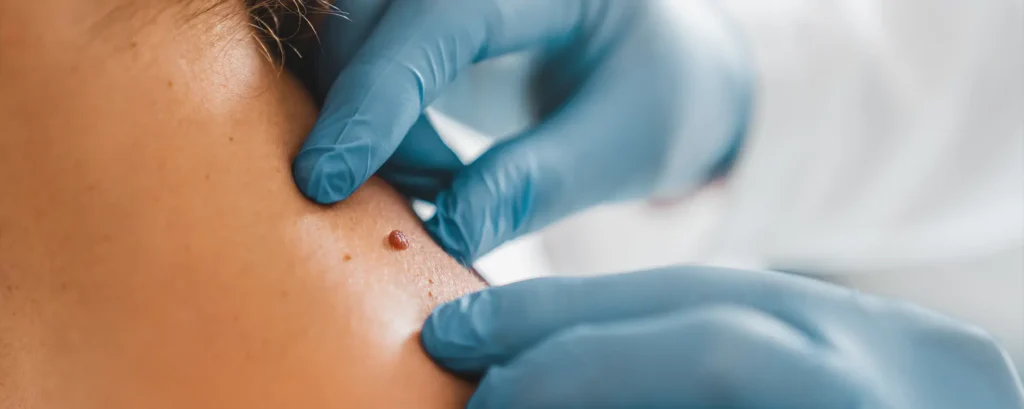
A traditional mole check is a thorough clinical skin examination carried out by a dermatologist. During the appointment, your skin is assessed from head to toe to identify moles or lesions that appear unusual. The goal is to detect early signs of skin cancer or other concerning changes before they become serious. This examination is a routine but essential part of preventative dermatological care.
- Full-body visual examination – The dermatologist carefully inspects the skin from scalp to soles, checking all visible moles and lesions.
- Use of a dermatoscope – A handheld magnifying device is often used to view structures beneath the skin’s surface that cannot be seen with the naked eye.
- Assessment criteria – Moles are evaluated based on shape, colour, size, border irregularity, and overall pattern.
- Identification of suspicious lesions – Any mole that appears atypical may be flagged for closer attention.
- Next-step planning – Depending on findings, lesions may be photographed, monitored over time, or biopsied.
This structured approach allows dermatologists to make informed decisions about which moles require further investigation. While many lesions are harmless, careful examination ensures that potentially concerning changes are not overlooked and that appropriate follow-up is arranged when needed.
How Traditional Mole Checks Are Performed

A traditional mole check is a focused, in-clinic skin examination carried out by a dermatologist. The process is straightforward and relies on visual assessment combined with clinical experience. It is designed to identify suspicious lesions efficiently during a single visit.
- The examination usually takes 10–20 minutes, depending on the number of moles and lesions present
- You’ll be asked to change into a gown so all areas of the skin can be examined, including hard-to-see regions
- If a mole appears concerning, removal or biopsy may be recommended for further analysis
- In less urgent cases, the dermatologist may advise monitoring the mole and reviewing it at a later date
- This method relies heavily on the clinician’s expertise, with experienced dermatologists able to identify many concerning lesions during one examination
Traditional mole checks remain an important part of skin cancer detection. When performed by an experienced specialist, they can be highly effective in identifying lesions that require closer follow-up or intervention.
Strengths of Traditional Mole Checks
Traditional mole checks have been used effectively for many years and continue to play an important role in skin cancer detection. They are quick, widely available, and straightforward to perform in a clinical setting. For individuals with fewer moles or a lower overall risk, they often provide sufficient reassurance. These checks allow dermatologists to assess the skin efficiently without the need for specialised imaging.
1. Quick and Accessible Assessment – Traditional mole checks can usually be completed in a single appointment. This makes them a convenient option for routine skin surveillance or initial evaluation.
2. Effective for Specific Concerning Moles – They are particularly useful when a patient has noticed a mole that has changed, become itchy, painful, or started bleeding. In such cases, immediate assessment and clinical decision-making are often possible.
3. Suitable for Low-Risk Individuals – For people with relatively few moles and no significant risk factors, traditional checks are often all that is required. They provide a practical way to stay on top of skin health.
For many patients, traditional mole checks strike the right balance between simplicity and effectiveness. When used appropriately, they can identify suspicious lesions early and offer timely reassurance. While not designed for long-term mole tracking, they remain a reliable option for routine care.
Limitations of Traditional Mole Checks
Traditional mole checks are valuable, but they do have clear limitations. They assess your skin at a single moment in time and rely on what is visible during that appointment. This means gradual changes between visits may be harder to identify.
For people with many moles, especially those that look alike, tracking subtle differences becomes challenging. Even detailed clinical notes cannot always capture small shifts in colour, shape, or size. Human memory alone is not a reliable tool for long-term visual comparison. This is where digital mole mapping becomes particularly useful. By creating a photographic record over time, it allows precise comparison and improves the detection of early, meaningful change.
What Is Digital Mole Mapping?
Digital mole mapping is an advanced method of skin monitoring that uses high-resolution photography and specialised imaging software. It creates a detailed visual record of your skin rather than relying on memory or written notes. This approach allows dermatologists to track changes accurately over time. It is especially useful for identifying early signs of skin cancer.
During a digital mole mapping session, full-body images are taken under controlled lighting conditions. In addition to these overview photographs, close-up images of selected moles are captured using dermoscopy. Each image documents colour, shape, and structure in detail. Together, these form a reliable baseline of your skin.
At follow-up appointments, new images are compared directly with previous records. Even very subtle changes that may be missed during a standard examination can be detected. This comparison over time is what makes digital mole mapping so powerful. It supports earlier diagnosis and more confident clinical decisions.
How Digital Mole Mapping Works
Digital mole mapping begins with a detailed, standardised imaging session designed to capture your skin accurately. You are positioned in a consistent way so the same areas can be photographed at each visit, creating reliable baseline records. High-resolution images document existing moles and skin patterns across the body. This structured process supports long-term monitoring and comparison.
- Comprehensive baseline imaging – Advanced cameras capture detailed images of the entire skin surface during the first visit.
- Consistent positioning – Standardised positioning ensures the same areas are photographed at every appointment for accurate comparisons.
- Dermatologist-led analysis – Images are reviewed by a dermatologist, who assesses moles and identifies subtle changes over time.
- Software-assisted tracking – Some systems use specialised software to highlight differences, while final judgement remains clinical.
- Ongoing comparison – Each new session is compared with previous images to detect early or gradual changes.
Over time, digital mole mapping builds a visual timeline of your skin’s appearance. This allows dermatologists to identify changes earlier and more precisely than single-point examinations, supporting timely intervention and informed decision-making.
Key Benefits of Digital Mole Mapping
Digital mole mapping offers a more advanced and structured approach to skin monitoring by focusing on change over time rather than a single snapshot. Because skin cancer often reveals itself through evolution, having precise visual records greatly improves detection accuracy. This technology is particularly valuable for individuals at higher risk.
- Allows accurate tracking of subtle changes in moles over time, which is critical for early melanoma detection
- Especially beneficial for people with many moles, atypical moles, or a personal or family history of melanoma
- Reduces uncertainty by providing objective visual comparisons rather than relying on memory alone
- Improves confidence in clinical decision-making for both patients and dermatologists
- Helps reduce unnecessary biopsies by distinguishing stable moles from those that are genuinely changing
By combining technology with expert interpretation, digital mole mapping supports earlier detection while minimising unnecessary procedures. This leads to safer, more precise, and more reassuring long-term skin monitoring.
Digital Mole Mapping vs Traditional Mole Checks: A Direct Comparison

The key difference between traditional mole checks and digital mole mapping lies in how skin information is captured and used over time. Both approaches are clinically valid and rely on professional expertise. However, they serve slightly different purposes depending on a patient’s risk level and monitoring needs. Understanding these differences helps clarify why one method may be recommended over the other.
1. Traditional Mole Checks: Immediate Visual Assessment – Traditional mole checks focus on examining the skin at a single point in time. The dermatologist assesses moles visually and makes decisions based on current appearance and clinical judgement.
2. Digital Mole Mapping: Long-Term Monitoring – Digital mole mapping involves photographing the skin and tracking changes over months or years. This allows subtle changes to be detected through direct comparison over time.
3. Role of Clinical Expertise – Both methods depend heavily on the dermatologist’s experience and training. Clinical judgement remains central to identifying suspicious lesions in either approach.
4. Added Value of Objective Documentation – Digital mole mapping provides a visual record that supports clinical assessment. This additional documentation can be particularly valuable for patients with many moles or higher skin cancer risk.
In practice, these two approaches are not competitors but complementary tools. Traditional mole checks are often sufficient for low-risk individuals or isolated concerns, while digital mole mapping offers added reassurance for long-term surveillance. Choosing the right method depends on individual risk, skin type, and clinical context.
Accuracy and Early Detection
Digital mole mapping is particularly effective for identifying early and subtle changes in the skin. Small variations in size, colour, shape, or internal structure can be detected through precise image comparison over time. These changes may be too gradual to notice during a single clinical visit. This makes digital tracking especially valuable for early melanoma detection.
Traditional mole checks, however, remain highly accurate when performed by experienced dermatologists. Obvious changes, rapidly evolving lesions, or symptomatic moles are often identified quickly during in-person examinations. Clinical judgement, palpation, and immediate decision-making are strengths of traditional assessments. These checks play a crucial role in prompt diagnosis.
In practice, the most effective strategy is often a combination of both methods. Digital mole mapping adds long-term comparison and precision, while traditional checks provide real-time clinical insight. Together, they offer a more comprehensive and reliable approach to skin cancer monitoring. This balanced strategy maximises both accuracy and patient safety.
Who Benefits Most from Digital Mole Mapping?
Digital mole mapping is not necessary for everyone, but it can be particularly beneficial for individuals at higher risk of skin cancer. This approach is designed to support closer, more accurate monitoring when visual changes may be difficult to track over time. Certain personal and medical factors make digital monitoring especially valuable.
- High mole count or atypical moles – People with many moles or moles that appear unusual can benefit from detailed baseline imaging.
- Fair skin or sun damage – Those with fair skin or a history of significant sunburn are often advised to consider closer surveillance.
- Family history of melanoma – A family history increases risk and makes proactive monitoring more important.
- Difficulty with self-checks – Digital mapping helps when regular self-examination is challenging or unreliable.
- Personalised risk assessment – A dermatologist offering mole mapping in London can evaluate your risk and advise if digital imaging is appropriate.
By tailoring monitoring to individual risk, digital mole mapping provides reassurance and supports earlier detection of concerning changes. This personalised approach ensures that patients receive the level of surveillance best suited to their skin and medical history.
When Traditional Mole Checks Are Enough
For many people, traditional mole checks provide sufficient monitoring without the need for advanced imaging. When overall risk is low, a thorough clinical examination is often all that is required. In these situations, digital mole mapping may not offer additional value.
- Low-risk profiles – Individuals with only a few moles and no significant risk factors are often well served by standard checks.
- Limited or isolated concerns – Traditional examinations are ideal for assessing a single new mole or a lesion that has changed, bled, or become itchy.
- Clear clinical findings – When a dermatologist can confidently assess a mole during examination, digital tracking may be unnecessary.
- Efficient and appropriate care – Choosing the right level of monitoring avoids unnecessary procedures while ensuring safety.
Your dermatologist will consider your skin type, medical history, and specific concerns to recommend the most suitable approach for ongoing monitoring and peace of mind.
The Role of Dermatologist Expertise
Technology plays an important supporting role in mole monitoring, but it cannot replace clinical judgement. Digital images must be interpreted by a trained dermatologist who understands skin biology, mole patterns, and individual risk factors. Without expert interpretation, images alone have limited value.
A comprehensive assessment still relies on more than photographs. Medical history, family history, sun exposure, symptoms, and a hands-on skin examination all contribute critical context. These elements help dermatologists decide which changes are meaningful and which are harmless variations.
Choosing a clinic with specialist dermatology expertise ensures the right balance between technology and experience. When traditional clinical skills are combined with digital tools, assessments are more accurate and decisions more reliable. This integrated approach leads to safer monitoring and better outcomes.
How Often Should Mole Mapping Be Repeated?
There is no single schedule that suits everyone when it comes to mole mapping. The recommended frequency depends on your individual risk profile, skin type, and personal or family history of skin cancer. The goal is to balance early detection with appropriate, not excessive, monitoring. This is why follow-up plans are personalised rather than fixed.
1. Digital Mole Mapping Frequency
For many patients, digital mole mapping is repeated annually. Those with higher risk factors, such as numerous moles or a history of melanoma, may benefit from more frequent imaging.
2. Traditional Mole Check Intervals
Traditional mole checks are often scheduled yearly or performed as needed. The timing depends on clinical findings, new symptoms, or any concerning changes noticed by the patient.
3. Personalised Follow-Up Planning
Your dermatologist considers multiple factors when deciding review intervals. This ensures monitoring is tailored to your specific level of risk and skin behaviour.
Ultimately, the most effective monitoring schedule is one designed specifically for you. Regular follow-up helps detect changes early while avoiding unnecessary appointments or procedures. Working closely with your dermatologist ensures skin surveillance remains both effective and appropriate over time.
Cost and Practical Considerations
Digital mole mapping generally costs more than a traditional skin check. The higher price reflects the specialised equipment, high-resolution imaging, and time required for detailed image analysis. This technology-intensive process provides a more thorough record of your skin over time.
For patients at higher risk of skin cancer such as those with numerous moles, atypical moles, or a personal or family history the benefits often justify the expense. Early detection and continuous monitoring can prevent serious outcomes, making the investment worthwhile.
Beyond clinical benefits, digital mole mapping can also reduce anxiety. Clear visual evidence that moles are stable provides reassurance between visits. Patients often feel more confident and in control of their skin health.
Discussing costs, frequency, and expected benefits with your dermatologist during consultation ensures transparency. This helps you make an informed decision that balances financial considerations with optimal skin monitoring.
Does Digital Mole Mapping Replace Biopsies?
Digital mole mapping enhances monitoring but does not replace biopsies for suspicious lesions. While imaging helps identify moles that require closer attention, tissue sampling remains the gold standard for diagnosis.
- Digital mapping allows dermatologists to track changes and prioritise which moles may need further investigation
- Biopsies are still required when a mole shows concerning features, such as rapid growth, asymmetry, or colour change
- The primary goal is to ensure biopsies are used appropriately and at the right time
- Mapping reduces unnecessary procedures by distinguishing stable moles from those that are actively changing
- It supports early detection while maintaining a targeted, evidence-based approach to intervention
By combining digital tracking with expert evaluation, dermatologists can use biopsies more effectively, improving safety and diagnostic accuracy.
Patient Experience and Peace of Mind
The choice between digital mole mapping and traditional checks often depends on personal preference and comfort. Both approaches aim to provide effective monitoring while supporting patient confidence and reassurance. Understanding the options can help you feel secure in your skin health management.
- Reassurance through digital tracking – Many patients feel more confident knowing their skin is being carefully monitored over time with high-resolution imaging.
- Reduced anxiety – Digital monitoring can be particularly comforting for those with a personal or family history of skin cancer.
- Simplicity of traditional checks – Some patients prefer regular visual examinations, finding them straightforward and effective for peace of mind.
- Personal comfort matters – Feeling confident and at ease with your chosen monitoring method is an important part of ongoing skin care.
Ultimately, the best approach balances medical effectiveness with patient comfort, ensuring that monitoring supports both safety and emotional well-being.
Combining Both Approaches
Many dermatology clinics now use a combination of traditional mole checks and digital mole mapping. This approach leverages the strengths of both methods, allowing for thorough visual assessment alongside objective, long-term documentation. The goal is to provide accurate monitoring while minimising unnecessary interventions.
1. Visual Examination at Every Visit – Even when digital imaging is used, a dermatologist performs a careful visual check of the skin at each appointment. This ensures immediate assessment of any new or changing moles.
2. Supporting Decision-Making with Digital Images – Digital mole mapping provides a record that can be compared over time. This objective documentation helps dermatologists identify subtle changes that might otherwise be missed.
3. Personalised Monitoring Plans – Combining both approaches allows monitoring to be tailored to your individual risk. It ensures that you are neither under-monitored nor subjected to unnecessary procedures.
By integrating traditional checks with digital mapping, clinics can offer the most effective and reassuring care. Patients benefit from both immediate clinical evaluation and precise long-term tracking, providing confidence that skin changes are being monitored appropriately.
How Dermatologists Choose the Right Option
Choosing between digital mole mapping and traditional mole checks is highly individual. Dermatologists evaluate factors such as your skin type, the total number of moles, family and personal medical history, and any specific concerns you may have. This personalised assessment ensures that the monitoring method fits your unique profile.
Risk assessment is central to the decision. Patients with higher risk such as those with many moles, atypical moles, previous skin cancers, or a strong family history often benefit most from digital tracking. In contrast, lower-risk individuals may be well served by standard visual examinations and routine skin checks. Consultation discussions are important for aligning expectations. By talking openly about your risk level, lifestyle, and comfort with technology, your
FAQs:
1. What is the main difference between digital mole mapping and a traditional mole check?
The main difference lies in how the skin is assessed and monitored over time. Traditional mole checks rely on a visual examination performed by a dermatologist at a single point in time, often supported by a handheld dermatoscope to examine individual moles more closely. Digital mole mapping, on the other hand, involves capturing high-resolution, full-body images that create a baseline record.
2. Who benefits most from digital mole mapping?
Digital mole mapping is particularly valuable for individuals at higher risk of skin cancer, such as those with a high number of moles, atypical moles, fair or sun-sensitive skin, a personal or family history of melanoma, or difficulty performing thorough self-examinations. These factors make it challenging to detect small but important changes through routine visual checks alone.
3. Can traditional mole checks detect early signs of melanoma effectively?
Yes, traditional mole checks can be very effective, especially when performed by experienced dermatologists. They allow for immediate assessment of new, changing, or symptomatic moles and can identify suspicious lesions that may require further investigation or biopsy.
4. How does digital mole mapping improve early detection?
Digital mole mapping improves early detection by providing a precise visual record that can be compared over time. This method captures subtle changes in size, shape, colour, and structure that may be difficult to notice in a single clinical visit or with the naked eye. By monitoring these changes longitudinally, dermatologists can identify potentially malignant lesions at an earlier stage, which increases the likelihood of successful treatment while reducing unnecessary procedures on stable, benign moles.
5. Are there limitations to digital mole mapping?
While digital mole mapping is a powerful monitoring tool, it does not prevent skin cancer and cannot replace biopsies when a mole shows suspicious changes. Some melanomas can develop rapidly, and imaging alone cannot guarantee early detection in all cases. Additionally, the effectiveness of digital mapping depends on expert interpretation by a trained dermatologist, and it must be complemented by clinical assessment, medical history review, and hands-on examination for the most accurate evaluation.
6. How often should digital mole mapping be repeated?
The frequency of digital mole mapping is determined based on an individual’s risk profile. Patients at higher risk, such as those with multiple or atypical moles, may benefit from more frequent imaging, sometimes every three to twelve months, while lower-risk individuals may only require annual mapping or even a one-time baseline session.
7. Can digital mole mapping replace self-examinations?
No, digital mole mapping does not replace self-examination. Patients remain the first line of defence in noticing changes between clinical visits. Becoming familiar with one’s own moles and skin patterns allows individuals to detect new or unusual developments promptly.
8. Is digital mole mapping suitable for everyone?
Digital mole mapping is not necessary for every patient. Individuals with few moles, no personal or family history of skin cancer, and minimal sun exposure may find traditional mole checks sufficient. In such cases, digital mapping may provide limited added benefit and is usually reserved for creating a baseline image if desired.
9. How does dermatologist expertise factor into mole monitoring?
Regardless of the method used, dermatologist expertise is essential for accurate mole monitoring. Clinical judgement is required to distinguish between harmless variations and potentially concerning changes. In digital mole mapping, images must be interpreted in the context of patient history, skin type, and risk factors.
10. Can digital mole mapping reduce unnecessary biopsies?
Digital mole mapping can help reduce unnecessary biopsies by providing clear longitudinal evidence of stable versus changing moles. By comparing images over time, dermatologists can identify which moles have remained unchanged and which show subtle evolution that may warrant further investigation.
Final Thoughts: Choosing Between Digital and Traditional Mole Checks:
Both traditional mole checks and digital mole mapping play important roles in skin cancer monitoring. Traditional checks provide immediate, expert visual assessment, while digital mole mapping offers precise long-term tracking of subtle changes in moles. For individuals at higher risk or with many moles, combining both approaches often delivers the most comprehensive care. Personalised monitoring, guided by a dermatologist, ensures early detection, reduces unnecessary procedures, and provides peace of mind. If you’re considering mole mapping in London, you can reach out to us at the London Dermatology Centre.
References:
1. Vestergaard, M.E., Macaskill, P., Holt, P.E. and Menzies, S.W., 2008. Dermoscopy compared with naked eye examination for the diagnosis of primary melanoma: a meta‑analysis of studies performed in a clinical setting. British Journal of Dermatology, 159(3), pp.669‑676. https://pmc.ncbi.nlm.nih.gov/articles/PMC6517096/
2. Lallas, A., Kyrgidis, A., Apalla, Z. and Longo, C., 2025. Review of non‑invasive imaging technologies for cutaneous melanoma., Biosensors, 15(5), p.297. https://www.mdpi.com/2079-6374/15/5/297
3. Wolfang, A., et al., 2018. Clinical perspective of 3D total body photography for early detection of melanoma. https://pmc.ncbi.nlm.nih.gov/articles/PMC6517096/
4. Clinical Outcomes of 3D‑Total Body Photography and Digital …, European Journal of Cancer describes how advanced 3D total body imaging enhances visualization and surveillance of skin lesions. https://www.sciencedirect.com/science/article/abs/pii/S0959804925009396
5. A new concept in 3D total body imaging for early melanoma detection, Journal of Dermatological Imaging presents innovations in whole‑body imaging systems for skin cancer screening and monitoring. https://www.sciencedirect.com/science/article/pii/S2772611825004690