



Psoriasis treatment has changed dramatically over the past few decades. Understanding how your immune system drives the condition led researchers from broad immunosuppressive treatments towards medicines that target specific inflammatory pathways.
Biologic medicines have since transformed the treatment of moderate-to-severe psoriasis for many people. They can provide levels of skin clearance that were difficult to achieve consistently with earlier systemic treatments.
How Was Psoriasis Treated Before Biologics?
Before biologic medicines became available, your moderate-to-severe psoriasis might have been treated with phototherapy or systemic medicines such as methotrexate, ciclosporin and retinoids including acitretin.
These treatments work in different ways and should not all be described as broad immunosuppressants. Your dermatologist may still recommend them depending on your psoriasis severity, previous treatment response, other medical conditions and treatment priorities.
Why Did This Discovery Matter?
Once researchers understood more about the inflammatory pathways driving your psoriasis, treatments could be developed to interfere with particular immune signals rather than relying only on less targeted systemic approaches.
Your modern biologic treatment may therefore target TNF, IL-12/23, IL-17 or IL-23. Greater biological specificity does not mean that your treatment is free from side effects or suitable for everyone.
What Is a Biologic Medicine?
Your biologic medicine is produced using biological systems and is designed to interact with a particular immune target. Most biologics used for psoriasis are monoclonal antibodies, although some earlier treatments used fusion proteins or receptor-based designs.
Your biologic does not simply switch your entire immune system off. It modifies a particular inflammatory pathway, although this can still alter your susceptibility to infections and create other treatment-specific risks.
Key Points About Biologic Medicines
| Aspect | What It Means for You | Why It Matters |
| Targeted immune action | Your medicine interferes with a defined inflammatory pathway | Your treatment can be more pathway-specific than older systemic approaches |
| Monoclonal antibodies | Your medicine may bind a particular cytokine or receptor | Different biologics affect different parts of your psoriasis inflammation |
| Injection or infusion | Most of your biologics are injected under your skin, while infliximab is given intravenously | Your administration schedule varies between medicines |
| Treatment response | Your plaques may improve substantially | Your degree of skin clearance cannot be guaranteed |
| Infection risk | Your immune response is modified | Your dermatologist needs to assess infection and other safety risks |
| Long-term treatment | Your psoriasis can return if an effective biologic is stopped | Your treatment plan requires ongoing review |
The First Psoriasis Biologic
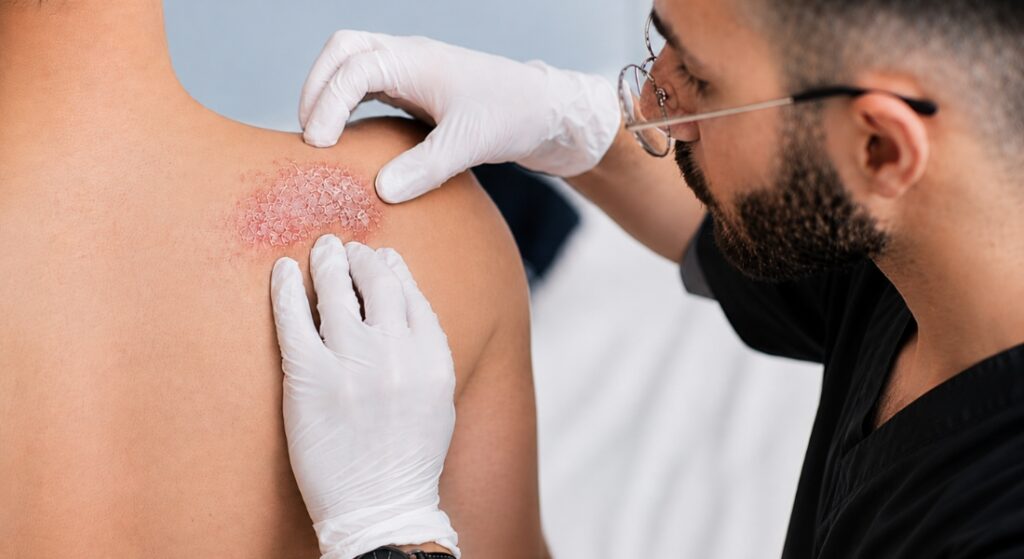
Alefacept became the first biologic approved by the US FDA specifically for chronic plaque psoriasis in January 2003. Your treatment would have targeted T-cell activation through a fusion-protein mechanism rather than one of the cytokine pathways targeted by many current biologics.
Alefacept helped establish that selective immune intervention could improve psoriasis. Commercial sales of the medicine ceased in 2011. Available evidence does not indicate that this was because of a specific new safety problem.
What Happened to Alefacept?
If you had received alefacept, your treatment would have targeted T-cell activation rather than the IL-17 or IL-23 pathways used by many newer biologics. The medicine was discontinued by its manufacturer in 2011.
Its historical importance lies in showing that selectively targeting your immune response could improve plaque psoriasis.
Efalizumab and Early T-Cell Therapy
Efalizumab was another early T-cell-targeted biologic. It was authorised in Europe in 2004 for selected adults with moderate-to-severe chronic plaque psoriasis who had not responded to, could not tolerate or could not receive other systemic treatments.
Its European marketing authorisation was withdrawn in 2009 after serious safety concerns including progressive multifocal leukoencephalopathy. Your treatment history therefore illustrates why long-term pharmacovigilance remains important even after a biologic has entered clinical use.
The Discovery of TNF-Alpha as a Target
TNF-alpha was identified as an important inflammatory cytokine involved in your psoriasis. Blocking TNF became one of the earliest successful cytokine-targeted approaches and helped establish biologic treatment as an important option for severe disease.
Your TNF-targeted medicines include etanercept, infliximab and adalimumab. Their success also encouraged research into more psoriasis-specific cytokine pathways.
Etanercept
Etanercept is a fusion protein that acts as a soluble TNF receptor, reducing the ability of TNF to activate inflammatory signalling. It became one of the early TNF-targeted biologics used for your plaque psoriasis.
Its development helped demonstrate that blocking an individual inflammatory pathway could produce substantial improvement in your skin disease.
Infliximab
Infliximab is a monoclonal antibody that directly binds TNF-alpha and can produce rapid improvements in severe psoriasis. It is given by intravenous infusion rather than a routine self-administered injection.
Because infliximab is administered through an intravenous infusion, your treatment is usually given in a clinical setting. Your dermatologist will consider factors such as the severity of your psoriasis and your overall health when deciding whether it is appropriate.
Understanding Psoriasis as an Immune-Mediated Disease

Research showed that your psoriasis involves abnormal interactions between immune cells, inflammatory cytokines and skin cells rather than being caused simply by excessive skin-cell growth.
T cells, TNF, IL-23 and IL-17 became particularly important in understanding the inflammatory pathways that sustain your psoriasis. This knowledge allowed researchers to develop treatments directed at increasingly specific parts of your immune response.
Adalimumab and the Expansion of TNF Therapy
Adalimumab further expanded TNF-targeted treatment and could be administered by injection at home. TNF inhibitors became important treatment options for psoriasis and psoriatic arthritis.
- Home treatment: Adalimumab can be administered by injection, which may make treatment more convenient for you
- TNF targeting: It blocks tumour necrosis factor (TNF), a protein involved in the inflammation associated with your condition
- Psoriasis treatment: TNF inhibitors can help reduce the inflammatory activity that contributes to your psoriasis
- Joint symptoms: These medicines can also help reduce inflammation associated with psoriatic arthritis
- Treatment choice: Your dermatologist or rheumatologist can consider TNF inhibitors alongside other biologic treatments based on your individual needs
TNF inhibitors have helped expand the range of biologic treatments available for psoriasis and psoriatic arthritis. For you, the option of administering some treatments at home can also make long-term management more convenient.
The IL-12 and IL-23 Breakthrough
Ustekinumab targets the p40 protein shared by IL-12 and IL-23. Its development represented another major step towards understanding and selectively modifying the inflammatory pathways involved in your psoriasis.
Your later treatments became even more selective by targeting the IL-23 p19 component without simultaneously blocking IL-12.
Why Was IL-17 Important?
Research established the IL-23/IL-17 pathway as a central component of plaque psoriasis inflammation. IL-23 supports inflammatory cell populations that produce cytokines including IL-17, which then act on your skin cells and contribute to plaque formation.
Understanding this pathway led to biologics capable of producing very high levels of skin clearance in many clinical-trial participants, although your individual response can still vary.
The Arrival of IL-17 Inhibitors
Secukinumab and ixekizumab bind IL-17A, while brodalumab works differently by targeting the IL-17 receptor A. These treatments interrupt an important inflammatory pathway involved in your plaque psoriasis.
You should therefore avoid describing all IL-17 biologics as having exactly the same target. Their mechanisms differ even though they act within the same broader inflammatory pathway.
Targeting IL-23 More Selectively
Guselkumab, tildrakizumab and risankizumab target the p19 component of IL-23 without blocking IL-12. This represented a more selective development from the earlier p40-targeting approach used by ustekinumab.
Your IL-23 inhibitor may provide sustained disease control with maintenance doses spaced several weeks apart, although your exact dosing schedule depends on which medicine you receive.
Why Were IL-23 Inhibitors a Major Advance?
IL-23 inhibitors can provide sustained psoriasis control with relatively infrequent maintenance injections. Their development reflected an increasingly detailed understanding of the immune pathways driving your psoriasis.
These treatments have expanded the options available for long-term management of your condition. Your dermatologist can consider factors such as your symptoms, treatment history and preferences when choosing a suitable biologic.
The Development of Dual IL-17 Inhibition
Bimekizumab represented another development by selectively targeting both IL-17A and IL-17F, two related cytokines involved in your psoriasis inflammation.
The British Association of Dermatologists incorporated bimekizumab into its updated biologic guidance after it became available for adults with psoriasis. Your suitability still depends on the same careful consideration of disease severity, previous treatment, effectiveness and safety.
How Did Biologics Change Your Treatment Goals?
Earlier psoriasis treatment often focused on producing a meaningful reduction in the extent and severity of your plaques. Highly effective modern biologics have made near-complete or complete skin clearance achievable for a substantial proportion of people in clinical trials.
Your dermatologist may therefore use ambitious treatment goals such as PASI 90 or PASI 100 alongside measures of how psoriasis affects your quality of life. These targets describe treatment responses and should not be presented as guaranteed outcomes for you.
What Are the Limitations of Biologic Treatment?

Your biologic can increase your susceptibility to particular infections, and individual drug classes have different safety considerations. Before treatment, your dermatologist will review your medical history and may arrange screening for infections and other conditions relevant to the medicine being considered.
Your treatment choice may also be affected by psoriatic arthritis, inflammatory bowel disease, pregnancy plans, previous cancers, other medical conditions and medicines you already take. Your monitoring helps manage treatment risks but cannot eliminate them completely.
UK Guidance Note
You will not normally receive a biologic through the NHS simply because you have psoriasis. Your dermatologist will consider your disease severity and whether appropriate treatments such as methotrexate, ciclosporin or phototherapy have not worked, cannot be tolerated or are unsuitable for you.
Your choice of biologic should also reflect your psoriatic arthritis, other health conditions, previous treatments, pregnancy plans and treatment preferences. You should not start, stop or change your biologic without discussing the decision with your dermatology team.
Myth vs Fact
| Myth | What You Should Know |
| Your psoriasis is simply caused by skin cells growing too quickly. | Your excessive skin-cell growth is driven in part by abnormal immune and inflammatory signalling. |
| Your biologic suppresses your whole immune system in the same way as every older treatment. | Your biologic targets a particular immune pathway, although it can still affect your infection risk. |
| Alefacept is still a commonly used modern psoriasis biologic. | You would not normally receive alefacept today because its manufacturer discontinued the medicine in 2011. |
| Efalizumab was withdrawn because it did not improve psoriasis at all. | Your medicine showed efficacy, but serious safety concerns including PML changed its benefit-risk balance. |
| Every IL-17 medicine targets IL-17A in exactly the same way. | Your secukinumab and ixekizumab target IL-17A, while brodalumab targets the IL-17 receptor A. |
| Ustekinumab selectively blocks only IL-23. | Your ustekinumab targets p40, which is shared by IL-12 and IL-23. |
| Every IL-23 biologic also blocks IL-12. | Your guselkumab, tildrakizumab and risankizumab selectively target the IL-23 p19 component. |
| Bimekizumab blocks only IL-17A. | Your bimekizumab targets both IL-17A and IL-17F. |
| Your biologic guarantees completely clear skin. | Your chance of substantial clearance can be high, but your individual response cannot be guaranteed. |
| Your biologic is automatically the first treatment for moderate psoriasis. | Your UK treatment pathway usually considers disease severity and previous standard systemic treatments before a biologic is used. |
Key Takeaways
- Your psoriasis is now understood as an immune-mediated inflammatory condition rather than simply a disorder of excessive skin-cell growth.
- Your earlier systemic treatments included methotrexate, ciclosporin and retinoids, alongside treatments such as phototherapy.
- Your first generation of psoriasis biologics focused particularly on T-cell activity and TNF.
- Your alefacept was historically important but is no longer used routinely.
- Your efalizumab demonstrated why long-term safety surveillance remains important for biologic medicines.
- Your TNF inhibitors established targeted cytokine treatment as an important approach to psoriasis.
- Your ustekinumab blocks the p40 component shared by IL-12 and IL-23.
- Your newer treatments can selectively target IL-17, IL-23 or related signalling pathways.
- Your brodalumab targets the IL-17 receptor rather than IL-17A itself.
- Your bimekizumab targets both IL-17A and IL-17F.
- Your biologic treatment can provide substantial skin clearance, but your response cannot be guaranteed.
- Your suitability for a biologic depends on your psoriasis severity, previous treatments, health and individual safety considerations.
Frequently Asked Questions
1. What is a biologic treatment for your psoriasis?
Your biologic is a medicine designed to target a particular part of the immune response involved in psoriasis. Most modern psoriasis biologics target TNF, IL-17, IL-23 or related pathways.
2. What was the first biologic developed for psoriasis?
Alefacept was the first biologic approved by the US FDA specifically for chronic plaque psoriasis in 2003. Your modern treatments have since moved towards different cytokine targets with substantially greater effectiveness.
3. Why was efalizumab withdrawn?
Efalizumab was withdrawn from the European market in 2009 after serious safety concerns, including cases of progressive multifocal leukoencephalopathy. Your experience with any biologic therefore requires continued safety monitoring after medicines enter routine use.
4. How did TNF inhibitors change your psoriasis treatment?
Your TNF inhibitors showed that blocking a particular inflammatory cytokine could substantially improve psoriasis. They helped establish biologic therapy as an important option for severe psoriasis and psoriatic arthritis.
5. What does ustekinumab target?
Your ustekinumab targets the p40 protein shared by IL-12 and IL-23. It therefore differs from newer IL-23 inhibitors that selectively target the p19 component of IL-23.
6. How do IL-17 inhibitors treat your psoriasis?
Your IL-17 treatment interrupts inflammatory signalling that contributes directly to psoriasis plaques. Secukinumab and ixekizumab target IL-17A, while brodalumab targets its receptor pathway.
7. How do IL-23 inhibitors differ from ustekinumab?
Your guselkumab, tildrakizumab or risankizumab selectively targets the p19 component of IL-23. Your ustekinumab instead blocks the p40 component shared by IL-12 and IL-23.
8. What is different about bimekizumab?
Your bimekizumab targets both IL-17A and IL-17F. This dual inhibition represents another step in the development of increasingly specific biologic approaches to psoriasis inflammation.
9. Can your biologic completely clear your psoriasis?
Your modern biologic may give you very high levels of skin clearance, and complete clearance is achievable for some people. Your response varies, so no biologic can guarantee completely clear skin.
10. When might you be offered a biologic in the UK?
Your dermatologist may consider a biologic when your psoriasis is sufficiently severe and appropriate standard systemic treatments have failed, cannot be tolerated or are unsuitable. Your other health conditions, previous treatments and personal treatment priorities also influence the choice.
Final Thoughts: The Discovery of Psoriasis Biologics
Your psoriasis treatment options have changed substantially as researchers have learned more about the immune pathways involved in your condition. Modern biologics can target TNF, IL-17, IL-23 or related pathways and may give you substantial or sometimes complete skin clearance.
If you are living with moderate-to-severe psoriasis and would like to understand whether biologic treatment could be suitable for you, feel free to contact us at Psoriasis Clinic in London to arrange a consultation and receive personalised advice.
References:
- Papp, K.A. et al. (2008) ‘Efficacy and safety of ustekinumab, a human interleukin-12/23 monoclonal antibody, in patients with psoriasis: 52-week results from a randomised, double-blind, placebo-controlled trial (PHOENIX 2)’, The Lancet, 371(9625), pp. 1675–1684. Available at: https://pubmed.ncbi.nlm.nih.gov/18486740/
- Piascik, P. (2003) ‘Alefacept, first biologic agent approved for treatment of psoriasis’, Journal of the American Pharmacists Association, 43(5), pp. 649–650. Available at: https://pubmed.ncbi.nlm.nih.gov/14626761/
- Rønholt, K. and Iversen, L. (2017) ‘Old and new biological therapies for psoriasis’, International Journal of Molecular Sciences, 18(11), article 2297. Available at: https://pmc.ncbi.nlm.nih.gov/articles/PMC5713267/
- Smith, C.H. et al. (2024) ‘British Association of Dermatologists guidelines for biologic therapy for psoriasis 2023: a pragmatic update’, British Journal of Dermatology, 190(2), pp. 270–272. Available at: https://pubmed.ncbi.nlm.nih.gov/37740557/
- Hawkes, J.E., Chan, T.C. and Krueger, J.G. (2017) ‘Psoriasis pathogenesis and the development of novel targeted immune therapies’, Journal of Allergy and Clinical Immunology, 140(3), pp. 645–653. Available at: https://www.sciencedirect.com/science/article/pii/S0091674917311971