


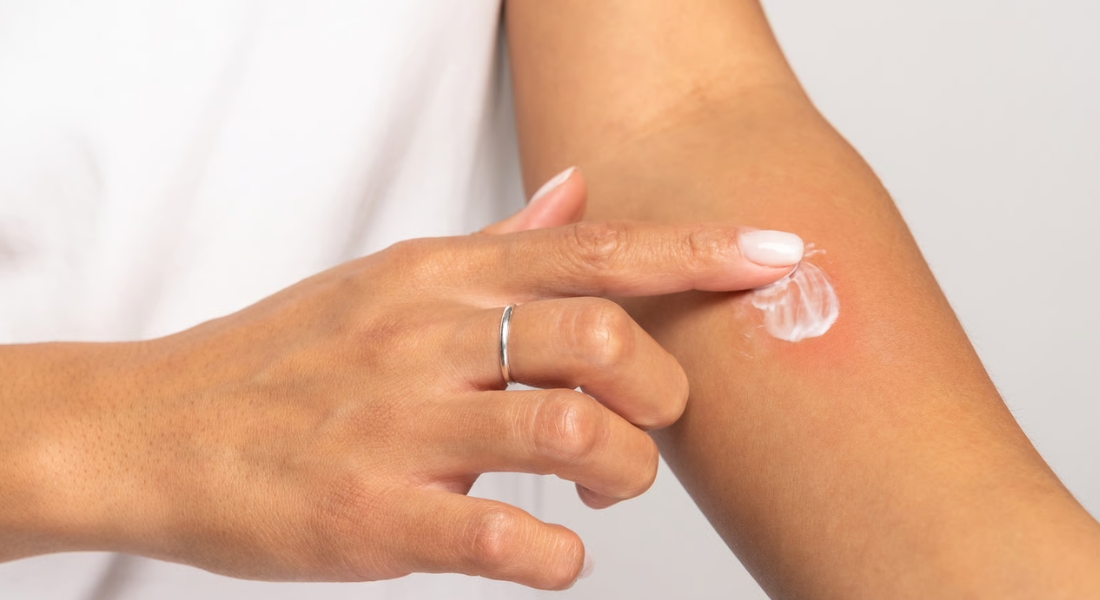
If you use a topical corticosteroid for eczema, psoriasis or another inflammatory skin condition today, it may feel like a routine part of treatment. But before the 1950s, doctors had far fewer reliable ways to quickly calm inflamed, itchy and uncomfortable skin.
That changed when research into adrenal hormones led to the successful use of topical hydrocortisone in 1952. What began as an important scientific breakthrough eventually gave you the range of steroid creams, ointments and other formulations available today, allowing treatment to be matched much more closely to your skin condition and the area being treated.
What Were Your Treatment Options Before Topical Corticosteroids?
Before topical corticosteroids became available, your treatment options for eczema, psoriasis and other inflammatory skin conditions were much more limited. Doctors used emollients, tar, salicylic acid, sulphur compounds and wet dressings, but these approaches could be less effective at quickly controlling severe inflammation, itching and flare-ups.
The introduction of topical corticosteroids gave you a faster and more targeted way to control inflamed skin. They did not cure the underlying condition, but they made painful, itchy and uncomfortable flares much more manageable.
Where Did Corticosteroid Research Begin?
The development of topical corticosteroids began with research into hormones produced by the adrenal glands. Scientists including Edward Kendall and Tadeus Reichstein studied compounds such as cortisone and hydrocortisone, initially to understand their role in the body.
The potential of these hormones became clearer when Philip Hench studied cortisone in rheumatoid arthritis. Its powerful anti-inflammatory effects later helped pave the way for corticosteroid treatments in dermatology. This early research may seem far removed from the cream you apply to your skin today, but it provided the scientific foundation for the topical corticosteroid treatments you can now be prescribed.
How Did Cortisone Become a Medical Breakthrough?
Philip Hench’s work with cortisone in 1948 showed how powerful corticosteroids could be at reducing inflammation. The striking improvement seen in people with severe rheumatoid arthritis attracted widespread medical interest and encouraged doctors in other fields to explore their potential.
For your skin, the importance of this discovery was that doctors began investigating whether corticosteroids could control conditions driven by inflammation. Applying the medicine directly to an affected area offered a way to treat your skin while generally limiting the wider exposure associated with systemic corticosteroid treatment.
Why Was the 1950 Nobel Prize Important to This Story?
In 1950, Edward Kendall, Tadeus Reichstein and Philip Hench received the Nobel Prize for their work on adrenal cortical hormones and their biological effects. Their research helped establish the scientific basis for corticosteroid treatment.
Although cortisone had demonstrated powerful anti-inflammatory effects when used systemically, it did not become the important topical treatment researchers were seeking. Attention therefore turned to related adrenal corticosteroids, particularly hydrocortisone, which showed useful anti-inflammatory activity when applied directly to the skin. That distinction eventually helped make it possible to treat inflammation where you actually experience it, rather than relying only on medicines that affect the whole body.
What Was Compound F and Why Did It Matter?
If you come across the name ‘Compound F’ when reading about the history of topical steroids, it simply refers to hydrocortisone. Hydrocortisone is chemically identical to the naturally occurring hormone cortisol and, unlike cortisone, showed useful anti-inflammatory effects when applied directly to the skin.
This created a new way to treat inflammation at the affected area rather than exposing the whole body to a systemic medicine. The approach was a major step forward in dermatology, with important clinical evidence emerging in 1952.
What Happened in the Landmark 1952 Study?
In August 1952, Marion B. Sulzberger and Victor H. Witten published research showing clinical benefit from topically applied Compound F, or hydrocortisone, in selected inflammatory skin conditions. This work is widely regarded as the beginning of successful topical corticosteroid therapy.
For you, this discovery meant that inflammation could be treated directly rather than managed mainly with soothing or protective products. The success of hydrocortisone encouraged researchers to develop additional corticosteroids with different strengths and formulations for different areas of your skin.
Why Was Applying the Medicine Directly to Skin So Revolutionary?
The main advantage of topical corticosteroids was their ability to target inflammation directly where it was needed. This allowed treatment to be focused on the affected skin while generally reducing systemic exposure compared with corticosteroids given throughout the body, although some absorption through the skin can still occur.
Doctors also learned that treatment needed to be tailored to your skin and the area being treated. Potency, formulation, age, treatment site, amount used and duration all matter, particularly as stronger corticosteroids were developed.
How Did Topical Corticosteroids Transform Eczema Treatment?
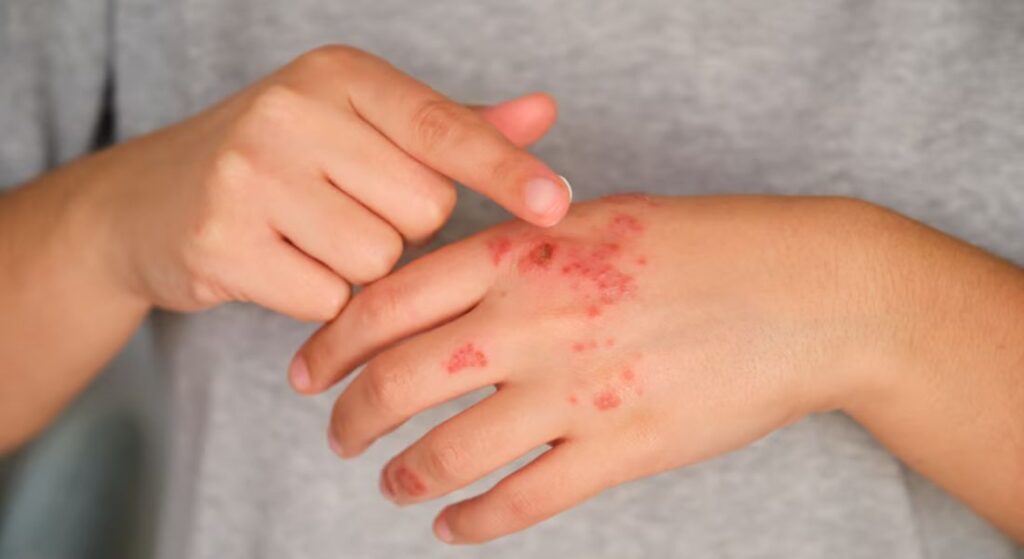
If you have eczema, you may find that emollients alone are not always enough when your skin becomes red, itchy and inflamed. The arrival of topical corticosteroids gave doctors a way to target this inflammation directly, helping you manage uncomfortable flares more effectively.
Different corticosteroid strengths also allowed treatment to be tailored to your skin and the affected area. They do not cure eczema or remove the underlying tendency, but they can help bring inflammatory flares under control.
How Did Topical Corticosteroids Change the Treatment of Your Psoriasis?
If you have psoriasis, a topical corticosteroid may help reduce inflammation and improve thick, scaly or uncomfortable plaques. Its introduction gave you a more practical treatment option than relying only on older preparations such as coal tar and dithranol.
Stronger corticosteroids later expanded your options for treating thicker plaques. However, they do not cure psoriasis, so your symptoms may return after treatment stops, and your dermatologist may recommend intermittent treatment or combine the corticosteroid with another topical medicine.
Why Did Scientists Start Developing Stronger Corticosteroids?
Hydrocortisone was a major breakthrough, but it is a relatively mild corticosteroid. If you have more severe inflammation, however, a mild treatment may not always provide enough control. This need encouraged researchers to develop stronger topical corticosteroids during the late 1950s and early 1960s.
During the late 1950s and early 1960s, researchers modified corticosteroid molecules to create preparations with greater topical potency. This expanded the treatments available for your skin, but it also made accurate potency comparison more important because stronger products can increase your risk of side effects when used incorrectly, over large areas or for too long.
How Did Doctors Learn to Compare Corticosteroid Potency?
In 1962, dermatologists A. W. McKenzie and R. B. Stoughton described a skin vasoconstriction test that became an important method for comparing topical corticosteroid activity. Because these medicines temporarily constrict small blood vessels, the degree of visible blanching could be used as an indication of their topical potency.
This provided an important practical method for comparing topical corticosteroid activity. In UK practice, topical corticosteroids are traditionally grouped as mild, moderately potent, potent and very potent. The aim is to use an appropriate corticosteroid for your condition, age and treatment area, generally choosing the lowest potency that is likely to control the inflammation effectively.
Key Milestones in the History of Topical Corticosteroids
| Period | Development | Why It Mattered |
| 1930s–1940s | Kendall, Reichstein and others investigated adrenal cortical hormones | Built the scientific foundation for corticosteroid medicines |
| 1948 | Hench demonstrated major anti-inflammatory effects of cortisone in rheumatoid arthritis | Showed the therapeutic potential of corticosteroids |
| 1950 | Hench, Kendall and Reichstein received the Nobel Prize | Recognised the importance of adrenal hormone research |
| 1952 | Sulzberger and Witten reported successful topical Compound F/hydrocortisone treatment | Marked a major beginning of topical corticosteroid therapy |
| 1950s–1960s | Newer synthetic topical corticosteroids expanded the available range of potencies | Allowed stronger inflammation control and increased the need for reliable potency comparison |
| 1962 | McKenzie and Stoughton described a skin vasoconstriction assay for topical corticosteroids | Helped provide a practical way to compare topical corticosteroid activity |
| Later 20th century | Potency comparisons and multiple formulations became established | Allowed treatment to be tailored more precisely |
| Modern practice | Potency, formulation, body site and duration are individually selected | Balances inflammation control with safety |
| 2024 UK | MHRA announced clearer patient-facing potency labelling and updated advice on topical steroid withdrawal reactions, with manufacturers given time to update product packaging. | Improved patient understanding of corticosteroid potency and modern safety advice |
Why Do Creams, Ointments and Other Formulations Matter?
If you have ever wondered why your topical steroid comes as a cream rather than an ointment, the formulation is an important part of how the treatment works for you. The vehicle can influence how easily you apply the medicine, how comfortable it feels and how effectively it reaches your skin.
Ointments can suit very dry or thickened skin, while creams may feel lighter and easier to use. Other formulations can be more practical for areas such as the scalp, and the choice of vehicle can also affect how strongly the corticosteroid works.
Clinical Tip
When you are prescribed a topical corticosteroid, make sure you know exactly where to apply it, how much to use, how often to apply it and how long the treatment should continue. Do not assume that a corticosteroid prescribed for one part of your body is suitable for another area, as thinner or more sensitive skin may need a different potency.
How Did Very Potent Corticosteroids Change Dermatology Again?

By the 1970s, much stronger topical corticosteroids were available, including clobetasol propionate. Its high potency provided an important option for difficult eczema and psoriasis that had not responded well to weaker treatments.
If you use a potent or very potent corticosteroid over a large area or for a prolonged period, more medicine may be absorbed through your skin. This can increase your risk of local side effects and, rarely, systemic effects such as adrenal suppression. Your prescribed strength, treatment area, amount and duration therefore all matter, even though the medicine is applied to your skin.
What Risks Should You Understand When Using Topical Corticosteroids?
Topical corticosteroids can be highly effective, but prolonged or excessive use may cause changes such as thinning of your skin, visible blood vessels, stretch marks or easy bruising. Your risk depends on factors including the product’s potency, the amount applied, the treatment area and how long you use it.
Recognising these risks led to safer prescribing rather than abandoning topical corticosteroids. Your clinician can choose an appropriate potency and treatment duration, with closer supervision if you need a potent or very potent preparation.
What If You’re Worried About Using Topical Steroids?
If you are worried about using a topical steroid, you are not alone. Concerns about side effects can sometimes lead you to use less treatment than prescribed or stop too early, which may leave your underlying inflammation poorly controlled.
A balanced approach is important. Topical corticosteroids are highly effective when used appropriately, but genuine adverse effects can occur, particularly with prolonged use of stronger preparations. Rare topical steroid withdrawal reactions have also been reported following long-term use of moderate or stronger topical corticosteroids, generally for six months or more. Concerns should be discussed with your dermatologist rather than leading you to stop or change treatment without medical advice.
UK Guidance Note
The MHRA advises that topical corticosteroids are safe and highly effective when prescribed and used appropriately, but the risk of adverse effects increases with prolonged use and greater potency. In 2024, the MHRA introduced clearer potency labelling for topical corticosteroids, using the terms ‘mild steroid’, ‘moderate steroid’, ‘strong steroid’ and ‘very strong steroid’, with manufacturers given time to implement the changes on product packaging. If you use more than one topical corticosteroid, make sure you know which product should be used on each body area and follow the instructions on how much to apply, how often to use it and when to stop.
Rare topical steroid withdrawal reactions have been reported, particularly after long-term use of moderate or stronger preparations. If you develop intense redness that extends beyond the original treatment area, burning, stinging, itching or peeling after stopping long-term treatment, seek medical advice before restarting the topical corticosteroid unless your prescriber has already given you a specific treatment plan.
Why Are Topical Corticosteroids Still Used Today?

If you need treatment for an inflammatory skin condition today, you have far more options than were available in the 1950s. Depending on your condition, these may include calcineurin inhibitors, vitamin D analogues, phototherapy, systemic medicines or biologic treatments.
Yet topical corticosteroids remain useful because they can work quickly and are available in different strengths and formulations. Modern treatment is more personalised, with doctors choosing the right product, potency, treatment area and duration for your individual needs.
Myth vs Fact
| Myth | Fact |
| Topical steroids can cure your eczema or psoriasis. | No. They control inflammation and flare symptoms but do not remove the underlying tendency to develop these conditions. |
| The percentage on the tube tells you how strong the steroid is. | Not reliably. Different corticosteroids have different potencies, so percentages should not be directly compared between products. |
| The weakest topical steroid is always the safest choice for you. | Treatment needs to be strong enough to control the inflammation, while using an appropriate potency for the body area and condition. |
| Because you apply a topical steroid to your skin, it cannot affect the rest of your body. | Rare systemic effects can occur, particularly with prolonged use of potent or very potent products over large areas. |
| You will develop topical steroid withdrawal if you stop using topical steroids. | No. The exact frequency of topical steroid withdrawal reactions is not known, but the MHRA estimates that they are rare. Reports are mainly associated with prolonged use of moderate or stronger topical corticosteroids. |
| If you are worried about side effects, you should stop treatment immediately. | Discuss concerns with your prescriber rather than changing or stopping prescribed treatment without advice. |
Frequently Asked Questions
1. How Did the Topical Corticosteroids You Use Today First Become Available?
Topical corticosteroid treatment began to change dermatology in the early 1950s. If you use one today, its history can be traced back to the landmark 1952 work showing that hydrocortisone could reduce inflammation when applied directly to affected skin.
2. Who Helped Develop the Topical Corticosteroids You Use Today?
There was no single person responsible for the discovery. Research by Edward Kendall, Tadeus Reichstein and Philip Hench established the importance of adrenal corticosteroid hormones, while Marion Sulzberger and Victor Witten later demonstrated the effectiveness of topical hydrocortisone.
3. Why Might You See Hydrocortisone Referred to as ‘Compound F’?
Hydrocortisone was historically known as Compound F in early corticosteroid research. It is the same hormone as cortisol, which your body naturally produces, and its successful topical use became a major turning point in inflammatory skin treatment.
4. How Can Topical Corticosteroids Help You Manage Eczema?
If you have eczema, a topical corticosteroid can help calm the redness, itching and inflammation you experience during a flare. It does not cure eczema, but when used as advised, it can help you bring an uncomfortable flare under control more quickly.
5. How Can Topical Corticosteroids Help You Manage Psoriasis?
If you have psoriasis, your dermatologist may recommend a topical corticosteroid to reduce inflammation and make thick or uncomfortable plaques easier to manage. The strength and treatment plan can be adjusted to the area of your skin affected, and you may use it alongside another topical treatment.
6. Why Might You Need a Stronger Topical Corticosteroid?
You may be prescribed a stronger topical corticosteroid if a milder treatment such as hydrocortisone is not enough to control your inflammation. Because stronger preparations can also increase the risk of side effects, your clinician will consider where you are using it and how long you need treatment.
7. How Can You Tell How Strong Your Topical Corticosteroid Is?
In the UK, your topical corticosteroid may be described as mild, moderate, strong or very strong on newer patient-facing packaging. Your clinician or pharmacist can explain the potency of your particular medicine and why that strength has been chosen for your skin condition and the area you are treating.
8. What Side Effects Should You Know About When Using Topical Corticosteroids?
Your risk of side effects depends on the strength of the corticosteroid, how much you use, where you apply it and how long you use it for. If treatment is overused, you may develop skin thinning, visible blood vessels, stretch marks or easy bruising, although serious effects elsewhere in the body are uncommon.
9. Why Does the Type of Topical Corticosteroid You Use Matter?
You may be prescribed a cream, ointment, lotion or another formulation depending on where and how your skin is affected. For example, an ointment may suit very dry or thickened skin, while a lotion or solution can be easier for you to use on areas such as the scalp.
10. Why Might Your Dermatologist Still Recommend a Topical Corticosteroid Today?
Your dermatologist may still recommend a topical corticosteroid because these medicines can work quickly and are available in different strengths and formulations. The aim is to choose a treatment that suits your skin condition, the area affected and how severe your inflammation is.
Final Thoughts: What the Discovery of Topical Corticosteroids Means for You
The discovery of topical corticosteroids transformed the treatment of eczema, psoriasis and other inflammatory skin conditions. If you experience an inflammatory flare, these medicines can now target the affected area directly, with different potencies and formulations available for different parts of your skin.
Your treatment still needs to balance effective inflammation control with safety. Using the prescribed product in the correct amount, on the intended body area and for the recommended duration can help you receive the benefits while reducing the risk of side effects.
References:
- Sulzberger, M.B. and Witten, V.H. (1952) ‘The effect of topically applied Compound F in selected dermatoses’, Journal of Investigative Dermatology, 19(2), pp. 101–102. Available at: https://pubmed.ncbi.nlm.nih.gov/14955641/
- Murray, J.R. (1989) ‘The history of corticosteroids’, Acta Dermato-Venereologica Supplementum, 151, pp. 4–6; discussion pp. 47–52. Available at: https://pubmed.ncbi.nlm.nih.gov/2696308/
- Jeziorkowska, R., Sysa-Jędrzejowska, A. and Samochocki, Z. (2015) ‘Topical steroid therapy in atopic dermatitis in theory and practice’, Postępy Dermatologii i Alergologii, 32(3), pp. 162–166. Available at: https://pmc.ncbi.nlm.nih.gov/articles/PMC4495104/
- Coondoo, A., Phiske, M., Verma, S. and Lahiri, K. (2014) ‘Side-effects of topical steroids: A long overdue revisit’, Indian Dermatology Online Journal, 5(4), pp. 416–425. Available at: https://pmc.ncbi.nlm.nih.gov/articles/PMC4228634/
- Hengge, U.R., Ruzicka, T., Schwartz, R.A. and Cork, M.J. (2006) ‘Adverse effects of topical glucocorticosteroids’, Journal of the American Academy of Dermatology, 54(1), pp. 1–15. Available at: https://www.sciencedirect.com/science/article/pii/S0190962205002550