



Dermatology is advancing incredibly quickly, with new medications, technologies, and research findings constantly changing the way skin conditions are diagnosed and treated. One of the organisations playing a major role in this progress is the European Academy of Dermatology and Venereology, commonly known as the EADV. Its annual congress is now recognised as one of the most influential international meetings in the field of dermatology.
Every year, thousands of dermatologists, researchers, scientists, and healthcare professionals attend the EADV Congress to explore the latest developments in skin, hair, nail, and venous disease. The congress provides a platform where experts from around the world share research findings, discuss emerging therapies, and exchange clinical experience that can directly influence patient care.
For you, the importance of the EADV lies in how strongly it shapes modern dermatology worldwide. In this article, you will understand what the EADV is, why its congress has become so important, and how it contributes to clinical practice, innovation, medical education, and improved patient outcomes across the global dermatology community.
What Is the EADV?
The European Academy of Dermatology and Venereology is one of the largest and most influential dermatology organisations in the world. It focuses on improving education, research, clinical standards, and professional collaboration across the fields of dermatology and venereology. The organisation brings together specialists, researchers, and healthcare professionals from many different countries.
The EADV supports both practising dermatologists and academic researchers by promoting evidence-based medicine and encouraging ongoing professional development. Its work helps improve understanding of skin disease, supports high-quality patient care, and creates opportunities for international scientific collaboration. Sharing knowledge between experts is a major part of its mission.
For you, the key point is that the EADV has become highly respected within global dermatology because it plays such a central role in spreading new research and clinical guidance. Many important discussions about emerging treatments, technologies, and disease management strategies are presented through EADV activities, and its educational influence continues to grow internationally.
What Is the EADV Congress?
The EADV Congress is the major annual scientific meeting organised by the European Academy of Dermatology and Venereology. It brings together dermatologists, researchers, scientists, and healthcare professionals from across the world to discuss the latest research, clinical findings, and emerging treatment approaches in dermatology and venereology.
You’ll find a very broad range of educational activities at the congress, including expert lectures, workshops, panel discussions, live demonstrations, and scientific presentations. Thousands of delegates attend each year both in person and online, with topics covering areas such as medical dermatology, cosmetic dermatology, skin cancer, paediatric dermatology, autoimmune disease, hair disorders, and many other subspecialties. The programme is known for being extensive and highly research-driven.
For you, the important thing to understand is that the EADV Congress is widely regarded as one of the leading international meetings in dermatology. Many important clinical updates, treatment innovations, and research breakthroughs are first introduced there before influencing wider clinical practice around the world. Its impact on modern dermatology is extremely significant.
Why Dermatology Conferences Matter

Medical conferences play a very important role in helping dermatologists stay up to date in a field that changes constantly. New medications, technologies, treatment techniques, and research findings emerge regularly, which means clinical practice can evolve quite quickly. By attending meetings such as the EADV Congress, specialists can keep their knowledge current and learn how the latest evidence may influence patient care.
Without ongoing education, treatment approaches can become outdated surprisingly fast. Conferences give doctors the opportunity to hear directly from leading researchers and clinicians about new therapies, updated guidelines, and emerging safety information. For you as a patient, this matters because continuous professional development often translates into more informed decision-making and better standards of care.
These meetings also create opportunities for collaboration and discussion between specialists from different countries and healthcare systems. Dermatologists can compare experiences, debate difficult cases, and learn from one another’s clinical challenges. That shared learning often improves understanding of complex skin diseases and ultimately benefits both doctors and the patients they treat.
The Importance of Evidence-Based Medicine
Modern dermatology relies increasingly on evidence-based medicine, which means treatment decisions are guided by high-quality scientific research rather than personal opinion alone. This approach helps ensure that therapies are supported by reliable data on effectiveness and safety. The EADV Congress plays an important role in sharing and discussing this evidence with specialists from around the world.
During the congress, you’ll often see presentations covering clinical trials, long-term safety studies, treatment comparisons, and real-world patient outcomes. Researchers and clinicians carefully analyse whether new therapies genuinely improve results for patients and whether potential risks are acceptable. This level of scientific scrutiny is essential before treatments become widely adopted in everyday practice.
For you, the benefit of evidence-based care is greater consistency, safety, and confidence in modern dermatology treatment. International meetings such as the EADV Congress help reliable research spread quickly across the medical community, allowing doctors to update their practice based on the latest scientific understanding rather than outdated assumptions.
Advances in Psoriasis Treatment
Psoriasis treatment has changed dramatically in recent years, particularly with the development of newer biologic therapies. These treatments have improved symptom control for many people and have transformed how dermatologists manage the condition long term. At major dermatology conferences, specialists regularly discuss the latest research, treatment results, and emerging therapies. This ongoing education helps ensure you benefit from the most up-to-date care available.
- Biologic Therapies Have Changed Psoriasis Care: Modern biologic medications target specific parts of the immune system involved in Psoriasis. By focusing on particular inflammatory pathways, these treatments can help control symptoms more effectively for many patients. Some people experience major improvements in both skin appearance and daily comfort.
- New Research Continues to Improve Treatment: Researchers are constantly developing and studying newer therapies to improve psoriasis management further. Long-term safety and effectiveness are carefully monitored so doctors can better understand how these medications perform over time. This ongoing research helps refine treatment options and improve patient outcomes.
- Treatment Is Becoming More Personalised: Not every psoriasis treatment works the same way for every person. Dermatologists now focus more on tailoring therapies based on factors such as your symptoms, overall health, lifestyle, and treatment goals. Personalised care often helps achieve better long-term control of the condition.
- International Discussions Improve Everyday Care: Conferences allow specialists from around the world to share experiences and compare treatment approaches. These discussions help dermatologists stay updated on the latest evidence and evolving treatment guidelines. The knowledge gained often directly influences the care you receive in everyday clinical practice.
Advances in psoriasis treatment continue expanding the options available to help manage the condition more effectively. As therapies become more targeted and personalised, many patients are experiencing better symptom control and improved quality of life. Ongoing education helps dermatologists use these treatments safely and appropriately. Ultimately, this progress gives you access to more modern, flexible, and effective psoriasis care.
Eczema Research at the Congress
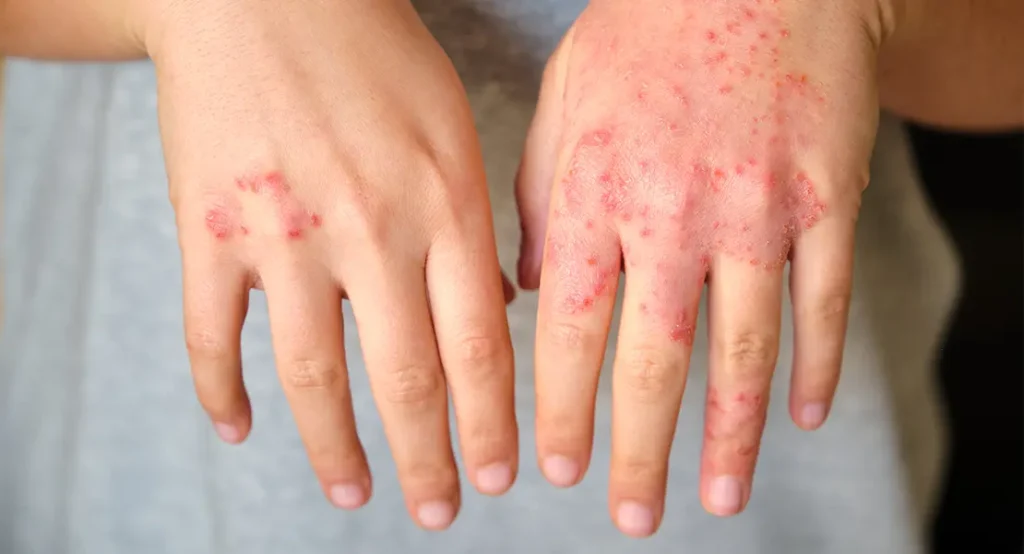
Atopic eczema is one of the major conditions discussed regularly at the EADV Congress. Researchers continue investigating how genetics, skin barrier dysfunction, microbiome changes, and immune system activity contribute to eczema development. Understanding of the condition has advanced significantly in recent years, and ongoing research continues to reshape how specialists approach treatment.
You’ll often find extensive discussion at the congress around newer therapies such as biologic medications and JAK inhibitors, which have changed eczema management for many patients with moderate to severe disease. Specialists review clinical trial data, long-term safety findings, treatment effectiveness, and potential side effects to better understand how these therapies perform in real-world practice.
For you, the importance of these discussions is that they help dermatologists stay informed about emerging treatments and evolving long-term management strategies. Knowledge shared through international meetings like the EADV Congress directly influences patient care and helps drive continued innovation in eczema treatment.
Skin Cancer Developments
Skin cancer research is a major focus at international dermatology meetings such as the EADV Congress. The congress regularly features extensive discussion around melanoma, basal cell carcinoma, squamous cell carcinoma, and advances in early detection methods. Prevention and public awareness are also heavily emphasised because reducing ultraviolet exposure remains an important part of lowering skin cancer risk.
In recent years, developments in dermoscopy, imaging technology, and immunotherapy have transformed the way many skin cancers are diagnosed and treated. Early diagnosis has become increasingly important because detecting skin cancer at an earlier stage can significantly improve outcomes and survival rates. Research presented at conferences continues helping specialists refine both diagnostic accuracy and treatment effectiveness.
For you, the value of these meetings lies in how they help dermatologists stay updated on rapidly evolving oncology knowledge. Specialists gain insight into new diagnostic strategies, emerging therapies, and long-term patient management approaches. In skin cancer care, ongoing education truly matters because accurate knowledge and early intervention can save lives.
Cosmetic Dermatology and Aesthetic Medicine
The EADV Congress also places significant attention on aesthetic and cosmetic dermatology. Topics commonly include dermal fillers, laser treatments, skin rejuvenation procedures, pigmentation management, scar treatment, and other minimally invasive cosmetic techniques. Alongside treatment innovation, patient safety remains a major focus throughout these discussions.
As cosmetic procedures become increasingly popular worldwide, dermatologists need a strong scientific understanding not only of potential benefits but also of possible complications and long-term outcomes. You’ll often see presentations at the congress examining treatment safety, evidence-based protocols, and complication management to help maintain high professional standards within aesthetic medicine.
For you, the important thing is that modern cosmetic dermatology is increasingly centred around safe, natural-looking results rather than excessive or unrealistic treatments. Ethical considerations, careful patient selection, and proper professional training are all heavily emphasised at international meetings like the EADV Congress because education and evidence-based practice help support safer outcomes for patients.
The Role of Technology in Dermatology
Technology is transforming dermatology at a remarkable pace, and many of these developments are explored in depth during the EADV Congress. Areas such as artificial intelligence, digital imaging, teledermatology, and advanced diagnostic systems are becoming increasingly important in both research and everyday clinical practice.
You’ll often see discussion around AI-assisted mole analysis, digital skin monitoring platforms, and imaging technologies designed to support earlier diagnosis and improve efficiency within dermatology services. Researchers continue evaluating how these tools may help detect conditions more accurately or improve access to specialist care, particularly in areas where dermatologists are less available. Despite these advances, human clinical expertise remains central to safe diagnosis and treatment decisions.
For you, the key point is that technology has the potential to improve both accessibility and precision in dermatology over time, but careful evaluation is still essential. International meetings such as the EADV Congress help specialists understand not only the opportunities these innovations create, but also their limitations, safety considerations, and appropriate role within patient care.
Autoimmune Skin Disease Research
Autoimmune skin diseases such as lupus, vitiligo, pemphigus, and alopecia areata are complex conditions that often require highly specialised management. The EADV Congress frequently features research exploring the immune pathways involved in these disorders, along with new treatment targets and evolving management strategies.
As understanding of immune dysfunction has improved, you’ve seen the development of more targeted therapies for several autoimmune skin conditions. Researchers continue investigating treatments that may control disease more effectively while reducing long-term side effects and improving patient quality of life. Progress in this area remains very active, with new findings emerging regularly through international research collaboration.
For you, the importance of these educational sessions is that they help dermatologists recognise uncommon autoimmune diseases earlier and manage challenging cases more confidently. Conferences like the EADV Congress encourage international knowledge sharing, which improves understanding of rare conditions and helps drive ongoing innovation in dermatology care.
Paediatric Dermatology Topics
Children’s skin conditions often differ significantly from those seen in adults, which is why paediatric dermatology is an important part of the EADV Congress. Sessions regularly cover topics such as eczema, birthmarks, genetic skin disorders, infections, and inflammatory diseases affecting children. Early diagnosis is especially important because some childhood skin conditions can influence long-term health and development.
Paediatric dermatology also requires careful consideration of treatment safety, growth, and developmental factors. Therapies that may be suitable for adults are not always appropriate for younger patients, so specialist expertise is essential when managing complex childhood skin disease. Ongoing research continues helping clinicians improve both the safety and effectiveness of treatments used in children.
For you, the value of these educational sessions is that they help dermatologists manage childhood skin conditions more confidently and safely. Family-centred care is also strongly emphasised, recognising the impact skin disease can have not only on children themselves but also on parents and caregivers. Better understanding and education ultimately support improved outcomes for young patients.
Rare Skin Diseases and Collaboration
Rare skin diseases can be particularly challenging because many clinicians encounter them only occasionally during their careers. International meetings such as the EADV Congress give specialists the opportunity to share expertise, compare unusual clinical presentations, and discuss difficult diagnostic cases with colleagues from around the world. This type of collaboration can significantly improve diagnostic accuracy.
During EADV sessions, researchers and clinicians often present case studies, research findings, and emerging treatment approaches for rare dermatological disorders. These discussions help expand medical understanding and allow specialists to learn from experiences that might otherwise remain isolated within individual hospitals or countries. Shared clinical experience is especially valuable when evidence is limited.
For you, the important thing is that international cooperation plays a major role in advancing rare disease research. Because patient numbers may be relatively small in any one country, combining global data and expertise helps researchers identify patterns, improve understanding, and evaluate potential treatments more effectively. Collaboration is one of the key drivers of progress in rare dermatological disease management.
Clinical Guidelines and Standards
Clinical guidelines play a very important role in modern dermatology because they help standardise how conditions are diagnosed and treated across different healthcare systems. The EADV Congress contributes to these developments by bringing together leading experts who review evidence and discuss the latest research findings. This collaborative process helps shape evidence-based recommendations for patient care.
You’ll often find that discussions at the congress influence future updates to clinical guidelines, especially when new research changes how certain skin conditions are understood or treated. As dermatology continues to evolve, guidelines are regularly reviewed and updated to reflect the most current scientific evidence, ensuring that clinical practice remains accurate and effective.
For you, the key point is that these guidelines help improve consistency and safety in dermatology care. They give clinicians a structured way to evaluate new treatments, compare evidence, and make informed decisions. This ultimately supports better patient outcomes by ensuring care is based on reliable, up-to-date scientific research rather than individual opinion alone.
The Importance of Research Presentation
At major dermatology conferences like the EADV Congress, you’ll see how important research presentation is in shaping the future of skin health. Researchers are given a platform to share new findings with an international audience, helping scientific knowledge spread much faster than it would through publications alone. Abstracts, posters, and lectures all play a role in communicating discoveries in a clear and accessible way. This kind of sharing helps move dermatology forward more quickly.
- Sharing New Discoveries Quickly: The European Academy of Dermatology and Venereology Congress allows researchers to present fresh findings to specialists from around the world. These presentations help new data reach clinicians sooner, rather than waiting for longer publication timelines. This rapid exchange of information supports faster progress in dermatology.
- Supporting Young Researchers and Trainees: You’ll often see early-career researchers and trainees presenting their own work at conferences. This gives them valuable experience in scientific communication and feedback from experienced specialists. It also encourages collaboration and helps build future leaders in dermatology.
- Encouraging Scientific Discussion and Collaboration: Presentations often lead to detailed discussions, questions, and shared insights among experts. This exchange of ideas can spark new research directions or improve existing studies. Collaboration like this helps strengthen the quality and relevance of scientific work.
- Influencing Future Clinical Practice: Some research presented at conferences may later contribute to updated treatment guidelines or changes in clinical practice. Early exposure to new findings helps specialists stay ahead of evolving evidence. Over time, this ensures patient care continues to improve based on the latest science.
Research presentation is therefore a key part of how dermatology evolves. By sharing findings early and openly, you help accelerate scientific progress and improve collaboration across countries. Conferences create an environment where ideas can be tested, discussed, and refined. Ultimately, this helps translate research into better treatments and improved patient care worldwide.
Industry Innovation and New Treatments
Pharmaceutical and medical technology companies often take part in the EADV Congress, where they present emerging therapies, clinical trial results, and new dermatology-related technologies. This kind of industry involvement helps drive innovation and brings early visibility to potential future treatments in skin health and disease management.
At the same time, you’ll notice that scientific scrutiny remains a key part of these discussions. New medications or devices are not accepted at face value instead, they are carefully evaluated through independent research, peer review, and evidence-based analysis. This balance helps ensure that enthusiasm for innovation does not override safety or clinical effectiveness.
For you, the important point is that the congress acts as both a showcase for new ideas and a critical space for evaluation. Dermatologists are able to compare data, question findings, and assess real-world applicability before incorporating new treatments into practice. Ultimately, this approach helps ensure that patient safety and treatment quality remain at the centre of dermatology care.
Networking and International Collaboration

Professional networking is a major part of the EADV Congress. It brings together dermatologists, researchers, and healthcare professionals from different countries, allowing them to share clinical experience, research interests, and practical approaches to patient care. These interactions often form the starting point for long-term professional relationships.
You’ll often find that collaborative research projects begin informally at events like this, where specialists discuss shared challenges or similar areas of interest. By combining expertise across countries and healthcare systems, clinicians can improve scientific understanding and develop more effective approaches to diagnosing and treating skin disease. This kind of global cooperation ultimately benefits patients by strengthening the overall quality of dermatology care.
For you, the key point is that networking at the congress is not just about meeting colleagues it also supports learning, mentorship, and professional growth. Younger dermatologists in particular can gain guidance from experienced experts, while also contributing fresh ideas. Education at the EADV Congress often extends beyond formal lectures, making it a valuable space for both scientific exchange and career development.
Training and Education for Young Dermatologists
The EADV Congress places strong emphasis on training and education for trainees and early-career dermatologists. Through workshops, teaching courses, case-based discussions, and interactive learning sessions, it helps develop both clinical knowledge and practical decision-making skills. Continuous learning is considered essential in a specialty that evolves as quickly as dermatology.
You’ll often see that young dermatologists are exposed to complex clinical cases, advanced diagnostic techniques, and emerging therapies during the congress. This experience goes beyond everyday hospital practice and helps broaden their understanding of rare conditions, new treatments, and multidisciplinary approaches to care. It also plays an important role in building clinical confidence over time.
For you, the key point is that investing in education for future dermatologists helps maintain high standards across the profession. Strong training ensures that patients benefit from up-to-date, evidence-based care, while also strengthening the overall healthcare system. Knowledge sharing at events like the EADV Congress supports long-term improvements in both clinical practice and patient outcomes.
The Global Influence of the EADV
The EADV Congress may be organised in Europe, but its influence is genuinely global. Dermatologists, researchers, and healthcare professionals from many different continents attend the meeting, and they often take the knowledge gained back into their own hospitals and healthcare systems. This international participation continues to grow each year.
You’ll often see that research presented at the congress goes on to shape wider discussions about treatment standards, disease management, and clinical best practice across the world. Because dermatology is a rapidly evolving specialty, scientific collaboration increasingly crosses borders, allowing experts to compare data, share outcomes, and refine approaches on a global scale.
For you, the key point is that the EADV Congress acts as a major hub for worldwide knowledge exchange. Its educational impact extends far beyond Europe, helping to spread evidence-based practices internationally. This shared learning ultimately contributes to improved patient outcomes by raising the overall standard of dermatology care across different healthcare systems.
How Patients Benefit Indirectly
You might never attend a dermatology conference yourself, but the impact of these events often reaches you in very real and practical ways. When dermatologists come together to share new research, refine techniques, and discuss updated guidelines, that knowledge gradually filters into everyday clinical practice. Over time, this means the care you receive becomes more informed, more up to date, and more effective.
- Better Treatments in Everyday Practice: When new therapies or techniques are discussed at meetings like the European Academy of Dermatology and Venereology Congress, they often influence how conditions are treated in clinics afterwards. This can lead to more effective treatment options being offered to you over time. As research progresses, your choices in care continue to improve.
- Earlier and More Accurate Diagnosis: Ongoing education helps dermatologists recognise conditions more quickly and accurately. You benefit when doctors are better trained to identify skin diseases earlier, often before they become more complex. This can make a big difference to treatment success and outcomes.
- More Evidence-Based Decision Making: Dermatologists who stay engaged with international research are more likely to base their decisions on the latest evidence. This means your treatment plan is guided by updated knowledge rather than outdated approaches. It helps ensure care is both modern and appropriate for your needs.
- Continuous Improvement in Patient Care: Medical conferences encourage collaboration, discussion, and shared learning among specialists. As ideas are tested and refined, they eventually shape better clinical guidelines and everyday practice. Over time, this ongoing progress directly improves the quality of care you receive.
In the end, medical conferences are not just academic events they are part of a continuous cycle of learning that directly benefits you as a patient. When knowledge is shared and applied, it leads to safer, more effective, and more personalised care. This constant exchange of information is what drives improvements in diagnosis and treatment. Ultimately, it ensures your care keeps moving forward with medical science.
Why the EADV Congress Continues to Matter
The EADV Congress continues to matter because dermatology is a field that is evolving extremely quickly. Advances in areas such as immunology, genetics, biologic therapies, imaging technology, and digital tools are constantly reshaping how skin diseases are understood and treated. Because of this rapid progress, specialists need regular opportunities to stay updated with the latest scientific developments.
You’ll find that international meetings like the EADV Congress help dermatologists critically evaluate new research and decide how it should be applied in real clinical practice. Instead of relying on isolated studies or individual experience, experts can discuss findings collectively, compare evidence, and refine treatment approaches. This kind of scientific discussion helps ensure that patient care continues to improve in line with the latest medical knowledge.
For you, the key point is that the role of organisations like the EADV is likely to become even more important in the future. As medicine becomes more complex and interconnected, global collaboration and shared knowledge are essential. Innovation in dermatology depends not just on discovery, but on how effectively that knowledge is shared, evaluated, and translated into better patient outcomes worldwide.
FAQs:
1. What is the EADV Congress and why is it important?
The EADV Congress is a major international dermatology meeting organised by the European Academy of Dermatology and Venereology. It brings together experts from around the world to share the latest research, treatments, and clinical knowledge. It is important because it helps shape how skin conditions are diagnosed and treated globally. For you, it means dermatology care continues improving through shared scientific progress.
2. Who attends the EADV Congress?
The congress is attended by dermatologists, researchers, scientists, and other healthcare professionals involved in skin, hair, nail, and venous diseases. It creates a global platform for collaboration in dermatology. For you, this means the information shared is highly expert-led and internationally recognised.
3. How does the EADV Congress improve patient care?
The congress improves patient care by helping doctors stay updated with the latest research and treatments. New therapies, safety data, and clinical guidelines are shared and discussed. This knowledge gradually becomes part of everyday dermatology practice. For you, it results in more modern, effective, and evidence-based treatment options.
4. What kind of topics are discussed at the EADV Congress?
A wide range of topics are covered, including psoriasis, eczema, skin cancer, autoimmune diseases, paediatric dermatology, and cosmetic treatments. Researchers also discuss new technologies such as biologic therapies, lasers, and digital diagnostics. For you, it means nearly every area of dermatology benefits from ongoing research.
5. Why is research presentation so important at the congress?
Research presentations allow scientists to share new findings quickly with the global dermatology community. Discussions and feedback also improve the quality of research. For you, it ensures treatments you receive are based on the most current scientific evidence.
6. How does the EADV Congress influence new treatments?
The congress highlights new clinical trials, medications, and technologies being developed in dermatology. Experts carefully review and discuss how effective and safe these treatments are. This helps decide which innovations should become part of everyday practice. For you, it means access to safer and more advanced treatment options over time.
7. Does the EADV Congress focus only on medical dermatology?
No, it covers both medical and cosmetic dermatology. Topics include skin diseases like eczema and psoriasis as well as aesthetic procedures such as fillers, lasers, and skin rejuvenation. For you, it ensures both medical and cosmetic treatments are scientifically supported.
8. How does technology play a role in the EADV Congress?
Technology is a major focus, including artificial intelligence, digital imaging, teledermatology, and diagnostic tools. These innovations aim to improve accuracy, speed, and access to dermatology care. For you, it means future skin care may become more precise and accessible.
9. Why is international collaboration important in dermatology?
International collaboration allows specialists to share knowledge, compare experiences, and study rare or complex skin conditions together. It also helps develop better clinical guidelines. For you, it ensures dermatology care benefits from worldwide expertise, not just local practice.
10. How do patients benefit from the EADV Congress even if they don’t attend?
Patients benefit indirectly because the knowledge shared at the congress eventually becomes part of everyday medical practice. It also helps doctors stay updated with the latest evidence-based medicine. For you, it means your care continuously improves with ongoing medical progress.
Final Thoughts: Why the EADV Congress Continues to Shape Modern Dermatology
The EADV Congress plays a crucial role in shaping the future of dermatology by bringing together global experts, sharing cutting-edge research, and ensuring that new treatments are carefully evaluated before reaching everyday clinical practice. From biologic therapies and skin cancer advances to cosmetic dermatology and digital innovation, the knowledge shared at this congress continues to elevate standards of care worldwide.
For you, this means that modern dermatology is constantly evolving and staying connected with the latest evidence helps ensure better, safer, and more effective treatment outcomes for patients. If you would like to book a consultation with one of our dermatologists in London, you can contact us at the London Dermatology Centre.
References:
1. Lin, T.K. et al. (2017) Association between Stress and the HPA Axis in the Atopic Dermatitis. International Journal of Molecular Sciences, Available at: https://www.mdpi.com/1422-0067/18/10/2131
2. Arck, P.C., Slominski, A., Theoharides, T.C., Peters, E.M.J. and Paus, R. (2006) Neuroimmunology of stress: skin takes center stage. Journal of Investigative Dermatology, Available at: https://pubmed.ncbi.nlm.nih.gov/16845409/
3. Afvari, S. (2023) Diet, sleep, and exercise in inflammatory skin diseases. Dermatology Review, Available at:https://pmc.ncbi.nlm.nih.gov/articles/PMC10755759/
4. Samaniego, M. (2025) Sleep in dermatologic conditions: A review. Journal of Dermatological Science, Available at: https://www.sciencedirect.com/science/article/pii/S2950198925000236
5. Khalil, N.B., Coscarella, G., Dhabhar, F.S. and Yosipovitch, G. (2024) A Narrative Review on Stress and Itch: What We Know and What We Would Like to Know. Journal of Clinical Medicine, Available at: https://www.mdpi.com/2077-0383/13/22/6854