



Eczema is often described as a red, itchy rash, and while that description can be helpful in lighter skin tones, it does not always show the full picture in Black skin. Because of differences in skin pigmentation, inflammation can present in a wider range of colours and textures, which can sometimes make it harder to recognise at first glance.
In Black skin, eczema may look purple, grey, dark brown, red-brown, ashen, or simply darker than the surrounding skin. It may also appear rough, dry, scaly, bumpy, thickened, cracked, or swollen, with texture changes often being more noticeable than colour changes.
This difference is important because eczema can sometimes be missed or underestimated when people are only looking for redness. You may be experiencing significant itch and inflammation, but the rash may not look bright red in the way many standard images online suggest.
When eczema is not recognised early, treatment can be delayed, which may lead to more scratching, infection, thickened skin, and longer-lasting pigment changes. Understanding how eczema appears in Black skin can help you get the right treatment sooner and avoid products that may further irritate the skin or worsen inflammation.
What Eczema Is
Eczema is a group of inflammatory skin conditions that can make your skin dry, itchy, sore, cracked, rough, and inflamed, and it can also significantly affect your comfort and quality of life when symptoms are active. The most common type is atopic eczema, which is also known as atopic dermatitis, and it often follows a long-term pattern of flare-ups and calmer periods.
It happens when your skin barrier is not working as well as it should. This means your skin loses moisture more easily and becomes more sensitive to irritants like soaps, allergens, weather changes, sweat, and sometimes infection. As a result, your skin can feel uncomfortable and reactive.
You may have periods when your skin is calm, followed by flare-ups when it becomes itchy, dry, swollen, or sore. Eczema is not contagious, and it is not caused by poor hygiene in fact, washing too often or using harsh soaps can make it worse.
Why Eczema Does Not Always Look Red in Black Skin
Redness is one of the classic signs of inflammation, but in Black skin it may be less visible or appear differently. This is because melanin can affect how colour changes show on the surface of the skin when inflammation is present.
Instead of bright red or pink, eczema may appear purple, grey, brown, dark brown, red-brown, or even almost black. In some cases, it may look more ashen, dull, or discoloured rather than obviously red. This does not mean your eczema is mild or inactive. It simply means the inflammation is presenting differently in your skin tone, which can sometimes make it harder to recognise at a glance.
If eczema is judged only by redness, its severity may be underestimated, which can affect diagnosis and treatment. A better approach is to look at the full picture, including itch, dryness, swelling, warmth, scaling, cracking, oozing, thickening, and how much it is affecting your sleep and daily life.
Why Eczema May Look Purple
Eczema may look purple in Black skin because inflammation can create deeper and more complex colour changes than the typical “red rash” people often expect. Instead of appearing pink or red, the skin may take on a violet, dusky, plum, or purple-brown tone during an active flare.
Alongside the colour change, you may also notice symptoms such as itching, warmth, swelling, soreness, or a rough or irritated texture. These signs often indicate active inflammation, even when the visible colour change is subtle or not immediately obvious.
This purple-toned eczema can appear on areas such as the neck, elbows, knees, wrists, ankles, hands, face, or body folds. Because it can sometimes resemble bruising, irritation, or other skin conditions, it is important to look at the pattern and symptoms together. If a patch is itchy, recurring, dry, or thickened, eczema should be considered and assessed by a dermatologist.
Why Eczema May Look Grey or Ashen
Eczema can sometimes look grey or ashen when inflammation is combined with dryness. In Black skin, this may appear as pale, dusty, flaky, or dull patches, which can sometimes make it look like simple dryness at first glance.
Because of this, you might think your skin only needs moisturiser, but there can still be active inflammation underneath the surface. This means the eczema is still ongoing, even if it does not look very red or obviously inflamed.
These grey or ashen areas often feel rough, tight, itchy, or scaly, and may worsen after washing or in cold weather. This is why you should not ignore eczema that keeps returning, as you may also need prescribed anti-inflammatory treatment alongside moisturising to properly calm the skin.
Why Eczema May Look Dark Brown
Eczema may appear dark brown in Black skin because inflammation can trigger increased pigment production. This is known as post-inflammatory hyperpigmentation, and it happens when the skin responds to irritation or injury by producing more melanin in the affected area.
Because Black skin naturally has more active melanin production, any inflammation such as eczema can more easily lead to noticeable colour changes. As a result, eczema patches may look darker during a flare and can sometimes remain as dark marks even after the inflammation has settled.
Scratching can make this more pronounced. The more the skin is rubbed or irritated, the more inflammation occurs, which increases the likelihood of pigment changes developing or persisting. This is why early treatment is important for you. By calming eczema quickly and controlling inflammation, you can reduce the risk of long-lasting dark marks and help the skin recover more evenly over time.
Eczema Can Also Leave Lighter Marks
Eczema in Black skin can sometimes leave lighter patches after inflammation has settled. This is known as post-inflammatory hypopigmentation, and it happens when the skin temporarily produces less pigment in the affected area.
These patches may look pale, uneven, or lighter than your usual skin tone, which can understandably be worrying. In some cases, they may resemble conditions such as vitiligo or fungal infections, so it is not always easy to tell the difference on appearance alone.
Eczema-related lighter patches often appear after a flare, especially where the skin was previously itchy, dry, rough, or inflamed. Once the eczema is controlled, these areas may slowly improve, but colour recovery does not always happen immediately.
If you are unsure about a light patch on your skin, it is best for you to have it assessed. Different causes of lighter pigmentation require different treatments, so getting the correct diagnosis is important for proper care and reassurance.
Itching Is One of the Most Important Clues
Itching is one of the strongest signs of eczema, and in Black skin it can often be a more reliable indicator of severity than redness or visible inflammation. You may feel intense itch even when the rash does not look very dramatic.
The itching is often worse at night and can disturb your sleep, leaving you tired and affected the next day. Children may scratch until the skin becomes sore or bleeds, while adults may scratch during sleep or without realising, especially during periods of stress.
Scratching may give temporary relief, but it damages the skin barrier and leads to more inflammation, more itching, and a higher chance of pigment changes. This is called the itch–scratch cycle, and breaking it is one of the key goals of eczema treatment.
Texture Changes May Be Easier to See Than Colour
In Black skin, eczema is often easier to recognise through changes in texture rather than colour. You may notice the skin feels rough, thick, dry, scaly, cracked, or slightly raised, even when any colour change is subtle or not very obvious.
You might also see that the natural skin lines look deeper or more pronounced, and the affected area can feel different when you run your fingers over it. This change in texture is often one of the earliest and most reliable signs of ongoing inflammation.
Sometimes eczema can appear bumpy rather than flat, showing as small raised areas on the arms, legs, trunk, or around hair follicles. Because redness may be less visible, you should not ignore a patch that is itchy, rough, or repeatedly flaring.
Thickened Skin From Scratching
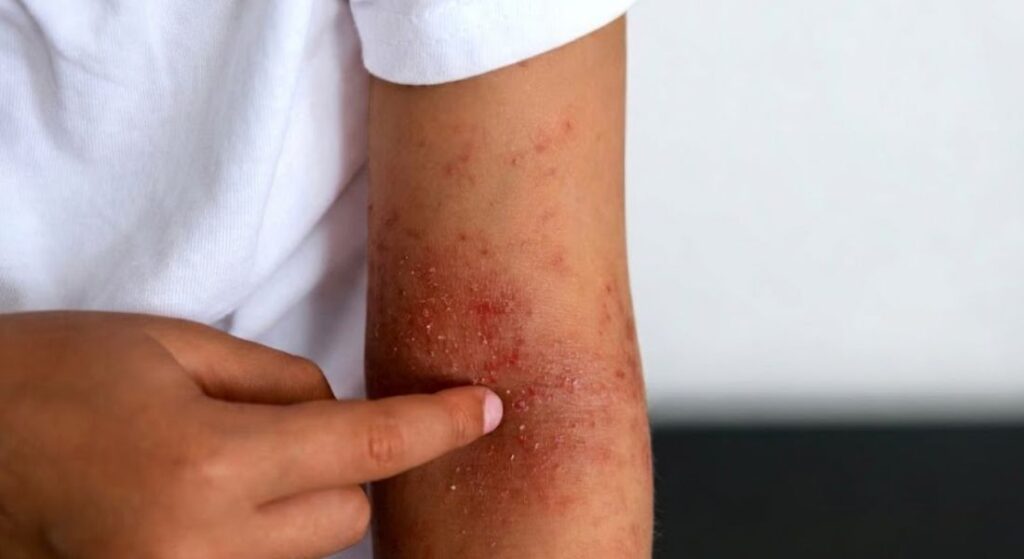
When eczema is scratched or rubbed repeatedly over a long period of time, your skin can respond by gradually becoming thicker, firmer, and more resistant in the affected areas. This process is known as lichenification, and it develops as part of the body’s response to ongoing itch, inflammation, and repeated trauma from scratching.
In Black skin, thickened eczema may appear dark brown, grey-brown, or purple-brown, and the skin can feel rough, leathery, or very textured. You may also notice that the natural skin lines become more visible in the affected areas.
This often affects areas you can easily reach and scratch, such as the neck, wrists, ankles, elbows, knees, hands, and body folds. Treatment focuses on breaking the itch–scratch cycle, calming inflammation, and restoring the skin barrier, but it can take time for the skin to gradually soften again.
Small Bumps Can Be Eczema Too
Eczema in Black skin may sometimes show up as small, raised bumps rather than large, obvious patches. This is often called papular eczema, and it can still be very itchy, uncomfortable, and persistent even if it does not look like classic eczema at first.
The bumps may feel rough and appear in clusters, and they can look purple, grey, brown, or darker than your surrounding skin. You might also notice that the affected areas feel uneven or textured when you touch them, even if the colour change is subtle.
This type of eczema can sometimes be confused with acne, folliculitis, keratosis pilaris, insect bites, or allergic reactions. Because the treatments are very different, getting the right diagnosis is important for you, as using acne treatments on eczema can sometimes irritate your skin further instead of helping it.
Why Eczema Can Be Misdiagnosed in Black Skin
Eczema can sometimes be harder to recognise in Black skin because many medical resources still focus on how it appears in lighter skin tones. As a result, there is often an expectation that redness is the main sign, even though eczema may present differently in darker skin.
When eczema appears purple, grey, brown, or dark, it can sometimes be mistaken for other skin conditions or not fully appreciated in terms of severity. You may also be told it is “mild,” even when you are dealing with significant itching, discomfort, and sleep disruption.
Other conditions such as psoriasis, fungal infections, scabies, contact dermatitis, lichen planus, seborrhoeic dermatitis, and lupus-related rashes can look similar. If your skin is not improving with treatment, you should feel confident asking for a review of your diagnosis, as further tests or specialist assessment may be needed.
Why Early Diagnosis Matters
Early diagnosis helps you take control of eczema before it becomes more severe. When you treat it early, you can calm inflammation before it leads to more persistent damage, thickening of the skin, or long-lasting irritation.
If treatment is delayed, you may experience more scratching, cracking, infection, and pigmentation changes. In Black skin, these dark or light marks after inflammation can take a long time to fade, especially if flare-ups keep coming back.
Early care can also make a big difference to your comfort and daily routine by reducing itching that affects sleep, concentration, work, or school. You do not need to wait until the skin is bleeding or infected if a patch is itchy, recurring, rough, or changing colour, it is worth getting it checked.
Why Under-Treatment Is a Risk
Eczema in Black skin can sometimes be under-treated if the level of inflammation is not fully recognised. This can happen because redness is not always obvious, even when your skin is actively inflamed and causing significant discomfort.
A flare may look mild on the surface but feel much more severe for you in terms of itching, irritation, and daily impact. In some cases, you might even be told your skin is “just dry,” when in reality the eczema is active and affecting your quality of life.
When eczema is under-treated, inflammation continues for longer, which can increase the risk of pigment changes and skin thickening. Over time, this can make your eczema harder to control. That is why it is important for you to clearly explain your symptoms, including itch severity, sleep disruption, pain, cracking, swelling, oozing, and how often flares return.
Why Over-Treatment Can Also Be a Problem
Some people try to manage eczema by using harsh or aggressive skincare products. This may include scrubs, acids, alcohol-based toners, fragranced creams, strong soaps, or repeated cleansing. While these may feel like they are “cleaning” or improving the skin, they can actually damage your skin barrier and make eczema worse over time.
In Black skin, irritation from over-treatment can also lead to post-inflammatory pigmentation, meaning dark or uneven marks that may take time to fade. This can add to both discomfort and cosmetic concern, even after the eczema flare itself has settled.
Overusing steroid creams without proper guidance can also cause side effects, such as skin thinning, stretch marks, visible blood vessels, or changes in skin texture. This is why it is important that you follow a clear plan rather than adjusting treatment on your own.
Skin Barrier Care Is the Foundation
Skin barrier care is the foundation of eczema treatment for you. If your skin barrier is not well protected, eczema becomes harder to control, and even prescription treatments may not work as effectively as they should. Keeping the barrier healthy helps reduce flare frequency and improves overall skin comfort.
Moisturisers are a key part of your routine because they reduce dryness, support healing, and protect your skin from everyday irritants. They can also make your skin feel less itchy and less sensitive. In Black skin, dryness may appear ashy, grey, flaky, or dull, so regular moisturising can also improve both comfort and appearance.
Thicker creams or ointments usually work better for you than light lotions because they provide stronger and longer-lasting protection. The most effective moisturiser is the one you can use consistently every day. You should also choose fragrance-free products where possible, as fragrance can irritate eczema-prone skin even when a product is marketed as gentle.
Cleansing Without Making Eczema Worse
If you have eczema, the way you cleanse your skin really matters because harsh washing can easily worsen dryness and irritation. Hot water, strong soaps, and long showers can strip away your skin’s natural oils, leaving it more sensitive and prone to flares.
You should use lukewarm water instead of hot water and avoid scrubbing your skin with rough cloths, exfoliating gloves, or brushes. These can damage the skin barrier and make eczema feel worse, even if your skin feels clean at the time.
Soap substitutes or very gentle, fragrance-free cleansers are often better than standard fragranced soaps. After washing, your skin should not feel tight or “squeaky clean.” It should feel comfortable and soft, not stripped.
You should apply moisturiser soon after washing while your skin is still slightly damp, as this helps lock in moisture and protect the skin barrier. If your cleanser stings, dries your skin out, or causes tightness, it may not be suitable for you, and your dermatologist can recommend a better alternative.
Topical Steroids in Black Skin

Topical corticosteroids are commonly used to help control eczema flares by reducing inflammation, itching, swelling, and discomfort. When used correctly, they can be very effective for you and can help bring a flare under control more quickly.
They may also help reduce the risk of dark marks after eczema by calming inflammation early, before it has a chance to worsen or spread. The strength of the steroid should always match both the area of the body and how severe your eczema is. For example, milder steroids are usually used on sensitive areas, while stronger ones may be needed for thicker or more stubborn patches.
It is important that you understand both the benefits and risks. Fear of steroids can sometimes lead to under-treatment, which allows eczema to persist, but overuse can also cause side effects. The key is correct, guided use.
Your doctor should clearly explain how much to apply, how often to use it, where you should apply it, and when you should stop or reduce treatment. This helps you use steroids safely and effectively as part of your eczema management plan.
Non-Steroid Treatments
Non-steroid treatments can be useful for managing your eczema, especially if you need longer-term control or if sensitive areas of your body are affected. These include topical calcineurin inhibitors such as tacrolimus and pimecrolimus, which help reduce inflammation without the risk of skin thinning that can sometimes happen with repeated use of steroid creams.
They are often used on more delicate areas like your face, eyelids, neck, and skin folds, where your skin is thinner and more prone to side effects from stronger treatments. Because they work differently from steroids, they can be particularly helpful for you if your eczema keeps coming back or needs ongoing maintenance treatment in these areas.
You may notice a stinging or warming feeling when you first start using these treatments, especially if your skin barrier is already irritated or broken. This is usually temporary, but if it continues or worries you, it’s worth discussing with your dermatologist. Overall, non-steroid treatments can be an important part of your long-term eczema control and may help you reduce how often you need steroid creams.
Treating Pigment Changes After Eczema
Dark or light marks after eczema can take time to improve, and in some cases they may take several weeks or even months to fade. The most important first step for you is to get the eczema itself under control, because ongoing inflammation will continue to trigger new pigment changes and make existing marks take longer to settle.
If your flare-ups keep happening, you may notice new areas of pigmentation forming, which can make the situation feel frustrating and difficult to manage. This is why stabilising your skin and preventing repeated inflammation is usually more important in the early stages than trying to directly treat the pigment changes themselves.
Sun protection can help reduce the visibility of darker marks, especially on exposed areas like your face and hands. This applies to Black skin as well, even though natural melanin offers some protection. You should also be cautious with harsh brightening products unless they have been prescribed, as they can irritate your skin and trigger further flares. In many cases, the safest approach is consistent eczema control, regular moisturising, sunscreen use, and giving your skin time to gradually recover.
Infection Can Be Harder to Spot
Eczema can become infected when scratching damages the skin barrier and allows bacteria or other microbes to enter the affected area. When this happens, the skin can change quite quickly and may show signs such as weeping, crusting, increased pain, swelling, warmth, pus, or a sudden worsening of your usual eczema symptoms.
In Black skin, redness may not always be easy to see, so you should pay closer attention to other changes such as increased tenderness, heat, swelling, or a wet or crusted appearance of the skin. These signs can be more reliable indicators of infection than colour changes alone.
If your skin condition changes quickly, becomes more painful, or looks infected, you should seek medical advice promptly. If you feel unwell or develop a fever, urgent care may be needed. Early treatment helps reduce complications and can lower the risk of longer-lasting pigmentation changes.
Eczema on the Face and Eyelids
Facial eczema can be particularly noticeable in Black skin and may lead to dark or light patches after flare-ups. It can also cause discomfort such as tightness, soreness, itching, or dryness, especially in sensitive areas like the cheeks, around the mouth, and along the jawline.
Eyelid eczema requires extra caution because the skin in this area is very thin and delicate. Strong steroid creams should not be used around the eyes unless they have been specifically prescribed for that area, as incorrect use can increase the risk of side effects.
Non-steroid treatments may be considered for facial or eyelid eczema depending on severity and safety. Your dermatologist will decide the most appropriate option for you. Triggers can include skincare products, makeup, fragrances, hair products, nail products, and even airborne allergens, and patch testing may be helpful if contact allergy is suspected. It is usually better not to keep adding multiple products, as a simpler, medically guided routine is often safer and more effective.
Eczema in Children With Black Skin
Eczema is common in children, and in Black skin it may not always look like the typical red, inflamed rash you might expect. Instead, it can appear grey, purple, dark brown, rough, bumpy, thickened, or scaly. This difference in appearance can sometimes make it harder for you to recognise early, which may delay treatment in the initial stages.
Children may scratch intensely, sometimes until the skin becomes sore or even bleeds. Night-time itching is especially common, and you may notice it affects sleep for both the child and the family. Over time, this can also impact concentration, behaviour, mood, and overall daily wellbeing.
After flare-ups, changes in skin colour such as darker or lighter patches can be worrying for you as a parent. These marks often improve gradually, but repeated inflammation or ongoing eczema can make them last longer. Early treatment, regular moisturising, and correct use of prescribed anti-inflammatory creams during flare-ups can help reduce symptoms and lower the risk of long-term skin changes.
Triggers That May Be Missed
Eczema triggers can vary from person to person, and what causes a flare in one individual may not affect another. Common triggers include soaps, fragrances, detergents, sweat, heat, cold weather, dust mites, pollen, stress, wool, and certain skincare products that can irritate sensitive skin.
Hair products can also contribute to flare-ups, especially if you notice eczema around the hairline, face, neck, shoulders, or upper back. Ingredients in shampoos, conditioners, styling products, or oils may sometimes irritate the skin without an obvious immediate reaction.
Some people may also react to metals, rubber, preservatives, nail products, or workplace substances, and contact dermatitis can sometimes overlap with eczema. Keeping a simple diary of flares, products used, and exposures may help identify patterns, but not every flare will have a clear trigger, and this does not mean you are doing anything wrong.
How to Describe Your Symptoms Clearly
Eczema can sometimes look different in Black skin, and it may not always appear very red even when it is active. Because of this, it really helps when you describe your symptoms clearly during your appointment. The more detail you give, the easier it is for your doctor to understand what you are experiencing and how severe it is.
- Focus on Sensation, Not Just Appearance: You should tell your doctor how itchy your skin feels and whether it is disturbing your sleep or daily routine.
- Describe Texture and Comfort Changes: Mention if your skin feels hot, sore, swollen, cracked, wet, rough, scaly, or thickened, as these are important signs of inflammation.
- Explain Timing and Pattern: Let them know how long the patch has been present and whether it keeps returning in the same area.
- Share Possible Triggers: You should mention anything that might be affecting your skin, such as hair products, detergents, fragrances, jewellery, or workplace exposures.
- Use Photos if Helpful: If your eczema improves before your appointment, showing photos of a flare can give a more accurate picture of how severe it becomes.
Overall, the way you describe your symptoms plays a big role in helping your dermatologist understand your eczema properly. Even if the skin does not look very red, your experience of itching, discomfort, and flare patterns gives important clues. Clear communication helps ensure you get the most appropriate and effective treatment for your skin.
When to Seek Dermatology Advice

You should seek dermatology advice if your eczema is persistent, spreading, infected, painful, or affecting your sleep. You should also get checked if you notice dark or light patches developing that do not improve or that are causing you concern.
A dermatologist can confirm whether your symptoms are due to eczema or another skin condition. This is particularly important in Black skin, where eczema may not always appear as obvious redness and can sometimes look more subtle or differently patterned.
They can also tailor treatment to your skin type, affected area, and symptom severity. This may include moisturisers, topical steroids, non-steroid treatments, patch testing, or stronger therapies if needed, helping you avoid both undertreatment and irritation from unsuitable products.
FAQs:
1. What does eczema look like in Black skin?
In Black skin, eczema does not always appear red. It may look purple, grey, dark brown, ashen, or darker than the surrounding skin. The skin can also look dry, rough, bumpy, thickened, or scaly. Because redness is less visible, texture and itch are often more important signs.
2. Why is eczema harder to recognise in Black skin?
Eczema is often described as a red rash, which is more visible in lighter skin tones. In Black skin, inflammation shows differently due to higher melanin levels, so colour changes like grey, purple, or brown may replace redness. This can lead to missed or delayed diagnosis if clinicians rely only on colour.
3. Is eczema more severe in Black skin?
No. Eczema is not more severe based on skin colour. However, it may appear more noticeable in terms of pigmentation changes such as dark or light marks. Severity depends on inflammation level, itch intensity, infection risk, and how long the condition has been uncontrolled.
4. Why does eczema leave dark patches on Black skin?
Eczema can cause post-inflammatory hyperpigmentation, where inflammation triggers increased melanin production. This leads to dark brown or grey-brown patches after a flare. Scratching makes this worse, which is why early treatment is important to reduce long-term pigmentation.
5. Can eczema leave light patches too?
Yes. After inflammation settles, some areas may lose pigment temporarily, leading to lighter patches. This is called post-inflammatory hypopigmentation. These changes are usually temporary but may take time to return to normal skin tone.
6. What is the most important symptom of eczema in Black skin?
Itch is one of the most important symptoms. Even if the rash does not look red or severe, intense itching especially at night is a strong indicator of eczema. Itching can also lead to scratching, which worsens inflammation and pigmentation changes.
7. Can eczema be confused with other skin conditions?
Yes. In Black skin, eczema can be mistaken for conditions such as psoriasis, fungal infections, allergic reactions, lichen planus, or acne-like eruptions. Because colour changes are subtle, a full assessment of symptoms, history, and texture is often needed for accurate diagnosis.
8. Why does eczema sometimes look grey or ashen?
Grey or ashen eczema often occurs when dryness combines with inflammation. The skin barrier becomes weakened, causing flaking and dullness. This can make the skin look “dry” even when active eczema is present underneath.
9. Can eczema be treated differently in Black skin?
The core treatments are the same for all skin types, including moisturisers, topical steroids, and non-steroid anti-inflammatory creams for atopic dermatitis. However, treatment must consider pigmentation risk, avoiding irritation, and protecting the skin barrier to reduce dark or light marks.
10. When should someone with eczema seek medical help?
Medical advice should be sought if eczema is persistent, very itchy, affecting sleep, spreading, infected, or leaving visible dark or light marks. Early treatment helps prevent complications like thickened skin, long-term pigmentation changes, and repeated flares.
Final Thoughts: Understanding Eczema in Black Skin Is Key to Better Care
Eczema can look very different in Black skin compared to lighter skin tones, often appearing purple, grey, dark brown, or ashen rather than the classic red rash. Because of this, relying on colour alone can lead to missed or delayed diagnosis. Recognising symptoms such as persistent itch, dryness, texture changes, thickened skin, and sleep disturbance is essential for identifying active inflammation early and starting the right treatment.
Early and consistent management helps reduce flare severity, limit scratching, and lower the risk of long-term pigmentation changes such as dark or light patches. A tailored approach that focuses on skin barrier care, appropriate anti-inflammatory treatment, and trigger management is the most effective way to keep eczema under control across all skin tones. If you are considering eczema treatment in London, contact us at London Dermatology Centre to book a consultation with one of our specialists.
References:
- Sachdeva, M. and Joseph, M. (2022) Dermatology: how to manage atopic dermatitis in patients with skin of colour, Drugs in Context. Available at: https://pmc.ncbi.nlm.nih.gov/articles/PMC9165632/
- Gan, C., Mahil, S., Pink, A. and Rodrigues, M. (2023) Atopic dermatitis in skin of colour: clinical presentation and treatment considerations, Clinical and Experimental Dermatology, 48(10), pp. 1091–1101. Available at: https://academic.oup.com/ced/article/48/10/1091/7147058
- Laughter, M.R., Maymone, M.B.C. and Vashi, N.A. (2020) Eczema in skin of color: clinical features and disparities, Dermatologic Clinics, 38(2), pp. 207–219. Available at: https://www.mdpi.com/2077-0383/12/7/2701
- Davis, C.M., Flohr, C., Gupta, M.R. and Koplin, J.J. (2023) Managing atopic dermatitis (eczema) in patients with skin of colour. Journal of Allergy and Clinical Immunology: In Practice, 11(5), pp.1376–1383. Available at: https://pubmed.ncbi.nlm.nih.gov/37001639/
- Cork, M.J., Danby, S.G. and Vasilopoulos, Y. (2015) Epidermal barrier dysfunction in atopic dermatitis. Journal of Allergy and Clinical Immunology, 136(4), pp.910–921. Available at: https://pubmed.ncbi.nlm.nih.gov/29457272/