


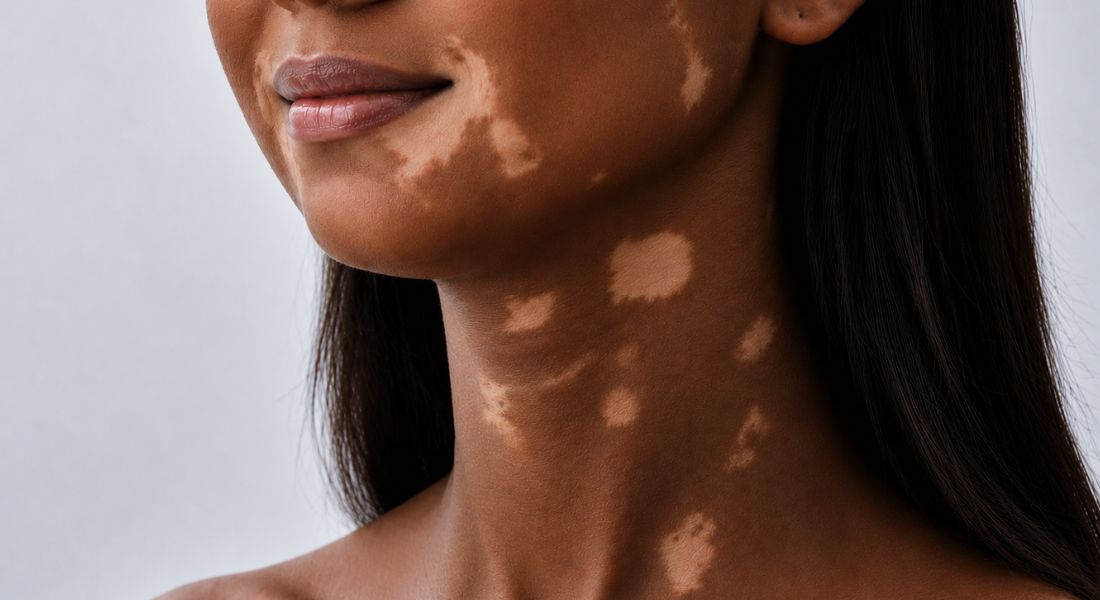
Facial vitiligo can feel very personal for you because the face is central to how you express yourself, communicate, and feel recognised. When pigment changes appear here, they are often difficult to ignore in daily life.
In Black skin, facial vitiligo can look more noticeable due to the strong contrast between depigmented patches and the surrounding skin. You may find that even small patches around the eyes, mouth, forehead, or cheeks stand out clearly, even when the condition is limited in size.
This does not mean the condition is more severe medically, but the visual and emotional impact can feel greater for you. You might notice that your confidence or comfort in social situations is affected more than the actual medical extent of the patches suggests.
The face often responds well to treatment, although care is needed because facial skin is delicate. A specialist approach is important for you to balance safety and effectiveness, and to help set realistic expectations about what improvement may look like.
What Facial Vitiligo Means
Facial vitiligo means that vitiligo patches appear on areas of your face. You may notice them on places like the forehead, cheeks, nose, eyelids, lips, chin, jawline, or around the mouth, and they can appear as a single patch or in multiple areas.
This happens when melanocytes are not working properly in the affected skin. These are the cells that produce melanin, the pigment that gives your skin its natural colour, so when they stop functioning, the skin loses its normal colour.
The affected areas usually become pale, white, or milky-white, while the skin texture stays the same. Facial vitiligo can remain stable, slowly spread, or appear in new areas over time, and a dermatologist can help confirm the diagnosis and activity of the condition.
Why Facial Vitiligo Is More Visible in Black Skin
Black skin contains higher levels of visible melanin, and you may notice that when vitiligo leads to pigment loss, the contrast between the white patches and the surrounding skin becomes much stronger. This sharper difference in tone can make even subtle changes on the face stand out more clearly than in lighter skin types.
Because of this strong contrast, even a small patch can be noticed at an earlier stage. You might find that areas like the eyes, mouth, and cheeks draw more attention, as these facial regions are naturally more expressive and frequently seen in everyday interaction.
Facial movement can also increase how visible the patches feel for you. Actions such as talking, smiling, eating, and showing expressions can highlight these changes throughout the day, which may affect confidence even when the overall affected area is relatively small in medical terms.
Common Facial Areas Affected

Vitiligo commonly affects areas around the mouth and eyes, and you may notice these sites can be especially visible in Black skin because the surrounding skin is naturally more pigmented. This can make even small patches stand out more clearly on the face.
You might see light patches on the lips, corners of the mouth, chin, around the nostrils, or across the cheeks. These areas are often affected because they are frequently exposed and involved in regular facial movement.
The eyelids and skin around the eyes can also be involved, and this area needs extra care because the skin is thin and sensitive. Vitiligo may also affect eyebrows, eyelashes, beard hair, or the scalp hairline, and your dermatologist will adjust treatment depending on the exact location.
Why Early Diagnosis Matters
Not every pale patch on your face is vitiligo, and you may find that other skin conditions can also cause lighter areas. Getting the right diagnosis early is important for you because each condition needs a different approach.
You should know that conditions like post-inflammatory hypopigmentation can happen after eczema, acne, burns, or irritation, while pityriasis alba can also cause pale patches, especially in younger people. Other causes may include fungal infections, scars, chemical leukoderma, contact reactions, or uneven skin colour from skin-lightening products.
A dermatologist can examine your skin and may use a Wood’s lamp to help check pigment loss and confirm whether vitiligo is likely. Early diagnosis helps you avoid the wrong treatments and allows you to start the right care sooner if needed.
Active Versus Stable Facial Vitiligo
Treatment for facial vitiligo depends on whether your condition is active or stable. You may hear that active vitiligo means patches are still spreading or new ones are appearing, which shows the condition is currently changing.
Stable vitiligo means the patches have not changed over time. This is important for you because it helps decide when to start treatment and which options are most likely to work well.
If your vitiligo is active, treatment usually focuses on calming the condition first to stop further spread. If it is stable, the focus may shift more towards repigmentation and improving appearance using options like topical treatments, phototherapy, or camouflage.
Why the Face Often Responds Better
The face is often one of the better areas for vitiligo treatment response, and you may notice this is partly because facial skin has more hair follicles and pigment cell reservoirs. These structures can support repigmentation more effectively than some other parts of the body.
Repigmentation usually starts around hair follicles, where you may first see small dots of colour appearing. Over time, these dots can slowly grow and join together, leading to more visible blending of the affected areas.
Because of this, facial vitiligo may respond better than areas like the fingertips, toes, elbows, or other bony sites, although results are not guaranteed. In Black skin, even partial repigmentation can reduce contrast, and your dermatologist should help you understand that the goal is often improvement rather than perfect colour matching.
Treatment Must Be Gentle Around the Face
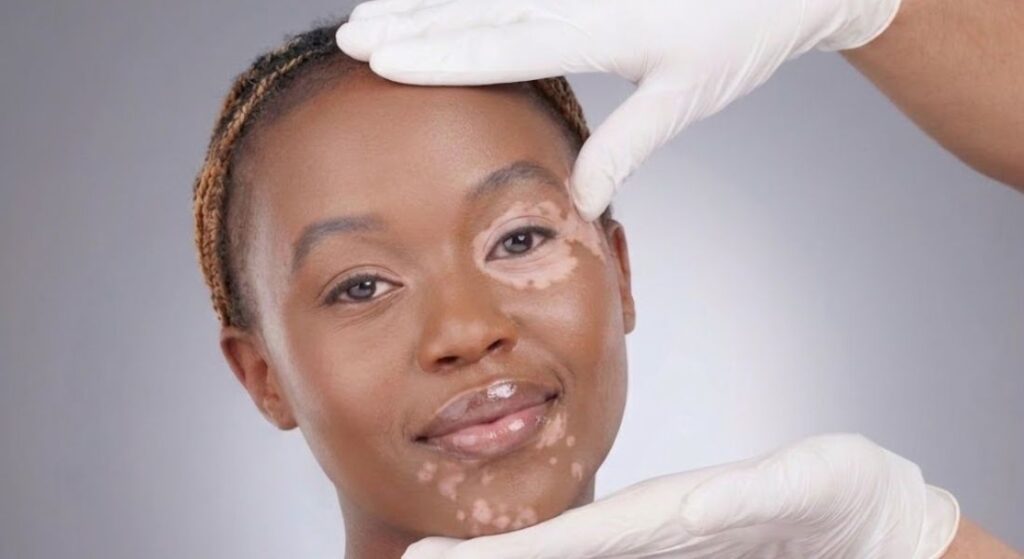
Facial skin is thinner and more sensitive than other parts of your body, so you need to be careful when treating vitiligo in this area. You may notice that places like the eyelids, lips, and skin folds react more easily and need extra protection.
Because of this, treatment should always be chosen with care. You should know that strong topical steroid creams, if overused on the face, can lead to side effects like thinning skin, visible blood vessels, acne-like eruptions, stretch marks, and irritation.
In Black skin, irritation can also lead to unwanted pigment changes, so careful monitoring is important for you. That is why facial vitiligo is usually managed with specialist advice, and you should avoid trying strong treatments on your own without guidance.
Topical Corticosteroids
Topical corticosteroids may be used for some vitiligo patches, and you may find they work by reducing inflammation and immune activity in the skin. This can sometimes help slow down the spread of white patches and may also support partial return of skin colour in suitable cases.
According to the NHS, topical steroids may be considered in adults with non-segmental vitiligo affecting less than 10% of the body. You should keep in mind that results can vary from person to person, and they are not appropriate for every area or every case.
On the face, these creams need extra care because the skin is more sensitive. You should not use steroid creams without medical guidance, as overuse can cause damage, and if one is prescribed, you should clearly understand how, where, and for how long to use it safely.
Topical Calcineurin Inhibitors
Topical calcineurin inhibitors may be used in facial vitiligo, especially in sensitive areas such as the face and around the eyes. Examples include tacrolimus ointment and pimecrolimus cream. These treatments help reduce local immune activity in the skin and support repigmentation in suitable cases without causing skin thinning.
- Suitable for Sensitive Areas: These treatments are often preferred for delicate skin such as the face because they do not cause skin thinning like topical steroids can.
- Recommended in Clinical Guidance: NICE CKS advises considering tacrolimus or pimecrolimus as options for facial vitiligo, particularly as an alternative to topical corticosteroids.
- How They Work: They reduce immune activity in the skin, helping to create a more favourable environment for repigmentation.
- Possible Early Irritation: You may notice temporary burning, warmth, or stinging when you first start treatment, which often improves with continued use.
- Slow and Steady Results: These treatments usually take several months of consistent application before any improvement can be properly assessed.
Overall, topical calcineurin inhibitors are an important option in facial vitiligo management, particularly when long-term treatment is needed in sensitive areas. They are generally well tolerated, but like all treatments, they require patience and regular use to see meaningful results. Your dermatologist will guide you on how and when to use them for the best outcome.
Phototherapy for Facial Vitiligo
Phototherapy uses controlled light exposure to help stimulate repigmentation and influence immune activity in vitiligo. You may hear about narrowband UVB as one of the most commonly used and effective forms of this treatment.
Facial vitiligo often responds better to phototherapy compared to more resistant areas like the hands and feet. However, you should expect that treatment takes time and involves repeated sessions before noticeable changes appear.
In Black skin, dosing needs careful supervision to avoid burns or uneven pigmentation. Phototherapy is not the same as sunbathing, as it is a controlled medical treatment, and your dermatologist will decide if it is suitable for you while also considering your daily routine and practical needs.
Targeted Light Treatment
Targeted light treatment, such as excimer laser or excimer light, may be used for small areas of vitiligo, particularly on the face. It works by delivering focused ultraviolet light directly to the affected patch, which can help stimulate repigmentation in selected cases. This approach is often considered when vitiligo is localised and does not require full-body phototherapy.
- Focused Treatment Area: Targeted light therapy treats only the affected patch, which helps limit exposure to surrounding healthy skin.
- Useful for Small or Facial Patches: It is often considered for smaller, localised areas where precision treatment is beneficial.
- Needs Careful Dosing: In Black skin, energy levels must be carefully controlled to avoid irritation, burns, or unwanted pigmentation changes.
- Can Be Combined with Topicals: It may be used alongside topical treatments to improve response in selected cases.
- Not Suitable for Everyone: Your dermatologist will assess patch size, location, disease activity, and equipment availability before recommending it.
Overall, targeted light treatment can be a useful option for small or stubborn vitiligo patches, especially on the face. However, it is not a first-line treatment for everyone and should always be carefully tailored to your skin type and condition. A specialist will help decide whether it is appropriate for your specific case.
Topical JAK Inhibitors
Topical JAK inhibitors are a newer type of treatment for vitiligo, and you may hear about ruxolitinib cream as one example. It is used for non-segmental vitiligo in people who are eligible, and it is often discussed as an option for facial areas.
In August 2025, NICE published guidance on ruxolitinib cream for treating non-segmental vitiligo in people aged 12 years and over. You should know that evidence reviews suggest it can be effective and generally well tolerated, although there are still safety considerations linked to the wider JAK inhibitor class.
This treatment may be especially relevant for facial vitiligo because the face is often a key focus in studies and licensing decisions. However, it is not suitable for everyone, so your eligibility, age, type of vitiligo, medical history, and previous treatments all need to be reviewed. Your dermatologist can help you understand whether it is appropriate for you.
Camouflage for Facial Vitiligo
Camouflage products can help reduce the visible contrast between vitiligo patches and your surrounding skin. This can be especially useful for facial vitiligo in Black skin, where even small colour differences may stand out more.
It is important to understand that camouflage does not treat vitiligo or restore pigment. However, it can give you more control over when and how visible the patches are, helping you feel more comfortable in daily life or social situations.
Some people use camouflage every day, while others prefer it only for special occasions like work, events, or photographs. You should focus on correct shade matching, because in Black skin the wrong tone can look grey, orange, or ashy instead of natural.
Sunscreen and Facial Vitiligo
Sunscreen is very important for facial vitiligo because the depigmented skin has less melanin, which normally helps protect you from sun damage. This means the affected patches can burn more easily, so you need to be extra careful with daily protection.
Sun exposure can also make vitiligo more noticeable for you. The surrounding Black skin may tan or darken, while the vitiligo patches stay pale, which increases the contrast and makes the patches stand out more.
You should choose a sunscreen that suits Black skin and does not leave a white or grey cast, such as tinted, gel-based, or lightweight formulas. Daily use is especially important if you are on treatment, and your dermatologist can guide you on how to combine sun protection safely.
Treating Vitiligo Around the Eyes
Vitiligo around the eyes can feel very noticeable and may be emotionally difficult for you, especially because this area is always in focus during face-to-face interactions. At the same time, it needs extra care because the skin on the eyelids is very thin and sensitive.
Strong steroid creams are usually avoided in this area or only used under strict medical supervision. You should know that the risk of side effects is higher on delicate eyelid skin, so treatment needs to be chosen carefully.
For you, topical calcineurin inhibitors may be considered as an option because they do not thin the skin in the same way as steroids. You should only apply any treatment near the eyes if your dermatologist has clearly shown you how to do it safely, as incorrect use can irritate both the skin and the eyes.
If eyelid vitiligo is affecting your confidence, you should feel comfortable discussing this openly with your clinician. Visible facial areas like the eyes deserve careful attention, support, and a treatment approach that feels safe and manageable for you.
Treating Vitiligo Around the Mouth
Vitiligo around the mouth is quite common, and you may notice it stands out more in Black skin due to the clear contrast between the lips, surrounding skin, and depigmented patches. This area can feel especially visible in day-to-day life.
Because your mouth moves constantly when you speak, smile, eat, or drink, you may feel the patches become even more noticeable. This natural movement can sometimes make the condition feel harder to ignore or manage emotionally.
Treatment for you may include topical medicines, phototherapy, targeted light, or camouflage depending on your situation. The area can be sensitive, so irritation may occur, and your dermatologist may adjust the treatment if needed. Repigmentation usually takes time, often starting with small dots of colour or gradual blending of the contrast.
Beard Area and Hair Colour Changes
For men, facial vitiligo can affect the beard area, and you may notice changes in both the skin and the hair colour. This can feel more noticeable when facial hair becomes lighter or white within the affected patches, as it changes the overall appearance.
If beard hairs in the affected area turn white, treatment can sometimes become more challenging. Hair follicles help store pigment cells, so when pigment is lost in the hair, it may reduce how well repigmentation responds in that specific area. Even so, you may still see some improvement in the skin itself.
Shaving can also irritate the skin, so you should try to avoid unnecessary irritation where possible. A dermatologist can guide you on how to adjust shaving routines, treatments, or camouflage options so you can manage the beard area more comfortably.
Colour Matching and Uneven Repigmentation
Repigmentation does not always return as a perfect colour match, and you may notice that the new pigment looks slightly lighter, darker, or a bit patchy at first. This is a normal part of how the skin responds, rather than an immediate final result.
In Black skin, even small differences in colour can be more noticeable, so you might find this stage emotionally confusing. You could feel happy that pigment is returning, but also frustrated that it does not yet blend perfectly, and both feelings are completely understandable.
Over time, the colour may continue to settle and become more even, although in some cases a slight unevenness can remain. Your dermatologist should help you understand that the aim is often improvement, blending, or reduced contrast rather than perfect restoration, so you can keep realistic expectations throughout the process.
Emotional Impact of Facial Vitiligo
Facial vitiligo can affect your confidence, self-image, relationships, and how comfortable you feel in social situations. You may feel like people notice your skin before they notice you, and that can feel quite overwhelming at times.
This experience can also become emotionally tiring for you. You might feel drained by repeated questions, comments, or assumptions from others, even when they are not meant to be hurtful.
Because of this, you may start avoiding things like photographs, dating, video calls, public speaking, or social events. Some people also feel pressure to cover their patches, even when they would prefer not to, and all of these reactions are completely understandable.
These feelings are valid and should not be ignored. Facial skin conditions can have a strong psychological impact, especially when they are visible every day, so your emotional wellbeing matters just as much as the physical treatment.
Children and Young People With Facial Vitiligo
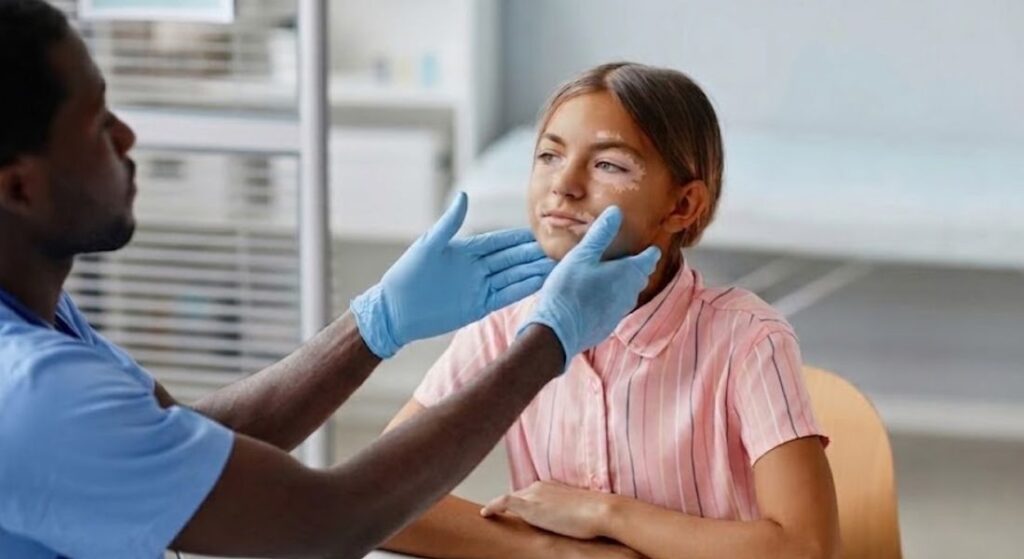
Facial vitiligo in children can be especially sensitive, and you may notice that children do not always talk about how they feel. Instead, they might become shy, withdrawn, or anxious, especially in school situations. It is important for you to watch for these subtle emotional changes.
In Black children, visible contrast can sometimes lead to questions from others or even teasing. Early education, reassurance, and support can make a real difference in helping you build their confidence and reduce emotional impact. You should try to address concerns early rather than ignoring them.
Treatment decisions in children depend on factors like age, patch location, disease activity, and safety. Some treatments have age restrictions or need extra caution, so you should always avoid using strong creams on a child’s face without medical advice. A dermatologist can explain the condition in a simple, reassuring way and help children understand that vitiligo is not contagious and is not their fault.
What Results Can Be Expected?
Facial vitiligo often responds better to treatment compared to some other areas, and this can feel encouraging for you. However, results still vary, so you might see clear improvement while others notice only partial or slower changes. It is important for you to remember that every skin response is different.
Treatment usually takes time, often several months before you see visible improvement. You may first notice small dots of colour around hair follicles, which can slowly spread and blend into larger areas over time. This gradual change is a normal part of the process.
Not every patch will fully match your natural skin tone again, but reduced contrast can still make a meaningful difference, especially in Black skin. Your dermatologist will monitor progress with photos and reviews so you can decide together whether to continue, adjust, or change treatment.
When Treatment Does Not Work
If one vitiligo treatment does not work for you, it does not mean that nothing else will help. Vitiligo can be unpredictable, and different people respond to different treatments in different ways. Sometimes the issue is timing, skin location, or how active the condition is rather than the treatment itself.
- Response Can Vary Widely: Vitiligo does not respond in the same way for everyone, so one treatment may work well for some people but not for others.
- Reviewing the Whole Picture Helps: Your dermatologist may reassess your diagnosis, disease activity, treatment consistency, and whether any irritation has affected results.
- Other Options May Be Considered: You may be offered a different topical treatment, phototherapy, targeted light therapy, camouflage support, or careful monitoring depending on your situation.
- Stable Cases May Have Additional Options: If your vitiligo is stable, specialist procedures may sometimes be discussed as part of a longer-term plan.
- It Is Not Your Fault: A lack of response does not mean you used the treatment incorrectly, and it is a normal part of how vitiligo behaves.
Overall, treatment for vitiligo often requires patience and ongoing adjustment. Your dermatologist may need to refine your plan over time to find the most effective approach for your skin. Progress can be gradual, and changing strategies is often part of achieving the best possible outcome.
Avoiding Unsafe Facial Treatments
When you deal with facial vitiligo, you need to be careful because the face is more sensitive and can be easily damaged by unsafe products. This is especially important in Black skin, where irritation can sometimes lead to further pigment changes. It is important to be cautious before trying any new product on your face.
It is best to avoid unregulated skin-lightening creams, strong steroid creams without a prescription, harsh chemical peels, and home remedies that cause burning or stinging. You might feel tempted to try quick solutions, but these can often do more harm than good.
You should also be cautious with online products that promise guaranteed repigmentation, because vitiligo treatment is rarely instant or certain. Some of these products can cause acne, thinning of the skin, burns, or even more pigment issues, which may be harder to manage than the original patches. If you are unsure about anything, you should always ask a dermatologist before using it on your face.
Building a Personalised Treatment Plan
When you look at a treatment plan for facial vitiligo, it should not just focus on the patches alone. It should also take into account your skin tone, age, lifestyle, medical history, activity level, and emotional wellbeing. You should feel that the plan is designed for you as a whole person, not just your skin condition.
It is also important to think about how practical the treatment will be in your daily life. You might ask yourself whether you can attend phototherapy regularly, or if you are comfortable using camouflage. You should also consider whether you can apply treatments consistently, because regular use often makes a real difference.
Your personal goals should guide the plan as well. You may want repigmentation, or you might mainly want to slow down spread or reduce contrast. A good plan can change over time based on how your skin responds, and regular review helps keep things safe, realistic, and suited to you.
FAQs:
1. Why is facial vitiligo more noticeable in Black skin?
Facial vitiligo is more noticeable in Black skin because of the natural contrast between high levels of melanin and the depigmented patches. When melanocytes stop producing pigment, the affected areas become milky-white, which stands out more strongly against darker surrounding skin. Even small patches can therefore appear visually prominent on the face.
2. Does facial vitiligo mean the condition is more severe?
No, facial vitiligo is not medically more severe in Black skin. The condition itself behaves in the same way regardless of skin tone. However, the psychological and visual impact can feel greater because the face is constantly visible in social interactions, making the contrast more emotionally noticeable.
3. Can facial vitiligo be treated successfully?
Yes, facial vitiligo often responds better to treatment compared with many other areas of the body. The face has more active hair follicles, which can support repigmentation. However, results vary from person to person. Some people see gradual improvement over months, while others may achieve partial rather than complete repigmentation.
4. What is the best treatment for facial vitiligo?
There is no single “best” treatment, as options depend on skin type, disease activity, and location. Common treatments include topical calcineurin inhibitors such as tacrolimus, carefully used topical corticosteroids, phototherapy (narrowband UVB), and in some cases newer options like topical JAK inhibitors. A dermatologist usually combines treatments for best results.
5. Is facial vitiligo treatment safe for delicate facial skin?
Yes, but it must be used carefully under medical supervision. Facial skin, especially around the eyes and mouth, is thinner and more sensitive than other areas. Overuse of strong treatments can cause side effects such as skin thinning, irritation, or acne-like changes, so treatment plans are usually gentle and closely monitored.
6. Can vitiligo around the eyes be treated?
Yes, vitiligo around the eyes can be treated, but it requires extra caution. Because eyelid skin is very thin, treatments must be chosen carefully. Topical calcineurin inhibitors are often preferred as they do not thin the skin like steroids. Any treatment near the eyes should only be used exactly as prescribed by a dermatologist.
7. Will my skin colour return to exactly the same shade?
Not always. Repigmentation usually starts slowly, often as small brown dots around hair follicles that gradually spread. In Black skin, even partial repigmentation can significantly reduce contrast and improve appearance. However, full and perfect colour matching is not guaranteed, and results may continue to evolve over time.
8. Does sunlight make facial vitiligo worse?
Sunlight does not directly worsen vitiligo, but it can make it more visible. This happens because unaffected skin may tan or darken, while vitiligo patches do not produce melanin. This increases contrast. Regular sunscreen use helps protect the skin and reduces this difference in appearance.
9. Can makeup or camouflage help facial vitiligo?
Yes, camouflage products can be very helpful for facial vitiligo. They are designed to match different skin tones and can significantly reduce visible contrast. While they do not treat the condition or restore pigment, they can improve confidence in social, professional, or photographic situations and are often waterproof and long-lasting.
10. What should I avoid if I have facial vitiligo?
You should avoid unregulated skin-lightening creams, strong steroid creams without prescription, and harsh home remedies that may irritate the skin. These can worsen pigmentation imbalance or damage facial skin. It is also best to avoid online “quick fix” treatments that claim guaranteed repigmentation, as vitiligo treatment usually requires time and medical supervision.
Final Thoughts: Living Well With Facial Vitiligo in Black Skin
Facial vitiligo can feel especially challenging when it appears on Black skin, mainly because the contrast between depigmented patches and surrounding skin is more visible. However, it is important to remember that visibility does not mean severity, and many people experience good responses on the face with the right combination of careful, consistent treatment and realistic expectations.
Modern vitiligo care offers several supportive options, including topical treatments, phototherapy, targeted light therapy, and newer medicines such as topical JAK inhibitors. Alongside medical treatment, camouflage products and sun protection can also make a meaningful difference in day-to-day confidence and comfort. Because facial skin is delicate, especially around the eyes and mouth, treatment should always be guided by a specialist to avoid irritation or unwanted side effects.
Most importantly, progress in vitiligo is often gradual rather than immediate. Small improvements, such as early repigmentation dots or reduced contrast, can build over time and still represent meaningful success. If you are considering vitiligo treatment in London, you can get in touch with us at London Dermatology Centre.
References:
- Iwanowski, T., Kołkowski, K., Nowicki, R.J. & Sokołowska-Wojdyło, M. (2023) Etiopathogenesis and emerging methods for treatment of vitiligo, International Journal of Molecular Sciences, 24(11), 9749. Available at: https://www.mdpi.com/1422-0067/24/11/9749
- Rodrigues, M., Hamzavi, I., Pandya, A.G. & Harris, J.E. et al. (2017) New discoveries in the pathogenesis and classification of vitiligo, Journal of the American Academy of Dermatology, 77(1), pp. 1–13. Available at: https://www.sciencedirect.com/science/article/abs/pii/S019096221631115X
- Ji Hae Lee, Hyuck Sun Kwon (2019) Treatment Outcomes of Topical Calcineurin Inhibitor Therapy for Patients With Vitiligo. Available at: https://pmc.ncbi.nlm.nih.gov/articles/PMC6547091/
- N.F., Ezekwe, N., Narayan, V.S., Bekkenk, M.W., van Geel, N., Hamzavi, I., Passeron, T. & Wolkerstorfer, A. (2022) The use of lasers in vitiligo, an overview, Journal of the European Academy of Dermatology and Venereology, 36(6), pp. 779–789. Available at: https://pmc.ncbi.nlm.nih.gov/articles/PMC9314124/
- Rodrigues, M., Ezzedine, K. (2023) Vitiligo: pathogenesis and new and emerging treatments, International Journal of Molecular Sciences, 24(24), 17306. Available at: https://www.mdpi.com/1422-0067/24/24/17306