


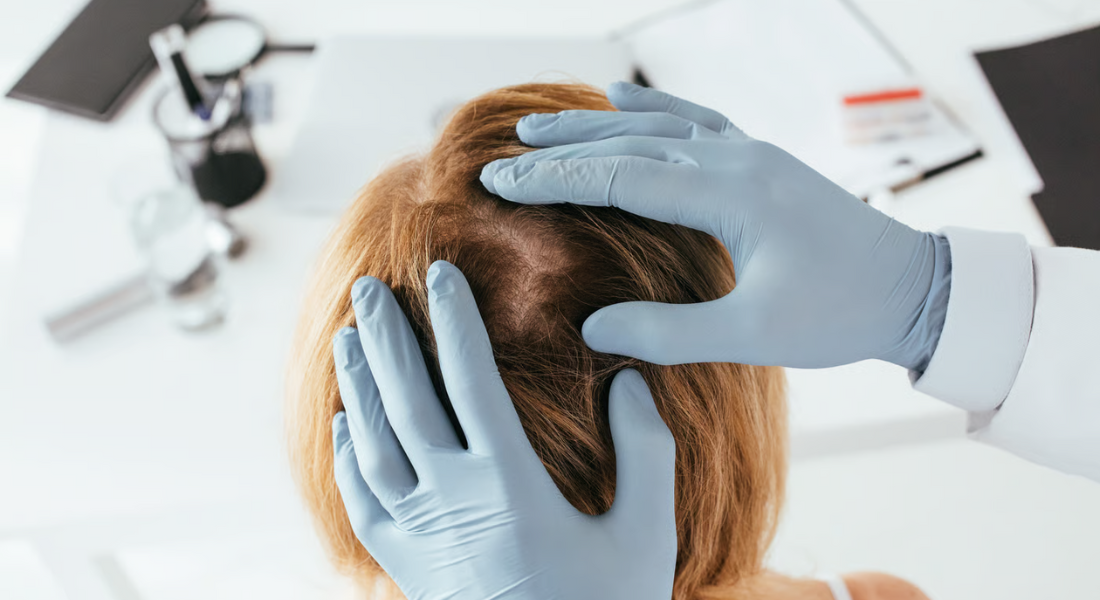
Hair loss can feel sudden, confusing, and deeply personal. One day your hair feels normal, and the next you notice smooth, round patches appearing without warning. If you are dealing with alopecia areata, this unpredictability is often the hardest part to live with. To understand why this happens, you need to look beyond the surface of the scalp. The real story begins inside the hair follicle itself and the immune system that is supposed to protect you. At the centre of this story is a concept called hair follicle immune privilege.
In healthy skin, your immune system is highly alert. It constantly scans for infections, abnormal cells, and anything it sees as a threat. But not all parts of the body are treated the same way.Certain sites are given special protection from immune attack. These areas are known as immune-privileged sites. Your hair follicles are one of them.
When immune privilege collapses, the immune system turns against the follicle. This is what happens in alopecia areata. Understanding how and why this breakdown occurs helps explain sudden hair loss, patchy patterns, and even unexpected regrowth.
What Is Immune Privilege?
Immune privilege is a specialised biological strategy that protects certain delicate tissues from unnecessary or harmful inflammation. While inflammation is a vital part of the body’s defence system, it can also cause damage if it is not tightly controlled. In tissues that are particularly sensitive, uncontrolled immune activity could lead to permanent harm.
Some areas of the body cannot tolerate inflammation well. Classic examples include the brain, the eyes, the testes, and the hair follicle. In these regions, excessive immune activity could damage essential structures or impair function. To prevent this, the immune system is deliberately restrained: immune cells are kept at a distance, and inflammatory signals are suppressed or blocked.
Immune privilege does not mean that these tissues are defenceless. Instead, they rely on alternative protective mechanisms that are less destructive than a full-blown inflammatory response. The aim is balance allowing defence without causing collateral damage.
Hair follicles, in particular, rely heavily on immune privilege. Without it, the normal process of hair growth could be repeatedly interrupted, as the immune system might mistakenly recognise the follicle’s active cells as a threat. By maintaining immune privilege, follicles can continue their delicate work of producing hair uninterrupted, supporting healthy hair growth throughout life.
Why Hair Follicles Need Immune Protection
Hair follicles are biologically active structures. They are constantly growing, regressing, resting, and regenerating. This activity makes them vulnerable. During active growth, follicle cells divide rapidly. They express unique proteins that are not normally seen on the skin surface. These proteins could attract immune attention if not protected.
Hair follicles also undergo controlled cell death during their normal cycle. This process could easily be misinterpreted as tissue damage. Immune privilege prevents unnecessary immune responses to these changes.
Another reason is regeneration. Hair follicles contain stem cells that allow repeated regrowth.
Inflammation could permanently damage these cells. Immune privilege allows follicles to function quietly in the background. When it works properly, you never notice it. When it fails, the consequences become visible very quickly.
Where Immune Privilege Exists in the Hair Follicle
Immune privilege is not uniform throughout the hair follicle. It is strongest in the hair bulb, particularly during the anagen, or growth, phase, which is where the hair shaft is actively produced and lengthened.
In this critical region, immune surveillance is deliberately reduced. Major histocompatibility complex (MHC) molecules, which normally present antigens to immune cells, are suppressed. By limiting MHC expression, the follicle effectively hides from T cells and other immune effectors, reducing the risk of attack. This selective “invisibility” is a cornerstone of hair follicle immune privilege.
The follicle also produces local immunosuppressive factors to reinforce protection. These include molecules such as transforming growth factor-beta (TGF-β) and alpha-melanocyte-stimulating hormone (α-MSH). These signals actively calm nearby immune cells, preventing an inappropriate immune response.
Specialised cells surrounding the follicle further support this protective environment. They maintain immune tolerance rather than promoting inflammation, ensuring that the follicle can continue producing hair without interference. Together, these mechanisms create a controlled immune environment that safeguards the follicle during its most vulnerable phase of active growth.
The Normal Hair Growth Cycle and Immune Privilege

To understand alopecia areata, you first need to understand how the normal hair growth cycle works. Hair does not grow continuously in a straight line. Instead, it moves through a repeating cycle made up of three main phases. Each of these phases interacts with the immune system in a different way, and this relationship is crucial to maintaining healthy hair growth.
Anagen: The Growth Phase
Anagen is the active growth phase. Hair follicles are metabolically busy and highly productive.
Immune privilege is strongest at this stage. This protection allows rapid cell division without immune interference. The follicle remains hidden from immune surveillance. Hair grows continuously during this period.
Catagen: The Regression Phase
Catagen is a controlled shutdown phase. Cell division slows and the follicle shrinks. Immune privilege begins to weaken slightly. This change is normal and temporary. It prepares the follicle for rest. The immune system still remains largely restrained.
Telogen: The Resting Phase
Telogen is a resting phase. The follicle is inactive and the hair eventually sheds. Immune privilege is lowest during this stage. Even here, inflammation is normally minimal. The cycle then resets and a new anagen phase begins. Immune privilege is re-established.
In alopecia areata, this cycle is disrupted. Immune privilege collapses during anagen, when it is most needed. The immune system attacks an actively growing follicle.
What Happens When Immune Privilege Collapses
In alopecia areata, immune privilege is lost prematurely, often during the anagen phase when protection should be strongest. As a result, the hair follicle becomes visible to the immune system. Structures that are normally hidden are suddenly exposed, triggering an inflammatory immune response.
The immune system mistakenly identifies components of the hair follicle as foreign. T cells migrate into the hair bulb and surrounding tissue. Once present, these immune cells release inflammatory cytokines that disrupt the normal environment of the follicle. This inflammation interferes directly with the signals that support healthy hair growth.
As inflammation increases, the follicle is forced out of anagen earlier than it should be. Active hair production stops abruptly. The developing hair shaft becomes weaker, growth slows, and the hair is shed prematurely. Despite this disruption, the follicle itself is not destroyed. This preservation of the follicular structure is why alopecia areata is classified as a non-scarring form of hair loss. The capacity for regrowth remains intact.
However, as long as immune privilege remains disrupted, regrowth is unstable. Hair may begin to return, only to fall out again when immune activity resumes. This cycle of loss and regrowth explains the relapsing and unpredictable nature of alopecia areata.
Why the Immune System Targets Hair Follicles

Alopecia areata is classified as an autoimmune condition. This means the immune system mistakenly targets the body’s own tissues instead of harmful invaders. A key question, however, is why hair follicles become the focus of this immune response.
One leading theory involves a failure of immune tolerance. Under normal circumstances, the immune system learns which tissues to ignore and which to attack. In alopecia areata, this process of tolerance breaks down. As a result, the immune system begins to respond to structures that should be recognised as part of the body.
Genetic susceptibility plays an important role in this process. Certain genes are involved in regulating immune responses and maintaining immune balance. Variations in these genes can increase the risk of immune misdirection. While genetics alone do not cause alopecia areata, they create a background of vulnerability.
Environmental triggers may further contribute to the condition. Factors such as infections, emotional or physical stress, and physical trauma can activate immune pathways. In individuals who are genetically susceptible, this immune activation becomes misdirected. Hair follicle antigens, which are normally hidden during immune privilege, become exposed.
The Role of T Cells in Alopecia Areata
T cells play a central role in the development of alopecia areata. They are the primary immune cells responsible for attacking the hair follicle once immune privilege has been disrupted. Rather than protecting the body, these cells become misdirected and initiate an autoimmune response. Several different types of T cells are involved, each contributing in a specific way to follicle damage and disease persistence.
CD8+ Cytotoxic T Cells
CD8+ T cells are the primary effectors. They directly attack follicle cells. These cells are normally used to destroy infected or abnormal cells. In alopecia areata, they target healthy follicle cells instead.
They recognise follicle antigens presented via MHC molecules. This recognition should not occur under immune privilege. Once activated, CD8+ T cells release inflammatory signals. They disrupt follicle function. Hair growth stops almost immediately.
CD4+ Helper T Cells
CD4+ T cells support the immune response. They amplify inflammation. They recruit additional immune cells to the follicle. These cells help sustain the autoimmune attack. They make the process more persistent. This contributes to chronic or recurrent disease.
The Cytokine Storm Around the Follicle
Cytokines are chemical messengers that allow immune cells to communicate with one another. Under normal circumstances, cytokine signalling is tightly regulated. In alopecia areata, however, this signalling becomes excessive and poorly controlled, creating a highly inflammatory environment around the hair follicle.
One of the key cytokines involved is interferon-gamma. This molecule strongly promotes immune activation and plays a central role in driving the autoimmune response. Interferon-gamma also directly interferes with immune privilege mechanisms within the follicle, weakening the protective barriers that normally keep immune cells at bay.
As interferon-gamma levels increase, expression of major histocompatibility complex (MHC) molecules on follicle cells is upregulated. This change makes the follicle even more visible to T cells, further enhancing immune recognition. A self-perpetuating cycle then develops, in which immune activation leads to increased visibility, which in turn drives further immune attack.
Other pro-inflammatory cytokines help maintain this hostile environment. They sustain inflammation and prevent immune privilege from being re-established. As a result, hair follicles remain under continuous immune pressure.
This localised inflammatory response explains the sharply defined borders often seen in alopecia areata patches. Inflammation is concentrated around specific follicles, while the surrounding skin may appear completely normal and unaffected.
Why Hair Loss Is Sudden in Alopecia Areata
Many people are taken aback by how quickly hair loss can occur in alopecia areata. This sudden shedding is one of the condition’s hallmark features and is very different from other types of hair loss, such as pattern baldness, which usually develops gradually over months or years.
The rapid onset is explained by the collapse of immune privilege. When this protective mechanism fails, hair follicles are exposed to the immune system during the active growth, or anagen, phase. At this stage, hair shafts are still securely anchored in the follicle. Once the immune system abruptly halts follicle activity, the hairs weaken at the root and are shed quickly.
This sudden disruption leads to noticeable shedding, often leaving people startled. You may see hairs coming out with minimal pulling or brushing. A classic sign of alopecia areata, known as “exclamation-mark hairs,” may appear at the edges of patches. These hairs are thinner at the base, reflecting the abrupt stop in growth.
Unlike other hair loss conditions, there is no gradual thinning phase in alopecia areata. Hair can fall out over a matter of days or weeks, creating sharply defined patches. This rapid and targeted loss highlights the direct impact of the immune attack on actively growing follicles.
Why the Scalp Looks Healthy
One aspect of alopecia areata that often surprises people is how healthy the scalp can appear despite noticeable hair loss. Typically, there is no redness, scaling, or scarring, which can make the condition seem less severe at first glance. This appearance reflects the nature of the immune attack itself.
In alopecia areata, inflammation is highly targeted and occurs deep within the follicle, specifically around the hair bulb, rather than affecting the surface layers of the skin. The epidermis the outer layer of the skin is largely spared, which explains why the scalp looks normal even when hair has fallen out.
This pattern of selective attack also indicates that the follicles are not destroyed. They are temporarily suppressed, not permanently damaged. Understanding this distinction is important, as it has a direct impact on prognosis and treatment expectations.
Because the skin barrier remains intact, there is potential for hair regrowth. Once immune privilege is restored and the immune system ceases its attack, follicles can re-enter the anagen, or growth, phase. Hair production resumes, allowing previously lost hair to grow back.
The Unpredictable Nature of Regrowth
One of the most frustrating aspects of alopecia areata is its unpredictability. Hair may regrow spontaneously, giving hope, only to fall out again without warning. This pattern can be confusing and emotionally challenging for those affected.
The unpredictability reflects fluctuations in immune activity. In some cases, immune privilege can partially recover, and inflammation may temporarily subside. When the immune attack weakens, hair follicles can resume the anagen, or growth, phase. Newly regrown hair often appears fine, soft, or even white at first, with pigmentation gradually returning over time.
However, the immune system retains a “memory” of the attack. T cells remain primed to recognise follicle antigens, meaning that a trigger such as stress, infection, or other environmental factors can reactivate the autoimmune process. This explains why relapses are common in alopecia areata and why treatment responses can vary from person to person.
Ultimately, the dynamic nature of the immune system underlies the waxing and waning course of the condition. Understanding this variability is important for managing expectations and planning treatment, as regrowth may occur in phases rather than steadily.
Why Stress Is Often Linked to Flare-Ups
Many people notice hair loss after stressful events. Stress does not cause alopecia areata directly. However, it can influence immune balance. Stress hormones affect immune regulation. They can increase inflammatory signalling. They may weaken immune tolerance mechanisms. In susceptible individuals, this can tip the balance.
Immune privilege may become unstable. A flare-up can occur. This does not mean hair loss is psychological. The process is biological. Stress acts as a modifier, not a cause. Understanding this helps reduce self-blame. You are not causing your hair loss. Your immune system is responding abnormally.
Why Alopecia Areata Is Non-Scarring

A key feature of alopecia areata is its reversibility. Unlike scarring forms of hair loss, the hair follicles are not permanently destroyed, which is what allows hair to regrow. This distinction is important in understanding prognosis and treatment potential.
The immune attack in alopecia areata is functional rather than destructive. Rather than eliminating follicle stem cells or physically destroying the follicle, it temporarily suppresses follicle activity. The hair simply stops growing, but the essential structures remain intact.
This preservation is closely linked to the concept of immune privilege. Even when immune privilege is disrupted, some protective mechanisms often persist, allowing the follicle structure to survive the inflammatory attack.
Because the follicles remain viable, regrowth is possible even after extended periods of hair loss. Dormant follicles can reawaken when immune activity decreases and the local environment becomes favourable again. This capacity for recovery is what makes alopecia areata fundamentally non-scarring and highlights the potential for hair restoration with time or treatment.
Differences Between Patchy, Totalis, and Universalis
Alopecia areata exists on a spectrum, and the severity of hair loss depends on the extent of immune privilege collapse. This variation influences how the condition presents clinically and affects the likelihood of hair regrowth.
Patchy Alopecia Areata
Patchy alopecia areata is the most common form. In this type, the immune attack is localised, affecting only certain hair follicles while leaving others protected. Because the disruption of immune privilege is limited, hair regrowth is more likely, and the disease course may be intermittent. Many people experience partial recovery, with new hair appearing in previously affected areas, sometimes even without treatment.
Alopecia Totalis
Alopecia totalis involves extensive hair loss across the scalp. In this form, immune privilege collapse is more widespread, and the immune response is sustained over a longer period. Regrowth is less predictable than in patchy alopecia areata, and treatment can be more challenging. Despite the severity, the follicles are preserved, meaning that regrowth remains biologically possible with time or therapeutic intervention.
Alopecia Universalis
Alopecia universalis represents the most severe end of the spectrum, with complete loss of all body hair. In this form, immune dysregulation is systemic, and immune privilege fails across multiple sites. While hair loss is extensive, the condition remains non-scarring, as the follicles themselves are not destroyed. This means that, even in universalis, future hair regrowth is biologically possible, although it may be slow and unpredictable.
Why Children and Adults Are Both Affected
Alopecia areata can occur at any age, from early childhood to adulthood. This is because immune privilege mechanisms are present throughout life, but they can fail at any stage, exposing hair follicles to immune attack.
In children, genetic factors often play a larger role. Early immune system programming may contribute to susceptibility, making some young individuals more prone to immune misdirection. In these cases, the disease can sometimes be more extensive, affecting larger areas of the scalp or even multiple sites.
In adults, environmental triggers tend to be more prominent. Over the course of life, the immune system is influenced by a range of experiences, including stress, infections, and other environmental factors. These triggers can disturb immune regulation, increasing the risk of alopecia areata onset or relapse.
Despite these differences, the underlying mechanism remains the same across all ages: the collapse of immune privilege exposes hair follicles to immune attack, leading to hair loss. Whether in a child or an adult, the follicles themselves are preserved, meaning that regrowth is biologically possible once the immune environment stabilises.
The Role of Genetics in Immune Privilege Failure
Genetics influence immune regulation. Certain genes affect how immune tolerance is maintained. These genes are associated with alopecia areata. They often overlap with other autoimmune conditions. This explains why alopecia areata can coexist with them. Examples include thyroid disease and vitiligo.
These genes do not determine outcomes alone. They create susceptibility. Environmental factors influence expression. Having a genetic predisposition does not guarantee hair loss. It increases risk. Immune privilege must still be disrupted.
Why Pigment Loss Is Sometimes Seen
When hair regrows after an episode of alopecia areata, it is sometimes white or colourless. This can be alarming, but there is a clear immune-based explanation. Hair colour comes from melanocytes specialised pigment-producing cells located near the hair bulb. These cells can be affected by the immune attack that targets the follicle.
In many cases, immune responses appear to preferentially affect pigmented follicles. This may explain why newly regrown hair can initially lack colour. The melanocytes themselves may recover more slowly than the follicle’s structural cells. Over time, as immune activity stabilises and inflammation subsides, pigmentation usually returns naturally.
Importantly, the temporary loss of colour does not indicate permanent damage to the follicle. Hair may initially grow white or fine, but with time and once the autoimmune response diminishes, melanocytes can resume normal function, restoring the hair’s natural colour.
How Modern Treatments Target Immune Privilege
Many modern treatments for alopecia areata are designed to reduce immune attack on the hair follicles or, in some cases, restore immune privilege directly. Understanding how these therapies work can help set realistic expectations for treatment outcomes.
Corticosteroids are commonly used to reduce inflammation. They dampen immune signalling and calm the local immune response, creating an environment where hair follicles can resume growth. These can be applied topically, injected locally, or taken systemically, depending on the severity and extent of hair loss.
JAK inhibitors represent a more targeted approach. They interfere with specific cytokine pathways, particularly those involving interferon-gamma, which plays a central role in sustaining the autoimmune attack. By blocking these signalling pathways, JAK inhibitors help restore immune balance around the follicle, allowing hair regrowth in many cases.
Topical immunotherapy works differently. It deliberately alters immune responses by redirecting immune activity away from hair follicles. This helps re-establish tolerance and can reduce the intensity of the autoimmune attack, allowing dormant follicles to re-enter the anagen phase.
It is important to note that no treatment is a guaranteed cure. The immune system is complex, dynamic, and highly individual. Management of alopecia areata focuses on controlling the immune response, reducing inflammation, and promoting regrowth, rather than completely eradicating the underlying condition.
Why Treatment Responses Vary
People often respond very differently to the same alopecia areata treatment. This variability reflects individual differences in immune system behaviour. The collapse of immune privilege does not occur in exactly the same way for everyone, and this affects how the follicles respond to therapy.
The depth and duration of the immune attack vary between individuals. Genetic factors also influence how well a person responds to treatment, as some immune pathways may be more resistant or more easily suppressed than others. Timing of intervention is another critical factor: treatments started early in the disease course are often more effective, whereas long-standing or chronic disease can be more challenging to reverse. Nonetheless, improvement is usually possible even in persistent cases.
This variability can understandably be frustrating for patients. A slow or partial response does not mean that treatment has failed permanently. Often, adjustments to the therapy whether in dosage, type of treatment, or combination approaches can help achieve better results. Understanding that the immune system is dynamic and individualised helps set realistic expectations and encourages patience throughout the management process.
Living With Uncertainty
Alopecia areata affects more than just the hair it can have a profound impact on identity, self-confidence, and emotional wellbeing. Learning about the underlying science of the condition can help you regain a sense of control and perspective.
Understanding that hair follicles are not destroyed is particularly reassuring. This knowledge reinforces the fact that hair regrowth is possible and that the condition is fundamentally non-scarring. Recognising that alopecia areata is an autoimmune condition also helps reduce feelings of self-blame, as the hair loss is not caused by anything you have done.
Knowledge empowers you to make informed decisions about treatment, lifestyle, and coping strategies. It also highlights the importance of support. You are not alone in this experience; many people share similar journeys. Access to specialist care, patient support groups, and trusted information can make a significant difference in managing both the physical and emotional aspects of the condition.
FAQs
1. What is hair follicle immune privilege?
Hair follicle immune privilege is your body’s natural way of protecting hair follicles from immune attack. It reduces inflammation and keeps the follicles “hidden” so hair can grow normally.
2. Why does immune privilege matter for hair growth?
Your follicles are active and constantly regenerating. Without immune privilege, your immune system could mistake normal follicle activity for a threat, causing inflammation and hair loss.
3. How does immune privilege collapse in alopecia areata?
In alopecia areata, immune privilege breaks down during the growth phase. Immune cells attack the follicles, leading to sudden patchy hair loss.
4. Why is hair loss so sudden?
Hairs are actively growing when the immune attack occurs. This abrupt disruption weakens hairs at the root, causing rapid shedding, sometimes over just a few days or weeks.
5. Can hair regrow after alopecia areata?
Yes. Alopecia areata is non-scarring, so the follicles remain intact. Hair can regrow once inflammation decreases, though regrowth can be unpredictable at first.
6. Why does regrown hair sometimes appear white?
Pigment-producing cells near the follicle may be affected by the immune attack. Newly grown hairs can be white initially, with colour returning over time.
7. How does stress affect alopecia areata?
Stress doesn’t directly cause hair loss but can disrupt immune balance. In susceptible individuals, this may trigger flare-ups or worsen existing hair loss.
8. What role do genetics play in alopecia areata?
Certain genes influence how your immune system recognises and tolerates your own tissues. Variations can make you more susceptible to immune misdirection, increasing the risk of alopecia areata. Genetics alone don’t cause hair loss it still requires immune privilege collapse or triggers like stress or infection.
9. Why do treatment responses vary?
Everyone’s immune system reacts differently. Genetics, severity, and timing of treatment affect results, so responses can vary between individuals.
10. Why do alopecia areata patches have sharply defined borders?
Inflammation is highly localised around follicles while surrounding skin remains healthy. This targeted attack creates the smooth, round patches typical of the condition.
Final Thoughts: Key Takeaways on Alopecia Areata and Hair Regrowth
A rash that does not behave as expected is often your body’s way of signalling that something deeper may be going on. When skin changes are persistent, unpredictable, or resistant to topical treatment, it is important to recognise that the skin is closely linked to your internal health. Paying attention to patterns, associated symptoms, and changes in your general wellbeing can provide valuable clues that should not be ignored.
Taking a holistic view of skin health allows underlying causes, such as immune conditions, infections, hormonal imbalance, nutritional deficiencies, or systemic disease, to be identified and managed appropriately. Early assessment helps reduce uncertainty, prevents unnecessary delays, and ensures that both the skin and any internal contributors are addressed together.
If hair loss or scalp changes are part of your wider skin concerns, exploring options such as Alopecia treatment in London may also be appropriate as part of a comprehensive dermatological assessment. If you’re considering Alopecia treatment in London, you can get in touch with us at London Dermatology Centre.
References
- Paus, R., Nickoloff, B.J., Ito, T. Hair follicle immune privilege and its collapse in alopecia areata. Trends in Immunology. 2020. https://pubmed.ncbi.nlm.nih.gov/32682334/
- Harries, M.J., Meyer, K., Chaudhry, I., et al. Recent advances in the pathogenesis of autoimmune hair loss disease alopecia areata. Journal of Investigative Dermatology. 2014. https://pubmed.ncbi.nlm.nih.gov/24151515/
- Gilhar, A., Etzioni, A., Paus, R. Alopecia areata: From immunopathogenesis to emerging therapeutic approaches. Journal of Clinical & Experimental Dermatology Research. 2016 https://pmc.ncbi.nlm.nih.gov/articles/PMC5573125/
- Paus, R., et al. The hair follicle and immune privilege. Journal of Investigative Dermatology Symposium Proceedings. 2003. https://www.sciencedirect.com/science/article/pii/S0022202X15529643
- The Pathogenesis of Alopecia Areata. Encyclopedia MDPI. 2024. Outlines the roles of CD8⁺NKG2D⁺ T cells and interferon‑γ in immune privilege collapse, and how follicular antigens become immunogenic once exposed. https://pmc.ncbi.nlm.nih.gov/articles/PMC9018517/