


If you have ever had a wart or another skin lesion frozen, you may be surprised to learn that cryotherapy has a much longer history than you might expect. Although liquid nitrogen treatment feels like a modern part of dermatology, doctors have actually been experimenting with the medical effects of intense cold for well over a century.
The treatment you may receive today has developed from early experiments using little more than ice and salt. As scientists discovered how to achieve much lower temperatures, cryotherapy gradually became the controlled dermatology treatment now used for concerns such as warts, actinic keratoses and seborrhoeic keratoses.
So, What Exactly Is Cryotherapy?
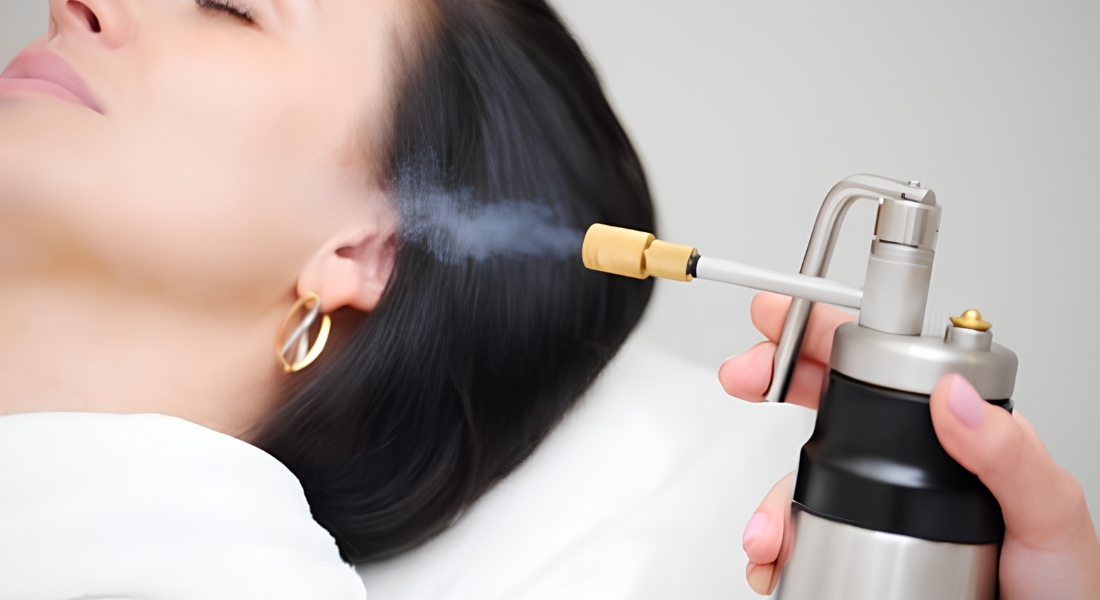
Put simply, cryotherapy uses very low temperatures to freeze a specific area of your skin. Your dermatologist may use it to treat certain unwanted or abnormal skin lesions, most commonly using liquid nitrogen, which reaches around −196°C and freezes tissue very quickly.
You may also hear terms such as cryosurgery or cryoablation used for procedures that destroy tissue by freezing. Although the principle is simple, your dermatologist needs to identify the lesion correctly and carefully control how deeply and widely the area is frozen.
Where Did Cryotherapy Begin?
To understand how the cryotherapy you may be offered today developed, it helps to go back to the 19th century. Doctors had already used cold to relieve pain, but they were beginning to explore whether much more intense cooling could also be used to treat abnormal tissue.
One of the doctors who took this idea further was British physician James Arnott, whose experiments with intense cold became an important early chapter in the development of cryotherapy.
James Arnott and the Earliest Cryotherapy Experiments
If you trace modern cryotherapy back to its beginnings, James Arnott is one of the names you are likely to encounter. During the 19th century, he experimented with ways of applying intense cold directly to specific areas of the body. His ice-and-salt mixtures produced much lower temperatures than ice alone, and he developed equipment to apply them more carefully to tissue.
For you as a modern patient, this may seem very different from liquid nitrogen treatment, but the basic idea was already similar: target specific tissue with intense cold while limiting the effect on surrounding skin. Later advances in liquefied gases made much lower treatment temperatures possible, allowing doctors to freeze tissue more effectively.
The Breakthrough That Made Much Colder Treatment Possible
A major turning point came when scientists learned how to produce and store gases in liquid form, allowing doctors to reach much lower temperatures than earlier ice-and-salt methods. In 1899, New York physician Campbell White reported using liquefied air to treat various skin conditions, helping move cryotherapy towards modern practice.
Liquid air allowed doctors to freeze tissue more effectively, although producing and storing it was difficult compared with today’s equipment. This period showed that intense cold could be used to destroy unwanted skin tissue, creating the foundation for further advances in cryotherapy.
From Liquid Air to Carbon Dioxide Snow
Liquid air was not the only freezing material explored in the early days of cryotherapy. In 1907, American dermatologist William Allen Pusey reported using solid carbon dioxide, known as carbon dioxide snow, to treat skin lesions, helping establish freezing as a practical dermatological treatment.
Compared with earlier methods, carbon dioxide snow provided a more practical way to apply intense cold to skin lesions. The basic principle remains familiar today: applying intense cold to a targeted lesion, although modern liquid nitrogen treatment offers greater precision and control.
When Liquid Nitrogen Changed Everything
The biggest step towards the cryotherapy you may recognise today came with the introduction of liquid nitrogen. Boiling at around −196°C, it can freeze tissue rapidly and intensely, while its wider availability after the Second World War made it more practical for medical use.
Liquid nitrogen allowed dermatologists to create controlled freezing and treat small areas of superficial tissue without always needing surgical removal. It remains the most commonly used freezing agent in dermatology, although careful diagnosis, lesion selection and treatment depth are still essential.
How Liquid Nitrogen Entered Everyday Dermatology
The year 1950 was an important milestone in dermatological cryotherapy when H. V. Allington described using liquid nitrogen to treat skin conditions with cotton swabs soaked in the cryogen. This gave doctors a practical way to apply extremely cold temperatures directly to small skin lesions.
Although simple compared with modern equipment, the technique showed the potential of liquid nitrogen for treating conditions such as warts and seborrhoeic keratoses. Today, liquid nitrogen can be applied using methods such as a spray gun, metal probe or cotton bud, depending on the treatment needed.
From Simple Applicators to Modern Cryotherapy Equipment
Liquid nitrogen provided the extreme cold needed for cryotherapy, but doctors also needed equipment to apply it safely and accurately. In 1961, neurosurgeon Irving Cooper and engineer Arnold Lee developed a controlled cryosurgical system using liquid nitrogen, influencing later cryotherapy devices.
During the 1960s, dermatological equipment continued to improve, including liquid nitrogen spray systems and portable devices. These developments gave dermatologists better control over the treatment area, helping make cryotherapy a practical procedure for everyday skin conditions.
Cryotherapy Through the Years: A Simple Timeline
| Period | Development | Why It Mattered |
| 1840s–1850s | James Arnott experimented with ice-and-salt cooling | Helped establish deliberate intense cooling as a medical treatment |
| 1899 | Campbell White reported treating skin conditions using liquid air | Introduced liquefied gases into dermatological treatment. |
| 1907 | William Allen Pusey reported using carbon dioxide snow | Made freezing therapy more practical for dermatological lesions |
| 1950 | H. V. Allington described liquid nitrogen treatment for skin diseases | Helped establish liquid nitrogen as a practical dermatological cryogen |
| 1961 | Irving Cooper and Arnold Lee developed a controlled cryogenic probe system | Improved the ability to control tissue freezing |
| Modern practice | Spray guns, probes and applicators allow controlled liquid nitrogen treatment | Cryotherapy is routinely used for selected benign and precancerous lesions and may also be considered for selected superficial skin cancers. |
What Actually Happens to Skin When It Is Frozen?
If you have ever wondered what actually happens when your dermatologist freezes a skin lesion, the answer comes down to how extreme cold affects the cells and blood vessels in the treated area. When your skin becomes cold enough, ice crystals can form and damage cell membranes and other structures.
The thawing stage is also important, as tissue damage can continue as the area warms. Factors such as freezing temperature, duration and repeated freeze–thaw cycles influence the effect, which is why your dermatologist adjusts the technique to suit the type and depth of the lesion.
Why Is Cryotherapy Still So Useful Today?
One reason cryotherapy has remained so useful is that your dermatologist can treat many suitable skin lesions directly and relatively quickly. If you are having a small superficial lesion treated, the freezing itself may take only seconds and you will not usually need stitches. Some treatments can also be carried out without local anaesthetic, although this depends on the lesion, its location and how deeply it needs to be frozen.
Treatment can usually be carried out during an outpatient appointment, making it a practical alternative to surgical removal for suitable lesions. Its speed, accessibility and relatively compact equipment have helped make cryotherapy a familiar treatment in dermatology clinics.
Why Is Cryotherapy Still Used for Warts?
Warts are commonly treated with cryotherapy, where liquid nitrogen freezes the affected tissue. You may need more than one treatment, depending on the wart and how it responds.
A UK study involving 363 patients with hand or foot warts compared liquid nitrogen delivered by cryo-spray with treatment using a cotton wool bud. Among the patients who could be evaluated, complete clearance at three months was reported in 44% of the cryo-spray group and 47% of the cotton-wool-bud group. The study also found that warts present for six months or less were more likely to clear than longer-standing warts. This helps show why your response to cryotherapy can depend on more than simply how the liquid nitrogen is applied.
If You Have an Actinic Keratosis, When Might Cryotherapy Help?
If you have an actinic keratosis, you may notice a rough or scaly patch on an area of skin that has had a lot of sun exposure, such as your face, scalp, ears or the backs of your hands. Your dermatologist may use cryotherapy to treat an individual lesion by freezing the affected area directly.
However, your treatment may differ if you have many lesions or wider areas of sun damage. Cryotherapy treats individual spots rather than the surrounding damaged skin, so your dermatologist may recommend another treatment or a combination approach.
A 2022 review of cryotherapy for actinic keratoses supports its established role in treating individual lesions. However, when sun damage affects a wider area, your dermatologist may consider a treatment that addresses the surrounding field as well as individual keratoses.
What Else Can Cryotherapy Be Used For?
Cryotherapy can be used for more than warts and actinic keratoses, including selected benign surface lesions such as seborrhoeic keratoses and some solar lentigines. In selected low-risk cases, cryotherapy may be considered for some superficial basal cell carcinomas when surgery is not appropriate or desired, following specialist assessment. However, surgery remains the most common treatment for BCC, and non-surgical treatments may be less effective and carry a higher risk of recurrence.
Cryotherapy is not suitable for every skin mark, even if it looks harmless. Your dermatologist needs to identify the lesion correctly before treatment because different conditions can look similar but require very different approaches.
Why Does Your Skin Lesion Need Checking First?
Before any skin lesion is frozen, your dermatologist needs to be confident about what it is. This is important because cryotherapy destroys the treated tissue rather than removing an intact sample that can then be examined in a laboratory. If there is any uncertainty about the diagnosis, or if skin cancer needs to be excluded, your dermatologist may recommend a biopsy or another procedure first.
If you notice a new, changing, bleeding or unusual mark, your dermatologist should assess it properly before considering any destructive treatment.
What Can You Expect During Cryotherapy Today?
If your dermatologist recommends cryotherapy, you may naturally wonder what will happen during the appointment. The procedure itself is usually quite straightforward: liquid nitrogen is applied to the diagnosed lesion using a spray gun, metal probe or cotton bud, and you will usually see the area turn white as it freezes.
You may feel stinging, burning or intense cold during treatment, followed by redness, swelling, blistering or crusting as the skin heals. Before treatment, your dermatologist will assess whether cryotherapy is suitable for your particular skin condition and explain what you can expect. Healing time varies according to the size, depth and location of the treated area. A blister or scab may form afterwards, and some areas can take several weeks to settle fully.
How Should You Care for Your Skin After Cryotherapy?
After cryotherapy, avoid picking the scab, and do not puncture a blister unless your healthcare professional advises you to do so. Follow the aftercare instructions given by your dermatologist. Contact the clinic or your GP if pain, redness or swelling becomes worse rather than settling, or if you notice pus or other signs of infection.
What Should You Know About Cryotherapy’s Risks?
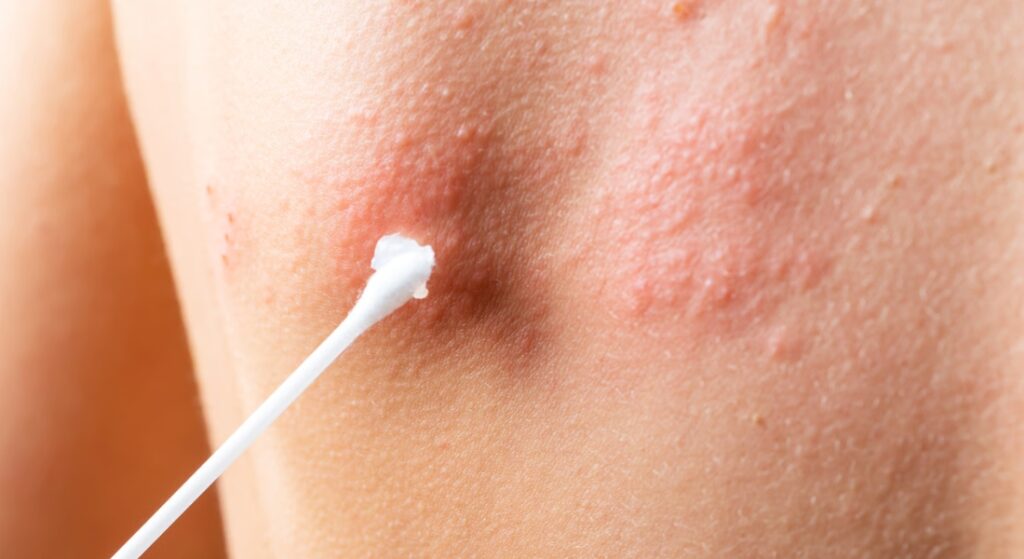
Before having cryotherapy, it is helpful to know what your skin may look and feel like afterwards and which side effects are possible. You may experience pain, redness, swelling, blistering or crusting, while changes in skin colour can sometimes persist, particularly in darker skin tones.
Scarring can occur, particularly after deeper freezing, while infection is uncommon but possible. If a superficial nerve is affected, temporary numbness may develop, with sensation usually returning over time. Cryotherapy may not completely remove a lesion, so your dermatologist may recommend repeat treatment or another approach.
Frequently Asked Questions
1. How long does a cryotherapy appointment usually take?
Cryotherapy itself is often quick, especially when treating a small skin lesion. The exact appointment time depends on the number, size and location of the areas being treated and whether your dermatologist needs to examine them in more detail first.
2. Will I need more than one cryotherapy treatment?
You may need more than one treatment, particularly for some warts or lesions that do not clear after the first session. Your dermatologist can advise you whether repeat treatment is appropriate after assessing how the area responds.
3. How long does skin take to heal after cryotherapy?
Healing time varies depending on the size, depth and location of the treated area. Redness, swelling, blistering or crusting can occur, and some areas may take several weeks to settle fully.
4. Why is liquid nitrogen used in cryotherapy?
Liquid nitrogen reaches an extremely low temperature, allowing your dermatologist to freeze targeted skin tissue quickly and in a controlled way. When applied carefully, it can destroy targeted tissue while aiming to limit damage to the surrounding skin.
5. What skin conditions can cryotherapy treat?
Cryotherapy is commonly used for suitable lesions such as warts, actinic keratoses and seborrhoeic keratoses. Depending on the diagnosis, location and characteristics of a lesion, your dermatologist may also consider freezing for other selected superficial skin conditions.
6. Can cryotherapy cause changes in skin colour?
Yes. The treated area can become lighter or darker after cryotherapy, and pigment changes may sometimes persist. This can be particularly noticeable in darker skin tones, so your dermatologist should discuss this risk with you before treatment.
7. Can I return to normal activities after cryotherapy?
Many people can continue with their usual activities after treatment, although the area may feel sore, blister or form a scab. Follow the aftercare advice given by your dermatologist and avoid picking at the treated area while it heals.
8. Does cryotherapy hurt?
You may feel intense cold, stinging or burning while the liquid nitrogen is applied. The treated area can remain sore afterwards and may become red, swollen or blistered before gradually healing.
9. Is cryotherapy safe for every skin lesion?
No. Your dermatologist needs to identify a lesion correctly before freezing it because cryotherapy destroys the treated tissue and usually does not leave a specimen available for laboratory examination. A new, changing, bleeding or unusual skin mark should therefore be assessed before any destructive treatment.
10. What are the risks of modern cryotherapy?
Possible effects include pain, redness, swelling, blistering, crusting and temporary or persistent changes in skin colour. Scarring can also occur, particularly with deeper freezing, and the risk of pigment changes may be more relevant if you have darker skin.
Final Thoughts: What Does Cryotherapy’s History Mean for You Today?
If you have cryotherapy today, it may be surprising to think that the treatment can be traced back to experiments involving ice and salt more than a century ago. The equipment your dermatologist now uses is far more precise, but the basic idea remains remarkably similar: carefully controlled cold is used to target a particular area of unwanted or abnormal skin tissue.
What matters most for you, however, is not simply whether a lesion can be frozen. Your dermatologist first needs to establish what the lesion is and whether cryotherapy is the most appropriate option, because some skin changes may need a biopsy or a different form of treatment.
If you’re considering cryotherapy treatment in London, you can get in touch with us at London Dermatology Centre to have your skin assessed and discuss whether cryotherapy may be suitable for you.
References
- Gage, A.A. (1998) ‘History of cryosurgery’, Seminars in Surgical Oncology, 14(2), pp. 99–109. Available at: https://pubmed.ncbi.nlm.nih.gov/9492880/
- Wells, H. and Abdullah, A. (2022) ‘H11: A chilling history of cryotherapy’, British Journal of Dermatology, 187(S1), p. 189. Available at: https://academic.oup.com/bjd/article-abstract/187/S1/189/6700543
- Arisi, M., Guasco Pisani, E., Calzavara-Pinton, P. and Zane, C. (2022) ‘Cryotherapy for actinic keratosis: Basic principles and literature review’, Clinical, Cosmetic and Investigational Dermatology, 15, pp. 357–365. Available at: https://pmc.ncbi.nlm.nih.gov/articles/PMC8906699/
- Ahmed, I., Agarwal, S., Ilchyshyn, A., Charles-Holmes, S. and Berth-Jones, J. (2001) ‘Liquid nitrogen cryotherapy of common warts: Cryo-spray vs. cotton wool bud’, British Journal of Dermatology, 144(5), pp. 1006–1009. Available at: https://academic.oup.com/bjd/article-abstract/144/5/1006/6690833
- Mokbel, R., Kodresko, A., Mokbel, K., Ghazal, H., Trembley, J. and Jouhara, H. (2025) ‘Cutaneous cryosurgery in dermatology: Evolving principles and clinical applications for benign, premalignant, and malignant lesions’, In Vivo, 39(2), pp. 577–612. Available at: https://pmc.ncbi.nlm.nih.gov/articles/PMC11884497/