



Laser dermatology has transformed the way you can treat skin concerns such as pigmentation, scarring, redness, and overall skin rejuvenation. Over time, laser technology has become more precise, more targeted, and significantly safer for a wider range of skin types, allowing you to benefit from more controlled and effective treatments.
As you move into 2027, laser systems are expected to become even more advanced, offering improved accuracy, reduced downtime, and better clinical outcomes for you. These developments are being driven by innovations in energy delivery systems, artificial intelligence integration, and a deeper understanding of skin biology, all of which help refine how treatments are performed.
What is particularly exciting is how laser treatments are becoming more personalised for you. Instead of a one-size-fits-all approach, modern systems are increasingly able to adapt settings based on your individual skin type, condition, and treatment goals, helping to optimise safety and results.
Overall, this evolution is making laser dermatology more accessible, more comfortable, and more effective for you than ever before, with ongoing research continuing to shape the future of aesthetic and medical skin treatments.
Smarter Laser Systems with AI Integration
Artificial intelligence is beginning to play an important role in laser dermatology by helping guide treatment settings more precisely. If you are considering laser treatment, you should know that researchers are exploring how AI systems may analyse skin characteristics and treatment information to support clinicians when planning laser parameters and personalising treatment.
As you move into 2027, AI-assisted laser systems are expected to become more refined, helping reduce the risk of over-treatment or under-treatment. This can improve safety, enhance consistency, and support more controlled delivery of laser energy tailored to your individual skin needs.
With these advancements, you may experience more predictable results and a lower risk of complications. However, your clinician will continue to play the key role in overseeing treatment, ensuring that AI-guided recommendations are applied safely and appropriately for your specific skin condition and goals.
Improved Safety for Skin of Colour
One of the most important advancements in laser dermatology is improved safety for darker skin tones. If you have a medium to deep skin tone, you should know that earlier laser systems sometimes carried a higher risk of pigmentation changes, such as post-inflammatory hyperpigmentation, due to less precise energy control.
Emerging AI-assisted systems may help clinicians analyse skin characteristics, support treatment planning and select more appropriate parameters. However, laser settings still require careful clinical judgement, particularly when treating darker skin tones or conditions with a higher risk of pigmentary complications. This helps reduce the risk of unwanted pigmentation changes and supports safer, more controlled treatment delivery tailored to your individual skin type.
As you move into 2027, you can expect more inclusive laser technologies that are suitable for a wider range of skin tones. These improvements aim to provide safer and more effective results for you, regardless of skin type, while still requiring careful assessment and expertise from your treating clinician to ensure optimal outcomes.
Evidence Note:
Laser treatment in darker skin tones requires careful selection of wavelength, fluence, pulse duration and treatment density because higher epidermal melanin can increase the risk of post-inflammatory hyperpigmentation and other pigmentary changes. Research and clinical reviews show that laser and light treatments can be effective in skin of colour, but outcomes depend heavily on appropriate device selection and conservative, individualised treatment parameters. For you as a patient, this means the newest device is not automatically the safest choice; specialist experience with your skin type remains essential.
Better Post-Treatment Recovery Products
Post-laser skincare is also evolving alongside advances in laser technology. If you undergo laser treatment, you should know that new medical-grade skincare products are being developed to support your skin during the healing process and reduce inflammation more effectively.
These formulations are designed to help your skin recover faster while also protecting and maintaining the results of your treatment. As you move into 2027, post-procedure care is increasingly being recognised as an essential part of the overall treatment plan, rather than something secondary.
Aftercare is becoming more sophisticated, with a stronger focus on improving comfort, supporting skin barrier repair, and enhancing long-term outcomes. While appropriate post-treatment products may support comfort and skin recovery your clinician will guide you on the most appropriate aftercare routine tailored specifically to your skin type and the laser procedure you have received.
Faster Healing and Reduced Downtime
Modern laser technology is increasingly focused on reducing recovery time and making treatments more convenient for you. If you undergo laser dermatology procedures, you should know that fractional laser systems work by treating only a portion of your skin at a time, while leaving surrounding tissue intact. This helps your skin heal more quickly and efficiently.
As you move into 2027, further refinements in laser precision are expected to minimise redness, swelling, and overall downtime. This means you may be able to return to your normal daily activities sooner, making treatment easier to fit into your routine with less disruption.
Shorter recovery periods are becoming a key priority in laser dermatology. While technology continues to improve healing outcomes for you, your clinician will still carefully tailor the treatment settings to ensure safety, effectiveness, and results that are appropriate for your individual skin type and concern.
Precision Targeting of Skin Concerns
Laser technology is becoming increasingly precise in targeting specific layers of the skin. If you are considering laser treatment, you should know that modern systems can focus energy more accurately on the exact depth where your skin concern exists, whether it is acne scars, fine lines, or pigmentation.
This improved precision allows you to benefit from more controlled energy delivery, which helps minimise damage to the surrounding healthy tissue. As a result, treatments can be safer, more comfortable, and deliver better cosmetic outcomes tailored to your individual skin condition.
As you move into 2027, precision targeting is expected to remain one of the most important advancements in laser dermatology. While technology continues to improve accuracy, your clinician will still carefully adjust settings based on your skin type and treatment goals to ensure the safest and most effective results for you.
How Different Laser Innovations May Improve Treatment
| Laser Innovation | What Is Changing | Potential Benefit for Patients |
| AI-Assisted Treatment Planning | Skin characteristics and treatment history may be analysed to support parameter selection | More individualised and consistent treatment planning |
| Improved Energy Delivery | Energy can be delivered with greater control to selected skin depths and targets | Better precision with less unnecessary exposure of surrounding tissue |
| Fractional Technology | Only selected microscopic areas of skin are treated while surrounding tissue remains intact | May support faster healing and reduced downtime |
| Non-Ablative Technology | Energy is delivered beneath the skin surface without removing the outer skin layer | Less invasive treatment with generally shorter recovery than ablative resurfacing |
| Combination Approaches | Different technologies or wavelengths may be included within a personalised treatment plan | Allows different skin concerns to be addressed strategically |
| Advanced Cooling Systems | Skin cooling is used before, during or after energy delivery | May improve comfort and help protect the skin surface |
| Digital Skin Analysis | Imaging tools assess characteristics such as pigmentation and texture | Supports more detailed treatment planning and monitoring |
Combination Laser Treatments
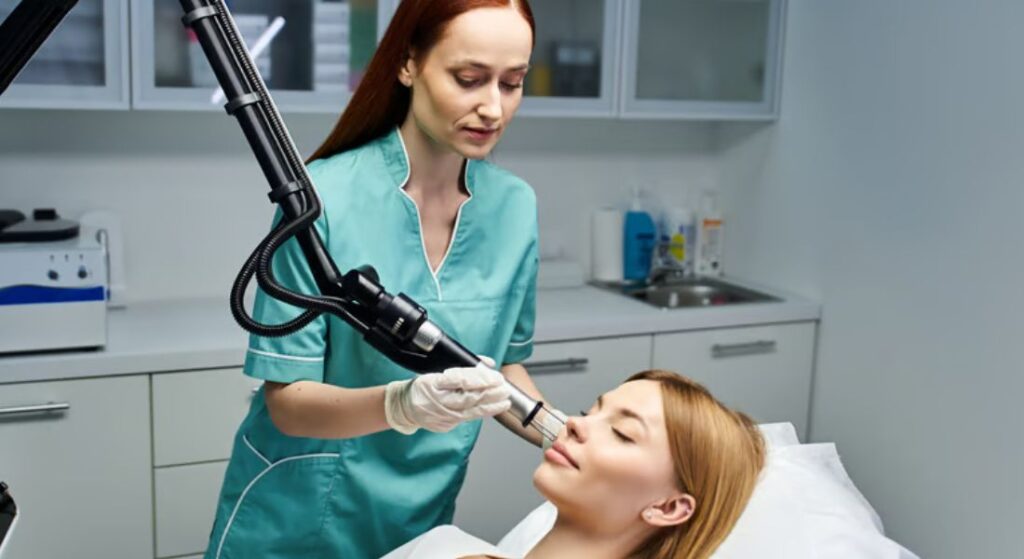
Instead of relying on a single laser type, combination treatments are becoming increasingly common in modern dermatology. If you are considering laser therapy, you should know that different wavelengths can be used together in a single treatment plan to target multiple skin concerns more effectively.
This approach allows you to address issues such as pigmentation, uneven skin texture, and redness at the same time. As a result, you may benefit from more comprehensive improvements in your skin’s overall appearance while also reducing the number of separate treatment sessions needed.
As you move into 2027, combination laser protocols are expected to expand further as technology becomes more advanced and versatile. While these treatments offer greater efficiency and improved outcomes for you, your clinician will still carefully select and combine laser settings based on your individual skin type, condition, and treatment goals to ensure safe and effective results.
Non-Ablative Laser Advancements
Non-ablative lasers treat the skin without removing its outer layer, offering a less invasive approach to skin rejuvenation. They work by delivering energy beneath the skin’s surface to stimulate collagen production while keeping the outer layer intact. Newer technologies aim to balance visible improvements with minimal downtime.
- Collagen Stimulation: Non-ablative lasers stimulate collagen beneath the skin to support smoother texture and healthier-looking skin.
- Minimal Downtime: Because the outer skin layer remains intact, recovery is generally shorter than with more aggressive ablative treatments.
- Improving Technology: Newer devices aim to deliver more effective treatment while maintaining comfort and controlled recovery.
- Personalised Treatment Settings: Laser settings can be adjusted according to your skin type, treatment area, and individual skin concerns.
Overall, advances in non-ablative laser technology may provide increasingly precise options for skin rejuvenation and texture improvement. Results and recovery can vary between individuals, so careful assessment and personalised treatment settings remain important. The aim is to achieve effective improvements while keeping treatment controlled and recovery time manageable.
Enhanced Scar Revision Technology
Laser treatments for scar management are improving significantly in modern dermatology. If you are dealing with acne scars or surgical scars, you should know that advanced fractional laser systems can target scar tissue with precision, helping to break it down while simultaneously stimulating new collagen production in your skin.
This dual action supports gradual skin remodelling, which may improve the texture, thickness, and overall appearance of scars over time. As you move into 2027, scar revision technology is expected to become even more refined, offering better blending between treated and surrounding skin for more natural-looking results.
These advancements are particularly beneficial for acne and surgical scars, where improving skin texture and uniformity can make a noticeable difference to appearance. While outcomes vary depending on your individual skin type and scar depth, your clinician will tailor treatment settings carefully to maximise safety and achieve the best possible cosmetic improvement for you.
Research Note:
Fractional laser therapy has an established role in the management of selected acne scars, although the degree of improvement varies according to scar type, depth, skin type and laser settings. A recent review of fractional CO₂ laser treatment reported improvement ranges commonly around 30% to 70% across the studies reviewed, while also identifying erythema, swelling and post-inflammatory pigmentation as recognised adverse effects. For you, this means laser scar treatment can provide meaningful improvement, but several sessions and a personalised treatment plan may be required.
Pigmentation Treatment Improvements
Treating pigmentation remains one of the most common and important applications of laser dermatology. If you are concerned about uneven skin tone or dark patches, you should know that newer laser systems are becoming more precise at targeting excess melanin while protecting the surrounding healthy skin.
Improved laser precision may help achieve a more even skin tone while reducing unnecessary exposure of surrounding tissue. However, treatment risks still vary according to your skin tone, the underlying condition, wavelength, energy settings and operator experience. Pigmentation problems such as post-treatment darkening or rebound pigmentation can still occur, which is why careful assessment and individualised treatment settings remain essential.
As you move into 2027, pigmentation control continues to be a key focus in laser research and development. While outcomes depend on your individual skin type and the underlying cause of pigmentation, your clinician will carefully select and adjust laser settings to ensure treatment is both safe and effective for your specific condition.
Vascular Laser Innovations
Vascular lasers are commonly used to treat skin redness, broken capillaries, and conditions such as rosacea. If you experience facial redness, you should know that recent advances in wavelength control are improving how precisely these lasers can target blood vessels beneath the skin without affecting surrounding tissue.
As you move into 2027, these technologies are expected to become even more effective, with fewer side effects and improved consistency in reducing visible redness. This may allow you to achieve clearer, more even-toned skin with better comfort during and after treatment.
These improvements also support safer treatment across a wider range of skin types. While results can vary depending on your individual condition, your clinician will adjust laser settings carefully to ensure the treatment is both safe and optimised for your specific vascular concerns.
Improved Cooling Systems
One of the key factors affecting comfort during laser treatments is heat. If you are considering laser therapy, you should know that new cooling technologies are being developed to better protect your skin during procedures by managing temperature more effectively.
These systems help reduce discomfort, minimise pain, and lower the risk of thermal damage to surrounding tissue. As a result, your treatment experience can become more tolerable, even during more intensive laser sessions.
As you move into 2027, continued improvements in cooling technology are expected to make laser procedures more comfortable and safer for you. While these advancements enhance patient comfort, your clinician will still carefully control treatment settings to ensure your skin receives the appropriate level of energy for effective and safe results.
Greater Customisation of Treatments
Laser settings are increasingly being customised based on your skin type, age, and treatment goals. If you are considering laser treatment, you should know that this personalised approach helps improve both safety and the quality of your results by ensuring the procedure is tailored specifically to your skin’s needs.
As you move into 2027, more clinics are expected to use advanced diagnostic tools before selecting laser parameters. These tools can help your clinician better understand your skin characteristics, allowing for more precise adjustment of energy levels, depth, and treatment intensity.
Customisation is becoming increasingly important in laser dermatology While technology continues to improve precision and consistency, your clinician will remain central in designing and overseeing your treatment plan to ensure it is safe, effective, and appropriate for your individual skin type and goals.
Shorter Treatment Sessions
Advances in laser technology are making treatment sessions faster and more efficient. If you are considering laser dermatology, you should know that improved pulse delivery systems allow clinicians to treat larger areas of skin in less time while maintaining precision and effectiveness.
As you move into 2027, these innovations are expected to further reduce the duration of laser procedures, making them more convenient and easier to fit into your schedule. This means you may spend less time in the clinic while still achieving high-quality results.
The aim of these developments is to improve treatment efficiency without compromising precision, safety or clinical outcomes. While technology continues to enhance speed and performance, your clinician will still carefully control all settings to ensure your treatment remains safe, accurate, and tailored specifically to your skin type and condition.
Laser Use in Skin Rejuvenation
Laser skin rejuvenation remains one of the most common cosmetic applications in dermatology. If you are considering these treatments, you should know that they are widely used to improve fine lines, uneven texture, and overall skin quality by stimulating collagen production and encouraging skin renewal.
As you move into 2027, new laser technologies are expected to deliver more natural-looking results with a reduced risk of over-treatment. This supports a more gradual and balanced improvement in your skin, rather than dramatic or artificial-looking changes.
Rejuvenation treatments continue to evolve, with a stronger focus on long-term skin health and subtle enhancement. While these advances improve outcomes, your clinician will still carefully tailor your treatment plan to ensure results are appropriate for your skin type, ageing pattern, and aesthetic goals.
Integration with Digital Skin Analysis
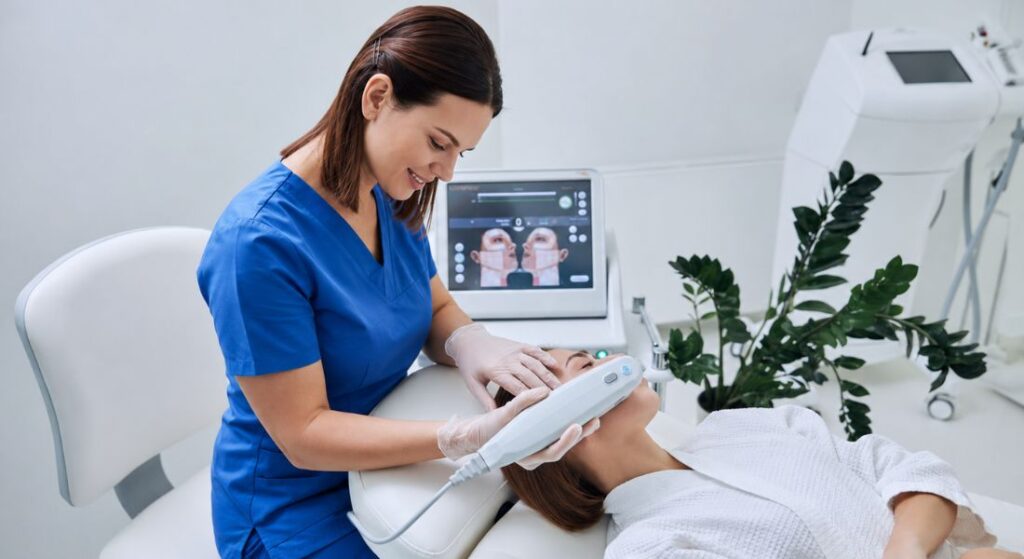
Digital imaging systems are increasingly being used before laser treatment to analyse your skin condition in greater detail. If you are planning a laser procedure, you should know that these tools help your clinician assess pigmentation, texture, and other skin characteristics more accurately before selecting the most appropriate treatment settings for you.
As you move into 2027, AI-powered analysis is expected to further enhance this process by identifying subtle or hidden skin concerns that may not be immediately visible during a routine examination. This can support more targeted and personalised laser treatments tailored specifically to your skin’s needs.
Technology is steadily improving diagnostic precision in dermatology. While these systems provide valuable insights, your clinician will continue to make the final treatment decisions, ensuring that all findings are interpreted in the context of your individual skin type, history, and overall treatment goals.
Reduced Risk of Side Effects
Safety improvements are one of the most important developments in laser dermatology. If you are considering laser treatment, you should know that modern systems offer much better energy control, which helps reduce the risk of side effects such as burns, pigmentation changes, and scarring.
As you move into 2027, laser technology is expected to become even safer when used correctly across all skin types. These advancements are driven by improved precision, real-time monitoring systems, and better understanding of how different skin types respond to energy-based treatments.
Safety remains a top priority in innovation. While technology continues to enhance protection and predictability, your clinician will always play the key role in adjusting settings and ensuring that your treatment is delivered in a controlled, appropriate, and safe manner tailored specifically to your skin.
Clinical Safety Tip: Laser Treatment Is Not One-Size-Fits-All
Before laser treatment, your clinician should consider:
- your skin tone and tendency to develop pigmentation;
- the exact condition being treated;
- recent sun exposure or tanning;
- previous reactions to laser or energy-based treatments;
- current medicines and active skin conditions;
- whether a test area or conservative initial setting is appropriate.
Laser treatment can cause redness, swelling, pigmentary change and, less commonly, infection or scarring. An NHS patient leaflet on laser treatment for pigmented marks notes that hyperpigmentation is more likely in people who tan easily or have darker skin, and that hypopigmentation can occasionally persist.
Expanding Use in Medical Dermatology
Laser treatments are not limited to cosmetic procedures; they are also widely used in medical dermatology. If you are managing a chronic skin condition, you should know that lasers may be used as part of treatment plans for conditions such as psoriasis, vitiligo, and persistent skin redness, depending on your individual case.
Research continues to explore new therapeutic applications for laser technology, with the aim of improving symptom control, reducing disease activity, and enhancing overall skin health. As you move into 2027, these developments may gradually expand the range of conditions that can be supported with laser-based therapies.
Medical use of lasers is steadily growing, reflecting ongoing advances in both technology and clinical understanding. While these treatments can offer benefits in selected cases, your dermatologist will carefully assess your condition to determine whether laser therapy is appropriate and how it can best be integrated into your personalised treatment plan.
Long-Term Skin Quality Improvement
Modern laser treatments are increasingly focused on improving long-term skin health rather than only providing short-term correction. If you are considering laser therapy, you should know that many treatments work by stimulating collagen production deep within your skin, which supports gradual structural improvement over time.
This means that your results may continue to develop for several months after your treatment session, as your skin naturally rebuilds and remodels itself. As you move into 2027, long-term benefits are expected to become more predictable due to improvements in laser precision, energy delivery, and treatment planning.
Sustained improvement is a key goal in modern laser dermatology. While technology plays an important role in enhancing outcomes, your clinician will still design and adjust your treatment plan based on your individual skin type, ensuring that your results are safe, natural-looking, and long-lasting for you.
Future Research Directions
Ongoing research in laser dermatology is exploring increasingly advanced systems, including ultra-precise energy delivery and more automated treatment mapping. If you are following developments in this field, you should know that these innovations aim to make laser procedures even more accurate by tailoring treatment delivery to the specific needs of your skin.
These emerging technologies could further improve both safety and clinical outcomes in the coming years by reducing variability and enhancing precision during treatment. As you move into 2027, clinical trials continue to play a key role in testing and refining these next-generation laser systems before they are introduced into routine practice.
Research continues to push the boundaries of what laser dermatology can achieve. While these advancements are promising, your clinician will remain essential in evaluating which technologies are appropriate for you and ensuring that any treatment is applied safely and effectively based on your individual skin type and condition.
Seeking Expert Dermatology Advice

Laser treatments require careful assessment and skilled clinical execution to ensure safe and effective results. If you are considering laser dermatology, you should know that the most appropriate treatment plan for you will depend on your skin type, specific condition, medical history, and personal aesthetic goals.
As you move into 2027, laser technology will continue to advance, but expert clinical judgement will remain essential in achieving the best outcomes for you. A qualified dermatologist will evaluate your skin in detail, recommend the most suitable laser approach, and adjust treatment settings to ensure both safety and effectiveness.
While innovations are making treatments more precise and predictable, your clinician’s expertise is still the most important factor in delivering results that are tailored specifically to your individual needs and ensuring a safe treatment experience.
Myth vs Fact:
| Myth | Fact |
| The newest laser is automatically the best treatment. | The right device depends on your diagnosis, skin type, treatment goal and risk profile. |
| Laser treatment is equally safe for every skin tone. | Many skin tones can be treated successfully, but risks and suitable parameters differ. |
| Higher energy always gives better results. | Excessive energy can increase burns, inflammation, pigmentation and scarring risk. |
| One laser can treat every skin concern. | Different wavelengths and technologies target different chromophores, tissue depths and clinical problems. |
| Non-ablative lasers have no recovery period. | Downtime may be lower than with ablative resurfacing, but redness, swelling and temporary sensitivity can still occur. |
| Laser treatment permanently removes every pigmentation problem. | Some pigmentary conditions can recur, and certain conditions, such as melasma, may respond unpredictably or worsen after inappropriate laser treatment. |
Key Takeaways:
- Laser dermatology in 2027 is likely to become more precise, personalised and data-supported.
- AI may increasingly support skin analysis and treatment planning, but it does not replace an experienced clinician.
- Fractional and non-ablative technologies continue to improve the balance between effectiveness and recovery time.
- Laser treatment can be performed in a wide range of skin tones, but darker skin requires careful parameter selection because pigmentary risks remain important.
- Combination treatment plans may address multiple concerns, but more technology does not automatically mean better results.
- Fractional lasers can improve selected acne scars, but results depend on scar type, depth and individual skin characteristics.
- Digital skin analysis, treatment mapping and monitoring technologies are promising areas, although some remain emerging rather than routine.
- Safe outcomes still depend on correct diagnosis, appropriate technology, carefully selected settings and experienced clinical supervision.
FAQs:
1. How is laser dermatology expected to change in 2027?
Laser dermatology in 2027 is expected to become more precise, safer, and highly personalised. Advances in AI, energy delivery systems, and skin analysis will improve treatment outcomes. These developments will make procedures more effective with less downtime.
2. How does AI improve laser skin treatments?
AI helps analyse your skin type and condition before treatment to recommend the most suitable laser settings. This reduces the risk of over-treatment or under-treatment. In 2027, AI-guided lasers are expected to deliver more consistent and predictable results.
3. Are laser treatments becoming safer for all skin types?
Laser treatment options are becoming more adaptable for a wider range of skin tones, but safety still depends on the technology used, wavelength, treatment settings and clinician experience. Darker skin can carry a higher risk of pigmentary change, so careful assessment and conservative, individualised parameters remain important.
4. Will laser treatments have less downtime in the future?
Yes, newer fractional and non-ablative lasers are designed to minimise damage to surrounding tissue. This helps the skin heal faster and reduces redness and swelling. By 2027, downtime is expected to be significantly shorter for many procedures.
5. How precise are modern laser treatments becoming?
Laser technology is now able to target specific layers of the skin with much greater accuracy. This improves treatment of concerns like acne scars, pigmentation, and fine lines. Precision delivery also helps protect surrounding healthy tissue.
6. What are combination laser treatments?
Combination laser treatments use different wavelengths in a single session to address multiple skin concerns. This may include pigmentation, redness, and skin texture improvements at the same time. It offers more efficient and comprehensive results.
7. How do lasers help with scar treatment?
Laser treatments break down scar tissue while stimulating collagen production in the skin. This helps improve texture and blend scars with surrounding tissue. In 2027, advancements are expected to further enhance scar revision results.
8. Are laser treatments painful?
Modern laser systems often include advanced cooling technologies to reduce discomfort during treatment. While some sensations may still be felt, pain levels are generally much lower than before. Future innovations are expected to make procedures even more comfortable.
9. How is recovery after laser treatment improving?
Recovery is improving due to gentler laser technologies and better post-treatment skincare products. These help reduce inflammation and support faster healing. As a result, patients can often return to normal activities sooner.
10. Will laser dermatology continue to improve after 2027?
Yes, ongoing research is exploring even more advanced laser systems and automated treatment technologies. These developments aim to improve safety, precision, and long-term skin health. Laser dermatology is expected to remain a rapidly evolving field.
Final Thoughts: The Future of Laser Dermatology in 2027
Laser dermatology is clearly moving towards a more intelligent, precise, and patient-centred future. With advances in AI, improved safety across all skin types, and faster recovery times, treatments in 2027 are set to feel more accessible and comfortable than ever before.
What stands out most is the shift from standardised procedures to fully personalised care. You are no longer looking at a one-size-fits-all approach, but rather treatments that are carefully tailored to your skin type, concerns, and long-term skin health goals. This not only improves results but also enhances safety and confidence in the process.
As technology continues to evolve, laser treatments will likely become an even more integral part of both cosmetic and medical dermatology, offering long-lasting improvements with minimal disruption to your daily life. If you would like to book a consultation with one of our Dermatologist in London, you can contact us at the London Dermatology Centre.
References:
- Mar, K., Khalid, B., Maazi, M., Ahmed, R., Wang, O.J.E. and Khosravi-Hafshejani, T. (2024) ‘Treatment of post-inflammatory hyperpigmentation in skin of colour: a systematic review’, Journal of Cutaneous Medicine and Surgery, 28(5), pp. 473–480. Available at: https://pubmed.ncbi.nlm.nih.gov/39075672/
- Kashetsky, N., Feschuk, A. and Pratt, M.E. (2024) ‘Post-inflammatory hyperpigmentation: a systematic review of treatment outcomes’, Journal of the European Academy of Dermatology and Venereology, 38(3), pp. 470–479. Available at: https://pubmed.ncbi.nlm.nih.gov/37843491/
- Levy, T., Lerman, I., Waibel, J., Gauglitz, G.G. et al. (2025) ‘Expert consensus on clinical recommendations for fractional ablative CO₂ laser in facial skin rejuvenation treatment’, Lasers in Surgery and Medicine, 57(1), pp.15–26. Available at: https://pmc.ncbi.nlm.nih.gov/articles/PMC11776446/
- Ptaszek, B., Czernecka, M. and Podsiadło, S. (2025) ‘The use of a fractional laser in acne scar treatment: a systematic review’, Life, 15(6), p. 915. Available at: https://www.mdpi.com/2075-1729/15/6/915
- Clementi, A., Cannarozzo, G., Amato, S., Zappia, E., Bennardo, L., Michelini, S., Morini, C., Sannino, M., Longo, C. and Nisticò, S.P. (2024) ‘Dye laser applications in cosmetic dermatology: efficacy and safety in treating vascular lesions and scars’, Cosmetics, 11(6), p.227. Available at: https://www.mdpi.com/2079-9284/11/6/227