


If you’ve been researching scar treatment options, you’ve probably noticed that laser resurfacing and RF microneedling keep coming up as two of the most popular choices. You might have even reached the point where you’re wondering which one actually works better for your specific type of scarring, your skin tone and your goals.
I know it can be confusing when you hear different opinions from clinics, online reviews and before-and-after photos. That’s exactly why I’ve written this guide to walk you through the differences in a simple, practical and honest way, so you can feel more confident about choosing the best approach.
Let’s start by breaking down the core technologies, because understanding this part makes everything else easier.
How Laser Resurfacing Works
Laser scar treatment works by using controlled light energy to remove damaged skin and stimulate new collagen production beneath the surface. Lasers can target tissue with remarkable precision, which is why dermatologists have trusted them for decades.
There are two main types of lasers used for scars: ablative and non-ablative. Ablative lasers, like CO₂ and Er:YAG, vaporise microscopic columns of skin, promoting rapid collagen remodelling and visibly reducing scar depth. They are more intense but often deliver transformative results.
Non-ablative lasers, such as 1,550 nm and 1,927 nm fractional devices, heat the deeper layers without removing the surface. This encourages collagen production with gentler downtime and a lower risk of side effects, making them suitable for patients seeking milder treatments.
How RF Microneedling Works

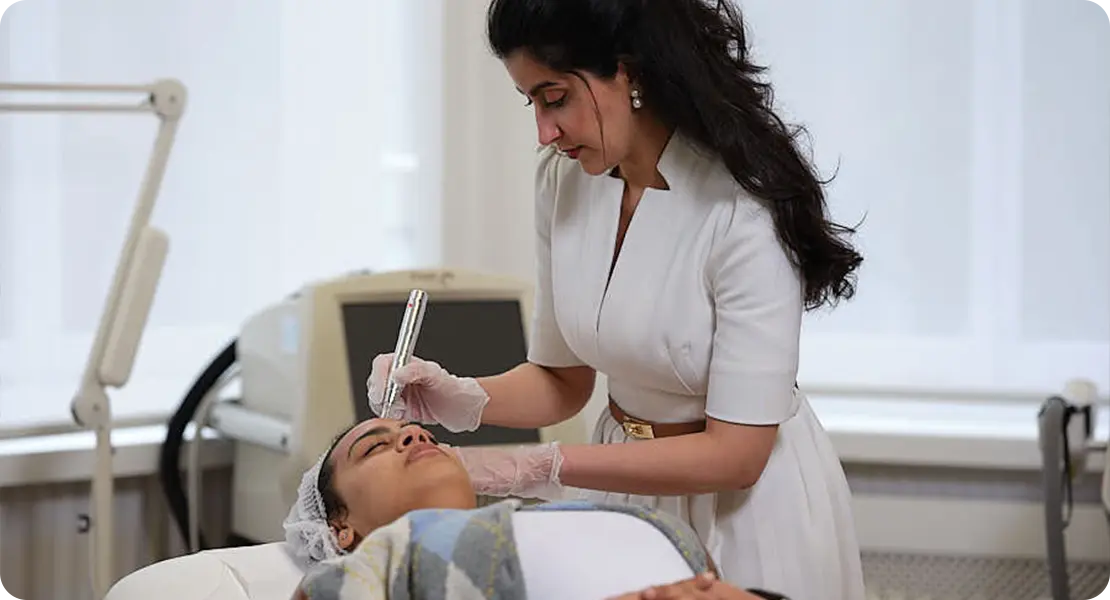
RF microneedling is a different approach entirely. Instead of light energy, it uses a combination of mechanical micro-needles and radiofrequency heat.
The device creates hundreds of microscopic channels in your skin. Once the needles are inside the deeper layers, controlled heat is delivered directly into the dermis. This stimulates collagen and elastin from within, without disturbing the surface as much as many laser treatments do.
When you hear brands like Morpheus8, Secret RF, or Sylfirm X, these are all forms of RF microneedling designed to remodel scar tissue more precisely.
What makes RF microneedling so popular in 2025–2026 is that it works brilliantly on a wider range of skin tones, including deeper tones that may not tolerate certain lasers as well. It also tightens and firms the skin at the same time, which is a bonus if your scars come with associated skin laxity.
Key Differences Between Laser Resurfacing and RF Microneedling
You might assume that both treatments provide similar results because they are both used for scars, but that isn’t the case. They work very differently underneath the surface.
Here’s the easiest way to think about it:
Laser = Surface + shallow-to-mid depth remodelling
RF Microneedling = Mid-to-deep dermal remodelling
Both stimulate collagen, but they do so in different layers and through different mechanisms. That’s why dermatologists often combine them rather than treating them as competitors.
Instead of giving you a generic comparison chart, I want to take you through the differences in a way that lets you picture what you’ll experience as a patient.
1. Depth of Action: Laser treatments strongly affect the epidermis and the top-to-mid dermis. RF microneedling reaches deeper into the dermis, sometimes up to 4–5 mm depending on the device. This matters because deeper scars need deeper stimulation.
2. Heat Distribution: Lasers beam heat from the outside in. RF delivers heat from the inside out. That’s why RF microneedling causes less surface trauma, yet still produces strong collagen remodelling.
3. Skin Tone Suitability: Lasers, especially ablative ones, can pose a pigmentation risk for darker skin tones. RF microneedling is safer across all tones because it bypasses the surface layer. This is one of the biggest advantages for people with Fitzpatrick skin types IV–VI in 2025–2026.
4. Downtime Profile: Ablative lasers often involve crusting, peeling and redness for several days. RF microneedling causes swelling and redness but usually no peeling. If you need to return to work quickly, RF might feel more practical.
5. Texture vs Tightening: Lasers excel at resurfacing and smoothing texture. RF excels at tightening and lifting as well as remodelling deeper scars.
Many patients want both, which is why combination treatment is now so common.
Which Types of Scars Respond Best to Laser Resurfacing?
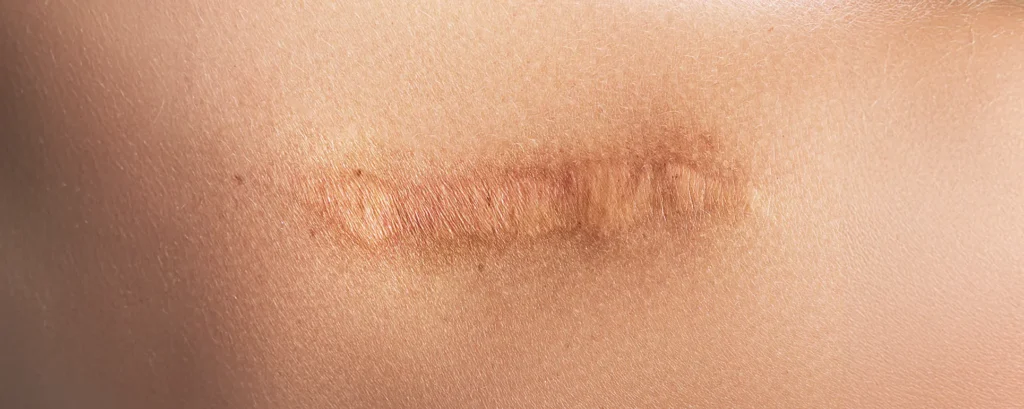
If your scars sit closer to the surface or have a strong texture component, you may find that laser resurfacing gives you the most noticeable improvement. Lasers directly exfoliate and re-level the skin, which can smooth edges and reduce visible roughness.
You might benefit most from laser if your scars fall into these categories:
1. Shallow Atrophic Scars: These scars dip slightly but don’t extend too deep. Lasers remove surface irregularities and soften the transition between normal and scarred skin.
2. Boxcar Scars with Defined Edges: If the edges of your scars are sharp rather than sloped, ablative lasers can physically break down those edges and smooth the outline.
3. Pigmented Scars: Lasers can simultaneously improve colour imbalance something RF microneedling doesn’t do.
4. Blended Acne Marks + Texture: If you have a mix of scars and rough texture, a fractional CO₂ or Er:YAG laser is often a powerful way to reset the surface.
5. Surgical or Trauma Scars with Surface Irregularity: These often respond extremely well to fractional laser sessions that precisely remove the uneven surface layer.
Lasers are also useful when you want noticeable improvement in fewer sessions, even if the downtime is a bit longer.
Which Types of Scars Respond Best to RF Microneedling?
RF microneedling shines when scars sit deeper or when your skin tone makes you less suited to aggressive laser resurfacing. If you have deeper atrophic scars, especially those with tethering, RF microneedling can sometimes achieve more dramatic remodelling.
You may find RF microneedling ideal if your scars match these situations:
1. Rolling Scars: These scars create a wavy appearance because they sit deeper and are often tethered. RF microneedling can reach the necessary depth to remodel them.
2. Ice-Pick Scar Clusters Combined with Other Scars: Ice-pick scars themselves need separate treatments like TCA CROSS, but RF can improve the surrounding tissue so the overall texture blends better.
3. Scars With Skin Laxity: Radiofrequency heat tightens loose skin, which can make scars look less shadowed and more even.
4. Thickened or Fibrotic Scars: RF microneedling can break up dense collagen bundles, softening firm or lumpy scars that lasers sometimes struggle with.
5. Darker Skin Tones: Because the RF energy bypasses the surface, the risk of pigmentation is far lower compared to laser resurfacing.
6. When You Need Minimal Downtime: RF microneedling typically lets you return to daily life faster, which is a significant factor for many people making this choice.
Which Treatment Works Better in 2025–2026? The Real Answer
You might expect this to be a simple “Laser is better” or “RF microneedling is better” conclusion, but in clinical practice that simply isn’t how dermatologists decide. Results depend on the scar type, skin tone, your downtime tolerance and the treatment plan.
So here’s the truth you need to know:
Laser resurfacing works better when: Laser resurfacing is ideal for shallow to moderately deep scars, especially when texture and pigmentation are concerns. It delivers faster, more dramatic results, though it requires a slightly longer recovery period.
RF microneedling works better when: RF microneedling is best for deeper scars, rolling or tethered scars, and medium to dark skin tones. It also firms and tightens skin while offering short, manageable downtime.
For example, a dermatologist might loosen tethered scars with RF microneedling and then refine surface texture with a fractional CO₂ laser. In many cases, this layered approach produces a smoother finish than either treatment alone.
If you’re seeking scar treatment in London, this combination strategy is now widely recommended in advanced dermatology clinics because it addresses scars from multiple angles instead of relying on one tool.
Downtime: What You’ll Really Experience
Let me walk you through what downtime feels like for both treatments, because this is often one of the biggest deciding factors for patients.
1. Laser Resurfacing Downtime: Laser resurfacing downtime depends on the type of laser you choose. Ablative lasers, such as fractional CO₂ or Er:YAG, deliver dramatic results but require longer recovery. Redness, crusting, and peeling typically last 4–7 days, with some residual redness possibly lingering for weeks.
Non-ablative fractional lasers are gentler, causing mild redness or swelling for 24–72 hours with little to no peeling. Most people can resume social activities quickly. While ablative lasers provide more transformative results, non-ablative options offer a faster return to normal life with minimal visible downtime.
2. RF Microneedling Downtime: RF microneedling typically involves minimal downtime, making it a convenient option for many patients. Most people experience short-lived redness, mild swelling, and occasional pinpoint marks, often allowing them to return to work the next day.
Redness usually lasts for a few hours up to 48 hours, while mild swelling can persist for a day or two. Pinpoint marks may be visible for several days depending on needle depth, but there is no peeling or crusting unless combined with other treatments. This makes RF microneedling a low-disruption option for skin rejuvenation.
Pain and Comfort: What to Expect
Pain varies depending on your threshold, but most people describe RF microneedling as more tolerable than ablative laser.
Topical numbing cream is always used for both treatments, but RF often feels more like brief heat and pressure, while ablative lasers feel sharper and more intense.
Newer laser devices include advanced cooling, but RF microneedling still tends to be the more comfortable option for the average patient.
How Long Results Take to Show
Scar improvement is a slow biological process, no matter which treatment you choose. Collagen production takes months, not days.
Laser Results Timeline: Laser results develop progressively, with early improvements visible within 2–4 weeks and major changes typically occurring over 3–6 months. Skin remodelling can continue for up to 12 months, and most patients need 1–3 sessions depending on the treatment’s intensity to achieve optimal outcomes.
RF Microneedling Results Timeline: RF microneedling results appear gradually, with early improvements visible within 4–6 weeks and major changes typically emerging around 3–4 months. Skin remodelling continues over 9–12 months, and most patients require 3–6 sessions to achieve optimal results, making patience and consistency key to success.
Laser may give quicker, more noticeable changes after each session because it targets the surface as well as the deeper layers. RF builds results more gradually but produces impressive remodelling for the right scar types.
Safety Considerations in 2025–2026
In 2025–2026, both laser and RF microneedling treatments are generally very safe when performed by experienced dermatologists. However, each method has specific precautions to ensure optimal results and minimise risks.
Lasers require extra caution for medium to dark skin tones, recent sun exposure, active acne, certain medications like isotretinoin, and a history of post-inflammatory hyperpigmentation. They can also trigger herpes simplex virus, so antiviral prophylaxis may be needed.
RF microneedling is typically safer across a wider range of skin types but should be used carefully on very thin or fragile skin, areas with active infections, uncontrolled rosacea, or rare cases with metal implants. This inclusivity makes it popular among diverse patients.
Which Treatment Gives Longer-Lasting Results?
Both treatments give long-term improvement, but neither is permanent. Scars don’t return, but ageing continues, meaning collagen naturally declines.
Laser resurfacing often gives more dramatic long-term resurfacing, while RF microneedling creates deeper structural improvements that can feel more stable over time.
Combining both is what tends to produce the most durable and natural-looking results.
How Dermatologists Decide Between Laser and RF Microneedling
When evaluating your scars, dermatologists don’t immediately pick between laser or RF microneedling. They consider factors like scar type, depth, skin tone, and your healing response to determine which treatment or combination will deliver the best results safely and effectively.
They look at specific clinical factors such as:
Scar type: The type of scar whether acne, surgical, or traumatic determines which laser or treatment method will be most effective. Different scars respond differently to ablative, non-ablative, or microneedling procedures.
Scar depth: Deeper scars often require more intensive treatments, such as ablative lasers, while superficial scars can be improved with gentler, non-ablative approaches.
Skin tone: Skin tone affects the choice of laser wavelength and intensity to minimise the risk of hyperpigmentation or hypopigmentation after treatment.
Sensitivity to pigmentation: Sensitivity to pigmentation changes is critical. Patients prone to dark spots may need lower-intensity settings or alternative therapies to prevent discolouration.
Downtime tolerance: The patient’s tolerance for recovery time influences the selection of treatment. Ablative lasers usually require longer downtime, while non-ablative options heal faster.
Previous treatments: Previous treatments, including chemical peels, laser sessions, or microneedling, affect how the skin responds and guide the safe intensity and timing of new procedures.
Skin thickness: Skin thickness impacts laser penetration and effectiveness. Thicker skin may require more aggressive treatment, while thinner skin is more delicate and needs gentler approaches.
Budget and treatment plan duration: Financial considerations and the duration of the treatment plan influence the number and type of sessions that can be realistically scheduled, balancing cost with desired results.
A good practitioner doesn’t push a single device; they match the technology to your skin’s biology.
Many clinics now create a long-term scar revision plan with multiple tools, including:
Microneedling: RF (radiofrequency) microneedling uses fine needles combined with radiofrequency energy to stimulate collagen production, improve skin texture, and reduce the appearance of scars with minimal downtime.
Laser: Fractional laser resurfacing creates controlled micro-injuries in the skin to promote collagen remodelling and smooth uneven texture, suitable for both superficial and deeper scars depending on the laser type.
Subcision: It involves inserting a needle beneath tethered scars to break fibrous bands, releasing the skin and improving depressed areas such as acne scars.
TCA: TCA CROSS (trichloroacetic acid chemical reconstruction of skin scars) targets deep icepick scars by applying high-concentration acid, inducing collagen formation and gradual filling of the scar.
Fillers: Dermal fillers restore volume under depressed scars, lifting them to the level of surrounding skin. This is especially effective for rolling scars and post-traumatic indentations.
PRP: Platelet-rich plasma uses growth factors from your own blood to stimulate healing and collagen production, enhancing skin texture and complementing other scar treatments.
This tailored approach is what consistently produces the refined and natural finish most patients are looking for.
Combination Therapy: Why 2025–2026 Is All About Layered Treatment
In 2025–2026, the focus has shifted from choosing a single treatment to combining therapies strategically for optimal results. Using RF microneedling alongside laser resurfacing allows for deeper collagen remodelling while refining the skin surface, achieving better blending and natural texture.
Combination therapy also reduces shadowing, accelerates visible improvements, and lowers the risks associated with aggressive laser treatments alone. By layering treatments, clinicians can address both deep and superficial scars without over-stressing the skin.
A typical plan might start with RF microneedling, followed by subcision for tethered scars, then fractional CO₂ resurfacing six to eight weeks later, with additional RF sessions as needed.
Costs: What You Can Expect in 2025–2026
While prices vary between clinics and locations, you can generally expect cataract surgery costs to reflect both the surgeon’s expertise and the type of intraocular lens chosen. Advanced lens options or premium services may increase the overall fee, so it’s a good idea to get a detailed estimate from your provider.
Ablative fractional laser: Ablative fractional laser treatments typically cost between £500 and £1,800 per session. The higher price reflects their intensive skin-remodelling effect and the advanced technology involved, which often requires longer recovery time.
Non-ablative fractional laser: Non-ablative fractional laser sessions usually range from £300 to £900. These treatments are less invasive, targeting deeper layers without removing the surface, which reduces downtime while still promoting collagen production.
RF microneedling: RF (radiofrequency) microneedling costs about £250 to £700 per session. This method combines tiny needles with radiofrequency energy to stimulate collagen, improve skin texture, and tighten tissue, offering moderate results with minimal recovery.
RF tends to require more sessions, while ablative laser can be more expensive per treatment but fewer in number. Combination plans often offer better value because each tool contributes to the final result efficiently.
Who Should Not Have Laser or RF Microneedling?
Not everyone is a suitable candidate for laser or RF microneedling. Treatments should be delayed or avoided if there is an active skin infection, severe eczema, or dermatitis in the area. These conditions can increase the risk of irritation or complications.
Uncontrolled rosacea or very recent aggressive sun exposure can also make your skin more sensitive, reducing the safety and effectiveness of the procedure. Active cold sores are another reason to postpone treatment, as lasers and RF can trigger flare-ups.
Recent isotretinoin use requires caution, as it can make skin fragile and prone to scarring. The timing of treatment depends on your dermatologist’s advice and the duration since your last course.
How to Choose the Right Clinic in 2025–2026
Choosing the right clinic matters more than the device itself. A skilled practitioner who understands your specific needs can make all the difference in both safety and results. Look for clinics where experienced dermatologists perform or supervise treatments.
It’s important that multiple technologies are available, allowing the practitioner to select the best approach for your scar type. Authentic before-and-after photos provide insight into real outcomes and set realistic expectations.
A comprehensive treatment plan should be offered, rather than a single session. The clinic should discuss risks openly and demonstrate an understanding of different skin tones and pigmentation concerns.
FAQs:
1. What’s the main difference between laser resurfacing and RF microneedling for scars?
The biggest difference lies in how each treatment stimulates your skin. Laser resurfacing uses concentrated light to target the surface and shallow-to-mid dermis, improving texture and pigmentation, while RF microneedling delivers heat via tiny needles deep into the dermis, remodelling collagen and improving deeper scars.
2. Which scars are better treated with laser resurfacing?
If your scars are closer to the surface or have texture and pigmentation concerns, laser resurfacing usually gives the best results. Shallow atrophic scars, boxcar scars, blended acne marks, and surface irregularities from trauma or surgery respond particularly well.
3. Is RF microneedling safer for darker skin tones?
Yes, one of the advantages of RF microneedling is that it bypasses the surface layer, lowering the risk of pigmentation changes. Darker skin tones, including Fitzpatrick types IV–VI, can often tolerate RF treatments more safely than ablative lasers.
4. How long is the downtime after laser resurfacing compared to RF microneedling?
Downtime varies depending on the type of laser. Ablative lasers may involve redness, peeling, and crusting for up to a week, whereas non-ablative lasers usually require only a couple of days of mild redness. RF microneedling generally causes redness and mild swelling for 24–48 hours, making it easier to return to daily life quickly.
5. Do both treatments stimulate collagen in the same way?
Both treatments aim to boost collagen production, but they do so differently. Lasers trigger collagen by creating controlled surface injury, while RF microneedling stimulates collagen from the inside out, reaching deeper layers of the dermis.
6. Can I combine laser resurfacing and RF microneedling for better results?
Absolutely. Many dermatologists in 2025–2026 recommend a combination approach. RF microneedling can loosen deep scars, and laser resurfacing can then refine surface texture. This layered strategy often produces smoother, more natural-looking results than either treatment alone.
7. How soon will I see improvements in my scars?
Scar improvement is gradual because collagen remodelling takes time. With laser resurfacing, early changes may appear within 2–4 weeks, with major results around 3–6 months. RF microneedling typically shows early improvement in 4–6 weeks, with significant changes around 3–4 months and continued remodelling up to a year.
8. Are these treatments painful?
Both treatments use topical numbing creams to make you comfortable. Many people find RF microneedling more tolerable, feeling brief heat and pressure, while ablative lasers feel sharper and more intense despite advanced cooling systems.
9. Who shouldn’t have laser or RF microneedling?
You should avoid these treatments if you have active infections, uncontrolled rosacea, recent aggressive sun exposure, severe eczema, or very recent isotretinoin use. Pregnant patients and those with sensitive or fragile skin may need to delay treatment or seek tailored advice from a dermatologist.
10. How do I choose the right clinic for my scars?
The clinic and practitioner matter more than the device. Look for dermatologists who customise settings to your scar type, offer multiple technologies, provide realistic before-and-after photos, and create comprehensive treatment plans. A clinic that pushes a single device for everyone is a red flag.
Final Thoughts: Finding the Right Scar Treatment for Your Skin
Choosing between laser resurfacing and RF microneedling isn’t about picking the “best” treatment universally it’s about matching the right technology to your scar type, skin tone, and recovery needs. In 2025–2026, dermatologists increasingly favour a combination approach, layering RF microneedling with fractional laser resurfacing for optimal results. This strategy addresses both deep and superficial scars, enhances collagen remodelling, and delivers smoother, more natural-looking skin with manageable downtime.
If you’re looking for scar treatment in London, you can reach out to us at the London Dermatology Centre to schedule a consultation with one of our expert specialists and receive a personalised treatment plan tailored to your skin’s unique needs.
References:
1. C Yan et al. (2025) Comparative Effectiveness and Safety of Fractional Laser and Fractional Radiofrequency for Atrophic Acne Scars: A Retrospective Propensity Score Analysis, Life, 15(9), 1379. https://www.mdpi.com/2075-1729/15/9/1379
2. ȘE Măgerușan (2024) Current Understanding of Microneedling Procedures for Atrophic Acne Scars and Combined Strategies, Cosmetics, 11(6), 193. https://www.mdpi.com/2079-9284/11/6/193
3. Hendel K, Karmisholt K & Hedelund L (2023) Fractional CO₂ Laser versus Microneedle Radiofrequency for Acne Scars: Randomized Split‑Face Trial, Lasers Surg Med. https://pubmed.ncbi.nlm.nih.gov/33721385
4. Sriram R, Chandrashekar BS, Madura C, et al. (2024) Comparative Study of Fractional CO₂ Laser vs Microfractional Radiofrequency in Acne Scars, J Cutan Aesthet Surg. https://pmc.ncbi.nlm.nih.gov/articles/PMC11494830
5. Hamadani F. (2025) The Role of Fractional Radiofrequency in Long‑Term Acne Scar Revision, Aesthetic Surgery Journal. https://academic.oup.com/asj/article/45/Supplement_1/S23/7958337