



If you’re living with psoriasis, you’ll know it’s more than just a “skin condition”. It’s persistent, often unpredictable, and can affect not only your body, but your confidence, sleep, daily routine—even your mental health. And while off-the-shelf creams and general GP advice may offer some short-term relief, managing psoriasis effectively often requires something more targeted, more consistent, and more personal.
That’s where specialist dermatology really comes into its own.
Because let’s face it—when you’re stuck in a loop of flare-ups, trial-and-error treatments, and long waiting lists, it can feel like you’re constantly reacting rather than progressing. The emotional toll can be just as exhausting as the physical symptoms. You deserve more than temporary fixes—you deserve a long-term strategy and someone who truly understands what you’re going through.
In this article, we’re diving into what actually works when it comes to managing psoriasis—looking beyond basic treatments to explore how expert-led, private care can change the game for good. Whether you’re newly diagnosed or years into your journey, this is about helping you take control of your skin, your health, and your peace of mind.
Why Standard Treatments Often Fall Short
Many people start their psoriasis journey with emollients, steroid creams or tar-based ointments. These can help ease symptoms for a time, but they often don’t go far enough—especially for moderate to severe cases or for those with flare-ups that just keep returning.
These treatments are typically aimed at soothing the skin rather than addressing the root cause of the condition. While they might reduce redness, scaling or itching temporarily, they don’t prevent flare-ups or help manage the long-term nature of psoriasis. Over time, people often find themselves in a frustrating loop—relief followed by relapse—with little sense of lasting improvement.
If you’ve ever found yourself waiting weeks (or even months) to see a GP, or you’ve been handed the same prescription time and time again with little improvement, you’re not alone. The lack of continuity and limited access to specialist care can leave patients feeling stuck, dismissed, or even blamed for not “managing it properly.”

The reality is, psoriasis is a complex, immune-related condition that rarely responds well to a one-size-fits-all approach. What works for one person might be completely ineffective for another. To get real results, you need real expertise—and that starts with seeing someone who specialises in skin.
A specialist looks beyond surface-level symptoms. They assess your full health profile, identify triggers, and recommend targeted, evidence-based treatments designed specifically for your type and severity of psoriasis. That’s the level of care that makes a lasting difference.
Why Specialist Dermatology Makes All the Difference
Seeing a consultant dermatologist, especially in a private setting, opens the door to options you may not have even known existed. You’re no longer limited to the standard creams or repeat prescriptions. Instead, you’ll have access to a wide range of tailored treatment plans—based on your skin type, psoriasis severity, medical history, and lifestyle.
More importantly, private care means faster access. No long waiting lists. No rushed appointments. Just prompt, in-depth assessments with someone who knows what they’re looking at and how best to treat it.
You also benefit from continuity of care—being seen by the same expert every time, which allows for more accurate tracking of your progress and a deeper understanding of how your psoriasis behaves over time. This consistency builds trust and ensures treatments can be adjusted quickly and confidently as your condition evolves.
Specialists don’t just treat what’s visible on the surface—they consider everything from stress levels and sleep patterns to diet, family history and coexisting conditions. It’s a truly holistic approach. And the best part? It’s not just about treating flare-ups—it’s about getting on top of your psoriasis long-term. With regular monitoring and a treatment strategy that evolves with you, specialist dermatology empowers you to take control of your skin—rather than letting it control you.
What Modern Psoriasis Treatment Looks Like
So, what are the options when you’re under the care of a specialist? Here’s what you can expect beyond the usual creams:
Phototherapy (Light Treatment)
- Benefits: Non-invasive, safe, often effective when topicals fail.
- Who it’s for: People with plaque psoriasis covering larger areas or hard-to-treat spots.
Phototherapy is a clinically proven treatment for psoriasis that uses specific wavelengths of ultraviolet (UV) light to slow the rapid skin cell growth that causes scaling and inflammation. Most commonly, narrowband UVB is used, which penetrates the skin and calms the immune response without damaging surrounding tissues. It’s especially effective for people with widespread plaques or stubborn areas that haven’t responded well to topical treatments.
Treatments are typically done two to three times a week in a clinic, using a specially designed light booth or handheld device for targeted areas. Sessions are short—just a few minutes—but results can build steadily over several weeks. It’s a safe and controlled option when managed by a dermatologist, who will adjust the frequency and exposure based on your skin’s response and sensitivity.
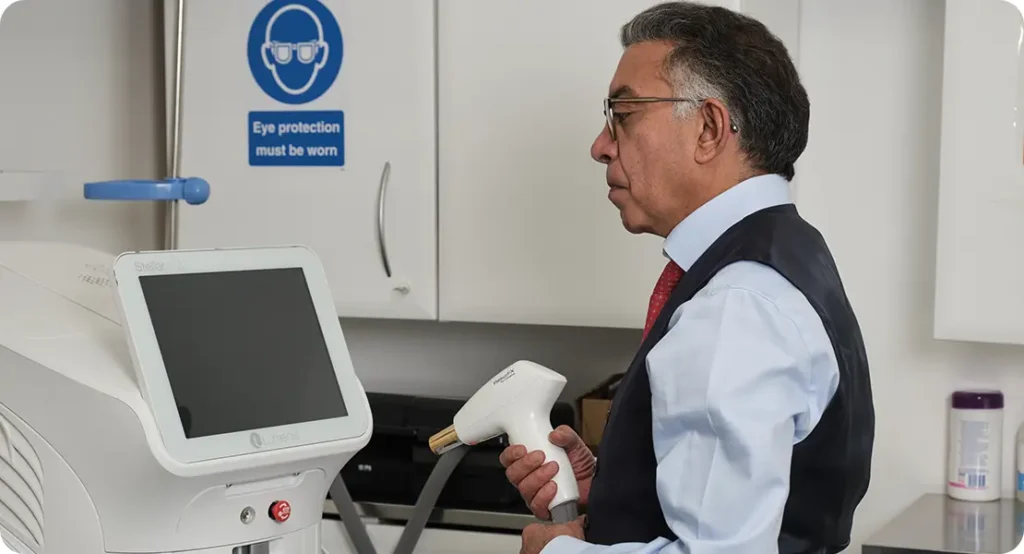
Unlike sunbeds or natural sunlight, phototherapy is medically supervised and precisely dosed to maximise results and minimise risks like burns or premature ageing. It’s also suitable for use alongside other treatments, such as creams or lifestyle modifications.
For many patients, phototherapy offers long-term relief and can significantly reduce the need for stronger medications. It’s non-invasive, doesn’t involve daily application like topicals, and is well-tolerated by a wide range of skin types.
Targeted Immune Therapies
- Benefits: Can lead to long-term skin clearance or significantly reduced flare-ups.
- Who it’s for: Those with moderate to severe psoriasis, or who haven’t responded to topicals or light therapy.
Psoriasis is not just a skin issue—it’s an immune-mediated condition. That means the underlying cause often lies deeper than the surface, in how the body’s immune system behaves. Targeted immune therapies are designed to address this root cause by modulating the immune response that triggers inflammation and rapid skin cell turnover.
These advanced therapies are typically prescribed for people with moderate to severe psoriasis or for those who haven’t responded well to topical or light-based treatments. They’re delivered through injections or tablets, depending on the treatment plan, and work systemically—helping to calm the immune system from within.
Rather than broadly suppressing immunity, as older treatments once did, these therapies are designed to be more selective, targeting specific immune pathways responsible for psoriasis activity. This means fewer side effects and a more precise impact on the condition itself.
Before starting, a dermatologist will assess your medical history, bloodwork, and overall health to ensure it’s the right option for you. Monitoring continues throughout treatment to track progress, manage side effects, and adjust dosage as needed.
With consistent use, many patients see dramatic improvements in symptoms, reduced flare-ups, and a better overall quality of life. For some, it can mean clear skin for the first time in years.
Personalised Combination Therapy
- Benefits: Tailored to individual needs and more adaptable as your condition evolves.
- Who it’s for: Anyone who needs a flexible, responsive care plan.
Many dermatologists now use combination approaches—pairing light therapy with targeted treatments or using prescription topicals alongside immune-based therapies. The idea is to fine-tune treatment to each person’s skin, lifestyle, and triggers.
This approach allows for more flexibility, especially when managing unpredictable flare-ups or transitioning between treatment stages. It also means your plan can evolve over time, based on how your skin responds and what’s working best for you.
Ongoing Monitoring and Skin Management
- Benefits: Fewer flare-ups, more stability, and peace of mind.
- Who it’s for: Everyone who wants long-term, proactive care.
One of the biggest benefits of private dermatology is the long-term care you receive. This isn’t just a one-off appointment. You’ll be monitored regularly, and your treatment plan can be adjusted as your condition changes—whether that means stepping up care during a flare, or easing off when your skin is under control.
Psoriasis is rarely static. It can evolve with the seasons, with stress, hormonal changes, and even shifts in lifestyle. That’s why consistent follow-up with a dermatologist is key. Regular check-ins allow your consultant to spot subtle changes in your skin before they become full-blown flares. They can then fine-tune your treatment to stay ahead of the condition, not just respond to it.

These appointments also give you the space to raise concerns, discuss how treatments are working, and explore new options when needed. You’re not left to self-manage for months on end, nor are you reliant on repeat prescriptions without review.
This kind of proactive care is vital for long-term success. It’s not just about clearing your skin temporarily—it’s about keeping it clear in a way that’s sustainable, manageable, and tailored to your individual journey. The result? Better skin and more confidence in your care.
Lifestyle and Trigger Management
- Benefits: Empowers you to play an active role in your own skin health.
- Who it’s for: Anyone ready to go beyond prescriptions and address root causes.
Stress, diet, smoking, alcohol, and even certain medications can all play a role in psoriasis flare-ups. A specialist can help you identify your unique triggers and develop a personalised plan that includes lifestyle guidance to help minimise flare frequency. You’re not just getting prescriptions—you’re getting holistic support.
Psoriasis is heavily influenced by what’s happening inside your body and around you. A sudden change in routine, poor sleep, or an unhealthy diet can tip the balance and set off a flare. That’s why managing psoriasis effectively often requires looking beyond the skin—and understanding how your lifestyle habits are contributing to your symptoms.
Private dermatology care gives you the time and attention needed to dig into these contributing factors. You might be guided to reduce processed foods, introduce anti-inflammatory meals, manage stress through mindfulness or therapy, or find alternatives to medications that could be worsening your skin.
Importantly, these changes aren’t forced—they’re discussed and tailored to what’s realistic and sustainable for you. This collaborative, informed approach empowers you to make choices that support your skin health daily, not just during flare-ups. It’s the kind of support that transforms treatment from reactive to preventative—and it can make a huge difference in how you feel and function, both physically and mentally.
Why Private Care Can Be a Game-Changer
Choosing private dermatology care for psoriasis isn’t just about speed—it’s about depth. You get the time, the attention, and the treatment options that simply aren’t always available through standard routes.
Below are a few things that set private care apart.
Rapid Access to Appointments and Diagnosis
One of the most frustrating aspects of managing psoriasis through standard healthcare channels is the wait. Weeks or even months for an appointment can feel endless when you’re dealing with discomfort, pain, or a visible flare-up. In private dermatology care, speed is one of the biggest advantages. You can usually be seen within days—not weeks—allowing treatment to begin far earlier and potentially preventing a mild flare from becoming more severe.

Early diagnosis can also make a massive difference. Psoriasis often overlaps with other conditions, such as eczema or fungal infections, and misdiagnosis can delay proper treatment. A consultant dermatologist is trained to spot even the subtleties of skin conditions and give a clear, accurate diagnosis from the start. This alone can save you time, money, and needless frustration.
Fast access means fewer disruptions to your routine, and more importantly, a better quality of life. Whether it’s your first flare or a long-standing condition, timely expert intervention puts you back in control—so you can stop waiting and start healing.
Longer, More Thorough Consultations
In many general appointments, especially within busy NHS settings, time is limited. You might get 10 minutes, perhaps 15 on a good day. That’s rarely enough to explore the full scope of a condition like psoriasis, which often affects more than just the skin. In contrast, private dermatology consultations are longer, more in-depth, and focused entirely on you.
A proper consultation doesn’t just skim the surface. It gives you the chance to talk about your experience—how long you’ve had psoriasis symptoms, what treatments you’ve tried, what triggers you’ve noticed, and how it affects your daily life. A good dermatologist will ask about your medical history, family background, mental health, and lifestyle habits—all of which can play a role in flare-ups and recovery.
You’ll also have the time to ask questions and actually understand the answers. No rushing. No leaving confused or unheard. That kind of clarity and attention can be a huge relief, especially if you’ve spent years feeling dismissed or stuck in a cycle of trial and error. When you’re heard, supported, and given time, your path to clearer skin becomes a lot more achievable.
Access to Cutting-Edge Therapies
Private dermatology opens up access to a wide range of advanced treatments that may not be available through your local GP or standard care pathway. Psoriasis is a complex autoimmune condition, and while creams and ointments may help with milder forms, they’re often not enough for those with moderate to severe symptoms. This is where specialist care really steps up.
Phototherapy, for instance, is a medically supervised light treatment that can reduce inflammation and slow skin cell growth. It’s not something you can do at home, and it requires expertise to be both safe and effective. Your dermatologist will guide you through the sessions, monitoring your response and adjusting as needed.
There are also advanced immune-modulating therapies designed to address psoriasis at its root, not just on the surface. These require careful evaluation, regular monitoring, and expert oversight—things you’ll only find in a specialist-led setting.
Ultimately, having access to modern options means more chances of success, fewer flare-ups, and treatments tailored to how your body actually responds. You’re not just managing symptoms—you’re treating the underlying cause in a more strategic, personalised way.
Continuity of Care with the Same Specialist
One of the biggest challenges in public healthcare systems is continuity. You might see a different doctor at every appointment, repeating your story over and over. In private dermatology care, that changes. You’ll usually see the same consultant throughout your treatment journey, which builds trust, consistency, and stronger results over time.
Continuity means your dermatologist knows your history. They remember what worked—and what didn’t. They can track your progress in real time and tweak your treatment plan based on subtle changes. That consistency leads to better care because nothing gets lost in translation.

It also creates a safe space. When you have a good relationship with your specialist, you’re more likely to be honest about symptoms, struggles, or lifestyle habits—all of which matter in psoriasis care. Whether you’re dealing with a stubborn flare, trying a new treatment, or just checking in, having someone who genuinely knows your skin and your story makes a huge difference.
In the long run, it’s this ongoing, tailored approach that helps people not only manage their psoriasis—but live more confidently with it.
And perhaps most importantly, you get to take back a sense of control. Psoriasis can feel like it’s running your life—but with the right support, it doesn’t have to.
Take the First Step Toward Better Skin
You don’t have to put up with the discomfort, the flare-ups, or the frustration of trial-and-error treatments. Specialist dermatology offers a smarter, more personalised approach—one that looks at your skin, your health, and your lifestyle as a whole.
Psoriasis isn’t something you have to “just live with.” It’s a condition that responds best to expert insight, consistent care, and a plan that’s made for you. If you’ve been feeling stuck—cycling through over-the-counter options, repeating prescriptions, or simply feeling unheard—it’s worth knowing there is another way. If you’re suffering from psoriasis, you can get in touch with us at The London Dermatology Centre to book a consultation with one of our expert dermatologists who specialise in treating the condition.
So if you’re tired of the cycle of creams and guesswork, it might be time to consider a different path. Private dermatology gives you access to quicker appointments, cutting-edge treatments, and a level of attention that simply isn’t possible in a rushed 10-minute GP slot. You’re not a case number—you’re a person with unique needs, and your skin deserves to be treated as such.
With expert-led care, modern therapies, and long-term support, managing psoriasis can become more than just possible—it can become manageable. In fact, for many patients, it can become life-changing. The first step is reaching out and having that initial consultation. From there, real, lasting progress begins.