


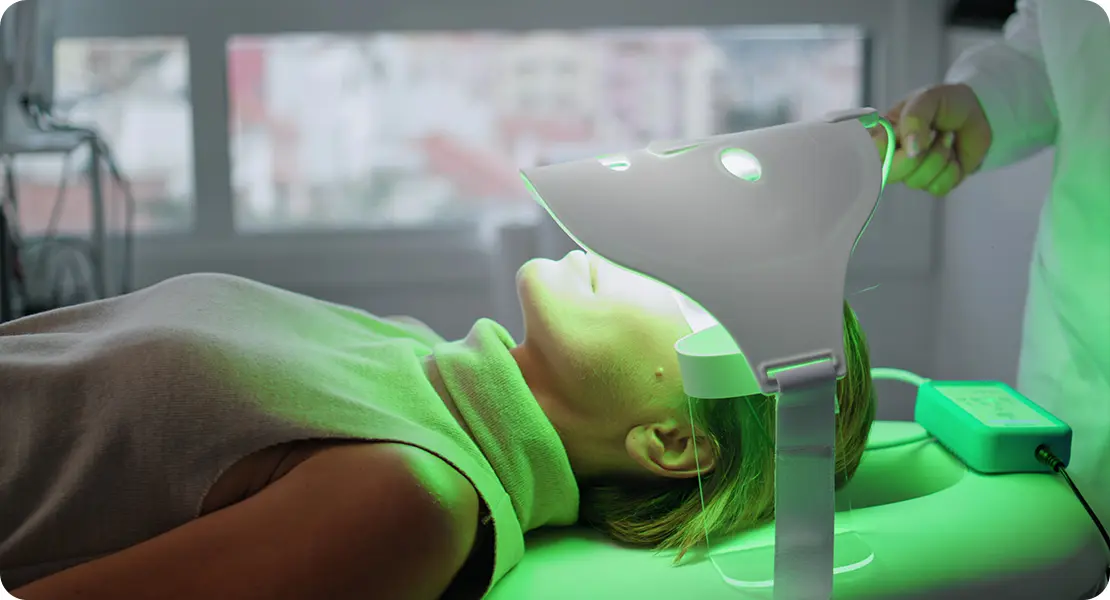
If you’ve been diagnosed with actinic keratoses, freezing (cryotherapy) is often presented as the standard treatment. While it has been used for many years, it is not always ideal, especially when sun damage is widespread or involves visible areas such as the face or scalp. In these situations, treating lesions one by one may not address the full extent of the damage.
Photodynamic therapy (PDT) is increasingly preferred by dermatologists because it treats both visible actinic keratoses and the surrounding sun-damaged skin. Rather than focusing on isolated spots, PDT targets the entire affected area, reducing the risk of new lesions developing nearby. This field-based approach often leads to more even results.
For many patients, PDT also offers better cosmetic outcomes, with less scarring and more uniform skin appearance. In this guide, we’ll explore what actinic keratoses are, how photodynamic therapy works, why it’s often chosen over freezing, and which patients are most likely to benefit from this treatment.
Understanding Actinic Keratoses
Actinic keratoses (AKs) are rough, scaly skin patches that develop after years of sun exposure. They most commonly appear on sun-exposed areas such as the face, ears, scalp, hands, and forearms. Although they may seem minor initially, they reflect underlying sun damage that should not be ignored.
- AKs develop when ultraviolet radiation causes cumulative damage to skin cells over time
- They are considered pre-cancerous, with the potential to progress to squamous cell carcinoma if untreated
- Lesions may appear as red, pink, or skin-coloured patches with a rough or gritty texture
- Some AKs are easier to feel than see, particularly in early stages
- Early identification allows for simpler and more effective treatment
Because actinic keratoses signal ongoing sun damage, monitoring and treatment are important for long-term skin health. Addressing them early reduces cancer risk and helps prevent further progression, making regular skin checks a key part of prevention.
Why Treating Actinic Keratoses Matters

Actinic keratoses are often mistaken for minor sun damage, particularly when they cause little discomfort. Despite this, they are considered pre-cancerous lesions with the potential to progress into skin cancer over time. While not every lesion becomes malignant, the uncertainty makes early management important. Treating actinic keratoses helps reduce future risk and supports overall skin health.
- Risk of progression – Actinic keratoses can develop into skin cancer, and it is not possible to predict which lesions will change.
- Early intervention benefits – Treating lesions early lowers the likelihood of malignant transformation.
- Protection of long-term skin health – Management helps prevent ongoing damage in sun-exposed areas.
- Improved skin texture – Treatment can smooth rough, scaly patches and restore healthier-looking skin.
- Cosmetic benefit – Addressing lesions on visible areas such as the face or scalp can improve appearance and confidence.
By treating actinic keratoses proactively, patients reduce cancer risk while also improving the look and feel of their skin. This dual benefit makes early treatment an important part of long-term skin care and sun damage management.
Traditional Treatment: Cryotherapy Explained
Cryotherapy, commonly referred to as freezing, is a long-established treatment used in dermatology clinics. It works by destroying abnormal skin cells through extreme cold and has been safely used for many years. The treatment is typically quick and performed during a routine appointment, making it a familiar option for many patients.
1. How Cryotherapy Works – Liquid nitrogen is applied directly to the lesion, rapidly freezing the abnormal cells. This process damages the cells so they can no longer survive or multiply.
2. Healing Process After Treatment – Following treatment, the area usually blisters or forms a scab before healing over several weeks. This reaction is expected and is part of the normal skin repair process.
3. Best Use for Isolated Lesions – Cryotherapy is particularly effective when there are only one or two actinic keratoses. It allows targeted treatment without affecting large areas of surrounding skin.
For many years, cryotherapy has been considered a first-line treatment for actinic keratoses, especially in cases with limited lesions. While it remains a valuable option, its suitability depends on the number, location, and extent of sun damage present. Your dermatologist will advise whether freezing is the most appropriate approach for your skin.
Limitations of Freezing
Cryotherapy is a commonly used and effective treatment for actinic keratoses, but it is not without limitations. While it targets visible lesions, it does not treat the broader areas of sun-damaged skin where new lesions may develop. For some patients, this approach may be less practical or desirable over time.
- Lesion-specific treatment – Freezing targets individual actinic keratoses but does not address surrounding sun-damaged skin.
- Risk of recurrence nearby – New lesions can appear close to treated areas after freezing.
- Impractical for widespread damage – Repeated cryotherapy may be unsuitable for patients with multiple lesions or extensive sun exposure.
- Potential skin changes – Pigment alteration, scarring, or delayed healing can occur, especially on the face.
- Higher risk in darker skin tones – Changes in pigmentation may be more noticeable or persistent.
These limitations highlight why cryotherapy may not be the best option for everyone. In cases of extensive or visible sun damage, alternative treatments that address larger areas of affected skin may be more appropriate.
What Is Photodynamic Therapy?
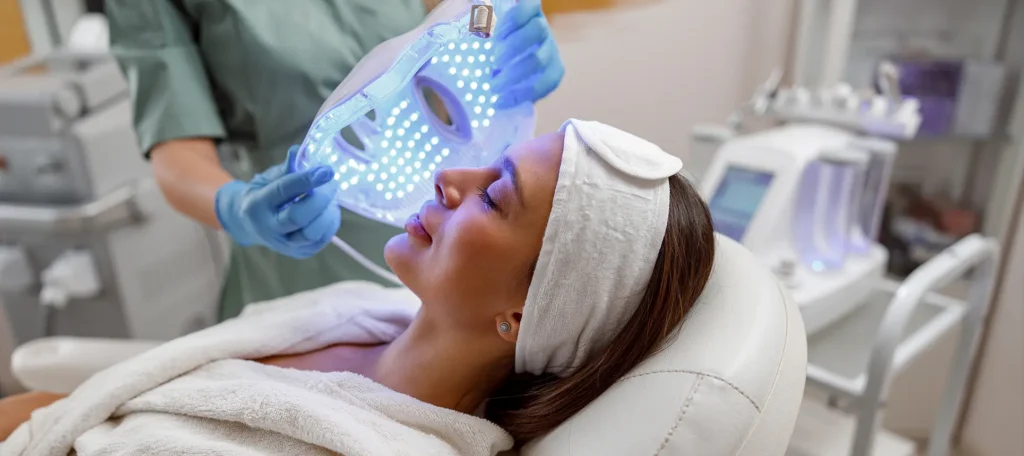
Photodynamic therapy is a treatment that uses a light-activated medication to destroy abnormal skin cells. It is designed to target both visible actinic keratoses and early sun damage that is not yet visible on the skin surface. The process begins with the application of a photosensitising cream to the affected area. This medication is absorbed more readily by damaged or precancerous cells than by healthy skin.
After an incubation period, the area is exposed to a specific wavelength of light. This activates the medication and selectively destroys the abnormal cells, while largely preserving the surrounding healthy tissue.
How Photodynamic Therapy Works Step by Step
Photodynamic therapy is a carefully controlled treatment designed to target sun-damaged and abnormal skin cells while sparing healthy tissue. The process is carried out in stages to ensure the photosensitising medication works effectively. Each step plays an important role in achieving good clinical outcomes.
- The skin is first prepared, and any thick scale or crusting is gently removed to improve medication penetration
- A photosensitising agent is applied to the treatment area and allowed to absorb during a set incubation period
- During incubation, the medication selectively accumulates in abnormal or damaged skin cells
- The treated area is then exposed to a controlled light source, activating the medication
- This activation triggers a reaction that selectively destroys the abnormal cells
Following treatment, the skin begins a natural healing process as healthy cells regenerate. This step-by-step approach allows photodynamic therapy to treat both visible lesions and underlying sun damage effectively.Top of FormBottom of Form
Why PDT Targets More Than Just Visible Lesions
Photodynamic therapy (PDT) offers a broader approach to treating sun-damaged skin. Rather than focusing only on visible lesions, it addresses the wider area at risk, which can improve long-term outcomes for certain patients.
1. Treating Field Cancerisation – PDT targets areas of skin that may look normal but contain early, invisible damage caused by sun exposure. This concept, known as field cancerisation, explains why new lesions can appear near treated areas.
2. Difference Between PDT and Cryotherapy – Cryotherapy treats individual, visible lesions by freezing them. In contrast, PDT treats the entire affected area, addressing both visible and subclinical damage.
3. Reducing the Risk of New Lesions – By treating the whole field of damaged skin, PDT reduces the likelihood of new actinic keratoses forming soon after treatment. This can lead to longer-lasting results.
For patients with extensive sun damage, this wider treatment approach can be particularly beneficial. By addressing both visible and hidden changes, PDT offers a more comprehensive strategy for managing actinic keratoses over the long term.
Cosmetic Advantages of Photodynamic Therapy
Cosmetic outcome is an important consideration when treating actinic keratoses, particularly on visible areas such as the face and scalp. Many dermatologists favour photodynamic therapy (PDT) because it treats damaged skin more evenly than lesion-by-lesion methods. Healing tends to be smoother, with fewer long-term cosmetic changes.
- PDT promotes more uniform healing compared to freezing, which can leave uneven results
- Overall skin texture and tone often improve once healing is complete
- The risk of pale spots, scarring, or uneven pigmentation is lower than with repeated cryotherapy
- PDT treats both visible lesions and surrounding sun-damaged skin, improving overall appearance
- It is especially well suited for cosmetically sensitive areas such as the face, scalp, and ears
For patients concerned about appearance as well as effectiveness, PDT offers clear cosmetic benefits. When actinic keratoses affect highly visible areas, this balance of medical and aesthetic outcomes often makes PDT the preferred choice.
Pain and Comfort During Treatment
Discomfort during photodynamic therapy is a common concern for many patients. During the light activation phase, sensations such as stinging, burning, or warmth may occur as the treatment works on damaged cells.
These sensations are usually temporary and ease quickly once the light is switched off. Clinics often use cooling methods, such as fans or cold air devices, to improve comfort during the procedure.
Most patients find photodynamic therapy manageable overall. The brief discomfort is generally outweighed by the long-term benefits of more effective treatment and improved skin appearance.
Recovery After Photodynamic Therapy
Recovery after photodynamic therapy (PDT) is a normal and expected part of the treatment process. The skin reaction reflects how the therapy works to remove damaged cells and allow healthier skin to regenerate. Understanding what to expect can help patients feel more prepared and reassured.
1. Immediate Skin Reaction – After treatment, the skin commonly becomes red and inflamed, similar to sunburn. Crusting, peeling, or mild swelling may develop over the following days.
2. Healing Timeframe – Healing typically takes one to two weeks, depending on the treated area and individual skin response. During this period, strict sun avoidance is essential to protect the healing skin.
3. Skin Appearance After Healing – Once healing is complete, many patients notice smoother, clearer, and healthier-looking skin. These cosmetic improvements are often an added benefit of PDT.
Overall, recovery from PDT is temporary and manageable for most patients. With proper aftercare and sun protection, the skin usually heals well, leaving improved texture and reduced signs of sun damage.
How PDT Compares to Freezing in Recovery
Cryotherapy commonly leads to scabbing or blistering at each individual lesion that is frozen. When multiple areas are treated, healing can vary from spot to spot and may take longer than expected. Photodynamic therapy produces a more even, field-wide reaction across the treated skin. Although redness and peeling can appear more noticeable at first, the healing process is usually more consistent.
For many patients, the final cosmetic outcome after PDT is smoother and more uniform. If appearance during recovery is a concern, careful timing and planning of treatment can make the process easier to manage.
Which Patients Benefit Most from PDT?
Photodynamic therapy (PDT) is especially helpful for patients with widespread sun damage or recurring actinic keratoses. It is designed to treat both visible lesions and the surrounding affected skin, making it a good option when multiple areas are involved. Certain patterns of skin damage are particularly well suited to this approach.
- Multiple lesions in one area – PDT is effective when several actinic keratoses are clustered together.
- Extensive sun damage – Ideal for patients with broad areas of sun-damaged skin but relatively few thick lesions.
- Recurrent actinic keratoses – Beneficial for those who continue to develop new lesions despite repeated freezing.
- Sensitive or visible areas – Often preferred for the face, scalp, or chest, where cosmetic outcomes matter.
- Individualised assessment – A dermatologist offering photodynamic therapy in London can evaluate suitability based on skin type and goals.
By addressing both existing lesions and surrounding sun damage, PDT offers a comprehensive treatment option. For the right patients, it can reduce recurrence while supporting better long-term skin health and appearance.
When Freezing May Still Be Appropriate
While photodynamic therapy (PDT) offers many benefits, cryotherapy (freezing) remains a valuable option in certain situations. The choice depends on lesion characteristics, patient preference, and medical considerations.
- Thick or heavily keratinised actinic keratoses may respond better to freezing than to PDT
- Some patients prefer cryotherapy for its speed and minimal treatment time
- PDT may be unsuitable for individuals with photosensitivity or certain medical conditions
- Freezing can be a practical choice for small, isolated lesions or when immediate treatment is needed
- Dermatologists weigh lesion type, patient health, and cosmetic considerations before recommending the most appropriate therapy
By selecting the right treatment for each patient, dermatologists can balance effectiveness, convenience, and cosmetic outcome. Both PDT and cryotherapy remain important tools in managing actinic keratoses.
Combining PDT with Other Treatments
Photodynamic therapy (PDT) can be combined with additional treatments to enhance outcomes and address varied lesion types. This tailored approach allows dermatologists to optimise care for each patient’s specific skin needs.
- Pre-treatment of thicker lesions – Cryotherapy may be used on larger or thicker actinic keratoses before PDT for better results.
- Adjunct topical therapies – Certain creams or gels can be applied alongside PDT to target remaining or superficial lesions.
- Customised treatment plans – Combining approaches allows different lesion types within the same area to be managed effectively.
- Enhanced effectiveness – Multi-modal strategies often improve overall clearance rates and reduce recurrence.
- Personalised dermatology care – Treatment is adapted to each patient’s skin type, lesion characteristics, and cosmetic goals.
Using combination therapies ensures a comprehensive and flexible approach, helping patients achieve optimal outcomes while maintaining healthy, improved-looking skin.
Safety and Side Effects of Photodynamic Therapy
Photodynamic therapy (PDT) is generally safe when performed by experienced dermatologists. Most side effects are mild and temporary, reflecting the skin’s normal response to treatment. Proper aftercare is essential to minimise risks and promote effective healing.
- Temporary redness, swelling, and mild discomfort are common and typically resolve within days
- Some patients may experience flaking or crusting as treated skin heals
- Rare complications include infection or prolonged skin sensitivity, usually related to inadequate aftercare
- Strict sun avoidance immediately following treatment is crucial to prevent additional damage
- Following post-treatment instructions carefully supports smooth recovery and optimal cosmetic and medical outcomes
With professional oversight and adherence to aftercare guidelines, PDT offers a safe, effective option for treating actinic keratoses while preserving skin appearance.Top of FormBottom of Form
Long-Term Outcomes and Prevention
Photodynamic therapy is very effective at treating existing actinic keratoses, but it does not stop new lesions from forming. Maintaining results requires ongoing sun protection and healthy skin habits.
Using broad-spectrum sunscreen every day, wearing protective clothing, and avoiding peak sun hours all help minimise the risk of recurrence. These measures are essential for long-term skin health.
Regular follow-ups with a dermatologist are equally important. They allow early detection of new or returning lesions, ensuring prompt treatment and helping maintain the overall appearance and health of your skin.
Psychological and Quality-of-Life Benefits
Dealing with multiple actinic keratoses can be stressful and frustrating, especially when lesions keep appearing over time. Photodynamic therapy helps patients feel more in control by targeting both visible spots and the surrounding sun-damaged skin. Knowing that a broader area has been treated provides reassurance and reduces the anxiety of constantly monitoring and removing individual lesions.
The improvement in skin appearance can significantly boost self-confidence, particularly for lesions located on highly visible areas like the face or scalp. Overall, PDT not only addresses the medical aspect of actinic keratoses but also enhances emotional well-being and quality of life, making patients feel proactive about their skin health.
Choosing the Right Clinic for PDT
Selecting a clinic with experience in photodynamic therapy (PDT) is key to achieving safe and effective results. Expertise in medical dermatology ensures that the procedure is tailored to your skin and managed with appropriate care.
- Specialised equipment and training – Clinics offering PDT should have the necessary technology and staff experienced in its use.
- Comprehensive consultation – A thorough pre-treatment assessment helps determine suitability, set realistic expectations, and plan recovery.
- Focus on safety and effectiveness – Expertise ensures that treatment is performed correctly and potential side effects are minimised.
- Importance for visible areas – High-quality care is especially crucial when treating facial or extensively sun-damaged skin.
- Personalised treatment plan – Clinics with experience can adapt protocols to each patient’s skin type, lesion characteristics, and cosmetic priorities.
Choosing the right clinic helps maximise the benefits of PDT while ensuring a safe, well-managed, and tailored treatment experience.
FAQs:
1. What makes photodynamic therapy (PDT) different from freezing (cryotherapy) for actinic keratoses?
Photodynamic therapy differs from cryotherapy primarily in its approach to treatment. While freezing targets individual lesions by applying extreme cold to destroy abnormal cells, PDT treats both visible lesions and the surrounding sun-damaged skin. This broader approach addresses areas of early, invisible damage that may later develop into actinic keratoses. As a result, PDT not only removes existing lesions but also helps reduce the risk of new ones forming nearby.
2. How does photodynamic therapy actually work on the skin?
Photodynamic therapy works by using a photosensitising cream that is selectively absorbed by abnormal or precancerous skin cells. After a set incubation period, a controlled light source activates the medication, triggering a chemical reaction that destroys the damaged cells. Healthy skin is largely spared during this process, allowing the treatment to target both existing lesions and underlying sun damage effectively.
3. Who is most likely to benefit from PDT?
PDT is particularly beneficial for patients with widespread sun damage, multiple clustered actinic keratoses, or recurring lesions. It is well suited for areas where cosmetic outcomes are important, such as the face, scalp, and ears. Patients with broader regions of sun-damaged skin may find PDT more convenient and effective than repeated freezing treatments, as it targets both visible and subclinical lesions.
4. What should patients expect during the PDT treatment session?
During PDT, patients may feel temporary stinging, burning, or warmth when the light source activates the photosensitising cream. These sensations are generally brief and subside once the light is switched off. Clinics often use cooling techniques such as fans or cold air devices to improve comfort during the procedure.
5. How long does recovery take after photodynamic therapy?
Recovery after PDT usually takes one to two weeks, depending on the area treated and individual skin response. The skin may become red, inflamed, or slightly swollen, and crusting or peeling can occur as part of the natural healing process. Strict sun protection is essential during this period to prevent further damage and allow proper regeneration of healthy skin cells.
6. Are there side effects or risks associated with PDT?
Photodynamic therapy is generally safe when performed by experienced dermatologists. Most side effects are mild and temporary, including redness, swelling, mild discomfort, and occasional flaking or crusting. Rare complications, such as infection or prolonged sensitivity, can occur if aftercare instructions are not followed. Careful adherence to post-treatment guidance, particularly avoiding sun exposure immediately after therapy, significantly reduces risks and supports optimal healing and cosmetic outcomes.
7. Can PDT prevent new actinic keratoses from developing?
While PDT effectively treats existing actinic keratoses and reduces the likelihood of new lesions in the treated area, it does not prevent future lesions from forming entirely. Sun-damaged skin remains susceptible to further ultraviolet damage, so ongoing sun protection, healthy skin practices, and regular dermatology follow-ups are essential.
8. How does PDT compare to cryotherapy in terms of cosmetic results?
Compared with freezing, PDT tends to produce more even and uniform healing across the treated skin. Cryotherapy can lead to blistering, scabbing, and uneven pigmentation, especially when multiple lesions are treated over visible areas. PDT addresses both the lesions and surrounding sun-damaged skin, which allows for smoother recovery and a more consistent final appearance.
9. When might freezing still be preferred over PDT?
Cryotherapy remains a useful treatment in certain situations, such as when lesions are thick, heavily keratinised, or isolated. It can be quicker and more convenient for treating single spots or when immediate intervention is needed. Additionally, PDT may not be suitable for patients with photosensitivity or specific medical conditions. Dermatologists evaluate lesion type, patient health, and cosmetic priorities to determine which treatment PDT or cryotherapy is the most appropriate for each individual.
10. How do dermatologists ensure PDT is safe and effective?
Safety and effectiveness in PDT rely on professional expertise, specialised equipment, and careful pre-treatment assessment. Dermatologists evaluate the patient’s skin, lesion characteristics, and overall health to develop a personalised treatment plan. Clinics with experience in PDT ensure proper skin preparation, accurate application of the photosensitising agent, controlled light activation, and guidance for aftercare.
Final Thoughts: Why Photodynamic Therapy Offers Comprehensive Care for Actinic Keratoses
Photodynamic therapy (PDT) provides a broader, more targeted approach to managing actinic keratoses compared with traditional freezing. By treating both visible lesions and surrounding sun-damaged skin, PDT reduces the risk of recurrence, promotes more even healing, and often delivers superior cosmetic outcomes. While cryotherapy remains useful for isolated or thick lesions, PDT is especially beneficial for patients with widespread sun damage or those seeking long-term skin health and aesthetic results. Choosing an experienced clinic ensures the treatment is safe, effective, and tailored to individual needs. If you’re thinking about photodynamic therapy in London, you can get in touch with us at London Dermatology Centre.
References:
1. Author(s) (2025) Daylight Photodynamic Therapy for Actinic Keratosis and Field Cancerization, Cancers, 17(6), 1050. https://www.mdpi.com/2072-6694/17/6/1050
2. Paradisi A, Bocchino E, Mannino M, Gualdi G, D’Amore A, Traini DO and Peris K (2025) The State of the Art in the Treatment of Actinic Keratosis and Field Cancerization: A Narrative Review, Journal of Personalized Medicine, 15(9), article 421. https://www.mdpi.com/2075-4426/15/9/421
3. Suwait Deeb AL, Chen R, Alkouz ZFM, Lai J, Liang X, Li S and Alhejairi R (2025) Comparative efficacy of photodynamic therapy versus conventional therapies for actinic keratosis: A systematic review and meta‑analysis, Photodiagnosis and Photodynamic Therapy, Elsevier. https://www.sciencedirect.com/science/article/pii/S1572100025008397
4. Improving the efficacy of photodynamic therapy for actinic keratosis: A comprehensive review of pharmacological pretreatment strategies, Photodiagnosis and Photodynamic Therapy, ScienceDirect. https://www.sciencedirect.com/science/article/pii/S1572100023004301
5. Bakirtzi K, Papadimitriou I, Vakirlis E, Lallas A and Sotiriou E (2023) Photodynamic Therapy for Field Cancerization in the Skin: Where Do We Stand? Dermatology Practical & Conceptual. https://pubmed.ncbi.nlm.nih.gov/37992384/