


Many people struggle with dry, sensitive, unpredictable skin and assume it is simply their skin type. In reality, these symptoms often point to something more specific. Damage to the skin barrier is one of the most common underlying causes of chronic skin discomfort.
When the skin barrier is compromised, even well-intentioned skincare can make things worse. Understanding how barrier damage develops, how dermatologists recognise it, and how it should be repaired properly can transform long-term skin health.
In this article, we explain what the skin barrier does, how damage shows itself, and how dermatologists approach repair in a structured, evidence-based way.
What the Skin Barrier Actually Does
Your skin barrier is the outermost defensive layer of your skin, and it plays a vital protective role. We rely on this barrier to keep moisture inside the skin while shielding you from harmful external factors. When it’s functioning well, your skin is better able to stay balanced and comfortable.
This barrier is made up of skin cells held together by lipids such as ceramides, cholesterol, and fatty acids. Together, these components prevent excessive water loss and block irritants, microbes, and allergens from entering. We often describe it as the skin’s natural security system.
When this system works properly, the skin feels resilient, calm, and less reactive. You’re less likely to experience dryness, irritation, or sensitivity. Maintaining a healthy skin barrier is essential for long-term skin comfort and stability.
Why Barrier Damage Is So Common Today
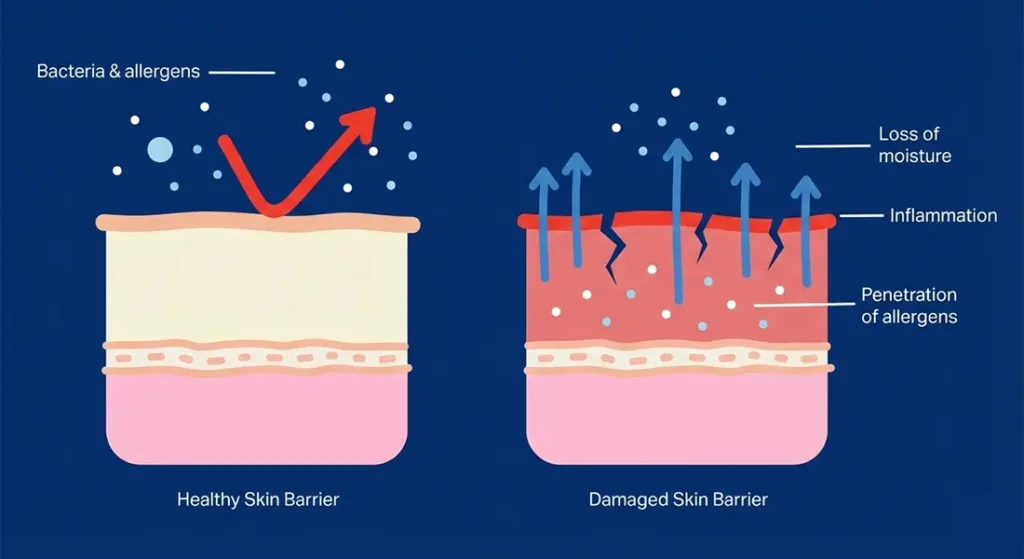
Barrier damage has become increasingly common, even in people who previously had resilient, problem-free skin. Modern skincare habits and environmental exposure place constant pressure on the skin, often without us realising the cumulative impact. Over time, this stress quietly weakens the barrier.
Here’s why barrier damage happens so often today:
1. Over-Cleansing Strips Protective Oils – Frequent washing, especially with foaming or harsh cleansers, removes the skin’s natural lipids. Without these oils, the barrier becomes less effective at retaining moisture.
2. Excessive Exfoliation and Active Ingredients – Regular exfoliation and strong actives like acids or retinoids can overwhelm the skin when overused. Instead of strengthening the barrier, they gradually break it down.
3. Environmental and Pollution Stress – Daily exposure to pollution, weather changes, and indoor heating increases oxidative stress on the skin. This ongoing exposure weakens barrier function over time.
4. Barrier Damage Develops Gradually – Barrier dysfunction rarely happens overnight. It builds slowly, often going unnoticed until dryness, sensitivity, or inflammation become persistent.
Barrier damage is usually the result of cumulative stress rather than a single mistake. By recognising how modern habits affect the skin, we can shift focus towards repair and protection. Supporting the barrier early helps prevent long-term sensitivity and recurring flare-ups.
How Dermatologists Recognise Skin Barrier Damage
Skin barrier damage is diagnosed clinically rather than with a single test. We look at how your skin behaves over time, not just how it looks on the day of examination. In many cases, your history and symptom pattern tell us more than appearance alone.
Dermatologists recognise barrier damage by assessing:
- Characteristic symptom patterns – Persistent dryness, stinging or burning with skincare products, recurrent redness, flaking, and increased sensitivity are key indicators.
- Poor tolerance to products – When products that once felt fine now cause irritation, it often signals a weakened barrier.
- Detailed product and routine history – What you use, how often, and any recent changes are frequently more revealing than visible signs alone.
- Response to previous treatments – Limited or short-lived improvement with active treatments can suggest the barrier itself needs repair.
By combining symptom patterns with your skincare history and treatment response, we can identify barrier damage accurately and guide you towards calmer, more resilient skin.
Why Dryness Is Often the First Sign

Dryness is often the earliest sign that the skin barrier is struggling. We see this happen when essential lipids begin to deplete, allowing water to escape more easily from the skin. At this stage, the skin may start to feel tight or rough.
You might notice that moisturisers help at first but don’t seem to last. We understand this can be frustrating, as hydration sits on the surface but doesn’t stay locked in. This is a clue that the barrier itself is not functioning properly.
This type of dryness is structural rather than purely seasonal. We look beyond weather changes and focus on restoring the barrier so the skin can retain moisture again. Addressing this early helps prevent further irritation and sensitivity.
Why Sensitive Skin Often Means Barrier Damage
Sensitive skin is often misunderstood as being “reactive” or allergic by nature. In reality, sensitivity usually signals that the skin barrier is no longer doing its job properly. When this protective layer weakens, the skin becomes far more reactive to everyday triggers.
Here’s why sensitivity often points to barrier damage:
1. Sensitivity Reflects Nerve Exposure – When the skin barrier thins or breaks down, nerve endings sit closer to the surface. This makes them easier to stimulate, even by mild products or environmental changes.
2. Weak Barriers Increase Sensation – Without adequate barrier protection, normal sensations can feel exaggerated. This is why you may experience burning, tingling, or stinging without any visible rash.
3. Discomfort Can Occur Without Redness – Sensitive skin doesn’t always look inflamed. You can feel significant discomfort even when the skin appears normal, which often leads to confusion and delayed care.
4. Sensitive Skin Is Often Damaged Skin – In many cases, sensitivity is not due to allergy at all. It reflects a compromised barrier rather than an immune reaction to a specific ingredient.
Understanding sensitivity as a barrier issue changes how we manage it. By focusing on repair and protection rather than avoidance alone, we can reduce nerve irritation and restore comfort. Supporting the barrier helps calm sensitivity at its source, rather than masking symptoms.
How Barrier Damage Triggers Redness and Flushing
When the skin barrier is compromised, the skin becomes more reactive to internal and external triggers. This increased sensitivity affects how blood vessels behave, particularly in facial skin. As a result, redness and flushing can appear more easily and persist for longer.
Barrier damage leads to redness and flushing because:
- Vascular reactivity increases – A weakened barrier allows nerves and blood vessels to respond more strongly to minor triggers.
- Blood vessels dilate more easily – This dilation shows up as visible redness or sudden flushing, especially on the cheeks and nose.
- Facial skin is more vulnerable – Thinner skin and higher vessel density make these changes more noticeable on the face.
- Barrier repair calms vessels indirectly – Restoring the barrier often reduces redness without needing treatments that target blood vessels directly.
By focusing on barrier repair, we can often improve redness and flushing in a more sustainable and skin-friendly way.
Why Breakouts Can Occur With Barrier Damage
Barrier damage doesn’t only affect dry skin. We often see that when the barrier is impaired, inflammation increases and the skin becomes more reactive. This can trigger breakouts even if your skin is naturally oily.
When the barrier is weakened, the skin’s microbiome also becomes unstable. We know this imbalance can worsen acne by encouraging irritation and disrupting normal oil regulation. Breakouts may appear more inflamed and harder to control.
Over-drying acne treatments frequently make this problem worse. We see harsh products strip the barrier further, increasing inflammation rather than reducing spots. Supporting barrier repair helps you calm breakouts more effectively and sustainably.
Why Skin Feels Tight After Cleansing
That tight, uncomfortable feeling after cleansing is a warning sign. We see it when cleansers strip away essential lipids that protect your skin barrier. This leaves the skin temporarily exposed and vulnerable.
When this happens repeatedly, barrier damage can become cumulative. Each cleanse removes a little more protection, making the skin drier and more reactive over time. You may notice increasing sensitivity or irritation as a result.
Healthy skin should not feel tight after washing. We want your skin to feel comfortable and balanced, not stretched or dry. Choosing gentle cleansing and protecting the barrier helps your skin stay resilient and calm.
How Over-Exfoliation Contributes to Damage
Exfoliation is designed to remove dead skin cells and improve texture. We use it deliberately to refresh the skin, but problems arise when it’s done too often. At that point, the skin doesn’t get enough time to repair itself.
When exfoliation is excessive, the protective barrier is disrupted faster than it can regenerate. Acids, physical scrubs, and retinoids can all contribute if they’re layered or used too frequently. You may start to notice redness, stinging, or increased sensitivity.
Barrier damage is often the result of “too much of a good thing.” We see this commonly in people trying to fix multiple concerns at once. Scaling back and allowing the skin to recover is essential for restoring balance and resilience.
Why Active Ingredients Can Backfire
Active ingredients can be powerful and effective when used on healthy skin. We rely on them to treat concerns like acne, pigmentation, and ageing. However, problems arise when the skin barrier is not stable.
Without a strong barrier, even beneficial actives can become irritating. Ingredients like retinoids, vitamin C, and acids may penetrate too deeply and trigger inflammation. You might notice stinging, redness, or worsening sensitivity rather than improvement.
Tolerance is determined by barrier stability, not by how “strong” your skin is. We focus on restoring balance before introducing actives. When the barrier is healthy, your skin is far more likely to respond positively and comfortably.
How Barrier Damage Leads to Recurrent Flares
When the skin barrier is damaged, it struggles to protect itself effectively. We see irritants enter the skin more easily, triggering immune responses that would normally be blocked. This makes the skin far more reactive than it should be.
As inflammation activates quickly, the skin moves into a cycle of flare and partial recovery. You may notice symptoms improve briefly, only to return again. This pattern can feel frustrating and unpredictable, even with regular skincare.
Without proper barrier repair, this cycle continues indefinitely. We focus on restoring the barrier so the skin can defend itself again. Once protection is rebuilt, flares become less frequent and far easier to control.
Why Moisturiser Alone Is Sometimes Not Enough
Using a moisturiser feels like the obvious solution when your skin is dry or uncomfortable. However, not all moisturisers work in the same way, and some may not address the underlying problem. This is why applying more product doesn’t always lead to better results.
Here’s why moisturiser alone may fall short:
1. Moisturisers Differ in What They Actually Do – Some products mainly add water to the skin but don’t replace what’s missing. Without addressing deeper barrier needs, hydration can be short-lived.
2. Missing Lipids Are Often the Real Problem – A damaged barrier lacks essential lipids like ceramides and fatty acids. If these aren’t replaced, moisture continues to escape even with regular moisturising.
3. Some Formulations Can Worsen Sensitivity – Fragrance, alcohol, or certain preservatives can irritate already compromised skin. Instead of calming the skin, these ingredients may increase stinging or redness.
4. More Product Does Not Equal Better Repair – Applying moisturiser frequently won’t fix barrier damage if the formulation isn’t right. Effective repair depends on what’s in the product, not how often you use it.
True barrier repair requires the right combination of hydration and lipid replacement. When we choose products designed to rebuild the barrier rather than just soften the skin, comfort improves and sensitivity settles more reliably. This targeted approach is far more effective than simply layering on more moisturiser.
Key Components Needed for Barrier Repair
Effective barrier repair is about rebuilding skin structure, not overwhelming it with products. Your skin barrier relies on a precise balance of lipids and hydration to function properly. When this balance is restored, the skin becomes calmer, stronger, and more resilient.
Barrier repair depends on the following components:
- Ceramides, cholesterol, and fatty acids – These lipids rebuild the skin’s natural lipid matrix, helping restore strength and reduce permeability.
- Humectants to attract water – Ingredients such as glycerin draw moisture into the skin, supporting hydration from within.
- Occlusives to reduce water loss – These help seal moisture in and limit evaporation from the surface.
- Balance over excess – Using the right combination matters more than layering too many products, which can overwhelm compromised skin.
By focusing on balanced formulation rather than quantity, we help your skin repair itself more effectively and sustainably.
Why Simpler Skincare Often Works Better
Barrier repair often benefits from keeping things simple. We find that reducing the number of products you use helps minimise irritation and gives your skin space to recover. Too many layers can overwhelm an already stressed barrier.
Fragrance-free, low-irritant routines are usually better tolerated. We focus on products that support the barrier rather than challenge it. This approach reduces the risk of ongoing sensitivity and inflammation.
When skin is calm, it heals more efficiently. We want your routine to protect and support, not constantly stimulate. Simplicity helps restore balance and long-term resilience.
How Dermatologists Adjust Cleansing During Repair
When the skin barrier is damaged, cleansing needs to be adjusted carefully. We often recommend gentle, non-foaming cleansers that clean without stripping essential lipids. In many cases, cleansing once daily is enough.
Over-cleansing is avoided because it can slow recovery and worsen irritation. We focus on removing dirt and sunscreen without disrupting the barrier further. Less frequent, gentler cleansing supports healing.
Cleansing should protect the skin, not strip it. We choose approaches that maintain comfort and stability while the barrier repairs itself. This helps create the right conditions for long-term recovery.
The Role of Anti-Inflammatory Treatment
Inflammation often sits alongside skin barrier damage. We see that when irritation is active, the skin struggles to repair itself properly. Calming inflammation becomes an important first step.
In some cases, short-term anti-inflammatory treatment is needed to settle redness, itch, and discomfort. This reduces ongoing immune disruption and gives the barrier a chance to rebuild. We use this approach carefully and for the right duration.
Barrier repair and inflammation control work together. When inflammation is reduced, the skin can recover more effectively. This combined strategy helps you regain comfort, stability, and long-term skin resilience.
Why Skin Barrier Repair Takes Time
Skin barrier repair doesn’t happen overnight. Restoring the barrier involves rebuilding lipids and repairing skin structure, both of which take time. Progress is gradual, and expecting rapid change can lead to frustration or over-treatment.
Barrier repair takes time because:
- Lipid production is gradual – Ceramide and lipid synthesis occurs steadily rather than immediately.
- Structural repair happens in phases – The skin needs time to rebuild organisation and strength at a cellular level.
- Improvement is measured in weeks – Meaningful change is usually seen over weeks, not days.
- Consistency outweighs intensity – Gentle, regular care supports repair better than aggressive or frequent product changes.
By staying consistent and patient, you give your skin the best chance to recover and become more resilient over time.
How Dermatologists Monitor Recovery
We assess recovery clinically rather than relying on appearance alone. Improved comfort, reduced reactivity, and better tolerance of products are key signs that the barrier is repairing. Visible redness may be the last thing to settle. Your experience matters as much as what we see on the skin. We pay close attention to how your skin feels day to day, not just how it looks. Subjective improvement is an important marker of true recovery.
Why Sun Protection Matters During Repair
Sun exposure can significantly worsen skin barrier damage. We know that UV radiation increases inflammation and interferes with the skin’s natural repair processes. Without protection, the barrier struggles to recover properly.
UV exposure also reduces lipid synthesis, which is essential for rebuilding the barrier. When these protective lipids are depleted, repair becomes slower and less effective. This can prolong sensitivity and irritation.
That’s why gentle, suitable sun protection is essential during repair. We focus on options that protect without irritating compromised skin. Proper sun care supports healing and helps restore long-term skin stability.
How Lifestyle Affects Barrier Health
Your skin barrier is influenced by much more than the products you apply. Everyday habits, environmental exposure, and stress levels all affect how well your skin repairs and protects itself. This is why lifestyle plays such an important role in long-term barrier health.
Here’s how daily factors impact the skin barrier:
1. Hot Water and Harsh Fabrics Cause Ongoing Stress – Hot showers strip natural oils from the skin, while rough or synthetic fabrics increase friction. Together, these factors gradually weaken the barrier and increase irritation.
2. Low Humidity Increases Moisture Loss – Dry indoor air, especially in winter, accelerates water loss from the skin. This makes it harder for the barrier to stay intact, even with good skincare.
3. Stress Affects Inflammation and Repair – Stress increases inflammatory signals in the body and slows skin repair. When stress is ongoing, the barrier struggles to recover fully between flare-ups.
4. Environment Can Support or Undermine Treatment – Controlling environmental factors such as temperature, humidity, and fabric choice supports treatment success. These adjustments reduce constant background stress on the skin.
Barrier health extends beyond skincare products alone. When we address lifestyle and environment alongside topical care, the skin becomes more resilient and responsive to treatment. This holistic approach helps protect the barrier and improve comfort over time.
When Barrier Damage Signals an Underlying Condition
Sometimes skin barrier damage is not the primary problem but a secondary effect. We often see this in conditions like eczema, rosacea, acne, and contact dermatitis, where inflammation repeatedly disrupts the barrier. In these cases, barrier weakness is a consequence rather than the root cause.
If the underlying condition remains active, repairing the barrier alone may not be enough. We may see temporary improvement, followed by repeated breakdown and flare-ups. This can feel frustrating when skincare changes don’t seem to hold.
Identifying and treating the underlying condition is essential for long-term control. We look beyond surface damage to understand what is driving instability. Once the cause is addressed, barrier repair becomes far more effective and sustainable.
Why Trial-and-Error Often Fails
Randomly switching products often prolongs skin barrier damage rather than fixing it. We see each new product introduce another potential irritant, making it harder for the skin to settle. Instead of recovery, the skin stays in a constant state of reaction.
Without understanding the underlying cause, trial-and-error delays improvement. You may see brief changes, but true healing doesn’t occur. This uncertainty can be frustrating and exhausting over time.
Structured plans consistently outperform experimentation. We focus on clear diagnosis, targeted treatment, and gradual adjustment. This approach gives your skin the stability it needs to recover properly and stay resilient.
When to Seek Professional Assessment
If your skin remains sensitive, continues to flare, or worsens despite careful routine changes, it’s a sign that further assessment is needed. Ongoing instability often means there is more happening beneath the surface than products alone can fix. Seeking guidance early can make a real difference.
Professional assessment is important because:
- Persistent symptoms suggest deeper imbalance – Continued sensitivity or flaring indicates that barrier damage may not be resolving on its own.
- Cause needs clarification – A qualified dermatologist can determine whether barrier damage is the primary issue or secondary to another condition.
- Guided repair is safer and more effective – Targeted advice helps avoid over-treatment and supports proper healing.
- Early intervention prevents chronic instability – Timely assessment reduces the risk of long-term sensitivity and recurrent flares.
By seeking professional input at the right time, you protect your skin from ongoing disruption and support more stable, long-term recovery.
How Expert Care Improves Long-Term Skin Health
Expert care focuses on skin biology rather than trends or quick fixes. We look at how your skin is functioning, not just how it looks, so treatment targets the real cause of instability. This approach supports meaningful, lasting improvement.
As the skin barrier begins to recover, we adjust treatment carefully. We step down what’s no longer needed and support what helps maintain balance. This prevents relapse and allows the skin to rebuild resilience over time.
Barrier repair is a medical strategy, not a cosmetic one. We treat it with structure, monitoring, and intent. When care is guided properly, your skin becomes stronger, calmer, and far more stable in the long term.
FAQs:
1. What exactly is skin barrier damage and why does it matter?
Skin barrier damage occurs when the outer protective layer of the skin is weakened and unable to retain moisture or block irritants effectively. This leads to dryness, sensitivity, inflammation, and unpredictable reactions. A compromised barrier makes the skin far more vulnerable to everyday stressors and flare-ups.
2. How can I tell if my skin issues are due to barrier damage rather than my skin type?
If your skin feels tight, stings with products, reacts unpredictably, or flares despite careful skincare, barrier damage is likely. True skin type does not usually cause burning or intolerance to basic products. These symptoms suggest functional disruption rather than a natural trait.
3. Can skincare products actually cause skin barrier damage?
Yes, frequent cleansing, over-exfoliation, and excessive use of active ingredients can gradually weaken the barrier. Even products marketed as beneficial can become damaging if used too often or layered incorrectly. Damage usually builds slowly rather than appearing suddenly.
4. Why does my skin feel tight or uncomfortable after washing my face?
Tightness after cleansing indicates that essential protective lipids have been stripped away. This leaves the skin temporarily exposed and unable to retain moisture. Repeated episodes of post-cleanse tightness often signal ongoing barrier breakdown.
5. Is sensitive skin always caused by allergies?
No, sensitivity is far more commonly caused by barrier damage than true allergy. When the barrier is compromised, nerve endings are closer to the surface and react more easily. This can cause stinging or burning even without visible redness or rash.
6. Why do breakouts sometimes get worse when my skin barrier is damaged?
A weakened barrier increases inflammation and disrupts the skin’s microbiome, both of which can trigger breakouts. Harsh acne treatments often worsen this by further stripping the skin. Supporting barrier repair helps calm inflammation and makes breakouts easier to manage.
7. Can moisturiser alone repair skin barrier damage?
Not always, because some moisturisers only add water without replacing missing structural lipids. Without ceramides, cholesterol, and fatty acids, moisture continues to escape. Effective repair depends on formulation quality, not how often you apply product.
8. How long does it take for the skin barrier to fully repair?
Barrier repair is a gradual process that typically takes several weeks rather than days. Lipid production and structural repair occur slowly and require consistency. Gentle routines and patience are far more effective than aggressive or frequent product changes.
9. Why does my skin keep flaring even when I’m careful with products?
Repeated flares often mean the barrier has not fully recovered or that an underlying condition is driving instability. Without restoring proper protection, the skin remains reactive. Identifying and addressing the root cause is essential for long-term control.
10. When should I seek professional help for skin barrier problems?
If sensitivity, redness, or flares persist despite simplifying your routine, professional assessment is important. A dermatologist can determine whether barrier damage is primary or secondary to another condition. Early guidance helps prevent chronic instability and long-term skin damage.
Final Thoughts: Repairing the Skin Barrier for Lasting Comfort
Skin barrier damage is one of the most common yet overlooked causes of ongoing dryness, sensitivity, redness, and unpredictable flare-ups. When the barrier is compromised, skincare alone often fails unless it is guided by a clear understanding of how the skin functions and heals. Recognising barrier damage early and repairing it properly helps restore comfort, resilience, and long-term skin stability rather than relying on repeated trial-and-error. If you’re looking to book a consultation with one of our dermatologists, you can contact us at the London Dermatology Centre.
References
1. Denda, M., et al. (2023) Skin Barrier Function: The Interplay of Physical, Chemical, and Immunologic Properties. Cells, 12(23), 2745. https://www.mdpi.com/2073-4409/12/23/2745
2. Roberts, M.S. & Walters, K.A. (2024) Bioactive lipids in the skin barrier mediate its functionality in health and disease. Biochimica et Biophysica Acta (BBA) – Molecular and Cell Biology of Lipids. https://www.sciencedirect.com/science/article/pii/S0163725824001013
3. Evaluating the effect of moisturizers containing endogenous lipids on skin barrier properties. Journal of the American Academy of Dermatology (2024). https://www.sciencedirect.com/science/article/pii/S2950306X24000359
4. Elias, P.M. & Feingold, K.R. (2023) The Skin Barrier and Moisturization: Function, Disruption, and Mechanisms of Repair. Reviews in Dermatological Science. https://pubmed.ncbi.nlm.nih.gov/37717558/
5. Wertz, P.W. & Downing, D.T. (2016) Advancements in the maintenance of skin barrier/skin lipid composition and the involvement of metabolic enzymes. Journal of Lipid Research. https://pubmed.ncbi.nlm.nih.gov/27405934/