


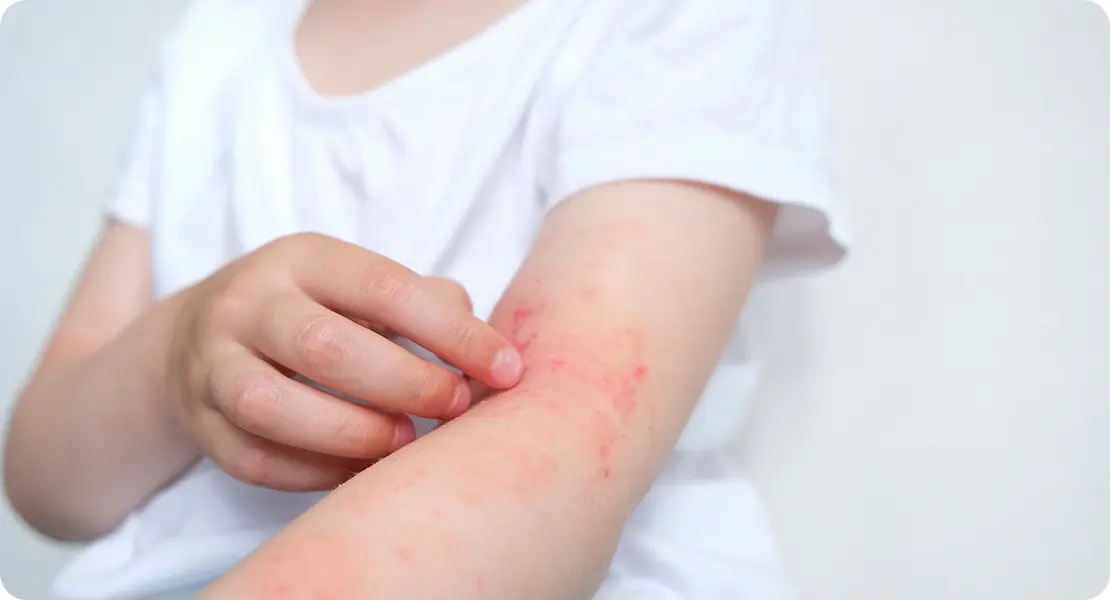
If you use topical steroids for eczema, you’ve probably seen the term “TSW” or “topical steroid withdrawal” online. Over the past few years, the topic has exploded across social media, eczema forums and YouTube. Many people are scared of steroid creams now, even when they’re used correctly and safely. Some stop treatment abruptly because they worry about becoming “dependent” on steroids, while others are terrified that any worsening of their skin means withdrawal is beginning.
So how do you know whether your worsening symptoms are simply eczema acting up, normal steroid side effects or genuine TSW? And how can you reduce risk, taper safely and find alternatives when steroids need to be limited? In this guide, I’ll walk you through everything you need to understand the difference clearly and confidently.
What Is Topical Steroid Withdrawal (TSW)?
Topical steroid withdrawal is a rare reaction that can occur after prolonged, frequent or inappropriate use of mid- to high-potency steroid creams. It typically appears when someone stops steroids suddenly after long-term use. The skin becomes red, burning, painful and sensitive in ways that feel different from a normal eczema flare.
Topical steroid withdrawal (TSW) is also referred to as red skin syndrome, steroid addiction syndrome, or a topical corticosteroid withdrawal reaction.
However, dermatologists emphasise that TSW is not simply “eczema coming back worse than before.” It is a separate inflammatory reaction driven by changes in blood vessels, skin barrier function and immune regulation caused by long-term steroid exposure.
Because awareness has grown rapidly online, many people now believe they have TSW even when their symptoms match regular eczema. This misunderstanding often delays effective treatment.
Why Has TSW Become So Popular Online?
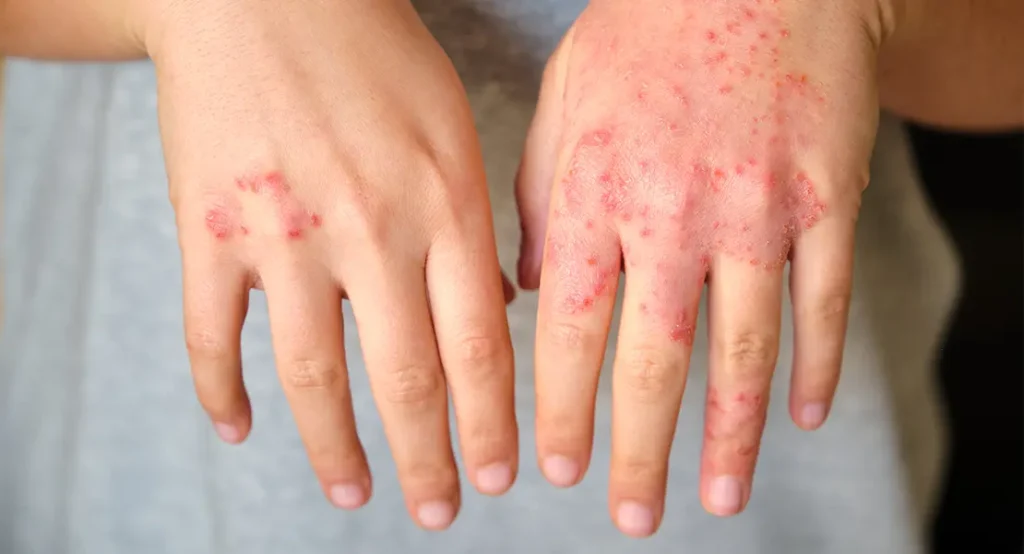
The popularity of TSW discussions online can be attributed to several factors, including personal stories of severe cases shared on social media, fear-based messaging around steroid use, and widespread misunderstandings about how topical corticosteroids work. The lack of accessible expert explanations in public spaces and instances of individuals stopping steroid treatments abruptly without medical guidance have also contributed to the spread of information sometimes inaccurate about TSW.
Social media often amplifies the most extreme cases, creating the impression that these experiences are common when they are not. In reality, many people who believe they have TSW may actually be experiencing undertreated eczema, incorrect steroid potencies, allergic contact dermatitis, rebound flares from stopping steroids abruptly, or irritation from overuse of moisturisers or new products. This highlights the importance of obtaining an accurate diagnosis from a qualified dermatologist.
How Do Topical Steroids Work?
Topical steroids are a cornerstone in managing eczema and other inflammatory skin conditions. They work by calming overactive immune responses in the skin, reducing inflammation, and promoting healing. When used correctly under medical guidance, they are safe and highly effective, helping relieve itching, reduce redness, stop flare-ups, and prevent long-term skin damage.
Relieve itching: Steroids soothe irritated skin by reducing the immune response that causes persistent itching, providing much-needed relief during flare-ups.
Reduce redness and inflammation: They constrict blood vessels and suppress inflammatory cells in the skin, which helps calm visible redness and swelling associated with eczema.
Stop flare-ups and promote healing: By controlling inflammation, steroids allow the skin to recover more quickly, preventing minor irritation from developing into a full-blown flare.
Prevent long-term damage: Proper use of steroids helps protect the skin from scarring, thickening, or pigment changes that can result from uncontrolled or chronic eczema.
Safe use requires guidance: Problems typically arise when potency is too strong for the affected area, steroids are used continuously without breaks, applied too frequently, used for the wrong diagnosis, or applied without dermatology oversight.
What Is an Eczema Flare?

An eczema flare occurs when the skin becomes inflamed in response to various triggers, such as dryness, allergens, irritants, stress, infections, incorrect skin products, cold weather, dust mites, or hormonal changes. Flares can happen even without the use of steroids and are a natural part of the cycle of atopic eczema, which tends to come and go over time.
During a flare, the skin typically shows familiar symptoms, including intense itching, dryness, redness, cracking, rough patches, and general inflammation. These signs are common for anyone who has experienced eczema over the years and can vary in severity depending on the trigger and individual skin sensitivity.
TSW vs Eczema Flare: Why They’re Confused
Topical steroid withdrawal (TSW) and eczema flares are often confused because both conditions involve redness, itching, and inflammation, making them appear very similar. Many people assume they are experiencing TSW whenever their skin worsens after stopping steroid treatment, but the underlying causes are different. Eczema flares are driven by the individual’s pre-existing skin condition, while TSW occurs specifically as a reaction to discontinuing long-term steroid use.
The confusion is compounded by the intensity of certain reactions, such as strong rebound eczema that can follow abrupt steroid withdrawal. This can look alarming and is often misinterpreted as a severe withdrawal syndrome rather than a temporary flare.
Other factors that can mimic TSW include allergic contact dermatitis, irritant dermatitis from new skin products, overuse of moisturisers leading to maceration, or infections that exacerbate eczema. Without proper guidance and diagnosis from a dermatologist, these issues can easily be mistaken for TSW, underscoring the importance of expert evaluation.
Key Differences: TSW vs Eczema Flare
Distinguishing between topical steroid withdrawal (TSW) and a typical eczema flare can be challenging because both conditions involve redness, inflammation, and discomfort. However, there are key differences in symptom location, the quality of redness, sensations, skin appearance, timeline, and history of steroid use that can help tell them apart.
Location of Symptoms: Eczema flares typically appear in the areas where you’ve always had eczema, such as elbows, knees, neck, hands, or eyelids, whereas TSW often affects areas where steroids were applied, even if those sites never had eczema before.
Redness Quality: In eczema flares, redness is usually patchy, dry, and itchy, whereas in TSW, the redness is often bright red, burning, hot to the touch, diffuse, painful rather than itchy, and can spread across the face and body in a different pattern.
Sensations: Eczema flares typically cause itching and occasionally some burning, while TSW is dominated by burning sensations, often accompanied by stinging, rawness, sensitivity to touch, and hyperesthesia, making the skin feel like it has a widespread sunburn.
Skin Appearance: During an eczema flare, the skin usually appears dry, inflamed, thickened, or cracked. In contrast, TSW may present with “red sleeves” (redness around the arms or legs), swelling, oozing, shedding skin, deep sensitivity, and skin that looks shiny, swollen, and hot.
Timeline: Eczema flares typically come and go depending on triggers, whereas TSW usually begins 2–14 days after stopping long-term use of topical steroids.
History of Steroid Use: Eczema flares can occur even without recent steroid use, while TSW almost always involves a history of long-term steroid use, frequent applications, high-potency steroids, use on sensitive areas like the face, and little or no break between courses; if these factors don’t apply, TSW is unlikely.
Steroid Side Effects vs TSW: Not the Same Thing
Many people mistakenly confuse the normal side effects of steroid use with topical steroid withdrawal (TSW). Common steroid side effects include thinning of the skin (atrophy), easy bruising, stretch marks, dilated blood vessels, and pigment changes. These effects are generally dose-related and can be partially reversible over time.
TSW, on the other hand, specifically refers to a withdrawal reaction that occurs after stopping long-term steroid use. It is not the same as the side effects experienced during steroid application, and understanding this distinction is important for accurate diagnosis and treatment.
When to Suspect TSW
Topical steroid withdrawal (TSW) is more likely to occur in individuals who have used potent steroids daily for months or even years. Prolonged daily use increases the risk of the skin becoming dependent on the medication, making withdrawal reactions more severe once the steroids are stopped.
The risk is particularly high when steroids have been applied to sensitive areas such as the face or genitals over a long period. These regions are more prone to irritation and show more noticeable reactions during withdrawal.
TSW is also more likely if steroids were used continuously without breaks or if treatment was stopped abruptly. Sudden cessation after long-term use can trigger intense symptoms, including burning, swelling, and widespread redness of the skin.
Newly affected areas that were never prone to eczema and worsening skin despite increasing steroid potency are further signs that TSW might be occurring. Even in such cases, an accurate diagnosis must come from a dermatologist, as TSW is extremely difficult to self-diagnose.
When It’s Probably NOT TSW
You are unlikely to be experiencing TSW if you have used mild or moderate steroids correctly, taken breaks between courses, or tapered the medication gradually. Short-term use of steroids in brief bursts also reduces the risk of withdrawal reactions.
Another sign that it’s probably not TSW is if your eczema returns in the same locations as before, with itching being the primary symptom rather than burning or intense discomfort. Redness that improves with moisturisers or topical calcineurin inhibitors also points away from TSW.
In most cases where people suspect TSW, the issue is actually uncontrolled eczema or contact dermatitis. Proper evaluation by a dermatologist is essential to determine the real cause and ensure effective treatment.
Why You Should Never Stop Steroids Abruptly
Stopping steroids abruptly, particularly high-potency ones, can trigger rebound eczema, sudden flares, intense inflammation, cracking, pain, and even infection. This reaction occurs because the skin has become reliant on the medication for control, and the sudden removal causes the underlying eczema to return aggressively.
Many people mistakenly interpret this rebound as steroid withdrawal, but it is actually a strong resurgence of the eczema itself. To prevent these severe reactions, a gradual taper under the guidance of a dermatologist is always the safer and more effective approach.
Safe Step-Down Plans for Reducing Steroid Use
Reducing steroid use safely requires a gradual and intentional approach to prevent rebound flares and protect your skin. Abrupt changes can trigger intense eczema, so step-down plans focus on slowly decreasing frequency and potency while introducing supportive treatments to maintain skin health.
A structured taper combined with non-steroidal therapies and trigger management helps your skin adjust without worsening symptoms. Identifying hidden irritants or allergens further reduces dependence on steroids and supports long-term eczema control.
Reduce frequency before reducing potency: When reducing steroid use, start by decreasing the frequency before lowering the potency. For example, transition from daily application to every other day, then every third day, and eventually to twice weekly, often called “weekend therapy.”
Switch to a milder steroid on the same schedule: Once the frequency is reduced, you can switch to a milder steroid while maintaining the same schedule. This gradual transition helps minimise the risk of rebound flares.
Introduce non-steroidal treatments: Introducing non-steroidal treatments can help bridge the gap as you reduce steroid use. Options include tacrolimus, pimecrolimus, crisaborole (where available), phototherapy, emollients, and barrier repair creams to maintain skin health and prevent flares.
Use “weekend therapy” for long-term control: For long-term control, some patients adopt “weekend therapy,” using steroids only on Saturdays and Sundays. This approach helps prevent flares while avoiding continuous steroid exposure.
Identify hidden triggers: It’s important to identify hidden triggers if you find yourself relying on steroids constantly. Common culprits include dust mites, pets, metals, fragrances, preservatives, stress, and overwashing.
Alternatives When Steroid Use Needs Limiting
When steroid use needs to be limited, dermatologists often recommend non-steroidal treatments to give the skin a break. Calcineurin inhibitors such as tacrolimus and pimecrolimus are excellent options for sensitive areas and long-term use, helping to control inflammation without the risks associated with steroids.
Phototherapy, particularly narrowband UVB, is another effective alternative for calming severe eczema. For more severe cases, JAK inhibitors and biologics like dupilumab, upadacitinib, and tralokinumab target deeper inflammatory pathways and reduce the frequency of flares.
Intensive emollient therapy also plays a key role by supporting skin barrier repair and reducing dependence on steroids. Additionally, antihistamines can help relieve night-time itching and discomfort, improving overall quality of life during flare-ups.
Red Flags That Mean You Should See a Dermatologist
You should see a dermatologist immediately if you experience bright red, burning skin over large areas, painful swelling, widespread peeling or shedding, or weeping and oozing. Fever or other signs of infection, as well as new symptoms after stopping steroids, are also urgent warning signs that require professional assessment.
Additionally, skin sensitivity that prevents you from wearing clothes or symptoms spreading to areas previously unaffected should prompt medical review. These signs could indicate severe eczema, infection, or, in rare cases, TSW, but only a dermatologist can provide an accurate diagnosis.
What Dermatologists Do When They Suspect TSW
When a dermatologist suspects TSW, the first step is to review your steroid history in detail. This helps them understand the potency, frequency, and duration of use, which is crucial for assessing risk.
Next, they carefully examine the affected areas to evaluate the extent of redness, burning, peeling, and sensitivity. They also rule out infections that could mimic withdrawal symptoms, ensuring other conditions aren’t overlooked.
Contact dermatitis is another condition that needs to be excluded, as reactions to allergens or irritants can appear similar to TSW. Once these possibilities are addressed, a personalised slow taper plan for steroid reduction may be created.
Non-steroidal treatments and supportive skin care are introduced to manage symptoms during the taper. The dermatologist monitors changes over several weeks or months, as TSW diagnosis and recovery require careful, ongoing assessment.
Emotional Impact: Why TSW Conversations Create Fear
Dealing with eczema is emotionally challenging, and the fear surrounding TSW can make it even more overwhelming. Many patients feel guilty about using steroids, scared of triggering a flare, or ashamed of how their skin looks. Conflicting information online often adds to confusion and frustration, making progress seem impossible at times.
Others may feel angry about persistent symptoms and disheartened by slow improvement despite following treatment plans. It’s important to remember that you are not alone, and the focus should be on balancing safe eczema management with informed, gradual reduction of steroid use when appropriate.
How to Reduce Anxiety Around Steroid Use
Managing eczema and concerns about TSW can feel overwhelming, but taking proactive steps can help you regain control. Educating yourself on proper steroid use and speaking openly with your dermatologist ensures that you have accurate guidance tailored to your situation.
Avoiding fear-based content online, tracking triggers and flare patterns, and using moisturisers consistently are practical ways to manage your skin daily. Following a medically supervised taper plan and not self-diagnosing based on social media helps you make informed decisions, while understanding the difference between TSW and eczema flares gives you confidence in your treatment choices.
FAQs:
1. What is topical steroid withdrawal (TSW) and how does it differ from eczema flares?
Topical steroid withdrawal (TSW) is a rare reaction that can occur after prolonged or inappropriate use of mid- to high-potency steroid creams, particularly when treatment is stopped abruptly. The skin in TSW becomes red, burning, painful, and highly sensitive, often showing diffuse redness and a shiny, swollen appearance.
2. Why do people often confuse TSW with regular eczema flares?
The confusion arises because both TSW and eczema flares involve similar visual signs, such as redness, inflammation, and discomfort. Many individuals interpret a worsening of skin after stopping steroids as TSW, even when it may be a rebound flare of uncontrolled eczema. Social media and online forums often amplify extreme TSW cases, giving the impression that these reactions are common.
3. How do topical steroids work in managing eczema?
Topical steroids work by calming overactive immune responses in the skin, which reduces inflammation, relieves itching, and promotes healing. When used correctly, they prevent eczema from worsening and protect the skin from long-term damage such as thickening, scarring, or pigment changes.
4. What are the signs that a skin flare is more likely an eczema flare rather than TSW?
Eczema flares typically occur in areas where the individual has previously experienced eczema, such as the elbows, knees, hands, or eyelids. These flares often manifest as patchy redness, dryness, scaling, and intense itching rather than burning or pain. Symptoms tend to respond to moisturisers and anti-inflammatory treatments, and the flare may be linked to known triggers such as stress, allergens, or environmental factors.
5. What increases the risk of developing TSW?
TSW is more likely in individuals who have used potent steroid creams daily over months or years, particularly on sensitive areas like the face or genitals. Continuous, long-term application without breaks, abrupt cessation of treatment, or the use of high-potency steroids increases the likelihood of withdrawal reactions. New areas of redness that were not previously affected by eczema, worsening skin despite increasing steroid strength, and intense burning or sensitivity after stopping steroids are further indicators of potential TSW.
6. What are the risks of stopping steroid treatment abruptly?
Stopping steroid treatment suddenly, especially high-potency steroids, can trigger rebound eczema. This manifests as intense inflammation, redness, cracking, and pain, sometimes accompanied by secondary infection. The skin, having adapted to rely on steroids, reacts aggressively when the medication is removed, often creating the appearance of TSW.
7. How can steroid use be safely reduced to avoid withdrawal symptoms?
Safe reduction of steroid use involves gradually decreasing application frequency and potency while supporting the skin with non-steroidal therapies and trigger management. A structured taper might involve reducing steroid application from daily to every other day, then further to twice weekly, possibly switching to a milder formulation while maintaining the same schedule. Non-steroidal alternatives such as calcineurin inhibitors, barrier repair creams, or phototherapy can be introduced to maintain skin health during the taper.
8. What alternatives exist when long-term steroid use needs to be limited?
Non-steroidal treatments, such as calcineurin inhibitors including tacrolimus and pimecrolimus, offer effective options for sensitive areas and long-term management. Phototherapy, particularly narrowband UVB, can reduce inflammation in severe cases. For more resistant eczema, targeted systemic treatments such as JAK inhibitors or biologics like dupilumab, upadacitinib, and tralokinumab are used to control deeper inflammatory pathways.
9. When should someone see a dermatologist regarding potential TSW or severe eczema?
A dermatologist should be consulted immediately if a person experiences bright red, burning skin over large areas, painful swelling, widespread peeling or shedding, weeping, or signs of infection such as fever. New symptoms appearing after stopping steroids, skin sensitivity that interferes with clothing, or flare-ups spreading to previously unaffected areas also warrant professional evaluation.
10. How can anxiety around steroid use and TSW be managed?
Managing anxiety involves understanding proper steroid use, following a medically supervised taper plan, and avoiding fear-based online content. Tracking flare triggers, maintaining a consistent skincare routine, and using moisturisers appropriately help maintain skin health and reduce flare severity. Open communication with a dermatologist provides reassurance and guidance tailored to individual needs.
Final Thought: Managing Eczema Safely Without Unnecessary Fear
Understanding the difference between topical steroid withdrawal and an eczema flare is essential for managing your skin safely and confidently. While TSW is a real condition, it remains rare, and many worsening symptoms are more often due to rebound eczema, untreated triggers, or incorrect steroid use rather than true withdrawal. Accurate diagnosis, gradual tapering, and personalised treatment plans are key to avoiding unnecessary fear, preventing severe flares, and maintaining long-term skin health.
If you’re looking for eczema treatment in London, book a consultation with our specialist at the London Dermatology Centre, where our team of experienced dermatologists provides personalised, evidence-based care tailored to your skin’s needs.
References:
1. Hajar T, et al. A systematic review of topical corticosteroid withdrawal (“steroid addiction”) in patients with atopic dermatitis and other dermatoses. https://pubmed.ncbi.nlm.nih.gov/25592622/
2. Fukaya M, et al. Topical steroid addiction in atopic dermatitis. https://pmc.ncbi.nlm.nih.gov/articles/PMC4207549/
3. Ahuja K, et al. Pediatric Topical Steroid Withdrawal Syndrome (TSW). PMC. Focus on TSW in children highlighting burning erythema and similarity with severe dermatitis. https://pmc.ncbi.nlm.nih.gov/articles/PMC11950796/
4. Wallen-Russell C. Could modifying the skin microbiome, diet, and lifestyle help manage topical steroid withdrawal? Journal of Functional Dermatology. https://www.mdpi.com/2313-5786/2/1/1
5. Ahuja K, et al. Pediatric Topical Steroid Withdrawal Syndrome (TSW). PMC. Focus on TSW in children highlighting burning erythema and similarity with severe dermatitis. https://pmc.ncbi.nlm.nih.gov/articles/PMC11950796/