


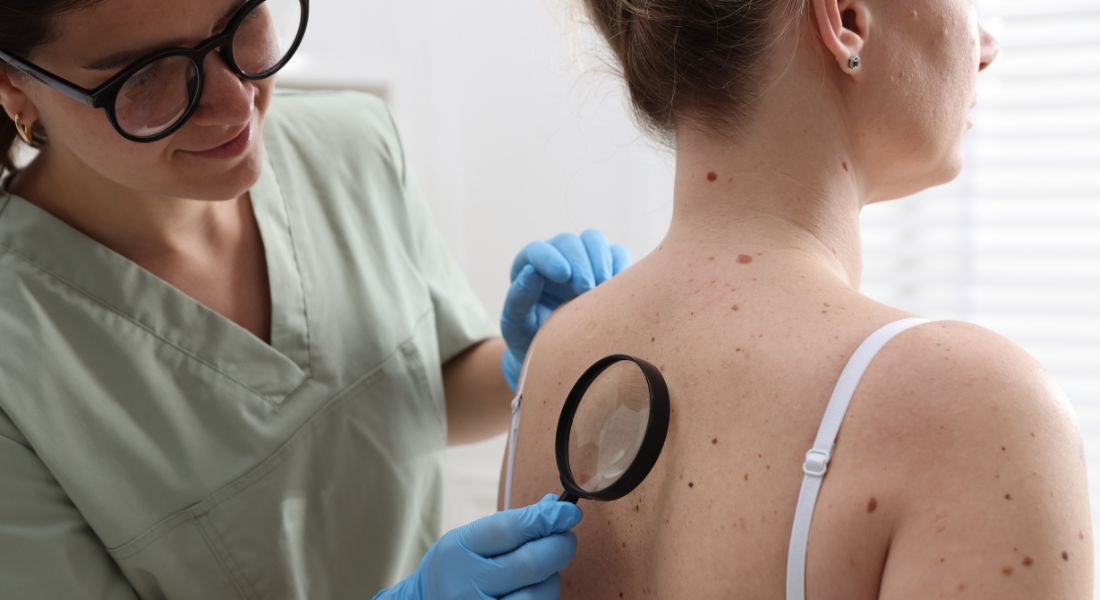
Most people expect a medical diagnosis to be quick and definitive. A rash appears, it’s examined, and a clear name is given. In reality, skin conditions don’t always follow textbook descriptions. Some rashes look similar to several different conditions. Others evolve over time, changing shape, colour, or symptoms. In these situations, dermatologists rely on structured clinical reasoning rather than instant labels.
In this article, I’ll explain how dermatologists approach unclear skin diagnoses, why uncertainty is sometimes unavoidable, what tools are used to narrow possibilities, and why patience can be an important part of getting the right diagnosis.
Why Not All Skin Conditions Look Classic

Textbook images usually show fully developed or typical disease patterns. In real life, patients often present earlier, later, or with features that overlap between multiple conditions.
Skin conditions may appear differently due to:
- Stage of the condition – Some patients seek help very early, before classic signs have fully developed, while others present later when features have evolved or changed.
- Influence of external factors – Inflammation, infection, previous treatments, or regular medication use can alter how a condition looks on the skin.
- Differences in skin tone – Redness, scaling, or pigment changes may appear more subtle or take on different colours depending on the patient’s skin tone.
- Individual variation – Even the same condition can look quite different from one person to another, making pattern recognition more complex.
This natural variability is one of the key challenges in dermatology and explains why diagnosis often relies on experience, context, and careful assessment rather than appearance alone.
The Myth of the Instant Diagnosis
It’s easy to assume that an experienced clinician should always know the diagnosis straight away. In reality, good dermatology often involves recognising when a condition does not yet fit a clear pattern. We understand that many skin concerns evolve over time and may not present in a textbook way at the first visit.
Making a diagnosis too quickly can lead to inappropriate treatment and may mask the true underlying issue. We see how early assumptions can delay effective care rather than improve it. This is why careful observation and thoughtful assessment are essential parts of responsible practice.
As dermatologists, we balance clinical confidence with caution. When needed, we may recommend further observation, investigations, or follow-up rather than a rushed label. By taking this approach, we ensure decisions are based on clarity and patient safety, not pressure for instant answers.
How Dermatologists Think in Unclear Cases

When a diagnosis is not immediately obvious, dermatologists rely on a structured and methodical way of thinking. Rather than guessing, they analyse patterns and clinical details step by step. Each observation helps reduce uncertainty and narrow the range of possible conditions.
Dermatologists assess unclear cases by focusing on:
- Morphology of the skin changes – The shape, colour, surface texture, and borders of a lesion provide important clues about its underlying cause.
- Distribution and location – Where the condition appears on the body, whether it is symmetrical, localised, or widespread, can point towards specific diagnoses.
- Symptoms and timing – Associated features such as itch, pain, or burning, along with when the condition started and how it has progressed, help refine the clinical picture.
- Triggers and treatment response – Previous treatments, environmental exposures, medications, or flare patterns often reveal whether a condition is inflammatory, infectious, or reactive.
This analytical approach allows dermatologists to move logically from uncertainty towards an accurate diagnosis, even when the presentation does not follow textbook patterns.
Pattern Recognition Beyond the Surface
Diagnosing skin conditions involves more than simply looking at colour or size. Dermatologists assess how a lesion is shaped, where it appears, and how it behaves across the skin. These patterns often provide more reliable clues than surface appearance alone.
Here’s what pattern recognition involves:
1. Shape and Structure of the Lesion – The outline, edges, and surface texture of a lesion can suggest whether it is inflammatory, infectious, or structural. Subtle differences in shape often guide the diagnostic process early on.
2. Location on the Body – Certain skin conditions tend to appear in specific areas of the body. For example, some favour skin folds, while others develop mainly on sun-exposed or pressure-prone areas.
3. Distribution Patterns – Some conditions follow nerve pathways, blood vessels, or symmetrical patterns on both sides of the body. These distribution clues can be more significant than colour changes alone.
4. Experience and Clinical Training – Pattern recognition improves with years of training and repeated clinical exposure. This experience helps dermatologists identify conditions that may not yet show classic textbook features.
Over time, these visual and clinical cues are assessed together rather than in isolation. This broader approach reduces the risk of misdiagnosis and ensures that treatment decisions are based on the full clinical picture. It also explains why some skin conditions require observation, follow-up, or further tests before a confident diagnosis is made.
Why Symptoms Matter as Much as Appearance
How a skin condition feels is often as important as how it looks. Itching, pain, burning, or tenderness can point toward inflammatory, infectious, or neuropathic causes. Absence of symptoms can be equally informative. Dermatologists pay close attention to what you feel, not just what they see.
The Importance of Timing and Evolution
When a skin condition started and how it has changed over time can offer vital diagnostic clues. Some conditions develop quickly, while others evolve slowly and subtly. Patterns of flaring, settling, or steady progression often reveal more than appearance alone.
Dermatologists focus on timing and evolution by looking at:
- Speed of onset – Rapid changes may suggest infection, allergy, or acute inflammation, while gradual development often points towards chronic or degenerative conditions.
- Pattern of change – Whether a condition flares and settles, comes and goes, or worsens steadily helps distinguish between inflammatory, autoimmune, and structural causes.
- Response over time – Improvement, worsening, or no change despite treatment provides insight into whether the initial diagnosis was correct.
- Patient history over weeks or months – Descriptions of how the skin has evolved help dermatologists see beyond a single snapshot and understand the condition’s natural behaviour.
By assessing timing and progression, dermatologists can clarify uncertain diagnoses and make more informed clinical decisions.
Why Some Conditions Need Time to Declare Themselves
Not all skin conditions present with clear, textbook features at the beginning. Some diseases evolve gradually, and their defining characteristics only become apparent as the condition progresses. This natural evolution can make early diagnosis challenging.
Here’s why time can be an important part of diagnosis:
1. Early Features Can Be Non-Specific – In the initial stages, many skin conditions share similar signs such as redness, scaling, or irritation. These early changes may not yet point clearly to a single diagnosis.
2. Different Conditions Can Appear Similar at First – Early psoriasis may resemble eczema, while early lupus rashes can look vague or non-specific. Without distinctive features, it can be difficult to confidently separate one condition from another.
3. Inflammatory Conditions Often Develop Gradually – Some inflammatory skin disorders start subtly and evolve over weeks or months. Defining features often emerge later, helping to confirm the diagnosis.
4. Time Can Bring Diagnostic Clarity – Allowing a condition to evolve naturally can reveal patterns that were not visible initially. Follow-up reviews help doctors recognise changes that confirm or refine the diagnosis.
Waiting does not mean ignoring symptoms. Instead, careful observation over time reduces the risk of misdiagnosis and unnecessary treatment. This measured approach ensures that any intervention is better targeted, safer, and more effective once the condition has clearly declared itself.
Follow-Up as a Diagnostic Tool
Reviewing the skin after a period of observation is a deliberate and valuable part of diagnosis, not a delay in care. We use follow-up appointments to allow patterns to become clearer as a condition evolves. Time can reveal details that are not visible at the first assessment.
Changes in appearance, spread, or symptoms often provide important new information. We also assess how the skin responds, or does not respond, to initial treatment. These responses help us refine our understanding of what is really happening.
Follow-up allows us to confirm, adjust, or reconsider a diagnosis with greater confidence. By revisiting the skin at the right time, we improve accuracy and reduce the risk of unnecessary or ineffective treatment.
The Role of Trial Treatment
Sometimes we prescribe treatment not only to relieve symptoms, but also to observe how the skin responds. This approach helps us gather additional information when a condition does not have a single clear diagnosis at the outset. We use trial treatments in a controlled and considered way.
The way the skin improves, partially responds, or worsens can help distinguish between conditions that look very similar. These responses often provide clues that examination alone cannot reveal. We carefully monitor changes to ensure they guide, rather than confuse, the diagnostic process.
Trial treatment is never used casually or without purpose. We choose options that are appropriate and low risk, with clear review points in place. By doing this thoughtfully, we improve diagnostic accuracy while continuing to prioritise patient safety.
Why Over-Treating Can Be Harmful
Starting aggressive treatment before a diagnosis is clear can interfere with accurate assessment. Some medications improve symptoms temporarily without addressing the underlying cause. This can make skin conditions harder to interpret over time.
Over-treating can cause problems because:
- Key diagnostic signs may be masked – Strong treatments, particularly topical steroids, can suppress visible features that dermatologists rely on to identify the true condition.
- Infections can be altered rather than resolved – Steroids may reduce redness and itch while allowing fungal, bacterial, or viral infections to persist or worsen unnoticed.
- Disease patterns become less clear – Partial improvement can blur the natural evolution of a condition, making it harder to recognise whether it is inflammatory, infectious, or autoimmune.
- Delayed correct diagnosis – When early clues are obscured, additional time and investigations may be needed to reach an accurate conclusion.
For this reason, dermatologists favour treatments that are proportionate, cautious, and clinically informative while the diagnosis is still being clarified.
When Investigations Are Needed

A clinical examination often provides enough information for diagnosis, but in some cases it does not tell the full story. When signs are unclear or overlapping, investigations help clarify the underlying cause and guide safe treatment decisions.
Here’s when and why investigations are used:
1. When Visual Assessment Is Not Enough – If a condition does not follow a typical pattern, examination alone may be insufficient. Investigations help uncover causes that are not visible on the skin’s surface.
2. Blood Tests for Systemic Clues – Blood tests can identify autoimmune activity, inflammation, infection, or signs of an underlying systemic condition. These results can explain skin changes that appear otherwise unexplained.
3. Swabs to Detect Infection – Skin swabs are used to confirm bacterial or fungal infections. Identifying the exact organism ensures that treatment is targeted and effective.
4. Investigations Are Used Selectively – Tests are recommended only when they are likely to add useful information. They are not routine and are chosen carefully to avoid unnecessary procedures.
Investigations are used to support, not replace, clinical judgement. When combined with examination and follow-up, they reduce uncertainty and help ensure that treatment is appropriate for the specific condition. This targeted approach improves outcomes while avoiding over-testing.
The Role of Skin Biopsy
When a diagnosis remains uncertain after clinical assessment, a skin biopsy may be required. Visual examination alone cannot always reveal what is happening at a microscopic level. A biopsy provides additional clarity when appearances are misleading or overlapping.
Skin biopsy plays an important role by:
- Allowing microscopic analysis – Examining skin tissue under the microscope reveals structural changes and patterns of inflammation that are not visible on the surface.
- Distinguishing similar-looking conditions – Many skin diseases appear identical clinically but have distinct microscopic features that guide accurate diagnosis.
- Identifying serious or scarring disorders – Conditions that may lead to permanent skin damage or systemic illness often require biopsy confirmation.
- Supporting targeted treatment decisions – A confirmed diagnosis helps dermatologists choose treatments that are appropriate and effective.
By providing objective histological information, skin biopsy can be a crucial step in resolving diagnostic uncertainty.
Why Biopsy Isn’t Always the First Step
Not every unclear rash requires an immediate biopsy. We often find that some skin conditions are still evolving and do not yet show clear diagnostic features under the microscope. In these situations, rushing to biopsy may not provide useful answers.
When a biopsy is taken too early, the results can be non-specific or inconclusive. We see how this can add confusion rather than clarity, leading to further tests or unnecessary concern. This is why careful timing is an important part of decision-making.
Timing matters as much as the test itself. We aim to choose the right moment, when the skin has declared itself enough to provide meaningful information. By doing so, we increase the value of the biopsy and avoid procedures that may not yet help the diagnosis.
Why One Test Rarely Gives All the Answers
Dermatological diagnoses are rarely based on a single test result. We bring together clinical examination, investigations, and follow-up findings to form a complete and accurate picture. Each piece of information adds context rather than providing an answer on its own.
A normal or negative test does not always rule out disease. We recognise that some conditions fluctuate or show subtle changes that may not be captured at one moment in time. This is why results are always considered alongside symptoms and clinical appearance.
Interpretation is just as important as testing itself. We assess what a result means for the individual, not just what it shows on paper. By combining evidence thoughtfully, we avoid false reassurance and ensure decisions are based on the full clinical story.
Managing Diagnostic Uncertainty Safely
Uncertainty in diagnosis does not mean inaction. We continue to manage symptoms carefully while further information is gathered, ensuring the skin is supported and protected throughout the process. Our focus remains on maintaining stability rather than waiting passively.
We monitor closely for any red flags and changes that may indicate the need for reassessment or urgent action. Alongside this, we prioritise treatments that support skin health and reduce discomfort. This approach allows care to continue safely while clarity develops.
Safety and comfort remain central, even when a condition does not yet have a definitive name. We take a structured and cautious approach to avoid harm and unnecessary intervention. By doing so, we ensure patients remain well cared for while diagnostic understanding evolves.
Red Flags That Change the Approach
While many skin conditions can be observed safely over time, some features require a more urgent and proactive response. These warning signs suggest higher risk and change how quickly investigations or referrals are arranged.
Here are the key red flags dermatologists look for:
1. Rapid Progression – Skin changes that worsen quickly over days or weeks raise concern. Rapid progression can indicate aggressive inflammation, infection, or an underlying systemic condition.
2. Systemic Symptoms – Symptoms such as fever, fatigue, joint pain, or weight loss alongside skin changes suggest involvement beyond the skin. These signs often require blood tests or specialist input.
3. Pain, Blistering, or Ulceration – Painful lesions, blisters, open sores, or ulceration are not typical of many benign conditions. These features often prompt faster investigation to rule out serious disease.
4. Scarring or Permanent Skin Damage – Conditions that cause scarring or irreversible skin changes require early intervention. Delayed diagnosis can lead to long-term cosmetic or functional damage.
Dermatologists are trained to recognise when uncertainty becomes risk. In these situations, observation alone is no longer appropriate, and the focus shifts to rapid clarification and timely treatment. Acting early helps prevent complications and protects long-term skin health.
Why Skin Tone Can Complicate Diagnosis
Skin conditions do not look the same on every skin tone. Many classic descriptions and teaching images are based on lighter skin, which can make recognising conditions in darker skin more challenging. This variation is an important part of accurate dermatological assessment.
Here’s why skin tone matters in diagnosis:
1. Medical Textbooks Often Focus on Lighter Skin – Much of traditional medical training relies on images from lighter skin tones. As a result, classic signs may look different or be less obvious in darker skin.
2. Redness May Appear Differently – In darker skin, inflammation may appear purple, brown, or grey rather than red. This can make active disease harder to recognise at an early stage.
3. Subtle Inflammation Can Be Missed – Swelling, warmth, or early inflammatory changes may be less visually obvious. This can sometimes delay diagnosis if skin tone variation is not considered carefully.
4. Assessment Must Be Adapted to Skin Tone – Experienced dermatologists adjust how they assess colour, texture, and distribution based on skin tone. This tailored approach improves accuracy and reduces the risk of missed or delayed diagnoses.
Recognising skin tone differences is essential for fair and effective care. When assessment is adapted appropriately, conditions are identified earlier and managed more confidently. This highlights the importance of experience and training in diagnosing skin conditions across all skin types.
The Psychological Impact of an Unclear Diagnosis
Living without a clear diagnosis can be emotionally challenging. Uncertainty often leads to anxiety, frustration, and fear about what the condition might represent. When no definitive label is given, people may feel unheard or worried that something serious is being missed.
An unclear diagnosis can affect patients by:
- Increasing anxiety and health-related worry – Without a clear explanation, it is natural to fear serious or long-term disease.
- Creating feelings of dismissal or doubt – Some patients feel their concerns are not being taken seriously when a condition cannot yet be named.
- Causing frustration with delayed answers – The need for observation or follow-up can feel like inaction rather than a deliberate clinical decision.
- Improving reassurance through clear communication – Understanding why time, monitoring, or further tests are needed can significantly reduce distress.
Clear explanations and shared understanding of the diagnostic process help patients feel supported while uncertainty is being resolved.
Why Communication Matters So Much
Effective dermatology care goes beyond examination and treatment. When uncertainty exists, open and honest explanation helps patients understand what is happening. Clear communication reduces anxiety and strengthens trust during the diagnostic process.
Communication plays a vital role by:
- Explaining uncertainty clearly – Knowing why a diagnosis is not yet definite helps patients feel informed rather than confused.
- Sharing what is suspected and ruled out – Understanding which conditions are being considered or excluded provides reassurance and context.
- Clarifying what is being monitored – Patients feel more confident when they know what changes or symptoms are being watched over time.
- Acting as part of treatment itself – Thoughtful communication can reduce stress, improve adherence, and support overall care.
Clear, transparent discussion is an essential component of dermatology treatment, not an optional extra.
Why “Wait and See” Can Be the Right Plan
Observation is an active and deliberate strategy, not a sign of neglect. We use careful monitoring to allow skin patterns to emerge in a safe and controlled way. This approach helps us avoid unnecessary treatment or investigations too early.
By allowing time, we gain clearer insight into how a condition behaves and changes. We regularly reassess symptoms and appearance to ensure nothing concerning is missed. This method is widely used in dermatology because many conditions declare themselves gradually.
The goal is accuracy, not speed. We focus on making the right diagnosis at the right time, rather than a rushed label. By prioritising precision, we ensure decisions are based on clarity and long-term skin health.
When Referral or Second Opinion Is Needed
Some skin conditions benefit from multidisciplinary input or a specialist referral. We recognise that complex presentations may require additional expertise to ensure nothing is overlooked. Seeking further input is part of delivering thorough and responsible care.
Conditions that are unusual, treatment-resistant, or involve complex inflammation may need assessment beyond a single clinician’s perspective. We use referrals to access specialised investigations or opinions when appropriate. This helps refine diagnosis and guide more effective management.
Good clinicians recognise when collaboration improves outcomes. We view second opinions as a strength, not a limitation. By working with other specialists, we ensure patients receive the most informed and comprehensive care possible.
How Experience Shapes Diagnostic Confidence
Medical training provides the foundation for diagnosis, but confidence develops through repeated clinical exposure over time. Seeing conditions in real patients, rather than only in textbooks, sharpens judgement and improves diagnostic accuracy.
Here’s how experience influences diagnosis:
1. Textbook Knowledge Provides the Base – Formal training teaches the core features of skin conditions and how they are classified. This knowledge is essential but represents only the starting point for clinical decision-making.
2. Repeated Exposure Builds Pattern Recognition – Experienced dermatologists have seen conditions at different stages and in varied presentations. This repeated exposure improves the ability to recognise subtle or atypical features.
3. Familiarity With Variation Reduces Error – With experience comes an understanding that diseases rarely follow textbook rules. Recognising normal variation helps avoid over-diagnosis or missed diagnoses.
4. Experience Helps Manage Uncertainty Safely – When findings are unclear, experience guides decisions about observation, investigation, or referral. This allows uncertainty to be handled carefully without unnecessary risk.
Experience does not eliminate uncertainty, but it provides a framework for managing it safely. Over time, this confidence supports more measured decisions, better communication with patients, and more appropriate use of investigations. Ultimately, experience helps ensure care is both cautious and effective.
Technology and Diagnostic Support
Digital imaging, dermoscopy, and AI-assisted tools increasingly support dermatological diagnosis. We use these technologies to document the skin accurately and monitor changes over time. This allows subtle features to be identified more clearly than with visual examination alone.
These tools help highlight patterns and changes that may otherwise be missed. We rely on them to support careful tracking and comparison, particularly when a condition evolves gradually. However, they are designed to assist clinical judgement, not replace it.
Clinical reasoning remains central to every diagnosis. We interpret technological findings in the context of symptoms, history, and examination. By combining expertise with technology, we ensure decisions are informed, balanced, and patient focused.
Why Labels Matter Less Than Outcomes
Ultimately, the goal is not simply to name a condition. We focus on controlling symptoms, preventing progression, and protecting long-term skin health from the outset. Effective care can often begin even while diagnostic clarity is still developing.
In many cases, meaningful improvement can be achieved before a final diagnosis is confirmed. We prioritise practical management that reduces discomfort and supports skin function. This ensures patients benefit from treatment without unnecessary delay.
Treatment plans are not fixed at the first visit. We adapt and refine management as new information becomes available. By aligning care with outcomes rather than labels, we provide safer, more responsive dermatological care.
The Value of Specialist Dermatology Care
Unclear skin conditions often require patience, structure, and specialist expertise. We understand that not every diagnosis is immediately obvious, and careful management is essential during periods of uncertainty. A structured approach helps prevent rushed decisions that may cause harm.
A skilled Dermatologist working within a specialist clinic environment is trained to manage uncertainty safely and effectively. We use experience, pattern recognition, and appropriate investigations to guide care over time. This ensures decisions are thoughtful rather than reactive.
This approach protects patients from both under-treatment and over-treatment. We aim to provide reassurance, symptom control, and clarity as the picture evolves. By focusing on safe progression rather than speed, we support better long-term skin outcomes.
Frequently Asked Questions:
1. Why can’t my dermatologist give me a clear diagnosis at the first appointment?
Not all skin conditions present with clear or recognisable features at the start. Many rashes and lesions look similar in their early stages and only develop defining characteristics over time. A dermatologist may need to observe how the condition evolves, how it responds to initial care, or whether new symptoms appear before making a confident diagnosis. This approach helps avoid incorrect labelling and unnecessary or harmful treatment.
2. Does an unclear diagnosis mean my condition is being missed or overlooked?
No, diagnostic uncertainty does not mean your condition is being ignored. In dermatology, uncertainty is often recognised early and managed deliberately. Your dermatologist is actively assessing patterns, monitoring changes, and considering possible causes rather than rushing to a conclusion. This careful approach is designed to protect your long-term skin health rather than delay care.
3. Is it safe to wait and observe a skin condition instead of treating it immediately?
In many cases, observation is a safe and clinically appropriate strategy. Dermatologists continue to manage symptoms, protect the skin barrier, and monitor for any warning signs during this period. Waiting allows the condition to reveal its true nature while avoiding treatments that could interfere with diagnosis or mask important features. If risk increases, the approach is adjusted promptly.
4. Can early treatment make diagnosis more difficult later on?
Yes, certain treatments can temporarily suppress visible signs without resolving the underlying cause. Strong topical steroids, for example, may reduce redness and itching but alter the natural pattern of a condition. This can make it harder to interpret how the disease behaves over time. That is why dermatologists often choose cautious, proportionate treatments when the diagnosis is not yet clear.
5. Why does my skin condition look different from images I’ve seen online or in textbooks?
Textbook images usually show fully developed or classic cases, but real-life presentations are far more variable. Skin tone, stage of disease, previous treatments, and individual differences all influence appearance. The same condition can look very different between two people or even in the same person at different times. Dermatologists are trained to recognise this variability rather than rely on images alone.
6. When are investigations like blood tests or swabs actually necessary?
Investigations are used when clinical examination does not provide enough information on its own. Blood tests may help identify inflammation, autoimmune activity, or systemic illness, while swabs can confirm infections that are not obvious visually. These tests are chosen selectively and only when they are likely to clarify the diagnosis or guide safer treatment decisions.
7. Why isn’t a skin biopsy done straight away in every unclear case?
A biopsy is not always helpful if taken too early. In evolving conditions, microscopic findings can be non-specific and may not yet show distinctive features. This can lead to inconclusive results and added confusion. Dermatologists carefully time biopsies so they are performed when the skin is most likely to provide meaningful diagnostic information.
8. Can a normal test result still mean something is wrong?
Yes, a normal result does not always rule out disease. Some conditions fluctuate or may not be active at the moment testing is done. Dermatologists interpret results alongside symptoms, examination findings, and how the condition changes over time. Diagnosis is rarely based on a single test in isolation.
9. Why does skin tone affect how conditions are diagnosed?
Many classic descriptions of skin disease are based on lighter skin tones, where redness and inflammation are more obvious. In darker skin, inflammation may appear purple, brown, or grey, and subtle changes can be harder to detect. Experienced dermatologists adapt their assessment techniques to account for these differences, improving accuracy and reducing the risk of delayed diagnosis.
10. How long does it usually take for an unclear skin condition to become clear?
There is no fixed timeline, as this depends on how the condition behaves and evolves. Some diagnoses become clear within weeks, while others may take months of observation and follow-up. What matters most is that changes are monitored carefully and decisions are adjusted as new information emerges. With structured follow-up and specialist care, clarity is usually achieved without compromising safety.
Final Thoughts: When Diagnosis Takes Time, Care Still Matters
When a skin condition doesn’t fit neatly into a textbook description, a lack of instant diagnosis doesn’t mean something has been missed. I see uncertainty as part of careful, responsible dermatology, where observation, follow-up, and proportionate management often lead to safer and more accurate outcomes than rushing to apply a label. if you would like to book a consultation with one of our dermatologists, you can contact us at the London Dermatology Centre.
References:
1. Tatu, A. L. & Nwabudike, L. C. (2025). Special Issue “Diagnosis and Management of Skin Diseases, Related Disorders and Their Comorbidities.” Diagnostics, 15(7), 897. https://www.mdpi.com/2075-4418/15/7/897
2. Alma, A., Sticchi, A., Chello, C., Guida, S., Farnetani, F., Chester, J., Bettoli, V., Pellacani, G. & Manfredini, M. (2022). Dermoscopy, Reflectance Confocal Microscopy and Optical Coherence Tomography Features of Acne: A Systematic Review. Journal of Clinical Medicine, 11(7), 1783. https://www.mdpi.com/2077-0383/11/7/1783
3. Hirokawa, D., Murzaku, E. & Lee, J. B. et al. (2011). Dermatoscopy: an overview of subsurface morphology. Clinics in Dermatology. https://www.sciencedirect.com/science/article/abs/pii/S0738081X21000547
4. Guida, S., Longhitano, S., Ardigò, M., Pampena, R. et al. (2021). Dermoscopy, confocal microscopy and optical coherence tomography features of main inflammatory and autoimmune skin diseases: A systematic review. Australasian Journal of Dermatology, 63(1), 15–26. https://pubmed.ncbi.nlm.nih.gov/34423852/
5. Gropper, C. A. (2001). An approach to clinical dermatologic diagnosis based on morphologic reaction patterns. Clinical Cornerstone, 4(1), 1–14. https://pubmed.ncbi.nlm.nih.gov/12739317/