


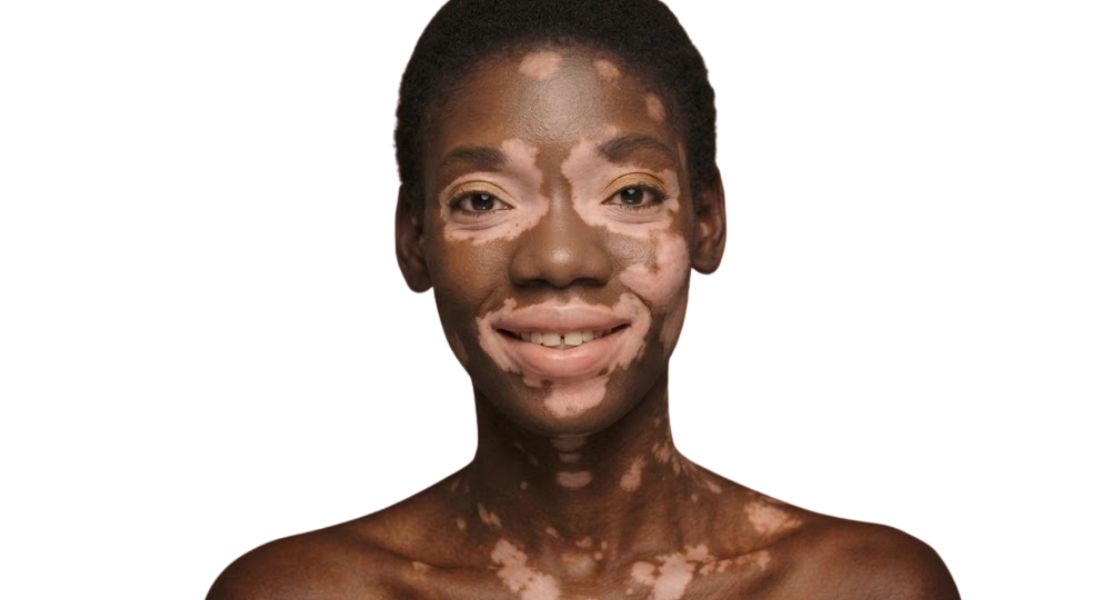
Vitiligo can affect anyone, whatever their skin colour. However, you may find that it is often more noticeable in Black skin because the contrast between the affected and unaffected areas is stronger, making changes in pigmentation easier to see.
If you have Black skin, even a small patch of pigment loss may stand out clearly. You might notice that the surrounding skin contains more visible melanin, so the areas where pigment has been lost can appear much lighter, brighter, or sharply defined against your natural skin tone.
This does not mean vitiligo is medically worse in Black skin. It simply means the visual impact can be greater, and you may experience it more strongly in everyday life depending on how visible the patches are and where they appear on your body.
That visual impact matters because skin conditions are not only about medical changes, but also about how you feel in daily life. You may notice this in situations like looking in the mirror, meeting people, taking photographs, going to work, or social interactions where visibility can affect your confidence.
What Vitiligo Is
Vitiligo is a skin condition that causes patches of skin to lose their natural pigment. You may find that this happens when the pigment-producing cells in your skin, called melanocytes, are no longer working properly or become damaged.
When melanocytes stop functioning, the affected skin loses its colour, which can lead to pale, white, or milky-white patches. You might notice that the change in colour can develop slowly over time or sometimes appear more suddenly depending on the person.
Vitiligo can appear anywhere on the body, and you may see it on areas such as the face, hands, feet, arms, legs, body folds, genitals, scalp, or around the mouth and eyes. The patches are usually flat, and you may find that the skin texture feels completely normal even though the colour has changed.
Why Vitiligo Is Often More Visible in Black Skin
Vitiligo is often more visible in Black skin because of the stronger contrast between affected and unaffected areas. You may find that Black skin contains higher levels of visible melanin, so when pigment is lost, the white or depigmented patches stand out much more clearly against the surrounding skin.
On lighter skin tones, early vitiligo can sometimes be quite subtle and may not be immediately noticeable at first. You might find that it becomes more visible later on, such as after tanning or under certain lighting conditions, which can change how the skin contrast appears.
In Black skin, however, the contrast can be noticeable from a much earlier stage, even when the patch is small. You may see that areas like the mouth, eyes, hands, or fingers are especially visible in daily life, which can make the condition feel more socially noticeable. You might experience people staring, asking questions, or making assumptions, and this can affect your confidence even when the affected area is medically small. That is why doctors should always consider emotional and visual impact, not just the size of the patch.
How Vitiligo Looks on Black Skin
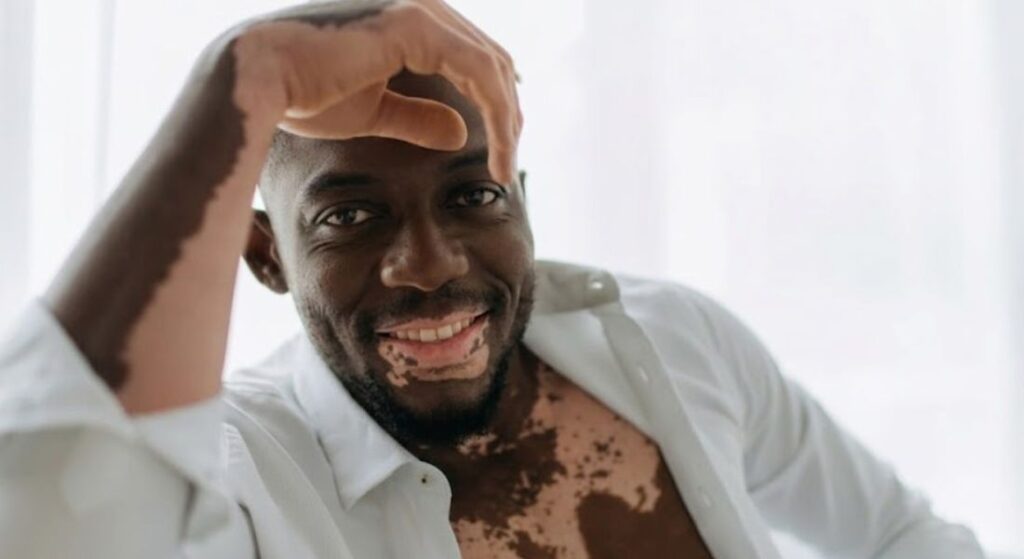
In Black skin, vitiligo may appear as sharply lighter patches, and you may notice the colour looks white, chalky, milky, pale, or significantly lighter compared with the surrounding skin. This contrast can make the patches more visually noticeable in everyday situations.
You might find that the edges are quite well defined, and sometimes the border between affected and unaffected skin stands out clearly. This can make even small patches appear more obvious than you might expect.
Some patches may start as slightly lighter areas before becoming fully depigmented, while others may appear clearly white from the beginning. You may also notice that vitiligo can affect hair in the same area, and if the scalp, beard, eyebrows, eyelashes, or body hair are involved, the hair may turn white or lighter in colour.
The appearance can vary depending on the body area, how active the condition is, and your natural skin tone. Because of this variation, you may find that a dermatologist’s assessment is important to understand your specific pattern and progression.
Why Contrast Matters Emotionally
The visible contrast of vitiligo in Black skin can sometimes make the emotional impact feel stronger. You may find that the difference in skin tone feels difficult to ignore in everyday situations, especially when it draws attention in public or social settings.
This can affect your confidence in daily life, and you might become more aware of your skin in photographs, meetings, social events, dating, or even family gatherings. You may notice that you start thinking about how others see your skin, which can sometimes add extra emotional pressure.
You may also feel tired of explaining your skin to others, even when questions are well-meaning or curious. You might notice pressure from different directions, either to cover your patches with makeup or clothing, or to accept them before you feel emotionally ready, and both responses are completely valid.
Vitiligo Is Not Just Cosmetic
Vitiligo is sometimes wrongly dismissed as only a cosmetic issue because it changes skin colour rather than causing physical pain. You may find this view feels hurtful or inaccurate, especially when you are living with the condition every day.
A visible skin condition can still have a real impact on your mental wellbeing, self-esteem, social confidence, and overall quality of life. This is particularly true when the patches appear on visible areas like your face, hands, or other exposed parts of the body.
You may experience anxiety about being judged, or find that it affects your identity, cultural confidence, or body image. For many people, the emotional impact can feel just as important as the physical appearance, and a good consultation should always recognise this. You should not feel guilty for being affected by vitiligo. Wanting support or treatment does not mean you are vain, and it is completely valid to seek help for how it makes you feel as well as how it looks.
Common Areas Where Vitiligo Appears
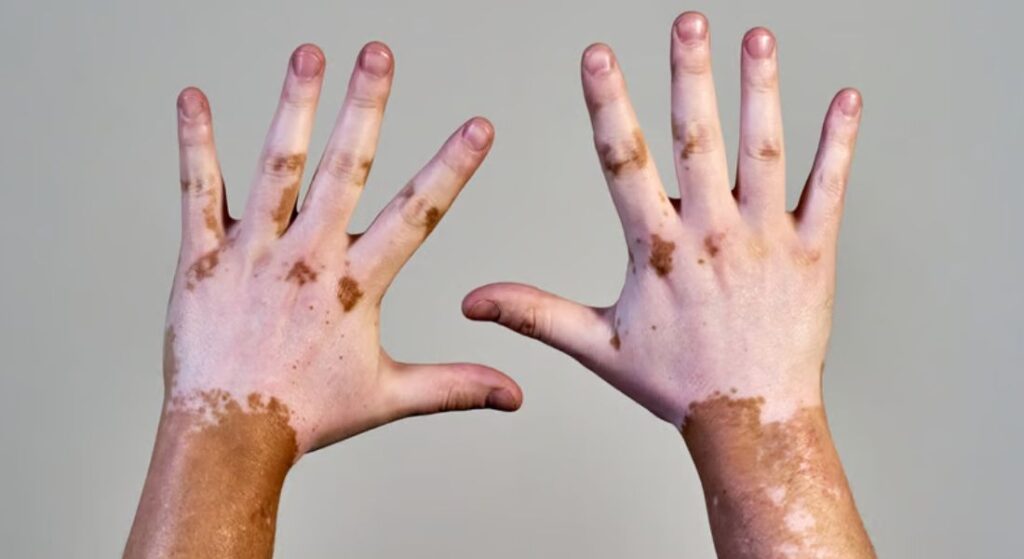
Vitiligo can appear anywhere on the body, but you may find that some areas are more commonly affected than others. These often include the face, hands, fingers, wrists, elbows, knees, feet, underarms, groin, mouth area, and around the eyes.
In Black skin, patches on the face and hands can be especially noticeable because these areas are difficult to cover and are part of daily communication. You might find that even small changes in these areas feel more visible in everyday life.
Vitiligo around the mouth and eyes can stand out strongly due to facial contrast, while hands are often a concern because they are always in view. You may also notice that the emotional impact of vitiligo often depends more on location than size, with small visible patches sometimes feeling more significant than larger hidden ones.
Early Vitiligo Can Be Easy to Notice
Early vitiligo may be easier to notice in Black skin because of the stronger contrast between affected and unaffected areas. You may see a small pale patch quite early, even before it becomes larger or more widespread.
This can actually be helpful, as it may encourage you to seek assessment sooner. Early diagnosis can confirm whether the patch is vitiligo or another skin condition, which helps guide the right approach from the beginning.
However, early visibility can also cause worry, and you may feel anxious about whether the patch will spread. It is important to remember that not every pale patch is vitiligo, as light areas can also be caused by eczema, fungal infections, inflammation, scars, or other skin conditions.
A dermatologist can carefully examine your skin and explain what is most likely in your case. You may find that this reduces uncertainty and helps you avoid using treatments that are not suitable for the actual condition.
Conditions That Can Look Similar
Several conditions can cause lighter patches on Black skin, which is why an accurate diagnosis is so important. Not every pale patch is vitiligo, and different conditions need different treatments. Understanding the cause helps avoid unnecessary or incorrect treatment that may not improve the skin.
- Pityriasis Versicolor: This is a common fungal condition that causes lighter or darker patches, often on the chest, back, neck, or shoulders, and may have fine scaling.
- Post-Inflammatory Hypopigmentation: This can occur after eczema, psoriasis, burns, injuries, or irritation, where the skin temporarily becomes lighter during healing.
- Chemical Leukoderma: This may develop after exposure to certain chemicals or products, including some skin-lightening agents, which can affect pigment production.
- Other Skin Conditions and Scars: Pityriasis alba, birthmarks, scars, and other inflammatory skin conditions can also resemble vitiligo in appearance.
Overall, many different conditions can look similar to vitiligo, especially in skin of colour. This is why getting the correct diagnosis from a dermatologist is essential before starting treatment. A proper assessment ensures you are treating the right condition and helps avoid delays or unnecessary skin irritation.
Why Early Diagnosis Matters
Early diagnosis helps you understand what is happening to your skin, and you may find this is important because vitiligo can behave very differently from one person to another. Getting clarity early can help you feel more in control of the situation.
Some patches may stay stable for a long time, while others can spread or appear in new areas. You might notice that this unpredictable pattern is one of the reasons professional assessment is useful.
If vitiligo is active, treatment may focus on slowing progression and supporting repigmentation, while stable vitiligo may lead to discussions around restoring colour or managing appearance. You may also find that early diagnosis provides emotional reassurance, as it is often easier to cope when you understand what is happening and what your options are.
Waiting without answers can sometimes increase anxiety, and you may find yourself checking your skin frequently or worrying about small changes. Getting an early diagnosis can help reduce that uncertainty and give you a clearer path forward.
The Role of a Dermatologist

A dermatologist can assess whether the patch is vitiligo and how active it appears. You may find that they examine your skin closely and ask when the patch first started, as this helps build a clearer understanding of your condition.
They may also ask whether it has been spreading, whether there is any family history of vitiligo, and whether you have symptoms of other autoimmune conditions. You might notice that these questions help them look at the bigger picture, not just the visible patch.
In some cases, a Wood’s lamp may be used. You may find this is a special light that helps highlight areas of pigment loss more clearly, especially on lighter or less obvious patches. Blood tests may also be considered in selected cases, particularly if there are symptoms suggesting thyroid disease or another autoimmune condition.
Vitiligo and Autoimmune Factors
Vitiligo is often linked with immune system activity, and you may find that in many cases the immune system appears to mistakenly target melanocytes, which are the cells responsible for producing skin pigment. This process can lead to the development of pale or white patches over time.
This does not mean your immune system is weak. Instead, you may understand it as a more specific immune response that affects pigment cells, rather than the whole immune system not working properly.
Some people with vitiligo may also have other autoimmune conditions, such as thyroid disease. You might find that this does not apply to everyone, but it can sometimes be considered during your assessment, depending on your symptoms and medical history.
Understanding this immune link can help explain why treatment may include anti-inflammatory or immune-modulating medicines. It also helps reinforce that vitiligo is a medical condition, not just a cosmetic change, and it deserves proper medical attention.
Types of Vitiligo
Vitiligo can be classified into different types depending on how it appears and how it spreads on the body. Understanding the type you have is important because it helps guide treatment choices and gives a clearer idea of how the condition may behave over time. It also helps your dermatologist set realistic expectations about progression, stability, and response to treatment.
- Non-Segmental Vitiligo: This is the most common type and usually affects both sides of the body in a more symmetrical pattern. It may slowly progress over time and can involve multiple areas such as the face, hands, or body folds.
- Segmental Vitiligo: This type typically affects one side or a single area of the body. It often starts earlier in life, may spread for a limited period, and then becomes stable or stops progressing.
- Focal Vitiligo: This form is limited to one or a small number of areas and may remain localised for a long time. In some cases, it can stay stable, while in others it may gradually change.
Overall, knowing the type of vitiligo helps your dermatologist understand how your condition is likely to behave in the future. It also supports more personalised treatment planning and helps you understand what improvements may realistically be possible. A clear classification is an important first step in choosing the right management approach for your skin.
Facial Vitiligo in Black Skin
Facial vitiligo can have a strong emotional impact because your face plays a central role in identity, expression, and communication. You may find that in Black skin, facial patches are especially noticeable due to the stronger contrast.
Common facial areas include around the mouth, eyes, nose, and forehead. You might find these areas harder to cover without makeup if you prefer some level of coverage, especially in daily social or professional settings.
The face may respond better to some treatments compared with areas like the fingers and toes. This is partly because facial skin often has more active pigment reservoirs within hair follicles, which can support repigmentation.
However, treatment on the face needs to be chosen carefully, especially in delicate areas. You may be offered options such as topical calcineurin inhibitors, short-term topical steroids, phototherapy, or newer treatments depending on your individual case and what is most suitable for your skin.
Vitiligo on Hands and Feet
Vitiligo on the hands and feet can be more difficult to treat, and you may find that areas like the fingers, toes, knuckles, and other bony parts often respond more slowly. This is because these areas tend to be less responsive compared to other parts of the body.
This can feel discouraging at times because your hands are highly visible and used in everyday activities. You may notice that people sometimes look at your hands when you shake hands, work, or even use your phone, which can make you more aware of the condition.
Treatment may still be possible, but you need to keep realistic expectations. You might see gradual improvement in some areas, while others may only improve partially or very slowly over time.
A dermatologist should explain this clearly so you know what to expect. You may find it helpful to understand which areas are more likely to respond and which are more resistant, as this can help you make more informed decisions about your treatment plan.
Sun Exposure and Visual Contrast
Sun exposure can make vitiligo more noticeable because your surrounding Black skin may tan or darken, while vitiligo patches do not tan in the same way. You may find that this difference in tanning creates a stronger visual contrast.
This increased contrast can make the patches look more obvious, and it may even feel like the condition has worsened, even when the actual size of the patches has not changed. You might notice this effect more during the summer or after spending time outdoors.
Vitiligo patches also have less melanin, which means they are more vulnerable to sunburn. Because of this, sun protection becomes very important, and you may benefit from using sunscreen, wearing protective clothing, and seeking shade when needed.
These steps can help protect the affected skin and may also reduce the contrast changes caused by tanning. Sun protection is not about avoiding the sun completely, but about caring for areas that have lost some of their natural pigment defence.
Camouflage and Makeup Support
Some people with vitiligo choose to use camouflage products, while others prefer not to cover their patches at all. You may find that both choices are completely valid, and you should not feel pressured to go either way.
Medical camouflage can help even out skin tone in daily life, at work, in photographs, or during special events. You might find it especially useful if you want more control over when your vitiligo is visible and when it is not.
Shade matching is particularly important in Black skin, because the wrong tone can sometimes look grey, orange, or unnatural. Camouflage does not treat vitiligo, but you may find it helpful for supporting confidence while you explore treatment options, and it can also be used alongside medical treatments if you choose.
Treatment Options for Vitiligo
Treatment for vitiligo depends on several factors, including the type, location, extent, and activity of the condition, as well as your personal goals. You may find that not everyone chooses treatment, and even when they do, the plan can look different from one person to another.
Topical corticosteroids may be used for certain areas, and you might be prescribed them to help calm immune activity in the skin and support repigmentation over time. These are often used in carefully selected areas where they are considered safe and appropriate.
Topical calcineurin inhibitors may be considered for more delicate areas such as the face or skin folds. You may also be offered phototherapy, especially narrowband UVB, if vitiligo is more widespread or needs light-based treatment. In some cases, newer topical JAK inhibitor treatments may also be considered depending on availability and clinical assessment.
Why Treatment Response Varies
Vitiligo treatment response can vary widely from person to person, and you may find that results are very different depending on your skin and situation. Some people see good repigmentation, while others may only notice partial or slower improvement.
The location of the patch plays an important role in how well it responds. You might find that areas like the face tend to respond better, while hands, feet, fingertips, and areas with white or lighter hair often improve more slowly or may be more resistant to treatment.
Disease activity also matters, because active, spreading vitiligo may need a different approach compared to stable vitiligo. You may also need to stay consistent with treatment, as most options take several months before visible changes become clear. That is why you should be cautious of anyone promising instant or guaranteed results, as vitiligo management usually requires patience and realistic expectations.
Emotional and Social Impact
Vitiligo can have a significant emotional and social impact, especially when it affects visible areas of the skin. You may notice people staring, asking questions, or making comments that feel uncomfortable or insensitive. Even when these reactions are not intended to be hurtful, they can still affect how you feel over time.
- Misunderstandings Are Common: Some people wrongly believe vitiligo is contagious, but it is not.
- Unwanted Attention: You may experience stares or repeated questions, which can feel emotionally draining.
- Impact on Confidence: These experiences can affect how you feel in social situations, at work, or in photographs.
- Avoidance Behaviours: You may start avoiding certain clothing, events, or public situations due to self-consciousness.
Overall, the emotional impact of vitiligo is an important part of your overall health and wellbeing. A good treatment plan should not only focus on repigmentation but also consider how you feel day to day. Support, understanding, and realistic expectations can all play an important role in managing the condition.
Vitiligo and Self-Image
Vitiligo can affect how you see yourself, and you may find this becomes more noticeable if it appears suddenly or in visible areas of the body. It can take time to adjust when your appearance feels different from what you are used to.
You might feel that your outward appearance no longer fully matches how you think of yourself. This can be a difficult feeling to process, and you may go through different emotions as you come to terms with the change.
Some people move towards acceptance quite quickly, while others may need more time, support, or treatment before they feel comfortable. There is no correct timeline for this, and you are allowed to have mixed or changing feelings along the way. Your self-image is personal, and your dermatologist should respect your goals, whether that includes treatment, camouflage, counselling support, or simply clear and honest information.
Children and Young People With Vitiligo
Vitiligo in children and young people can be emotionally sensitive, and you may notice that a child does not always express how they feel directly. Instead, they might become quieter, avoid certain activities, or feel embarrassed about their skin.
In Black children, the visible contrast can sometimes lead to more questions or comments from classmates or others. You may find that this can affect their confidence, especially in social or school settings where appearance becomes more noticeable.
Early diagnosis can really help you as a parent or caregiver understand the condition clearly and explain it in the right way. It also helps schools and family members support the child properly, while ensuring treatment decisions are made carefully, taking age, affected areas, and emotional wellbeing into account. Children should always be reassured that vitiligo is not their fault and cannot be passed on to others.
Myths About Vitiligo in Black Skin
There are many myths about vitiligo, and you may find that these misunderstandings can increase stigma and sometimes delay people from getting the right medical advice. It is important to know the facts so you can feel more informed and confident about the condition.
Vitiligo is not contagious, so you cannot catch it by touching someone who has it. You may hear incorrect beliefs, but it does not spread through contact, and there is no risk in normal daily interaction with others who have vitiligo.
It is also not caused by poor hygiene or anything related to cleanliness or personal behaviour. While diet can support overall health, you may find that extreme claims about curing vitiligo through food alone are not reliable. Vitiligo is not something you are required to hide, and you may choose treatment, camouflage, or visible acceptance depending on what feels right for you.
When to Seek Specialist Advice
You should seek specialist advice if you notice new white patches, patches that are spreading, or any pigment changes in visible areas of your skin. You may also want to get help if the condition is starting to affect your confidence or how comfortable you feel in everyday life.
A dermatologist can confirm whether it is vitiligo and explain what stage it may be at. You might find it helpful that they can also tell you whether the condition appears active or stable, which can influence the type of treatment you are offered.
Early assessment becomes especially important if new patches are appearing quickly or changing in a short space of time. You may find that this helps guide treatment decisions more effectively and prevents unnecessary delays.
You should also seek advice before using strong creams, skin-lightening products, or home remedies. Some of these products can irritate your skin or worsen pigment changes, so getting professional guidance helps you make safer decisions based on your skin rather than online assumptions.
How to Prepare for Your Appointment
Before you see a dermatologist, it can help you to note when the patches first appeared. You may also want to write down whether they have changed over time or if they seem to be spreading, as this gives a clearer and more accurate picture of how your condition is behaving.
Taking photographs can also be very useful. You might find that images help track progression more reliably than memory alone, especially if changes happen slowly over weeks or months. It can also make it easier for your dermatologist to compare how your skin looked at different stages.
It is also helpful to make a list of any treatments or products you have already tried. This can include creams, steroid treatments, herbal remedies, or skin-lightening products, as all of this information helps guide your care. You may also want to mention any family history of vitiligo or autoimmune conditions, as well as any relevant symptoms like tiredness, weight changes, or thyroid concerns.
Living With Visible Vitiligo
Living with visible vitiligo can take some adjustment, and you may find that some days feel easier than others. Your confidence can naturally change depending on how noticeable the patches feel or what situation you are in, and this is a very normal experience.
You may choose to treat it, cover it with camouflage, talk openly about it, or simply let it be visible. You might also notice that your approach changes from day to day, depending on your setting, your mood, or how comfortable you feel in yourself at that moment.
Support can really help you manage this journey, and it may include dermatology care, camouflage advice, counselling, support groups, or clear information. It can also help to remind yourself that vitiligo is part of your skin, but it does not define who you are.
FAQs:
1. Is vitiligo more noticeable in Black skin?
Yes, vitiligo is often more noticeable in Black skin because the contrast between natural skin tone and depigmented patches is much stronger. This makes even small areas of pigment loss easier to see.
2. Why does vitiligo look more visible on darker skin tones?
It is mainly due to contrast. Black skin contains higher levels of melanin, so when pigment is lost, the affected areas appear much lighter or white compared with surrounding skin.
3. Does vitiligo look worse in Black skin?
No. Vitiligo is not medically worse in Black skin. However, it can appear more visually striking due to the higher contrast between affected and unaffected areas.
4. Which areas of the body show vitiligo most clearly in Black skin?
The face, hands, fingers, around the mouth, eyes, and joints often show vitiligo most clearly. These areas are also highly visible in daily life, which increases the emotional impact.
5. Can early vitiligo be easier to notice in Black skin?
Yes. Early patches may stand out quickly as small pale or white areas, especially after sun exposure when surrounding skin tans but the vitiligo patch does not.
6. Does visible vitiligo affect confidence and mental health?
It can. Many people feel self-conscious or anxious due to the visibility of patches. The emotional impact is often significant, even when the affected area is small.
7. Is vitiligo only a cosmetic condition?
No. Although it does not usually cause physical pain, vitiligo is a medical condition that can affect mental wellbeing, confidence, and quality of life, especially when visible.
8. Can vitiligo be mistaken for other skin conditions?
Yes. Conditions like fungal infections, eczema-related pigment loss, post-inflammatory hypopigmentation, or chemical leukoderma can look similar and require proper diagnosis.
9. What should I do if I notice new white patches on my skin?
You should seek dermatology advice early. A specialist can confirm whether it is vitiligo, assess whether it is active, and recommend appropriate treatment if needed.
10. Can vitiligo visibility be reduced?
Yes, in some cases. Options include topical treatments, phototherapy, and camouflage products. While these do not cure vitiligo, they may help reduce contrast or support repigmentation depending on the case.
Final Thoughts: Understanding the Visual Impact of Vitiligo in Black Skin
Vitiligo can affect all skin types, but in Black skin it often appears more noticeable due to the higher contrast between depigmented patches and the surrounding skin. While this does not mean the condition is medically more severe, it can have a greater emotional and social impact, especially when visible areas such as the face and hands are affected.
Early assessment by a dermatologist is important to confirm the diagnosis, rule out other similar conditions, and discuss suitable management options. Treatments such as topical therapies, phototherapy, and camouflage support may help depending on the type, location, and activity of vitiligo, while also taking into account your personal goals and confidence. If you are considering vitiligo treatment in London, you can get in touch with us at London Dermatology Centre.
References:
- Al-Smadi, K., Imran, M., Leite-Silva, V.R. and Mohammed, Y., 2023. Vitiligo: A review of aetiology, pathogenesis, treatment, and psychosocial impact. Cosmetics, 10(3), p.84. Available at: https://www.mdpi.com/2079-9284/10/3/84
- Ibrahim, S., Hegazy, R.A., Gawdat, H.I., Esmat, S., Mahmoud, E., Rashed, L., Hegazy, A.A. and Saadi, D.G., 2022. Differentiating active from stable vitiligo: The role of dermoscopic findings and their relation to CXCL10. Journal of Cosmetic Dermatology, 21(10), pp.4651–4658. Available at: https://pubmed.ncbi.nlm.nih.gov/35298096/
- Kamath, C., Dhurat, R., Shah, B., Sharma, R., Kowe, P.A. and Chamle, S., 2023. Monitoring of vitiligo patches over six months to validate dermoscopic findings of lesional stability. Dermatology Practical & Conceptual, 13(4), Available at: https://pmc.ncbi.nlm.nih.gov/articles/PMC10656188
- Jha, A.K., Sonthalia, S. and Lallas, A., 2018. Dermoscopy as an evolving tool to assess vitiligo activity. Journal of the American Academy of Dermatology, 78(5), pp.1017–1019. Available at: https://pubmed.ncbi.nlm.nih.gov/29229577/
- Yang, Y., Morriss, S. and Rodrigues, M., 2024. Dermoscopy in vitiligo, diagnostic clues and markers of disease activity: a review of the literature. Clinical and Experimental Dermatology, 49(9), pp.969–975. Available at: https://academic.oup.com/ced/article-abstract/49/9/969/7513393