



You may not realise how much modern dermatology relies on international collaboration and shared scientific progress. Global conferences bring together researchers, clinicians, and specialists from around the world to present new findings, discuss clinical experiences, and compare treatment outcomes. These events are an important way of ensuring that knowledge is not limited to one region, but instead contributes to a wider, evidence-based understanding of skin health.
When new research is presented at these conferences, it often goes through discussion, peer evaluation, and comparison with existing studies. Over time, strong evidence can influence clinical guidelines and help shape how conditions are diagnosed and treated in everyday practice. This process ensures that dermatology continues to evolve in line with reliable scientific data rather than isolated opinion or outdated methods.
Understanding this global process helps you see how treatments eventually reach patients in clinical settings. What you experience in a consultation or treatment room is often the result of years of international research, testing, and refinement. This continuous exchange of knowledge helps improve safety, effectiveness, and consistency in dermatological care over time.
How Research Is Shared at Conferences
You might wonder how scientific research is actually shared at global dermatology conferences. Typically, studies are presented through a combination of lectures, poster presentations, and live discussions. These formats allow researchers to explain their findings clearly, while also giving other experts the opportunity to ask questions and challenge the results. This interactive setting helps ensure the information is properly understood and critically evaluated.
Researchers often present data from clinical trials, laboratory studies, and real-world patient outcomes. This can include details such as treatment effectiveness, side effects, safety profiles, and long-term results. By sharing this level of detail, specialists are able to assess how reliable and applicable the findings are to everyday clinical practice. It also helps compare new approaches with existing treatments already in use.
The open exchange of information at these conferences plays an important role in accelerating progress within dermatology. When experts from different countries and specialties share their knowledge, it helps identify stronger treatment methods more quickly. This collaborative environment ensures that improvements in skin health care are based on a broad and well-reviewed evidence base rather than isolated findings.
From Research to Clinical Practice
You should know that not all research presented at conferences is immediately turned into treatment. After findings are shared, they go through careful review by other experts in the field. This evaluation process helps confirm whether the results are reliable, safe, and applicable to real patients before they are widely adopted in clinical practice.
- Peer review helps validate findings: Research is carefully assessed by other specialists who evaluate whether the methods, data, and conclusions are scientifically sound.
- Further studies are often required: Initial findings are frequently followed by larger clinical trials or additional research to confirm consistency and real-world effectiveness.
- Comparison with existing evidence is essential: New data is measured against established treatments and guidelines to ensure it offers genuine improvement before being introduced.
- Safety and reliability come first: Only treatments with strong and consistent evidence are considered suitable for everyday clinical use, helping maintain high standards of patient care.
This careful progression from research to practice is what keeps dermatology evidence-based and safe. While it can take time for new discoveries to reach patients, this process ensures that treatments used in clinics are supported by thorough scientific review and real-world validation.
The Role of Clinical Trials

You may not realise how important clinical trials are in dermatology research. Many of the studies presented at conferences are based on trials involving real patients, where treatments are carefully tested in controlled environments. This allows researchers to understand how new medications, devices, or procedures perform in practice, not just in theory.
These trials are designed to evaluate both safety and effectiveness before any treatment becomes widely available. Researchers closely monitor outcomes, side effects, and long-term results to ensure the approach is suitable for broader use. The data collected is then analysed and shared with the wider medical community to support informed decision-making.
Clinical trials are essentially the foundation of medical advancement in dermatology. They help shape future standards of care by identifying what works best for patients and what needs further refinement. Without them, it would not be possible to introduce new treatments safely or confidently into everyday clinical practice.
Advances in Biologic Treatments
You might hear a lot about biologic therapies at international conferences, as they represent one of the most significant advances in modern dermatology. These treatments are designed to target specific immune pathways that play a key role in inflammatory skin conditions such as psoriasis and eczema. Instead of broadly suppressing the immune system, biologics work in a more precise way by focusing on the underlying biological processes driving disease.
Research presentations in this area often focus on improving both effectiveness and safety. Scientists and clinicians share data on how well different biologics control symptoms, how long their benefits last, and what side effects may occur. This ongoing exchange of information helps refine how these treatments are selected, prescribed, and monitored in everyday clinical practice. It also supports the development of newer generations of biologic therapies with improved outcomes.
Biologics are widely regarded as one of the most important developments in modern dermatology. They have transformed the management of several chronic skin conditions by offering more targeted and effective treatment options. As research continues, their use is likely to become even more refined, helping patients achieve better long-term control of their conditions with fewer side effects.
Emerging Technologies in Dermatology
You should know that global dermatology conferences are also an important platform for showcasing emerging technologies. These often include advanced imaging systems, next-generation laser devices, and improved diagnostic tools designed to enhance precision in skin assessment. By presenting these innovations in a scientific setting, researchers and clinicians can evaluate how effectively they work in real clinical environments.
At these events, experts demonstrate how new technologies can improve accuracy, safety, and overall patient outcomes. This may involve showing clearer diagnostic imaging, more controlled treatment delivery, or faster and more comfortable procedures. The aim is to prove not only that a technology is innovative, but that it genuinely offers meaningful benefits compared to existing methods. Feedback from the wider medical community also helps refine these tools further.
Over time, many of these technologies move from conference presentations into everyday clinical use. Once they have been properly tested, reviewed, and validated, they often become part of standard dermatology practice around the world. This gradual adoption process ensures that new innovations are both safe and effective before reaching patients. In this way, technology continues to steadily transform and improve modern dermatology care.
The Importance of Skin Microbiome Research
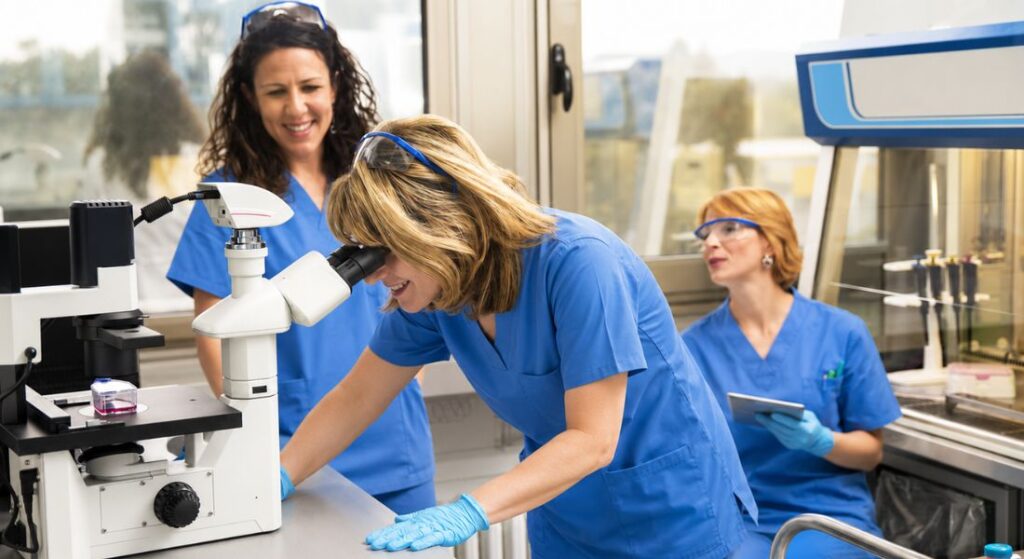
You may not think about the bacteria living on your skin, but microbiome research is becoming a major focus in dermatology. Scientists are increasingly studying how your skin’s natural microbial balance influences conditions such as acne, eczema, and psoriasis. Rather than viewing bacteria purely as harmful, modern research explores how different microbial communities interact with your skin barrier and immune system.
- The skin microbiome affects skin health: our skin hosts a diverse range of microorganisms that play a role in maintaining barrier function and regulating inflammation. An imbalance can contribute to common skin conditions.
- Research is shifting away from “removal” approaches: Instead of trying to eliminate bacteria completely, newer thinking focuses on restoring balance between beneficial and harmful microbes on the skin.
- Treatments are becoming more targeted and supportive: Emerging approaches aim to reduce inflammation-linked bacteria while supporting those that help maintain a healthy skin environment.
- Focus is on long-term skin balance, not just symptoms: The goal is not only to treat flare-ups but also to support a stable and resilient skin ecosystem over time.
This evolving research is reshaping how skin health is understood in modern dermatology. It highlights that healthy skin is not just about treating visible symptoms, but also about maintaining a balanced environment on the skin surface. As knowledge in this area grows, it is likely to influence future treatments that are more targeted, gentle, and aligned with your skin’s natural biology.
Artificial Intelligence in Dermatology
You might be surprised to learn that artificial intelligence is now widely discussed at dermatology conferences. Machine learning systems are being developed to analyse skin images and help clinicians identify patterns that may not always be immediately visible to the human eye. These tools are trained on large datasets of dermatological images, allowing them to support faster and more consistent assessments.
In practice, AI can assist in the early detection of conditions such as skin cancer, as well as other inflammatory or pigmentary disorders. By highlighting suspicious changes or unusual features, these systems can help guide clinicians towards earlier investigation and diagnosis. This can be particularly valuable in improving accuracy and supporting decision-making in busy clinical environments.
However, AI is designed to support, not replace, clinical judgement. Final decisions still rely on trained medical professionals who interpret results in the context of a patient’s full history and examination. As this technology continues to develop, it is becoming an increasingly important tool in modern dermatology, helping to enhance precision, efficiency, and early detection outcomes.
Global Collaboration in Research
You should understand that dermatology research is highly collaborative on a global scale. Experts from different countries regularly work together to share data, compare findings, and improve overall treatment outcomes. This international cooperation allows research to move beyond individual clinics or regions and become part of a much broader scientific understanding.
This global approach is important because it ensures that treatments are tested across diverse populations. Skin types, genetic backgrounds, climates, and environmental exposures can all influence how conditions develop and how patients respond to treatment. By studying these differences, researchers can better understand variations in effectiveness and safety, leading to more inclusive and reliable results.
Collaboration also plays a key role in strengthening scientific progress overall. When experts combine their knowledge and data, it reduces gaps in understanding and helps validate findings more effectively. This shared effort ultimately leads to more robust evidence and improves the quality of care offered to patients worldwide.
How Conferences Influence Treatment Guidelines
You may not realise that the treatment guidelines used in clinics are often influenced by findings presented at dermatology conferences. When strong and consistent evidence emerges from research studies, it is carefully reviewed by expert panels within professional organisations. These groups assess the quality of the data and determine whether it is reliable enough to inform clinical recommendations.
Once reviewed, this evidence can contribute to updates in official guidelines that dermatologists follow in everyday practice. These guidelines help ensure that patients receive treatments that are based on the most current and effective scientific knowledge. They also provide a structured framework for decision-making, which supports consistency in care across different clinics and regions.
As new research continues to emerge, these guidelines naturally evolve over time. This ongoing update process ensures that dermatology practice keeps pace with scientific advancements and reflects the latest understanding of skin health and treatment outcomes.
Breakthroughs in Acne Research

You might see significant attention given to acne at international dermatology meetings, as it remains one of the most widely researched skin conditions. Researchers are continually exploring new ways to target its multiple contributing factors, including hormonal influences, inflammation, and bacterial activity. By studying acne from different biological angles, they aim to develop more effective and targeted treatment strategies.
- Acne is being studied from multiple biological pathways: Researchers are looking at how hormones, inflammation, sebum production, and bacteria all interact, rather than treating acne as a single-cause condition.
- Focus is shifting towards long-term control: Modern research is increasingly aimed at reducing recurrence and improving how well results are maintained over time, not just achieving short-term clearance.
- Combination and personalised therapies are expanding: Studies are exploring how tailored treatment plans and combined approaches can improve consistency and outcomes across different patient groups.
- New technologies are improving treatment precision: Advances in clinical research and diagnostic tools are helping treatments become more targeted, predictable, and better suited to individual skin profiles.
Acne research continues to evolve rapidly through ongoing clinical trials and technological development. As understanding of the condition deepens, treatments are becoming more refined and personalised, helping patients achieve more stable and longer-lasting improvements in their skin health.
Advances in Skin Cancer Detection
You should know that early detection is a major focus in dermatology research and continues to be one of the most important priorities in the field. At international conferences, new imaging technologies, diagnostic algorithms, and screening tools are regularly presented and evaluated by experts. These innovations are designed to help clinicians identify suspicious skin changes at a much earlier stage than was previously possible.
These advancements often improve both accuracy and speed in diagnosis. High-resolution imaging systems, dermoscopy enhancements, and AI-assisted analysis tools can highlight subtle features that may not be easily visible during a standard examination. By detecting potential skin cancers earlier, clinicians can recommend treatment sooner, which can significantly improve patient outcomes and survival rates.
Early detection remains a central goal in dermatology because it has a direct impact on treatment success. The earlier a condition is identified, the more effective and less invasive the treatment is likely to be. Continued research and technological progress in this area are helping to make skin cancer diagnosis more reliable, accessible, and effective across different clinical settings.
The Role of Regenerative Medicine
You may hear more about regenerative treatments in conference discussions, as this area of dermatology continues to grow rapidly. Regenerative medicine focuses on supporting the skin’s natural ability to repair and renew itself by using the body’s own healing mechanisms. Instead of simply treating symptoms, these approaches aim to improve skin function at a deeper biological level.
Techniques such as platelet-rich plasma (PRP) and ongoing stem-cell research are being explored for a range of skin concerns. PRP uses components from your own blood to encourage tissue repair and collagen production, while stem-cell research is investigating how cellular regeneration can improve healing and skin quality. These methods are still being studied, but early findings suggest potential benefits in both aesthetic and medical dermatology.
Regenerative medicine is an exciting and expanding field because it represents a shift towards more natural and biologically aligned treatments. As research continues, these approaches may become more refined and widely used in clinical practice. The focus remains on improving skin health by enhancing the body’s own repair processes in a safe and controlled way.
Translating Research Into Patient Care
You should know that research only becomes meaningful when it ultimately improves patient outcomes. While scientific discoveries are important on their own, their real value lies in how they are applied in everyday clinical care. Conferences play a key role in bridging this gap by bringing researchers and clinicians together to discuss how new findings can be translated into practical treatment approaches.
At this stage, doctors and specialists carefully evaluate whether new evidence can be safely and effectively used in real-world settings. This includes considering factors such as patient safety, ease of use, accessibility, and how the treatment performs outside of controlled study environments. Only when these criteria are met can new approaches begin to be integrated into routine dermatology practice.
Ultimately, patient benefit is always the final goal of this entire process. Every stage of research, review, and clinical evaluation is focused on improving outcomes, safety, and quality of care. This ensures that advancements in dermatology are not only scientifically sound but also genuinely useful for the people receiving treatment.
Challenges in Implementing New Research
You might assume that new treatments are adopted quickly once they are presented at conferences, but in reality, the process is often much slower. Even promising findings usually need further validation through additional studies, longer follow-ups, or larger patient groups before they are considered ready for everyday clinical use. This ensures that early results are consistent and reliable over time.
- Further validation is often required: Early research findings must usually be confirmed through larger studies and longer-term follow-ups to ensure the results remain consistent and dependable.
- Safety is always the top priority: Even if a treatment shows promise, it must first meet strict safety standards before it can be introduced into routine clinical practice.
- Practical considerations matter: Factors such as cost, availability, training requirements, and healthcare infrastructure all influence whether a treatment can realistically be adopted.
- Not all innovations are immediately suitable for widespread use: Some treatments may work well in controlled research settings but require further refinement before they can be used across different clinical environments.
Because of this careful and structured process, not all research becomes immediate treatment. While some advancements are adopted relatively quickly, others may take years before becoming part of standard practice. This cautious approach helps ensure that dermatology remains safe, evidence-based, and consistently reliable for patients.
The Future of Dermatology Innovation
You should understand that dermatology is constantly evolving, with global conferences playing a key role in introducing new ideas, technologies, and treatment approaches. These events bring together experts who are actively shaping the direction of future skin health care through shared research and collaboration. As new evidence emerges, it steadily influences how conditions are understood and treated.
The future of dermatology is likely to focus more on personalised medicine, where treatments are tailored specifically to your skin type, genetics, and individual response patterns. Advanced diagnostics will also continue to improve, allowing earlier and more precise identification of skin conditions. Alongside this, more targeted therapies are being developed to act on specific biological pathways, improving effectiveness while reducing unnecessary side effects.
Overall, innovation will continue to shape patient care in meaningful ways. As technology and research progress, treatments are expected to become more accurate, efficient, and customised to individual needs. This ongoing development ensures that dermatology remains a dynamic field that continually improves outcomes for patients.
FAQs:
1. How do dermatology conferences influence your treatment?
You may not realise it, but many treatments you receive are shaped by research first presented at conferences. Experts review and discuss new findings before they become part of clinical practice. This ensures your care is based on evidence rather than opinion. Over time, this leads to safer and more effective treatments.
2. Why is international collaboration important in dermatology?
You benefit from research shared across different countries and populations. This helps doctors understand how skin conditions behave in different environments and skin types. It also improves the reliability of treatments worldwide. Global collaboration makes dermatology more consistent and inclusive.
3. What role do clinical trials play in dermatology research?
You should know that clinical trials are essential for testing new treatments on real patients. They help researchers understand safety, effectiveness, and long-term outcomes. Only treatments that perform well in trials move forward into wider use. This ensures your care is backed by strong scientific evidence.
4. How do treatments move from research to clinics?
You might be surprised that new treatments go through a careful approval process before reaching you. Research is reviewed, tested further, and compared with existing treatments. Only after strong evidence is confirmed are they introduced into clinical practice. This helps maintain high standards of safety and effectiveness.
5. What are biologic treatments in dermatology?
Biologics are advanced therapies that target specific parts of your immune system. They are often used for conditions like psoriasis and eczema. Because they act more precisely, they can improve symptoms with fewer side effects than older treatments. They are one of the biggest advances in modern dermatology.
6. How is artificial intelligence used in dermatology?
You may see AI being used to analyse skin images and support diagnosis. It helps detect patterns that might not be obvious during a standard examination. However, it always works alongside a trained specialist rather than replacing them. This improves accuracy and supports earlier detection of conditions.
7. Why is skin microbiome research important?
You should know that your skin contains natural bacteria that help maintain balance and protect it. Research shows that disruption in this balance can contribute to conditions like acne or eczema. Instead of removing bacteria, new treatments aim to restore balance. This leads to a more natural approach to skin health.
8. How does research influence treatment guidelines?
You may not realise that clinical guidelines are updated based on new research findings. Expert panels review evidence from conferences and studies before making changes. This ensures treatments used in clinics are up to date and reliable. It helps create consistency in care across different practices.
9. Why are some new treatments slow to reach patients?
You might expect new treatments to be used quickly, but they often require further testing first. Safety, effectiveness, and real-world performance must all be confirmed. Practical factors like cost and training also matter. This careful process ensures only reliable treatments are introduced.
10. What is the future of dermatology research?
You can expect dermatology to become more personalised and technology-driven. Treatments will increasingly be tailored to your genetics, skin type, and condition. Advances in diagnostics and targeted therapies will improve accuracy and results. Overall, care will become more precise and patient-focused.
Final Thoughts: How Research Shapes the Future of Dermatology
International dermatology conferences play a vital role in turning scientific discovery into real-world patient care. What begins as early-stage research or experimental findings is carefully reviewed, tested, and validated before it ever reaches a clinic. This ensures that the treatments you receive are not only innovative but also safe, effective, and backed by strong evidence from global collaboration.
As dermatology continues to evolve, these shared advancements are helping improve diagnosis, treatment precision, and long-term outcomes across a wide range of skin conditions. From biologic therapies to AI-assisted diagnostics, much of today’s progress is the result of years of international research and ongoing clinical refinement. This continuous exchange of knowledge is what drives modern dermatology forward. If you’re considering Dermatologist in London, contact us at London Dermatology Centre to book a consultation with one of our specialists.
References:
- Holcomb, J.D. et al. (2021) Helium plasma dermal resurfacing: VISIA CR assessment of facial spots, pores, and wrinkles Preliminary findings. Journal of Cosmetic Dermatology, 20(6), pp. 1668–1678. Available at: https://pmc.ncbi.nlm.nih.gov/articles/PMC8251577/
- Bogle, M.A., Arndt, K.A. and Dover, J.S. (2007) Evaluation of Plasma Skin Regeneration Technology in Low-Energy Full-Facial Rejuvenation. Archives of Dermatology, 143(2), pp. 168–174. Available at: https://jamanetwork.com/journals/derm/article-abstract/411275
- Holcomb, J.D., Kelly, M. and Hamilton, T.K. (2020) A Prospective Study Evaluating the Use of Helium Plasma for Dermal Resurfacing. Lasers in Surgery and Medicine, 52(10), pp. 940–951. Available at: https://pmc.ncbi.nlm.nih.gov/articles/PMC7754429/
- Pourazizi, M. and Abtahi-Naeini, B. (2017) Plasma application in aesthetic medicine: Clinical and physical aspects. Journal of Surgical Dermatology, 2(t1). Available at: https://www.mdpi.com/1648-9144/62/4/759
- Hassana, A.M. et al. (2020) Evaluation of plasma exeresis as a new technique for non-surgical treatment of dermatochalasis. Journal of Dermatological Treatment, 33(2), pp. 1017–1022. Available at: https://www.mdpi.com/2673-6179/6/2/17