


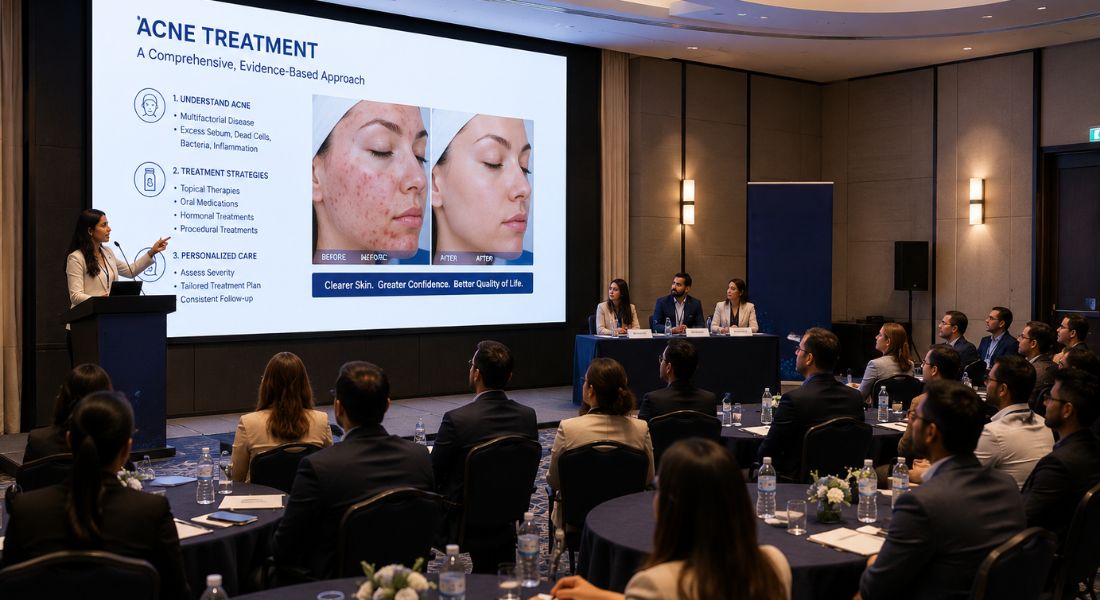
The European Academy of Dermatology and Venereology (EADV) Congress is one of the most influential dermatology meetings in the world. You’ll often see dermatologists, researchers, and healthcare professionals coming together here to share the latest updates in skin disease diagnosis, treatment, and research. It plays a key role in shaping modern dermatology practice.
You’ll notice that acne consistently remains one of the most widely discussed topics at the congress. This is because it affects people across different age groups and can have a significant impact on your quality of life and confidence. As a result, it continues to attract strong clinical and scientific attention.
For you as a patient, the acne sessions at EADV are important because many of the findings often influence future treatment recommendations. You’ll see that one of the strongest themes from recent meetings is a shift towards more personalised, evidence-based, and patient-centred care. Ultimately, the focus is on improving your results while reducing treatment burden and side effects.
Acne Remains a Major Focus at EADV
Acne continues to feature prominently within the EADV scientific programme. You’ll often see that it remains one of the most discussed conditions at the congress because it affects millions of people worldwide. This makes it a key focus for both researchers and clinicians.
You’ll notice that acne is still one of the most common reasons for dermatology consultations across different age groups. Conference sessions regularly include presentations on disease mechanisms, new treatment approaches, and long-term patient outcomes. This helps improve understanding of how acne develops and responds to different therapies.
This continued focus reflects the importance of improving care for you if you are affected by acne. You’ll see that the condition remains a major research priority within dermatology. Ultimately, this ongoing attention helps drive better treatment options and more effective management strategies.
Understanding Acne Pathways Continues to Advance
Many EADV presentations focus on the biological mechanisms that contribute to acne development. You’ll often hear researchers discussing how different internal processes in your skin work together to trigger and sustain acne. This deeper understanding helps improve overall knowledge of the condition.
You’ll notice that key areas of focus include inflammation, hormonal influences, oil (sebum) production, and bacterial interactions within the skin. By studying how these factors connect, researchers can better understand why acne behaves differently from person to person. This is important for developing more effective treatment strategies for you.
Conference discussions frequently highlight how advances in basic science are directly influencing clinical practice. You’ll see that this growing knowledge is helping shape more targeted and precise acne treatments. Ultimately, this research continues to guide the future of acne management in a more personalised direction.
Personalised Treatment Strategies Are Expanding
One of the strongest themes emerging from EADV acne sessions is personalised medicine. You’ll often hear experts explain that acne is not the same for everyone, and treatment needs to reflect these individual differences. This shift is helping improve how acne is understood and managed.
You’ll notice that factors such as your age, skin type, acne severity, and hormonal influences all play an important role in treatment decisions. Instead of using a single standard approach, practitioners are increasingly encouraged to tailor treatment plans to your specific needs. This helps ensure more suitable and effective care for you.
Conference speakers frequently discuss better ways to personalise acne treatment strategies in clinical practice. You’ll see that personalisation is becoming a key part of modern acne care. Ultimately, this approach aims to improve your outcomes by making treatment more targeted and individualised.
New Topical Treatments Are Being Evaluated
Topical therapies remain a key focus in acne research at EADV. You’ll often see presentations exploring new formulations, delivery systems, and active ingredients designed to improve both effectiveness and tolerability. This ongoing research helps refine how topical treatments are used in practice.
You’ll notice that researchers are also looking at ways to improve treatment adherence and your overall satisfaction with therapy. Many traditional topical treatments can be difficult to use consistently, so innovation is focused on making them easier and more comfortable for you. This can play an important role in improving real-world results.
These developments may help address some of the common challenges associated with existing topical acne therapies. You’ll see that topical treatment innovation remains highly active and continues to evolve. Ultimately, the goal is to make acne care more effective, practical, and better suited to your everyday routine.
Adult Acne Continues to Attract Attention

Adult acne is receiving increasing attention at international dermatology conferences. You may notice that it is now widely recognised that acne is not just a teenage condition, as many people continue to experience breakouts or develop acne well into adulthood. This has led researchers to explore why it persists or appears later in life and how it should be managed differently from adolescent acne.
- Hormonal influences are a key focus: You may hear that hormones play a major role in adult acne, especially in women. Fluctuations related to menstrual cycles, stress, pregnancy, or other hormonal changes can contribute to ongoing or recurring breakouts.
- Lifestyle factors are being studied more closely: Researchers are increasingly looking at how sleep, stress, diet, and daily habits may influence adult acne. While these factors are not the sole cause, they can affect how frequently breakouts occur and how severe they become.
- Treatment approaches are more tailored for adults: Adult skin often behaves differently from teenage skin, so treatment strategies may need to be adjusted. You may be offered combinations of topical treatments, oral medications, or procedural options based on your skin’s sensitivity and long-term needs.
- Adult acne affects a wide age range: One important shift in understanding is that acne can affect people across many age groups, not just teenagers. This broader awareness has encouraged more research and more personalised treatment approaches for adults.
Overall, adult acne continues to be an evolving and important area of dermatology. For you, this means treatment is becoming more personalised, taking into account hormonal patterns, lifestyle factors, and how your skin responds as an adult. As research progresses, adult acne management is expected to become even more targeted and effective across different age groups.
Hormonal Acne Research Is Expanding
Hormonal influences remain a major focus of EADV acne sessions. You’ll often hear researchers explaining how changes in hormone levels can play a significant role in acne development, particularly in certain patient groups. This helps improve overall understanding of why acne can vary so much between individuals.
You’ll notice that many presentations explore how hormonal fluctuations contribute to breakouts and persistent acne patterns. This is especially relevant when acne does not respond fully to standard treatments. By studying these pathways, researchers aim to develop more targeted treatment strategies for you.
Improved understanding of hormonal acne may support more effective and individualised care in the future. You’ll see that this continues to be one of the most active areas of acne research. Ultimately, this ongoing work helps improve how hormonal acne is managed in clinical practice.
Acne Scarring Prevention Is a Key Priority
Conference experts consistently highlight the importance of preventing acne scars. You’ll often hear that early action plays a crucial role in reducing the risk of permanent skin changes. This helps protect your skin from long-term damage.
You’ll notice that research presented at EADV frequently focuses on strategies to control inflammation and reduce the severity of active acne. Early and effective treatment is strongly emphasised because it can significantly lower the chance of scarring. This is why timely management is considered so important for you.
Presentations also explore different approaches for treating existing acne scars and improving skin texture. You’ll see that scar prevention and management remain key priorities within modern acne care. Ultimately, the goal is to protect your skin early and support better long-term outcomes for you.
Quality of Life Is Receiving Greater Recognition
Modern acne research increasingly considers the emotional and psychological impact of the condition. You’ll often hear experts explain that acne is not just a skin issue, but something that can affect your confidence, self-esteem, and overall wellbeing. This broader view helps improve how the condition is understood.
You’ll notice that EADV presentations frequently include discussions about how acne can influence your social life and emotional health. Researchers recognise that the severity of acne does not always match how much it affects your daily experience. Even mild acne can have a significant impact on how you feel about yourself.
This wider understanding supports a more patient-centred approach to acne care. You’ll see that quality-of-life measures are becoming increasingly important in clinical studies and treatment evaluations. Ultimately, this ensures that your experience and wellbeing are considered alongside clinical results.
Antibiotic Stewardship Remains Important

Responsible antibiotic use continues to be a major discussion point at EADV meetings. You’ll often hear experts emphasising that antibiotics should be used carefully to help protect their long-term effectiveness. This is especially important in acne management, where they are commonly prescribed.
You’ll notice that researchers are exploring ways to reduce antibiotic resistance while still maintaining effective treatment outcomes for you. Conference speakers frequently encourage balanced prescribing practices and the use of evidence-based treatment choices. This helps ensure antibiotics are used only when truly necessary and in the most appropriate way.
This reflects a growing awareness of antimicrobial stewardship within dermatology. You’ll see that the topic remains highly relevant to modern acne care and treatment planning. Ultimately, the goal is to protect treatment effectiveness for both you and future patients.
Combination Therapies Continue to Be Studied
Many EADV acne sessions focus on combination treatment strategies. You’ll often hear experts discussing how using more than one therapy together can improve overall results for you. This approach reflects a more complete way of managing acne rather than relying on a single treatment alone.
You’ll notice that researchers are continually evaluating how different therapies can work alongside each other effectively. These combinations may include topical treatments, oral medications, and sometimes procedural interventions depending on your needs. The aim is to target acne from multiple angles at the same time for better control.
The main goal of combination therapy is to address different factors that contribute to acne simultaneously. You’ll see that this remains a key part of modern and effective treatment planning. Ultimately, this approach helps improve your outcomes by making treatment more balanced and comprehensive.
Real-World Evidence Is Becoming More Influential
In addition to clinical trials, you’ll often see researchers presenting real-world evidence at EADV. This focuses on how treatments actually perform in everyday clinical practice, rather than only under controlled study conditions. It helps create a more practical understanding of treatment effectiveness for you.
You’ll notice that real-world data often includes important insights such as patient satisfaction, treatment adherence, and long-term outcomes. These factors are especially useful because they reflect your actual experience with treatment over time. This helps bridge the gap between research studies and real-life results.
Conference discussions frequently combine clinical trial results with real-world findings to provide a more complete picture. You’ll see that this approach helps clinicians make more informed treatment decisions for you. Ultimately, it ensures that acne care is guided by both scientific evidence and everyday clinical experience.
Acne in Different Skin Types Is Being Studied More Closely
Acne across different skin types is being studied more closely than ever in modern dermatology research. You may notice that conferences like EADV increasingly focus on how acne behaves differently depending on skin tone, ethnicity, and individual skin characteristics. This helps ensure that treatment approaches are more accurate, inclusive, and effective for a wider range of patients.
- Different skin types respond differently to acne: You may experience acne in a way that is influenced by your natural skin type. Some skin types are more prone to inflammation, while others may show more post-acne marks or uneven skin tone even after breakouts heal.
- Pigmentation changes are a major focus: One key concern in many skin types is post-inflammatory pigmentation, where dark marks can remain after acne has settled. Researchers are studying how to reduce these changes and improve long-term skin clarity.
- Treatment responses can vary between individuals: Not every acne treatment works the same way for every skin type. You may respond differently to certain topical or oral treatments depending on your skin sensitivity, pigmentation tendency, and overall skin behaviour.
- More inclusive research improves care quality: As studies include a wider range of skin types, doctors can make better-informed treatment decisions. This helps ensure that recommendations are suitable for more patients and reduce the risk of side effects or ineffective treatment choices.
Overall, the growing focus on acne in different skin types reflects a more inclusive and realistic approach to dermatology. For you, this means your treatment can be better tailored to your skin’s natural characteristics, including how it heals and how it responds to inflammation. As research continues to expand, acne care is becoming more personalised, balanced, and effective across all skin types.
Inflammation Remains Central to Research
Inflammation continues to be recognised as a core factor in acne development. You’ll often hear experts explain that it plays a central role in how acne forms and progresses over time. This helps improve your overall understanding of the condition.
You’ll notice that conference presentations frequently explore the different inflammatory pathways involved in acne. Researchers study how these processes contribute to breakouts and how they may vary from person to person. This deeper insight is important for identifying new and more effective treatment targets for you.
Many recent treatment developments have come directly from inflammation-focused research. You’ll see that this remains one of the most active and important areas of scientific interest in acne. Ultimately, understanding inflammation helps support better and more targeted treatment approaches for you.
Early Intervention Is Frequently Highlighted
Many EADV speakers consistently stress the importance of treating acne early. You’ll often hear that prompt intervention can make a real difference in how the condition develops over time. This helps support better long-term skin health for you.
You’ll notice that early treatment may help reduce inflammation, lower the risk of scarring, and improve overall outcomes. Researchers continue to study how acting sooner can influence the progression of acne in different patients. This is why timing is considered such an important part of acne management.
Conference discussions often support a more proactive approach rather than waiting for acne to worsen. You’ll see that early treatment remains a key theme within modern acne care. Ultimately, this approach aims to give you better results and protect your skin in the long run.
Emerging Technologies Are Being Explored
Technology continues to play an increasingly important role in dermatology research and clinical practice. You’ll often hear that new digital tools are helping to change how acne is diagnosed, monitored, and managed. This reflects a growing interest in more modern and connected approaches to care.
You’ll notice that EADV sessions sometimes include discussions on digital monitoring tools, teledermatology, and artificial intelligence applications. These technologies may help support your diagnosis, track treatment progress, and improve communication between you and your clinician. This can make acne management more efficient and accessible.
Although many of these innovations are still developing, interest in them continues to grow rapidly. You’ll see that future conferences are expected to feature even more technology-driven discussions. Ultimately, these advancements aim to improve the overall quality and convenience of care for you.
Long-Term Outcome Data Is Increasing
Researchers are increasingly presenting long-term acne treatment data at EADV. You’ll often hear that understanding how treatments perform over months or even years is just as important as short-term results. This helps give a more complete picture of treatment effectiveness for you.
You’ll notice that these studies look closely at durability, safety, and patient satisfaction over extended follow-up periods. This kind of information is valuable because it shows how stable your results are likely to be over time. It also helps clinicians better understand what to expect in real-world practice.
Conference discussions frequently highlight the importance of ongoing follow-up in assessing outcomes properly. You’ll see that this growing body of evidence supports more informed and balanced treatment planning. Ultimately, it helps ensure your acne care decisions are based on long-term, reliable data.
Patient Education Is Becoming More Important
Conference experts are increasingly emphasising the importance of patient education in acne care. You’ll often hear that when you understand your condition, treatment process, and timelines more clearly, it can make a real difference to your overall experience. This helps you feel more in control of your treatment journey.
You’ll notice that better education is linked to improved treatment adherence and higher satisfaction. When you know what to expect and why a certain approach is recommended, you’re more likely to follow your treatment plan consistently. This can lead to better and more stable results for you.
Presentations at EADV frequently explore communication strategies that help improve patient engagement. You’ll see that education is now considered a key part of successful acne management. Ultimately, this patient-centred approach is designed to support better understanding, confidence, and outcomes for you.
Future Treatment Targets Are Being Investigated

Future treatment targets in acne are being actively explored in modern dermatology research. You may notice that conferences like EADV increasingly focus on understanding the deeper biological pathways involved in acne development, rather than only improving existing treatments. This helps researchers identify new ways to control acne more precisely at its source.
- New biological pathways are being explored: You may hear researchers discuss how acne is influenced by multiple interconnected pathways, including inflammation, hormones, and immune responses. Understanding these systems in more detail helps identify potential new treatment targets.
- Emerging therapies focus on precision: A key goal of future acne treatments is to act more specifically on the biological mechanisms causing breakouts. Instead of broad treatments, researchers are working towards therapies that target acne more directly and effectively.
- Conference discussions highlight future possibilities: EADV presentations often showcase early-stage research and experimental approaches. These discussions help guide future innovation, even if the treatments are not yet available in everyday clinical practice.
- Not all research becomes routine treatment: It is important to understand that many therapies discussed in research settings may take years to develop or may not reach clinical use. However, they still play an important role in advancing scientific understanding.
Overall, the investigation of future treatment targets shows how rapidly acne research is evolving. For you, this means future therapies are likely to become more targeted, precise, and biologically focused. As research continues, acne treatment is expected to move towards more personalised and effective long-term solutions.
Collaboration Continues to Drive Progress
The EADV Congress provides an important platform for collaboration between researchers and clinicians. You’ll often hear that bringing together experts from different countries helps create a more complete understanding of acne and its treatment. This shared environment encourages open discussion and idea exchange.
You’ll notice that international cooperation plays a key role in accelerating scientific progress and improving the quality of research. When clinicians and researchers share their findings, it becomes easier to refine treatment approaches that may benefit you in practice. This helps ensure more consistent and effective care across different settings.
Many important advances in acne treatment come from partnerships formed during these conference interactions. You’ll see that knowledge sharing remains one of the strongest aspects of the EADV Congress. Ultimately, this collaboration continues to support innovation and improved outcomes in acne care for you.
EADV Sessions Continue to Shape Modern Acne Management
The acne sessions presented at the EADV Congress play an important role in shaping future treatment approaches and clinical practice. You’ll often hear that researchers are continuously exploring new therapies, improved strategies, and a deeper understanding of acne biology. This ongoing work helps refine how the condition is managed for you.
You’ll notice that acne care is increasingly moving towards a more personalised, evidence-based, and patient-focused approach. Conference discussions consistently highlight the importance of early intervention, tailored treatment plans, and long-term management strategies. This ensures that your care is designed around your individual needs rather than a one-size-fits-all method.
FAQs:
1. What is the EADV Congress and why is it important for acne research?
The EADV Congress is one of the largest dermatology conferences in Europe, bringing together experts to discuss the latest developments in skin disease research and treatment. For you as a patient, it provides valuable insights that often influence future acne management strategies and clinical recommendations.
2. Why does acne receive so much attention at the EADV Congress?
Acne is one of the most common skin conditions worldwide and can significantly affect your confidence and quality of life. Because of its prevalence and complexity, researchers continue to study new ways to improve treatment outcomes and patient care.
3. What are the main acne treatment trends discussed at recent EADV meetings?
Recent EADV sessions have focused on personalised treatment plans, improved topical therapies, hormonal acne management, acne scar prevention, and evidence-based treatment approaches. These developments aim to make treatment more effective and tailored to your individual needs.
4. How is personalised acne treatment changing patient care?
Researchers increasingly recognise that acne affects everyone differently. Your age, skin type, acne severity, hormonal influences, and lifestyle factors may all affect treatment decisions, allowing clinicians to create more individualised treatment plans.
5. What role does hormonal acne research play at the EADV Congress?
Hormonal acne remains a major area of research. Conference presentations often explore how hormone fluctuations contribute to breakouts and how a better understanding of these pathways may help practitioners develop more targeted treatment strategies for you.
6. Why is acne scar prevention considered so important?
Experts frequently emphasise that early and effective acne treatment can help reduce the risk of permanent scarring. Preventing scars is often easier than treating them later, which is why early intervention remains a key theme at EADV meetings.
7. How are researchers addressing antibiotic resistance in acne treatment?
EADV sessions regularly discuss antibiotic stewardship, which focuses on using antibiotics responsibly. The goal is to maintain treatment effectiveness while reducing the risk of antibiotic resistance, helping protect future treatment options for you and other patients.
8. Are new acne treatments being developed?
Yes. Researchers continue to evaluate new topical therapies, innovative treatment combinations, and emerging biological targets involved in acne development. These advances may lead to more precise and effective treatment options in the future.
9. Why is quality of life discussed during acne sessions?
Modern acne research recognises that acne can affect your emotional wellbeing, confidence, and social interactions. Many studies now assess patient-reported outcomes alongside clinical improvements to better understand the overall impact of treatment.
10. How do EADV acne sessions benefit patients seeking treatment?
The findings presented at EADV help dermatologists stay updated with the latest research, treatment advances, and clinical best practices. For you, this means your acne care can be guided by current scientific evidence, helping support safer, more effective, and more personalised treatment outcomes.
Final Thoughts: The Future of Acne Management Following EADV Insights
The acne sessions at the EADV Congress continue to highlight how rapidly acne management is evolving through advances in research, personalised treatment strategies, and a deeper understanding of the condition’s underlying causes. Rather than relying on a one-size-fits-all approach, experts are increasingly focusing on tailored treatment plans that consider factors such as skin type, hormonal influences, inflammation, and quality of life. This reflects a broader shift towards more patient-centred care designed to improve both clinical outcomes and your overall treatment experience.
Looking ahead, researchers expect acne treatment to become even more targeted, evidence-based, and individualised as new therapies and biological pathways are explored. The continued emphasis on early intervention, scar prevention, patient education, and long-term management is likely to further improve outcomes for people living with acne. If you’re considering treatment at a specialist acne clinic in London, contact us at London Dermatology Centre to book a consultation with one of our specialists.
References:
1. Thiboutot, D., Gollnick, H., Bettoli, V., Dréno, B., Kang, S., Leyden, J.J., Shalita, A.R., Lozada, V.T., Berson, D., Finlay, A. and Goh, C.L., 2009. https://pubmed.ncbi.nlm.nih.gov/19376456/
2. Zaenglein, A.L., Pathy, A.L., Schlosser, B.J., Alikhan, A., Baldwin, H.E., Berson, D.S., Bowe, W.P., Graber, E.M., Harper, J.C., Kang, S. and Keri, J.E., 2016. https://pubmed.ncbi.nlm.nih.gov/26897386/
3. Tan, J.K.L., Bhate, K., 2015. A global perspective on the epidemiology of acne. British Journal of Dermatology, 172(S1), pp.3–12. https://pmc.ncbi.nlm.nih.gov/articles/PMC5029236/
4. Williams, H.C., Dellavalle, R.P. and Garner, S. (2012) Acne vulgaris, The Lancet, 379(9813), pp. 361–372. Available at: https://www.sciencedirect.com/science/article/abs/pii/S0140673611603218
5. Tobiasz, A., Nowicka, D. and Szepietowski, J.C. (2022) Acne vulgaris novel treatment options and factors affecting therapy adherence: a narrative review, Journal of Clinical Medicine, 11(24), p. 7535. Available at: https://www.mdpi.com/2077-0383/11/24/7535