


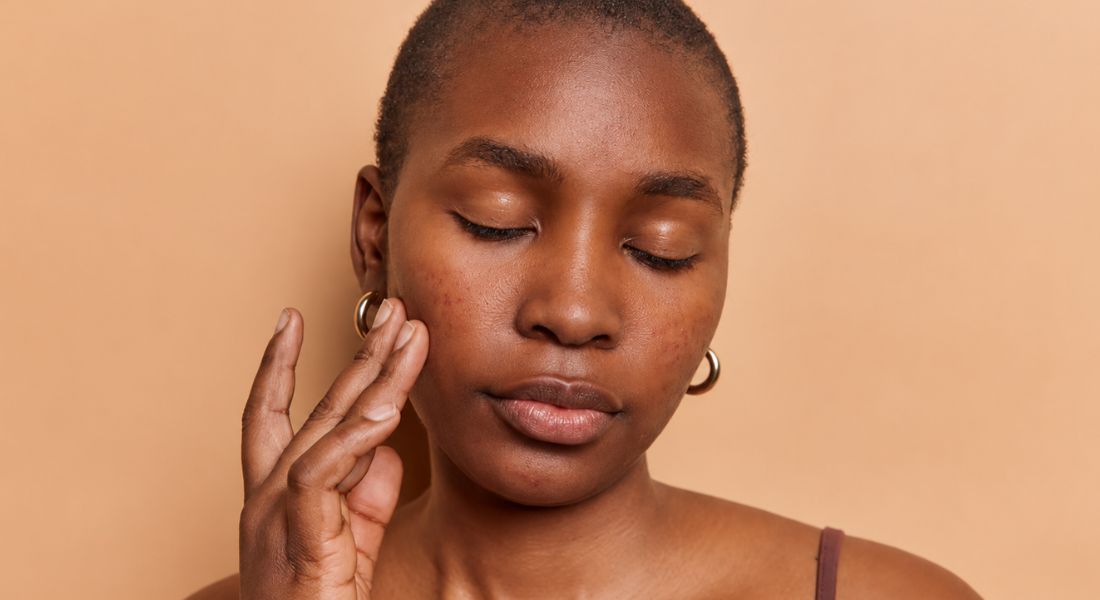
When you treat Acne in Black skin, you often need to think beyond just clearing the spots. For many people, the dark mark left behind after a breakout can feel more noticeable and longer-lasting than the acne itself. These marks are known as post-inflammatory hyperpigmentation, and they can appear as brown, grey-brown, purple-brown or even darker patches once the inflammation settles.
You may also notice that even small or short-lived spots can leave marks that take weeks or months to fade. This can make your skin look uneven, even when the active acne has already improved. That is why the way you treat acne matters just as much as the treatment itself.
The goal is not to avoid acne treatment, but to avoid overly harsh or aggressive routines that irritate your skin. When your skin becomes inflamed or damaged, it is more likely to produce extra pigment, which leads to more dark marks.
A better approach is to treat acne early, calm inflammation, protect your skin barrier, and use gentle, consistent products. This helps you control breakouts while also reducing the chance of new pigmentation forming.
Why Acne Can Leave Dark Marks in Black Skin
Black skin naturally has higher and more active melanin production. Melanin is the pigment that gives your skin its colour and also helps provide some protection against sun damage. Because your skin produces pigment more readily, it can also respond more strongly when inflammation occurs.
When your skin becomes inflamed, injured, or irritated, it may react by producing extra pigment in that area. Acne is a very common trigger for this because each spot involves inflammation within and around the pore. The deeper or more intense the inflammation, the stronger this pigment response is likely to be.
This is why dark marks often appear after acne has healed. The spot itself may flatten and disappear, but the pigment can remain for weeks or even months. The more inflamed the acne is, the higher the chance of pigmentation forming, especially with deep, painful, squeezed, or picked spots. Over time, repeated breakouts can make the skin look uneven even when active acne seems mild.
Dark Marks Are Not the Same as Scars
Many people use the word “scars” for all acne-related marks, but dermatologists usually separate dark marks from true scars, and this distinction is important because the treatment is different. Acne can leave both types of changes, but they behave very differently.
Dark marks are flat colour changes in the skin. The texture usually feels normal, but the area appears darker, brown, grey-brown, or uneven compared to the surrounding skin. These are often linked to post-inflammatory hyperpigmentation and may gradually fade over time with the right care.
True acne scars, on the other hand, involve changes in skin texture. These may appear as pits, dents, rolling scars, boxcar scars, ice-pick scars, or raised areas where the skin surface has permanently changed.
You can also have both at the same time. For example, a single deep breakout may leave a brown mark as well as a small indentation. This is why getting a proper diagnosis from a dermatologist is important, so you use the right treatments for pigmentation, scarring, or both instead of guessing.
The First Goal Is to Stop New Breakouts
If you want to reduce dark marks from Acne, the first and most important step is to stop new breakouts from forming. Every new inflamed spot can create another area of pigmentation once it heals, which is why prevention matters so much.
It is very common to focus only on fading existing marks, but this can feel frustrating if new acne keeps appearing. You may start to see improvement in one area, only for another spot to form and leave a fresh mark behind, continuing the cycle.
A good treatment plan should prioritise controlling active acne first. Once breakouts become less frequent, pigmentation treatments are more likely to work well. As your acne settles, you naturally reduce the number of new marks forming, which is the key to long-term improvement.
Avoid Picking, Squeezing and Scratching Spots
Picking, squeezing, or scratching spots from Acne is one of the biggest reasons dark marks develop and persist in Black skin. It adds extra injury to skin that is already inflamed and trying to heal.
When you squeeze a spot, you can push inflammation deeper into the skin and sometimes break the surface. This increases swelling, slows healing, and makes the overall response more intense. Your skin then reacts by producing more pigment in that area. This extra trauma is what often leads to darker, longer-lasting marks. Even a small amount of picking can make a noticeable difference in how long pigmentation takes to fade.
If you find yourself picking without realising it, practical steps can help. Pimple patches, keeping your nails short, avoiding magnifying mirrors, and treating spots early may reduce the urge. You do not need to blame yourself if it has become a habit the goal is simply to reduce skin trauma gradually so your skin can heal more evenly.
Use Gentle Cleansing Instead of Harsh Scrubbing
Many people try to scrub acne away when their skin feels oily or rough, but this can actually make acne and pigmentation worse. Harsh scrubbing can irritate the skin and lead to more inflammation, which may trigger increased dark marks in Black skin. Over time, this irritation can slow down healing rather than improve it.
- Scrubbing Can Damage the Skin Barrier: Physical scrubs can create tiny micro-injuries in the skin, leading to irritation and inflammation.
- Increased Pigmentation Risk: In Black skin, irritation can stimulate more pigment production, making dark marks more noticeable.
- Over-Cleansing Weakens the Skin: Washing too often or using strong cleansers can leave your skin dry, sensitive, and more prone to breakouts.
- Gentle Cleansers Work Better: A mild cleanser should clean your skin without making it feel tight, stripped, or uncomfortable.
Overall, your skin does not need to feel “squeaky clean” after washing. That feeling often means your skin has been over-cleansed and stripped of its natural barrier. A gentle, consistent routine is usually much better for controlling acne and protecting your skin tone.
Keep Your Skincare Routine Simple

Keeping your skincare routine simple can make a big difference when you are managing Acne. A complicated routine with too many active ingredients can make it harder for you to know what is actually helping your skin and what might be irritating it.
For acne-prone Black skin, a basic routine usually works best. This may include a gentle cleanser, an acne treatment, a moisturiser, and sunscreen. Additional products can be added later if your skin needs them, but there is no need to overload your routine from the beginning.
This approach also helps you stay consistent. Acne treatments take time to work, so you need a routine you can realistically follow every day. Constantly changing products every few days can irritate your skin, slow progress, and increase the risk of new dark marks forming.
Most treatments should be given enough time to show results unless your skin is becoming very irritated or you are having an allergic reaction. If you are unsure, it is always safer to check with a dermatologist before adding new products or making frequent changes.
Protect the Skin Barrier
Your skin barrier is the outer protective layer of your skin. It helps keep moisture in and protects you from irritants, bacteria, and everyday environmental stress. When it is healthy, your skin is better able to tolerate acne treatments and heal in a more balanced way.
When this barrier becomes damaged during treatment for Acne, your skin can feel dry, tight, flaky, sore, or more sensitive than usual. In some cases, it may also look irritated, red, or overly shiny. This can make even normal skincare products feel uncomfortable or stingy to use.
In Black skin, barrier damage can also increase inflammation and raise the risk of post-inflammatory pigmentation, meaning dark marks may become more noticeable or take longer to fade. This is why using a non-comedogenic moisturiser is so important. It helps support healing, reduce irritation, and allows you to continue your acne treatment more comfortably and consistently over time.
Introduce Active Ingredients Slowly
Strong acne treatments can be very effective for Acne, but they should be introduced slowly rather than all at once. Starting too many active products together can irritate your skin and increase the risk of dryness and pigmentation, especially in Black skin.
If you are using a retinoid, benzoyl peroxide, acids, or prescription creams, your dermatologist may advise starting only a few nights a week at first. This gives your skin time to adjust gradually instead of becoming overwhelmed, and it can help reduce irritation while still allowing the treatment to work.
You may also be advised to use moisturiser before or after your treatment to improve comfort and reduce dryness. Using more product or applying it more often than recommended does not usually clear acne faster. In many cases, it only leads to irritation, so a slower start is often safer and more effective in the long run.
Use Retinoids Carefully
Topical retinoids are commonly used in the treatment of Acne because they help prevent clogged pores and support long-term control. Over time, they may also help improve uneven skin tone and post-inflammatory pigmentation.
However, retinoids can cause dryness, peeling, and irritation if they are used too quickly or too frequently. In Black skin, this irritation can increase inflammation and may contribute to more hyperpigmentation, which is why careful use is especially important.
You may need to start slowly by using a small amount, applying it only at night, and using it less often at the beginning. A pea-sized amount is usually enough for the entire face, and using more product will not give faster results.
Retinoids also require patience. It can take several weeks before you notice visible improvement, and your skin may need time to adjust before it becomes more comfortable with the treatment.
Do Not Stop Retinoids Too Early Without Advice
Some people stop using topical retinoids early when treating Acne because their skin feels dry, tight, or because their acne seems slightly worse at the beginning. This can happen during the early adjustment phase and does not always mean the treatment is failing.
However, stopping too soon may prevent you from getting the full benefit. Retinoids usually need consistent, long-term use to improve clogged pores, acne control, and overall skin texture, so your skin often needs time to adapt before you see real results.
That said, you should not ignore significant irritation. Severe burning, swelling, or ongoing discomfort may mean your treatment plan needs adjustment. A dermatologist can help you decide whether to reduce frequency, change the formulation, or pause temporarily so your skin can tolerate the treatment safely and effectively.
Benzoyl Peroxide Can Help, But Strength Matters
Benzoyl Peroxide can be very helpful in treating Acne because it reduces acne-causing bacteria and inflammation. It is also important because it does not lead to antibiotic resistance in the same way that antibiotic treatments can.
However, benzoyl peroxide can also be drying and irritating. In Black skin, this irritation can increase inflammation and raise the risk of post-inflammatory hyperpigmentation, so how you use it really matters. A lower strength is often easier to tolerate, and some people find a wash-off formula less irritating than a leave-on gel.
Your dermatologist may recommend using it only on certain areas or just a few times a week at first, depending on your acne type and skin sensitivity. It can also bleach towels and pillowcases, so it is best to use white fabrics or be careful after applying it. Importantly, it does not bleach your natural skin colour.
Azelaic Acid Can Be Helpful for Acne and Marks
Azelaic Acid can be especially helpful when both Acne and dark marks are a concern. It can help reduce inflammation, unblock pores, and improve uneven pigmentation in some people.
It is often considered gentler than some stronger acne treatments, although it can still cause stinging, dryness, or mild irritation at the start. This is why introducing it slowly is usually recommended so your skin can adjust more comfortably.
Azelaic acid may be used on its own for milder acne or combined with other treatments for more persistent breakouts. One advantage is that it can target both active acne and post-inflammatory pigmentation at the same time, which makes it particularly useful in Black skin. However, it still requires patience. Even when it is working well, dark marks do not usually fade quickly, and improvements tend to happen gradually over time.
Do Not Overuse Exfoliating Acids
Exfoliating acids such as Salicylic Acid, glycolic acid, or lactic acid can sometimes be useful in an acne routine, especially for helping to unclog pores and improve skin texture. However, they can also cause problems if they are used too often or combined with too many other active products.
It is very easy to unintentionally overload your routine by using acids alongside retinoids, scrubs, vitamin C, and other acne treatments at the same time. When this happens, your skin barrier can become weakened, leading to irritation and increased inflammation. In Black skin, this inflammation may trigger post-inflammatory hyperpigmentation, meaning more dark marks can form rather than fewer.
More exfoliation does not always mean faster results. In fact, over-exfoliating can slow progress and make the skin more sensitive and reactive. If you are using acids, it is usually better to keep your routine simple and avoid layering too many strong products unless your dermatologist has advised it.
You should also be cautious with strong at-home chemical peels, especially without medical guidance. A severe reaction can sometimes leave more pigmentation than the original acne itself, which is why supervision and careful selection of treatments are so important.
Sunscreen Is Essential for Dark Marks

Sunscreen is one of the most important steps when you are trying to prevent or fade dark marks from Acne. Sun exposure can make pigmentation darker, more visible, and much slower to fade, even if your acne is improving.
Although Black skin has more natural melanin protection than lighter skin, it is still vulnerable to sun-related pigmentation changes. Without sunscreen, your dark marks may persist for longer and can look more pronounced, especially after inflammation has settled.
You should apply sunscreen every morning, particularly if you are using retinoids, exfoliating acids, or other pigmentation treatments, as these can increase sun sensitivity. Sunscreen does not replace acne medication, but it supports your routine by helping prevent marks from becoming darker and allowing them to fade more effectively over time.
Choose Non-Comedogenic Products
Some skincare, makeup, sunscreen, and even hair products can clog your pores and trigger acne. These are often called comedogenic products, and they may contribute to breakouts if your skin is sensitive or acne-prone. Choosing the right products can make a noticeable difference in how your skin behaves over time.
- Look for Suitable Labels: Try to choose products labelled non-comedogenic, oil-free, or acne-friendly as a starting point.
- Pay Attention to Your Skin: Not every labelled “safe” product will suit you, so it’s important to notice how your skin reacts.
- Watch Hair Products Carefully: Heavy oils, butters, pomades, gels, and edge-control products can sometimes transfer onto your skin and clog pores.
- Keep Skin and Hair Products Separate: Avoid letting hair products touch your face and wash pillowcases regularly to reduce buildup.
Overall, choosing non-comedogenic products is about reducing the chances of blocked pores and breakouts. Small everyday habits, like being careful with hair products and keeping fabrics clean, can make a real difference. The best routine is the one that suits your skin and keeps it calm, clear, and balanced over time.
Be Careful With Skin-Lightening Products
Dark marks from Acne can be very frustrating, so it is understandable that you may want them to fade quickly. However, you need to be careful with unregulated skin-lightening products, as some can do more harm than good.
Certain products may contain harmful ingredients such as strong steroids, mercury, or other toxic substances. These can damage your skin barrier, cause thinning of the skin, worsen pigmentation, and lead to long-term skin problems that are harder to treat than the original marks.
Even prescription treatments that help with pigmentation, such as hydroquinone, need to be used carefully and usually under medical supervision. Using strong lightening products on their own is also not enough if active acne is still present, because new breakouts will continue to create new marks.
The safest approach is to first control active acne, protect your skin barrier, and then treat pigmentation with appropriate, medically guided ingredients. Quick fixes may seem appealing, but they can sometimes create more lasting damage in the long run.
Treat Inflammation Early
Inflammation is one of the main reasons Acne leads to dark marks in Black skin. When a spot becomes inflamed, your skin reacts by increasing pigment production in that area as part of the healing process. The longer that inflammation continues, the stronger this response can become, which is why deeper or longer-lasting spots are more likely to leave post-inflammatory pigmentation.
This is why early treatment is so important. Waiting until acne becomes severe can increase the risk of both pigmentation and scarring. You do not need to wait until your skin is badly affected before seeking help, especially if you are noticing painful, deep, or recurring breakouts.
Early treatment may include topical medication, oral medication, hormonal therapy, or isotretinoin depending on acne severity and your medical history. The right treatment depends on your individual skin needs rather than a one-size-fits-all approach, with the main goal being to reduce inflammation before it causes long-lasting marks.
Avoid Using Too Many Spot Treatments
Spot treatments can feel very tempting when you are dealing with Acne because they seem like a quick way to target individual breakouts. However, using strong products repeatedly on the same spot can sometimes irritate the skin rather than help it heal faster.
This irritation can lead to dryness, peeling, and even darkening around the area. In Black skin, this kind of inflammation can sometimes create a visible mark even if the original spot was quite small. Over-treating one area can therefore make pigmentation more noticeable.
If you are using a spot treatment, it is important to follow the instructions carefully and avoid reapplying it too frequently unless your dermatologist has advised otherwise. A more effective long-term approach is often a consistent full-face acne routine that helps prevent new breakouts rather than only reacting to existing ones. When you think of acne care as prevention rather than emergency treatment, it becomes easier to reduce the cycle of new spots and, in turn, the number of new dark marks forming.
Hormonal Acne May Need Hormonal Treatment
Hormonal Acne may need a different approach compared with other types of acne. If you notice breakouts mainly around your jawline, chin, lower face, neck or chest, hormones may be playing a key role. You might also see flare-ups before your period, which is a common pattern in hormonal acne.
In these cases, topical treatments alone may not always give you full control. Hormonal treatment may be considered in suitable patients because it targets the underlying hormonal driver behind breakouts rather than only treating the surface spots.
Options may include combined oral contraceptives or spironolactone, depending on your health history and treatment goals. These can help reduce androgen-driven oil production and acne activity, but they are not suitable for everyone.
Your doctor will need to consider factors such as pregnancy plans, blood pressure, clotting risk, migraine history, and other medical conditions. If hormonal acne is repeatedly leaving dark marks, a dermatologist can help decide whether hormonal treatment should be part of your overall plan.
Oral Antibiotics Should Be Used Carefully
Oral antibiotics can be helpful for inflammatory acne, especially when breakouts are red, sore, or widespread. However, they are usually not intended for long-term use because repeated or prolonged courses can contribute to antibiotic resistance. In Black skin, reducing inflammation quickly can also help lower the risk of post-inflammatory pigmentation and dark marks.
- Short-Term Use Only: Oral antibiotics are usually prescribed for limited periods and reviewed regularly to avoid long-term resistance.
- Helps Reduce Inflammation: They can calm active, inflamed acne, which may also reduce the chance of new pigmentation marks forming.
- Best Used in Combination: Antibiotics work better when combined with topical treatments like benzoyl peroxide and retinoids.
- Need for a Maintenance Plan: If acne keeps returning after stopping antibiotics, a longer-term strategy such as hormonal treatment or isotretinoin may be needed.
Overall, oral antibiotics should be seen as a temporary part of acne control rather than a long-term solution. If your acne repeatedly returns after treatment, it usually means your skin needs a more sustainable maintenance plan. Your dermatologist can help you move towards options that give longer-lasting control while reducing reliance on antibiotics.
Isotretinoin May Prevent Severe Marks and Scars
Isotretinoin may be recommended for you if you have severe, nodular, scarring, or persistent Acne that has not improved with other treatments. It is one of the most effective acne medicines available, but it always needs careful medical supervision.
In Black skin, isotretinoin can be particularly helpful for you because it reduces severe inflammation, which is one of the main causes of dark marks and scarring. By bringing inflammation under control, it may help protect your skin from long-term pigmentation changes as well as deeper texture damage.
However, isotretinoin also comes with important side effects and risks that you need to be aware of. It can cause dryness, irritation, increased sun sensitivity, and serious pregnancy-related risks, so you will need close monitoring from your doctor along with a supportive skincare routine while you are on treatment.
Professional Treatments Need Extra Caution
Professional treatments such as chemical peels, lasers, and microneedling can sometimes help improve acne marks or scarring from Acne, but they need to be chosen very carefully in Black skin.
The main concern is that the wrong peel strength, laser type, or device settings can irritate the skin and worsen pigmentation. This is why it is important that you are treated by a clinician who has experience with darker skin tones and understands how to reduce the risk of post-inflammatory hyperpigmentation.
You should not rush into procedures while your acne is still active and uncontrolled. It is usually better to calm breakouts first, then consider treatments for marks or scars. If you are thinking about any procedure, always ask about risks, benefits, and alternatives so you can make an informed decision with your clinician.
Makeup Can Help, But Product Choice Matters
Makeup can be helpful if dark marks from Acne are affecting your confidence. You do not need to avoid makeup completely just because you have acne, as it can help you feel more comfortable and confident day to day.
However, product choice matters. Heavy or pore-clogging makeup may contribute to breakouts, so it is better to look for non-comedogenic options where possible. The goal is to choose products that sit lightly on your skin and are less likely to block pores or trigger new spots.
It is also important to remove your makeup gently every evening, since sleeping in it can clog pores and worsen acne. Keeping your brushes and sponges clean, and reviewing your products if breakouts appear in makeup-heavy areas, can also help reduce flare-ups.
Treat Body Acne Early Too
Dark marks from Acne are not limited to your face. If you get acne on your chest, shoulders, back, or neck, it can also leave post-inflammatory pigmentation behind that may take time to fade. In many cases, these marks can be quite persistent because the skin on the body is often exposed to more friction from clothing, sweat, and daily movement, which can keep the area slightly irritated even after the spot has settled.
Body acne can sometimes be more difficult to manage because the affected area is larger, and everyday factors like tight clothing, sweat, and friction can make irritation worse. Hair and body products can also contribute in some cases, especially if they are heavy or pore-clogging.
Depending on how severe your acne is, you may need a medicated body wash, topical treatment, or sometimes oral medication. It is important not to ignore painful or widespread body acne, as early treatment can help reduce the risk of long-term pigmentation and scarring.
Give Pigmentation Time to Fade
Dark marks from Acne often take time to fade, even when you are using the right treatments. This can feel frustrating, but slower fading does not mean your treatment is not failing.
The time it takes for improvement depends on several factors, including your skin tone, how deep the pigment is, sun exposure, inflammation level, and whether new breakouts are still occurring. Some marks may fade within weeks, while others can take several months or longer to noticeably improve.
Consistency is more important than frequently changing products. Switching treatments too often can irritate your skin and slow down healing. It is usually better to stick with a suitable routine, track gradual changes over time, and give your skin enough time to respond properly.
When to See a Dermatologist

You should consider seeing a dermatologist if your Acne is leaving dark marks, becoming painful, causing scarring, or affecting your confidence. It is also important to seek help if over-the-counter treatments are not improving your skin.
If your skin is becoming irritated from acne treatments, professional guidance can help you adjust your routine safely. This is especially important when you are trying to manage both active acne and pigmentation at the same time, as the balance between treatment and irritation needs careful control.
A dermatologist can assess whether your acne is comedonal, inflammatory, hormonal, product-related, or severe enough to need oral medication. They can also help you understand whether your marks are mainly pigmentation, true scarring, or a combination of both.
Getting the right diagnosis matters because using the wrong treatment can delay progress and sometimes worsen irritation or dark marks. Seeking help early can reduce trial and error and give you a clearer, safer, and more effective long-term plan.
FAQs:
1. How can I treat acne in Black skin without causing dark marks?
Treat acne early with gentle, consistent skincare and avoid harsh scrubbing or overuse of strong actives. Protecting the skin barrier and reducing inflammation is key to preventing post-inflammatory hyperpigmentation.
2. Why does acne in Black skin often leave dark marks?
Black skin has more active melanin, so inflammation from acne can trigger extra pigment production. This leads to post-inflammatory hyperpigmentation, which can remain after the spot itself has healed.
3. What skincare routine is best for acne-prone Black skin?
A simple routine works best: gentle cleanser, acne treatment (like azelaic acid or retinoids), moisturiser, and daily sunscreen. Keeping it simple helps reduce irritation and pigmentation risk.
4. Can over-exfoliating make acne and dark marks worse?
Yes. Over-exfoliating can damage the skin barrier, increase irritation, and trigger more inflammation. In Black skin, this often leads to more noticeable and longer-lasting dark marks.
5. Do I still need sunscreen if I have Black skin and acne?
Yes. Sunscreen helps prevent dark marks from becoming darker and supports faster fading of pigmentation, even in Black skin tones.
6. Which acne treatments help reduce dark marks?
Azelaic acid, retinoids, and carefully used benzoyl peroxide can help control acne and improve pigmentation. The key is using them gently to avoid irritation.
7. Should I pick or squeeze acne spots?
No. Picking increases inflammation and significantly raises the risk of dark marks and scarring. Letting spots heal naturally is much safer for your skin.
8. Can hair products cause acne?
Yes. Heavy oils, gels, and pomades can clog pores, especially around the hairline and forehead, leading to breakouts and dark marks after healing.
9. How long do dark marks take to fade?
They can take a few weeks to several months depending on depth, skin type, and whether new acne continues to form. Consistency in treatment is important.
10. When should I see a dermatologist?
If acne is leaving marks, causing scarring, painful, or not improving with basic skincare, you should see a dermatologist for a tailored treatment plan.
Final Thoughts: Treating Acne in Black Skin Without Dark Marks
Treating Acne in Black skin is not only about clearing breakouts, but also about preventing the dark marks that often follow. Because inflammation can easily trigger post-inflammatory hyperpigmentation, the focus should always be on early treatment, gentle skincare, and protecting the skin barrier. Harsh scrubbing, over-exfoliation, and picking spots can all increase irritation and make pigmentation worse, so a calm and consistent approach is usually more effective.
A simple routine with a gentle cleanser, targeted acne treatment, moisturiser, and daily sunscreen can make a significant difference over time. Active ingredients like retinoids, azelaic acid, and benzoyl peroxide can be very helpful when used correctly and introduced gradually. At the same time, giving your skin time to respond is important, as both acne and pigmentation improve slowly with consistency rather than frequent product changes. You can get in touch with us to book a consultation with our acne clinic in London.
References:
- Alexis, A.F., Woolery-Lloyd, H., Williams, K. and Andriessen, A. (2021) Racial/ethnic variations in acne: Implications for treatment and skin care recommendations for acne patients with skin of color. Journal of Drugs in Dermatology, 20(7), pp.716–725. Available at: https://pmc.ncbi.nlm.nih.gov/articles/PMC8565877/
- Bagatin, E., Freitas, T.H.P., Rivitti-Machado, M.C., Ribeiro, B.M., Nunes, S., Rocha, M.A.D. and Adult Female Acne Expert Group (2019) Adult female acne: a guide to clinical practice, Anais Brasileiros de Dermatologia, 94(1), pp.62–75. Available at: https://pmc.ncbi.nlm.nih.gov/articles/PMC6360964/
- Kurokawa, I., Danby, F.W., Ju, Q., Wang, X., Xiang, L.F., Xia, L., Chen, W., Nagy, I., Picardo, M., Suh, D.H. and Ganceviciene, R. (2009) New developments in our understanding of acne pathogenesis and treatment, Experimental Dermatology, 18(10), pp.821–832. Available at: https://pubmed.ncbi.nlm.nih.gov/19709092/
- Tan, J.K.L. and Bhate, K. (2015) A global perspective on the epidemiology of acne, British Journal of Dermatology, 172(S1), pp.3–12. Available at: https://pubmed.ncbi.nlm.nih.gov/25597339/
- Tobiasz, A., Nowicka, D. and Szepietowski, J.C. (2022) Acne vulgaris Novel treatment options and factors affecting therapy adherence: A narrative review, Journal of Clinical Medicine, 11(24), p. 7535. Available at: https://www.mdpi.com/2077-0383/11/24/7535