


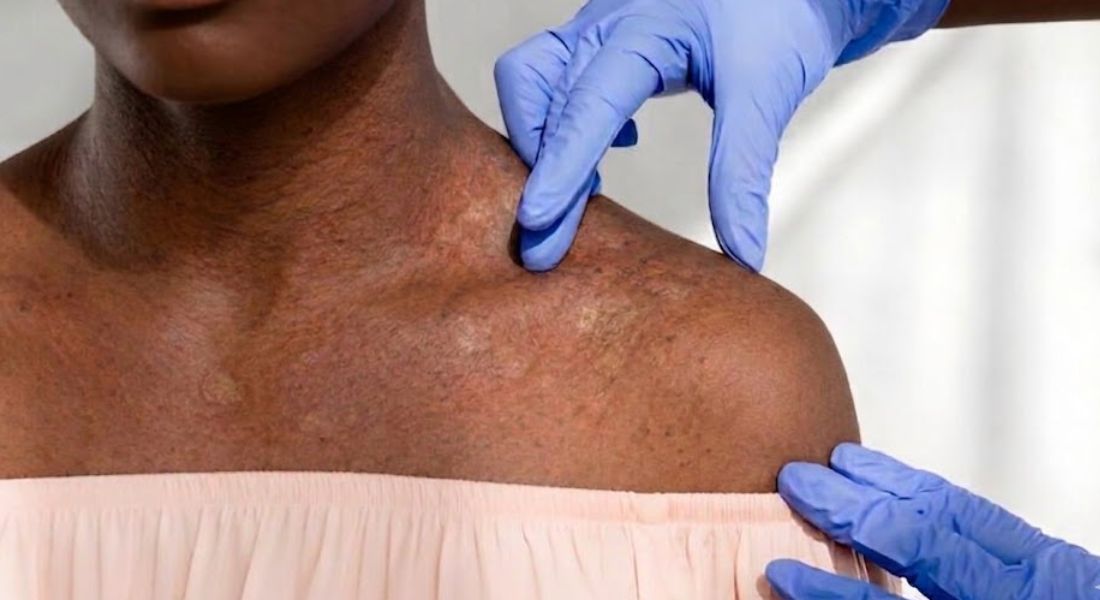
Eczema is a long-term inflammatory skin condition that affects your skin barrier, leading to dryness, itching, irritation, and overall sensitivity. In Black skin, it does not always appear red in the same way it does in lighter skin tones, which can sometimes make it harder to recognise early or judge how active it really is.
Instead, inflammation may show as dark brown, purple, grey, or ashy patches. Because of this, eczema can sometimes be missed or underestimated, especially when redness is minimal but inflammation is still present underneath the surface.
Even after an eczema flare has settled, your skin may not immediately return to its natural tone. This happens because inflammation can trigger changes in melanin production, leading to pigmentation changes as part of the healing process.
As a result, you may be left with dark marks known as post-inflammatory hyperpigmentation. These are especially common in Black skin, and understanding this process is important because managing eczema early and effectively helps reduce both flares and long-term pigmentation changes.
Why Post-Inflammatory Hyperpigmentation Happens in Black Skin
Post-inflammatory hyperpigmentation (PIH) happens when your skin produces extra melanin after an area has been inflamed. In Black skin, melanocytes (the cells that produce pigment) can be more reactive, which means they may produce pigment more easily in response to irritation or injury.
When you have an eczema flare, inflammatory signals activate these pigment-producing cells. This can lead to darker patches forming in the affected areas, even after the visible inflammation has started to settle or completely improved.
Even mild or short-term eczema can still lead to pigmentation changes if it happens repeatedly or is not treated early enough. Scratching can make this worse because it increases ongoing skin trauma and prolongs inflammation, which further stimulates melanin production and makes dark marks more likely to develop or persist.
What Eczema-Related Dark Marks Look Like
These marks are usually flat and smooth on the surface of your skin. They do not feel raised or bumpy once the active eczema has settled, which is one of the key differences compared to an ongoing flare. The colour can vary quite a bit, and in your case it may appear light brown, dark brown, grey-brown, or sometimes even have a purple tone depending on your skin depth and how severe the previous inflammation was.
In most cases, the texture of your skin returns to normal after the inflammation has gone down. However, the colour change can still remain visible for several weeks or even months, which can make it feel like the eczema is still present even when it is not active anymore.
These patches are most commonly seen in areas where eczema tends to flare repeatedly, such as your face, neck, elbows, knees, and hands. Over time, repeated inflammation in the same areas can make the pigmentation more noticeable and slower to fade.
Difference Between Active Eczema and Pigmentation
Active eczema involves ongoing inflammation in your skin, which often causes itching, dryness, irritation, and discomfort. During a flare, your skin may feel rough, sensitive, or even slightly swollen, and symptoms can come and go depending on triggers and treatment.
Post-inflammatory hyperpigmentation, on the other hand, is different. It is not active inflammation, but rather a leftover colour change that remains after the eczema has settled and the skin is healing. This means the surface may look darker or uneven even though the flare itself has already improved.
Understanding this difference is very important because the treatment approach is not the same. Active eczema needs anti-inflammatory care to calm the skin, while pigmentation mainly requires time, protection, and supportive skincare to gradually fade over time.
How Scratching Worsens Pigmentation
Scratching is one of the main reasons eczema can leave long-lasting dark marks. When you scratch, it damages your skin barrier further and increases inflammation, which makes the area more reactive and slower to heal.
This repeated irritation sends signals to your skin to produce more melanin as a protective response. Over time, this leads to pigmentation becoming deeper, more noticeable, and more persistent, especially if the skin is repeatedly disturbed during flares.
Even unconscious scratching during sleep can contribute to this cycle without you realising it. That’s why controlling itch and protecting your skin from repeated trauma is such an important part of preventing long-term pigmentation changes.
How Long Dark Marks Last
Post-inflammatory hyperpigmentation does not fade quickly, and it is important to understand that healing is often a gradual process. In many cases, it can take several weeks to months for dark marks to lighten, depending on how severe the original eczema flare was and how well your skin has recovered.
The more intense or repeated the inflammation, the longer pigmentation is likely to remain visible. This is because ongoing inflammation continuously stimulates pigment production in the skin, slowing down the natural fading process.
If eczema keeps returning in the same area, pigmentation can become more persistent and take even longer to improve. This is why controlling flares early and maintaining consistent skincare is key to giving your skin the best chance to recover evenly over time.
Sun Exposure and Pigmentation
Sun exposure can make dark marks from eczema more noticeable. In Black skin, this effect can be more obvious because the surrounding unaffected skin may tan more easily, while the affected areas remain darker.
This difference in tanning can increase contrast between the patches and the rest of your skin, making pigmentation appear more visible even if the condition itself is improving. As a result, the marks may seem more persistent than they actually are.
Using daily sun protection can help reduce further darkening of these areas and support a more even skin tone over time. While it does not remove pigmentation immediately, it can play an important role in preventing it from becoming more pronounced and allowing it to fade gradually.
Importance of Early Eczema Treatment
Early treatment of eczema is one of the most effective ways to reduce the risk of pigmentation changes developing. When you treat inflammation quickly, you help calm the skin before it has a chance to become more severe or widespread.
By controlling inflammation early, you also reduce the stimulation of melanin production in the skin, which is what can lead to darker patches after a flare. The longer inflammation is left untreated, the higher the chance of visible marks forming afterwards.
This is why acting early during a flare is so important. Prompt treatment not only helps your skin feel more comfortable sooner, but it also significantly lowers the risk of long-term dark marks developing once the eczema settles.
Role of Moisturising and Barrier Repair
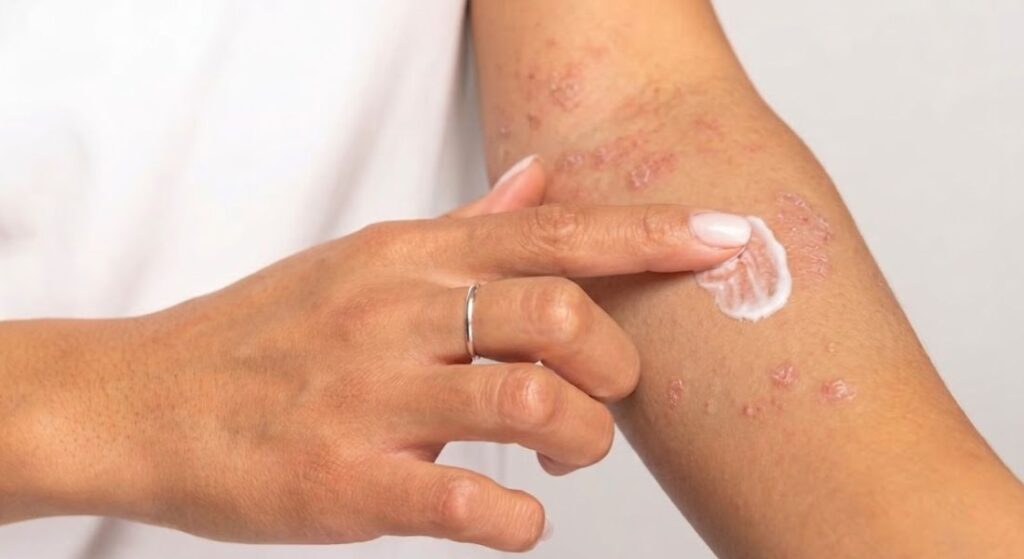
A strong skin barrier plays a key role in reducing eczema flares and helping your skin stay more stable over time. When your barrier is healthy, it is better at keeping moisture in and blocking irritants from entering the skin.
Regular moisturising helps maintain this barrier by keeping your skin hydrated and less reactive to common triggers such as weather changes, soaps, and friction. This makes your skin less likely to become dry, irritated, or inflamed.
It also helps reduce itching, which is important because scratching is one of the main factors that worsens inflammation and contributes to post-inflammatory pigmentation. By supporting barrier repair through consistent moisturising, you can reduce both flare frequency and the risk of long-lasting skin discolouration.
Topical Steroids and Pigmentation Prevention
Topical steroids are commonly used to control eczema flare-ups by reducing inflammation in the skin. When your inflammation is brought under control quickly, your skin is less likely to develop long-lasting pigment changes afterwards.
- Reduce Active Inflammation: Topical steroids calm the immune response in the skin during flares, helping to settle redness, itching, and irritation.
- Help Prevent Post-Inflammatory Pigmentation: By controlling inflammation early, they reduce the trigger for excess melanin production, which is what often leads to dark marks.
- Lower Risk of Flare-Related Marks: When eczema is treated promptly, the severity and duration of flares are reduced, which can also reduce the chance of pigmentation developing.
- Best Results With Correct Use: The protective effect on pigmentation is most effective when steroids are used appropriately and as directed by your doctor.
Overall, topical steroids do more than just treat the immediate flare. By controlling inflammation early and effectively, they can also play an important role in reducing the risk of long-lasting pigmentation changes after eczema in Black skin.
Non-Steroid Treatments
Non-steroid treatments, such as calcineurin inhibitors, can also help you control eczema inflammation effectively. These treatments work by calming the immune response in your skin without using steroids, which makes them a useful option for longer-term management in certain patients.
They are especially helpful for sensitive areas like your face and neck, where the skin is thinner and more prone to irritation. Because of this, they are often preferred when doctors want to avoid the potential side effects that can come with prolonged steroid use in these delicate regions.
By reducing inflammation in a controlled way, non-steroid treatments can also help lower the risk of post-inflammatory pigmentation developing over time. This makes them an important part of a balanced eczema treatment plan, particularly in areas where pigmentation changes are more visible and longer lasting.
Why Some People Develop More Pigmentation
Not everyone develops the same level of pigmentation after an eczema flare. Some people may notice only mild, short-lived marks, while others experience more noticeable or longer-lasting dark or light patches.
Several factors influence this, including genetics, natural skin tone, how severe the inflammation is, and how often flares occur. Your habits during a flare also matter, especially scratching, which can worsen inflammation and increase the chance of pigmentation changes.
Repeated eczema flares in the same area significantly increase the risk of persistent pigmentation. This is why early treatment and good flare control are so important, as they help reduce inflammation before it has a chance to leave long-lasting marks on your skin.
Misconception About Dark Marks
A common misunderstanding is that dark marks always mean your eczema is still active. In reality, this is not necessarily the case. The visible inflammation may have already settled, even though the skin still appears discoloured.
What you are often seeing is post-inflammatory hyperpigmentation, where your skin produces extra pigment as part of the healing process after a flare. This can leave behind brown, grey, or darker patches even when the eczema itself is no longer active.
Understanding this difference is important, because it helps you avoid unnecessary worry and focus on the right stage of treatment. While active eczema needs anti-inflammatory care, pigmentation changes usually improve more slowly and require patience, sun protection, and consistent skincare to gradually fade over time.
Can Dark Marks Fade Naturally?
Yes, post-inflammatory hyperpigmentation can fade naturally over time in many cases, especially when the skin is no longer being actively inflamed. Once your eczema is under control, your skin gradually begins its natural healing and renewal process, which helps reduce the appearance of dark marks.
However, this fading process is usually slow, and the time it takes can vary depending on how deep or long-standing the pigmentation is. Some marks may fade within a few weeks or months, while others can take much longer, especially if there have been repeated flares in the same area.
Because of this, preventing new eczema flares is very important if you want to support natural fading. When your skin stays calm and protected, it has a much better chance to even out over time and reduce the appearance of pigmentation gradually.
Treatments That May Help Fading
Once your eczema is well controlled, dermatologists may suggest gentle treatments to help improve post-inflammatory pigmentation. These are usually introduced only after the inflammation has settled, as treating active eczema first is always the priority.
Any pigmentation treatments need to be chosen carefully because eczema-prone skin can be easily irritated. Your dermatologist will aim to use options that support gradual fading without disrupting your skin barrier or triggering new flares.
Harsh or aggressive products are generally avoided, as they can worsen sensitivity and sometimes even increase pigmentation. The focus is always on slow, steady improvement while keeping your skin calm and protected.
Importance of Sun Protection
Daily sunscreen use plays an important role in protecting your skin and preventing pigmentation from becoming darker over time. It helps reduce the contrast between affected and unaffected areas, especially in conditions where pigmentation changes are already present.
- Helps Prevent Darkening: Regular sunscreen use can stop existing pigmentation from becoming more noticeable or deeper in colour.
- Supports More Even Skin Tone: Over time, consistent sun protection helps maintain a more balanced and even appearance of your skin.
- Important for Exposed Areas: You should pay special attention to areas like your face and hands, which are more frequently exposed to sunlight.
- Part of Daily Skincare: Sunscreen works best when used every day, even when it is cloudy or you are mostly indoors near windows.
- Supports Overall Treatment: Sun protection does not treat pigmentation directly, but it helps improve and maintain results from other treatments.
Overall, sun protection is a simple but essential step in managing pigmentation changes after eczema. When you use sunscreen consistently, you help your skin heal more evenly and reduce the chances of dark marks becoming more persistent or noticeable.
Long-Term Skin Management

Eczema and the associated pigmentation changes are long-term conditions, so they need ongoing care rather than just short-term treatment during flares. Even when your skin looks better, maintaining a routine is essential to keep it stable.
Daily moisturising, identifying and avoiding triggers, and treating early signs of a flare quickly are the key strategies you should focus on. These steps work together to strengthen your skin barrier and reduce how often inflammation returns.
When you stay consistent with your skincare routine, you are more likely to see fewer flare-ups over time, along with a gradual improvement in overall skin texture and pigmentation. This long-term consistency is what helps prevent repeated cycles of inflammation and long-lasting skin changes.
Emotional Impact of Pigmentation
Dark marks left behind after eczema can affect your confidence, even when the active inflammation has improved. It can feel frustrating when your skin is no longer itchy or inflamed, but uneven pigmentation still remains visible.
This is especially common because post-inflammatory pigmentation can take time to fade, even with good treatment and skincare. As a result, you may feel that your skin is not fully “healed,” even though the eczema itself is under control.
Because of this, the emotional and psychological impact of pigmentation should be considered as part of your overall eczema care. Supporting both your skin health and your confidence is important, and managing expectations around healing time can help you feel more in control of the recovery process.
Prevention Is Better Than Treatment
Preventing pigmentation changes is often easier than trying to treat them once they have developed. This is because early inflammation control helps reduce the skin damage that leads to dark or uneven patches over time.
The most important steps include managing eczema early, keeping your skin well moisturised, and avoiding scratching as much as possible. When you scratch, it may feel relieving in the moment, but it often worsens inflammation and increases the risk of long-lasting pigmentation.
By following a consistent skincare routine every day, you can make a real difference in the long term. Over time, this helps reduce flare frequency, supports a healthier skin barrier, and lowers the chances of persistent pigmentation changes developing.
When to Seek Medical Advice

If your eczema or pigmentation is persistent, worsening, or not improving with regular skincare, it is important to seek specialist advice. This helps ensure you are not just managing symptoms at the surface level, but actually treating the underlying inflammation effectively.
A dermatologist can assess your skin in detail and tailor treatment based on your skin type, severity of eczema, and how your condition is behaving over time. This is especially important in skin of colour, where changes in pigmentation can sometimes make it harder to judge how active the eczema is just by looking.
With the right medical guidance, both inflammation and pigmentation can be managed more effectively, helping to reduce flares, improve comfort, and support a more even and healthy skin appearance over time. Early intervention also reduces the risk of long-term marks and helps you maintain better control of your skin condition in the long run.
FAQs:
1. Why does eczema leave dark marks in Black skin?
Eczema causes inflammation in the skin, which triggers excess melanin production. In Black skin, melanocytes are more reactive, so this pigment response is stronger, leading to post-inflammatory hyperpigmentation (dark marks) even after the eczema flare has healed.
2. Are dark marks after eczema still active eczema?
Not usually. Dark marks are often a sign that the inflammation has already settled. The skin may feel normal, but the colour change remains due to increased pigment production during the healing process.
3. What do eczema-related dark marks look like?
They typically appear as flat patches that may be light brown, dark brown, grey-brown, or sometimes purplish. The skin texture is usually normal, unlike active eczema which is itchy, dry, and inflamed.
4. Does scratching make pigmentation worse?
Yes. Scratching increases inflammation and skin trauma, which stimulates more melanin production. This makes dark marks deeper, longer-lasting, and more difficult to fade over time.
5. How long do eczema dark marks last?
They can last from several weeks to many months. The duration depends on how severe the eczema was, how often it recurs, and whether scratching or repeated irritation continues in the same area.
6. Can sun exposure worsen eczema pigmentation?
Yes. Sun exposure can make dark patches more noticeable by increasing contrast between affected and unaffected skin. Daily sun protection helps prevent further darkening and supports gradual fading.
7. How can eczema pigmentation be prevented?
The best prevention is early and effective eczema control. This includes regular moisturising, avoiding triggers, and treating flares quickly to reduce inflammation and melanin activation in the skin.
8. Do eczema treatments help prevent dark marks?
Yes. Treatments like topical steroids and non-steroid anti-inflammatory creams reduce inflammation, which helps prevent excess pigment formation. The earlier the flare is controlled, the lower the risk of pigmentation.
9. Can dark marks from eczema fade naturally?
Yes, they often fade over time, but this can be slow. The process depends on how deep the pigmentation is and whether new eczema flares keep occurring in the same area.
10. When should I see a dermatologist for eczema pigmentation?
You should seek advice if dark marks are persistent, worsening, or if eczema keeps flaring in the same areas. A dermatologist can help control inflammation and recommend safe ways to improve pigmentation over time.
Final Thoughts: Managing Eczema Pigmentation in Black Skin
Eczema-related dark marks in Black skin are a common result of post-inflammatory hyperpigmentation, where inflammation triggers increased melanin production during and after flare-ups. While these marks are not usually a sign of active eczema, they can take weeks or months to fade and are often made worse by repeated inflammation or scratching. The most effective way to reduce pigmentation is to control eczema early, maintain a strong skin barrier, and minimise triggers that lead to repeated flares.
With consistent treatment and good skincare habits, both eczema and the resulting pigmentation can be significantly improved over time. If you’re considering Eczema treatment in London, contact us at London Dermatology Centre to book a consultation with one of our specialists.
References:
- Sidbury, R. et al., 2014. Guidelines of care for the management of atopic dermatitis. Journal of the American Academy of Dermatology. Available at: https://pubmed.ncbi.nlm.nih.gov/24290431/
- Weidinger, S. and Novak, N., 2016. Atopic dermatitis. The Lancet, 387(10023), pp.1109–1122. Available at: https://pubmed.ncbi.nlm.nih.gov/26377142/
- Chalmers, J.R. et al., 2015. Atopic eczema: a clinical review of diagnosis and treatment. British Medical Journal. Available at: https://pmc.ncbi.nlm.nih.gov/articles/PMC4954337/
- Eichenfield, L.F. et al., 2014. Guidelines of care for the management of atopic dermatitis: topical therapies. Journal of the American Academy of Dermatology. Available at: https://pmc.ncbi.nlm.nih.gov/articles/PMC4326095/
- Radhakrishnan, J. et al., 2024. Recent Advances in Phytochemical-Based Topical Applications for the Management of Eczema: A Review. Available at: https://www.mdpi.com/1422-0067/25/10/5375