


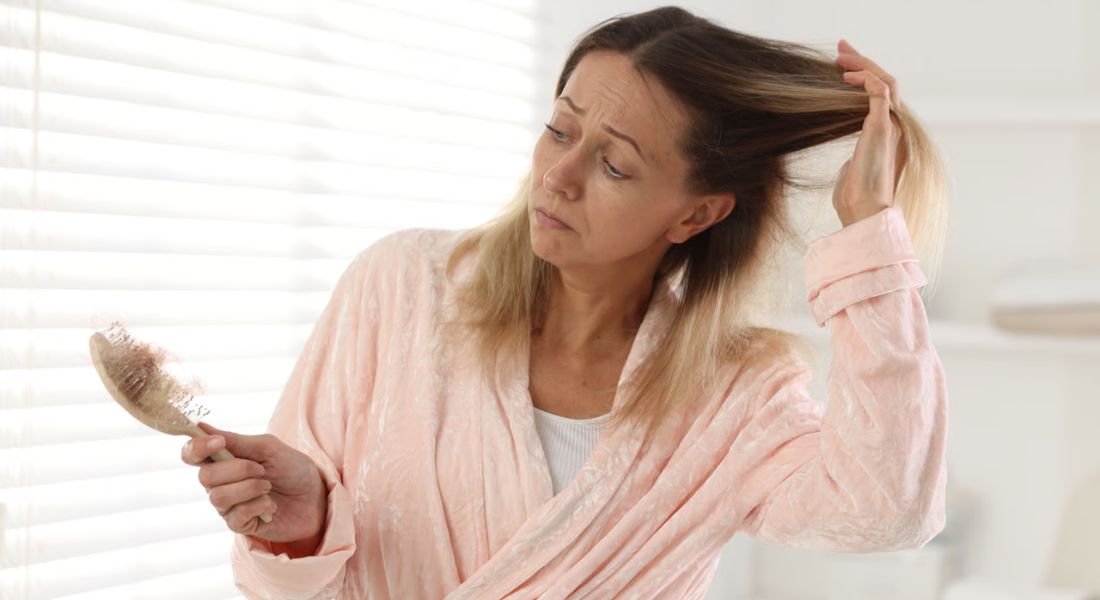
Pregnancy and childbirth can affect the normal hair-growth cycle in ways that may feel unexpected. You may notice fuller hair or reduced shedding during pregnancy, followed by increased hair loss approximately three months after delivery as more follicles enter the resting and shedding phase.
This pattern is usually consistent with postpartum telogen effluvium, a temporary form of diffuse shedding that does not normally cause permanent damage to the hair follicles. The active shedding phase commonly lasts for three to six months, although it may take several additional months for the hair to regain its previous volume. Patchy loss, scalp inflammation or shedding that does not improve requires assessment for another cause.
How Does the Normal Hair-Growth Cycle Work?
Your hair naturally follows a repeating growth cycle, with each strand growing, resting and eventually shedding at different times. This allows you to lose a small number of hairs daily without developing noticeable thinning.
During this cycle, most scalp follicles remain in the active growth phase while others rest before releasing older hairs. This normal process explains why finding some hair in your brush or shower is expected.
Why Can Hair Look Thicker During Pregnancy?
During pregnancy, hormonal changes can make your hair appear thicker, fuller or less likely to shed. This happens because more hairs may stay in the active growth phase for longer instead of moving into the usual shedding stage.
The change does not mean you have created more hair follicles, but that you are temporarily keeping hairs that would normally have fallen out. Hair texture and scalp oil levels can also change, although these effects usually settle after pregnancy.
Can You Lose Hair While You Are Still Pregnant?
Hair shedding can happen during pregnancy, but significant or persistent hair loss is not always a normal hormonal change. Factors such as illness, stress, poor nutrition, iron deficiency or thyroid problems can affect your hair cycle and may need medical assessment.
You should speak to your midwife or GP if you notice obvious thinning, patchy hair loss or other symptoms such as tiredness, breathlessness or feeling unusually cold. Depending on your symptoms and medical history, blood tests may help identify treatable causes and guide appropriate care.
What Is Postpartum Telogen Effluvium?
Postpartum telogen effluvium is a temporary increase in hair shedding after childbirth. Pregnancy and delivery alter the timing of the normal hair cycle, causing a larger proportion of follicles to enter the resting phase and release their hairs within a similar period.
The shedding is usually diffuse across the scalp rather than confined to one smooth bald patch. Because telogen effluvium is non-scarring, the follicles usually remain capable of producing new hair, and gradual regrowth may become visible as the cycle settles. Telogen effluvium can sometimes make previously subtle female-pattern hair loss more noticeable, which is one reason persistent thinning may need assessment.
When Does Postpartum Hair Loss Usually Begin?
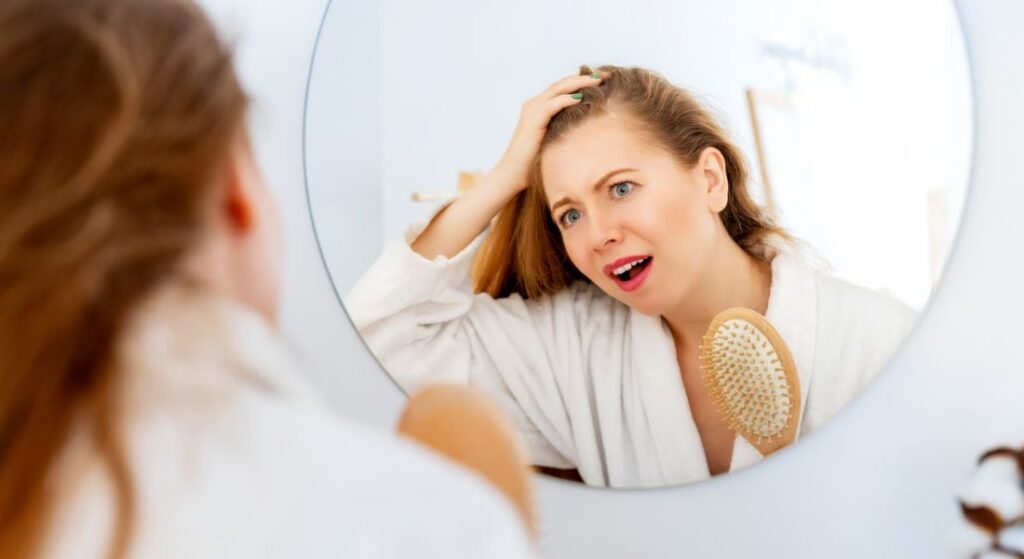
Postpartum hair shedding usually begins approximately two to four months after childbirth rather than immediately after delivery. This delay occurs because hairs remain in the resting phase for several weeks before they are released.
The amount of shedding can vary, and it may appear particularly dramatic during washing or brushing. Hair loss that starts during pregnancy, forms distinct patches or is accompanied by scalp pain, inflammation or scaling should not automatically be attributed to postpartum telogen effluvium. The British Association of Dermatologists explains that telogen effluvium commonly becomes noticeable several months after a physical or hormonal trigger.
What Does Normal Postpartum Shedding Look Like?
Normal postpartum shedding usually affects your whole scalp rather than causing one specific bald area. You may notice more hair coming out during washing or brushing, a wider parting or a thinner ponytail.
Your scalp should generally remain healthy without sores, heavy scaling, pus or smooth bald patches. If you notice these changes or unusual symptoms, speak to a healthcare professional for further assessment.
How Can Postpartum Hair Loss Affect Your Confidence?
Even temporary hair shedding can affect how you feel about your appearance, particularly when it happens alongside the physical and emotional changes of caring for a new baby. Feeling worried or self-conscious does not mean that you are overreacting.
Gentle styling, volumising products or hair fibres may make thinning less noticeable while regrowth develops. Monthly photographs taken in similar lighting can also help you recognise gradual improvement. Speak to your GP or dermatologist if the hair loss is causing persistent anxiety, affecting your confidence or making it difficult to manage daily life.
How Long Does Postpartum Hair Loss Last?
The increased shedding usually improves within three to six months. You may notice short regrowing hairs around the hairline or parting before the overall thickness returns, particularly when your hair is long.
Hair density does not always return as soon as the shedding slows because new hairs grow gradually. Arrange an assessment if heavy shedding continues for more than six months, if there is no visible regrowth over time or if the hair remains noticeably thinner around your baby’s first birthday. Telogen effluvium lasting beyond six months is considered chronic and may require investigation for a continuing trigger.
Does Breastfeeding Cause Hair Loss?
Breastfeeding is often blamed for postpartum hair loss, but the main trigger is thought to be the change in the hair-growth cycle after pregnancy rather than breastfeeding itself. Shedding can occur whether you breastfeed, combination-feed or use formula.
You do not usually need to stop breastfeeding because of normal hair loss. Focus on eating well and seek advice if you are losing weight, struggling with nutrition or considering treatments that may need breastfeeding safety checks.
Can Iron Deficiency Make Postpartum Shedding Worse?
Iron deficiency may contribute to diffuse hair shedding or occur alongside it, particularly after low iron levels during pregnancy, significant blood loss during delivery or a restricted diet. Other possible symptoms include marked tiredness, breathlessness, dizziness, palpitations, pale skin or unusual cravings such as eating ice.
A GP may arrange a full blood count and, when appropriate, an iron-storage test such as ferritin. Take iron supplements at the dose recommended by a healthcare professional rather than starting a high-dose product solely because your hair is shedding. When a confirmed deficiency is corrected, hair growth may improve gradually because the follicles need time to return to their usual cycle.
Could Thyroid Changes Be Responsible?
Thyroid dysfunction may contribute to diffuse hair shedding because thyroid hormones influence metabolism and the hair-growth cycle. Postpartum thyroiditis can occur during the first year after childbirth and may involve an overactive phase, an underactive phase or both. Possible symptoms include palpitations, heat intolerance, anxiety, unexplained weight change, tiredness, feeling unusually cold, dry skin and hair loss.
Many of these symptoms can be mistaken for ordinary postnatal changes. Speak to your GP when these symptoms are persistent, severe or occur alongside ongoing shedding, as thyroid-function blood tests, usually including TSH and free T4, may be needed.
Which Patterns of Hair Loss Are Not Typical?
Postpartum hair shedding usually causes overall thinning rather than smooth bald patches or loss in one specific area. Round bald spots, widening parting, hairline thinning or broken hairs may suggest another cause, such as alopecia areata, pattern hair loss or hair damage.
You should seek medical advice if you notice scalp pain, heavy scaling, crusting, pustules or shiny areas that look scarred. Inflammatory or scarring scalp conditions may cause permanent follicle damage if they are not recognised and treated promptly.
How Can You Care for Your Hair While It Is Shedding?
| Do | Avoid |
| Use a wide-toothed comb | Tight hairstyles |
| Wash hair gently | Aggressive brushing |
| Reduce heat styling | Frequent bleaching or chemical treatments |
| Eat a balanced diet | Restrictive diets without advice |
| Be patient with regrowth | Checking your hair repeatedly every day |
Clinical Tip
Telogen effluvium usually causes full-length hairs to shed from across the scalp. Numerous short broken hairs, scalp tenderness, chemical burns or thinning concentrated around tight braids, extensions or a repeatedly pulled-back hairline may indicate breakage or traction rather than postpartum shedding.
Take monthly photographs of your parting and hairline in similar lighting rather than checking several times each day. This can make gradual regrowth easier to recognise and provides useful information during an assessment.
Can Diet or Supplements Stop Postpartum Hair Loss?
No food or supplement can immediately stop normal postpartum telogen effluvium because the affected hairs have already entered the shedding phase. A balanced diet containing adequate protein, iron, fruit and vegetables may support normal hair growth and recovery. Supplements may be appropriate when a deficiency or restricted diet has been identified.
Avoid high-dose hair, skin and nail supplements without professional advice. Many contain biotin, which can interfere with some thyroid laboratory tests and produce falsely high or low results. Tell your GP and the laboratory or healthcare professional arranging your blood test about every supplement you take. Do not stop a prescribed supplement unless you have been advised to do so.
UK Guidance Note
The MHRA advises healthcare professionals to ask about biotin intake when thyroid dysfunction is suspected. High-dose biotin is frequently included in products marketed for hair growth and can interfere with laboratory testing, potentially leading to an incorrect diagnosis or treatment decision.
Supplements marketed for hair growth can contain several ingredients at doses higher than normal dietary requirements. Check any product with your GP, pharmacist or maternity healthcare professional, particularly if you are pregnant, breastfeeding, taking prescribed medicines or awaiting blood tests.
Do Shampoos, Oils or Minoxidil Help?
Volumising shampoos, conditioners, hair fibres and cosmetic styling products may make the hair look fuller, but they do not shorten the shedding phase or make telogen-effluvium regrowth occur more quickly. Oils may improve softness or reduce breakage but do not alter the follicle’s growth cycle.
Topical minoxidil is not normally required for uncomplicated postpartum telogen effluvium. UK product information for a licensed women’s topical minoxidil product states that it is not indicated for hair loss caused by childbirth and should not be used during pregnancy or breastfeeding. A dermatologist may discuss treatment options if an assessment identifies another condition, such as female-pattern hair loss.
When Should You Arrange Medical Advice?
Arrange a GP or dermatology assessment if heavy shedding continues for more than six months, shows no gradual improvement or remains associated with substantial thinning around your baby’s first birthday. Assessment may also be helpful when the shedding began during pregnancy or followed severe illness, major blood loss, rapid weight loss or a new medicine.
Seek earlier review for smooth bald patches, loss of eyebrows or eyelashes, a progressively widening parting or a receding hairline. Scalp pain, burning, redness, pustules, heavy scaling, crusting or shiny scar-like areas also require prompt assessment because inflammatory or scarring conditions can cause permanent follicle damage.
What Happens During a Dermatology Assessment?
A dermatologist will ask when the shedding began, whether it affects the whole scalp and whether there were possible triggers such as childbirth, illness, blood loss, weight change, medication or dietary restriction. The scalp examination may assess the distribution of thinning, follicle openings, inflammation, breakage and short regrowing hairs.
A gentle hair-pull test or dermoscopy may help distinguish telogen effluvium from another form of hair loss. Blood tests are selected according to your history and symptoms and may include a full blood count, iron studies or thyroid-function testing. A scalp biopsy is only occasionally required when the diagnosis remains uncertain.
Myth vs Fact
| Myth | Fact |
| Breastfeeding causes postpartum hair loss. | The principal trigger is the change in the hair cycle after pregnancy, and shedding can occur with any method of infant feeding. |
| Washing your hair makes more of it fall out. | Washing releases hairs that have already completed their growth cycle and were ready to shed. |
| Postpartum shedding permanently destroys the follicles. | Telogen effluvium is a non-scarring condition, and the follicles normally produce new hair. |
| Hair supplements can stop the shedding immediately. | Normal postpartum shedding has to complete its cycle, and medication or supplements do not speed recovery when no deficiency is present. |
| Every widening parting is normal postpartum shedding. | A persistently widening central parting may indicate female-pattern hair loss, sometimes revealed by telogen effluvium. |
| Minoxidil is a routine treatment for postpartum hair loss. | It is not normally required for telogen effluvium, and UK product information advises against its use during pregnancy or breastfeeding. |
Key Takeaways
- Postpartum telogen effluvium commonly starts approximately three months after childbirth.
- The shedding usually affects the whole scalp rather than creating one smooth bald patch.
- Active shedding often lasts three to six months, while full volume may take longer to return.
- Breastfeeding is not normally the cause of postpartum shedding.
- Iron deficiency, thyroid dysfunction and other hair disorders can prolong or imitate postpartum hair loss.
- Patchy loss, scalp inflammation, scarring or shedding beyond six months should be medically assessed.
FAQs
1. Is hair loss after pregnancy normal?
Yes, increased hair shedding after pregnancy is very common. It usually happens because pregnancy hormones temporarily keep more hairs in the growing phase, and after delivery these retained hairs enter the resting and shedding phase together. This condition is called postpartum telogen effluvium and is usually temporary.
2. When does postpartum hair loss usually start?
Postpartum shedding commonly begins approximately two to four months after childbirth because hairs remain in the resting phase before being released. It may become most noticeable at around three or four months, although timing varies.
3. How long does hair loss after pregnancy last?
The active shedding phase commonly lasts for three to six months. New hair then grows gradually, so it may take several additional months for the previous thickness to return. Heavy shedding lasting beyond six months should be assessed.
4. Does breastfeeding cause hair loss?
Breastfeeding itself is not usually the main cause of postpartum hair loss. The main trigger is the hormonal change that occurs after childbirth. However, maintaining a balanced diet and addressing any nutritional deficiencies is important while breastfeeding to support healthy hair growth.
5. Can hair loss during pregnancy be a sign of a health problem?
Significant hair loss during pregnancy is less typical and may sometimes be linked to conditions such as iron deficiency, thyroid problems, nutritional issues or another medical condition. You should speak to your GP or maternity team if you notice noticeable thinning while you are still pregnant.
6. How can I reduce hair shedding after pregnancy?
You cannot completely prevent normal postpartum shedding, but gentle hair care can reduce unnecessary breakage. Avoid tight hairstyles, excessive heat styling, harsh chemical treatments and aggressive brushing, and use a mild shampoo and conditioner suitable for your hair type.
7. Can vitamins or supplements stop postpartum hair loss?
Supplements do not stop normal postpartum telogen effluvium when there is no deficiency. Iron, vitamin B12 or other supplements may be recommended when clinical assessment or blood tests identify a need. Tell your healthcare professional if you use high-dose biotin because it can interfere with thyroid blood tests.
8. Are hair oils or special shampoos effective for postpartum hair loss?
Oils, conditioners and volumising shampoos may improve softness or make the hair look fuller, but they do not shorten the shedding phase. Topical minoxidil is not normally required for uncomplicated postpartum telogen effluvium. UK product information for licensed women’s topical minoxidil advises against its use during pregnancy or breastfeeding and states that it is not indicated for hair loss caused by childbirth.
9. When should I see a dermatologist about hair loss after pregnancy?
Seek assessment for smooth bald patches, eyebrow or eyelash loss, a persistently widening parting, hairline recession or scalp pain, redness, pustules, heavy scaling, crusting or scarring. Review is also appropriate when heavy shedding continues for more than six months or there is no gradual recovery.
10. Will my hair return to normal after postpartum hair loss?
In many cases, postpartum shedding gradually improves without treatment because it does not normally scar or destroy the hair follicles. However, recovery takes time, and your previous density may not return fully if the shedding has revealed another condition, such as female-pattern hair loss. Arrange an assessment if the thinning remains significant or does not gradually improve.
Final Thoughts: Understanding Hair Changes After Pregnancy
Hair loss after pregnancy can feel unexpected and upsetting, especially when you notice more hair shedding than usual during a time when your body is already going through many changes. In many cases, postpartum hair loss is a temporary change in the hair-growth cycle and gradually improves as the cycle settles after pregnancy.
However, severe, patchy or persistent hair loss should not be ignored, as it may sometimes be linked to conditions such as iron deficiency, thyroid changes or other scalp problems. If you would like to book a consultation with one of our dermatologists in London, you can contact us at the London Dermatology Centre.
References:
- Galal, S.A., El-Sayed, S.K. and Henidy, M.M.H. (2024) ‘Postpartum telogen effluvium unmasking additional latent hair loss disorders’, The Journal of Clinical and Aesthetic Dermatology, 17(5), pp. 15–22. Available at: https://pmc.ncbi.nlm.nih.gov/articles/PMC11107900/
- Gizlenti, S. and Ekmekci, T.R. (2014) ‘The changes in the hair cycle during gestation and the post-partum period’, Journal of the European Academy of Dermatology and Venereology, 28(7), pp. 878–881. Available at: https://pubmed.ncbi.nlm.nih.gov/23682615/
- Mirallas, O. and Grimalt, R. (2016) ‘The postpartum telogen effluvium fallacy’, Skin Appendage Disorders, 1(4), pp. 198–201. Available at: https://pmc.ncbi.nlm.nih.gov/articles/PMC4908443/
- Treister-Goltzman, Y., Yarza, S. and Peleg, R. (2022) ‘Iron deficiency and nonscarring alopecia in women: systematic review and meta-analysis’, Skin Appendage Disorders, 8(2), pp. 83–92. Available at: https://pmc.ncbi.nlm.nih.gov/articles/PMC8928181/
- Kinoshita-Ise, M., Fukuyama, M. and Ohyama, M. (2023) ‘Recent advances in understanding of the etiopathogenesis, diagnosis, and management of hair loss diseases’, Journal of Clinical Medicine, 12(9), article 3259. Available at: https://www.mdpi.com/2077-0383/12/9/3259