


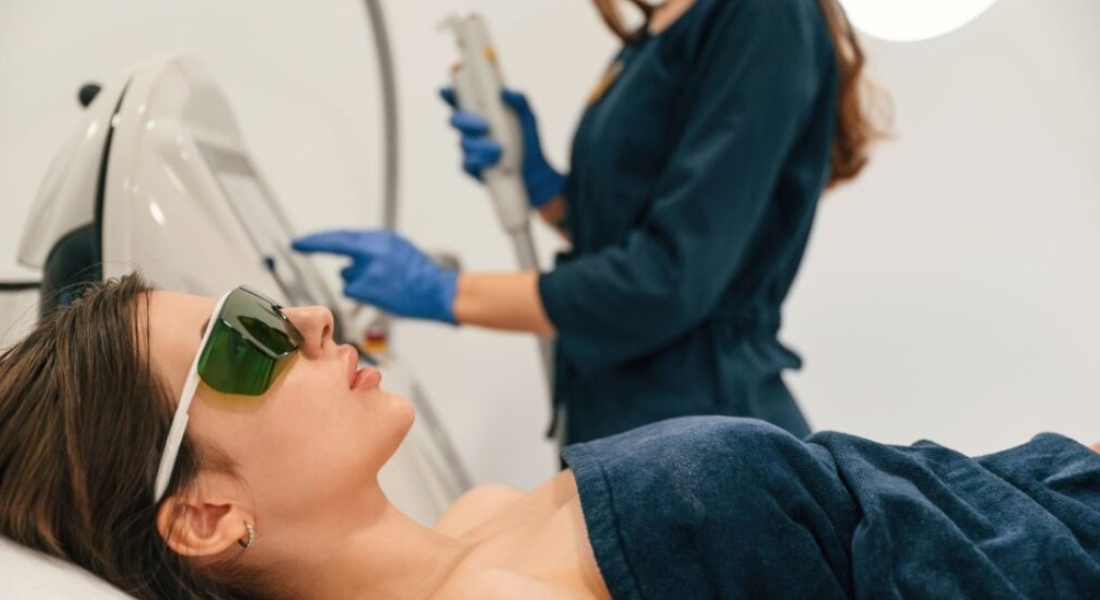
Skin resurfacing may seem modern, but people have tried to improve rough, scarred and ageing skin for centuries. Early methods used acidic substances and abrasive materials, while later techniques introduced stronger chemicals, mechanical treatments and eventually lasers.
Today, resurfacing is much more controlled, with dermatologists considering treatment depth, laser wavelength, skin type and the concern being treated. Fractional technology has also made it possible to treat microscopic zones while leaving intervening areas relatively untreated, which can support faster healing than some full-field resurfacing approaches.
Key Takeaways
- Skin resurfacing has developed from early chemical and abrasive techniques to carefully controlled peels, dermabrasion and laser treatments.
- Medical chemical peeling became more systematic during the 19th century.
- Abner Kurtin’s work in 1953 helped establish modern dermabrasion.
- Anderson and Parrish introduced selective photothermolysis in 1983, an important principle in modern laser dermatology.
- Er:YAG laser resurfacing became established during the 1990s as another ablative resurfacing option.
- Fractional photothermolysis was introduced in 2004 and changed resurfacing by treating microscopic zones rather than the entire surface.
- Newer does not automatically mean better; treatment choice still depends on your skin type, concern, required treatment depth and acceptable recovery time.
What Does Skin Resurfacing Actually Mean?

Skin resurfacing refers to treatments that deliberately remove, exfoliate or create controlled injury in selected layers of your skin to improve concerns such as uneven texture, scars, fine lines and sun damage. Depending on the technique and treatment depth, resurfacing may work mainly at the surface or stimulate deeper healing and collagen remodelling.
Different methods work in different ways, including chemical peels, dermabrasion and laser treatments. Modern fractional and non-ablative techniques allow doctors to control treatment more precisely, so the approach can be tailored to your skin type and concerns.
Were People Resurfacing Their Skin in Ancient Times?
Historical accounts suggest that people in ancient civilisations used acidic substances and abrasive materials to improve the appearance and feel of their skin. Ancient Egyptian skin practices have been associated with sour milk, which contains lactic acid, while different cultures also used abrasive materials to smooth the skin.
These early methods were very different from modern dermatology because there was no way to control treatment depth or understand how the skin healed. However, the basic idea was similar to modern resurfacing: carefully removing or exfoliating the outer skin could change its texture and appearance.
When Did Chemical Resurfacing Become Medical Treatment?
During the 19th century, dermatology became more established as a medical specialty, and doctors began exploring chemical methods to improve visible skin concerns. Ferdinand von Hebra described the use of phenol as a peeling agent in the 19th century, while Paul Gerson Unna later documented the peeling effects of agents including salicylic acid and resorcinol. Their work helped move chemical peeling towards a more systematic dermatological treatment.
This marked a shift towards more controlled skin treatments, with greater attention to the chemical used, its strength and the depth of tissue affected. These principles remain important today, as superficial and deep chemical peels can produce very different results, recovery times and risks.
How Did Phenol Change Chemical Peeling?
Phenol became an important part of the early development of deep chemical resurfacing, as it could create controlled injury deep enough to improve acne scars, wrinkles and other skin irregularities. George Miller MacKee used phenol for acne scarring in the early 20th century, with later techniques in the mid-20th century further developing its use.
These deeper treatments could produce noticeable improvements but also involved greater risks and longer recovery. This helped establish an important principle that still guides resurfacing today: treating deeper may produce stronger results, but it can also increase the risk of complications and extend healing time.
Deep phenol peeling also introduced risks that go beyond ordinary redness or peeling. Phenol can be absorbed through the skin and, particularly during extensive deep peeling, can cause systemic toxicity including cardiac arrhythmias. This is one reason deep phenol resurfacing requires careful patient selection, controlled technique and appropriate medical monitoring.
How Did Chemical Peels Become More Predictable?
As chemical peeling developed, dermatologists recognised that different acids and techniques could produce different depths of treatment. TCA, salicylic acid and alpha-hydroxy acids such as glycolic and lactic acid became established options, with doctors increasingly choosing between superficial, medium-depth and deep peels.
Research also showed that some chemical peels, depending on their agent and treatment depth, can affect dermal structures and stimulate changes in collagen rather than acting only on surface cells. Even after lasers became available, chemical peels remained useful because they offer different levels of treatment, recovery time, cost and suitability.
How Did Dermabrasion Introduce Mechanical Resurfacing?
Chemical peels were not the only way doctors developed skin resurfacing, as mechanical abrasion also became an important approach. Modern dermabrasion became established in the mid-20th century, with Abner Kurtin’s 1953 technique using powered rotary equipment to remove damaged surface skin more precisely.
Dermabrasion became particularly useful for acne scars and uneven skin contours, but the depth had to be carefully controlled to avoid deeper injury and permanent scarring. Although newer technologies are now available, its development showed that damaged skin could be removed systematically rather than through simple abrasion.
Why Was Microdermabrasion an Important Change?
Traditional dermabrasion can treat deeper layers of skin, but this also means more recovery time and a greater risk of complications. Microdermabrasion took a gentler approach, using fine abrasives or specialised tips to exfoliate the skin’s surface with much less downtime.
Modern microdermabrasion was introduced in Italy in 1985 by Marini and Lo Brutto. Early systems used aluminium oxide crystals with suction to produce controlled superficial abrasion. Unlike traditional dermabrasion, the technique mainly affected the outermost epidermal layer, making it a substantially less aggressive form of mechanical resurfacing.
This reflected a growing demand for effective treatments that did not require long recovery periods. Although microdermabrasion cannot replace deeper resurfacing, it broadened the range of options by offering more superficial exfoliation with less recovery than traditional dermabrasion.
How Did Lasers Enter Dermatology?
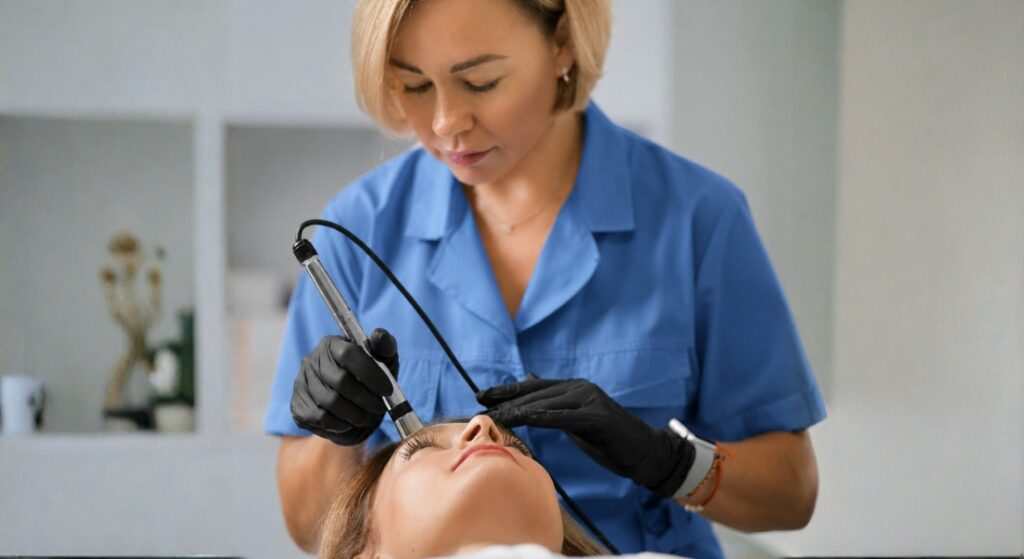
Lasers transformed dermatology by allowing doctors to deliver controlled light energy directly to the skin. The carbon dioxide (CO₂) laser became especially important for resurfacing because its energy is strongly absorbed by water in human tissue.
Modern laser resurfacing depended on earlier advances in laser physics. Theodore Maiman demonstrated the first working laser in 1960, and C. Kumar N. Patel reported the carbon dioxide laser in 1964. These developments established key laser technologies that were later adapted for medical procedures, including the controlled use of laser energy in surgery and dermatology.
Early systems were less precise, and controlling heat damage was a major challenge. As researchers understood more about laser energy and tissue absorption, treatments became more targeted and safer.
Why Was Selective Photothermolysis Such an Important Discovery?
A major breakthrough in laser dermatology was the concept of selective photothermolysis, introduced by Rox Anderson and John Parrish in 1983. It showed how the right wavelength and pulse duration could target specific skin structures while limiting unnecessary heat to surrounding tissue.
This principle helped make laser treatments more precise for concerns involving pigment, hair and blood vessels. Although ablative resurfacing works differently by targeting water in the skin, the same focus on controlling laser parameters helped shape modern laser dermatology. Their work became a foundational principle for the increasingly precise use of lasers across dermatology.
How Did CO₂ Laser Resurfacing Change Facial Rejuvenation?
CO₂ laser resurfacing developed during the late 1980s and became particularly important during the 1990s. Because CO₂ laser energy is strongly absorbed by water in the skin, it can vaporise superficial tissue, while advances in pulsed and scanned systems gave doctors greater control over tissue removal and surrounding thermal damage.
CO₂ resurfacing could improve wrinkles, photoaged skin and some scars, but full-field treatment required a lengthy recovery. Risks such as infection, prolonged redness, pigmentation changes and scarring encouraged the development of gentler laser techniques.
What Did the Er:YAG Laser Add to Resurfacing?
The Er:YAG laser brought another important development in ablative resurfacing. Its 2,940-nanometre wavelength is highly absorbed by water, allowing precise tissue removal with less surrounding heat than conventional CO₂ lasers. Er:YAG systems became established as an important resurfacing option during the 1990s.
Er:YAG treatment can offer faster initial healing, while CO₂ lasers may provide greater thermal effects and tissue contraction. Neither is automatically better, so doctors choose between them based on your skin concerns, treatment depth, desired results and recovery time.
Why Did Dermatology Move Towards Non-Ablative Treatments?
By the late 1990s and early 2000s, patients increasingly wanted skin improvement without the long recovery associated with full-field resurfacing. Non-ablative lasers addressed this by heating deeper skin layers while largely preserving the surface, encouraging collagen remodelling without creating the same open wound.
This offered a gentler recovery but often required several treatments and produced more modest results than ablative resurfacing. The approach also helped shift resurfacing from simply removing damaged skin towards controlled heating and stimulating the skin’s natural remodelling process.
How Did Fractional Resurfacing Revolutionise the Field?
Fractional photothermolysis, introduced in 2004, changed resurfacing by creating microscopic treatment zones while leaving intervening areas of skin untreated. This allowed the untreated skin to support faster healing while still encouraging collagen remodelling and skin renewal.
The technology could also be adapted to ablative CO₂ and Er:YAG lasers, giving doctors greater control over treatment intensity and density. By adjusting these settings, they could balance the expected results with recovery time and treatment risks.
Key Milestones in the History of Skin Resurfacing
| Period | Development | Why It Mattered |
| Ancient era | Acidic and abrasive substances were used to alter skin texture | Established the basic idea of exfoliating the skin surface |
| 19th century | Hebra and Unna described medical chemical-peeling agents | Helped move peeling into systematic dermatological practice |
| 1953 | Abner Kurtin described modern powered dermabrasion | Made controlled mechanical resurfacing more practical |
| 1983 | Anderson and Parrish introduced selective photothermolysis | Provided a foundation for precise laser targeting |
| 1985 | Marini and Lo Brutto introduced microdermabrasion | Provided a more superficial, lower-downtime form of mechanical resurfacing |
| 1990s | Pulsed/scanned CO₂ systems advanced laser resurfacing | Reduced unnecessary thermal injury compared with older continuous-wave approaches |
| 1990s | Er:YAG laser resurfacing became established | Offered precise ablation with less surrounding thermal injury |
| 2004 | Fractional photothermolysis was introduced | Allowed microscopic treatment zones surrounded by untreated tissue |
| Modern practice | Ablative, non-ablative and fractional approaches coexist | Allows treatment to be selected according to concern, skin type, risk and recovery |
Evidence Note
The original 2004 fractional photothermolysis work established the principle of creating microscopic treatment zones rather than treating the entire skin surface uniformly. This early fractional approach was non-ablative. The same basic concept was later adapted to ablative technologies, including fractional CO₂ and Er:YAG systems, expanding the range of resurfacing depths and recovery profiles available to clinicians.
How Did Fractional CO₂ and Er:YAG Treatments Develop?
Fractional CO₂ and Er:YAG systems changed ablative resurfacing by treating microscopic columns of skin rather than removing the entire treated surface uniformly. Doctors can adjust treatment depth and density according to your skin concern, the desired intensity and the amount of recovery time you can accept.
Fractional treatment can be useful for acne scars, photoageing, wrinkles and uneven texture, but it is not automatically gentle or risk-free. Redness, swelling, crusting, pigmentation changes, infection and scarring can still occur, particularly when treatment settings or patient selection are not appropriate.
Did Lasers Make Chemical Peels and Dermabrasion Obsolete?
Newer resurfacing technology has not simply replaced older treatments, as chemical peels and dermabrasion still have useful roles. Different techniques offer different levels of treatment, recovery and suitability, so the best option depends on your skin concerns.
Modern dermatology may also combine treatments, particularly for acne scarring where scars can vary in depth and shape. The history of resurfacing is therefore less about finding one perfect treatment and more about developing a wider range of options that can be tailored to your skin.
How Has Safety Changed the Way Modern Resurfacing Is Planned?
One of the biggest differences between historical resurfacing and modern dermatology is the focus on patient selection, treatment depth and individual risk. Because resurfacing creates controlled skin injury, risks such as prolonged redness, infection, scarring, delayed healing and pigmentation changes can still occur.
Pigment changes are an especially important consideration when planning resurfacing for darker skin tones. Some procedures can trigger post-inflammatory hyperpigmentation or, less commonly, loss of pigment, so treatment choice and settings need to take your skin type and previous pigment responses into account.
Your skin pigmentation, scarring history, previous pigmentation problems, medicines and the concern being treated can all influence treatment choices. Modern dermatology therefore aims to find the right level of treatment for your skin, rather than simply using the most aggressive option available.
Clinical Tip
Before choosing a resurfacing treatment, tell your dermatologist about previous problems with pigmentation or scarring, any history of cold sores, your medicines and any recent skin procedures. Ask what level of redness, peeling or downtime is expected for the specific treatment being recommended, as recovery can vary considerably between superficial, fractional and fully ablative procedures.
UK Guidance Note
In England, laser and IPL services are not automatically required to register with the Care Quality Commission. Whether registration is required depends on the purpose of treatment, the way the service is provided, who provides or supervises it and whether it falls within a regulated activity. Procedures carried out purely for cosmetic purposes are generally outside the CQC-regulated activity of treating disease, disorder or injury. Local authority licensing requirements may also apply, so you should check the practitioner’s qualifications, experience and the standards followed by the clinic.
Myth vs Fact
| Myth | Fact |
| The newest resurfacing treatment is always the best. | No. Older treatments such as chemical peels and dermabrasion still have useful roles for selected concerns. |
| A stronger or deeper treatment always gives a better result. | Deeper treatment can produce greater change, but it also increases recovery time and the potential for complications. |
| Fractional laser treatment is risk-free because only part of the skin is treated. | No. Fractional treatments can still cause redness, swelling, pigment changes, infection and, rarely, scarring. |
| All laser resurfacing treatments work in the same way. | No. Different wavelengths and technologies interact with the skin differently and can reach different treatment depths. |
| Laser technology made chemical peels obsolete. | No. Chemical peels remain useful because treatment depth and indication can be selected according to the individual patient. |
Frequently Asked Questions
1. What is the history of skin resurfacing?
If you think of skin resurfacing as a modern treatment, its history is much older. Techniques have developed from early acidic and abrasive approaches to chemical peels, dermabrasion and carefully controlled laser treatments that can now be tailored more precisely to your skin.
2. How did ancient civilisations resurface the skin?
Long before modern dermatology, people used acidic substances and abrasive materials in attempts to smooth the skin. Ancient Egyptian practices are often associated with sour milk containing lactic acid, showing that some of the basic principles behind exfoliation existed centuries before the treatments you may recognise today.
3. When did chemical peels become a medical treatment?
Medical chemical peeling began to develop during the 19th century, when dermatologists started documenting how different substances affected the skin. This gradually led to the more controlled superficial, medium-depth and deep peels that may be considered for patients today.
4. When was dermabrasion first developed?
Modern dermabrasion became established during the mid-20th century, particularly after Abner Kurtin described a powered technique in 1953. If dermabrasion is considered for you today, the treatment is much more controlled than earlier forms of mechanical abrasion.
5. When did lasers become used for skin resurfacing?
Laser resurfacing developed during the later 20th century, with CO₂ lasers becoming particularly important for wrinkles, photoageing and selected scars. Later systems gave doctors much greater control over how deeply your skin was treated and how much surrounding heat was produced.
6. What was the significance of the CO₂ laser in skin resurfacing?
The CO₂ laser became important because its energy is strongly absorbed by water in your skin, allowing carefully controlled removal of superficial tissue. It can produce significant changes, but fully ablative treatment also involves more recovery and a greater potential for complications.
7. What did the Er:YAG laser add to skin resurfacing?
Er:YAG provides another ablative resurfacing option. Its wavelength is very strongly absorbed by water, allowing precise tissue removal with less surrounding heat than traditional CO₂ treatment, so your dermatologist can consider which technology better suits your skin concern and required recovery time.
8. What is fractional skin resurfacing?
Fractional resurfacing treats microscopic zones of your skin while leaving intervening areas untreated. Those untreated areas support healing, which can reduce recovery compared with some traditional full-field resurfacing approaches, although fractional treatment can still cause side effects.
9. Are chemical peels and dermabrasion still used today?
Yes. Your dermatologist may still consider a chemical peel, dermabrasion or another resurfacing technique depending on the concern being treated. Newer laser technology has expanded the options available rather than making every older treatment obsolete.
10. How has skin resurfacing become safer over time?
Modern treatment can be planned much more precisely than historical resurfacing, but it is not risk-free. Your dermatologist should consider your skin type, pigmentation, scarring history, medical history, treatment depth and expected recovery before recommending a resurfacing procedure.
Final Thoughts: How Skin Resurfacing Has Evolved
The history of skin resurfacing shows how dramatically dermatology has evolved, from early exfoliation and abrasive techniques to more precisely controlled laser and fractional treatments. Today, you have more options than ever, but the right approach depends on your skin type, the concern being treated, the depth of resurfacing required and your individual risk factors.
Modern resurfacing is not simply about achieving the strongest possible treatment. It is about choosing a carefully controlled approach that can improve your skin while allowing you to recover safely and achieve realistic results.
References:
- Măgerușan, Ș.E., Hancu, G. and Rusu, A. (2023) ‘A comprehensive bibliographic review concerning the efficacy of organic acids for chemical peels treating acne vulgaris’, Molecules, 28(20), article 7219. Available at: https://www.mdpi.com/1420-3049/28/20/7219
- Fulton, J.E. Jr (1996) ‘Dermabrasion, chemabrasion, and laserabrasion: Historical perspectives, modern dermabrasion techniques, and future trends’, Dermatologic Surgery, 22(7), pp. 619–628. Available at: https://pubmed.ncbi.nlm.nih.gov/8680784/
- Anderson, R.R. and Parrish, J.A. (1983) ‘Selective photothermolysis: Precise microsurgery by selective absorption of pulsed radiation’, Science, 220(4596), pp. 524–527. Available at: https://pubmed.ncbi.nlm.nih.gov/6836297/
- Keller, G.S., Rawnsley, J., Cutcliffe, B. and Watson, J. (1998) ‘Erbium:YAG and carbon dioxide laser resurfacing’, Facial Plastic Surgery Clinics of North America, 6(2), pp. 167–181. Available at: https://www.sciencedirect.com/science/article/pii/S1064740623003164
- Manstein, D., Herron, G.S., Sink, R.K., Tanner, H. and Anderson, R.R. (2004) ‘Fractional photothermolysis: A new concept for cutaneous remodeling using microscopic patterns of thermal injury’, Lasers in Surgery and Medicine, 34(5), pp. 426–438. Available at: https://pubmed.ncbi.nlm.nih.gov/15216537/