


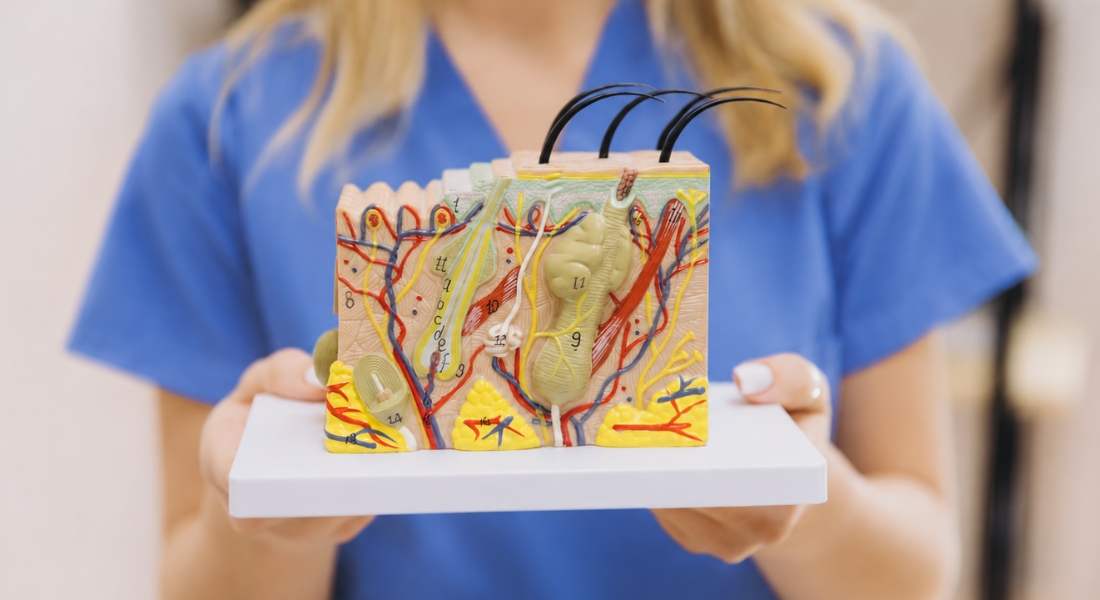
You may not realise it, but your skin is home to a diverse community of bacteria, fungi and other tiny organisms. Together, these are known as your skin microbiota, and they can interact with your skin barrier and immune system.
For many years, scientists could detect only a small part of this hidden community. Modern DNA sequencing has revealed much greater diversity and is helping researchers understand how the microbes living on your skin may relate to conditions such as eczema and acne.
How Did Scientists First Discover Microbes on Your Skin?
You cannot see the microorganisms living on your healthy skin with the naked eye. In the seventeenth century, Antonie van Leeuwenhoek’s microscopic observations helped reveal a hidden microbial world that had previously been invisible.
Later discoveries by scientists including Louis Pasteur and Robert Koch demonstrated that some microorganisms can cause disease. Over time, researchers also learnt that many microbes can live normally on your skin without causing infection, helping establish the distinction between harmful pathogens and members of your usual skin microbiota.
How Scientists Discovered That Your Healthy Skin Is Not Sterile
Scientists began finding bacteria living on healthy skin without causing infection. This changed the earlier assumption that microorganisms found on your skin must always be harmful. Researchers discovered that your healthy skin naturally supports organisms including Staphylococcus, Corynebacterium and Cutibacterium species.
However, the culture methods available at the time could identify only organisms that grew successfully in laboratory conditions. As a result, scientists could see only a small part of the microbial community living on your skin.
Why Do Some Skin Microbes Stay While Others Come and Go?
In 1938, Philip B. Price distinguished bacteria recovered from the hands into resident and transient populations. This distinction helps explain why some microorganisms remain on your skin for longer periods, while others are acquired temporarily through contact with your surroundings.
Researchers also discovered that microbes are not distributed randomly across your skin. They can live in distinct environments, including hair follicles, helping scientists understand your skin as a living microbial ecosystem rather than simply a surface covered with germs.
How Mary Marples Helped Explain Your Skin as an Ecosystem
Mary Marples’ 1965 work helped scientists understand your skin as a collection of distinct ecological habitats rather than one uniform surface. Moisture, temperature, pH and sebum vary across your body and influence which microorganisms can persist in each area.
This explains why the microbial community on your forehead may differ from the community on your forearm, feet or armpits. Later sequencing studies confirmed that the oily, moist and dry areas of your skin support different microbial communities.
Why Traditional Culture Revealed Only Part of Your Skin Microbiome
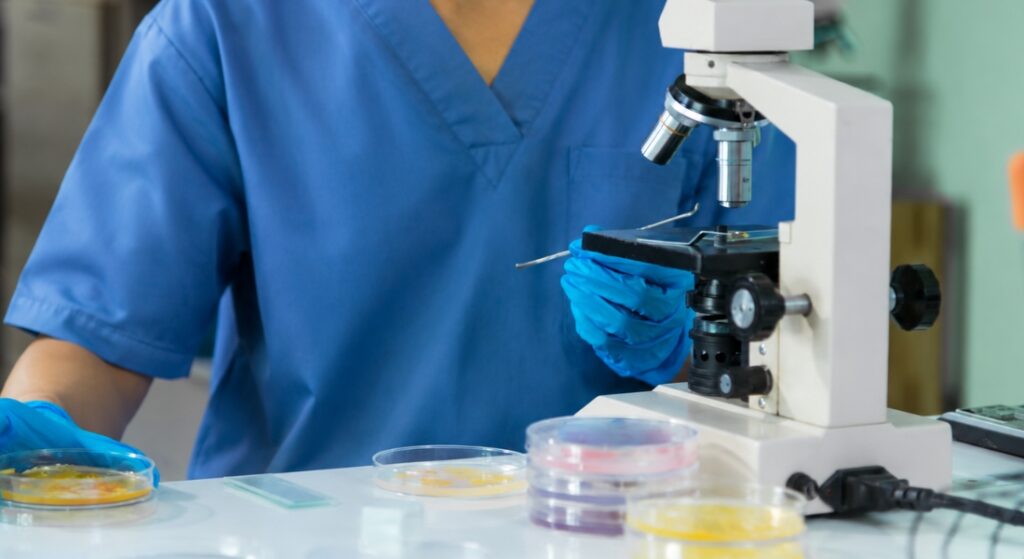
For many years, scientists studied the microorganisms living on your skin by attempting to grow them in laboratory cultures. However, laboratory conditions cannot reproduce every feature of your skin, meaning many organisms were difficult or impossible to grow using traditional methods.
As a result, researchers could detect only part of your skin’s microbial community. Genetic methods later allowed scientists to identify microbial DNA directly, providing a more complete picture of the organisms living on your skin.
How DNA Sequencing Transformed the Study of Your Skin Microbiome
DNA sequencing changed what scientists could see on your skin. By analysing a bacterial marker called the 16S ribosomal RNA gene, researchers could identify and compare many types of bacteria without first needing to grow them in the laboratory.
This revealed much more bacterial diversity than culture methods had suggested. It also allowed researchers to compare the microbes on different areas of your skin with those found on other people and on skin affected by particular conditions.
How the Word “Microbiome” Changed the Way We Understand Your Skin
Whipps, Lewis and Cooke published an early formal definition of ‘microbiome’ in 1988. In human biology, the term gained wider prominence around 2001 when Joshua Lederberg and Alexa McCray used it to describe the ecological community of microorganisms sharing the human body.
When you read about your skin microbiota, the term usually refers to the microorganisms themselves. The term skin microbiome is broader and may include these organisms, their genetic material, their interactions and the local environment in which they live.
This broader concept changed how scientists viewed your skin. Rather than focusing only on harmful microorganisms, researchers began investigating how your resident microbes interact with your skin barrier and immune system to influence health.
How Early Sequencing Revealed the Diversity of Your Skin
In 2008, researchers including Elizabeth Grice, Heidi Kong and Julia Segre used DNA-based methods to examine bacteria living on healthy skin. Their findings helped move the field beyond studying a limited group of culturable organisms towards comparing whole bacterial communities on healthy skin.
The study also showed that your skin microbiome may differ substantially from another person’s while remaining healthy. Broader mapping published the following year demonstrated that the location on your body also strongly influences which microorganisms are present.
How the 2009 Microbiome Map Explained Differences Across Your Skin
By 2009, researchers had begun to map how microbial communities vary across different parts of your body. This showed that your skin does not have one uniform microbiome. Oily, moist and dry areas can support different microbial communities, which helps explain why the microbes on your forehead may differ from those on your forearm or armpit.
Evidence Note
In a landmark 2009 study, Elizabeth Grice and colleagues analysed bacterial 16S rRNA sequences from 20 different skin sites in healthy adults. They found that areas with similar skin conditions tended to support similar bacterial communities. This showed that the microbes on your skin are strongly influenced by where they live on your body rather than forming one uniform microbial layer.
Why Different Areas of Your Skin Support Different Microbes
Modern sequencing showed that your skin site strongly influences which microbes live there. Oily areas can support Cutibacterium, while moist folds often contain more Staphylococcus and Corynebacterium, and dry areas may have greater bacterial diversity.
These patterns are also influenced by your age, hormones, climate, hygiene and skincare. Understanding these local microbial differences helps researchers explore why conditions such as acne, eczema and seborrhoeic dermatitis affect particular areas.
How the Human Microbiome Project Changed What We Know About Your Skin
The US Human Microbiome Project gave researchers a much broader picture of the microorganisms associated with your body. Its major findings, published in 2012, showed that your skin microbiome can differ considerably from another person’s without either community necessarily being unhealthy.
The project also confirmed that different areas of your body provide distinct microbial environments. This gave scientists a large reference dataset for comparing the microbial communities found across healthy body sites.
How Can Newer DNA Sequencing Reveal What Your Skin Microbes Are Doing?
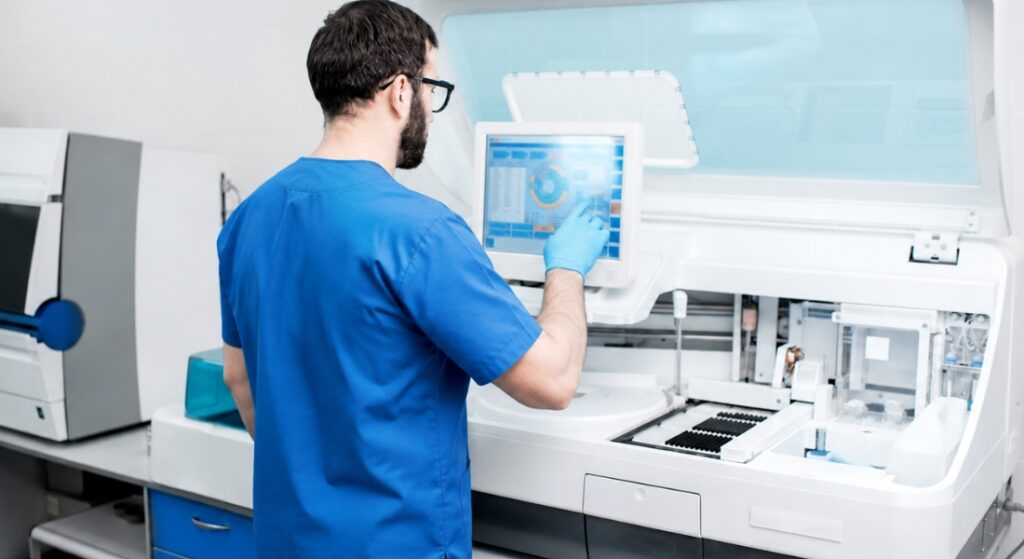
Early 16S sequencing helped scientists identify many bacteria living on your skin, but it mainly focuses on one bacterial marker gene. Newer methods such as shotgun metagenomics examine DNA from across the microbial community, giving researchers a broader view and helping them distinguish different species, strains and microbial genes.
Other techniques can show which genes are active and which microbial products are being made. Together, these methods help researchers move beyond asking which microbes are present and start exploring what they may actually be doing on your skin.
Key Milestones in Skin Microbiome Research
| Period | Development | Why It Mattered |
| 17th century | Leeuwenhoek’s microscopic observations revealed microorganisms | Opened the microscopic microbial world |
| 1938 | Philip B. Price distinguished resident and transient skin flora | Helped define different microbial populations on skin |
| 1965 | Mary Marples published The Ecology of the Human Skin | Established an ecological way of thinking about skin microbes |
| 1988 | Whipps, Lewis and Cooke published an early formal definition of ‘microbiome’ | Helped frame microbes as communities within defined habitats |
| Early 2000s | Human-microbiome terminology gained momentum | Shifted attention from individual pathogens towards microbial ecosystems |
| 2008 | Grice and colleagues profiled healthy skin using 16S sequencing | Revealed unexpected bacterial diversity |
| 2009 | Bacterial communities were mapped across multiple skin sites | Demonstrated strong microbial biogeography |
| 2012 | Human Microbiome Project published major reference findings | Brought human microbiome research into mainstream biomedicine |
| 2010s–present | Metagenomics and multi-omics expanded | Allowed researchers to investigate strains, genes and microbial functions |
| Current research | Microbiome-targeted therapies are being investigated | May eventually support more targeted approaches to selected skin diseases |
Why Your Skin Microbiome Includes More Than Bacteria
Your skin microbial ecosystem includes more than bacteria. It can also contain fungi, viruses and microscopic organisms such as Demodex mites. Malassezia fungi are common on many areas of your skin, while your feet may support greater fungal diversity.
Researchers now investigate how these different organisms interact with one another and with your skin. This means your skin microbiome is not simply a list of bacterial species; it includes diverse organisms, microbial genes, biological interactions and the local environment of your skin.
How Can Your Skin Microbiome Help Support Your Skin Barrier?
Your skin barrier does more than prevent water loss and block irritants. Your resident microbes can also compete with harmful organisms and interact with your immune system to support skin defence.
However, microbes are not simply “good” or “bad”. Your skin health depends on the balance between its barrier, immune system, microbial community and environment.
How Your Skin Microbiome May Change with Atopic Eczema
If you have atopic eczema, affected areas of your skin may show increased Staphylococcus aureus and reduced bacterial diversity, particularly during a flare. Greater S. aureus dominance has also been associated with more severe eczema. However, this does not mean that everyone should have one identical “ideal” skin microbiome.
Importantly, your eczema is not caused by one bacterium alone. Changes in your skin barrier, immune responses, genetics and environmental factors can all interact with changes in your skin microbes, making the overall picture much more complex.
How Your Skin Microbiome May Relate to Acne, Psoriasis and Other Conditions
If you have acne, psoriasis, rosacea or seborrhoeic dermatitis, changes in your skin’s microbial community may form part of the condition. However, simply finding Cutibacterium acnes on your skin does not mean it is causing acne because this bacterium can also live normally on healthy skin.
Researchers now ask what your microbes are doing, not just which organisms are present. Techniques such as metagenomics and metabolomics help reveal how microbial genes, products and interactions may influence your skin.
What Future Microbiome Research Could Mean for Your Skin
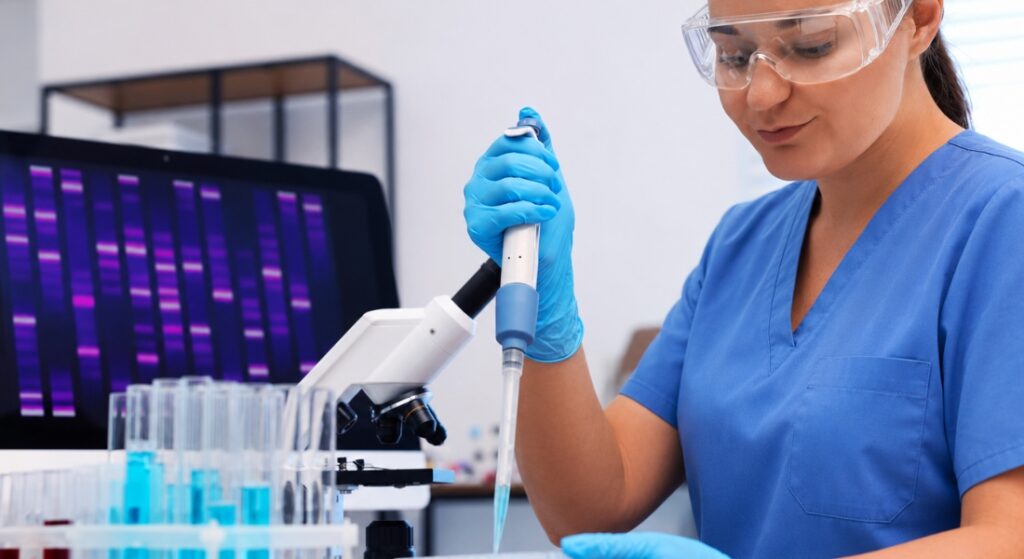
Future research may give you more targeted ways to manage selected skin conditions by altering particular microbial interactions. Scientists are investigating selected bacterial strains, bacterial products, bacteriophages, which are viruses that target bacteria, and related approaches, but these remain experimental and are not currently standard treatments for most skin conditions.
You should be cautious about products claiming to “balance” your microbiome because the science is still developing. What works for your skin may depend on your condition, body site and individual microbial community, so promising research does not automatically mean every microbiome product is proven.
Clinical Tip
If you use prescribed treatment for eczema, acne or another skin condition, do not stop it simply because a product claims to “restore” or “rebalance” your microbiome. Many commercial microbiome claims are still ahead of the clinical evidence. If your condition is persistent or getting worse, speak to your GP or dermatologist rather than relying on microbiome-focused skincare alone.
Myth vs Fact
| Myth | Fact |
| Healthy skin should be sterile. | No. Healthy skin naturally supports many microorganisms. |
| Every bacterium on your skin is harmful. | No. Many resident organisms coexist with the skin and may contribute to barrier and immune functions. |
| Everyone has one identical “healthy” microbiome. | No. Microbial communities differ between individuals and across different areas of the same body. |
| Finding S. aureus means eczema is definitely infected. | No. S. aureus can be present on eczema-affected skin without causing a clinical infection. |
| Cutibacterium acnes automatically causes acne whenever it is present. | No. Cutibacterium acnes can also live normally on healthy skin. Different bacterial strains, what the bacteria are doing and factors in your own skin can all matter. |
| A product claiming to “balance your microbiome” is necessarily clinically proven. | No. Microbiome-focused treatments are a developing field and evidence varies considerably between products. |
Frequently Asked Questions
1. What is the skin microbiome?
The microorganisms living on and within your skin are often described as the skin microbiota. The term skin microbiome is broader and can include these microorganisms, their genetic material, their interactions and the local skin environment in which they live.
2. How was the skin microbiome discovered?
Early microscopes allowed scientists to see microorganisms on the skin, but researchers initially relied mainly on laboratory culture methods. DNA-based sequencing later transformed the field by allowing researchers to detect and compare many microorganisms without first having to grow them in laboratory culture.
3. Is your skin supposed to have bacteria on it?
Yes. Healthy skin is not sterile, and many microorganisms normally live on its surface and within structures such as hair follicles. Some resident microbes can help compete with potentially harmful organisms and interact with your skin’s immune defences.
4. Does everyone have the same skin microbiome?
No. Your skin microbiome can differ from another person’s and can also vary across different areas of your own body. Factors such as whether the skin is oily, dry or moist, along with age, hormones, environment and skincare, can influence which microbes are present.
5. How did DNA sequencing change our understanding of the skin microbiome?
DNA sequencing allowed researchers to identify microorganisms without first growing them in a laboratory. This revealed that your skin supports a much more diverse microbial community than traditional culture techniques had suggested.
6. What is the connection between your skin microbiome and eczema?
If you have atopic eczema, your skin microbiome may change during a flare, with more Staphylococcus aureus and less bacterial diversity. However, eczema is not caused by one bacterium alone. Your skin barrier, immune system, genetics and environment also play important roles.
7. Can your skin microbiome affect acne?
Your microbiome may play a role in acne, but simply having Cutibacterium acnes does not mean you have the condition. This bacterium can normally live on healthy skin, so researchers are increasingly studying differences between microbial strains, genes and activity rather than just looking for its presence.
8. Does your skin microbiome include fungi and viruses?
Yes. The broader skin microbial ecosystem includes more than bacteria. Researchers also study fungi and viruses, as well as microscopic organisms such as Demodex mites that share the skin environment. For example, Malassezia fungi are common on many areas of healthy skin and can interact with the surrounding microbial community.
9. Can you change your skin microbiome?
Your skin microbiome can be influenced by factors such as skincare, hygiene, environment and treatments. Researchers are also investigating targeted approaches involving selected bacteria, bacterial products and other microbiome-based treatments, but many of these approaches are still being studied.
10. Can you use microbiome products to improve your skin?
Some microbiome-focused skincare products are being developed, but you should be cautious about claims that a product can simply “rebalance” your microbiome. Your microbial community varies by person and body site, and not every microbiome-based treatment has been proven to provide a clinical benefit.
Final Thoughts: What the Skin Microbiome Means for You
The discovery of the skin microbiome has changed how you can think about your skin. Rather than being a sterile surface, your skin supports diverse microorganisms that interact with its barrier, immune system and local environment.
Researchers are now investigating how these microbial communities relate to eczema, acne and other skin conditions. Although microbiome-based treatments remain a developing field, this research may eventually support more personalised ways of understanding and managing your skin health.
References:
- Smythe, P. and Wilkinson, H.N. (2023) ‘The skin microbiome: Current landscape and future opportunities’, International Journal of Molecular Sciences, 24(4), article 3950. Available at: https://www.mdpi.com/1422-0067/24/4/3950
- Grice, E.A., Kong, H.H., Conlan, S. et al. (2009) ‘Topographical and temporal diversity of the human skin microbiome’, Science, 324(5931), pp. 1190–1192. Available at: https://pubmed.ncbi.nlm.nih.gov/19478181/
- Kong, H.H., Oh, J., Deming, C. et al. (2012) ‘Temporal shifts in the skin microbiome associated with disease flares and treatment in children with atopic dermatitis’, Genome Research, 22(5), pp. 850–859. Available at: https://pmc.ncbi.nlm.nih.gov/articles/PMC3337431/
- Sanabani, S.S. (2026) ‘The skin microbiome: From historical ecology to therapeutic frontiers’, Anais Brasileiros de Dermatologia, 101(4), article 501393. Available at: https://www.sciencedirect.com/science/article/pii/S0365059626001066
- Berg, G. et al. (2020) ‘Microbiome definition re-visited: old concepts and new challenges’, Microbiome, 8(1), article 103. Available at: https://pubmed.ncbi.nlm.nih.gov/32605663/