


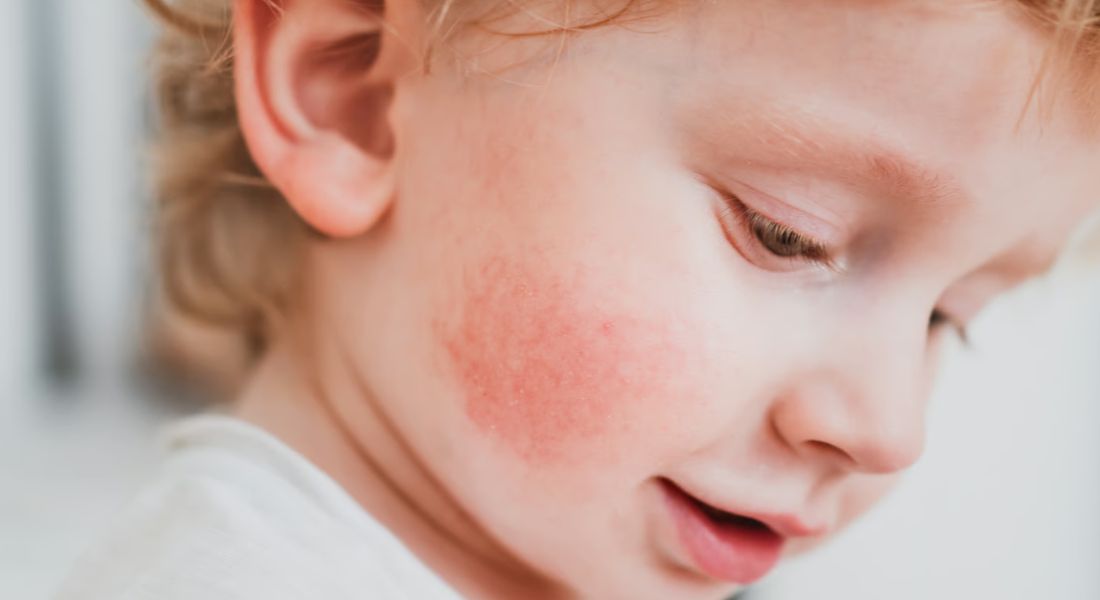
Seeing your child develop raised, itchy patches that keep returning can be worrying, especially when the rash appears in different places and then disappears. Hives that continue to recur for six weeks or longer are known as chronic urticaria. In many children, they are not caused by a specific food or environmental allergy, although immune-system activity contributes to the repeated activation of cells within the skin.
In some children, chronic urticaria may have autoimmune features, where the immune system mistakenly reacts against the body’s own cells. Understanding this can help you avoid unnecessary food restrictions or repeated allergy testing while making sure your child receives the right assessment and treatment.
What Is Chronic Urticaria in Children?
Urticaria causes raised, itchy swellings known as weals or hives when mast cells in the skin release histamine and other inflammatory substances. An individual weal usually disappears within 24 hours without leaving a permanent mark, although new hives may continue to appear elsewhere.
The condition is described as chronic when hives, angioedema or both continue to recur for six weeks or longer. Angioedema is deeper swelling that often affects the eyelids, lips, hands or feet and may feel tight or painful rather than itchy. Chronic describes how long the condition has continued and does not mean that it will necessarily be permanent.
What Do Chronic Hives Look and Feel Like?
Hives may appear as small bumps, larger patches or broad areas of raised skin. They can look pink, red, pale or similar to the surrounding skin, and colour changes may be less obvious on brown or black skin. Individual weals change shape, disappear within hours and may then develop elsewhere.
Itching is usually the main symptom, while angioedema develops more deeply and may last longer. Angioedema around the eyes or lips can occur with chronic urticaria and is not always anaphylaxis. However, call 999 if your child develops sudden swelling of the lips, mouth, throat or tongue, breathing or swallowing difficulty, blue, grey or pale colour changes, collapse, marked dizziness or reduced responsiveness.
How Is Chronic Urticaria Different from Acute Urticaria?
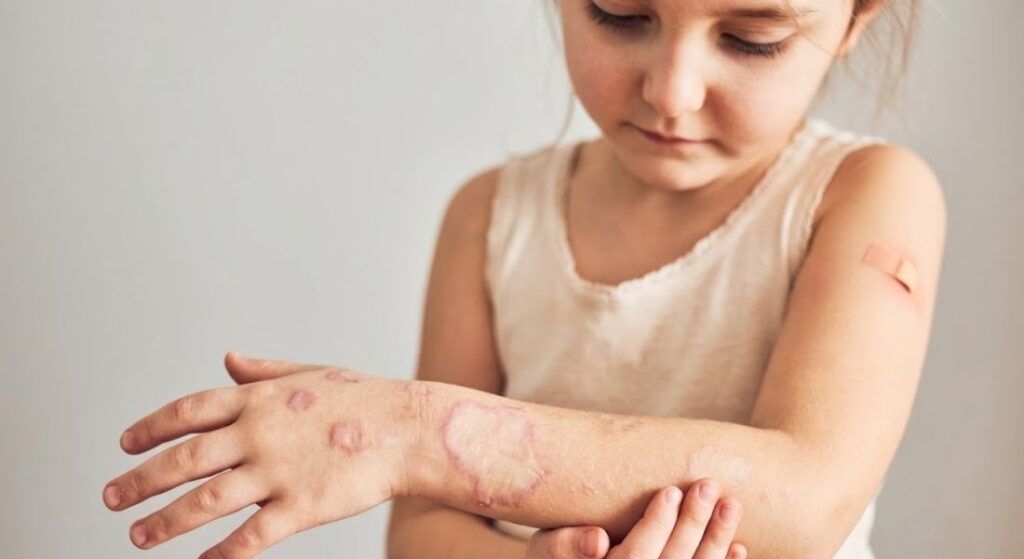
Acute urticaria lasts for less than six weeks and is often linked to viral infections, medicines, insect stings or food allergies. Chronic urticaria continues for six weeks or longer and is less likely to be caused by a specific external allergen, so management is usually based on symptoms rather than extensive allergy testing.
Acute vs Chronic Urticaria
| Feature | Acute Urticaria | Chronic Urticaria | Why It Matters |
| Duration | Lasts less than 6 weeks | Persists for 6 weeks or longer | Duration helps determine the diagnosis |
| Common causes | Viral infections, medicines, insect stings or food allergies | Often no consistent external trigger is identified | The underlying cause differs between types |
| Role of food allergy | More likely if hives occur repeatedly after eating the same food | Usually not caused by a specific food allergy | Avoiding foods is rarely helpful without a clear pattern |
| Allergy testing | May be considered if the history suggests an allergic trigger | Often not needed unless there is a consistent trigger | Prevents unnecessary investigations |
| Management approach | Focuses on treating symptoms and avoiding known triggers | Long-term symptom control and regular follow-up may be needed | Treatment is tailored to the type of urticaria |
| Outlook | Usually settles within a few weeks | Can persist for months or longer but is often manageable | Understanding the condition helps set realistic expectations |
What Is Chronic Spontaneous Urticaria?
Chronic spontaneous urticaria causes repeated hives or swelling without a clear, consistent trigger. You should know that the word “spontaneous” does not mean there is no reason for the symptoms, but that they are not linked to a specific trigger you can easily identify.
Some children also have chronic inducible urticaria, where symptoms appear after triggers such as cold, pressure, heat, exercise, or scratching. Your child’s doctor can help identify any patterns and suggest practical ways to manage triggers without unnecessary restrictions.
What Does Autoimmune Chronic Urticaria Mean?
In some children with chronic spontaneous urticaria, immune reactions contribute to repeated mast-cell activation and histamine release. This differs from a conventional food or environmental allergy because the hives can flare without a consistent external exposure.
Not every child with chronic spontaneous urticaria has a confirmed autoimmune subtype, and an autoimmune mechanism does not need to be proven before symptom-control treatment begins. Current guidance recognises autoimmune endotypes but does not recommend relying on one biomarker to make routine treatment decisions.
How Can the Immune System Trigger Hives?
Your child’s immune system can trigger hives when certain immune cells in the skin, called mast cells, become activated and release chemicals such as histamine. In chronic spontaneous urticaria, this activation may happen through different immune pathways, including reactions involving the body’s own antibodies.
Researchers recognise more than one immune pattern in chronic spontaneous urticaria. In a type IIb autoimmune pattern, antibodies may activate mast cells through IgE receptors or related pathways. In a type I autoimmune, or autoallergic, pattern, IgE antibodies react to substances naturally present in the body.
These mechanisms are still being studied, and routine treatment does not usually depend on proving a particular endotype. Test results must be interpreted alongside your child’s symptoms and overall clinical assessment.
Research Insight
Researchers increasingly describe chronic spontaneous urticaria according to immune endotypes, including type I autoimmune or autoallergic disease and type IIb autoimmune disease. These categories may help explain differences in severity and treatment response, but no single routine test can reliably classify every child. Treatment therefore remains guided mainly by symptoms, disease control and response to medicine.
Is Autoimmune Urticaria Linked to Other Conditions?
Chronic spontaneous urticaria may occur alongside other autoimmune conditions, particularly autoimmune thyroid disease. Associations with coeliac disease, type 1 diabetes and vitiligo have also been reported, although these conditions remain uncommon and the evidence is stronger in adults than in children.
Having chronic urticaria does not mean that your child will develop another autoimmune illness. Testing should be guided by symptoms, examination findings and family history rather than performed routinely for every child.
Persistent digestive symptoms, poor growth, unexplained weight change, tiredness, temperature intolerance or bowel changes may justify targeted investigation. However, an abnormal antibody result does not necessarily show that the associated condition is causing your child’s hives.
When Might a Doctor Suspect an Autoimmune Cause?
An autoimmune contribution may be considered when your child has persistent spontaneous hives without a convincing allergic or physical trigger, particularly when they or a close relative have another autoimmune condition. Frequent angioedema or poor control with standard-dose antihistamines may also prompt specialist consideration, but these features do not confirm an autoimmune subtype.
In specialist care, tests such as thyroid antibodies or total IgE may occasionally help assess possible autoimmune endotypes or treatment response. However, the results must be interpreted with the clinical history because no available test can reliably confirm or exclude autoimmune chronic urticaria in every child.
Which Symptoms Need Urgent Medical Attention?

Call 999 if your child’s lips, mouth, throat or tongue suddenly swell, they are struggling to breathe, have noisy breathing, cannot swallow normally, become pale, blue or grey, collapse, or become unusually confused, drowsy, dizzy, limp or unresponsive.
If your child has been prescribed an adrenaline auto-injector, use it immediately in accordance with their emergency plan and call 999. Do not wait to see whether an antihistamine relieves serious breathing, throat or circulation symptoms.
Arrange prompt medical assessment if individual marks remain fixed for longer than 24 hours, are painful rather than itchy, leave bruising or occur with fever, joint pain or significant illness, as this may indicate urticarial vasculitis or another condition. Recurrent angioedema without hives also needs assessment because it can have causes that require different tests and treatment.
What Happens During a Dermatology Assessment?
The dermatologist will ask when the hives began, how often they appear, how long each individual mark remains visible and whether angioedema occurs. They will also ask about pain, bruising, fever, medicines, infections, physical triggers and any repeatable relationship with food or another exposure.
Because individual hives may have disappeared before the appointment, bring clear photographs taken when the rash was visible. Avoid delaying treatment simply to obtain an untreated photograph. The doctor may also ask how the condition affects sleep, school, concentration, physical activity and emotional wellbeing, as these effects help assess disease control and whether treatment needs adjusting.
Clinical Tip
Take clear photographs when your child’s hives are visible and keep a brief symptom record for one or two weeks before the appointment. Note when the rash appears, how long each individual mark lasts, whether swelling occurs and any medicines or possible triggers involved. Do not stop prescribed antihistamines solely to produce a visible rash unless the clinical team specifically asks you to do so.
Which Tests Might Be Recommended?
Most children with typical chronic spontaneous urticaria do not need extensive testing, especially when their hives improve with antihistamines and there are no unusual symptoms. Your child’s medical history and the appearance of the hives are often enough to help guide the diagnosis.
If symptoms are persistent, severe or unusual, your clinician may recommend tests such as a full blood count, inflammatory markers, thyroid checks or coeliac screening based on your child’s individual situation. Further investigations are usually guided by specific concerns rather than broad testing, as unnecessary tests may show unrelated changes that do not affect treatment.
Are Allergy Tests or Skin Biopsies Needed?
Allergy testing may be helpful when your child’s hives consistently develop soon after the same suspected trigger, such as a particular food, medicine or insect sting. Routine skin-prick or blood allergy testing is usually less helpful when the hives appear unpredictably without a reproducible pattern.
A skin biopsy is not usually needed for typical chronic spontaneous urticaria, but it may be considered if the hives last longer than 24 hours, leave bruising, become painful or occur with other symptoms. Doctors usually combine your child’s symptoms, medical history and selected tests rather than relying on a single result to identify autoimmune chronic urticaria.
Myth vs Fact
| Myth | Fact |
| Chronic hives are usually caused by a hidden food allergy. | Chronic spontaneous urticaria usually does not have a consistent external allergen. Food testing is most useful when the same reaction repeatedly follows a specific food. |
| Every child with chronic urticaria needs extensive blood tests. | Many children with typical symptoms need only a focused clinical assessment. Tests are selected when the history or examination suggests another condition. |
| A positive allergy test proves what is causing the hives. | A positive result can show sensitisation, but it must match the pattern and timing of your child’s symptoms. |
| Swelling of the lips always means anaphylaxis. | Angioedema can occur with chronic urticaria without anaphylaxis. However, call 999 for sudden swelling of the lips, mouth, throat or tongue, breathing or swallowing difficulty, blue, grey or pale colour changes, collapse, marked dizziness or reduced responsiveness. |
| Children should avoid several foods until the hives disappear. | Unnecessary elimination diets can restrict nutrition and usually do not help unless a specific food trigger has been clinically identified. |
How Is Chronic Urticaria Treated Initially?
The first treatment for chronic urticaria is usually an age-appropriate second-generation H1 antihistamine, which helps reduce the effects of histamine and is less likely to cause drowsiness. When hives appear regularly, taking the medicine as prescribed often provides better control than waiting until symptoms become severe.
If your child’s symptoms are not adequately controlled, the clinician may check whether the medicine is being taken regularly, change the second-generation antihistamine or consider increasing the dose. Higher-than-standard doses may be used off-label in selected children, but the decision depends on your child’s age, weight, health and the specific medicine.
Do not increase the dose without advice from the prescribing clinician. Older sedating antihistamines are generally avoided for routine daytime treatment because they may affect alertness, behaviour, learning and sleep.
UK Guidance Note
UK treatment pathways begin with a regular, age-appropriate second-generation H1 antihistamine. Dose increases or off-label regimens should only be used under medical supervision. NICE recommends omalizumab as a specialist add-on option for severe chronic spontaneous urticaria in young people aged 12 years and over who meet its treatment criteria. The UK product licence covers chronic spontaneous urticaria in adults and adolescents aged 12 years and over whose symptoms are inadequately controlled by H1 antihistamines; it is not licensed for this condition in children younger than 12.
What Happens When Antihistamines Are Not Enough?

When higher-dose antihistamines do not provide enough relief, your child may be referred to a specialist clinic for further assessment and treatment options. The next steps depend on your child’s age, symptom severity, previous treatment response and how much the condition affects daily life.
For young people aged 12 years and over with severe chronic spontaneous urticaria that remains uncontrolled despite appropriate antihistamine treatment, a specialist may consider omalizumab. UK guidance recommends that it is prescribed and monitored in specialist care and only for patients who meet the relevant treatment criteria.
The evidence and licensing position are more limited for children younger than 12, so any biologic treatment in this age group requires careful specialist consideration. Ciclosporin may be considered off-label in selected severe cases that remain uncontrolled, but it requires blood-pressure, kidney-function and other safety monitoring.
Key Takeaways
- Chronic urticaria means that hives, angioedema or both have continued to recur for at least six weeks.
- Individual hives usually disappear within 24 hours, although new ones may develop elsewhere.
- Chronic spontaneous urticaria is not usually caused by a persistent food allergy.
- Autoimmune pathways may contribute in some children, but no single routine test confirms the mechanism in every case.
- Extensive allergy or autoimmune testing is not required for every child.
- Regular second-generation antihistamines are normally the first treatment.
- Omalizumab is a specialist UK treatment option for selected young people aged 12 years and over.
- Call 999 for sudden swelling of the lips, mouth, throat or tongue, breathing or swallowing difficulty, blue, grey or pale colour changes, collapse or reduced responsiveness.
Frequently Asked Questions (FAQs)
1. What is autoimmune chronic urticaria in children?
Autoimmune chronic urticaria is a form of chronic hives in which the immune system mistakenly activates mast cells, causing repeated episodes of itchy hives and sometimes deeper swelling (angioedema). Unlike a typical allergy, there is often no consistent external trigger.
2. How can I tell if my child’s hives are chronic?
Chronic urticaria is diagnosed when hives, angioedema or both continue to occur for six weeks or longer. Individual hives usually disappear within 24 hours, but new ones continue to appear on different areas of the body.
3. Is chronic urticaria usually caused by a food allergy?
No. In children with chronic spontaneous urticaria, an ongoing food allergy is an uncommon cause. Unless there is a clear and consistent link between a specific food and the onset of symptoms, routine food allergy testing and elimination diets are usually not recommended.
4. What tests are used to investigate autoimmune chronic urticaria?
Many children require few or no tests. Depending on your child’s symptoms and medical history, your doctor may recommend blood tests such as a full blood count, inflammatory markers, thyroid function tests or coeliac disease screening. Extensive testing is not necessary for every child.
5. When should my child see a dermatologist for chronic hives?
You should consider specialist assessment if your child’s hives continue to recur for six weeks or longer, are difficult to control with antihistamines, occur with frequent angioedema or are associated with unusual symptoms such as bruising, pain, fever or joint swelling.
6. What is the first-line treatment for chronic childhood urticaria?
The first-line treatment is usually a regular second-generation, non-sedating antihistamine. If symptoms remain poorly controlled, your doctor may recommend adjusting the dose or referring your child to a specialist for additional treatment options.
7. Will chronic urticaria eventually go away?
Many children experience substantial improvement over time, and some eventually stop developing hives. However, it is not possible to predict exactly when this will happen for an individual child. Treatment focuses on controlling symptoms, reducing the effect on everyday life and reviewing whether medicine is still needed as the condition changes.
8. When should I seek emergency medical help for my child’s hives?
Call 999 if your child develops sudden swelling of the lips, mouth, throat or tongue, very fast, noisy or difficult breathing, throat tightness or difficulty swallowing, blue, grey or pale skin, lips or tongue, collapse, severe dizziness, confusion or unusual drowsiness, or becomes limp, floppy or unresponsive. If they have an adrenaline auto-injector, use it immediately according to their emergency plan and call 999. Do not wait to see whether an antihistamine works.
9. Is chronic urticaria contagious?
No. Chronic urticaria is not an infection and cannot be passed to other children through physical contact, sharing toys, attending school or participating in normal activities.
10. Can stress or exercise make chronic hives worse?
Yes. While stress and exercise do not usually cause chronic urticaria, they can trigger or worsen symptoms in some children. Other common aggravating factors include heat, sweating, tight clothing and pressure on the skin. Identifying personal triggers may help improve symptom control.
Final Thoughts: Understanding Autoimmune Chronic Urticaria in Children
Chronic urticaria can be frustrating and unpredictable, but it is usually not caused by a hidden food allergy and many children achieve good symptom control with regular second-generation antihistamines. Autoimmune mechanisms may contribute in some cases, although extensive testing is not always helpful and treatment does not normally need to wait for a specific autoimmune marker.
If you are considering an appointment with a paediatric dermatologist in London, you can contact London Dermatology Centre to discuss your child’s recurring hives, swelling and the most appropriate next steps. Seek prompt medical assessment if individual marks remain fixed for longer than 24 hours, become painful, leave bruising or occur with fever or joint pain, or if your child develops recurrent swelling without hives. Call 999 for sudden swelling of the lips, mouth, throat or tongue, breathing or swallowing difficulty, blue, grey or pale colour changes, collapse or reduced responsiveness.
References:
- Zuberbier, T. et al. (2026) The International Guideline for the Definition, Classification, Diagnosis and Management of Urticaria. Allergy, advance online publication, pp. 1–51. Available at: https://pubmed.ncbi.nlm.nih.gov/41649409/
- Bendayan, E., Farzad, A., Zhu, C.K., Ben-Shoshan, M. and Netchiporouk, E. (2026) Diagnosis and management of comorbid autoimmune disorders in children with chronic spontaneous urticaria. Journal of Inflammation Research, 19, pp. 1–8. Available at: https://pmc.ncbi.nlm.nih.gov/articles/PMC13023397/
- Ensina, L.F., Brandão, L., Netchiporouk, E. and Ben-Shoshan, M. (2025) Managing chronic urticaria in children: an update. Current Allergy and Asthma Reports, 25(1), article 21. Available at: https://pubmed.ncbi.nlm.nih.gov/40192928/
- Özhan, A.K. and Arıkoğlu, T. (2024) Evaluation of pediatric chronic urticaria with emphasis on clinical and laboratory characteristics and treatment response to omalizumab: a real-life experience from a tertiary allergy center. Children, 11(1), article 86. Available at: https://www.mdpi.com/2227-9067/11/1/86
- Caffarelli, C. et al. (2019) Management of chronic urticaria in children: a clinical guideline. Italian Journal of Pediatrics, 45(1), article 101. Available at: https://pmc.ncbi.nlm.nih.gov/articles/PMC6694633/