


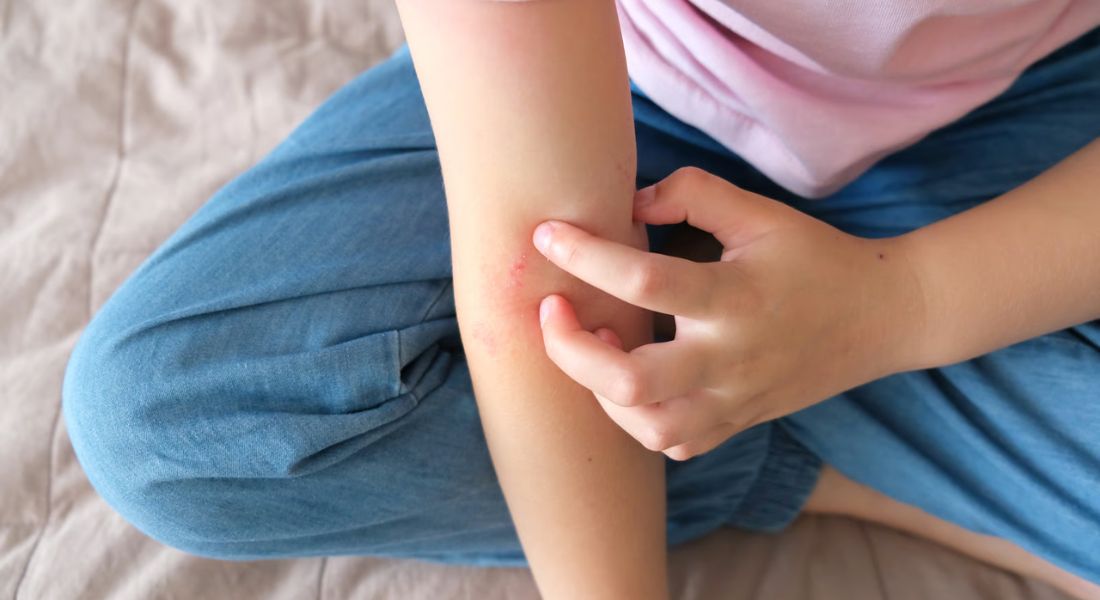
If your child develops a persistent rash, unusual sensitivity to sunlight or patches that leave changes in skin colour, it can be difficult to know whether you are dealing with a common childhood skin problem or something less familiar. Childhood cutaneous lupus is uncommon, but recognising the signs can help your child receive appropriate assessment before inflammation causes lasting skin damage.
Cutaneous lupus mainly affects the skin, although some children can also have systemic lupus erythematosus, which may involve other parts of the body. Understanding what you should look for, when your child needs further tests and how treatment can protect their skin can make the condition easier for you to manage.
What Is Childhood Cutaneous Lupus?
Childhood cutaneous lupus is an autoimmune condition in which your child’s immune system mistakenly causes inflammation within the skin. Depending on the subtype, you may notice facial rashes, scaly patches, ring-shaped lesions, changes in pigmentation or increased sensitivity to ultraviolet light.
The condition is not contagious, so your child cannot catch lupus from another person or pass it to friends or family. Your child can continue normal contact, school activities and everyday routines while receiving the treatment and sun-protection measures recommended by their healthcare team.
How Is Cutaneous Lupus Different From Systemic Lupus?
Cutaneous lupus primarily affects your child’s skin, whereas systemic lupus erythematosus can affect organs and tissues including the joints, kidneys, blood, lungs, heart and nervous system. Some children have skin-limited disease, while others have skin symptoms as part of wider systemic lupus.
This distinction matters because your child may need different monitoring depending on the pattern of their illness. If symptoms suggest wider involvement, your dermatologist may work with paediatric rheumatology and other specialists to make sure your child receives appropriate investigation and follow-up.
Why Can Childhood Cutaneous Lupus Be Difficult to Recognise?
Cutaneous lupus can resemble several more common childhood skin conditions, including eczema, psoriasis, fungal infection and other inflammatory rashes. If your child’s rash initially looks familiar, you may reasonably assume that it is a routine skin problem.
Certain clues can make specialist assessment more important, including a rash that repeatedly worsens after sun exposure, leaves pigmentation changes, causes scarring or affects the scalp with hair loss. The table below shows some conditions that may look similar, although your child still needs clinical assessment for an accurate diagnosis.
| Condition | What You May Notice | Clues That Can Help Your Child’s Doctor |
| Cutaneous lupus | Photosensitive facial rash, ring-shaped lesions or persistent scaly patches | May leave pigmentation changes, scarring or permanent scalp hair loss |
| Eczema | Dry, itchy, inflamed or cracked skin | Often affects typical flexural areas and may occur with allergy or asthma |
| Psoriasis | Clearly defined scaly plaques | May involve your child’s scalp, elbows, knees or nails |
| Fungal infection | Scaly or inflamed patches, sometimes with broken hairs | May itch and can spread between people |
| Alopecia areata | Smooth, clearly defined patches of hair loss | Usually does not cause scaling or scarring |
| Dermatomyositis | Purple-red changes around the eyelids, knuckles or sun-exposed skin | Your child may also develop muscle weakness |
What Types of Cutaneous Lupus Can Affect Your Child?
Cutaneous lupus is commonly divided into acute, subacute and chronic forms. Acute cutaneous lupus can include the familiar butterfly-shaped facial eruption, while subacute disease may produce ring-shaped or scaly lesions on sun-exposed areas of your child’s skin.
Chronic cutaneous lupus includes discoid lupus, which can produce persistent inflamed and scaly plaques with a risk of scarring. Your child may not fit neatly into one category at their first appointment, so the pattern can become clearer through examination, investigations and follow-up.
What Can a Lupus Rash Look Like on Your Child?
Lupus-related rashes can look different depending on the subtype and your child’s skin tone. You may notice red, pink, purple, brown or greyish areas, and some lesions may be flat while others are raised, scaly or more clearly defined.
You should also look at how the rash behaves rather than focusing only on colour. A persistent lesion, worsening after ultraviolet exposure, development of scarring or associated hair loss may provide your child’s dermatologist with important diagnostic clues.
What Does a Butterfly Rash Look Like?
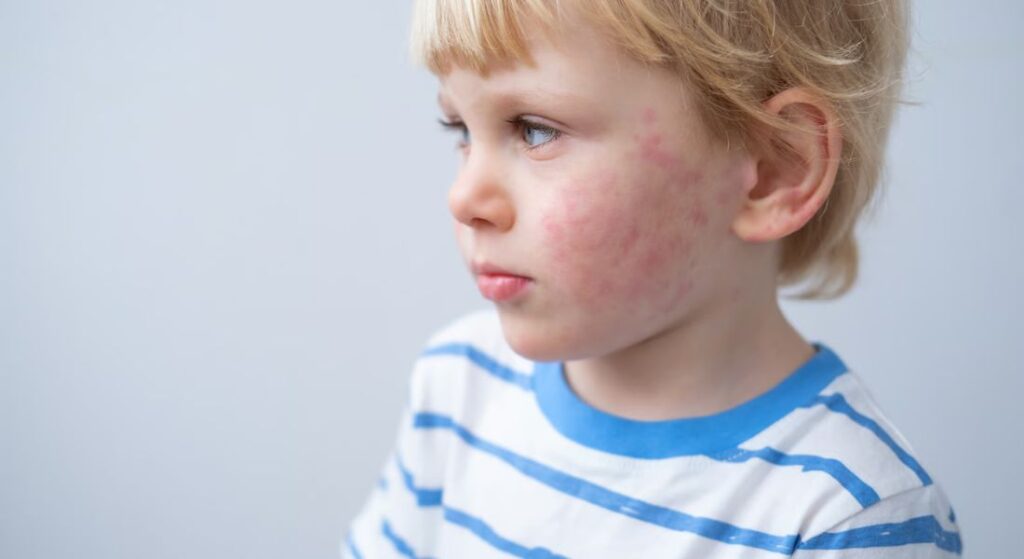
A butterfly or malar rash can spread across both of your child’s cheeks and the bridge of the nose. You may notice that it becomes more obvious after sun exposure, although its colour and intensity can vary according to your child’s natural skin tone.
A butterfly-shaped rash does not automatically mean that your child has lupus. Several other skin conditions can affect the same area of the face, so your child should be assessed in the context of their other symptoms, examination findings and medical history.
What Are Discoid Lupus Patches?
Discoid lupus can produce round or oval patches that appear inflamed, scaly, thickened or different in colour from the surrounding skin. You may notice these lesions on your child’s scalp, face, ears, lips or other areas.
Early recognition is particularly important because persistent discoid inflammation can cause permanent scarring. If your child’s scalp is affected, damage to the hair follicles can lead to permanent hair loss, making prompt treatment especially important.
How Can Subacute Cutaneous Lupus Affect Your Child?
Subacute cutaneous lupus can cause ring-shaped or scaly lesions that may resemble psoriasis. The rash often appears on areas of your child’s skin that receive ultraviolet exposure, such as the upper chest, shoulders, arms or back.
Because subacute cutaneous lupus can occur alongside systemic disease, your child’s specialist may look for symptoms beyond the skin and arrange additional investigations when appropriate. This does not mean that every child with this rash will have systemic lupus.
Why Does Sunlight Matter in Cutaneous Lupus?
Photosensitivity means ultraviolet exposure can trigger or worsen inflammation in your child’s skin. You may notice a flare after outdoor play, sports, school trips, holidays or other periods when your child has spent longer outside.
The reaction does not always appear immediately, so it can be difficult for you to connect a rash with earlier sun exposure. Consistent photoprotection is therefore an important part of managing your child’s condition rather than something used only when a rash is already visible.
Can Scalp Lupus Cause Hair Loss?
Cutaneous lupus can affect your child’s scalp and produce scaling, tenderness, colour changes or areas of reduced hair density. Discoid lupus is especially important because prolonged inflammation can damage your child’s hair follicles.
Some types of hair shedding associated with illness or inflammation may improve, but scarring alopecia can be permanent once follicles have been destroyed. If you notice patchy hair loss together with scaling, redness or scarring, your child should receive specialist assessment promptly.
Can Lupus Affect Your Child’s Mouth or Lips?
Some children with lupus develop mouth ulcers or inflammation affecting the lips. You may notice ulcers inside your child’s cheeks, on the palate, gums, tongue or lips, and they may be painless or uncomfortable.
Mouth ulcers are common in childhood and usually have causes other than lupus. They become more relevant when your child also has features such as a persistent photosensitive rash, joint symptoms, fever, unusual tiredness or other signs that need medical assessment.
Can Cutaneous Lupus Cause Skin Colour Changes or Scarring?
After inflammation settles, your child may be left with areas that are darker or lighter than the surrounding skin. These pigmentary changes can be particularly noticeable in darker skin tones and may persist even when the active rash has improved.
Some chronic forms of cutaneous lupus can also leave permanent scars. Controlling inflammation early gives your child the best opportunity to reduce ongoing damage, which is why persistent scaly, inflamed or scarring lesions should not be managed indefinitely with over-the-counter products without a clear diagnosis.
What Symptoms Beyond the Skin Should You Watch For?

You should seek medical advice if your child develops a lupus-like rash together with persistent fever, marked fatigue, joint swelling, unexplained swelling of the face or legs or changes in their urine. These symptoms may indicate that further assessment for systemic involvement is needed.
Urgent medical assessment is appropriate if your child develops severe chest pain, significant breathing difficulty, blood in the urine, markedly reduced urine output, confusion, collapse or appears seriously unwell. Your child’s healthcare team can determine whether these symptoms are related to lupus or another condition requiring prompt treatment.
How Is Childhood Cutaneous Lupus Diagnosed?
Diagnosis usually starts with a careful history and examination of your child’s skin. Your dermatologist may ask when the rash started, whether sunlight affects it, whether lesions leave marks or scars and whether your child has symptoms involving their joints, energy levels or other parts of the body.
Your child may then need selected investigations to support the diagnosis and look for wider lupus activity. No single test confirms every case of cutaneous lupus, so your specialist will interpret the overall pattern rather than relying on one isolated laboratory result.
What Can Blood and Urine Tests Show?
Blood tests may include antinuclear antibodies and other autoimmune markers depending on your child’s presentation. Your healthcare team may also assess blood counts, kidney function, complement levels and other measures when systemic lupus is a concern.
Urine testing can help identify blood or protein that might indicate kidney involvement. An abnormal result does not automatically mean your child has severe lupus, and a normal test cannot answer every diagnostic question, so results need to be interpreted alongside their symptoms and examination.
When Might Your Child Need a Skin Biopsy?
A skin biopsy may be recommended when your child’s rash has features suggestive of cutaneous lupus but the diagnosis remains uncertain. A small sample of affected skin is taken under local anaesthetic and examined microscopically for characteristic changes.
Not every child needs a biopsy. Your dermatologist will consider how typical the rash appears, your child’s other test results and whether confirmation would change treatment before deciding whether the procedure is worthwhile.
Research Insight
Published paediatric reviews show that childhood cutaneous lupus includes several distinct patterns and that some forms have a stronger association with systemic disease than others. This is why your child’s dermatologist may look beyond the visible rash even when the skin is your main concern.
Research in children remains more limited than adult cutaneous lupus research, so paediatric treatment often combines available evidence with specialist experience. Your child’s age, disease subtype, risk of scarring and any systemic involvement all influence how treatment is selected.
How Does Sun Protection Help Your Child?
Photoprotection can reduce ultraviolet-triggered flares and help protect areas of your child’s skin that are already inflamed. Depending on your specialist’s advice, this can include broad-spectrum sunscreen, protective clothing, hats, shade and limiting prolonged exposure when ultraviolet levels are high.
Your child should still be able to enjoy normal outdoor activities. The aim is to make sun protection part of everyday management so that your child can participate safely rather than feel that lupus prevents them from going outside.
Clinical Tip
If your child has photosensitive lupus, speak with their school or nursery about how sun protection can be managed during the day. You may need arrangements that allow your child to reapply sunscreen, use shaded areas or wear appropriate protective clothing during outdoor activities.
You can also ask your child’s specialist whether a written healthcare plan would help the school understand their needs. Consistent routines often make sun protection easier for both you and your child than trying to manage each outdoor activity separately.
What Topical Treatments Can Help Cutaneous Lupus?
When your child has localised cutaneous lupus, their dermatologist may recommend topical corticosteroids or topical calcineurin inhibitors to control inflammation. The choice will depend on the location, severity and subtype of your child’s rash.
Treatment for the face, eyelids or other delicate areas may differ from treatment used on thicker skin elsewhere on the body. You should use prescribed creams exactly as directed because potency, frequency and duration are important when treating children.
When Might Hydroxychloroquine Be Recommended?

Hydroxychloroquine is an important systemic treatment for cutaneous and systemic lupus and may be considered when your child has persistent, widespread or scarring disease. If it is prescribed, your child’s dose is calculated according to specialist guidance and factors including actual body weight.
Current UK guidance also considers the risk of retinal toxicity during longer-term treatment. Your child’s clinical team will decide when eye monitoring should begin and how often it is needed, with current guidance generally recommending annual monitoring after five years of hydroxychloroquine use and earlier monitoring when additional risk factors are present.
Can Your Child Need Other Systemic Treatments?
Some children with more severe cutaneous lupus or systemic involvement may need additional immune-modifying treatment. Your child’s specialist may consider short courses of corticosteroids or other medicines depending on disease severity, risk of scarring and which organs are involved.
These treatment decisions should be individualised rather than based on the appearance of the rash alone. Your child may therefore receive coordinated care from dermatology, rheumatology, ophthalmology or other specialists depending on the treatment being used and their wider health.
UK Guidance Note
British Association of Dermatologists guidance recommends considering systemic lupus in people with cutaneous lupus and using targeted history, examination and investigations to assess for wider involvement. It also emphasises photoprotection and recognises topical corticosteroids, calcineurin inhibitors and antimalarial treatment as important options for appropriate disease.
The 2026 British Society for Rheumatology guideline includes children and young people with systemic lupus and recommends hydroxychloroquine unless contraindicated, with long-term dosing based on actual body weight. Your child’s specialist will adapt any systemic treatment to their age, diagnosis and individual risk profile.
How Can You Help Your Child Live With Cutaneous Lupus?
Visible rashes, pigmentation changes, hair loss and repeated medical appointments can affect your child emotionally as well as physically. You can help by explaining the condition in age-appropriate language and reassuring your child that lupus is not contagious and is not caused by something they have done.
Daily routines can make treatment feel more manageable. Keeping sunscreen, hats, prescribed medicines and appointment reminders organised can help you protect your child’s skin while allowing them to remain active at school, with friends and during family activities.
When Should Your Child See a Paediatric Dermatology Specialist?
You should seek specialist advice if your child has a persistent facial rash, recurrent photosensitive eruption, scaly plaques, unexplained pigment changes, scalp inflammation, patchy hair loss or skin changes that appear to be scarring. Earlier assessment is particularly valuable when your child’s symptoms are progressing despite ordinary skincare.
A specialist review is also important when your child develops joint pain, fever, unusual tiredness, swelling or other symptoms that may suggest involvement beyond the skin. Your dermatologist can decide whether your child needs blood tests, urine tests, biopsy or referral to paediatric rheumatology.
Evidence Note
Current evidence shows that cutaneous lupus can affect children in several different forms and that chronic discoid disease carries an important risk of scarring and permanent hair loss. Assessment for systemic lupus is also important because acute and some other cutaneous patterns may occur alongside wider disease.
Evidence-based management combines accurate diagnosis, photoprotection, appropriate topical therapy and systemic treatment when needed. You should view your child’s treatment plan as individualised because paediatric evidence is more limited than adult evidence and specialist multidisciplinary care may be needed for complex disease.
Myth vs Fact
| Myth | Fact |
| Every butterfly-shaped facial rash means your child has lupus | Several childhood skin conditions can produce similar facial rashes |
| Cutaneous lupus is contagious | Your child cannot catch or spread lupus through normal contact |
| Skin lupus always means internal organs are affected | Some children have skin-limited disease |
| Sunscreen is only important on hot days | Ultraviolet exposure can still occur when the weather is cool or cloudy |
| One positive antibody test confirms your child has lupus | Results need to be interpreted with symptoms, examination and other investigations |
| Hair always grows back after scalp lupus improves | Scarring discoid lupus can permanently damage hair follicles |
| Hydroxychloroquine is only used to prevent malaria | It is an established treatment for cutaneous and systemic lupus |
| Stronger treatment means your child’s condition is untreatable | Treatment intensity reflects disease severity and risk of damage |
| Every child with cutaneous lupus needs a biopsy | A biopsy is useful in selected cases but is not always necessary |
| Your child must avoid outdoor activities completely | Appropriate photoprotection can help your child remain active outdoors |
Key Takeaways
- Childhood cutaneous lupus can cause photosensitive rashes, scaly lesions, pigmentation changes, scalp inflammation and, in some forms, permanent scarring or hair loss.
- You should seek specialist assessment if your child’s rash repeatedly worsens after sun exposure, leaves scars or occurs alongside unexplained systemic symptoms.
- Your child’s diagnosis may involve clinical examination, blood and urine tests and, in selected cases, a skin biopsy.
- Consistent photoprotection, appropriate medication and specialist follow-up can help control inflammation and reduce the risk of long-term skin damage.
Frequently Asked Questions
1. What is childhood cutaneous lupus?
Childhood cutaneous lupus is an autoimmune condition that mainly causes inflammation in your child’s skin. It can produce photosensitive rashes, scaling, pigmentation changes and different patterns depending on the subtype.
2. Is cutaneous lupus the same as systemic lupus?
No. Cutaneous lupus mainly affects your child’s skin, while systemic lupus can affect other organs and tissues. Some children have skin-only disease, while others have cutaneous symptoms as part of systemic lupus.
3. What can a lupus rash look like on your child?
You may notice a butterfly-shaped facial rash, persistent scaly plaques or ring-shaped lesions. The colour can vary with your child’s skin tone, and some rashes become noticeably worse after ultraviolet exposure.
4. Can sunlight make your child’s lupus worse?
Yes. Many cutaneous lupus rashes are photosensitive, meaning ultraviolet exposure can trigger or worsen them. Consistent sun protection can therefore become an important part of your child’s treatment plan.
5. Can cutaneous lupus cause permanent hair loss?
Yes, if your child develops scarring discoid lupus on the scalp, inflammation can permanently damage hair follicles. Prompt assessment of scaling, inflammation or patchy hair loss can help reduce the risk of irreversible damage.
6. How will your child be tested for cutaneous lupus?
Your child’s dermatologist will assess their rash, medical history and other symptoms. Blood tests, urine tests and sometimes a skin biopsy may be recommended depending on whether the diagnosis is uncertain or wider lupus involvement is suspected.
7. Can your child pass cutaneous lupus to someone else?
No. Lupus is an autoimmune condition and is not contagious, so your child cannot pass it to other children through school, swimming, shared objects or ordinary physical contact.
8. What treatments might your child need?
Treatment may include photoprotection, topical corticosteroids, topical calcineurin inhibitors and systemic medicines such as hydroxychloroquine when appropriate. Your child’s treatment will depend on the subtype, severity, scarring risk and whether systemic lupus is present.
9. Can cutaneous lupus leave permanent marks on your child’s skin?
Some forms can cause persistent pigmentation changes or scarring. Your child’s risk is particularly important with chronic discoid lupus, so early control of inflammation can help limit long-term damage.
10. When should you take your child to a dermatologist?
You should seek specialist advice if your child has a persistent or recurrent photosensitive rash, unexplained scarring, scalp inflammation, hair loss or skin changes that are not improving. Assessment is also important if your child develops joint symptoms, fever, unusual fatigue, swelling or other signs beyond the skin.
Final Thoughts: What Should You Remember About Childhood Cutaneous Lupus?
Childhood cutaneous lupus is uncommon, but recognising persistent photosensitive rashes, scarring patches, scalp involvement and other warning signs can help your child receive appropriate care earlier. Your child may need ongoing monitoring because some forms are limited to the skin while others can occur alongside systemic lupus.
If you’d like to book a consultation with a dermatologist in London, you can contact us at the London Dermatology Centre.
References:
- O’Kane, D. et al. (2021) ‘British Association of Dermatologists guidelines for the management of people with cutaneous lupus erythematosus 2021’, British Journal of Dermatology, 185(6), pp. 1112–1123. Available at: https://academic.oup.com/bjd/article/185/6/1112/6599926
- Tsang, V., Leung, A.K.C. and Lam, J.M. (2021) ‘Cutaneous lupus erythematosus in children’, Current Pediatric Reviews, 17(2), pp. 103–110. Available at: https://pubmed.ncbi.nlm.nih.gov/33655840/
- Md Yusof, M.Y. et al. (2026) ‘The 2026 British Society for Rheumatology guideline for the management of children, young people and adults with systemic lupus erythematosus’, Rheumatology, 65(6), article keag223. Available at: https://academic.oup.com/rheumatology/article/65/6/keag223/8713811
- Yusuf, I.H., Foot, B. and Lotery, A.J. (2021) ‘The Royal College of Ophthalmologists recommendations on monitoring for hydroxychloroquine and chloroquine users in the United Kingdom (2020 revision): executive summary’, Eye, 35(6), pp. 1532–1537. Available at: https://pmc.ncbi.nlm.nih.gov/articles/PMC8169737/
- Fijałkowska, A., Kądziela, M. and Żebrowska, A. (2024) ‘The spectrum of cutaneous manifestations in lupus erythematosus: a comprehensive review’, Journal of Clinical Medicine, 13(8), 2419. Available at: https://www.mdpi.com/2077-0383/13/8/2419