


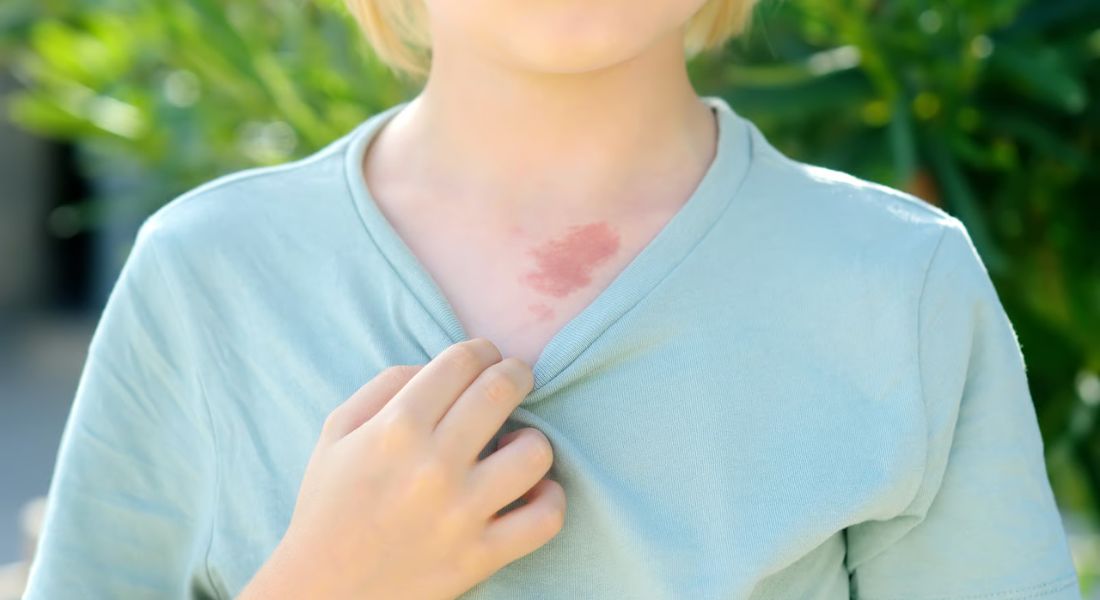
Juvenile dermatomyositis is a rare autoimmune condition that can affect your child’s skin and muscles, as well as other parts of the body. You may first notice tiredness, difficulty climbing stairs or an unusual rash, and these early signs can sometimes look like another childhood condition.
Although the diagnosis can feel worrying, treatment can help control inflammation and improve your child’s strength. Early specialist care can also help you understand the condition and reduce the risk of longer-term complications.
What Is Juvenile Dermatomyositis?
Juvenile dermatomyositis (JDM) is a rare inflammatory condition in which your child’s immune system mistakenly attacks healthy tissue. This mainly causes inflammation in the skin and muscles, leading to characteristic rashes and muscle weakness.
The severity can vary considerably, so your child may have mild symptoms or need more intensive treatment and monitoring. JDM is not contagious, which means your child cannot pass the condition to siblings, classmates or other people.
Why Does Juvenile Dermatomyositis Develop?
The exact cause of JDM is not fully understood, but experts believe several factors may be involved. Your child may have a genetic susceptibility that, together with changes in the immune system and certain environmental triggers, contributes to the condition developing.
Some children have relatives with autoimmune conditions, but this does not mean JDM is directly inherited. You should also know that the condition is not caused by your child’s diet, everyday activities or anything you did during pregnancy or their early years.
What Can the JDM Skin Rash Look Like?
A distinctive rash is one of the main signs of JDM and may sometimes appear before your child develops obvious muscle weakness. You may notice pink, red, violet, purple, brown or darker areas of skin, depending on your child’s natural skin tone.
On darker skin, redness may be less obvious, so you may instead notice changes in colour, texture, swelling or scaling. Because several skin conditions can look similar, your child’s dermatologist will consider the rash alongside muscle symptoms and other clinical findings.
Heliotrope Rash Around the Eyes
A heliotrope rash is a characteristic change that can appear around your child’s upper eyelids. You may notice violet, purple, reddish-brown or darker discolouration, sometimes with puffiness or swelling around the eyes.
The rash can be mistaken for tiredness, allergies, eczema or irritation, particularly when the colour change is subtle. If you notice persistent eyelid changes together with weakness or unusual tiredness, your child should be assessed by a medical professional.
Gottron’s Papules and Gottron’s Sign
Gottron’s papules are raised or flat-topped areas that usually develop over your child’s knuckles or finger joints. You may notice that the skin looks scaly, cracked or thickened, with colours ranging from red or violet to brown or darker shades.
Gottron’s sign refers to similar changes over larger joints, including the elbows and knees. If your child also develops weakness, tiredness or difficulty with normal activities, these skin changes can provide an important clue for the specialist assessing them.
What Other Skin and Nail Changes Might You Notice?
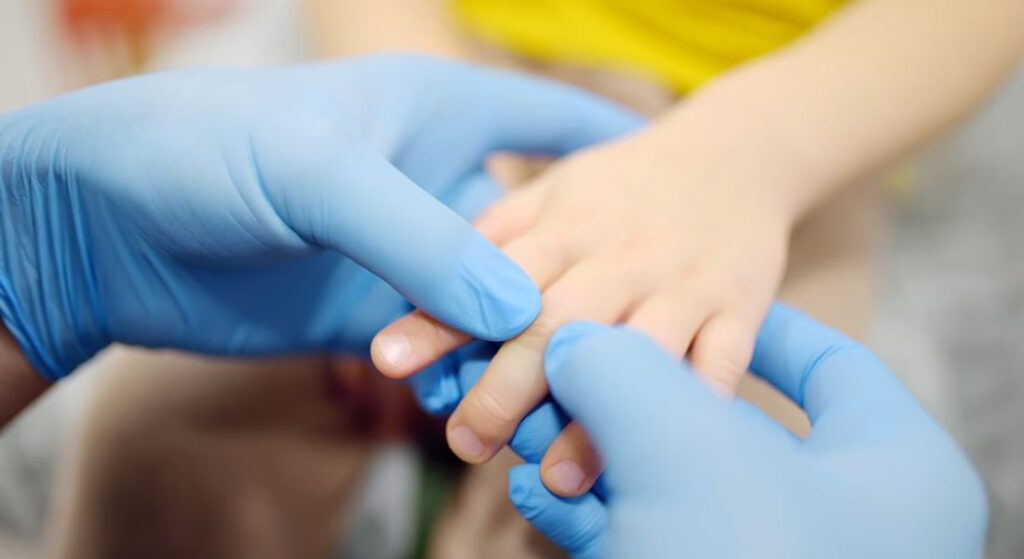
JDM can cause rashes across your child’s upper chest, shoulders, back, neck, face or other sun-exposed areas. If the scalp is involved, you may notice itching, scaling or temporary hair shedding that can resemble eczema or psoriasis.
Changes can also occur around your child’s fingernails, including redness, swelling, ragged cuticles or tiny red spots. A specialist may examine these small blood vessels closely because nailfold changes can provide useful information about ongoing inflammation.
How Muscle Weakness Usually Appears
JDM usually causes weakness in muscles close to the centre of your child’s body, particularly around the shoulders, neck, hips and thighs. You may notice difficulty climbing stairs, standing from the floor, lifting the arms or completing activities that were previously easy.
The weakness often develops gradually, which means you may initially think your child is tired, clumsy or less fit than usual. Younger children may ask to be carried more often, avoid active play or struggle to keep up with friends.
Can JDM Affect Swallowing or Breathing?
JDM can sometimes affect the muscles your child uses for swallowing. You may notice coughing or choking during meals, slower eating, difficulty swallowing drinks or changes in your child’s voice.
Breathing muscles or the lungs can also be affected in some children, although this is less common. If your child develops breathlessness, a persistent cough or reduced exercise tolerance, you should arrange prompt medical assessment.
Juvenile Dermatomyositis Symptoms at a Glance
The symptoms your child develops can depend on which tissues are affected. This overview can help you recognise changes that may be worth discussing with their medical team.
You do not need to wait for every symptom to appear before seeking advice. If you notice a persistent rash together with weakness or declining physical ability, your child should be assessed.
| Area Affected | What You May Notice | Why It Matters |
| Skin | Rash around the eyelids, knuckles, elbows, knees, face, chest or upper back | Characteristic patterns can provide an early clue |
| Muscles | Difficulty climbing stairs, rising from the floor or lifting the arms | May indicate weakness around the hips, shoulders and neck |
| Nailfolds | Redness, swelling or ragged cuticles | Blood-vessel changes may reflect disease activity |
| Swallowing | Coughing, choking or taking longer to eat | Swallowing weakness may allow food or drink into the airway |
| Breathing or lungs | Breathlessness, persistent cough or reduced exercise tolerance | May require prompt respiratory assessment |
| Joints | Pain, stiffness or swelling | Joint inflammation can occur alongside JDM |
| Soft tissues | Hard or painful lumps beneath the skin | These may represent calcinosis |
Symptoms That Require Urgent Medical Attention
You should seek urgent medical advice if your child’s weakness suddenly becomes worse or they struggle to walk, stand or lift their head. You should also act promptly if your child develops difficulty swallowing, choking during meals or significant breathing problems.
Call 999 if your child has severe breathing difficulty, blue or grey lips, collapses or becomes difficult to wake. You should also seek urgent medical review for severe abdominal pain, blood in the stools, painful skin ulcers or signs of infection while your child is taking immune-suppressing medicines.
Can JDM Affect the Skin Without Obvious Weakness?
Yes, some children develop the characteristic skin changes of dermatomyositis without obvious muscle weakness. Your child may appear to have normal strength even though their skin shows typical signs of the condition.
In some cases, tests can reveal subtle muscle inflammation despite there being no noticeable weakness. This is why your child may still need specialist follow-up even when their physical strength appears normal.
How Juvenile Dermatomyositis Is Diagnosed

There is no single test that confirms every case of JDM, so your child’s specialist will consider the overall pattern of symptoms and examination findings. You may be asked when the rash or weakness started and whether your child’s everyday abilities have changed.
The doctor may assess how easily your child can raise their arms, lift their head or stand from the floor. Your child may also need blood tests, imaging and assessment by paediatric rheumatology, dermatology and other specialists.
What Can Your Child’s Blood Tests Show?
Blood tests can help your child’s medical team look for signs of muscle inflammation and monitor disease activity. Your child may have tests for creatine kinase, aldolase, LDH and other markers that can change when muscles are inflamed.
A normal creatine kinase result does not completely rule out JDM, so your child’s results must be considered alongside their symptoms and examination. Autoantibody tests may also help the specialist understand the pattern of disease and whether particular complications need closer monitoring.
What Other Tests Might Your Child Need?
An MRI scan can show inflammation in your child’s muscles without using radiation. Your child’s specialist may use the scan to assess which muscles are affected and whether further investigation is needed.
The small blood vessels around your child’s fingernails may also be examined using nailfold capillaroscopy. A skin or muscle biopsy is not necessary for every child, but it may be recommended when the diagnosis remains uncertain or another condition needs to be excluded.
What Is Your Child’s Treatment Trying to Achieve?
The main aim of treatment is to control inflammation before it causes lasting damage to your child’s muscles, skin or blood vessels. Your child’s treatment should also help restore strength, improve everyday movement and control continuing skin symptoms.
Specialists may use a treat-to-target approach and regularly review whether your child is reaching agreed treatment goals. Because every child responds differently, your child’s plan will be adjusted according to symptoms, test results and overall progress.
Evidence Note
International treat-to-target recommendations published in 2025 identify inactive disease as the preferred goal for children with JDM. For your child, this means treatment aims for no clear signs of active inflammation in the muscles, skin or other affected organs.
Minimal disease activity may be used when complete inactive disease cannot yet be achieved. Your child’s progress should therefore be reviewed regularly through symptoms, physical function, skin findings, blood tests and other appropriate assessments.
Corticosteroids and Methotrexate
High-dose corticosteroids are commonly used first because they can reduce inflammation quickly. Your child may receive prednisolone by mouth or intravenous methylprednisolone when more intensive treatment is required.
Methotrexate is often started alongside corticosteroids to help control inflammation and reduce long-term steroid exposure. Your child will need regular monitoring and blood tests so their medical team can check that treatment remains safe and effective.
UK Guidance Note
UK guidance recommends that children with juvenile inflammatory myopathy are cared for by paediatric specialists. Earlier diagnosis is associated with better outcomes, so your child should be referred promptly when JDM is suspected.
For most children with active muscle inflammation, treatment generally includes corticosteroids together with methotrexate. Your child’s team will also assess for complications such as calcinosis, swallowing difficulties and wider organ involvement.
Additional Medicines for Persistent or Severe Disease
Some children need additional treatment when JDM remains active despite initial medicines. Depending on your child’s symptoms and previous response, the specialist team may consider mycophenolate mofetil, ciclosporin, intravenous immunoglobulin, rituximab or cyclophosphamide.
These medicines require careful monitoring because they can affect the immune system and other parts of the body. Your child’s team will explain possible side effects, arrange blood tests and tell you what to do if your child develops a fever or becomes unwell.
Skin Care and Protection From Sunlight
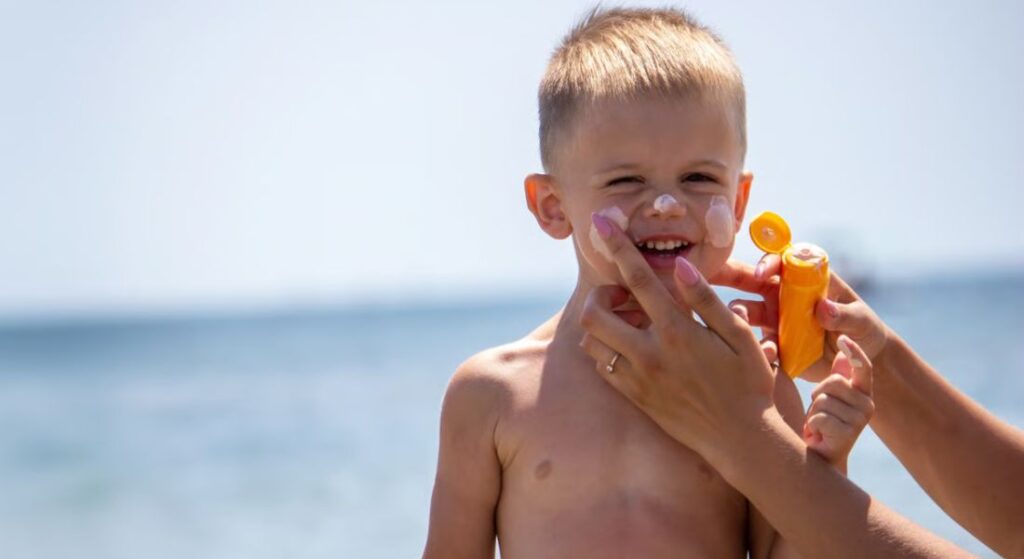
Sunlight can worsen the skin rash associated with JDM, so protecting your child’s skin is an important part of treatment. You can use a high-factor broad-spectrum sunscreen, protective clothing and a hat while limiting prolonged exposure to strong midday sun.
Your child may also be prescribed topical corticosteroids or treatments such as tacrolimus for active skin inflammation. If the rash spreads, becomes ulcerated or does not improve, you should contact their clinical team for further advice.
Physiotherapy, Exercise and Everyday Management
Your child may need more rest when inflammation is active, but prolonged inactivity can lead to stiffness and further weakness. A specialist physiotherapist can help your child gradually rebuild strength, flexibility and confidence through an appropriate exercise programme.
Your child may also benefit from occupational therapy or temporary adjustments at school. You can work with their healthcare and school teams to manage fatigue, physical education, sun protection, appointments and everyday activities.
Clinical Tip
Keep a simple record of changes in your child’s strength, energy levels, swallowing, breathing and skin. You can also take photographs of their rash in similar lighting to help the clinical team see whether it is improving or spreading.
Notes about everyday activities can be useful because they show how your child’s physical function is changing. You should not increase, reduce or stop medicines or alter their exercise programme without advice from the specialist team.
What Can You Expect in the Longer Term?
Calcinosis occurs when calcium deposits form beneath your child’s skin or within muscles and other soft tissues. These deposits can cause pain, restrict movement or occasionally break through the skin, so your child should have them assessed by their specialist team.
The long-term outlook varies, with some children achieving lasting remission and others experiencing relapses or needing longer treatment. Research into newer treatments, including JAK inhibitors, is continuing, but these medicines are not routine first-line treatment for JDM.
Research Insight
UK-led research published in 2025 identified mitochondrial abnormalities and interferon-related inflammatory changes in muscle tissue from children with untreated JDM. The findings may help researchers understand why your child’s muscle function can be affected by the disease.
However, this was an exploratory laboratory study involving a small number of patients. It does not currently change your child’s standard treatment, and mitochondrial testing is not part of routine JDM care.
Myth vs Fact
| Myth | Fact |
| JDM is only a skin condition | It can affect the skin, muscles, small blood vessels and occasionally other organs |
| A normal creatine kinase result rules out JDM | Muscle enzymes can be normal or only mildly raised |
| Children with JDM should avoid all physical activity | Carefully planned exercise and physiotherapy can support recovery |
| Sun protection is only needed to prevent sunburn | UV exposure can worsen the characteristic JDM rash |
| Medicines can be stopped when strength improves | Inflammation may remain active even when strength improves |
| JDM has the same cancer association as adult dermatomyositis | Childhood JDM is not generally linked to the same increased cancer risk |
| JAK inhibitors are standard first-line treatment | They remain emerging options for selected treatment-resistant cases |
| Calcinosis is only cosmetic | Deposits can cause pain, restricted movement, ulceration or infection |
Frequently Asked Questions
1. Is juvenile dermatomyositis a lifelong condition?
Not always. Your child may have a single episode that goes into long-term remission, while some children experience relapses or need longer-term treatment and monitoring.
2. What are the first signs of juvenile dermatomyositis?
You may first notice a persistent rash, unusual tiredness or gradual muscle weakness. Your child may also struggle with climbing stairs, standing from the floor or lifting their arms.
3. Is juvenile dermatomyositis contagious?
No, juvenile dermatomyositis is an autoimmune condition and cannot spread from one person to another. Your child can continue normal contact with siblings, classmates and friends.
4. How is juvenile dermatomyositis diagnosed?
Your child’s diagnosis is usually based on symptoms, physical examination and investigations rather than a single test. Blood tests, MRI scans, nailfold examination and, occasionally, a skin or muscle biopsy may be used.
5. Can juvenile dermatomyositis affect only the skin?
Yes, some children develop typical skin changes without obvious muscle weakness. Your child may still need specialist monitoring because subtle muscle inflammation can sometimes be found during investigations or develop later.
6. What treatments are available for juvenile dermatomyositis?
Your child may be treated with corticosteroids and medicines such as methotrexate to control inflammation. Physiotherapy, appropriate exercise, sun protection and additional specialist medicines may also form part of their treatment plan.
7. Can children with juvenile dermatomyositis attend school and play sports?
Yes, most children can continue attending school, although your child may need temporary adjustments during active disease or treatment. You should follow advice from their healthcare and physiotherapy teams about suitable exercise and activity levels.
8. Does sunlight make juvenile dermatomyositis worse?
Ultraviolet light can worsen the characteristic skin rash in some children. You can help protect your child by using broad-spectrum sunscreen, protective clothing and limiting exposure to strong midday sun.
9. What complications can occur if juvenile dermatomyositis is not treated?
Without appropriate treatment, your child may develop persistent muscle weakness, swallowing difficulties, calcinosis or joint problems. More severe disease can also affect other parts of the body, which is why early specialist care is important.
10. When should you seek urgent medical attention for your child?
You should seek urgent medical advice if your child develops rapidly worsening weakness, difficulty swallowing, choking, breathing problems or severe abdominal pain. Call 999 if your child has severe breathing difficulty, blue or grey lips, collapses or becomes difficult to wake.
Key Takeaways
- JDM is a rare autoimmune condition affecting the skin and muscles.
- A characteristic rash can appear before obvious muscle weakness.
- Difficulty climbing stairs, rising from the floor or lifting the arms can be important signs.
- Normal muscle-enzyme results do not completely exclude JDM.
- Swallowing or breathing difficulties require prompt medical attention.
- Diagnosis usually combines examination, blood tests and imaging.
- Corticosteroids and methotrexate are commonly used treatments.
- Physiotherapy, sun protection and school support can form part of ongoing care.
- Calcinosis can cause symptoms and requires specialist assessment.
- JAK inhibitors remain emerging treatments rather than routine first-line therapy.
Final Thoughts: Early Diagnosis Can Make a Difference
Early recognition and treatment can help protect your child’s skin, muscle strength and everyday function. You should seek specialist advice if you notice a persistent rash alongside unexplained weakness, tiredness or changes in normal activities.
An assessment with an experienced paediatric dermatologist in London can help your child receive an accurate diagnosis and appropriate care. Early specialist support can also help you understand the condition and plan the right next steps.
References:
- Ravelli, A. et al. (2025) ‘Treating juvenile dermatomyositis to target: Paediatric Rheumatology European Society/Childhood Arthritis and Rheumatology Research Alliance-endorsed recommendations from an international task force’, Annals of the Rheumatic Diseases, 84(7), pp. 1055–1067. Available at: https://www.sciencedirect.com/science/article/abs/pii/S0003496725009501
- Bellutti Enders, F. et al. (2017) ‘Consensus-based recommendations for the management of juvenile dermatomyositis’, Annals of the Rheumatic Diseases, 76(2), pp. 329–340. Available at: https://pubmed.ncbi.nlm.nih.gov/27515057/
- Kim, H. (2024) ‘Updates on efficacy and safety of Janus kinase inhibitors in juvenile dermatomyositis’, Expert Review of Clinical Immunology, 20(6), pp. 589–602. Available at: https://pmc.ncbi.nlm.nih.gov/articles/PMC11189608/
- Syntakas, A.E. et al. (2025) ‘Spatial transcriptomic analysis of muscle biopsy from patients with treatment-naive juvenile dermatomyositis reveals mitochondrial abnormalities despite disease-related interferon-driven signature’, Annals of the Rheumatic Diseases, 84(10), pp. 1706–1720. Available at: https://pubmed.ncbi.nlm.nih.gov/40784813/
- Coss, S.L., Sabbagh, S.E. and Kim, H. (2025) ‘Updates in juvenile dermatomyositis: pathogenesis and therapy’, Current Opinion in Rheumatology, 37(6), pp. 445–456. Available at: https://pubmed.ncbi.nlm.nih.gov/40693918/