



Persistent vulvar itching can be a deeply uncomfortable symptom that affects daily life, sleep, and confidence. While infections such as thrush or bacterial vaginosis are commonly suspected, dermatological conditions are often the true underlying cause. These skin-related issues may be overlooked in general consultations, leading to prolonged discomfort and ineffective treatments.
Dermatological causes of chronic vulvar itching include conditions like lichen sclerosus, lichen planus, eczema, psoriasis, and contact dermatitis. Each of these disorders affects the vulvar skin differently some cause redness, thinning, or white patches, while others may lead to thickened or inflamed areas. Early recognition is essential to prevent long-term complications such as scarring, pigmentation changes, or structural changes in vulvar anatomy.
Diagnosis requires a careful and targeted approach. A specialist dermatologist will perform a thorough examination, sometimes using tools like dermoscopy or conducting a skin biopsy, to distinguish between various dermatological conditions and rule out other causes. This precision ensures that patients receive an accurate diagnosis rather than being treated repeatedly for infections that are not present.
Consulting an experienced female dermatologist in London can make a significant difference in both comfort and outcomes. Specialist care allows for personalised treatment plans, which may include topical corticosteroids, immunomodulators, moisturisers, or lifestyle adjustments. Addressing the specific dermatological cause provides effective relief from chronic vulvar itching and supports long-term skin health.
Understanding Vulvar Itch
Vulvar itching, or pruritus vulvae, can range from mild, intermittent irritation to persistent, severe discomfort. The constant urge to scratch often worsens the condition, causing redness, skin thickening, and even small fissures, which can increase sensitivity and pain.
Chronic vulvar itch is a symptom, not a diagnosis. While infections like thrush are often suspected, ongoing itching may indicate dermatological conditions, allergic reactions, or systemic issues that require careful evaluation.
Effective management depends on identifying the underlying cause. A thorough history, clinical examination, and, when necessary, diagnostic tests such as swabs or skin biopsies help specialists develop a targeted treatment plan that addresses the source of discomfort and restores long-term vulvar health.
Why Infections Aren’t Always the Cause

Vulvar itching is often initially attributed to infections, such as Candida or bacterial overgrowth. While these are common culprits, chronic symptoms sometimes persist despite repeated antimicrobial treatments. This suggests that the underlying problem may be a dermatological condition rather than an infection. Specialist evaluation is essential to accurately identify the cause and guide effective treatment.
- Infections Are Often Overdiagnosed: Many patients receive multiple courses of antifungal or antibiotic therapy without relief. Repeated negative tests indicate that infection is not the source of ongoing symptoms. Overuse of these medications can lead to resistance or unnecessary side effects.
- Dermatological Conditions Mimic Infection: Conditions such as lichen sclerosus, lichen planus, eczema, and contact dermatitis can cause redness, irritation, and chronic itching. These skin disorders often resemble infections but require entirely different management strategies focused on skin health rather than pathogens.
- Importance of Specialist Assessment: Dermatologists experienced in vulvar health can differentiate infectious from non-infectious causes. They perform targeted diagnostic tests, evaluate the skin thoroughly, and develop a personalised treatment plan to address the true source of discomfort.
- Targeted Management Improves Outcomes: Correctly identifying non-infectious causes prevents unnecessary medication use and reduces the risk of long-term skin complications. Patients benefit from treatments that directly address the dermatological condition, improving comfort and quality of life.
Chronic vulvar itching is not always caused by infection. Accurate diagnosis through specialist assessment ensures that the underlying dermatological condition is treated appropriately, avoiding ineffective therapies and supporting long-term skin health.
Lichen Sclerosus
Lichen sclerosus is one of the most common dermatological causes of chronic vulvar itching. It typically presents with thinning of the vulvar skin, white patches, and intense itching, which can significantly affect comfort and quality of life.
In some cases, lichen sclerosus may also cause discomfort during sexual activity, pain, or sensitivity, making early diagnosis particularly important. If left untreated, the condition can lead to long-term complications such as scarring, narrowing of the vaginal opening, or other structural changes in the vulva.
Early recognition by a specialist allows for effective management, usually with potent topical corticosteroids. Timely treatment not only alleviates itching and discomfort but also helps preserve the integrity and function of the vulvar skin, reducing the risk of chronic complications.
Lichen Planus
Lichen planus is an inflammatory dermatological condition that can affect the vulva, vagina, or both, often causing significant discomfort. Patients typically experience persistent itching, burning sensations, soreness, and sometimes pain during sexual activity.
Diagnosis can be challenging, as its symptoms may resemble other vulvar conditions such as lichen sclerosus or chronic infections. Dermatologists often rely on a detailed clinical examination, and in some cases, a small skin biopsy may be performed to confirm the diagnosis and rule out other disorders.
Early identification and treatment are essential to manage symptoms effectively and prevent long-term complications. Management may include topical corticosteroids, immunomodulatory creams, and lifestyle adjustments to reduce irritation and support skin health.
Eczema and Atopic Dermatitis
Chronic eczema or atopic dermatitis can affect the vulvar region, leading to persistent itching, redness, dryness, and discomfort. The skin may appear thickened or inflamed, and flare-ups often occur intermittently, triggered by irritants such as soaps, detergents, tight clothing, allergens, or even stress. Because the vulvar skin is particularly delicate, symptoms can be more pronounced and affect daily activities, sleep, and sexual comfort.
Effective management focuses on protecting and soothing the sensitive vulvar skin while reducing inflammation. Targeted moisturisers, barrier creams, and prescribed topical anti-inflammatory treatments help control itching, prevent scratching-related damage, and restore the skin’s natural barrier. Lifestyle modifications, such as avoiding irritants and using gentle hygiene practices, also play an important role in preventing flare-ups.
Seeking specialist guidance from a dermatologist is essential, as improper use of over-the-counter creams or self-treatment can worsen symptoms and prolong discomfort. A personalised care plan not only addresses immediate symptoms but also supports long-term skin health, improves quality of life, and helps patients regain confidence and comfort in everyday activities.
Psoriasis
Psoriasis is widely recognised on areas like the elbows and knees, but it can also affect the vulvar region. In this sensitive area, it often presents as red, shiny patches rather than the classic silvery plaques seen elsewhere on the body, making it easy to misidentify.
Persistent itching, burning, or discomfort is common and may be mistaken for infection or simple irritation, which can delay accurate diagnosis and appropriate treatment. Because the vulvar skin is delicate, standard psoriasis treatments may need to be modified to prevent further irritation or damage.
Specialist evaluation by a dermatologist is essential to confirm the diagnosis and create a safe, effective management plan. Treatment typically includes mild topical corticosteroids, soothing moisturisers, and lifestyle adjustments to reduce flare-ups. With proper care, patients can manage symptoms effectively and maintain long-term vulvar skin health and comfort.
Contact Dermatitis
The vulvar area is highly sensitive and can be easily irritated by everyday substances such as soaps, detergents, perfumes, sanitary products, or tight-fitting clothing. Both allergic and irritant contact dermatitis can cause persistent itching, redness, swelling, and general discomfort, often mimicking infection or other skin conditions.
Identifying and avoiding triggers is the first and most important step in managing contact dermatitis. Keeping a symptom diary and noting products or activities that provoke flare-ups can help pinpoint the cause.
Treatment may also involve topical corticosteroids to reduce inflammation, barrier creams to protect the skin, and gentle skincare routines to promote healing. With careful management and avoidance of irritants, most patients experience significant relief and improved long-term vulvar skin health.
Vulvar Paget’s Disease
Vulvar Paget’s disease is a rare skin condition that primarily affects the vulvar area. It often presents as persistent itching, redness, or pale patches, which can be mistaken for more common dermatological issues. Early recognition is essential because the condition may be linked to underlying malignancy, making timely evaluation critical. Awareness and prompt assessment by a specialist help ensure accurate diagnosis and appropriate management.
- Chronic Itching and Skin Changes: Patients may experience ongoing itchiness along with red, white, or eczematous patches. These symptoms can persist despite standard topical treatments. Noticing these patterns early allows dermatologists to investigate further.
- Importance of Early Diagnosis: Early detection is crucial because vulvar Paget’s disease can be associated with underlying cancers. A delayed diagnosis may affect treatment options and outcomes. Prompt evaluation improves safety and prognosis.
- Role of Biopsy: If the dermatologist suspects Paget’s disease, a biopsy is typically recommended. This confirms the diagnosis and helps determine whether additional testing or treatment is necessary. Biopsy is the gold standard for identifying malignant changes.
- Specialist Management: Management often involves dermatologists and sometimes gynaecologists working together. Collaborative care ensures both the skin condition and any potential underlying malignancy are addressed effectively.
Vulvar Paget’s disease, though rare, requires careful attention to persistent symptoms. Early specialist assessment, accurate diagnosis through biopsy, and coordinated management are key to optimising outcomes and ensuring patient safety.
Hormonal and Post-Menopausal Skin Changes
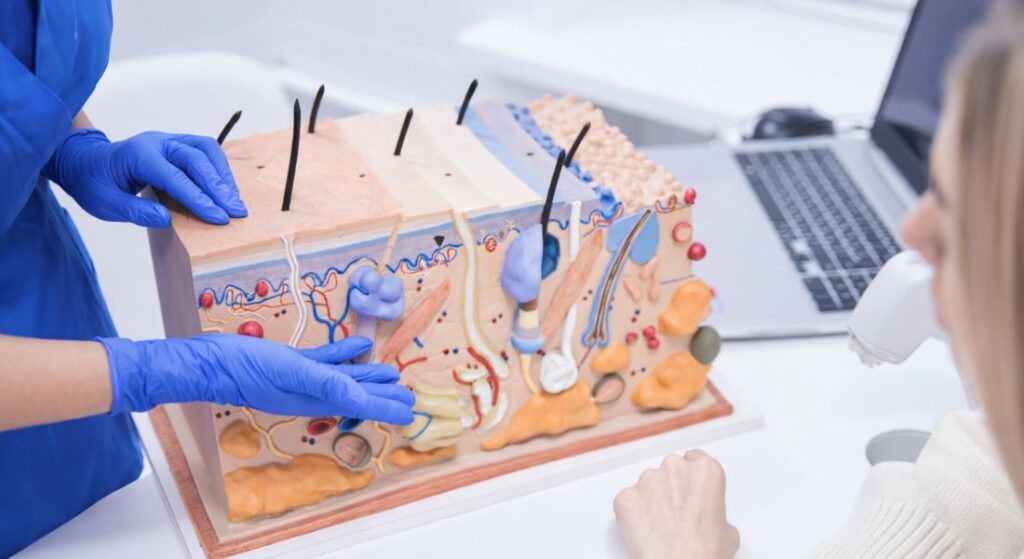
Decreased oestrogen levels during perimenopause or menopause can have a significant impact on vulvar skin, leading to thinning, dryness, and increased fragility. These changes make the skin more sensitive and prone to irritation, often resulting in persistent itching or burning, even in the absence of infection or dermatological disease. The delicate nature of vulvar tissue means that small irritants like soaps, tight clothing, or friction can easily exacerbate symptoms.
This hormonal effect can affect daily comfort, sexual activity, and overall quality of life, making symptom management particularly important. Gentle skincare routines, regular use of moisturisers, and avoidance of irritants form the foundation of care. Patients may also benefit from barrier creams and soothing products specifically formulated for sensitive vulvar skin.
In many cases, topical oestrogen creams are recommended as part of a broader management plan. These treatments help restore skin thickness, improve elasticity, enhance moisture retention, and reduce itching. When combined with lifestyle adjustments and specialist guidance, they support long-term vulvar skin health, comfort, and overall well-being during and after menopause.
The Role of Neuropathic Itch
In some cases, chronic vulvar itching is not caused by skin inflammation but by nerve-related issues, a condition known as neuropathic pruritus. This type of itch can occur even when the skin appears normal, making it more difficult to diagnose and treat.
Neuropathic itch can be triggered by local nerve irritation, prior surgeries, or systemic conditions such as diabetes, multiple sclerosis, or neuropathies. Patients may experience persistent or burning sensations that are disproportionate to any visible skin changes.
A specialist dermatological evaluation is essential to identify neuropathic causes. Once recognised, management may include medications that target nerve function, topical treatments to soothe symptoms, and lifestyle strategies to minimise triggers, offering relief even when conventional skin-focused therapies are insufficient.
The Importance of Clinical Examination
A careful and thorough clinical examination is essential when evaluating chronic vulvar itching. Dermatologists assess the colour, texture, and distribution of skin changes, while also considering the patient’s medical history, hygiene practices, and potential exposure to irritants or allergens.
The findings from this examination often guide further diagnostic steps. In cases where serious conditions such as lichen sclerosus, lichen planus, or vulvar Paget’s disease are suspected, a biopsy or laboratory testing may be necessary to confirm the diagnosis and rule out other causes.
A detailed clinical assessment ensures that the underlying cause is accurately identified, enabling a targeted treatment plan. This approach not only alleviates symptoms but also helps prevent long-term complications and preserves vulvar health and function.
Biopsy and Histopathological Assessment
When vulvar or skin lesions are unclear, a biopsy is an essential diagnostic tool. It involves taking a small tissue sample for detailed microscopic examination. Histopathology helps differentiate between inflammatory, autoimmune, or neoplastic processes, allowing clinicians to identify the exact underlying cause. Accurate diagnosis is crucial for guiding effective and targeted treatment strategies.
- Confirming the Diagnosis: Biopsy provides definitive evidence about the nature of the lesion. This ensures that conditions like Paget’s disease or other malignancies are not missed. Early confirmation allows timely intervention.
- Microscopic Tissue Evaluation: Histopathology examines cellular structure and tissue architecture. Pathologists can identify abnormal cell growth, immune cell infiltration, or signs of chronic inflammation. This level of detail cannot be obtained through visual inspection alone.
- Distinguishing Between Conditions: Many vulvar lesions appear similar clinically. Biopsy helps differentiate benign inflammatory conditions from autoimmune or malignant processes. Correct classification is essential to avoid misdiagnosis and inappropriate treatment.
- Guiding Targeted Treatment: Results from histopathology inform personalised management plans. Whether topical therapy, surgical excision, or systemic treatment is needed depends on the precise underlying cause.
Biopsy and histopathological assessment are critical for accurate diagnosis of uncertain lesions. By identifying the exact pathology, clinicians can deliver effective, evidence-based treatment while minimising risks and optimising outcomes.
Tailoring Treatment Plans

Once the underlying cause of chronic vulvar itching is identified, management can be carefully personalised to each patient’s needs. Treatment strategies vary depending on the diagnosis and may include topical corticosteroids or calcineurin inhibitors to reduce inflammation, as well as emollients and barrier creams to soothe and protect the delicate vulvar skin.
Avoiding irritants, allergens, or harsh hygiene products is a key part of treatment, helping prevent flare-ups and support healing. In cases where hormonal changes contribute to symptoms, topical oestrogen therapy may also be recommended to restore moisture and skin resilience.
Specialist guidance is essential to ensure that therapies are both effective and safe. Dermatologists can monitor response to treatment, adjust dosages as needed, and provide long-term strategies to maintain vulvar skin health, improve comfort, and prevent recurrence of chronic itching.
The Psychological Impact
Chronic vulvar itching can profoundly affect a patient’s quality of life, extending far beyond physical discomfort. Persistent itch, pain, or irritation can disrupt sleep, interfere with daily activities, and cause sexual discomfort, which may strain intimate relationships. Many patients also experience embarrassment, anxiety, or self-consciousness, leading to stress and social withdrawal, further compounding the emotional burden of the condition.
Recognising the psychological component is a vital part of comprehensive care. Addressing both the physical and emotional aspects of chronic vulvar itching helps patients cope with symptoms more effectively, reduces the risk of chronic stress, and improves overall treatment outcomes.
Dermatologists often adopt a holistic approach, combining medical management with education, reassurance, and emotional support. In cases where anxiety, distress, or sexual health concerns are significant, referral to counselling, therapy, or specialist support services may be recommended. This integrated care ensures that patients receive both symptomatic relief and long-term strategies to enhance comfort, confidence, and overall well-being.
The Value of Specialist Care
Chronic vulvar itching can arise from a wide range of causes, including dermatological conditions, infections, hormonal changes, or nerve-related issues. Because of this complexity, consulting a female dermatologist in London or another qualified specialist is often the most effective way to achieve accurate diagnosis and appropriate treatment.
Specialists are trained to carefully differentiate between the various underlying causes through detailed clinical examinations, targeted testing, and sometimes biopsies. This expertise ensures that patients receive a personalised treatment plan rather than repeated or ineffective therapies that fail to address the root cause.
Early specialist assessment not only alleviates symptoms more quickly but also reduces the risk of long-term complications, such as scarring, skin thinning, or persistent discomfort. With expert care, patients benefit from tailored interventions, ongoing monitoring, and strategies that provide both immediate relief and long-term vulvar health.
FAQs:
1. What are the common dermatological causes of chronic vulvar itching?
Chronic vulvar itching can be caused by conditions such as lichen sclerosus, lichen planus, eczema, psoriasis, and contact dermatitis, which affect the skin differently and may be mistaken for infections.
2. How can I tell if vulvar itching is due to infection or a skin condition?
Persistent itching that does not respond to antifungal or antibiotic treatments may indicate a dermatological cause. Specialist examination, including skin assessment and sometimes biopsy, helps distinguish between infection and skin disorders.
3. What is lichen sclerosus, and how does it affect the vulva?
Lichen sclerosus is a chronic skin condition causing white patches, thinning, and intense itching of vulvar skin. Early treatment with topical corticosteroids helps prevent scarring and structural changes.
4. Can eczema or psoriasis affect the vulvar area?
Yes, both conditions can occur in the vulva. Eczema causes redness, dryness, and flare-ups, while vulvar psoriasis often appears as red, shiny patches rather than typical silvery plaques seen elsewhere.
5. What is vulvar Paget’s disease, and why is early detection important?
Vulvar Paget’s disease is a rare skin condition that can mimic common dermatological issues but may be associated with underlying malignancy. Biopsy and specialist assessment are crucial for timely diagnosis and treatment.
6. How do hormonal changes affect vulvar skin?
Reduced oestrogen levels during menopause can thin the vulvar skin, increase dryness, and cause sensitivity, leading to persistent itching even without infection or dermatological disease. Topical oestrogen may be used to restore skin health.
7. What is neuropathic vulvar itch, and how is it treated?
Neuropathic pruritus is caused by nerve irritation rather than skin inflammation. Management may involve nerve-targeting medications, topical soothing treatments, and lifestyle strategies to reduce triggers.
8. Why is specialist assessment important for chronic vulvar itching?
A dermatologist can differentiate between infectious, dermatological, hormonal, or neuropathic causes, perform targeted tests or biopsies, and create personalised treatment plans to provide effective relief and prevent complications.
9. What treatment options are available for chronic vulvar itching?
Treatment depends on the underlying cause and may include topical corticosteroids, immunomodulators, moisturisers, barrier creams, avoidance of irritants, or hormonal therapies, guided by a specialist.
10. How does chronic vulvar itching affect quality of life?
Persistent itching can disrupt sleep, sexual activity, daily comfort, and self-esteem. Comprehensive management addresses both physical symptoms and psychological impact, often improving overall well-being.
Final Thoughts: Prioritising Specialist Care for Chronic Vulvar Itching
Chronic vulvar itching is a complex symptom with multiple potential causes, ranging from dermatological conditions to hormonal changes and neuropathic issues. Accurate diagnosis is essential, as repeated treatments for suspected infections often fail when the true cause lies in the skin or nerves. Early specialist assessment ensures a personalised treatment plan that addresses the root cause, improves comfort, and helps prevent long-term complications.
If you’re considering a female dermatologist in London, you can get in touch with us at London Dermatology Centre for expert evaluation and tailored care. Specialist guidance not only provides effective relief but also supports long-term vulvar health, confidence, and overall well-being.
References:
- Corazza, M., Toni, G., Zedde, P., Schettini, N. and Borghi, A. (2021) ‘Contact dermatitis of the vulva: an overview of irritant and allergic causes and clinical implications’, Allergies, 1(4), pp. 206–215. Available at: https://www.mdpi.com/2313-5786/1/4/19
- Trčko, K. (2025) ‘Chronic vulvar itch: diagnostic and therapeutic challenges’, Acta Dermatovenerol Alp Pannonica Adriat, 34(3), pp. 123–131. Available at: https://pubmed.ncbi.nlm.nih.gov/41014075/
- Raef, H.S. & Elmariah, S.B. (2021) ‘Vulvar pruritus: a review of clinical associations, pathophysiology and therapeutic management’, Frontiers in Medicine, 8, p. 649402. PMCID: PMC8058221. Available at: https://pmc.ncbi.nlm.nih.gov/articles/PMC8058221/
- Moyal‑Barracco, M. and Wendling, J. (2014) ‘Vulvar dermatosis’, Best Practice & Research Clinical Obstetrics and Gynaecology, 28(7), pp. 946–958. Available at: https://www.sciencedirect.com/science/article/abs/pii/S1521693414001291
- Kellogg Spadt, S. & Kusturiss, E. (2015) ‘Vulvar dermatoses: a primer for the sexual medicine clinician’, Sexual Medicine Reviews, 3(3), pp. 126–136. Available at: https://academic.oup.com/smr/article-abstract/3/3/126/6827692