



Vulvar dermatology focuses on skin conditions that affect the external female genital area. The vulva contains delicate skin that can behave differently from skin on other parts of your body. Because of this sensitivity, certain dermatological conditions may appear in unique ways in this region.
You might notice symptoms such as itching, discomfort, redness, or visible skin changes in the vulvar area. These symptoms can develop for many different reasons, including inflammatory conditions, autoimmune disorders, infections, or pigment changes. Since several conditions can look similar, identifying the exact cause is important.
A dermatologist can help evaluate these symptoms through careful examination. By looking closely at the skin and considering your medical history, they can narrow down the possible causes. Their specialised knowledge helps ensure that the condition is correctly identified.
Once the cause is understood, the right treatment plan can be recommended for you. Proper diagnosis helps relieve symptoms and protect the health of this sensitive area. With appropriate care, many vulvar skin conditions can be managed effectively.
What Is Vulvar Dermatology?
Vulvar dermatology is a specialised area of dermatology that focuses on conditions affecting the vulvar skin. The vulva includes structures such as the labia, clitoris, and the surrounding skin. Because this area has unique anatomy, some skin conditions can appear or behave differently here compared with other parts of your body.
The skin in this region is thinner and more sensitive, which means it can react more easily to irritation. It is also affected by factors such as friction, moisture, and hormonal changes. These influences can affect how certain skin conditions develop and how symptoms appear.
Dermatologists who specialise in vulvar dermatology understand these unique characteristics. When you are evaluated by a trained specialist, they can recognise subtle skin changes that might otherwise be missed. Their expertise helps ensure an accurate diagnosis and appropriate treatment.
Why Skin Conditions Occur in the Vulvar Area
The vulvar area is influenced by several factors that can affect your skin health. Moisture, friction from clothing, and hormonal changes can all impact the skin barrier in this region. Because the skin here is delicate, these factors may make it more prone to irritation or inflammation.
Another reason conditions can develop in this area is that the vulva contains both skin and mucosal tissue. These tissues react differently to infection or inflammation, which can sometimes make symptoms more complex. As a result, certain conditions may appear differently here than they would on other parts of your body.
Since many symptoms can look similar, it is important for you to have a proper dermatological evaluation. A specialist can examine the affected area and identify the underlying cause. Once the cause is clear, the most appropriate treatment can begin.
Common Symptoms of Vulvar Skin Conditions
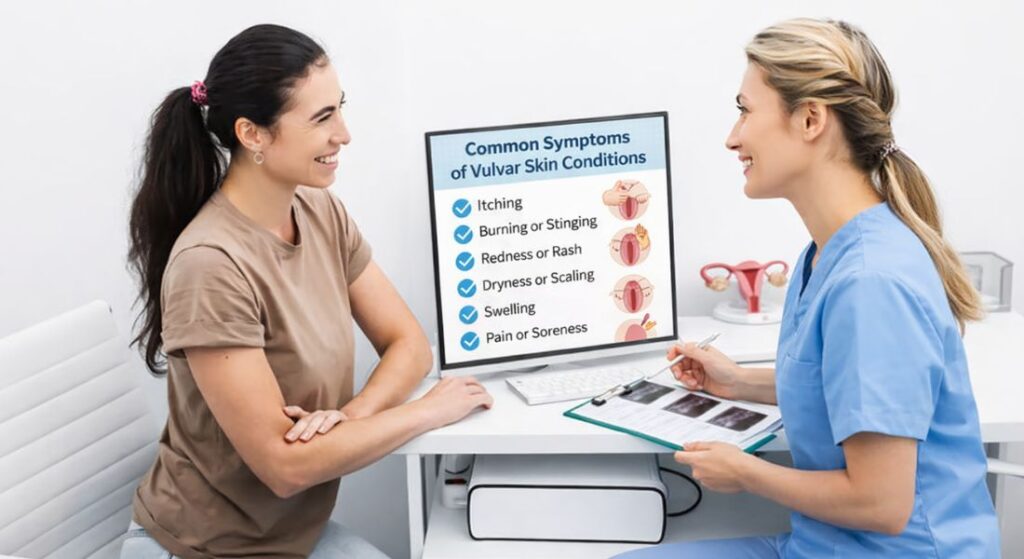
Many women with vulvar skin conditions first notice itching. If you experience persistent itching in this area, it can become very uncomfortable and may even interfere with your daily routine. The sensation may sometimes feel worse at night or after physical activity.
You may also notice symptoms such as redness, swelling, or a burning feeling in the affected area. These signs can indicate irritation or inflammation of the skin. Because the vulvar skin is sensitive, even mild irritation may feel quite noticeable.
Changes in the appearance of your skin can also occur. You might see differences in colour or texture, such as white patches, darker areas, or thickened skin. These changes can sometimes develop gradually over time.
In some cases, the skin may become fragile and small cracks or sores may appear. While these symptoms can feel worrying, many vulvar skin conditions can be managed effectively with proper dermatological care. Seeing a specialist can help identify the cause and guide the right treatment.
Inflammatory Skin Disorders Affecting the Vulva
Several inflammatory skin conditions can affect the vulvar area. One common example is eczema, which can develop on this sensitive skin. If you experience eczema in this region, you may notice dryness, itching, irritation, or patches of inflamed skin.
Another condition that can occur is contact dermatitis. This happens when your skin reacts to certain products, such as soaps, detergents, sanitary products, or personal care items. Identifying and avoiding the substance that triggers the reaction is often an important step in managing the problem.
Many inflammatory vulvar skin conditions respond well to topical treatments. Your dermatologist will assess your symptoms and recommend a treatment plan that suits your specific condition. With the right care, symptoms can often be controlled and your skin can become more comfortable.
Autoimmune Skin Conditions
Some skin conditions that affect the vulvar area are linked to the immune system. In autoimmune disorders, your immune system mistakenly targets healthy skin cells, leading to inflammation and visible changes in the affected area. Careful medical assessment helps ensure that the correct diagnosis is made and that appropriate treatment is started.
- How Autoimmune Conditions Affect the Skin: In autoimmune skin disorders, your immune system reacts against normal skin tissue rather than protecting it. This reaction can lead to inflammation, irritation, and changes in the skin’s appearance or texture. As a result, you may notice discomfort, sensitivity, or visible patches developing in the affected area.
- Lichen Sclerosus as an Autoimmune-Related Condition: Lichen sclerosus is often considered to have an autoimmune component. The condition can cause pale or white patches of skin along with thinning of the affected tissue. If you experience these changes, early medical evaluation is important because timely treatment can help manage symptoms and protect the skin.
- Symptoms That May Overlap with Other Conditions: Some autoimmune skin disorders can produce symptoms that appear similar to other dermatological conditions. For example, itching, skin irritation, or changes in colour and texture may occur in several different diseases. Because of this overlap, it can sometimes be difficult to identify the exact cause without a detailed examination.
- Importance of Careful Dermatological Assessment: Dermatologists carefully evaluate the appearance, location, and pattern of skin changes when investigating possible autoimmune conditions. In some cases, additional tests may be recommended to confirm the diagnosis. This thorough approach helps ensure that you receive the most appropriate treatment for your specific condition.
Early identification of autoimmune-related skin conditions allows for more effective management. When your dermatologist recognises the condition promptly, treatment can help control inflammation and improve your comfort. Ongoing monitoring also helps ensure that your skin remains as healthy and stable as possible over time.
Pigmentary Changes in the Vulvar Area
Changes in skin pigmentation can sometimes occur in the vulvar area. You might notice patches of skin that appear darker or lighter than the surrounding tissue. In many cases these changes are harmless, but they can occasionally indicate an underlying skin condition.
Hormonal influences may also affect how pigmentation appears in this region. For example, your skin colour can change after irritation or inflammation, a process known as post-inflammatory pigmentation. These changes can develop gradually and may look different from person to person.
A dermatologist can examine these pigment changes carefully to understand what may be causing them. By looking at the pattern, colour, and location of the patches, they can determine whether the change is normal or related to a specific condition.
Monitoring these changes is important because, in rare cases, colour alterations can be linked to more serious issues. An accurate evaluation helps ensure that you receive the right advice and care for your skin.
Infectious Conditions Affecting the Vulvar Skin
Infections can sometimes affect the vulvar skin and cause irritation or discomfort. For example, fungal infections may develop in this area and often lead to itching, redness, or soreness. If you experience these symptoms, they can usually be treated effectively with the right medication.
Bacterial infections may also occur and can cause symptoms such as swelling, tenderness, or unusual discharge. If you notice these changes, a dermatologist or healthcare professional can examine the area and determine the cause. In some cases, doctors may work with other specialists to ensure you receive the most appropriate care.
Seeking treatment early can help relieve your symptoms and prevent the infection from worsening. Good hygiene and following your doctor’s advice can also support recovery. With proper care, most infections affecting the vulvar skin can be managed successfully.
The Role of Hormonal Changes
Hormones play an important role in the health of your skin throughout the body. In the vulvar area, hormonal changes can influence skin thickness, elasticity, and moisture levels. Because of this, fluctuations in hormones may affect how your skin responds to irritation or inflammation. For example, during menopause, lower oestrogen levels can cause the vulvar skin to become thinner and more sensitive.
This change is sometimes referred to as vulvar atrophy. You may notice symptoms such as dryness, irritation, or increased sensitivity in the area. In some cases, treatments such as hormonal therapy or specialised moisturising products may help improve these symptoms. Your dermatologist may also work alongside a gynaecologist to ensure you receive the most appropriate care and support for your condition.
Diagnosing Vulvar Skin Disorders
Diagnosing vulvar skin disorders usually begins with a detailed medical history. Your dermatologist may ask about your symptoms, daily habits, skincare products you use, and any previous treatments. This information helps them understand what might be affecting your skin.
A careful physical examination of the vulvar area is also important. During this step, your dermatologist looks for signs such as redness, scaling, pigmentation changes, or differences in skin texture. These visible patterns often provide valuable clues about the possible condition.
In some cases, additional tests may be recommended. For example, a small skin biopsy might be taken so the tissue can be examined under a microscope. This test can help confirm the diagnosis and guide the most appropriate treatment for you.
The Importance of a Skin Biopsy
A skin biopsy may sometimes be recommended if the diagnosis is not completely clear. During this procedure, your doctor removes a very small sample of skin using local anaesthetic, so the area is numb. The sample is then examined under a microscope to look more closely at the skin tissue.
The biopsy can reveal specific patterns of inflammation or structural changes within the skin. These microscopic findings help your dermatologist confirm the diagnosis and better understand what is causing your symptoms. Having an accurate diagnosis is important because it guides the most appropriate treatment for you.
Although the idea of a biopsy might feel worrying, the procedure is usually quick and safe. Your dermatologist performs it carefully and focuses on keeping you as comfortable as possible throughout the process.
Treatment Options for Vulvar Skin Conditions

Treatment for vulvar skin conditions depends on the underlying cause of your symptoms. Many inflammatory conditions respond well to topical medications that reduce inflammation. Your doctor may prescribe treatments such as corticosteroid creams or other anti-inflammatory medications to calm the skin.
You may also be advised to use moisturisers or barrier creams to protect the sensitive skin in this area. These products help maintain hydration and support the natural skin barrier. Gentle skincare and avoiding irritating products are often important parts of your treatment plan.
If an infection is present, treatments such as antifungal or antibiotic medications may be needed. Your dermatologist will adjust the treatment based on your specific condition and symptoms. This personalised approach helps ensure the most effective care for your skin.
Managing Chronic Vulvar Conditions
Some vulvar skin conditions are chronic and may require long-term management. If you have a condition such as lichen sclerosus or eczema, ongoing treatment may be needed to keep symptoms under control. Regular care helps prevent flare-ups and maintain skin comfort.
Your dermatologist may recommend periodic follow-up appointments. These visits allow your doctor to check how your skin is responding to treatment and make adjustments if needed. Monitoring the condition over time helps reduce the risk of complications.
You may also receive guidance about daily skincare and symptom monitoring. Learning which products to use and what changes to watch for can help protect your sensitive skin. Small adjustments in your routine can often make a noticeable difference.
Understanding your condition plays an important role in long-term management. When you know how to care for your skin and recognise early symptoms, you can respond quickly if problems arise. This knowledge helps you stay more confident in managing your health.
Avoiding Irritants That Affect Vulvar Skin
Keeping the vulvar area healthy often involves paying attention to everyday habits and products that come into contact with your skin. This area is naturally sensitive, so certain products or materials can easily cause irritation. By avoiding common triggers and choosing gentler alternatives, you can help protect your skin and reduce discomfort. These simple adjustments often work alongside medical treatment to improve overall skin health.
- Avoiding Harsh or Scented Products: Some soaps, body washes, and hygiene products contain fragrances or strong chemicals that may irritate delicate skin. When you use these products regularly, they can lead to dryness, itching, or redness. Choosing mild, fragrance-free cleansers designed for sensitive skin can help minimise irritation and keep the area more comfortable.
- Choosing Breathable Clothing: The type of clothing you wear can also affect vulvar skin health. Tight or non-breathable fabrics may trap heat and moisture, which can increase irritation or discomfort. Wearing loose, breathable clothing and cotton underwear allows better airflow and may help reduce friction against the skin.
- Reducing Moisture and Friction: Excess moisture and constant rubbing can aggravate sensitive skin. You may find that staying dry and changing out of damp clothing promptly helps prevent irritation. Simple habits such as these can make a noticeable difference in maintaining comfort throughout the day.
- Identifying Personal Triggers: Everyone’s skin reacts differently, so identifying the specific irritants that affect you is important. Your dermatologist may ask about the products you use, your clothing choices, and your daily routine. By recognising and avoiding these triggers, you can often reduce symptoms and support the healing process.
Dermatologists often provide personalised guidance to help you protect sensitive skin and avoid common irritants. Small lifestyle changes can sometimes lead to significant improvements in comfort. When combined with appropriate medical care, these adjustments help support long-term vulvar skin health.
Psychological Impact of Vulvar Skin Disorders
Vulvar skin conditions can affect your emotional wellbeing as well as your physical comfort. Symptoms such as itching, irritation, or visible skin changes may sometimes make you feel embarrassed or anxious. These reactions are very common, especially when the condition affects such a private and sensitive area.
Talking openly with your healthcare professional can help ease many of these concerns. Dermatologists understand that these conditions can feel difficult to discuss, and they aim to create a supportive and respectful environment. When you share your symptoms honestly, it becomes easier for them to provide the right care.
With effective treatment, many people notice improvement not only in their physical symptoms but also in their confidence. Early diagnosis and proper management can help you feel more comfortable and reassured about your skin health.
Why Specialist Care Is Important
Because vulvar skin conditions can sometimes resemble other disorders, specialist evaluation is very important. When you see a dermatologist, they can recognise subtle skin patterns that may point to a specific condition. This expertise helps ensure an accurate diagnosis and prevents unnecessary or ineffective treatments.
Specialist care also means that your treatment plan is designed specifically for this delicate area. The vulvar skin is more sensitive than skin on many other parts of the body, so some treatments used elsewhere may not be suitable here. Your dermatologist can recommend therapies that are both safe and effective for this region.
When you receive care from a specialist, you benefit from their experience and knowledge in managing these conditions. With the right diagnosis and treatment approach, symptoms can often be controlled more effectively. Proper care helps improve comfort and overall outcomes for your skin health.
Differences Between Dermatology and Gynaecology Care
When it comes to vulvar health, both dermatologists and gynaecologists may be involved, but their areas of expertise differ. Dermatologists specialise in diagnosing and treating skin conditions, including changes in colour, texture, or inflammation. Gynaecologists focus more broadly on reproductive and hormonal health, which can also affect the vulvar area. Understanding the distinct roles of each specialist can help patients seek the most appropriate care.
- Dermatologists Focus on Skin Health: Dermatologists evaluate skin-specific symptoms, such as rashes, lesions, or chronic inflammation. They can diagnose conditions like eczema, lichen sclerosus, or psoriasis affecting the vulvar skin. Their expertise ensures that skin-related issues are properly identified and treated.
- Gynaecologists Address Hormonal and Reproductive Factors: Gynaecologists assess issues linked to hormonal changes, infections, or reproductive health. They can manage conditions such as vulvovaginal atrophy, infections, or hormonal imbalances. This perspective helps address factors that may indirectly impact skin health in the vulvar region.
- Collaborative Care Can Be Beneficial: In some cases, symptoms may involve both skin and hormonal factors. Coordination between dermatologists and gynaecologists allows for a more comprehensive approach. Collaboration ensures that patients receive care targeting all contributing factors.
- Comprehensive Symptom Management: Working with both specialists helps provide accurate diagnosis and effective treatment. Patients benefit from a holistic approach that addresses skin, hormonal, and reproductive health together. This can improve outcomes and overall quality of care.
Understanding the differences between dermatology and gynaecology care helps patients navigate treatment for vulvar symptoms. By recognising which specialist addresses specific aspects of health, and when collaboration is beneficial, patients can receive more precise and effective care. A combined approach often leads to better symptom management and improved overall wellbeing.
The Importance of Early Evaluation
Early evaluation of vulvar skin symptoms can make a significant difference to your care. When you seek medical advice sooner, dermatologists can identify the condition earlier and begin appropriate treatment. Prompt care can help prevent certain conditions from progressing and often leads to better results.
If you notice symptoms that persist or gradually worsen, it is important to speak with a healthcare professional. Ongoing itching, irritation, or visible skin changes should not be ignored. Getting advice early helps ensure that the cause is properly understood.
Many vulvar skin conditions can look similar at first. When your dermatologist evaluates the symptoms early, they can determine what is happening and recommend the right treatment plan. Accurate diagnosis is an important step in effective care.
Timely consultation also helps protect your long-term skin health and comfort. With early intervention and the right guidance, many conditions can be managed successfully and symptoms can be relieved more quickly.
Research in Vulvar Dermatology
Research in vulvar dermatology is helping us understand these skin conditions much better. Scientists are looking at how your immune system, genetics, and hormones can influence the development of vulvar skin diseases. This knowledge helps doctors refine how they treat you.
New treatments may provide more targeted options in the future. Advances in dermatology mean that people like you with chronic skin conditions can expect better outcomes over time. Ongoing research is really benefiting patients worldwide.
As our understanding grows, doctors can diagnose conditions more accurately. This means you’re more likely to get the right treatment sooner. Keeping up with these developments helps ensure that your care is based on the latest evidence. Ultimately, research aims to make living with vulvar skin conditions easier and more manageable for you.
Preventive Skin Care for the Vulvar Area

Looking after your vulvar skin means keeping your skincare routine gentle. You might find that using mild, fragrance-free cleansers and avoiding unnecessary products helps protect your skin’s natural barrier. Often, simple is best when it comes to keeping this area healthy.
It’s also important to maintain good hygiene without overdoing it. Washing too often can strip your skin of its protective oils, which may lead to dryness or irritation. Finding a balance in your routine can help your skin stay healthy and comfortable.
Preventive care can go a long way in reducing irritation and discomfort. You may benefit from a skincare routine tailored specifically to your needs, and your dermatologist can guide you on the best practices for keeping your vulvar skin healthy.
Raising Awareness of Vulvar Dermatology
Awareness of vulvar dermatology is important because you might feel hesitant to discuss symptoms affecting this area. Understanding that these concerns are common can make it easier for you to seek medical advice when needed. The earlier you get a diagnosis, the better the outcome is likely to be.
Healthcare professionals can also help by raising awareness and providing information. When your dermatologist explains common vulvar skin conditions, it can reduce feelings of embarrassment or stigma. This knowledge may empower you to take your skin health seriously and speak up about any concerns.
As awareness grows, you may find it easier to access the right dermatological care. This can help you manage vulvar skin conditions more effectively and prevent discomfort or complications. With the right guidance, looking after this sensitive area becomes simpler and more confident.
FAQs:
1. What is vulvar dermatology?
Vulvar dermatology focuses on the skin of your vulva, which is thinner and more sensitive than other areas. Specialists in this field can spot subtle changes that might be missed elsewhere. Seeing an expert helps ensure you get the right diagnosis and treatment.
2. What common symptoms should I look out for?
You might notice itching, redness, irritation, burning, or patches of unusual skin. These symptoms can be persistent or gradually worsen. If they do, it’s best to speak to a dermatologist early.
3. Why do skin conditions appear in the vulvar area?
Factors like moisture, friction from clothing, and hormonal changes can make your vulvar skin more sensitive. These influences may trigger inflammation, irritation, or infections. Understanding these triggers helps your dermatologist choose the right care.
4. Which inflammatory skin conditions affect the vulva?
Conditions such as eczema or contact dermatitis can affect the vulvar skin. They often cause dryness, irritation, or inflamed patches. Identifying triggers, like certain products, is key to managing them effectively.
5. Can autoimmune conditions affect vulvar skin?
Yes, conditions like lichen sclerosus involve your immune system mistakenly attacking healthy skin. This can cause pale patches, thinning skin, and discomfort. Early diagnosis allows treatment to control inflammation and protect your skin.
6. What about infections?
Fungal or bacterial infections can cause itching, redness, or soreness in the vulvar area. Prompt treatment helps prevent symptoms from worsening. Good hygiene and following your doctor’s advice are important for recovery.
7. How do hormones affect vulvar skin?
Hormonal changes, especially during menopause, can make your skin thinner, drier, and more sensitive. This may lead to discomfort or irritation. Treatments or moisturisers can help maintain comfort and skin health.
8. How are vulvar skin conditions diagnosed?
Your dermatologist will review your history and examine the skin closely. Sometimes a small biopsy is needed to confirm the cause. This ensures your treatment is accurate and effective.
9. How are these conditions treated?
Treatment depends on the cause and may include topical creams, moisturisers, or medications for infections. Avoiding irritants like scented products or tight clothing also helps. Following your dermatologist’s advice is key to managing symptoms.
10. Why see a specialist?
Vulvar skin is delicate, and conditions can look similar, so a specialist can give an accurate diagnosis. They can recommend safe treatments and monitor your skin over time. Seeing an expert helps protect your long-term comfort and skin health.
Final Thoughts: Understanding and Managing Vulvar Skin Conditions
Vulvar skin conditions can feel worrying, especially when you notice persistent itching, redness, or unusual patches. Understanding these conditions is the first step towards managing them effectively. By recognising symptoms early and seeking professional advice, you give yourself the best chance of relieving discomfort, protecting your skin, and preventing long-term complications.
Dermatologists play a key role in evaluating and managing vulvar skin conditions. Through careful examination, consideration of your medical history, and, when needed, additional tests, they can identify the underlying cause and recommend treatments that reduce irritation and support skin health. With proper care and regular follow-up, many women successfully manage these conditions and maintain comfort in daily life.
If you’re looking for an experienced female dermatologist in London, you can reach out to us at the London Dermatology Centre to book a consultation with one of our specialists. Speaking with a specialist ensures your symptoms are assessed carefully and your treatment plan is guided by expert dermatological care.
References:
- Corazza, M., Toni, G., Zedde, P. et al. (2021) Contact Dermatitis of the Vulva: Overview and Allergens, Allergies, 1(4), pp.206–215. Available at: https://www.mdpi.com/2313-5786/1/4/19
- Spadt, S.K. and Kusturiss, E. (2015) Vulvar dermatoses: a primer for the sexual medicine clinician, Sexual Medicine Reviews, 3(3), pp.126–136. Available at: https://pubmed.ncbi.nlm.nih.gov/27784605/
- Fruchter, R., Melnick, L. and Pomeranz, M.K. (2017) Lichenoid vulvar disease: a review, International Journal of Women’s Dermatology, 3(1), pp.58–64. Available at: https://pmc.ncbi.nlm.nih.gov/articles/PMC5419035/
- Goldstein, A.T., Burrows, L.J. and Shaw, H.A. (2008) The vulvar dermatoses: Presentation, diagnosis and management, The Journal of Sexual Medicine, 5(2), pp.276‑283. Available at: https://www.sciencedirect.com/science/article/abs/pii/S1743609515319482
- Burrows, L.J. and Shaw, H.A. (2008) The vulvar dermatoses: presentation, diagnosis and management, The Journal of Sexual Medicine, 5(2), pp. 276–283. Available at: https://academic.oup.com/jsm/article-abstract/5/2/276/6862369