Growth Factor Skin Care: Does the Science Support the Hype?
Jul 22, 2026
Growth factors are signalling proteins involved in processes such as cell communication and tissue repair. Skincare products containing growth factors are intended to improve the appearance of ageing or photo damaged skin, but the effect of a finished product depends on its formulation, stability, delivery and supporting clinical evidence.
Overall, the science supports cautious interest rather than the strongest marketing claims. Some finished formulations have produced modest short-term improvements, but the evidence is product-specific and is often based on small or uncontrolled studies.
If you use skincare products containing growth factors, the aim is to complement your skin’s natural processes rather than completely change how your skin ages. You may notice gradual improvements in areas such as texture, smoothness, and overall skin quality with consistent use.
You should remember that not all growth factor products are the same. The concentration, formulation, and delivery method can have a significant impact on how effective a product may be and whether you see noticeable benefits.
How Growth Factor Skincare Claims to Work
Growth factor skincare works on the idea that applying these ingredients to your skin may encourage natural repair processes. The aim is to provide signals that support cellular activity and help your skin respond in a healthier way.
If the formulation is suitable for your skin, you may notice improvements such as smoother texture, reduced fine lines, and a more refreshed appearance over time. However, results are usually gradual rather than immediate.
You should also remember that your skin’s natural barrier can affect how well growth factors are absorbed. Not every product can reach deeper layers of the skin, so the visible effects may be more subtle compared with professional treatments.
Key Ingredients in Growth Factor Products
Growth-factor skincare may contain human cell-conditioned media, purified or recombinant human-identical growth factors, biomimetic peptides, cytokines or related signalling ingredients. Some products also contain botanical or “plant stem cell” extracts, but these should not automatically be treated as equivalent to human growth factors. If you are choosing a product, understanding these different types can help you make a more informed decision based on your skincare goals.
Recombinant growth factors are created using scientific methods to replicate natural growth factors. You may find this approach in many premium skincare products because it allows for more consistent production and quality control.
When you look at the ingredient list, you can better understand what type of growth factor you are using. You should also consider the quality of the formulation, sourcing, and product stability, as these factors can influence the overall effectiveness.
Clinical Tip
Look for clinical evidence involving the complete product you intend to purchase, not only research showing that an individual growth factor has a biological role in the skin. Check whether the study was independently conducted, included a control group, assessed an adequate number of participants and used objective photography or investigator grading. Introduce one new product at a time so that you can identify irritation and judge whether it provides a meaningful benefit. Do not apply a routine cosmetic product to freshly microneedled, lasered or otherwise damaged skin unless the clinician performing the procedure has approved that exact formulation.
Can Growth Factors Stimulate Collagen and Elastin?
Collagen and elastin are important proteins that help keep your skin firm, strong, and resilient. In laboratory and product-specific studies, certain growth factors can influence fibroblast signalling and extracellular-matrix activity. However, this does not prove that every topical formulation reaches the relevant cells or increases collagen and elastin to a clinically meaningful degree.
If growth factor skincare suits your skin, you may notice gradual improvements in firmness and elasticity over several weeks or months. It is not an overnight solution, but consistent use may support healthier-looking skin over time.
You should remember that growth factors work alongside your skin’s natural processes rather than replacing them. Maintaining healthy habits, including good sleep, a balanced diet, and regular sun protection, is still essential for long-term skin health.
Potential Benefits for Skin Rejuvenation
Some clinical studies have reported improvements in texture, hydration, firmness or fine lines after regular use of particular formulations. You may also see improvements in areas such as fine lines, uneven tone, and overall skin radiance over time.
Some formulations may modestly improve the visible appearance of photodamaged skin, including texture, fine lines or overall skin quality. They should not be assumed to treat wounds, active skin disease or significant scarring.
This may make them an optional addition for people seeking modest cosmetic improvement. However, they should not be viewed as a proven method of preventing skin ageing or as a replacement for daily sun protection.
You should keep your expectations realistic, as results can vary depending on your skin type, age, and daily skincare habits. A consistent routine and healthy skin practices can help you get the most from these products.
Evidence From Scientific Studies
Several studies have looked at how growth factors may support skin health, with research showing potential improvements in areas such as texture and elasticity after regular use. If you are considering these products, it is helpful to understand that results can vary between individuals.
Some small, product-specific studies have reported clinical or imaging changes consistent with dermal remodelling. However, many studies are uncontrolled, and these findings do not prove that every topical growth-factor product increases collagen to a clinically meaningful degree.
The evidence behind growth factor skincare is promising, but it is still developing. You should approach product claims carefully and look for information supported by reliable, peer-reviewed studies.
Question
Current evidence
Important limitation
Can growth-factor products improve texture or fine lines?
Some studies report modest improvements
Results differ considerably between formulations
Do they stimulate collagen or elastin?
Laboratory and product-specific clinical findings are encouraging
This cannot be assumed for every finished product
Do they penetrate intact skin?
Formulations are designed to interact with or deliver proteins to skin
Large protein size makes penetration uncertain
Are they better than retinoids?
No reliable evidence establishes superiority
Retinoids have a stronger evidence base for photoageing
Are they suitable for sensitive skin?
Short-term studies report relatively few adverse effects
Other ingredients may still cause irritation or allergy
Do results appear within 8–12 weeks?
Many studies assess outcomes around this time
The timeline is not a guarantee
Do the benefits last?
Long-term persistence is unclear
Evidence beyond six months is limited
Can they treat scars?
Evidence is product- and procedure-specific
General scar-reduction claims should be avoided
Evidence Note
A 2023 systematic review examined 33 studies involving 1,180 participants and 23 topical growth-factor preparations. The review found modest improvements in features such as skin texture, fine lines and overall facial appearance, with a relatively low rate of reported adverse effects.
However, only nine studies used a placebo or active comparison, many were uncontrolled, and three comparative randomised trials found no statistically significant difference between the treatments being compared. Products, additional ingredients and outcome measures varied considerably, and it is not known whether improvements persist beyond six months.
This means the evidence is encouraging but not strong enough to assume that every product labelled as containing growth factors will provide the same benefit.
Considerations for Sensitive Skin
If you have sensitive skin, you may be concerned about irritation when trying new skincare products. Topical growth-factor preparations were generally well tolerated in published short-term studies. However, products vary greatly, and irritation or allergy may be caused by the complete formulation rather than the growth-factor ingredient alone.
Before applying a new product widely, test a small amount on a discreet area once daily for several days. This may help identify obvious irritation, but it cannot guarantee that an allergic reaction will not develop later.
To improve comfort, you can combine growth factor products with soothing ingredients such as hyaluronic acid or ceramides. These ingredients can help support hydration and make your skincare routine feel more comfortable.
How Growth Factors Compare to Retinoids
Retinoids are one of the most researched anti-ageing ingredients, while growth factors are a newer addition to skincare. Both may support collagen production, but they work through different processes within the skin.
Retinoids can increase cell turnover more actively, which may cause dryness, redness, or irritation when you first start using them. Growth-factor products use different formulation approaches, but their evidence base is smaller and more product-specific. Retinoids, particularly tretinoin, have a much more established clinical evidence base for photoageing, although they are also more likely to cause dryness, scaling or irritation.
You may be able to combine these ingredients as part of a skincare routine, but it is important to introduce them carefully. Speaking with a skincare professional can help you avoid irritation and choose an approach that suits your skin.
Delivery Methods in Skincare
Growth factors are available in different skincare formats, including serums, creams, and masks. If you are looking for a more targeted approach, serums are often chosen because they may contain higher concentrations of active ingredients.
Some formulations use liposomes, encapsulation or other delivery technologies intended to improve stability or skin interaction. However, a delivery claim does not confirm that an intact, biologically active growth factor reaches the deeper skin in a clinically meaningful amount. The formulation and technology behind a product can be just as important as the ingredient itself.
For the best results, you should use growth factor skincare consistently and follow the manufacturer’s instructions. Regular application as part of your routine can help you get the most benefit from the product over time.
Target Areas and Skin Concerns
Growth factor products are commonly used on areas such as the face, neck, and décolletage, where visible signs of ageing often appear first. You may consider these areas when looking to support your overall skin health and appearance.
These products may help improve concerns such as fine lines, uneven texture, and dull-looking skin. For the best possible outcome, you should use growth factor products consistently alongside good skincare habits. Protecting your skin from the sun and maintaining hydration can also support healthier-looking results.
Age and Effectiveness
Age alone cannot predict whether a growth-factor product will produce a visible result. Baseline photodamage, skin condition, sun exposure, product formulation, other skincare products and the way outcomes are assessed may all influence the apparent response.
Everyone’s skin responds differently, so you should give the product enough time before judging its effectiveness. Being patient and consistent can help you better understand how it works for your individual skin needs.
Combining With Other Skincare Ingredients
Growth factor products can often be used alongside ingredients like hyaluronic acid, antioxidants, and peptides. These ingredients can work together to support hydration, protect the skin, and complement your overall skincare routine.
Acids, vitamin C products and retinoids may increase irritation when several active products are introduced together. Product compatibility and application order vary, so follow the manufacturer’s directions rather than assuming that every acidic product deactivates every growth-factor formulation.
A simple and balanced skincare routine is often more beneficial than using too many powerful products together. By keeping your routine focused and consistent, you can support your skin without causing unnecessary irritation.
Practical Tips for Use
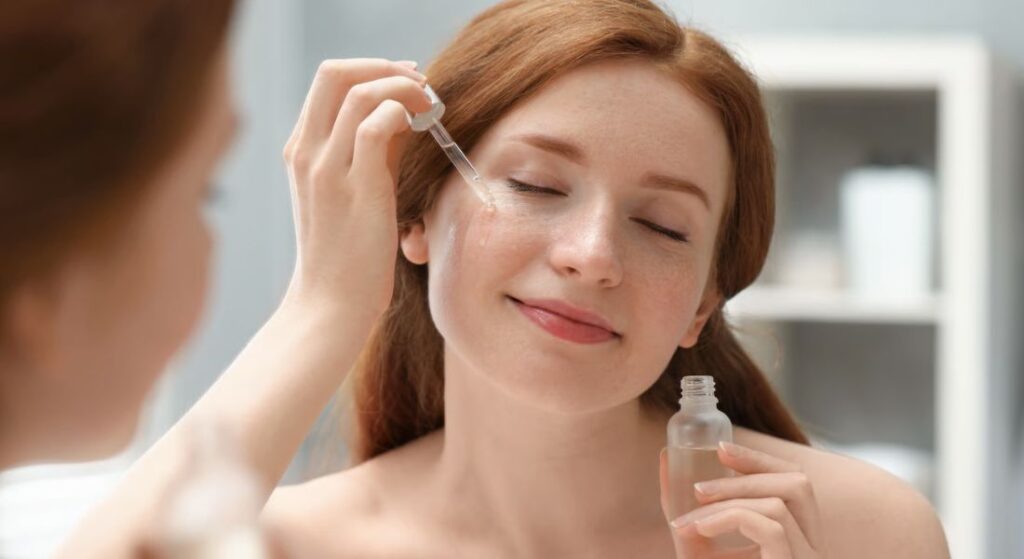
Apply the product according to its instructions. Some formulations are intended for dry skin after cleansing, while others may be layered with a moisturiser. You should gently pat the serum into your skin rather than rubbing it harshly.
Consistency is more important than using a large amount of product. Applying a small quantity regularly is usually more beneficial than using too much product occasionally.
Follow the manufacturer’s storage instructions. Some formulations are stable at normal room temperature, while others may require greater protection from heat or light. Do not assume that every growth-factor product should be refrigerated or stored in the same way.
Expected Timeline for Results
Many studies have assessed results after approximately eight to twelve weeks of regular use. This reflects a common study period rather than a guaranteed response time, and some people may notice little or no meaningful benefit.
Any changes are likely to be gradual and may initially involve subtle differences in texture or overall appearance. Whether further improvement develops depends on the individual product, your skin and the consistency of use.
Tracking your progress with photographs or keeping a skincare journal can help you understand how your skin is responding. This allows you to assess the benefits more accurately and make informed decisions about your routine.
Cost Considerations
Growth factor skincare products are often considered premium options because the technology and ingredient sourcing can make them more expensive than standard serums. Before investing, you should consider whether the cost fits your skincare goals and budget.
Some people prefer spending more on professional treatments, while others choose to include growth factor products as part of their daily routine. The right option depends on what you want to achieve and how you prefer to approach your skincare.
A higher price does not always mean a product will be more effective. You should research the brand, ingredients, and formulation carefully to make sure you are choosing a product that offers genuine value for your needs.
Professional Advice and Guidance
If you are unsure whether growth factor skincare is right for you, speaking with a dermatologist can be helpful. They can assess your skin concerns and recommend products or concentrations that are appropriate for your needs.
You may also be advised to combine topical growth factor products with suitable in-clinic treatments, depending on your skin goals. This approach can help create a more personalised skincare plan while ensuring the products are used correctly.
Seeking professional advice gives you greater confidence in the choices you make for your skin. It also helps you follow an evidence-based approach, rather than relying on trial and error or unverified skincare claims.
Possible Side Effects
Published short-term studies have generally reported relatively few adverse effects. However, long-term safety data are limited, and the finished formulation may still cause irritation, allergy, acne-like breakouts or worsening of an existing skin condition.
If you experience persistent irritation or discomfort, stop using the product and seek advice from a skincare professional. They can help you decide whether it is suitable for your skin or recommend an alternative.
Before adding any new growth factor product to your routine, you should carry out a patch test. This simple step can help you check that the product is compatible with your skin.
Combining With Lifestyle Factors
Healthy habits support your general wellbeing and skin health, but they cannot compensate for an ineffective formulation or guarantee better results from a growth-factor product. Getting enough sleep, staying well hydrated, and eating a balanced diet all contribute to healthier-looking skin.
You should also protect your skin from the sun every day. UV exposure can damage the skin, reduce collagen production, and limit the benefits of your skincare routine.
Think of growth factor skincare as one part of your overall approach to skin health, rather than a complete solution on its own. Healthy habits and sun protection support general skin health, but they cannot guarantee that a growth-factor product will provide a visible benefit.
Common Myths About Growth Factors
Some people believe growth factor skincare can reverse ageing almost instantly, but that is not realistic. If you are considering these products, it is important to understand that visible improvements usually take time.
You may also hear that all growth factor products are equally effective, but this is not the case. Their formulation, concentration, and stability can vary considerably from one brand to another.
When you understand what growth factor skincare can realistically achieve, it becomes easier to set sensible expectations. This can help you choose products with greater confidence and reduce the risk of disappointment.
Suitability for All Skin Types
Some growth-factor formulations may be suitable for a range of skin types, but tolerability depends on the complete ingredient list rather than the growth-factor label alone. If you are unsure which product is suitable, choosing one designed for your skin type can make a difference.
If you have an active inflammatory skin condition, such as eczema or rosacea, it is best to speak with a dermatologist before introducing growth factor products. They can advise whether the treatment is appropriate for your skin.
Choosing the right formulation for your specific skin type can improve both comfort and results. It also helps you build a skincare routine that supports your skin without unnecessary irritation.
Key Takeaways
Growth factors are signalling proteins involved in normal cellular processes.
A growth factor’s biological role does not prove that every topical product containing it will work.
Products may contain conditioned media, recombinant growth factors, biomimetic peptides or other ingredients.
“Plant stem cell” extracts are not necessarily the same as human growth factors.
The skin barrier limits the penetration of large protein molecules.
Short-term studies suggest that some formulations may modestly improve texture and fine lines.
The quality of evidence varies, and many studies are small or uncontrolled.
Comparative trials have not consistently shown one growth-factor product to be superior.
Retinoids have a stronger evidence base for treating photoageing.
An 8 to 12 week timeline reflects common study periods, not a guaranteed result.
A high price or high claimed concentration does not prove effectiveness.
Short-term tolerability appears generally reassuring, but formulations can still cause irritation.
Follow the individual product’s application and storage instructions.
Do not use a cosmetic growth-factor serum after a procedure unless your clinician advises it.
Daily broad-spectrum sun protection remains more important than adding an optional growth-factor serum.
Frequently Asked Questions
1. What are growth factors in skincare? Growth factors are signalling proteins involved in communication between cells. Skincare formulations containing them are intended to improve the appearance of ageing or photodamaged skin, but the result depends on the finished product.
2. Do growth factor skincare products really work? Some formulations have produced modest improvements in texture, fine lines or firmness in short-term studies. However, evidence varies considerably, and the term “growth factor” alone does not prove that a product is effective.
3. How long does it take to see results from growth factor skincare? Many clinical studies assess results after approximately eight to twelve weeks, but there is no guaranteed timeline. Stop using the product if it causes irritation and reassess whether the benefit justifies the cost after consistent use.
4. Are growth factor products safe for sensitive skin? Short-term studies generally report good tolerability, but fragrances, preservatives and other active ingredients may still irritate sensitive skin. Patch-test the complete product before wider use and stop if persistent redness, itching, swelling or discomfort develops.
5. Can growth factors be used with retinol? Some products can be included in the same routine as retinol, but introduce them gradually and follow the individual product directions. Using several active products together may increase irritation.
6. Can I use growth factor skincare every day? Most topical growth factor products are formulated for daily use. Always follow the manufacturer’s instructions, as recommended frequency may vary depending on the formulation and concentration.
7. Are growth factors better than peptides or hyaluronic acid? Growth factors, peptides and hyaluronic acid are different ingredient categories. Hyaluronic acid mainly supports hydration, while peptides and growth factors may be included for several formulation-specific purposes. None is automatically better without considering the product and your goal.
8. Who is most likely to benefit from growth factor skincare? Some people seeking modest improvement in fine lines, texture or photodamage may choose to try a well-formulated product with relevant clinical evidence. However, it is not possible to identify a group that is guaranteed to benefit.
9. Can growth factor skincare replace professional skin treatments? Topical products and professional procedures are not directly interchangeable. Their aims, intensity, evidence and risks differ, and a cosmetic serum should not be expected to reproduce the effects of laser treatment, microneedling or injectable procedures.
10. How should growth factor skincare products be stored? Follow the manufacturer’s instructions. Some products are stable at room temperature, while others have more specific storage requirements.
Final Thoughts: Taking a Balanced Approach to Growth Factor Skincare
Growth factor skincare is a promising area of cosmetic science, with research suggesting that certain well-formulated products may help improve skin texture, firmness, and the appearance of fine lines over time. However, results are influenced by factors such as the quality of the formulation, consistent use, your skin type, and realistic expectations. Rather than viewing growth factors as a miracle solution, they are best considered one part of a well-rounded skincare routine that also includes sun protection, moisturisation, and healthy lifestyle habits.
If you would like personalised advice on whether growth factor skincare is suitable for your skin, consulting an experienced Dermatologist in London can help you make informed decisions based on your individual skin concerns. If you would like to book a consultation with one of our dermatologists in London, you can contact us at the London Dermatology Centre.
References:
Quinlan, D.J., Ghanem, A.M. and Hassan, H. (2023) ‘Topical growth factor preparations for facial skin rejuvenation: a systematic review’, Journal of Cosmetic Dermatology, 22(7), pp. 2023–2039. Available at: https://pubmed.ncbi.nlm.nih.gov/37222303/
Aldag, C., Nogueira Teixeira, D. and Leventhal, P.S. (2016) ‘Skin rejuvenation using cosmetic products containing growth factors, cytokines, and matrikines: a review of the literature’, Clinical, Cosmetic and Investigational Dermatology, 9, pp. 411–419. Available at: https://pmc.ncbi.nlm.nih.gov/articles/PMC5108505/
Wu, D.C. and Goldman, M.P. (2017) ‘A prospective, randomized, double-blind, split-face clinical trial comparing the efficacy of two topical human growth factors for the rejuvenation of the aging face’, Journal of Clinical and Aesthetic Dermatology, 10(5), pp. 31–35. Available at: https://pmc.ncbi.nlm.nih.gov/articles/PMC5479475/
Barone, F., Bashey, S. and Woodin, F.W. Jr (2019) ‘Clinical evidence of dermal and epidermal restructuring from a biologically active growth factor serum for skin rejuvenation’, Journal of Drugs in Dermatology, 18(3), pp. 290–295. Available at: https://pubmed.ncbi.nlm.nih.gov/30909351/
Gold, M.H., Wilson, A., Makino, E. and Mehta, R. (2023) ‘Improvements in skin quality parameters in postmenopausal participants after use of topical growth factor serum’, Journal of Cosmetic Dermatology, 22(1), pp. 236–244. Available at: https://pubmed.ncbi.nlm.nih.gov/36237142/