



Advanced melanoma was historically extremely difficult to treat once it could no longer be removed surgically or had spread to distant parts of the body. Early immunotherapies showed that altering your immune response could occasionally produce remarkable and durable tumour regression, while later checkpoint inhibitors made long-term disease control possible for a much larger proportion of patients.
This transformation did not come from one single treatment. Early work with interleukin-2 and interferon helped establish immune-based cancer treatment, while discoveries involving CTLA-4 and PD-1 eventually led to modern checkpoint inhibitors such as ipilimumab, nivolumab and pembrolizumab. Understanding these milestones helps explain why melanoma became central to the development of modern cancer immunotherapy.
What Was the First Successful Melanoma Immunotherapy?
There is no single answer unless you define what successful means. In 1985, Steven Rosenberg and colleagues reported objective tumour regression after treatment with lymphokine-activated killer cells and recombinant IL-2, including a complete regression in a patient with metastatic melanoma. Later studies showed that high-dose IL-2 alone could produce durable complete responses in a small proportion of people with metastatic melanoma.
High-dose IL-2 was approved in the United States for adults with metastatic melanoma in January 1998. Ipilimumab represented a different milestone in 2010–2011 because it became the first immune-checkpoint treatment shown in a randomised phase III trial to extend overall survival in advanced melanoma.
Why Melanoma Became a Target for Immunotherapy
Researchers discovered that your immune system could sometimes recognise melanoma cells, creating the possibility of strengthening this natural response through treatment. This suggested that the immune system might be able to play a role in controlling melanoma more effectively.
The challenge was finding a way to make this immune response strong enough and persistent enough to control advanced disease. This became an important focus of research as scientists looked for ways to improve the body’s ability to recognise and attack melanoma cells.
Early Treatments Focused on Cytokines
Before checkpoint inhibitors, cytokines were among the most important immune-based treatments investigated for melanoma. Interferon-alpha and interleukin-2 both influenced immune activity, but they eventually occupied different roles in melanoma care.
High-dose IL-2 became particularly important in metastatic melanoma because a small number of patients achieved remarkably durable complete tumour regression. Interferon alfa-2b became better known as an adjuvant treatment after surgery for selected people with high-risk melanoma. These treatments demonstrated the potential of immunotherapy but were limited by toxicity and by the relatively small proportion of patients who benefited.
Interleukin-2 Produced Rare but Remarkably Durable Responses
High-dose interleukin-2 provided early evidence that immunotherapy could sometimes achieve long-term control of metastatic melanoma. Across eight trials involving 270 patients, the objective response rate was 16%, including complete responses in 6% and partial responses in 10%, with some complete responses lasting for many years.
Key Findings With High-Dose Interleukin-2
| Aspect | Finding | What It Showed | Why It Mattered |
| Patients studied | 270 patients across eight trials | Provided evidence from multiple clinical studies | Strengthened understanding of IL-2 activity |
| Overall response | 16% achieved an objective response | Some patients experienced measurable tumour reduction | Demonstrated potential for immunotherapy |
| Complete responses | 6% achieved complete responses | Some patients had no detectable disease after treatment | Showed the possibility of deep responses |
| Partial responses | 10% achieved partial responses | Tumour burden was reduced in some patients | Added further evidence of treatment activity |
| Long-term responses | Some complete responses persisted for many years | Responses could remain durable | Suggested immune treatment could provide prolonged disease control |
| Responses lasting over 30 months | No further disease progression was found during subsequent follow-up | Very durable control was possible in selected patients | Provided important evidence for lasting immunotherapy benefit |
Why IL-2 Was an Important Breakthrough
IL-2 helped establish proof that manipulating your immune system could sometimes produce durable complete regression even when melanoma had spread. This led to US approval of high-dose aldesleukin for adults with metastatic melanoma in January 1998.
However, most patients did not respond, and high-dose treatment could cause severe toxicity and required highly experienced specialist care. The large historical series reported treatment-related deaths as well as substantial acute toxicity, which greatly limited its suitability and encouraged the search for treatments with a better balance between benefit and risk.
Long-Term Survival Was Transformed

The final 10-year CheckMate 067 results demonstrated how substantially the outlook for advanced melanoma had changed. With at least 10 years of follow-up, median overall survival was 71.9 months with nivolumab plus ipilimumab, 36.9 months with nivolumab alone and 19.9 months with ipilimumab alone.
These results demonstrate durable long-term benefit from PD-1-containing treatment, but they do not mean that combination nivolumab plus ipilimumab is the best option for every patient. Treatment choice depends on factors including toxicity risk, general health, performance status, brain metastases, tumour biology and individual preferences. NICE guideline NG14 recommends nivolumab plus ipilimumab when suitable, with nivolumab or pembrolizumab monotherapy when this combination is unsuitable or unacceptable. NICE technology appraisal TA950 also recommends nivolumab–relatlimab as an option for untreated advanced melanoma in people aged 12 years and over under its specified conditions.
Interferon Changed Treatment After Surgery
Interferon alfa-2b became an important historical treatment for people whose high-risk melanoma had been surgically removed. The ECOG E1684 randomised trial involved 287 patients and reported improvements in both relapse-free survival and overall survival with high-dose interferon compared with observation.
The study was published in 1996 and helped establish immunotherapy in the adjuvant setting, although later melanoma treatment moved increasingly towards checkpoint inhibitors. Current NICE melanoma pathways now include modern checkpoint immunotherapies rather than interferon as the key systemic immunotherapy options.
Scientists Began Studying Immune Checkpoints
Researchers discovered that immune cells have natural “brakes” that limit excessive immune activity. This led scientists to explore whether releasing these brakes could help T cells attack cancer cells more effectively.
- Immune checkpoints: Natural mechanisms that control immune activity.
- T-cell activity: Researchers explored ways to strengthen T-cell responses against cancer.
- New approach: Focus shifted from simply stimulating the immune system to removing immune restraints.
- Melanoma research: Checkpoint discoveries changed the direction of melanoma immunotherapy.
- Future treatments: This work led to treatments designed to help your immune system fight melanoma more effectively.
The discovery of immune checkpoints became an important step towards modern melanoma immunotherapy. It helped researchers develop treatments that could restore or strengthen your body’s anti-cancer immune response.
CTLA-4 Became a Crucial Target
In 1996, experimental research showed that blocking CTLA-4 could strengthen anti-tumour immunity and cause rejection of established tumours in mouse models. This provided important evidence that changing the way your immune system was regulated could help it respond more effectively to cancer.
The findings laid the scientific foundation for developing treatments that could release an important immune “brake” rather than directly attacking melanoma cells. This approach eventually became a major part of the modern development of melanoma immunotherapy.
Ipilimumab Put Checkpoint Therapy Into Practice
Ipilimumab was developed as an antibody that blocks the CTLA-4 immune checkpoint, allowing immune responses against cancer to remain more active. This gave your immune system a greater opportunity to recognise and attack melanoma cells.
The approach represented a major change in treatment because it focused on altering immune regulation rather than directly destroying melanoma cells with conventional chemotherapy. It helped establish immune checkpoint therapy as an important new direction in melanoma care.
The 2010 Survival Trial Changed Melanoma Care
A landmark phase III trial published in 2010 evaluated ipilimumab in people with previously treated metastatic melanoma. Median overall survival was 10.1 months with ipilimumab alone and 10.0 months with ipilimumab plus the gp100 vaccine, compared with 6.4 months with gp100 alone.
This was a historic result because it provided randomised phase III evidence that immune-checkpoint blockade could extend overall survival in advanced melanoma. However, treatment could also cause severe immune-related adverse events, reinforcing the need for specialist monitoring and management.
Why Immune-Related Side Effects Matter

Checkpoint inhibitors work by removing restraints on immune activity, so the same mechanism that helps your immune system attack melanoma can also cause harmful inflammation in healthy tissues. These reactions can sometimes be serious or life-threatening, and combination checkpoint treatment generally carries a higher risk of severe toxicity than PD-1 monotherapy.
If you are receiving immunotherapy, you should follow the advice given by your oncology team and report new or worsening symptoms promptly rather than waiting for your next routine appointment. Treatment choice and monitoring need to take your general health, potential benefit and tolerance of toxicity into account.
Ipilimumab Approval Followed in 2011
The US Food and Drug Administration approved ipilimumab for unresectable or metastatic melanoma on 25 March 2011. It became the first CTLA-4 checkpoint inhibitor approved for melanoma and helped establish checkpoint inhibition as an entirely new approach to systemic cancer treatment.
Unlike conventional chemotherapy, ipilimumab does not primarily work by directly poisoning melanoma cells. It blocks an inhibitory immune checkpoint, allowing T-cell responses against cancer to remain more active.
The Discovery of PD-1 Opened Another Route
Tasuku Honjo’s research group identified and cloned PD-1 in 1992. Its function as an inhibitory regulator of immune activity became clearer through later research, eventually establishing the PD-1/PD-L1 pathway as another important target for cancer immunotherapy.
A major 2012 clinical study of anti-PD-1 therapy reported objective responses in 28% of 94 people with melanoma, with many observed responses lasting at least a year. These findings provided strong early clinical evidence that PD-1 blockade could produce durable anti-tumour activity.
Anti-PD-1 Treatments Raised Expectations Further
Nivolumab and pembrolizumab block PD-1 signalling and produced substantially greater clinical activity than had generally been seen with older cytokine immunotherapies. In previously untreated BRAF wild-type advanced melanoma, nivolumab produced a one-year overall-survival rate of 72.9% compared with 42.1% with dacarbazine in a phase III trial.
Pembrolizumab was later directly compared with ipilimumab in KEYNOTE-006. Longer follow-up showed superior overall survival with pembrolizumab, with 24-month overall survival of 55% compared with 43% in the ipilimumab group.
Anti-PD-1 Therapy Reached Patients in 2014
Pembrolizumab received its first US melanoma approval on 4 September 2014 for selected patients with unresectable or metastatic melanoma, followed by nivolumab on 22 December 2014. These approvals came only a few years after ipilimumab and accelerated the shift from older cytokine therapies towards immune-checkpoint blockade.
Subsequent evidence expanded the roles of both drugs, including first-line and adjuvant treatment settings. Their rapid development demonstrated how quickly PD-1 blockade moved from experimental research into routine melanoma oncology.
Combining Checkpoint Inhibitors Produced Another Advance
Researchers then investigated whether blocking CTLA-4 and PD-1 together could produce stronger anti-tumour activity. The CheckMate 067 trial showed longer progression-free and overall survival with nivolumab plus ipilimumab, and with nivolumab alone, compared with ipilimumab alone.
The potential benefit of combination therapy comes with substantially greater toxicity. In the initial trial report, treatment-related grade 3 or 4 adverse events occurred in 55% of participants receiving nivolumab plus ipilimumab compared with 16.3% receiving nivolumab alone. Your oncology team therefore needs to balance potential benefit against your individual risk of serious treatment-related toxicity.
Early Melanoma Detection Still Matters
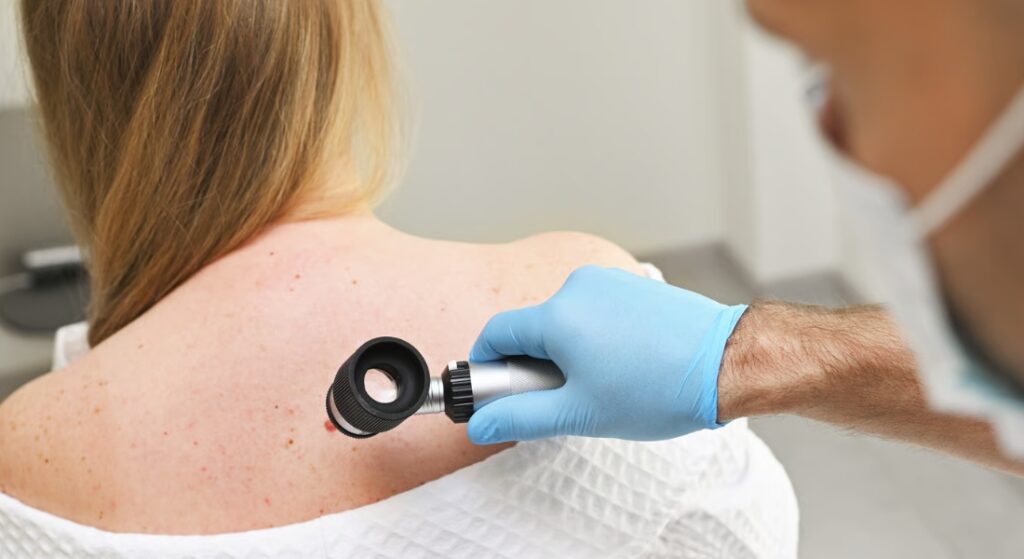
Immunotherapy has transformed treatment for many people with advanced melanoma, but detecting suspicious lesions early remains extremely important. Melanoma treatment and prognosis depend heavily on the stage and pathological characteristics of the tumour, and many early melanomas can be managed primarily with surgery. NICE recommends that pigmented lesions referred for specialist assessment are examined with dermoscopy by an appropriately trained healthcare professional.
If you are worried about a new or changing mole, arranging an assessment with an experienced dermatologist in London for a suspicious or changing skin lesion can help determine whether dermoscopic assessment, monitoring or biopsy is appropriate. Immunotherapy does not replace appropriate examination and histological assessment when melanoma is suspected.
Myth vs Fact
| Myth | What You Should Know |
| One treatment was clearly the first successful melanoma immunotherapy. | Different milestones include early IL-2 responses, interferon in the adjuvant setting, IL-2 approval for metastatic melanoma and the later checkpoint-inhibitor survival breakthrough. |
| IL-2 worked for most patients. | Only a minority responded; historical pooled data showed complete responses in about 6%. |
| Ipilimumab directly kills melanoma cells. | It blocks CTLA-4 and changes the regulation of your immune response. |
| PD-1 was invented as a melanoma treatment. | PD-1 was discovered through basic immunology research in 1992; its cancer-treatment potential became clear later. |
| Combination immunotherapy is automatically best for everyone. | It can produce strong long-term outcomes but also causes substantially more severe toxicity. |
| Immunotherapy only treats metastatic melanoma. | Checkpoint inhibitors are also used as adjuvant treatment after surgery in selected higher-risk melanoma. |
| A successful immunotherapy response is guaranteed to last permanently. | Some responses are extremely durable, but recurrence or progression can still occur. |
| Modern immunotherapy means early diagnosis matters less. | Detecting melanoma early remains extremely important. |
| A dermatologist normally chooses and administers advanced melanoma immunotherapy alone. | Systemic treatment decisions are made within specialist oncology and melanoma multidisciplinary care. |
Key Takeaways
- Melanoma immunotherapy developed through several breakthroughs rather than one discovery.
- IL-2-based treatment produced some of the earliest documented durable complete regressions in metastatic melanoma.
- High-dose IL-2 produced an objective response in about 16% of patients in a large pooled series, including complete responses in about 6%.
- Interferon alfa-2b became an important historical adjuvant treatment after surgery for high-risk melanoma.
- CTLA-4 blockade introduced the idea of releasing an immune brake rather than simply stimulating your immune system more strongly.
- Ipilimumab became the first checkpoint inhibitor to demonstrate improved overall survival in a randomised phase III trial of advanced melanoma.
- PD-1 was identified by Tasuku Honjo’s group in 1992, and subsequent anti-PD-1 treatments produced higher response rates than earlier immunotherapies.
- Pembrolizumab and nivolumab entered melanoma treatment in 2014.
- Nivolumab–relatlimab later expanded checkpoint treatment by combining PD-1 blockade with inhibition of the LAG-3 immune checkpoint and is now a NICE-recommended option for untreated advanced melanoma in people aged 12 years and over.
- Combining nivolumab with ipilimumab can improve long-term outcomes for selected patients but also substantially increases toxicity.
- Immunotherapy does not make early melanoma diagnosis less important.
- In current UK practice, systemic immunotherapy decisions for advanced melanoma are made by the treating oncology team.
UK Guidance Note
For untreated stage IV or unresectable stage III melanoma in England, NICE guideline NG14 recommends nivolumab plus ipilimumab when combination immunotherapy is suitable. If this combination is unsuitable or unacceptable, for example because of potential toxicity, NICE recommends pembrolizumab or nivolumab monotherapy. Separate NICE technology appraisal guidance also recommends nivolumab–relatlimab as an option for untreated advanced melanoma in people aged 12 years and over under the specified treatment and commercial conditions.
These systemic treatments are delivered through specialist oncology care rather than as routine dermatology-clinic procedures. Treatment selection should consider factors such as your general health, performance status, potential toxicity, brain metastases, tumour biology, previous treatment and individual preferences. Dermatologists remain important in recognising and diagnosing suspicious lesions and in appropriate skin surveillance.
Frequently Asked Questions
1. What was the first successful immunotherapy for melanoma?
There is no single universally correct answer. IL-2-based therapy produced some of the earliest documented durable regressions in metastatic melanoma during the 1980s, while high-dose IL-2 was approved for metastatic melanoma in 1998. Ipilimumab later became the first checkpoint inhibitor to demonstrate a randomised phase III overall-survival benefit.
2. How effective was high-dose IL-2 for metastatic melanoma?
In a pooled series of 270 patients, the objective response rate was 16%, including complete responses in 6%. Some complete responses lasted for many years, but most patients did not respond and treatment could cause severe toxicity.
3. What was interferon used for in melanoma?
High-dose interferon alfa-2b was historically used after surgery for selected high-risk melanoma. The 1996 ECOG E1684 trial reported improved relapse-free and overall survival compared with observation. Modern checkpoint treatments have since changed adjuvant melanoma care considerably.
4. Why was ipilimumab such an important breakthrough?
Ipilimumab blocks CTLA-4, an inhibitory immune checkpoint. A 2010 phase III trial showed improved overall survival compared with a gp100 vaccine control, providing landmark evidence that checkpoint inhibition could extend survival in advanced melanoma.
5. When was ipilimumab approved for melanoma?
The FDA approved ipilimumab for unresectable or metastatic melanoma on 25 March 2011.
6. What did the discovery of PD-1 change?
PD-1 was identified by Tasuku Honjo’s group in 1992. Subsequent research established it as an immune checkpoint, leading to drugs such as nivolumab and pembrolizumab that became major treatments for advanced melanoma.
7. Are nivolumab and pembrolizumab more effective than older immunotherapies?
Clinical trials showed substantially improved outcomes compared with older treatment approaches. Nivolumab improved one-year survival compared with dacarbazine, while pembrolizumab produced superior overall survival compared with ipilimumab in KEYNOTE-006.
8. Is nivolumab plus ipilimumab suitable for everyone?
No. Combination treatment can produce durable long-term outcomes but has a greater risk of significant toxicity. NICE recommends the combination for suitable patients with untreated advanced melanoma and PD-1 monotherapy when combination treatment is unsuitable or unacceptable.
9. Can immunotherapy help after melanoma surgery?
Yes, for selected higher-risk melanoma. Current NICE recommendations include adjuvant checkpoint therapy in several resected melanoma settings, including pembrolizumab for completely resected stage IIB or IIC melanoma in people aged 12 years and over.
10. Does immunotherapy mean a changing mole can wait?
No. Early assessment remains important. NICE recommends specialist dermoscopic assessment of referred pigmented lesions, and a suspicious melanoma may require biopsy or excision so that a definitive pathological diagnosis and staging can be made.
Final Thoughts: How Melanoma Immunotherapy Changed Cancer Care
The history of melanoma immunotherapy shows how treatment can change when scientists learn to work with your own immune system rather than relying only on therapies that directly destroy cancer cells. Early treatments such as IL-2 and interferon provided important evidence that immune-based approaches could produce lasting responses, while checkpoint inhibitors such as ipilimumab, nivolumab and pembrolizumab transformed the outlook for many people with advanced melanoma. If you’d like to book a consultation with one of our dermatologists in London, you can contact us at the London Dermatology Centre.
References:
- Atkins, M.B., Kunkel, L., Sznol, M. and Rosenberg, S.A. (2000) ‘High-dose recombinant interleukin-2 therapy in patients with metastatic melanoma: long-term survival update’, Cancer Journal from Scientific American, 6(Suppl. 1), pp. S11–S14. Available at: https://pubmed.ncbi.nlm.nih.gov/10685652/
- Kirkwood, J.M., Strawderman, M.H., Ernstoff, M.S., Smith, T.J., Borden, E.C. and Blum, R.H. (1996) ‘Interferon alfa-2b adjuvant therapy of high-risk resected cutaneous melanoma: the Eastern Cooperative Oncology Group Trial EST 1684’, Journal of Clinical Oncology, 14(1), pp. 7–17. Available at: https://pubmed.ncbi.nlm.nih.gov/8558223/
- Topalian, S.L. et al. (2012) ‘Safety, activity, and immune correlates of anti-PD-1 antibody in cancer’, New England Journal of Medicine, 366(26), pp. 2443–2454. Available at: https://pmc.ncbi.nlm.nih.gov/articles/PMC3544539/
- Schachter, J., Ribas, A., Long, G.V., Arance, A., Grob, J.J., Mortier, L. et al. (2017) ‘Pembrolizumab versus ipilimumab for advanced melanoma: final overall survival results of a multicentre, randomised, open-label phase 3 study (KEYNOTE-006)’, The Lancet, 390(10105), pp. 1853–1862. Available at: https://pubmed.ncbi.nlm.nih.gov/28822576/
- Wolchok, J.D. et al. (2025) ‘Final, 10-year outcomes with nivolumab plus ipilimumab in advanced melanoma’, New England Journal of Medicine, 392(1), pp. 11–22. Available at: https://pmc.ncbi.nlm.nih.gov/articles/PMC12080919/