



If you have persistent eczema or a rash that keeps appearing after using certain products, finding the cause can be difficult. Your skin may react to something you use every day, yet the symptoms may not appear until hours or even days after exposure.
Patch testing was developed to help solve this problem by allowing your dermatologist to test small areas of your skin with carefully prepared allergens. Although the idea began in the late nineteenth century, the technique has continued to evolve and remains an important way to identify allergic contact dermatitis and understand what may be triggering your skin reaction.
What Is Patch Testing?
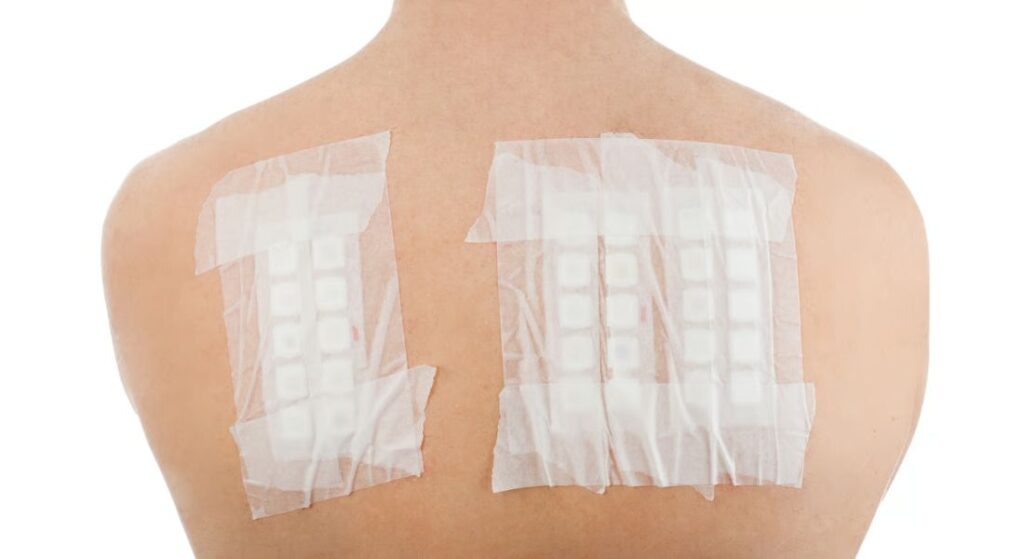
Patch testing is a specialised skin test used to find out whether you have a delayed allergy to something that comes into contact with your skin. Small amounts of selected allergens are usually placed in separate chambers on your back, then checked later to see whether your skin develops an eczema-like reaction.
If you react to a particular substance, the result can help your dermatologist identify an allergen that may be contributing to your dermatitis. Patch testing investigates delayed contact allergy and does not test for food allergy. It is different from tests such as skin-prick testing, which are used to investigate immediate allergic reactions.
Understanding Allergic Contact Dermatitis
Before exploring the history of patch testing, it helps to understand the condition this test was designed to investigate. Allergic contact dermatitis develops when your immune system becomes sensitised to a substance that touches your skin, and later exposure can cause itching, redness, swelling, dryness, cracking or blisters.
The reaction is often delayed, so you may not notice a problem until hours or even days after using a product. Common triggers include jewellery, cosmetics, fragrances, hair dyes, medicines and workplace materials, and you can even become allergic to a product you have used without problems for years.
Dermatology Before the Patch Test
For centuries, physicians recognised that particular occupations, plants, metals and chemicals could cause skin disease. However, it was difficult to distinguish a true allergic reaction from irritation caused directly by a harsh or damaging substance.
Before diagnostic patch testing became established, clinicians relied heavily on the appearance and distribution of dermatitis together with occupational and exposure history. Those clues remain important today, but the development of controlled testing on intact skin provided a more systematic way to investigate whether a specific substance had caused sensitisation.
Josef Jadassohn and the Birth of Patch Testing
The history of modern patch testing is generally traced back to dermatologist Josef Jadassohn. In 1895, he showed that people who had already become sensitised could develop an eczematous reaction when certain mercurial compounds were applied to intact skin, helping establish the basis of diagnostic patch testing.
Jadassohn recognised that intact skin could be used as a controlled testing site to investigate a suspected allergy. Although early testing was far less standardised than it is today, the basic idea remains the same: a suspected substance is applied to your skin under controlled conditions and checked later for an allergic reaction.
How Bruno Bloch Helped Develop the Technique
Jadassohn’s pupil Bruno Bloch became another important figure in the early development of patch testing. He continued and expanded Jadassohn’s clinical and experimental work and helped promote more systematic use of the technique, including the concept of testing groups of commonly encountered substances.
Researchers found that factors such as allergen concentration, testing material and length of skin exposure could affect patch-test results. The preparation needed to be strong enough to identify a genuine allergy without being so strong that it simply caused an irritant reaction.
By the 1930s, Poul Bonnevie had further developed the idea of using a standard series of commonly encountered allergens, building on the work of Bloch and other early pioneers. During the 1960s, Scandinavian and international collaboration further standardised routine patch testing, helping establish more consistent allergen series, concentrations, testing methods and approaches to grading reactions across different centres.
Key Milestones in the History of Patch Testing
| Period | Development |
| 1895 | Josef Jadassohn presented the method that became the basis of modern patch testing, demonstrating eczematous reactions to mercurial compounds applied to intact skin in sensitised individuals. |
| Early twentieth century | Bruno Bloch continued and expanded Jadassohn’s work, helping make patch testing more systematic and encouraging the use of groups of standard test substances. |
| Mid-twentieth century | Greater attention was given to allergen concentration, vehicles, exposure time and the classification of skin reactions, making results more consistent and comparable. |
| Later twentieth century | Baseline allergen series became increasingly established, while additional occupational, cosmetic, medicament and other specialist series allowed testing to be tailored to individual exposure. |
| Modern practice | Patch testing combines standardised preparations and reading methods with baseline and supplementary allergen series chosen according to a patient’s history and exposures. Results are interpreted for both the presence of sensitisation and their clinical relevance. |
The Development of Standard Allergen Series
As patch testing developed, dermatologists realised that the substance you suspected was not always the true cause of your dermatitis. You might blame a soap, for example, when the actual trigger is a preservative, fragrance or another ingredient within it, which led to the development of standard allergen series.
Today, your dermatologist can start with a baseline series of common allergens and then add tests based on your occupation, hobbies, cosmetics, medicines or other exposures. These series are regularly reviewed and updated as the products and chemicals you come into contact with change.
Why Standardisation Became So Important
As patch testing became more widely used, standardisation was needed to make results more reproducible and easier to compare between clinicians, centres and research studies. Dermatologists therefore developed common methods for preparing and applying allergens, as well as clear ways to describe different skin reactions.
Standardisation also made it easier for your dermatologist to distinguish between irritant reactions, doubtful reactions and positive allergic reactions. By using consistent methods, researchers could compare results across countries and identify which allergens were becoming more common in different workplaces and everyday environments.
How Scientific Understanding Explained Why Patch Testing Works
Allergic contact dermatitis is now understood as a delayed, T-cell-mediated immune reaction. Once your immune system has become sensitised to a contact allergen, later exposure can trigger inflammation in the skin.
Because this reaction develops over time rather than within minutes, patch testing applies allergens to a small, controlled area of skin and assesses the sites later for a delayed response.
Patch Testing Is Not the Same as a Skin Prick Test
It is easy to confuse patch testing with other forms of allergy testing, but they are used for different types of reactions. A skin prick test looks for immediate allergic responses, while patch testing helps your dermatologist investigate delayed contact allergies that may be causing your skin problems.
Skin-prick testing and specific IgE blood tests are generally used to investigate immediate-type allergies, whereas patch testing investigates delayed contact hypersensitivity. They are therefore not substitutes for patch testing when allergic contact dermatitis is suspected.
Why Patch Testing Remains the Gold Standard
Medicine has changed greatly since 1895, but patch testing remains the reference diagnostic method for allergic contact dermatitis because it can demonstrate delayed sensitisation to individual substances under controlled conditions. Tests designed for immediate allergy investigate different immune responses and do not replace patch testing when contact allergy is suspected.
Patch testing also allows several substances to be checked during the same testing period, helping identify allergens to which your skin has become sensitised, such as fragrances, preservatives or cosmetic ingredients. Your dermatologist can then assess whether any positive result is relevant to your current dermatitis and everyday exposures.
What Happens During Modern Patch Testing?
Modern patch testing usually starts with a detailed consultation, where your dermatologist asks about your symptoms, treatments and possible triggers at work or home. Small amounts of selected allergens are then placed in separate chambers and secured to your back so any reactions can be identified accurately.
The patches are usually left in place for about 48 hours before they are removed and the skin is assessed. A later reading is also usually needed because some allergic reactions become clearer after the patches have been removed, so the complete process commonly involves several appointments over about a week.
Clinical Note: Medicines and Patch Testing
Some medicines and skin treatments can affect patch-test responses. In particular, moderate or high doses of oral corticosteroids (steroid tablets), other medicines that suppress the immune system and topical corticosteroids applied to the test area may influence whether testing is suitable or how results are interpreted. Extensive eczema on the back and recent sunbathing or sunbed use can also affect when testing is performed.
Tell your patch-test clinic about all medicines and prescribed creams you use before the appointment. Do not stop or change prescribed treatment yourself simply because you are having patch testing; your dermatologist or clinic should advise you if anything needs to be adjusted beforehand.
How Dermatologists Interpret Your Results
The key part of patch testing is understanding what your skin does after the allergens are applied. Your dermatologist looks for changes such as redness or other colour change, raised areas, small bumps or blisters, then considers the strength and timing of each reaction to decide whether it is more consistent with an allergic or irritant response.
A positive result does not always mean that the allergen is causing your current dermatitis. Your dermatologist will compare the result with your symptoms, medical history and everyday exposures to see whether the allergen is actually relevant to your skin.
Clinical Insight: Reading Patch Tests in Different Skin Tones
Patch-test reactions are not always equally easy to recognise on every skin tone. In darker skin tones, redness or colour change may be less visually obvious, so clinicians may also look carefully for changes in skin texture, raised papules or small blisters and may use techniques such as palpation or tangential lighting when interpreting a reaction.
This is important because relying mainly on visible redness may contribute to missed reactions in people with skin of colour. Interpretation should therefore consider the full appearance and feel of the reaction rather than colour change alone.
Baseline, Specialist and Personal Product Testing
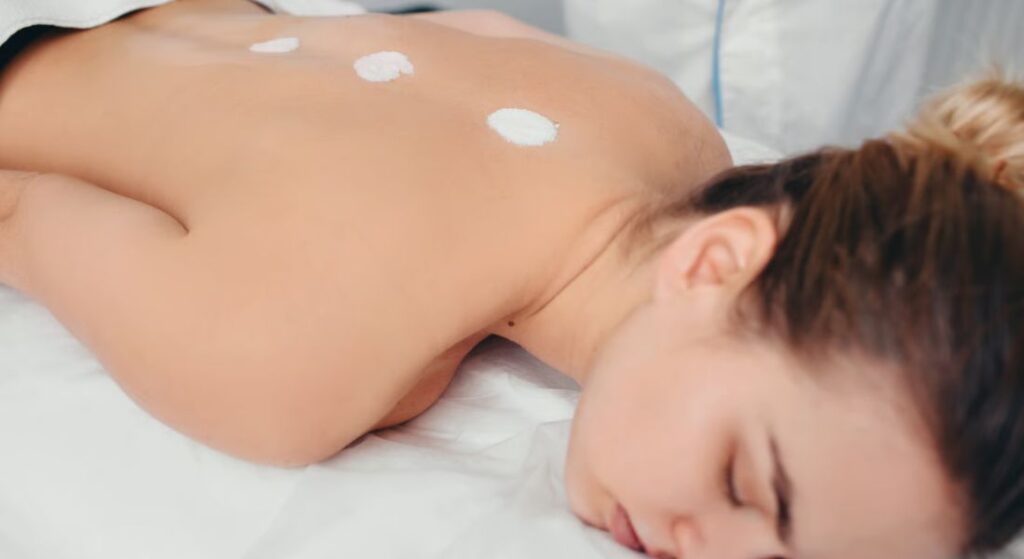
Modern patch testing can go beyond a basic set of suspected allergens. Your dermatologist may use a baseline series to check common allergens and add specialist tests for cosmetics, hair products, medicines, fragrances, rubber or workplace materials based on your symptoms.
Your own creams, toiletries or work products may also provide useful clues, but they should not be tested directly on your skin without professional advice. Some products need dilution or may irritate your skin, so your dermatologist can decide which items are suitable and how they should be tested. Bringing the original packaging and ingredient list can help the clinician decide whether individual ingredients or additional allergen series should be tested.
How Changing Products Have Changed Patch Testing
Patch testing has remained relevant because it has adapted as the products and materials around you have changed. You may encounter allergens through jewellery, fragrances, preservatives, hair dyes, cosmetics, medicines, adhesives, rubber gloves and many everyday products.
New products can introduce new allergens, while changes in manufacturing or regulation can reduce exposure to others. This is why recommended patch-test allergens are regularly reviewed and updated, helping the test remain useful as your everyday environment continues to change.
How Patch Testing Helps Identify Changing Allergy Trends
Patch testing can help you identify your own allergens, but it can also reveal wider changes in contact allergies when results from many people are reviewed together. This helps dermatologists and researchers see which allergens are becoming more or less common and identify new concerns linked to products or workplace exposures.
These findings can guide updates to baseline patch-test series as the products you use and the materials around you change. Although the basic testing method is old, the allergens selected for testing continue to evolve with changing patterns of exposure.
The Limitations of Patch Testing
Patch testing is useful, but it is not perfect, and a negative result does not rule out every possible contact allergy. You may have reacted to an allergen that was not included in the test, or factors such as immunosuppressive treatment, corticosteroid treatment on the test area, extensive active dermatitis or recent significant sun exposure may affect whether testing is suitable or how results are interpreted.
False-positive or irritant reactions can also occur, so your dermatologist needs to interpret the results carefully. Patch testing identifies contact sensitisation, but other conditions such as atopic eczema or irritant contact dermatitis may also contribute to your symptoms.
Myth vs Fact
| Myth | Fact |
| A positive patch test proves that an allergen is causing my current rash. | A positive test shows sensitisation, but the dermatologist must decide whether that allergen is relevant to your current dermatitis and everyday exposures. |
| Patch testing can diagnose food allergies. | Patch testing is designed primarily to investigate delayed contact allergy. It does not replace tests used for suspected immediate food allergy. |
| Patch testing and skin-prick testing are the same. | They investigate different types of immune reaction. Patch testing looks for delayed contact hypersensitivity, while skin-prick testing is mainly used for immediate allergic reactions. |
| A negative patch test completely rules out contact allergy. | Not necessarily. The relevant allergen may not have been tested, or other factors may affect the result. |
| I should stop my medicines before patch testing. | Do not stop prescribed medicines yourself. Some treatments can affect patch testing, but the clinic should tell you whether anything needs to be changed. |
How Patch-Test Results Can Change Your Treatment

The real value of patch testing becomes clear once the patches have been removed and your results are reviewed. If a clinically relevant allergy is identified, your dermatologist can explain where the allergen may be found and help you reduce future exposure to it.
You may need to change products such as cosmetics, moisturisers, shampoos, hair dyes, fragrances, gloves or topical medicines, while workplace allergies may require further changes. Avoiding the identified allergen can help prevent repeated inflammation, although your dermatologist may also recommend emollients, topical corticosteroids or other treatments while your skin heals and its protective barrier recovers.
Key Takeaways
- Modern patch testing traces its origins to Josef Jadassohn’s work in 1895.
- Bruno Bloch later helped expand and systematise the technique.
- Patch testing investigates delayed contact allergy and is different from skin-prick testing for immediate allergic reactions.
- Modern testing uses standardised baseline allergens with additional allergens selected according to personal, occupational and product exposures.
- A positive result must be interpreted for clinical relevance; sensitisation does not automatically mean that allergen is causing the current dermatitis.
- A negative result cannot exclude every possible contact allergen.
- Do not stop prescribed medicines before patch testing unless your dermatologist or clinic specifically advises you to do so.
FAQs
1. What is patch testing used for?
Patch testing is mainly used to identify delayed allergic reactions to substances that come into contact with your skin. It is particularly useful when allergic contact dermatitis is suspected.
2. When was patch testing first developed?
Modern diagnostic patch testing is generally traced to Josef Jadassohn’s work in 1895, with later dermatologists including Bruno Bloch helping to develop and standardise the technique.
3. Why is patch testing still used today?
It remains the reference diagnostic test for allergic contact dermatitis because it can demonstrate delayed sensitisation to individual contact allergens.
4. Is patch testing the same as a skin prick test?
No. A skin prick test is mainly used to investigate immediate IgE-mediated allergies, while patch testing investigates delayed contact hypersensitivity. The two tests therefore answer different medical questions.
5. Why does patch testing take several days?
Allergic contact dermatitis is a delayed immune reaction, so the skin may not react immediately after an allergen is applied. The patches are usually left in place for around two days, followed by later readings to identify reactions that develop or become more noticeable afterwards.
6. How do dermatologists know whether a patch-test reaction is a true allergy?
A positive result is assessed according to the appearance, strength and timing of the reaction. Your dermatologist will also consider your symptoms, medical history and everyday exposures because a positive test does not automatically mean that the allergen is causing your current dermatitis.
7. What allergens are commonly included in patch testing?
Common allergens may include nickel, fragrances, preservatives, hair-dye ingredients, rubber chemicals, adhesives and topical medicines. Your dermatologist may also select specialist allergens based on your occupation, hobbies, cosmetics or other products you regularly use.
8. Can patch testing identify the cause of long-term eczema?
It can help determine whether allergic contact dermatitis is contributing to persistent or recurring eczema. However, eczema can have several causes, and you may have more than one skin condition at the same time, so your results need to be interpreted alongside your clinical history.
9. What happens if patch testing finds an allergy?
Your dermatologist can help you identify where the allergen may be found and how to reduce or avoid future exposure. This may involve changing cosmetics, toiletries, medicines, workplace products or other items that contain the relevant substance.
10. Can medicines affect patch-test results?
Some corticosteroid and immune-suppressing treatments can affect whether patch testing is suitable or how the results are interpreted. Tell the clinic about all medicines and prescribed creams you use, and do not stop or change treatment unless your dermatologist or clinic specifically advises you to do so.
Final Thoughts: Understanding the Lasting Value of Patch Testing
Patch testing has come a long way since Josef Jadassohn’s work in the nineteenth century, but its purpose remains remarkably relevant today. If you have persistent or recurring dermatitis, understanding whether a specific allergen is triggering your symptoms can help you move beyond repeated flare-up treatment towards more targeted avoidance and long-term skin management.
If you’re thinking about allergy treatment in London, you can contact us at London Dermatology Centre to book a consultation with one of our specialists. With the right assessment and, where appropriate, patch testing, you can gain a clearer understanding of what may be contributing to your skin reactions and take practical steps towards protecting your skin.
References:
- Lachapelle, J.-M. (2009) ‘Patch testing: historical aspects’, Annales de Dermatologie et de Vénéréologie, 136(8–9), pp. 575–577. Available at: https://pubmed.ncbi.nlm.nih.gov/19686889/
- Lazzarini, R., Duarte, I. and Ferreira, A.L. (2013) ‘Patch tests’, Anais Brasileiros de Dermatologia, 88(6), pp. 879–888. Available at: https://pmc.ncbi.nlm.nih.gov/articles/PMC3900336/
- Zimmer, J., Neimanis, S., Schmidt, S., Schubert, S. and Mahler, V. (2025) ‘Patch Test Preparations: Basis and State-of-the-Art Modern Diagnostic Tools for Contact Allergy’, Journal of Clinical Medicine, 14(21), article 7521. Available at: https://www.mdpi.com/2077-0383/14/21/7521
- Wolf, R., Orion, E., Ruocco, V., Baroni, A. and Ruocco, E. (2013) ‘Patch testing: facts and controversies’, Clinics in Dermatology, 31(4), pp. 479–486. Available at: https://www.sciencedirect.com/science/article/abs/pii/S0738081X13000163
- Selvendran, S.S. and Goldsmith, P. (2024) ‘Techniques for patch testing interpretation in patients with skin of colour: a systematic review of the literature and textbooks’, British Journal of Dermatology, 191(Supplement 1), pp. i92–i93. Available at: https://academic.oup.com/bjd/article/191/Supplement_1/i92/7698753