


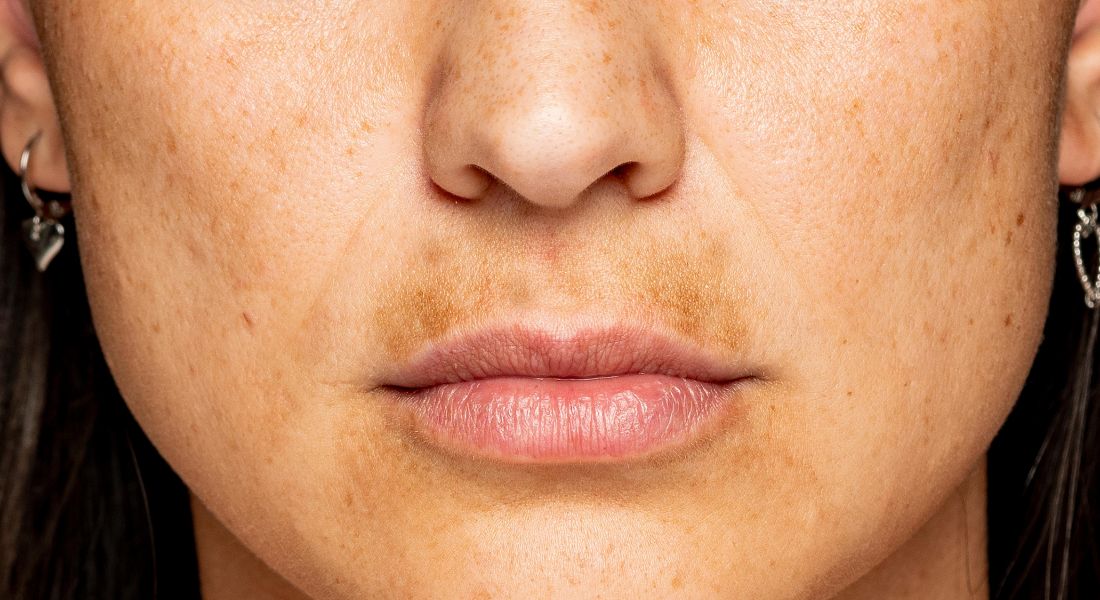
Pregnancy can cause noticeable changes to your skin, and you may develop brown or grey-brown patches on your cheeks, forehead, nose or upper lip, even if your skin tone was previously even. This type of pigmentation may be melasma, commonly known as the mask of pregnancy.
The exact cause is not fully understood, but pregnancy-related hormonal changes are thought to increase the activity of pigment-producing cells, while ultraviolet and visible light can stimulate further pigmentation.
Melasma is benign and does not affect your baby’s health, but changes in facial pigmentation can still affect your confidence and wellbeing. Pregnancy-related melasma may fade during the months after birth, although it can persist or return with future hormonal changes and sun exposure.
During pregnancy, management usually focuses on effective photoprotection, gentle skincare and avoiding treatments that are unsuitable or have insufficient safety evidence. A dermatologist can also confirm that the pigmentation is melasma rather than another type of skin lesion.
What Is Melasma?
If you develop melasma, you may notice flat brown, grey-brown or sometimes blue-grey patches appearing on your cheeks, forehead, nose, chin or upper lip. You may also hear it called chloasma or the ‘mask of pregnancy’ because it often develops during pregnancy and commonly affects both sides of your face.
Melasma develops when pigment-producing cells in your skin produce increased amounts of melanin. It is a benign, non-contagious pigmentation condition and does not transform into skin cancer.
However, you should still have an unusual, changing, raised or bleeding pigmented mark assessed rather than assuming that it is melasma.
Why Might You Develop Melasma During Pregnancy?
You may develop melasma when pregnancy-related hormonal changes increase the activity of melanocytes, the cells in your skin that produce melanin. Ultraviolet and visible light can then stimulate further pigmentation and make your patches darker.
Your natural skin tone, family tendency, previous melasma and exposure to sunlight also influence your risk. A family history can increase the likelihood of melasma, although the condition is not inherited in a simple or predictable way.
Who Is More Likely to Develop Pregnancy Melasma?
Anyone can develop melasma, but you are more likely to notice it during pregnancy, especially if you naturally have a medium or darker skin tone or tan easily. If you have a family history of melasma or previously developed pigmentation while taking hormonal contraception, your chances of developing it during pregnancy may also be higher.
Sun exposure is another important factor because ultraviolet light can make melasma darker and more noticeable. Even in the UK, your skin is exposed to ultraviolet rays on cloudy days, so protecting your skin from the sun is an important part of managing pregnancy melasma.
What Might Melasma Look Like on Your Skin?
You may notice flat patches that are darker than your surrounding skin, ranging from light brown to dark brown or grey-brown. The patches most commonly develop on your cheeks, forehead, nose, upper lip, chin or jawline and often appear on both sides of your face in a similar pattern.
Unlike a rash, melasma does not usually itch, hurt, burn or feel raised when you touch it. If your skin becomes painful, flaky, itchy or starts to bleed, it is important to see a healthcare professional, as these symptoms may suggest a different skin condition.
When Does Melasma Usually Appear During Pregnancy?

You can develop melasma at any stage of pregnancy, so there is no single trimester when you should expect it to appear. Your pigmentation may develop gradually and become more noticeable after exposure to sunlight or visible light.
Other pregnancy-related pigmentation may affect the nipples, underarms, genital skin or the line down the centre of the abdomen. A new patch that is raised, rapidly changing, bleeding or markedly different from the surrounding pigmentation should be assessed rather than assumed to be melasma.
Is Melasma the Same as Normal Pregnancy Pigmentation?
Pregnancy can cause several types of skin pigmentation, so not every dark patch is melasma. You may notice that your freckles, scars, nipples or the linea nigra on your abdomen become darker, but these are common pregnancy changes and are different from melasma.
Melasma usually appears as irregular, symmetrical patches on your face, while other types of pigmentation often have different patterns or causes. If you are unsure why your skin has changed, a healthcare professional can examine the affected areas and tell you whether it is melasma or another pigmentation condition.
Is Melasma Harmful to You or Your Baby?
If you develop melasma, it will not usually affect your baby’s growth, development or the progress of your pregnancy. It is also not contagious and does not normally cause physical symptoms such as itching or pain. However, changes in your facial pigmentation can still affect your confidence and emotional wellbeing.
If your melasma is making you feel self-conscious or distressed, speak to your GP or dermatologist. During pregnancy, the focus is usually on preventing the pigmentation from becoming darker with good sun protection, as many active treatments are not suitable until after your baby is born.
How Will Your Doctor Diagnose Pregnancy Melasma?
Your GP or dermatologist can usually diagnose melasma by examining your skin and looking at the colour, pattern and location of your pigmentation. They may ask when you first noticed the patches, whether they became darker during pregnancy or after sun exposure, and whether you have a personal or family history of similar pigmentation.
Most cases do not require laboratory tests. A dermatologist may examine the pigmentation with a dermatoscope and, occasionally, recommend a small skin biopsy when the appearance is atypical or another diagnosis needs to be excluded.
A raised, scaly, inflamed, bleeding or rapidly changing lesion is not typical of melasma. Pigmentation affecting only one side may have a non-serious cause, but it should be assessed when its pattern is unusual or the diagnosis remains uncertain.
Why Can Sunlight Make Your Melasma Worse?
Ultraviolet radiation can stimulate melanocytes and make melasma darker or more noticeable. High-energy visible light may also contribute, particularly in people with medium or darker skin tones, which is why UV protection alone may not provide the fullest pigmentation control.
Daily photoprotection helps prevent worsening and may support improvement after pregnancy. Use sunscreen together with shade and a wide-brimmed hat rather than relying on sunscreen as the only form of protection.
Evidence Note: Visible-Light Protection May Improve Melasma Control
In a double-blind randomised trial involving 68 adults with melasma, a sunscreen protecting against ultraviolet and visible light produced greater pigmentation improvement than a UV-only sunscreen. Both groups were also using 4% hydroquinone during the study (Castanedo-Cazares et al., 2014).
This was not a pregnancy-treatment trial and it does not support using hydroquinone during pregnancy. Its relevance to pregnancy melasma is that it supports protecting the skin from visible light as well as ultraviolet light. A tinted sunscreen containing iron oxides may provide this additional protection when used alongside shade and protective clothing.
How Can You Protect Your Skin from Further Pigmentation?
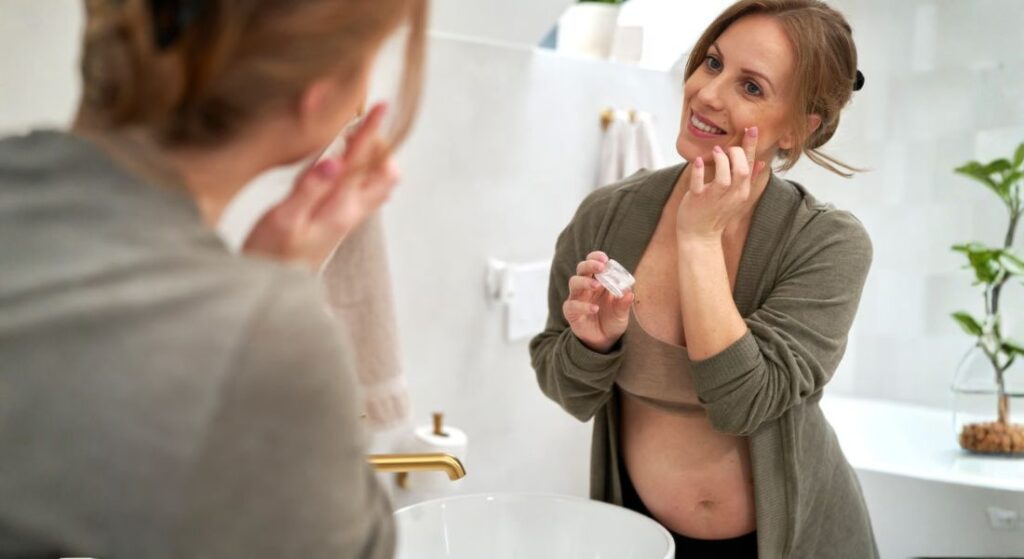
Use a broad-spectrum sunscreen with at least SPF 30 and at least four-star UVA protection, or a recognised UVA-circle symbol, on exposed skin. A tinted sunscreen containing iron oxides may provide additional protection against visible light.
Apply sunscreen generously before going outdoors and reapply it approximately every two hours while outside, as well as after swimming, sweating or towel drying. Follow the manufacturer’s instructions for the particular product.
Combine sunscreen with a wide-brimmed hat, sunglasses, protective clothing and shade. In the UK, ultraviolet exposure is generally strongest between 11 am and 3 pm from March to October.
Clinical Tip
When choosing sunscreen, check for an SPF of at least 30, strong UVA protection and a formulation you can apply generously every day. For melasma, a tinted product containing iron oxides may offer additional visible-light protection, but the most effective product is one you can tolerate, apply in the correct amount and reapply when needed.
What Should a Pregnancy-Safe Skincare Routine Include?
Keep your skincare routine simple and gentle during pregnancy. Use a mild, fragrance-free cleanser, follow with a moisturiser that suits your skin type and apply a broad-spectrum sunscreen every morning to help prevent your melasma from becoming darker.
You should avoid abrasive scrubs, irritating acids and introducing several active products at the same time, because inflammation can make your pigmentation more noticeable. Add products individually and stop a new cosmetic product if it causes persistent burning, redness or scaling.
Which Treatments May Be Considered During Pregnancy?
During pregnancy, your main approach should usually focus on consistent protection from ultraviolet and visible light alongside gentle skincare. Your clinician may consider a non-retinoid topical treatment such as azelaic acid after reviewing the formulation, the area you want to treat and your individual circumstances.
Cosmetic camouflage or tinted sunscreen can reduce the visible contrast while providing additional confidence. Because melasma may lighten after delivery, the practical goal during pregnancy is usually to prevent worsening rather than pursue rapid or complete clearance.
Which Melasma Treatments Should Be Avoided During Pregnancy?
You should not use hydroquinone or topical retinoids such as tretinoin, adapalene or tazarotene during pregnancy. Combination lightening creams must also be avoided when they contain hydroquinone or a retinoid. Do not use unregulated skin-lightening products, as their ingredients and concentrations may be inaccurate or unsafe.
Cysteamine and tranexamic acid treatments for melasma are generally deferred during pregnancy because pregnancy-specific safety evidence is limited. In particular, oral tranexamic acid should not be started solely for cosmetic melasma treatment during pregnancy. If you already use one of these treatments, ask your GP, midwife, pharmacist or dermatologist for individual advice before continuing.
UK Guidance Note: Accidental Topical-Retinoid Use
UKTIS advises that topical retinoid creams and gels should not be used during pregnancy. If accidental exposure occurs, stop using the product and inform your GP, midwife or prescribing clinician.
Most published reports of accidental exposure have involved unaffected babies. UKTIS states that additional monitoring for major birth defects is not normally required beyond the detailed scan offered at approximately 20 weeks as part of routine UK antenatal care. Your maternity team should still provide advice based on your individual exposure and pregnancy circumstances (UK Teratology Information Service, 2024).
Are Chemical Peels, Microneedling or Lasers Suitable?
You will usually be advised to postpone chemical peels, microneedling and laser procedures until after pregnancy because pregnancy-specific safety evidence is limited and your pigmentation may improve after delivery. These procedures can also cause irritation, infection, scarring or post-inflammatory pigmentation, and melasma can persist or recur after treatment.
You should also avoid strong home peels, home microneedling devices and unregulated light or laser products. If pigmentation remains after pregnancy, a dermatologist can reassess the diagnosis and discuss procedural options after considering breastfeeding, skin tone and the risk of worsening pigmentation.
Will Melasma Fade After Your Baby Is Born?

Pregnancy-related melasma may become lighter during the months after delivery, but the outcome varies. Some patches fade substantially, while others persist or return during future pregnancy, hormonal contraception or renewed light exposure.
Continue daily photoprotection after birth, as melasma commonly relapses when protection is reduced. Before starting hydroquinone, retinoids, tranexamic acid or a procedural treatment after delivery, tell the dermatologist whether you are breastfeeding and whether another pregnancy is planned.
When Should You See a Dermatologist?
You should see a dermatologist if you are unsure whether your pigmentation is melasma, if the patches continue to darken despite careful sun protection or if they become itchy, scaly or inflamed. A dermatologist can confirm the diagnosis, review your skincare products and advise which treatments are safe during pregnancy and which should be avoided.
If your pigmentation persists after pregnancy, a dermatologist can reassess the diagnosis and discuss treatment options according to your skin tone, breastfeeding status, future pregnancy plans and risk of post-inflammatory pigmentation. Arrange prompt medical assessment if a new mole or dark patch changes in size, shape or colour, forms a lump or repeatedly bleeds, as these features are not typical of melasma.
Myth vs Fact
| Myth | Fact |
| Melasma is a form of skin cancer. | Melasma is benign and does not become skin cancer, but a separate changing or bleeding lesion still needs assessment. |
| Pregnancy melasma always disappears after delivery. | Your melasma may become lighter after birth, but some pigmentation can persist or return with future hormonal changes or sun exposure. |
| Sunscreen is only needed on bright summer days. | Ultraviolet exposure occurs on cloudy days, and visible light may also worsen melasma. |
| Any high-SPF sunscreen protects equally well against melasma. | You need broad UV protection, and choosing a tinted sunscreen containing iron oxides may give you additional visible-light protection. |
| Stronger lightening creams produce faster and safer results. | If a product irritates your skin, it can make your pigmentation more noticeable, and you should not use hydroquinone or topical retinoids during pregnancy. |
| Blue light from phones and computer screens causes melasma. | Visible sunlight can contribute to melasma, but BAD reports no evidence that light from personal electronic devices affects the skin in this way. |
Key Takeaways
- If you develop melasma, you may notice flat, usually symmetrical brown or grey-brown patches on your face; the condition is not contagious or cancerous.
- Pregnancy hormones may contribute to your melasma, while ultraviolet and visible light can make your pigmentation darker.
- You should use at least SPF 30 with strong UVA protection, and you may benefit from a tinted sunscreen containing iron oxides.
- You should not use hydroquinone or topical retinoids during pregnancy.
- Your melasma may fade after delivery, although it can persist or return with future hormonal changes or light exposure.
- You should seek medical assessment if a pigmented area becomes raised, bleeding, scaly, painful or changes rapidly.
Frequently Asked Questions
1. Can pregnancy cause melasma?
Yes. During pregnancy, hormonal changes can stimulate the cells in your skin that produce melanin, which may lead to brown or grey-brown patches developing on your face.
2. Does pregnancy melasma disappear after childbirth?
It may become lighter during the months after delivery, but complete clearance does not occur for everyone. Melasma can persist or return during a future pregnancy, with hormonal contraception or after renewed light exposure, so continued photoprotection remains important.
3. Is melasma harmful during pregnancy?
Melasma is a benign pigmentation condition and is not known to affect your pregnancy or your baby’s growth and development. However, any raised, bleeding, scaly or rapidly changing pigmented lesion should be assessed because these features are not typical of melasma.
4. How Can You Stop Your Melasma from Becoming Darker During Pregnancy?
You may not be able to prevent melasma completely, but you can reduce further darkening by using broad-spectrum sunscreen every day, wearing protective clothing and limiting unnecessary sun exposure.
5. Which sunscreen is recommended for pregnancy melasma?
You should choose a broad-spectrum sunscreen with at least SPF 30 and strong UVA protection. A tinted sunscreen containing iron oxides may provide additional protection against visible light, which can worsen melasma. Apply enough product and reapply regularly when outdoors.
6. Are skin-lightening creams safe during pregnancy?
You should not use hydroquinone or topical retinoids during pregnancy. Other lightening treatments should be checked individually because ingredients, concentrations and pregnancy evidence vary. Avoid unregulated products bought through social media or unverified online sellers.
7. How can melasma be distinguished from other skin conditions?
Your melasma will usually appear as symmetrical, flat brown or grey-brown patches on your face without itching or pain. If you notice a raised, bleeding, rapidly changing or distinctly one-sided pigmented lesion, you should have it assessed by a healthcare professional.
8. Can melasma return in future pregnancies?
Yes. Your melasma can return during a future pregnancy or with other hormonal changes, including hormonal contraception.
9. Are chemical peels or laser treatments suitable during pregnancy?
These procedures are normally postponed until after pregnancy because safety evidence is limited and irritation can worsen pigmentation. If treatment is considered later, it should be performed by a suitably qualified practitioner after assessment of your skin tone, breastfeeding status and risk of recurrence.
10. When should a dermatologist be consulted for pregnancy melasma?
Arrange a dermatology assessment when the diagnosis is uncertain, the pigmentation is causing significant distress or it continues to worsen despite careful photoprotection. A raised, bleeding, scaly, painful or rapidly changing lesion should be assessed promptly because these features are not typical of melasma.
Final Thoughts: Managing Pregnancy Melasma with Confidence
If you develop melasma during pregnancy, it is usually harmless, but daily sun protection and a gentle skincare routine can help stop your pigmentation from becoming more noticeable. If your patches persist after childbirth or you are unsure whether your skin changes are truly melasma, professional assessment can help confirm the diagnosis and guide your next steps.
If you would like personalised guidance from an experienced Dermatologist in London, the team at London Dermatology Centre is here to help. We can assess your skin, confirm the diagnosis and recommend pregnancy-appropriate skincare and photoprotection, with further treatment options considered after childbirth when suitable.
References:
- British Association of Dermatologists (2024) Melasma. Patient Information Leaflet, June 2024. Available at: https://www.bad.org.uk/pils/melasma
- Castanedo-Cazares, J.P., Hernández-Blanco, D., Carlos-Ortega, B., Fuentes-Ahumada, C. and Torres-Álvarez, B. (2014) ‘Near-visible light and UV photoprotection in the treatment of melasma: A double-blind randomized trial’, Photodermatology, Photoimmunology & Photomedicine, 30(1), pp. 35–42. Available at: https://pubmed.ncbi.nlm.nih.gov/24313385/
- Morgado-Carrasco, D., Piquero-Casals, J., Granger, C., Trullàs, C. and Passeron, T. (2022) ‘Melasma: The need for tailored photoprotection to improve clinical outcomes’, Photodermatology, Photoimmunology & Photomedicine, 38(6), pp. 515–521. Available at: https://pmc.ncbi.nlm.nih.gov/articles/PMC9790748/
- UK Teratology Information Service (2024) Retinoid gels and creams (topical retinoids). Available at: https://www.medicinesinpregnancy.org/leaflets-a-z/isotretinoin-gel/
- Zhao, L., Fu, X. and Cheng, H. (2024) ‘Prevention of melasma during pregnancy: Risk factors and photoprotection-focused strategies’, Clinical, Cosmetic and Investigational Dermatology, 17, pp. 2301–2310. Available at: https://pmc.ncbi.nlm.nih.gov/articles/PMC11490249/