


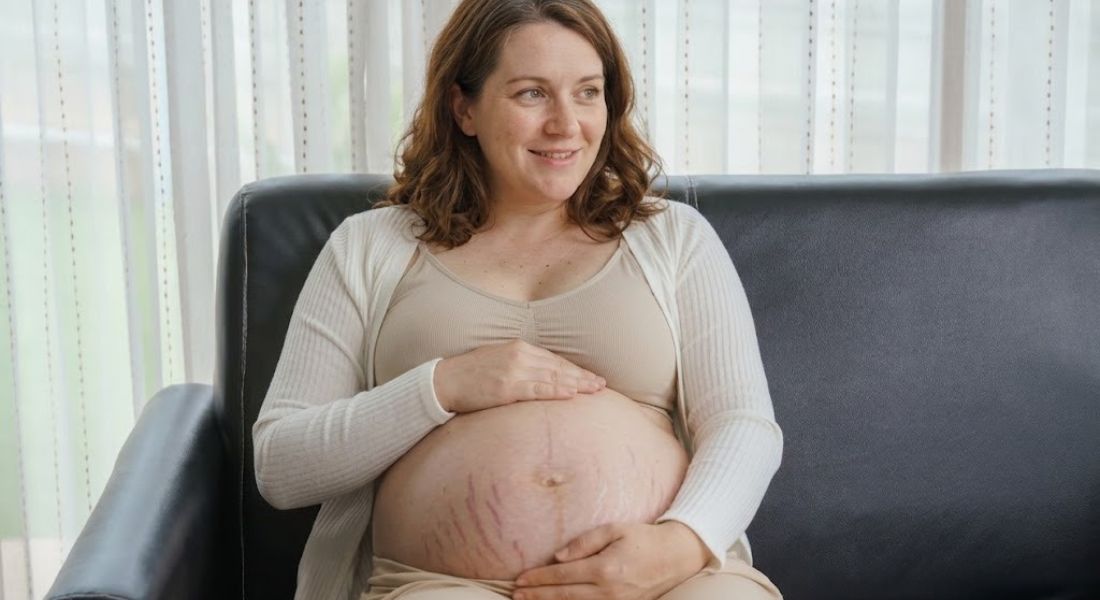
Stretch marks are a common skin change during pregnancy, and you may notice pink, red, purple, brown or darker lines developing on your abdomen, breasts, hips, thighs or buttocks. They are usually harmless, but it is understandable if their appearance affects your confidence or how you feel about your changing body.
Your likelihood of developing stretch marks is influenced by factors including your family history, skin characteristics, hormonal changes and the degree and speed of skin stretching. Moisturisers may relieve dryness or tightness, but no cream or oil has been shown to prevent pregnancy stretch marks reliably. Your marks will usually fade after childbirth, although no treatment can guarantee their complete removal.
What Are Pregnancy Stretch Marks?
Stretch marks, also known as striae or striae gravidarum during pregnancy, are narrow lines that develop when your skin stretches quickly as your body changes. They form in the deeper layer of the skin and most commonly appear on your abdomen, breasts, hips or thighs during pregnancy.
Although stretch marks may look like scars, they are harmless and do not affect your muscles, uterus or baby. They often start out pink, red, purple or brown before gradually becoming flatter and lighter over time, and they are not caused by poor skincare or anything you have done.
Why Do Stretch Marks Develop During Pregnancy?
Stretch marks develop because your skin has to stretch rapidly as your baby grows, particularly over your abdomen, breasts, hips and thighs. Hormonal changes during pregnancy also affect the deeper layers of your skin, so genetics, skin characteristics and the speed of growth all influence whether stretch marks appear.
This means stretch marks are not simply caused by your bump getting bigger or by poor skincare. Even if your skin feels soft and well moisturised, creams cannot prevent the deeper skin changes that lead to stretch marks.
How Common Are Stretch Marks in Pregnancy?
Stretch marks are very common, with published estimates suggesting that they affect around half to nine in ten pregnant women. You are most likely to notice them during the later stages of pregnancy, although they can develop earlier.
Your number and pattern of stretch marks do not indicate whether your pregnancy is healthy or predict your baby’s size reliably. Your experience may also differ between pregnancies.
What Do New and Older Stretch Marks Look Like?
New stretch marks are usually more noticeable because they appear pink, red, purple, brown or darker than the surrounding skin, depending on your natural skin tone. As they mature, they gradually become flatter, lighter and less visible, although they rarely disappear completely.
Older stretch marks often have a pale or slightly indented appearance and may look lighter or more reflective than the surrounding skin. How much they fade varies from person to person and depends on your skin tone and the size and age of the marks.
Who Is More Likely to Develop Stretch Marks?

You may be more likely to develop stretch marks if they run in your family or if you experienced them during puberty or an earlier pregnancy. Greater or faster changes in your body size may also contribute, but no individual factor can predict with certainty whether you will develop them.
Potent topical corticosteroids can thin your skin and contribute to stretch marks when they are used excessively, for prolonged periods or without suitable supervision. You should continue any prescribed treatment as directed and speak to your prescriber rather than stopping it independently.
Can Pregnancy Stretch Marks Be Completely Prevented?
There is no proven way to completely prevent pregnancy stretch marks, and no cream or oil can guarantee that they will not develop. Research has not found strong evidence that products such as cocoa butter, olive oil or vitamin E prevent stretch marks, as genetics and the deeper structure of your skin play a much bigger role.
Moisturisers can still be worthwhile because they help relieve dryness, tightness and itching, even if they cannot stop stretch marks from forming. Try to think of them as a way to keep your skin comfortable rather than a treatment that promises prevention, and be cautious of products that claim guaranteed results.
Do Cocoa Butter, Oils or Specialist Creams Work?
Cocoa butter, shea butter, almond oil, coconut oil, olive oil and specialist stretch mark creams can help keep your skin moisturised, but there is no strong evidence that they can prevent stretch marks during pregnancy. Although massage can feel soothing and help you apply moisturiser evenly, it has not been proven to stop stretch marks from developing.
If your skin has become more sensitive during pregnancy, choose a simple, fragrance-free moisturiser and stop using any product that causes ongoing irritation, redness or swelling. You should also avoid stretch mark products containing retinol, tretinoin or other topical retinoids during pregnancy, and check the ingredients carefully before using any new skincare product.
Your Pregnancy Weight and Stretch Marks
You should not diet, skip meals or try to lose weight during pregnancy to prevent stretch marks. Your pregnancy weight includes your baby, placenta, amniotic fluid and other normal changes, and you should follow the individual advice provided by your midwife or GP.
| Aspect | What It Means for You | Why It Matters to You | What You Should Do |
| Your pregnancy weight gain | Your weight normally increases as your baby and body develop | Your weight gain is a normal and necessary part of pregnancy | You should follow the advice provided by your midwife or GP |
| Your rate of weight gain | Faster changes in your body size may increase skin stretching | Faster stretching may contribute to your marks but cannot predict whether you will develop them | You should attend your antenatal reviews and discuss any concerns about your weight |
| Your diet during pregnancy | Your body requires adequate energy and nutrients | Restricting your food may affect your health and your baby’s development | You should eat a varied, balanced diet rather than trying to prevent your marks through weight loss |
| Your supplements | Collagen and other supplements are marketed for your skin | No supplement has been shown reliably to prevent your pregnancy stretch marks | You should seek professional advice before taking a supplement during pregnancy |
| Your professional support | Your midwife or GP can assess your weight in the context of your health and pregnancy | Your appropriate weight gain depends on your individual circumstances | You should raise your concerns during your antenatal appointments |
How Can You Care for Stretching or Itchy Skin?
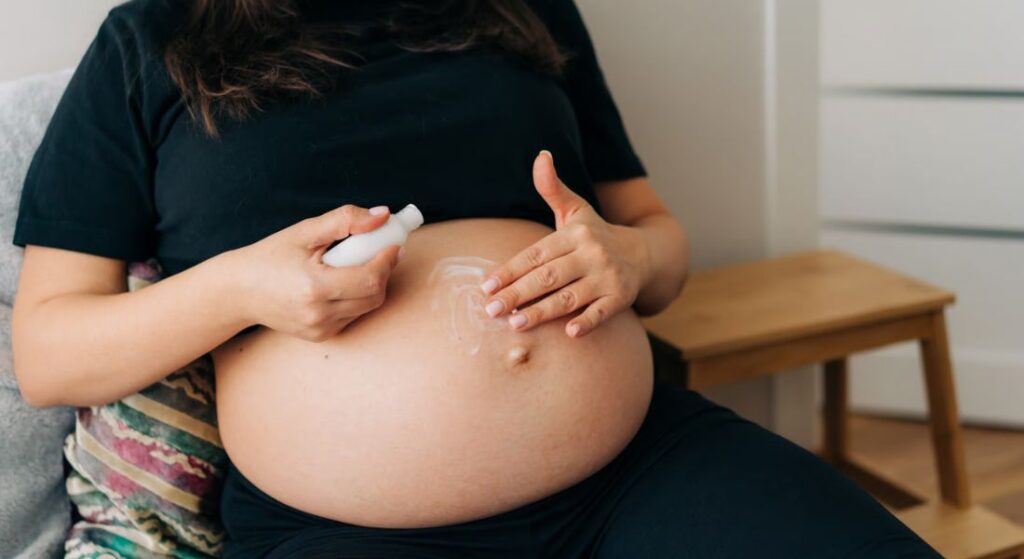
If your skin feels tight, dry or itchy as it stretches during pregnancy, applying a simple, fragrance-free moisturiser regularly can help keep it comfortable. You may find that a cream is easier to use during the day, while an ointment provides longer-lasting hydration if your skin is very dry.
You can also help protect your skin by using lukewarm water, a gentle cleanser and wearing loose, breathable clothing to reduce irritation. You should try not to scratch your itchy skin because scratching may cause further irritation or damage. You should also keep your clothing, bedding and other fabrics that may contain moisturiser residue away from cigarettes, naked flames and other ignition sources because the residue can make these materials catch fire more easily.
When Could Itching Be Caused by a Rash Instead?
Mild itching may occur when your skin is dry or stretching, but intense, widespread or persistent itching should not automatically be attributed to stretch marks. A raised, inflamed, painful or blistering rash may require assessment for another pregnancy-related or unrelated skin condition.
You should contact your maternity unit urgently if your itching affects your palms or soles, becomes worse at night or keeps you awake, particularly when you do not have a visible rash. These symptoms can occur with intrahepatic cholestasis of pregnancy and may require blood tests and maternity monitoring.
What Happens to Stretch Marks After Childbirth?
After your baby is born, your stretch marks will usually begin to fade naturally over time. The red, purple or darker colour gradually becomes lighter, although this process is slow and may continue for several months as your skin heals and adapts.
Your stretch marks are unlikely to disappear completely, but they often become much less noticeable with time. Keeping your skin moisturised can help it feel more comfortable, and there is no need to rush into cosmetic treatments, as waiting allows you to see how much your skin improves naturally.
Can Prescription Creams Treat Stretch Marks After Pregnancy?
Your dermatologist may consider topical tretinoin for newer red, purple or darker stretch marks after your pregnancy. Some studies suggest that it may produce a modest improvement, but your response cannot be guaranteed and the treatment will not remove your marks completely. Your skin may become dry, red, sensitive or irritated, so you should use it only under appropriate clinical supervision.
You must not use tretinoin, retinol or another topical retinoid while you are pregnant. If you are breastfeeding, you should discuss your treatment with your prescriber. You should not apply topical tretinoin to your nipple or areola, and you should prevent your baby’s skin from touching any treated area.
Can Laser or Light Treatment Improve Stretch Marks?
Certain laser or light treatments may improve the colour or texture of your stretch marks, but your response will depend on their age, colour, depth and your natural skin tone. No laser can guarantee complete removal, and more than one treatment session may be recommended without guaranteeing a particular result.
Your possible side effects include pain, redness, swelling, burns, scarring and changes in pigmentation. If you have brown or black skin, you should choose a clinician experienced in treating your skin tone because some procedures carry a greater risk of post-inflammatory darkening or lightening.
What About Microneedling, Radiofrequency and Microdermabrasion?
Microneedling and radiofrequency microneedling may improve the texture of some stretch marks by stimulating controlled skin remodelling. Current studies suggest that improvement is possible, but results vary and the available evidence does not identify one treatment that works best for everyone.
Evidence for microdermabrasion is less convincing, and it should not be presented as an equivalent treatment to microneedling or energy-based procedures. Your clinician should explain your expected benefit, discomfort, recovery time, pigment risk and treatment alternatives before you proceed.
When Is the Best Time to Consider Postpartum Treatment?
There is no universal number of weeks or months after childbirth when you should begin cosmetic treatment. Your stretch marks may continue to fade naturally, so allowing your skin and body to settle can help you assess whether treatment is still important to you.
Your timing should also consider whether you are breastfeeding, planning another pregnancy, experiencing ongoing skin sensitivity or taking medicines that affect healing. You should have an individual assessment rather than starting treatment according to a fixed postpartum timetable.
When Should You See a Dermatologist?

Your pregnancy stretch marks do not usually require medical treatment. You should seek advice if you are uncertain that the lines are stretch marks or if they appear very suddenly, develop without an obvious reason or are associated with pain, inflammation, blistering, broken skin or signs of infection.
If you are considering cosmetic treatment, your dermatologist can assess the colour, age and texture of your marks and explain which options may be appropriate for your skin. You should tell them whether you are pregnant or breastfeeding and disclose your medicines, skin conditions, previous procedures and tendency to develop pigmentation or raised scars.
Myth vs Fact
| Myth You May Hear | What You Should Know |
| Your stretch marks are caused by poor skincare. | Your genetics, hormones and degree of skin stretching have a greater influence than your skincare routine. |
| Your cocoa butter will prevent stretch marks. | Your cocoa butter may moisturise your skin, but it cannot reliably prevent your marks. |
| Your stretch marks mean that you gained too much weight. | Your marks can develop as part of your normal pregnancy-related body changes. |
| Your extra water or collagen supplement will prevent your marks. | Your hydration supports your general health, but no drink or supplement has been shown reliably to prevent your stretch marks. |
| Your stretch marks will disappear completely after childbirth. | Your marks will usually fade and flatten, but you may continue to see some colour or textural change. |
| Your retinol cream is safe because you apply it to your skin. | You should avoid retinol, tretinoin and other topical retinoids throughout your pregnancy. |
| Your laser treatment will remove every stretch mark. | Your treatment may improve the colour or texture of your marks but cannot guarantee complete removal. |
| Your severe itching is simply caused by your stretching skin. | You should seek urgent maternity advice if your itching affects your palms or soles, becomes worse at night or occurs without a visible rash. |
Key Takeaways
- Your stretch marks are usually a harmless part of pregnancy.
- Your family history and natural skin characteristics can influence whether you develop them.
- Your moisturiser may relieve dryness and itching but cannot guarantee prevention.
- You should not diet or try to lose weight to prevent stretch marks during pregnancy.
- You should avoid retinol, tretinoin and other topical retinoids during pregnancy.
- Your severe night-time itching or itching affecting your palms or soles requires urgent maternity advice.
- Your stretch marks will often become flatter and lighter after childbirth.
- Your treatment can improve their appearance but cannot remove them completely.
- Your treatment choice should account for your skin tone, breastfeeding status and the age of your stretch marks.
- You should have unusual, painful, blistering or unexplained marks medically assessed.
Frequently Asked Questions
1. When may your stretch marks appear during pregnancy?
You are most likely to notice stretch marks during the second half of pregnancy as your body changes more rapidly. However, your marks may appear earlier or only during your final weeks.
2. Can you develop stretch marks in any pregnancy?
Yes. You may develop stretch marks even if you did not experience them during an earlier pregnancy. Your family history, skin characteristics, hormonal changes and degree of stretching can all influence your likelihood.
3. Can your pregnancy stretch marks harm your baby?
No. Typical pregnancy stretch marks affect your skin and do not harm your baby, uterus or muscles. You should seek advice if your marks are painful, blistering, infected or do not look like ordinary stretch marks.
4. Can drinking more water prevent your stretch marks?
No evidence shows that drinking extra water prevents pregnancy stretch marks. You should remain appropriately hydrated for your general health without expecting this to stop the marks from developing.
5. Can your stretch marks feel itchy?
Your stretching or dry skin may feel mildly itchy. You should contact your maternity unit urgently if your itching is severe, affects your palms or soles, becomes worse at night or occurs without a visible rash.
6. Will your stretch marks disappear after pregnancy?
Your stretch marks will usually become flatter, lighter and less noticeable during the months after childbirth. They are unlikely to disappear completely.
7. Can you use retinol cream while pregnant?
No. You should avoid retinol, tretinoin and other topical retinoids during pregnancy. You should check the active ingredients in products marketed for stretch marks before using them.
8. Can you have laser treatment for stretch marks during pregnancy?
Your elective laser treatment should usually be postponed until after pregnancy because pregnancy-specific safety evidence is limited. Your stretch marks may also fade naturally after childbirth.
9. Can breastfeeding affect your treatment choices?
Yes. Your breastfeeding status may affect the suitability, timing and application area of prescription creams and cosmetic procedures. You should discuss your proposed treatment with your dermatologist or prescriber.
10. When should you see a dermatologist about your stretch marks?
You should seek advice if you are uncertain about your diagnosis, your marks appear suddenly without an obvious cause or you develop pain, blistering, inflammation or infection. You may also request an assessment if you are considering treatment after pregnancy.
Final Thoughts: Understanding Pregnancy Stretch Marks
Pregnancy stretch marks are common and usually harmless. Although you cannot prevent them reliably, a simple moisturiser may help your skin feel more comfortable while your body changes. Your marks will generally fade after childbirth, although some degree of colour or textural change may remain. If you’re considering consulting an experienced dermatologist in London, you can get in touch with us at London Dermatology Centre.
References:
- Brennan, M., Young, G. and Devane, D. (2012) ‘Topical preparations for preventing stretch marks in pregnancy’, Cochrane Database of Systematic Reviews, 2012(11), article CD000066. Available at: https://pmc.ncbi.nlm.nih.gov/articles/PMC10001689/
- Garg, A.M. and Mysore, V. (2022) ‘Dermatologic and cosmetic procedures in pregnancy’, Journal of Cutaneous and Aesthetic Surgery, 15(2), pp. 108–117. Available at: https://pmc.ncbi.nlm.nih.gov/articles/PMC9364454/
- Kasielska-Trojan, A., Sobczak, M. and Antoszewski, B. (2015) ‘Risk factors of striae gravidarum’, International Journal of Cosmetic Science, 37(2), pp. 236–240. Available at: https://pubmed.ncbi.nlm.nih.gov/25440082/
- Lokhande, A.J. and Mysore, V. (2019) ‘Striae distensae treatment review and update’, Indian Dermatology Online Journal, 10(4), pp. 380–395. Available at: https://pmc.ncbi.nlm.nih.gov/articles/PMC6615396/
- Lu, H., Guo, J., Hong, X., Chen, A., Zhang, X. and Shen, S. (2020) ‘Comparative effectiveness of different therapies for treating striae distensae: a systematic review and network meta-analysis’, Medicine, 99(39), article e22256. Available at: https://pmc.ncbi.nlm.nih.gov/articles/PMC7523784/