


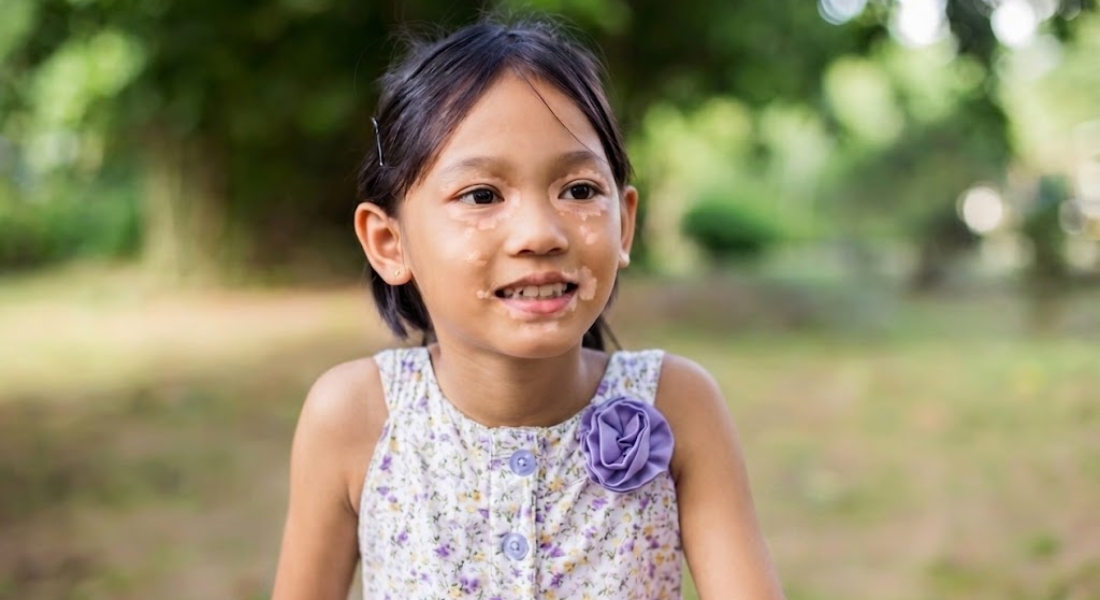
Finding a pale or white patch on your child’s skin can be worrying. You may wonder what has caused it, whether it will spread or if your child’s natural skin colour will return. While several skin conditions can cause changes in skin colour, vitiligo is one possible cause.
Vitiligo is a long-term condition that causes areas of skin to lose their natural pigment. It can develop at any age but often begins during childhood or adolescence. Although the condition affects the skin, it can also have an emotional impact on your child’s confidence and wellbeing.
Vitiligo is not contagious, so your child cannot pass it to others through everyday contact, swimming or sharing towels. It is not caused by poor hygiene, a particular food or anything you have done as a parent. Although there is no guaranteed cure, treatment may help restore some pigment, slow active disease and support your child’s quality of life.
What Childhood Vitiligo Is
Childhood vitiligo is a condition in which your child’s skin loses its natural pigment. This happens when the cells that produce melanin, called melanocytes, stop working or are destroyed. As a result, well-defined white or lighter patches appear on the skin.
Vitiligo can affect one small area or several parts of your child’s body. Some children develop new patches gradually over time, while others experience a period of spreading followed by long-lasting stability. Every child is affected differently.
Vitiligo can occur in children of all skin tones and ethnic backgrounds. On brown or black skin, the patches are often more noticeable because of the greater contrast with the surrounding skin. The affected areas may also burn more easily in the sun, so protecting your child’s skin from ultraviolet exposure is important.
Why Vitiligo Develops
You may wonder why your child has developed vitiligo, but there is no single cause. Non-segmental vitiligo is generally understood to involve an autoimmune process in which the immune system attacks the cells that produce skin pigment. As these cells are lost, white patches begin to appear on your child’s skin.
Researchers are still learning why this immune response begins. They believe that genetics, changes in the immune system and environmental factors may all play a role. Every child develops vitiligo differently, so the condition does not follow the same pattern for everyone.
You may also be concerned about whether vitiligo runs in families. Having a parent or sibling with vitiligo can increase your child’s likelihood of developing it, but many children with a family history never develop the condition. Many children with vitiligo have no known family history at all.
Vitiligo Is Not Your Child’s Fault
You may find yourself wondering whether something caused your child’s vitiligo. You might think back to an illness, a change in diet or a stressful time and question whether you could have prevented it. It is important to remember that vitiligo is not caused by anything you or your child did.
Your child’s vitiligo is not caused by poor hygiene, ordinary foods or contact with other children. There is also no reliable evidence that avoiding specific foods will prevent or cure the condition. Although stress may sometimes be linked with flare-ups, it does not mean the condition is psychological or that your child is to blame.
You can best support your child by focusing on the things that make a difference, such as appropriate medical care, sun protection and emotional wellbeing. Reassuring your child that they have done nothing wrong can help them feel more confident and supported as they learn to live with vitiligo.
Early Signs Parents May Notice
You may first notice a small patch of skin that looks slightly lighter than your child’s usual skin colour. It can become more noticeable during summer because the surrounding skin may tan while the vitiligo patch stays lighter. Early patches often appear around areas such as the fingertips, eyelids or mouth.
You may also notice a patch developing where your child has had a scratch, injury or repeated rubbing. Vitiligo does not usually cause pain, and many children do not experience any physical symptoms. Vitiligo is usually symptom-free, although mild itching can occur in some children.
Taking photographs in similar lighting can help you keep track of any changes over time. However, checking your child’s skin too often may increase worry and stress. Comparing photos every few months is usually more helpful than looking for changes every day.
Clinical Tip
If you are monitoring your child’s skin at home, take photographs in the same position and lighting every few months. Daily checking can make normal differences in lighting look like disease progression and may increase anxiety. Your dermatologist may also use standardised photographs at intervals of around three to six months.
Evidence Note
Systematic reviews suggest that childhood vitiligo can affect emotional wellbeing, confidence, social experiences and quality of life. The level of impact varies between children and may be influenced by factors such as age, the visibility and extent of the patches, personal experiences and reactions from other people.
What Vitiligo Looks Like in Children
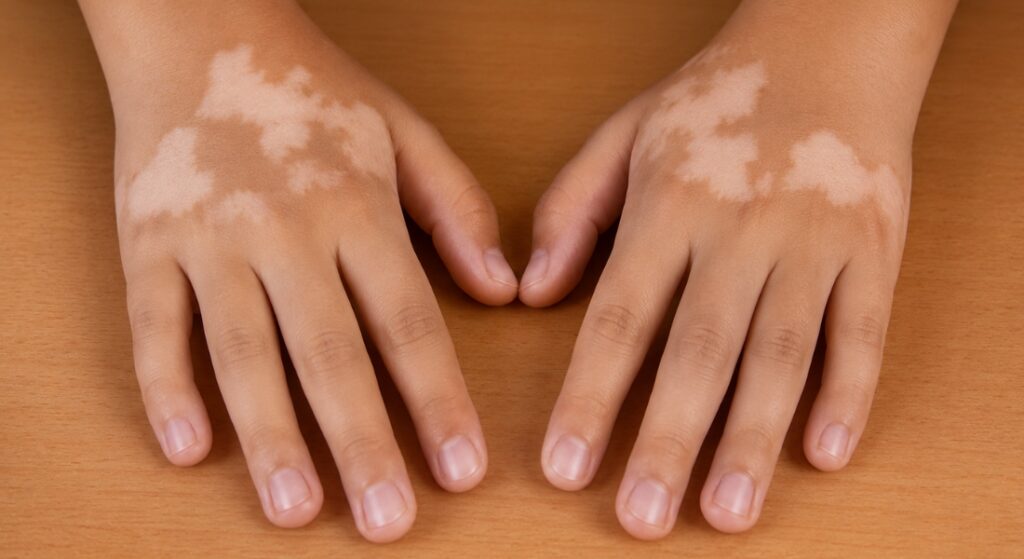
You may notice flat patches on your child’s skin that are lighter than their natural skin colour. Over time, these areas can become completely white and usually have clearly defined edges. The patches can appear gradually or develop more quickly.
Unlike eczema, vitiligo does not usually make your child’s skin rough, thick, scaly or itchy. The skin typically feels smooth, even though its colour has changed. Common areas include the face, hands, fingers, elbows, knees, feet and around the eyes or mouth.
You may also notice patches in areas that are exposed to frequent rubbing, such as the wrists, armpits or groin. In some children, the hair growing from affected skin may turn white, including the scalp, eyebrows or eyelashes. This is a recognised feature of vitiligo and may occur when pigment-producing cells in the hair follicles are affected.
Non-Segmental Vitiligo
Non-segmental vitiligo is the most common type of vitiligo in children. You may notice lighter patches appearing on both sides of your child’s body, although they may not always look exactly the same. For example, you might see patches around both eyes, on both knees or across several fingers.
You may notice new patches developing over time, even if your child’s vitiligo has been stable for a while. Your healthcare professional may also ask about your child’s general health and family history, as non-segmental vitiligo can be linked with other autoimmune conditions such as thyroid problems or type 1 diabetes.
Every child’s experience with non-segmental vitiligo is different. You may find that your child’s patches remain limited and unchanged for many years, while other children go through periods when new patches appear followed by times when the condition becomes stable.
Segmental Vitiligo
Segmental vitiligo usually affects one side or one specific area of your child’s body. It often starts at a younger age than non-segmental vitiligo and is seen relatively more often in children. You may notice patches developing on areas such as the face, trunk or a limb.
You may find that the patches spread for a limited time before becoming stable. Unlike some other types of vitiligo, segmental vitiligo often follows a more localised pattern, although every child’s experience can be different. Your dermatologist will look at how the patches are distributed and how they have changed over time.
In some children, the hair within the affected area may also turn white. This can make restoring colour more challenging because hair follicles play an important role in repigmentation. Understanding the type of vitiligo your child has can help you and your dermatologist discuss the most suitable treatment options and expected outlook.
Why Skin Injuries Can Trigger New Patches
You may notice new vitiligo patches appearing in areas where your child’s skin has been injured or irritated. This is known as the Koebner phenomenon, where conditions such as vitiligo can develop at sites of skin trauma.
Your child may develop patches after cuts, grazes, burns, sunburn, frequent scratching or repeated rubbing from tight clothing. Areas affected by straps, waistbands or sports equipment may also be more likely to develop changes if the skin is repeatedly irritated.
You do not need to stop your child from playing, exercising or taking part in everyday activities. However, you can help protect their skin by preventing sunburn, treating itchy skin conditions early and reducing unnecessary friction where possible. Comfortable clothing, well-fitted sports equipment and good wound care can also help minimise irritation.
Segmental vs Non-Segmental Vitiligo in Children
| Feature | Non-Segmental Vitiligo | Segmental Vitiligo |
| How common is it? | The most common type in children. | Less common than non-segmental vitiligo. |
| Pattern of patches | Usually affects both sides of the body, although not always evenly. | Usually affects one side or one localised area of the body. |
| Progression | May spread gradually over time, with periods of activity and stability. | Often spreads for a limited time before becoming stable. |
| Associated conditions | More likely to be linked with other autoimmune conditions, such as thyroid disease. | Less commonly associated with autoimmune conditions. |
| Hair colour changes | White hairs may occur but are variable. | White hairs within the patches are more common. |
| Treatment considerations | Treatment aims to slow progression and encourage repigmentation. | Treatment is based on the location, stability and extent of the affected skin. |
Conditions That Can Resemble Vitiligo
You may notice pale patches on your child’s skin and wonder whether they are caused by vitiligo. However, not every light-coloured patch is vitiligo, and several common childhood skin conditions can look similar. A proper assessment can help identify the correct cause.
Conditions such as pityriasis alba can cause lighter, dry patches, especially on the face of children with eczema-prone skin. Pityriasis versicolor, a superficial infection caused by an overgrowth of yeast on the skin, may also cause lighter patches with fine scaling, often on the chest, back or shoulders.
Your child may also develop lighter areas after eczema, an injury or another skin condition has healed. These changes often improve gradually, but it can take several months for normal pigment to return. If the patches are spreading, changing in appearance or associated with symptoms such as scaling, pain or altered texture, you should arrange a medical assessment.
How Childhood Vitiligo Is Diagnosed
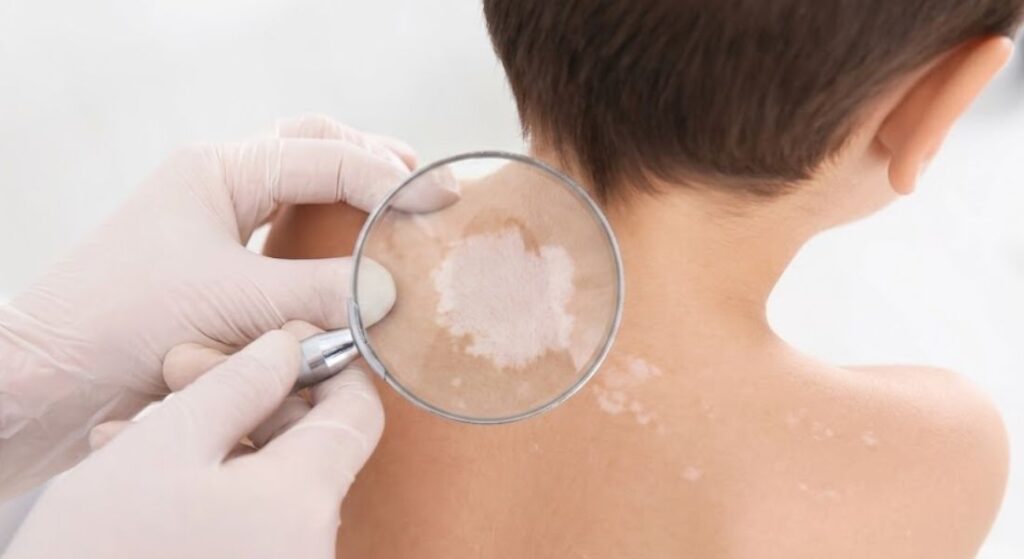
You may wonder how your child’s doctor can confirm whether a pale patch is vitiligo. Diagnosis is usually based on your child’s medical history and a careful examination of the skin. Your healthcare professional will look at the colour, borders, pattern and texture of the affected areas.
You may be asked when you first noticed the patches, whether they have changed or spread and whether anyone in your family has vitiligo or other autoimmune conditions. Details about itching, previous skin problems, injuries or medicines can also help your healthcare professional understand the cause.
A Wood’s lamp examination may be used to make areas of pigment loss easier to see and help rule out other causes of lighter skin patches. There is no blood test that confirms vitiligo, and a skin biopsy is only rarely needed when the diagnosis is unclear.
Blood Tests and Thyroid Screening
You may wonder whether your child needs blood tests after being diagnosed with vitiligo. Children with non-segmental vitiligo can have a higher chance of certain autoimmune conditions, especially thyroid problems, but this does not mean your child will definitely develop another condition.
Your healthcare professional may ask about symptoms such as ongoing tiredness, changes in weight, constipation, feeling unusually hot or cold, increased thirst or frequent urination. They may also ask about hair loss, digestive symptoms and whether autoimmune conditions run in your family.
British Association of Dermatologists guidance recommends thyroid-function and antithyroid-antibody screening for people with vitiligo, including children when appropriate for their age. Your child’s healthcare professional will decide which tests are suitable and whether any additional investigations are needed based on their symptoms, age, type of vitiligo and medical or family history.
Understanding Active and Stable Vitiligo
You may hear your healthcare professional describe your child’s vitiligo as either active or stable. Active vitiligo means that new patches are appearing, existing patches are becoming larger or pigment loss is continuing around the edges. Stable vitiligo means there has been no significant change or new patch development for a period of time.
Your dermatologist may look for signs that the condition is still changing, such as new small patches, unclear borders or changes in areas exposed to repeated friction. Photos taken over time can also help you and your healthcare professional understand whether the vitiligo is spreading.
A short period without visible changes does not always mean your child’s vitiligo has permanently stabilised. Looking at the overall pattern over time is usually more helpful than relying on a single appointment. Understanding whether vitiligo is active or stable helps guide the most suitable treatment approach.
How Vitiligo Can Affect Emotional Wellbeing
Vitiligo does not usually make your child physically unwell, but visible skin changes can affect their confidence and emotions. You may notice your child feeling self-conscious, especially if patches appear on the face, hands or other noticeable areas.
Some children feel comfortable with their skin, while others may worry about questions, teasing or how others see them. Talking openly with your child can help them feel supported and understood.
The emotional impact of vitiligo is not always linked to how much skin is affected. Even a small visible patch can have a big effect on your child’s confidence and daily life.
Research Insight
Healthcare professionals should ask how vitiligo is affecting your child’s school life, friendships, activities and emotional wellbeing, even when only a small area of skin is affected.
Supporting Your Child at Home and School
You can support your child by asking how they feel about vitiligo rather than assuming how they are coping. Their feelings may change as they grow, start school, meet new people or notice changes in their skin.
Use simple and positive language when talking about vitiligo. Helping your child understand that it is not contagious and does not make them unhealthy can build confidence. You may also want to explain the condition to teachers so they can support your child if questions arise.
If your child becomes withdrawn, anxious or avoids activities they previously enjoyed, extra support may help. Emotional support is an important part of caring for children with vitiligo and can help them feel more confident.
Daily Sun Protection and Vitamin D
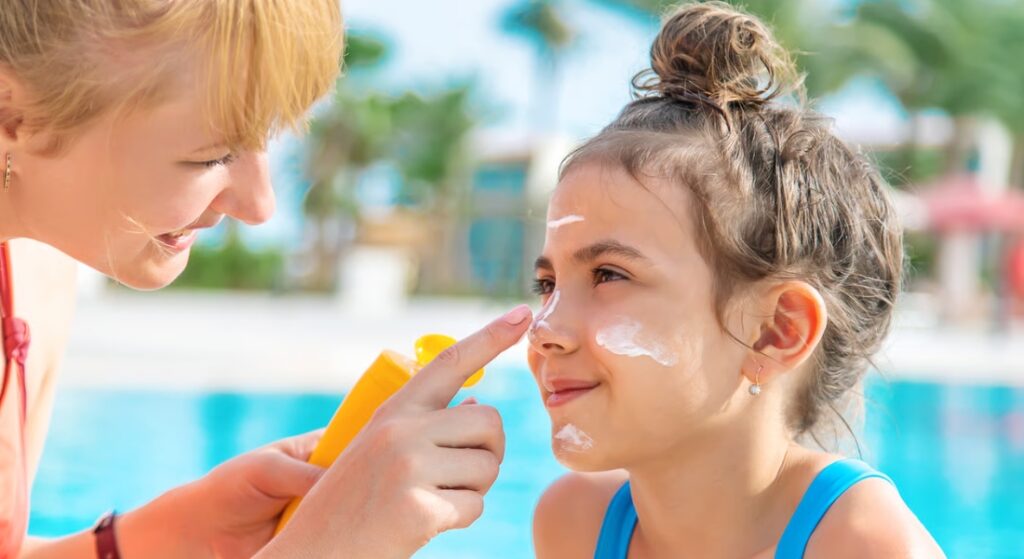
Vitiligo patches have little or no melanin, which means they can burn more easily than the surrounding skin. Preventing sunburn is important because damaged or inflamed skin may also trigger new patches in some children. Use a broad-spectrum sunscreen with SPF 50 or higher and a four- or five-star UVA rating on exposed skin.
Apply it before your child goes outdoors and reapply it at least every two hours, as well as after swimming, towel-drying or heavy sweating. Clothing, a wide-brimmed hat, shade and avoiding strong midday sunlight provide additional protection. Babies and young children should be kept out of direct strong sunlight as far as reasonably possible.
Regularly avoiding sunlight can reduce vitamin D production. Ask your child’s GP or dermatologist whether they need vitamin D advice, testing or an age-appropriate supplement. Do not give high-dose supplements without professional advice.
Deciding Whether Treatment Is Needed
Not every child with vitiligo needs treatment to restore skin colour. You may choose monitoring, sun protection and emotional support if your child’s patches are limited and they feel comfortable with their appearance.
Treatment may be considered if vitiligo is active, affects areas that concern your child or is having an impact on their emotional wellbeing. Your healthcare professional will consider your child’s age, skin tone, type of vitiligo and how realistic the treatment routine is for your family.
It is important to have realistic expectations from treatment. Treatment may produce some repigmentation or help control active vitiligo, but no treatment can guarantee complete or permanent results.
Topical Corticosteroids
Topical corticosteroids are commonly used to treat small areas of active vitiligo in children. They work by calming the immune activity that affects the pigment-producing cells in your child’s skin. Your healthcare professional will choose the most suitable option based on your child’s age and the area being treated.
The strength of the steroid will depend on your child’s age and the area being treated. Potent topical steroids may be used for limited periods on suitable body sites, but the face, eyelids and skin folds usually require milder or non-steroid treatments because these areas are more susceptible to side effects.
You may not notice changes straight away because repigmentation can take time. Following the recommended amount and schedule is important to reduce side effects such as skin thinning. Your healthcare professional may review progress through regular checks and photographs to decide the next step.
Tacrolimus and Pimecrolimus
Tacrolimus ointment and pimecrolimus cream are topical calcineurin inhibitors that reduce immune activity in the skin. Unlike steroid creams, they do not cause skin thinning, which can make them useful for delicate areas such as your child’s face, eyelids, neck and skin folds.
These medicines may be prescribed off-label for childhood vitiligo, meaning that their use for this condition may fall outside the wording of their official product licences. When treatment begins, your child may notice mild burning, warmth or stinging, but this often improves as the skin becomes used to the medicine.
You may see pigment returning as small brown or skin-coloured dots around hair follicles. These areas can gradually join together over time, although results vary and some areas, such as fingers, toes or areas with white hair, may respond less completely.
Narrowband UVB Phototherapy
Narrowband UVB phototherapy may be recommended if your child’s vitiligo is widespread, continues to spread, or is having a significant impact on their quality of life. This treatment is provided by a specialist dermatology team and uses controlled ultraviolet B light that may encourage repigmentation.
- When Phototherapy Is Recommended: Your child’s dermatologist may suggest this treatment if vitiligo is extensive, progressing, or not responding well to topical treatments.
- How the Treatment Works: Your child is positioned in a specialised light unit while a carefully calculated dose of narrowband UVB light is delivered to the affected skin.
- Regular Treatment Sessions: Narrowband UVB phototherapy commonly requires appointments two or three times a week. Treatment may continue for many months and, in some cases, for approximately a year or longer, so your dermatologist will discuss how it may affect school and family routines.
- Expected Results: Repigmentation is often more successful on the face and trunk than on the hands or feet, although results vary and some colour may fade over time.
Your child’s dermatologist will discuss the potential benefits, limitations and commitment involved before treatment begins.
Ruxolitinib Cream: An Important Recent Advance
Ruxolitinib cream is a topical Janus kinase inhibitor that targets immune signalling involved in non-segmental vitiligo. It is an important advance because it is a targeted topical medicine licensed for non-segmental vitiligo with facial involvement in people aged 12 years and over. A specialist dermatologist may consider this treatment for eligible young people aged 12 years and over with non-segmental vitiligo affecting the face.
It may be considered when first-line topical treatments have not worked or are unsuitable. Treatment may need to continue for several months before meaningful repigmentation becomes visible. Results vary between children, and your dermatologist will decide if it is suitable based on your child’s age, type of vitiligo and treatment needs.
Treatment should be initiated and supervised by a clinician experienced in diagnosing and treating non-segmental vitiligo. Your dermatologist will explain how the cream should be used, how much skin can be treated and possible side effects, including reactions at the application site.
UK Guidance Note
NICE recommends ruxolitinib cream as an option for people aged 12 and over with non-segmental vitiligo involving the face when first-line topical treatments have not worked or are unsuitable. It is a specialist-led treatment, and its safety and effectiveness have not been established in children under 12.
Other Advances and Future Treatment Directions
You may hear about newer treatments being developed for vitiligo as researchers learn more about how the immune system affects pigment cells. These approaches are being studied to determine whether they can target the disease process more precisely and produce reliable repigmentation.
Your dermatologist may discuss targeted light therapy in selected cases, particularly when patches are small or localised. Surgical techniques that transfer pigment-producing cells are generally reserved for carefully selected, stable vitiligo and are not routinely offered to children.
Research may lead to more personalised treatment options, but many emerging approaches still require further evidence on effectiveness, safety and long-term outcomes in children. Ongoing studies are helping doctors understand which treatments work best and how they can support your child’s long-term skin health and wellbeing.
Myth vs Fact
| Myth | Fact |
| Vitiligo is contagious | Vitiligo is not contagious and cannot be passed from one person to another. |
| Poor hygiene or diet causes vitiligo | Non-segmental vitiligo is considered autoimmune. Poor hygiene and ordinary foods do not cause vitiligo. |
| Sun exposure is harmless | Affected skin is more prone to sunburn and must be protected. |
| Vitiligo always spreads | The course is unpredictable; some patches remain stable. |
Key Takeaways
- Vitiligo causes smooth pale or white patches but is not contagious.
- It is not caused by poor hygiene, ordinary foods or anything your child has done.
- A dermatologist can confirm the diagnosis and distinguish vitiligo from other causes of pale skin.
- British Association of Dermatologists guidance recommends age-appropriate thyroid-function and antithyroid-antibody screening for people with vitiligo, including children.
- Treatment may include topical medicines, narrowband UVB phototherapy or, for eligible young people aged 12 years and over with non-segmental facial vitiligo, ruxolitinib cream.
- Sun protection and emotional support are important parts of everyday care.
- No treatment can guarantee complete or permanent repigmentation.
Frequently Asked Questions
1. What causes vitiligo in children?
Non-segmental vitiligo, the most common type, is considered an autoimmune condition in which the immune system attacks pigment-producing cells called melanocytes. The exact causes of vitiligo are not fully understood, and genetics, immune changes and environmental factors may all contribute. It is not caused by poor hygiene, ordinary foods or anything you have done as a parent.
2. Is childhood vitiligo contagious?
No. Vitiligo is not contagious and cannot be passed from your child to others through touching, hugging, swimming, sharing towels or attending school. It is a medical condition affecting skin pigmentation and is not caused by an infection.
3. Can vitiligo spread over time?
Yes, it can. Some children develop only one or two small patches that remain stable for years, while others experience new patches appearing over time. The pattern is unpredictable, and periods of activity are often followed by long periods when the condition remains unchanged.
4. How is childhood vitiligo diagnosed?
Vitiligo is usually diagnosed by examining your child’s skin and discussing their medical history, family history and any changes you have noticed. A dermatologist may also use a Wood’s lamp to make areas of pigment loss easier to see. Blood tests do not confirm vitiligo. British Association of Dermatologists guidance recommends thyroid-function and antithyroid-antibody screening for people with vitiligo, including children when appropriate for their age, to help identify associated autoimmune thyroid disease.
5. Can vitiligo be cured?
There is currently no guaranteed cure for vitiligo, but treatment may help control active pigment loss, encourage repigmentation or reduce the contrast between affected and unaffected skin. Results vary, and returned pigment may not always be complete or permanent.
6. What treatments are available for childhood vitiligo?
Treatment options may include topical corticosteroids, tacrolimus ointment, pimecrolimus cream, narrowband UVB phototherapy and, for eligible children aged 12 and over with non-segmental facial vitiligo, ruxolitinib cream. The appropriate option depends on your child’s age, affected areas, disease activity and individual needs.
7. Does vitiligo affect your child’s overall health?
Vitiligo is associated with an increased likelihood of certain autoimmune conditions, particularly autoimmune thyroid disease. UK dermatology guidance recommends age-appropriate thyroid-function and antithyroid-antibody screening, and your child’s healthcare professional can explain which tests and follow-up are suitable.
8. Can sunlight make vitiligo worse?
The white patches caused by vitiligo have little or no melanin, making them more likely to burn in the sun. Protecting your child’s skin with sunscreen, suitable clothing and shade is important. Although some medical light treatments are used under specialist supervision, sunburn can worsen the condition and should be avoided.
9. How can you support your child emotionally?
Listening to your child’s concerns, encouraging open conversations and helping them understand that vitiligo is not their fault can make a real difference. Letting teachers know about the condition and addressing any teasing or bullying early can also help protect your child’s confidence and emotional wellbeing.
10. What is the outlook for children with vitiligo?
The outlook varies from one child to another. Some children experience stable patches for many years, while others have periods when new areas develop. Although vitiligo is usually a long-term condition, treatment and regular follow-up may help some children achieve repigmentation, manage active disease and maintain a good quality of life.
Final Thoughts: Helping Your Child Live Well with Vitiligo
Although childhood vitiligo is a long-term condition, many children can live well with appropriate medical care, sun protection and emotional support. Early assessment can help confirm the diagnosis, identify whether the condition is active and explore treatment options that are appropriate for your child’s age, symptoms and individual needs.
If you would like an assessment from a paediatric dermatologist in London, the specialists at London Dermatology Centre can assess your child’s skin, discuss suitable treatment options and develop an individual management plan. Appropriate follow-up can support your child’s skin health, confidence, emotional wellbeing and quality of life.
References:
- Tissera, K.A., Hawryluk, E.B. and Garza-Mayers, A.C. (2025) ‘A retrospective comparison of narrowband-UVB phototherapy in pediatric versus adult vitiligo’, Children, 12(4), article 466. Available at: https://www.mdpi.com/2227-9067/12/4/466
- Pala, V., Ribero, S., Quaglino, P. and Mastorino, L. (2023) ‘Updates on potential therapeutic approaches for vitiligo: Janus kinase inhibitors and biologics’, Journal of Clinical Medicine, 12(23), article 7486. Available at: https://www.mdpi.com/2077-0383/12/23/7486
- Gianfaldoni, S. et al. (2018) ‘Vitiligo in children: A review of conventional treatments’, Open Access Macedonian Journal of Medical Sciences. Available at: https://pmc.ncbi.nlm.nih.gov/articles/PMC5816302/
- Kanwar, A.J. and Kumaran, M.S. (2012) ‘Childhood vitiligo: Treatment paradigms’, Indian Journal of Dermatology. Available at: https://pmc.ncbi.nlm.nih.gov/articles/PMC3519254/
- Nathalie, J. et al. (2021) ‘Health-related quality of life in paediatric patients with vitiligo: A systematic review and meta-analysis’, Journal of the European Academy of Dermatology and Venereology. Available at: https://pubmed.ncbi.nlm.nih.gov/34013610/
- Tarafdar, N. and Varambally, M. (2026) ‘Psychiatric comorbidities and quality-of-life burden in pediatric patients with vitiligo: A systematic review and meta-analysis’, Pediatric Dermatology. Available at: https://pubmed.ncbi.nlm.nih.gov/41084130/
- Eleftheriadou, V., Atkar, R., Batchelor, J. et al. (2022) ‘British Association of Dermatologists guidelines for the management of people with vitiligo 2021’, British Journal of Dermatology, 186(1), pp. 18–29. Available at: https://onlinelibrary.wiley.com/doi/10.1111/bjd.20596